
Opinion
Letter To President Buhari As He Clocks 78

Hassan Auwalu Muhammad
First of all, I congratulate you on celebrating your 78th birthday. May ALLAH prosper you with a long and blessed day. Ameen.
Baba, as one of your loyal supporters I would like to share with you my suggestions and views.
Indeed, there are many challenges to your first rule of government that many Nigerians feel Nigeria will never change.
Therefore, I have some points that I would like to offer a contribution to the development, sustainability and prosperity of our country, Nigeria. As I did last year in my birthday message to you.
Mr. President, I recommend that you should look at the judicial system of this country because there are still some judges and lawyers who do not have the country at heart, their ambition is to accumulate wealth through corrupt politicians who are before the courts for looting public funds.
This should be considered in order to provide lasting justice to any Nigerian.
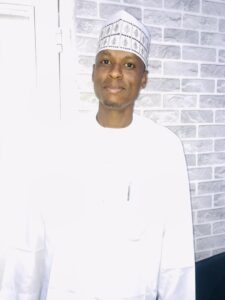
Hassan Auwal Muhammad
As you have increased the salaries of police officers some couple of months ago, they are yet to start enjoying the new salary scheme, it is good to make sure that they are paid on time, and that you should be very wary of their superiors, they could turn the money to banks to make a profit and then begin to release their salaries, which impedes their ability to earn their money early.
This will reduce the number of bribes some of them take from the people of this country, and failure to pay them on time will discourage them from doing their job safely and quietly.
We have seen the efforts your government made in rescuing the abducted Kankara schoolboys, though we do not know the strategies used in rescuing them, more efforts and strategies should be applied in fixing the worsening security situation bedeviling the northern region and the country in general.
However, Mr. President, the era of using the security forces to tackle insecurity by identifying insurgents should have been something of the past, the world is now moving on with modern and sophisticated security apparatus, such as cameras that are mounted on the roads and space shuttle surveillance to monitor what is happening nationwide and even in the wild.
We all know that you are a nationalist, you do not take sides in governing the affairs of this country. But Baba, you should look at the Northern Territory from 2003 until your 2019 general election, it is the most populous area that gave you lots of votes. The region needs to be revitalized economically and educationally.
The people of this country, have long been complaining that there are some CABALS in your government who have no official roles in the government, but they have prevented anything from running smoothly in your government, they enrich themselves at the expense of other citizens.
It is only those who they wish to appoint will be given the job not based on merit.
If this allegation is true, Baba does not hesitate to use your BROOM and sweep them away from your government and concentrate on building the people’s interests who voted for you!
On the issue of reopening our land borders, I salute your direction Mr president, but the banning of importation of rice and other products that could be made in Nigeria should be strictly maintained.
What you did was right Baba. But I would like to recommend a few reliable, trustworthy people to oversee the movement around the borders of these countries! On the other hand, the community is still struggling with expensive foodstuffs, which is why many people cannot afford to buy them. Measures should also be taken to reduce hardship.
In spite of the information contained in my previous letter, no country can survive, develop, and succeed without knowledgeable people in the country, Baba! There should be an emergency in the education sector, and also move the country from an education based-society to a knowledge based society. the damage to this sector in Nigeria is beyond the imagination of any person, and serious measures must be taken in restoring the educational value of this country.
Many of the education secretaries, headteachers, and their wives own private schools, so they will never allow public schools to flourish and develop because it will cost them.
There should be tough research and all those caught up in the act should be locked down, and in the development of public schools across the country, your government should be able to provide them with the right equipment, and pay their salaries in due course as well as make sure the teachers are well qualified. If you do that, Baba, you will probably wonder how education can develop in such a short time in this country.
Mr. President, I advise you to look at how the security system and the people of this country are at the country’s airports. Indeed, the case of Zainab, a woman of Kano state, has been a long-standing problem.
Research has shown that many Nigerians have been killed on suspicion of traveling with planted drugs in their luggage which they have no idea on how they got to the luggage.
Identifying people before boarding a flight down the bottom line of truth will never prevent them from getting in and out of drugs, nor will it deter those who intend to plant drugs in passengers’ baggage.
As we have gone through a severe economic downturn in this country, and I have previously suggested that a committee of economists who are nonbiased be formed, to act as a guide for the country’s economic growth and development. The committee should be reviewed because up till now, there is no improvement from the economic sector, nothing changed as we expected
Letter to Northern Nigeria Intellectuals
Reviewing the committee will enable us to join the list of the world’s top industrial nations sooner or later.
The problem of the high rate of unemployment in Nigeria cannot be fixed when many of our industries are not working let alone creating jobs for the masses, Baba, as you are working day and night to build power plan in Manbila, Taraba State, yet we need to develop some other electricity stations to meet the needs of Nigerians and the industrial sector.
By doing so, the government can communicate to the owners of all companies to reopen them in order to produce and consume our locally made products, otherwise, the government should take over from them or loan them if they have no capital now for their resurrection.
That is the only reason our youths with many degrees are unemployed, get jobs, and it will reduce the level of corruption in this country because a number of companies will work and no one will wait for the government to provide jobs.
This will help boost the country’s economy rapidly….
Lastly, continue with the good work, don’t let any Unscrupulous element distract you, keep moving, fear no one but your creator.
I wish you a joyful birthday celebration.
Hassan Auwalu Muhammad, a student of Journalism at Bayero University Kano, Department of Mass Communication.
Opinion
INEC, David Mark, And Coming Abachaian Coronation
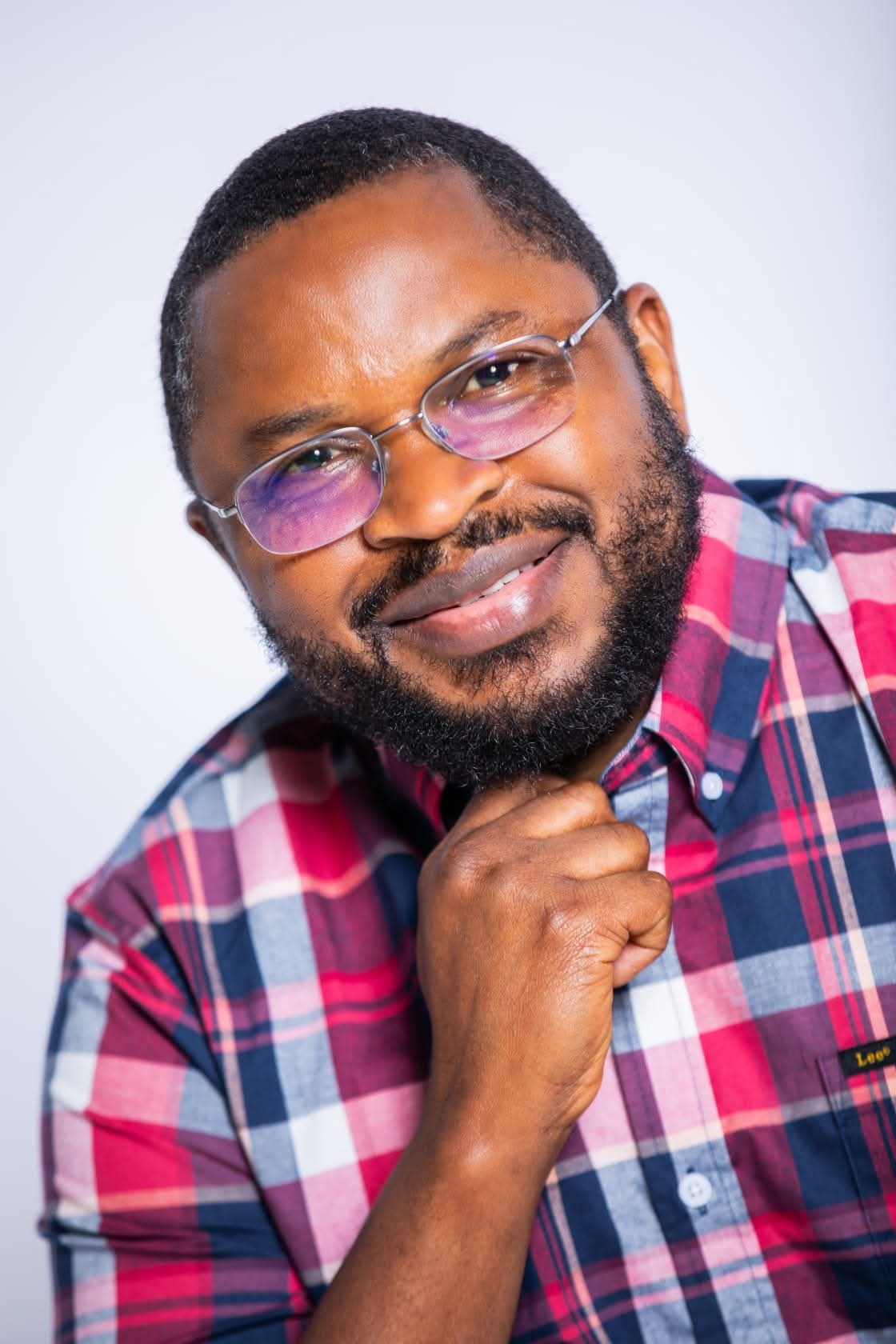
By Farooq Kperogi
With INEC’s overtly partisan, intentionally illegal, and possibly remote-controlled withdrawal of recognition for the David Mark-led ADC, Nigeria has officially reverted to full-on Abacha-era suffocation of even the wispiest pretence to competitive electoral politics.
Lawyers have said that the judgment of the appeal court, which INEC invoked as a convenient crutch to carry out a predetermined action, said the status quo should be maintained. In other words, the judgment says David Mark should remain the chairman of the ADC until the merit of the appeal has been determined.
However, it appears that INEC is in the know of what the final judgment will be and decided to jump the gun. Yet the INEC chairman is a professor of law and a SAN! He can’t even pretend to be neutral.
It seems obvious that the ADC faction INEC will ultimately recognize, as I predicted in my column of two weeks ago, will be the faction that will merely be an extension of the APC, much like the PDP now is. They will either present dummy candidates or adopt Tinubu as their candidate, which is a distinction without a difference.
It is obvious that Tinubu wants a coronation, not a competitive election, in 2027. He is scared to death about a real electoral contest. We all know why.
Well, according to public records, it cost around ₦300–₦355 billion to conduct the 2023 presidential election. It is projected that it will cost almost ₦870 billion to conduct the 2027 election.
Why should Nigeria spend close to a trillion naira on a preset, make-believe, Abachaian coronation exercise? Let’s kuku cancel democracy and make Tinubu the supreme leader. At least we would save a trillion naira.
Opinion
El-Rufai/Uba Sani And Pantami’s Perceived Peace Of The Graveyard
By Bala Ibrahim.
Yesterday was Sunday, a day recognized as the first day of the week, which in the Bible, holds supreme significance as the day of Jesus Christ’s resurrection. Some Christians call it the Lord’s Day. There are many interpretations given to show the significance of Sunday. But for the purpose of this article, attention would be given to the significance of yesterday’s Sunday, (29/03/2026), with special bias to the role it played in promoting reconciliation between parties and friends, as well as how, at the National Mosque, Abuja, the wall of religious divide was unconsciously demolished, as followers of different faiths scrambled over each other, in the competition for space to participate in the funeral rites of late Hajiya Umma El-Rufai, the deceased mother of Mallam Nasir El-Rufai.
By the Islamic tradition, when a Muslim dies, before he or she is taken to the grave yard, special prayers are offered on the deceased person’s body, at any convenient place, before proceeding to the cemetery. For late Hajiya Umma El-Rufai, the National Mosque Abuja, was the venue. And what happened there, is the prelude to this article.
If I say everyone that is anything in Nigeria was there, I think I am making an understatement. But that is not surprising, given the personal and political profile of the bereaved, who is Mallam Nasir El-Rufai. It may interest the reader to know that, among the early callers at the Mosque, were reputable Christians, with people like Peter Obi and Rotimi Amaechi, rubbing shoulders with Muslims, in the stampede to partake in the Islamic ceremonial practice. They know they don’t belong to the Islamic faith, but they want to share with Mallam Nasir El-Rufai, as an honour of solidarity, in the last rites given to his beloved mother. The duo of NSA Mallam Nuhu Ribadu and Governor Uba Sani were there face to face with El-Rufai. The atmosphere was solemn, sombre and clearly sorrowful.
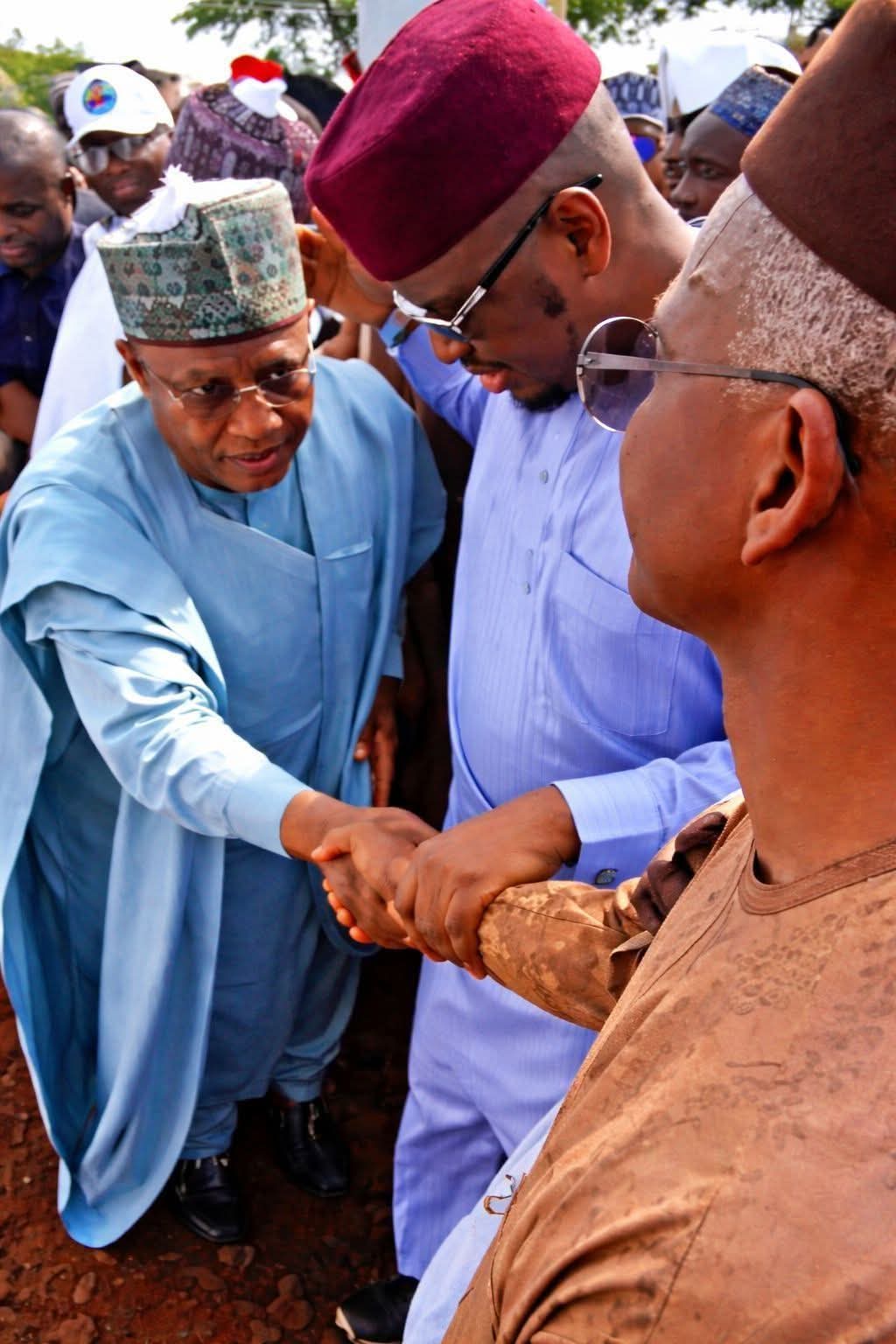
Also present at the Mosque was Prof. Isa Ali Ibrahim Pantami, former Minister and renowned Islamic cleric, who seized the opportunity to advance the imperative of reconciliation in Islam. He started in the Mosque and continued at the graveyard, to the extent of persuading El-Rufai to shake hands with Uba Sani, with a soft but casual commitment from both sides, on the pleaded forgiveness. It was difficult, very difficult, especially when perused through the prism of Mallam Nasir El-Rufai’s position.
Undoubtedly peace is fundamental to Islam, because it serves as a source of inner tranquillity and social harmony. The Quran has laid emphasis on reconciliation and kindness. So every Muslim is enjoined to embrace reconciliation. However, in advancing the course of reconciliation, timing is important, I think. We must not only perceive peace as merely the absence of conflict. No, it also has something to do with our state of mind. A man standing before the lifeless body of his beloved mother, at the graveyard, under intense pressure, is not in the appropriate state of mind to commit to any peace deal. Unless we are referring to the probabial peace of the graveyard.
The ambition of any reconciliation is to arrive at unity. And unity can only come after conflict, if there is healing. By definition, healing is the process of becoming healthy or whole again, encompassing the restoration of physical tissue, mental, or emotional well-being. A man under emotional pressure is not fit for commitment to any peace deal, I think. Unless we are referring to the probabial peace of the graveyard.
Peace of the graveyard is not genuine, because it could be deceptive, by resulting in forced calm, beneath which lies a deep tension. As a friend of the trio of El-Rufai, Nuhu Ribadu and Uba Sani, Sheik Pantami must go for a genuine, organic and sustainable peace agreement between the parties. More so, because they were genuine friends before.
All hands must be put on deck, to compel President Bola Ahmed Tinubu to come into the agreement. Because, he was the one who compelled Mallam Nasir El-Rufai to come into the Tinubu project in 2023. Indeed a lot of water had passed under the bridge. We should forget past misunderstandings or issues that are now irrelevant, and forgivable. Let’s move on from past disagreements and let go of grudges.That’s the only way to arrive at genuine reconciliation.
It may be recalled that the Muslim Rights Concern, MURIC, had long been appealing to the President, to come out clearly and reciprocate the gesture given to him in his time of need by Mallam Nasir El-Rufai. MURIC said they were the ones who persuaded El-Rufai to support Tinubu in 2023, as a result of which, he confronted the so called Buhari cabal, the then CBN Governor and other forces that were putting spanners in the work of the Tinubu project. The result of which is now President Tinubu. MURIC said El-Rufai does not deserve to be humiliated and went further to support their argument with the quote below:
“Noteworthy is a video clip showing how President Tinubu openly asked El-Rufai to join his government and this did not happen at a private meeting. It happened at a campaign ground, in the presence of thousands of party enthusiasts.”
Opinion
Defection: Kwankwaso’s Legacy Under Scrutiny; A Critical Look at his Political Journey Since 1999
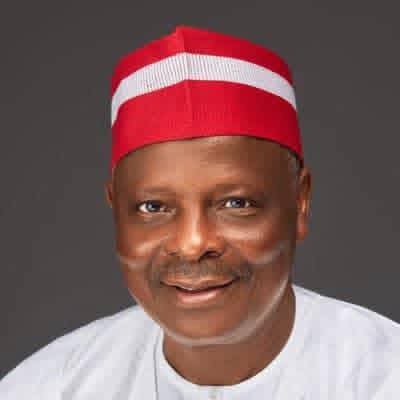
When Nigeria returned to democratic rule in 1999, the people of Kano embraced the moment with hope and expectation after years of military governance. Among the prominent figures who emerged at the time was Rabiu Musa Kwankwaso, whose leadership inspired confidence among many citizens eager for progress and representation.
More than two decades later, however, Kwankwaso’s political legacy continues to generate debate, with supporters highlighting his achievements and critics questioning the long-term impact of his leadership on Kano’s development.
Kwankwaso’s first tenure as governor (1999–2003) was marked by visible infrastructure projects, including roads and public buildings, which were widely welcomed by residents. At a time when tangible government presence was limited, these developments symbolised a new beginning. Yet, some analysts argue that while these projects addressed immediate needs, they did not sufficiently tackle deeper structural challenges, particularly the decline of Kano’s once-thriving industrial economy.
Historically a major commercial hub, Kano’s economy had been weakening due to years of policy neglect and infrastructural decay. Critics maintain that a more comprehensive economic strategy might have helped revive industries and reduce dependence on federal allocations.
Kwankwaso’s defeat in 2003 by Malam Ibrahim Shekarau marked a turning point. Observers note that while the loss strengthened his political network and grassroots appeal, it also raised questions about the sustainability of the systems established during his administration. Many of the projects, though impactful, were seen as lacking the institutional depth needed for long-term continuity.
Returning to office in 2011, Kwankwaso expanded his development agenda with increased infrastructure and an ambitious foreign scholarship programme that benefited thousands of Kano youths. The initiative is widely regarded as one of his most significant contributions, opening educational opportunities for many.
However, critics argue that despite these efforts, broader economic transformation remained limited. Rising population growth, unemployment, and declining industrial capacity continued to challenge the state’s development trajectory.
Beyond governance, Kwankwaso’s political influence has also shaped Kano’s power dynamics. His role in building a strong political movement—popularly known as the Kwankwasiyya—has been praised for mobilising grassroots support but criticised by some for reinforcing a personality-driven political structure.
Political analysts further point to the tensions surrounding the Kano Emirate as a significant episode in the state’s recent history. The controversial removal of Muhammadu Sanusi II highlighted deep divisions within the state’s political and traditional institutions, with varying opinions on the factors that led to the crisis.
In recent years, Kwankwaso’s shifting political alliances—from the PDP to the APC and later to the NNPP—have also drawn mixed reactions. While such moves are common in Nigeria’s political landscape, critics argue that they have contributed to instability and uncertainty within Kano’s political structure.
The 2023 elections brought another dimension to the discourse, with the emergence of Abba Kabir Yusuf as governor under the NNPP platform. Subsequent political developments, including evolving relationships between state and federal actors, have further shaped public debate about governance priorities and political strategy.
Today, Kwankwaso remains one of Kano’s most influential political figures, with a legacy that reflects both notable achievements and enduring controversies. While many credit him with expanding access to education and improving infrastructure, others believe that the state’s long-term economic and institutional challenges require deeper reflection.
As Kano continues to navigate its future, the assessment of past leadership—including Kwankwaso’s role—remains central to ongoing conversations about development, governance, and political direction.

INEC, David Mark, And Coming Abachaian Coronation
Jonathan Urges National Assembly to Overhaul Electoral Litigation Process, Create Specialised Court

ADC Defies INEC, Vows to Proceed with Congresses Amid Leadership Crisis

ADC Rejects INEC’s Ruling Interpretation, Vows to Clarify Contradictions

ADC Rising: Salga hails influx of political heavyweights as a turning point for justice

Governor Abba Kabir Yusuf Holds Exclusive Prerogative to Choose Deputy – Malam Inuwa Waya

The Governor Who Chose His People Over His Politics: Abba Yusuf and the Moral Courage Behind Kano First
Restoring the Glory That Was Always There: Governor Abba Kabir Yusuf and the Historical Vision Behind Kano First

Tinubu to Swear in Olatunji Disu as Inspector-General of Police on Wednesday

NDLEA Clarifies: Drug Case Against Abba Kyari Still Active After Court Discharge
INEC, David Mark, And Coming Abachaian Coronation
Jonathan Urges National Assembly to Overhaul Electoral Litigation Process, Create Specialised Court
ADC Defies INEC, Vows to Proceed with Congresses Amid Leadership Crisis
ADC Rejects INEC’s Ruling Interpretation, Vows to Clarify Contradictions
ADC Rising: Salga hails influx of political heavyweights as a turning point for justice
Governor Abba Kabir Yusuf Holds Exclusive Prerogative to Choose Deputy – Malam Inuwa Waya
The Governor Who Chose His People Over His Politics: Abba Yusuf and the Moral Courage Behind Kano First
Restoring the Glory That Was Always There: Governor Abba Kabir Yusuf and the Historical Vision Behind Kano First
Tinubu to Swear in Olatunji Disu as Inspector-General of Police on Wednesday
NDLEA Clarifies: Drug Case Against Abba Kyari Still Active After Court Discharge
-

 Opinion4 years ago
On The Kano Flyovers And Public Perception
-

 Features5 years ago
How I Became A Multimillionaire In Nigeria – Hadiza Gabon
-

 Opinion5 years ago
Kano As future Headquarters Of Poverty In Nigeria
-

 History5 years ago
Sheikh Adam Abdullahi Al-Ilory (1917-1992):Nigeria’s Islamic Scholar Who Wrote Over 100 Books And Journals
-

 Opinion4 years ago
My First Encounter with Nasiru Gawuna, the Humble Deputy Governor
-

 History5 years ago
The Origin Of “Mammy Market” In Army Barracks (Mammy Ochefu)
-

 History4 years ago
The History Of Borno State Governor Professor Babagana Umara Zulum
-

 News4 years ago
Federal University Of Technology Babura To Commence Academic Activities September