
News
Mamman Daura Misunderstood by Many-Buhari
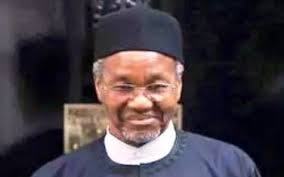
President Muhammadu Buhari has felicitated with Malam Mamman Daura on the occasion of his 81st birthday, describing him as “a dedicated public servant, consummate administrator, and one of our worthiest gentlemen who is widely misunderstood by so many.”
The President said on the occasion that “Mamman Daura is a thoroughbred public administrator with an all rounded knowledge and experience in life and government.”
According to President Buhari, “it’s impossible to sit down with Daura without gaining from his vast experience, knowledge and wisdom.”
The President noted that “among Daura’s unappreciated virtues are his humility, compassion and zeal to provide mentoring to many who are privileged to be with him or close to him.”
President Buhari, who also described Daura as “a veteran of Nigeria’s political history and active participant in its development,” said that “the revered journalist and public administrator is needlessly misunderstood.”
He added that “Daura’s experience is not unusual because many great men are not appreciated, which stems from the cynical obsession of many of his critics.”
In a statement by Malam Garba Shehu ,Senior Special Assistant to the President on Media and Publicity said President Buhari advised Nigerians “to be just and fair-minded in the assessment of public figures like Mamman Daura whose contributions to the development of the country overshadow perceived flaws.”
“As you celebrate the ripe age of 81, may Allah bless you with better health and longer life in the service of Nigeria and mankind. You are a fountain of inspiration and an inexhaustible reservoir of knowledge. We are proud of your invaluable support.
“I wish you more abundant blessings from God. Happy birthday,” the President told the elder statesman.
News
International Arabic Conference Calls for AI Integration

An international conference on Arabic language and literature held at Bayero University, Kano (BUK), has called for the integration of artificial intelligence, digitalisation and modern technology into the teaching, research and development of Arabic language studies. The recommendation was contained in a communiqué issued at the end of the conference organised by the Department of Arabic, Faculty of Arts and Islamic Studies, BUK, from September 28 to 30, 2026.
The conference, titled “Contemporary Issues in Arabic Language and Literature: Prospects and Challenges,” brought together scholars, researchers, postgraduate students, educators and officials from Nigeria and other countries, including Chad, Algeria and Egypt, according to the communiqué signed by Professor Muhammad Rabiu Auwal, Chairman of the Local Organising Committee.
The conference participants said the rapid development of artificial intelligence and digital technology had created both opportunities and challenges for the Arabic language, urging scholars and relevant authorities to develop practical approaches for advancing Arabic language teaching, learning and research in the digital era, according to the communiqué.
The participants also called on governments, educational institutions and policymakers to explore the use of Arabic in national development, particularly in education, media, translation, diplomacy, the economy and culture. The conference further recommended aligning Arabic studies with societal needs and labour market demands through research in language, literature, criticism, linguistics, translation and interdisciplinary studies, according to the communiqué.
The conference urged stakeholders to review Arabic language teaching methods and curricula, particularly for non-native speakers, while strengthening the connection between Arabic studies and modern fields such as computing, artificial intelligence, translation, media, tourism, diplomacy and the economy. The communiqué also called for collaboration between Arabic departments and departments of computer science, artificial intelligence, linguistics, translation and media.
The participants further recommended stronger academic cooperation between Nigerian universities and institutions around the world through exchange programmes, joint research projects, conferences, seminars, co-supervision of academic theses, exchange of professors and researchers, and sharing of scholarly publications and resources, according to the conference communiqué.
The conference also called for greater cultural and intellectual exchange between Arabic-speaking communities and Africa’s diverse peoples and languages, while encouraging students in higher institutions to pursue innovative research topics rather than merely repeating traditional areas of study. The participants, however, stressed the importance of preserving Arabic cultural heritage while embracing new areas of scholarship and technological development.
The opening ceremony was attended by representatives of the Vice Chancellor of Bayero University, Kano, and the Wazirin Kano, as well as the Director of the Egyptian Cultural Centre in Kano, the Vice President of the Association of Arabic Language and Literature Teachers in Nigeria, and the Deputy Vice-Chancellor of Mangal University of Technology in Chad, who delivered the keynote address, according to the communiqué.
The conference also called on governments and institutions to provide resources for Arabic-related scientific research and support academic programmes, conferences, seminars and research initiatives aimed at strengthening the language in response to contemporary challenges.
News
World Teachers’ Day: NUT Urges Kano Govt to Declare October 5 Public Holiday, Advocates Special Salary Scale
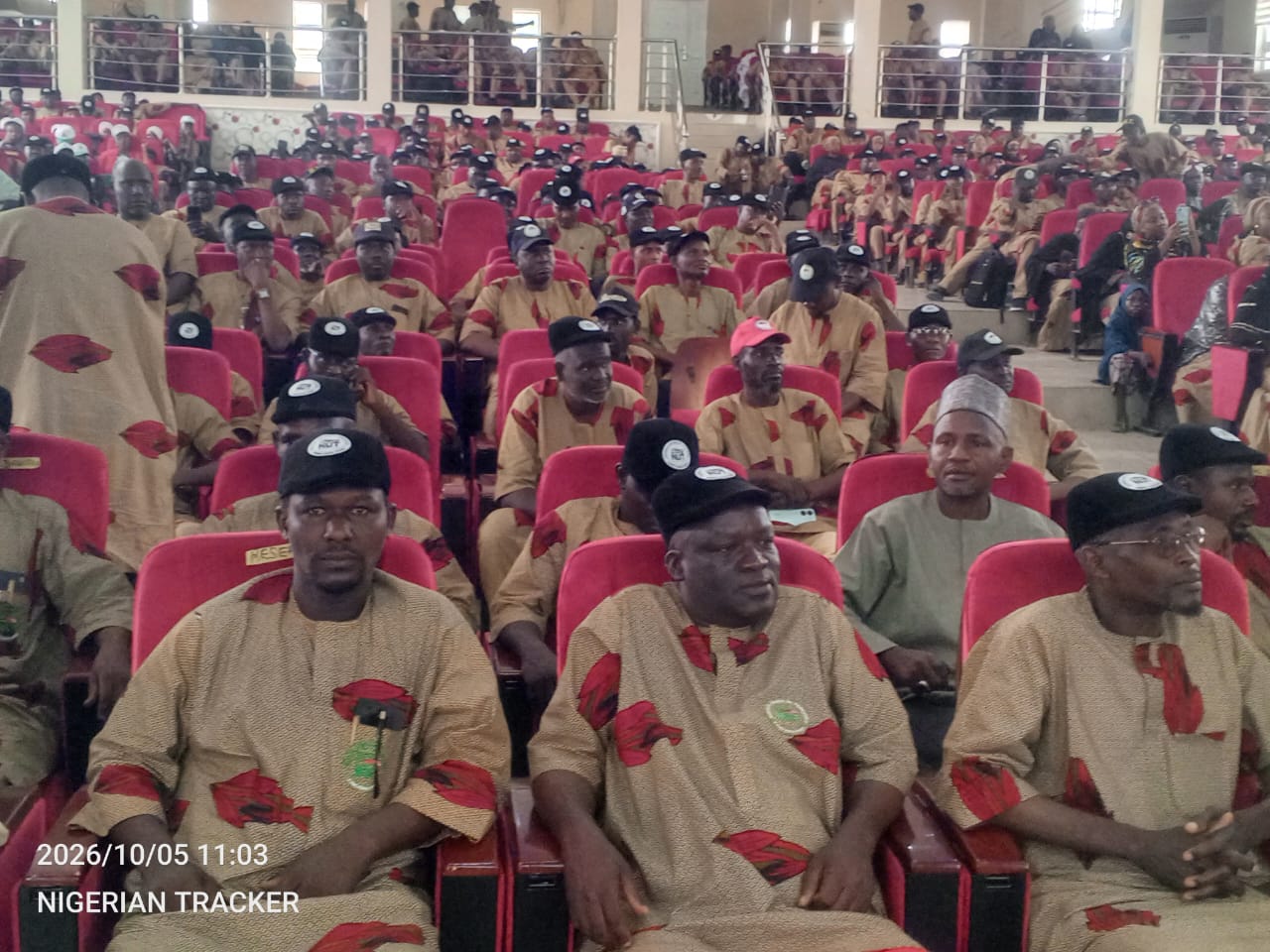
The Nigeria Union of Teachers (NUT), Kano State Wing, has called on the Kano State Government to declare October 5 every year as a public holiday in the state to recognise and celebrate the contributions of teachers to the development of society. The NUT Chairman, Comrade Baffa Ibrahim Garko, made the call on Monday during the 2026 World Teachers’ Day celebration held at the Coronation Hall of the Kano State Government House.
Garko said the celebration, which coincided with the 60th anniversary of the NUT’s commitment to protecting and advancing the teaching profession, should go beyond ceremonies to address issues affecting the welfare, professional status and working conditions of teachers. He said the union represented more than 100,000 teachers across Kano State and described teachers as the foundation upon which every other profession and the future of society are built.
The NUT chairman commended Governor Abba Kabir Yusuf’s administration for what he described as significant interventions in the education sector, including the regular payment of salaries, implementation of promotions and their financial benefits, provision of teaching and learning materials, implementation of interventions under the state of emergency on education, improved performance in NECO examinations and the construction and renovation of schools across the state. Garko said the interventions had restored confidence among teachers and contributed to creating better conditions for teaching and learning.
Garko, however, urged the government to address what he described as disparities between teachers in basic and post-primary education by reviewing salary structures, allowances and conditions of service. He also called for the strengthening of the Secondary Schools Upkeep Programme, saying schools required adequate and timely resources for maintenance, sanitation, furniture, instructional materials and other essential needs to provide a safe and conducive learning environment.
The NUT chairman further appealed to the Kano State Government to provide the union with an official bus to facilitate its activities across the state, while also calling for the payment and review of principals’ duty posts and allowances in recognition of the responsibilities they shoulder in managing secondary schools. Garko said principals perform critical administrative, academic and supervisory functions and should have their responsibilities appropriately reflected in their remuneration.
Garko also urged the government to address the salary scale and retirement benefits of teachers serving as Sit-in Directors in both primary and post-primary education, arguing that teachers who take on additional administrative responsibilities should not be disadvantaged when they retire. He appealed for the recruitment of more teachers to address manpower shortages, implementation of outstanding promotions and financial benefits, improved welfare packages and continued investment in infrastructure and teaching materials.
The governor, Abba Kabir Yusuf, represented by the Secretary to the Kano State Government, Umar Farouk Ibrahim, reaffirmed his administration’s commitment to improving teachers’ welfare, professional development and working conditions. The governor said supporting teachers amounted to investing in the future of Kano State, adding that his administration had fulfilled commitments to recruit more teachers, improve the learning environment, construct and renovate classrooms, provide furniture and teaching aids, and invest in the intellectual and professional development of teachers.
Presenting a paper titled “Repositioning Teachers and Quality Education for Sustainable Development in Kano State,” Professor Auwalu Halilu said World Teachers’ Day should serve as a reminder that teachers play a critical role in shaping the future rather than being limited to ceremonial celebrations. He said standing with teachers represented a social contract and required professionalisation, effective teaching, improved welfare and greater engagement of teachers in digital transformation, adding that teachers remained central to educating girls, mobilising communities and producing professionals such as doctors, engineers and entrepreneurs. Halilu commended the Kano State Government for implementing teacher competency tests and urged continued efforts to reposition teachers through improved welfare, conducive working environments and professional development. The National President of the NUT also said the aspirations and expectations of teachers had not yet been fully achieved, but expressed confidence that the challenges could be overcome through continued commitment, responsible leadership and dedication to duty.
News
Kano First Forum Petitions Police Over Alleged Inciting Statements by Aminu Babba Dan Agundi

The Incorporated Trustees of the Kano First Forum have petitioned the Kano State Commissioner of Police over alleged public statements by Alhaji Aminu Babba Dan Agundi which the organisation said could heighten tension and threaten public peace in the state.
The petition, signed by the Forum’s solicitor, Barrister Badamasi Suleiman Gandu, urged the police to conduct a discreet, impartial and comprehensive investigation into the statements allegedly made by Dan Agundi during a press briefing on October 1, 2026.
According to the petition, the press briefing followed the participation of Khalifa Muhammadu Sanusi II, the Emir of Kano, in the Independence Day celebration and touched on issues surrounding the reported use of a horse by the monarch during the event.
The Forum alleged that the issue was particularly significant because of an existing directive by the Kano State Government concerning the use of horses, adding that the circumstances surrounding the Emir’s participation in the celebration had generated public discussion.
Kano First Forum, however, said its major concern was a statement allegedly made by Dan Agundi during the briefing in which he was quoted as telling the people of Kano State to “await their return and await further directives from them.”
The organisation described the statement as sensitive in view of the longstanding disagreements surrounding the Kano Emirate and urged security agencies to establish the context and intention behind the words.
According to the Forum, leaving members of the public to speculate about who would return, what such a return would mean and what the reference to “further directives” entailed could create unnecessary fear, anxiety and tension among residents.
The Forum said its decision to petition the police was motivated by the need to prevent statements or actions that could potentially escalate existing disagreements into confrontation.
It stressed, however, that its intervention should not be interpreted as an attempt to suppress legitimate political expression, traditional disagreements, criticism or other lawful forms of public discourse.
Rather, Kano First Forum said its objective was to ensure that disagreements concerning the Kano Emirate were addressed through lawful and peaceful channels without exposing residents to unnecessary tension or the risk of conflict.
The organisation therefore called on the Kano State Police Command to examine the circumstances surrounding the alleged statements, establish their full context and determine whether they amounted to any breach of the law or conduct capable of disturbing public peace.
The Forum also appealed to political, traditional, religious and community leaders in Kano State to exercise restraint in their public communications, particularly when commenting on sensitive matters relating to the Kano Emirate.
It maintained that Kano occupies an important commercial, social and political position and that any development capable of undermining peace in the state could have consequences for millions of residents.
The organisation consequently urged all stakeholders to place the safety and security of residents above personal, political or institutional interests.
“Whatever differences may exist concerning the Kano Emirate, they must be resolved through the courts and other lawful institutions, rather than through statements that could be interpreted as threats, directives or calls for confrontation,” the Forum stated in the petition.
Kano First Forum further said it remained committed to the protection of peace, public safety and the rule of law, explaining that the petition was filed in an effort to prevent avoidable conflict and protect lives and property.
The petition was addressed to the Commissioner of Police, Kano State Command, while copies were also forwarded to the Inspector-General of Police and the Department of State Services for their attention.
The Forum subsequently appealed to the security agencies to independently assess the allegations and take any lawful measures considered necessary to preserve peace and prevent developments that could threaten public order in Kano State.

International Arabic Conference Calls for AI Integration

World Teachers’ Day: NUT Urges Kano Govt to Declare October 5 Public Holiday, Advocates Special Salary Scale

Kano First Forum Petitions Police Over Alleged Inciting Statements by Aminu Babba Dan Agundi

Kano South Senator Constructs Over 6,000 Tube Wells, Unveils 102 Projects Since Election

Kano, IBP sign MoU on health financing transparency dashboard

Zamfara Varsity ASUU Threatens Warning Strike Over FG-ASUU Agreement, Promotion Arrears

Kano Chemists Threaten Warning Strike Over Alleged PCN Pressure

Per Ishaq Samaila: “Waziri” for Strategy. “Mai Jama’a” for Service. One Man. One Mission. Ibrahim Kabir Masari

Goje’s Electoral War:The Confrontation With Tinubu,Governor Inuwa,Usman Kumo And APC candidates Ahead Of 2027

Prof Yusuf Adamu Delivers BUK’s 63rd Professorial Inaugural Lecture, Reflects on Medical Geography and Academic Legacy
International Arabic Conference Calls for AI Integration
World Teachers’ Day: NUT Urges Kano Govt to Declare October 5 Public Holiday, Advocates Special Salary Scale
Kano First Forum Petitions Police Over Alleged Inciting Statements by Aminu Babba Dan Agundi
Kano South Senator Constructs Over 6,000 Tube Wells, Unveils 102 Projects Since Election
Kano, IBP sign MoU on health financing transparency dashboard
Zamfara Varsity ASUU Threatens Warning Strike Over FG-ASUU Agreement, Promotion Arrears
Kano Chemists Threaten Warning Strike Over Alleged PCN Pressure
Per Ishaq Samaila: “Waziri” for Strategy. “Mai Jama’a” for Service. One Man. One Mission. Ibrahim Kabir Masari
Goje’s Electoral War:The Confrontation With Tinubu,Governor Inuwa,Usman Kumo And APC candidates Ahead Of 2027
Prof Yusuf Adamu Delivers BUK’s 63rd Professorial Inaugural Lecture, Reflects on Medical Geography and Academic Legacy
-

 Opinion5 years ago
On The Kano Flyovers And Public Perception
-

 Features5 years ago
How I Became A Multimillionaire In Nigeria – Hadiza Gabon
-

 Opinion6 years ago
Kano As future Headquarters Of Poverty In Nigeria
-

 History5 years ago
Sheikh Adam Abdullahi Al-Ilory (1917-1992):Nigeria’s Islamic Scholar Who Wrote Over 100 Books And Journals
-

 Opinion5 years ago
My First Encounter with Nasiru Gawuna, the Humble Deputy Governor
-

 History5 years ago
The History Of Borno State Governor Professor Babagana Umara Zulum
-

 History6 years ago
The Origin Of “Mammy Market” In Army Barracks (Mammy Ochefu)
-

 News5 years ago
Federal University Of Technology Babura To Commence Academic Activities September