
Politics
Kwankwasiyya Stalwart says no Reconciliation in Kano PDP
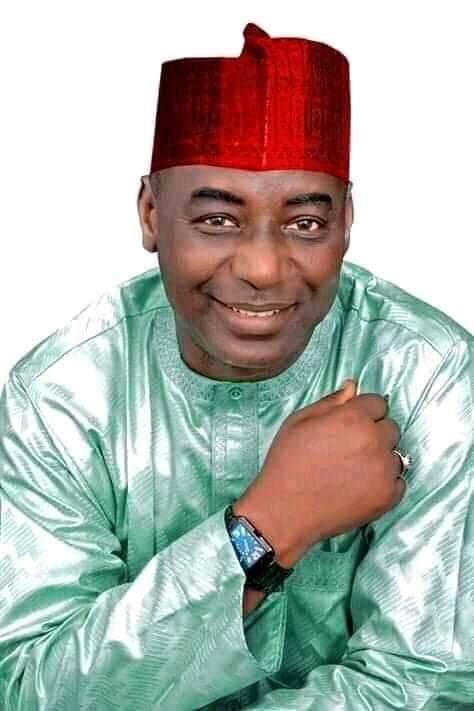
A Kwankwasiyya stalwart in Kano Mustafa Adamu Indabawa says there will be no reconciliation among adherents of other political schools of thought within the party in Kano.
Mustapha Adamu Indabawa made the statement on his Facebook page.
Kwankwaso Appointed Director of International Human Right Office Kano
He was quoted as saying whether you like it or not Kwankwaso is the alpha and omega of Kano politics and a time has come when they will defy everybody who is opposing them in the politics of Kano.
He said they will not allow miscreants to continue to holding sway in the affairs of Kano politics without putting a stop to them in 2023 says Mustapha Indabawa.
Recently a former Minister of foreign affairs and a one time Nigeria’s Ambassador to China Alhaji Aminu Bashir Wali was also quoted as saying he is ready to reconcile with the Kwankwasiyya movement base on the condition
Politics
Kano Politics: The Rise of Verbal Immorality-Adamu Aminu
By Adamu Aminu
Political disagreement is not the problem. Nigeria’s democracy was built on the expectation that citizens and their representatives would argue, differ, and contest ideas openly. What is happening in Kano today is something else entirely. It is not debate. It is decay.
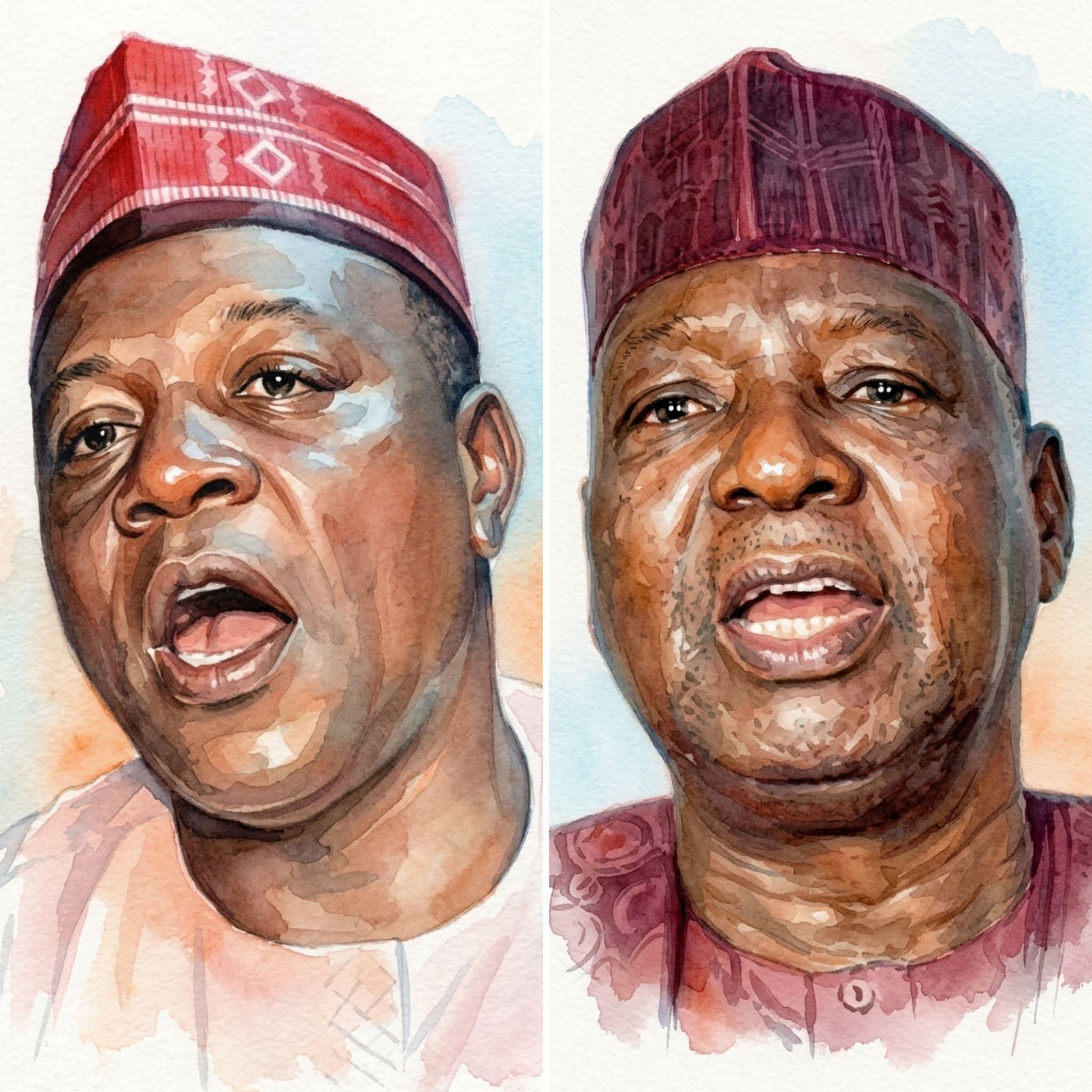
In recent weeks, the public exchange between two political proxies in Kano has crossed every line that should separate legitimate criticism from outright character assassination.
What began, ostensibly, as political rivalry has degenerated into insults, curses, and personal attacks that now extend beyond the individuals involved to their families. Parents, spouses, and children — people who hold no office and made no political claim — have been dragged into a contest that was never about governance in the first place.
It is with genuine concern that this must be said plainly: the recent exchange between Alhaji Usman Sharu Baban Lungu, an elderly statesman in his eighties, and Alhaji Nagoda, an aide to Governor Abba Kabir Yusuf, descended into accusations too grave and too dishonorable to repeat here — accusations that dragged innocent family members into territory no political disagreement should ever reach. “Inna lillahi wa inna ilaihi raji’un”
Whatever their differences, two men of public standing — one of them elderly enough to command respect by age alone — have involved their own households in conduct that neither politics nor personal grievance can justify.
Is this the legacy they intend to leave for their children, and for their children’s children, long after they are gone? A name is the one thing a person carries beyond death.
This is not politics. It is a scramble for relevance, dressed up as loyalty. By all appearances, both men are not fighting for ideas or for the people of Kano. They are fighting for attention, for patronage, for whatever crumbs might fall from a political table they hope to remain seated at.
None of this happens in a vacuum. Social media pages and radio stations are institutions that ought to apply editorial discipline and ethical restraint, have instead become amplifiers. A radio interview is meant to test a politician’s ideas, not to provide a stage for insults. Yet politicians whose speech is more familiar with vulgarity than with policy have found that behavior rewarded with airtime and circulation, because outrage travels faster than substance.
The mudslinging is no longer whispered in private. It is broadcast and shared, in the hope of impressing political godfathers who measure loyalty by how loudly their proxies can humiliate a rival.
This raises questions Kano cannot afford to postpone. Where is Kano’s political direction heading when public office is pursued through insult rather than ideas?
Is this the inheritance we intend to leave the next generation, a political culture where vulgarity is normal and dignity is optional?
Has character assassination become a shortcut to relevance, a way of chasing clout rather than earning trust?
And where are the gatekeepers in all of this?
The Kano State Governor, political leaders, religious clerics, and other well-meaning individuals who command moral and civic authority in this state cannot claim ignorance of what is unfolding on air and online.
Their silence is not neutrality — it is consent by omission. Religious clerics who ordinarily do not hesitate to speak on matters of public morality owe the state a word on this matter.
A society that leaves moral guardianship to chance will, sooner or later, find that vulgarity has filled the space their silence left behind.
Constructive criticism holds power accountable. It sharpens argument and improves governance. What Kano is witnessing instead is the normalization of verbal immorality. Left unchecked, this trend does more than embarrass the individuals involved. It teaches a generation of young people in Kano that vulgarity is a legitimate substitute for vision.
Kano’s institutions, political, religious, and media alike, must now decide whether they are custodians of public discourse or accomplices to its collapse.
Adamu Aminu writes from Kano.
Politics
Defamation Against DSP Barau, Institutional
By Abba Anwar
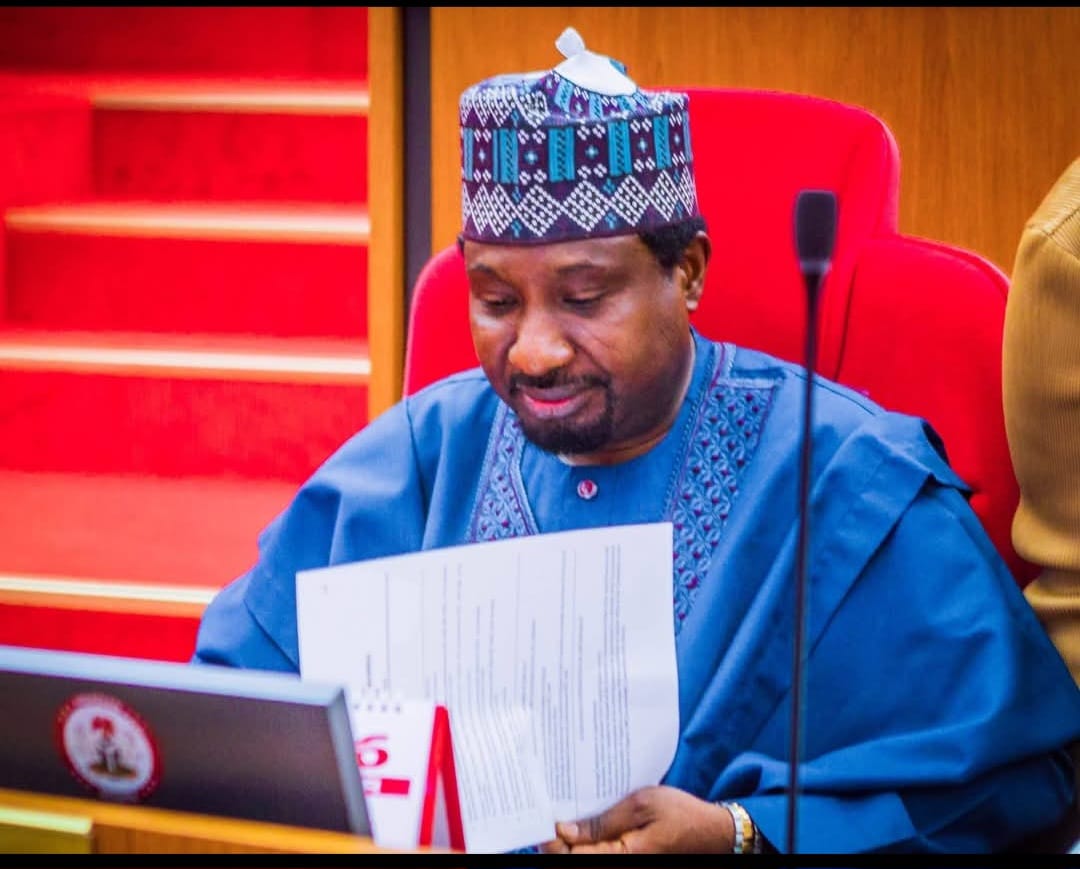
Any act of defamation of character against His Excellency the Deputy President of the Senate and First Deputy Speaker of ECOWAS Parliament, Distinguished Senator Barau I Jibrin, PhD, CFR, more of allegations of terrorism and aiding the national tragedy, is automatically a defamation against democratic institutions.
I know DSP knows glaringly clear that, the current malicious and defamatory allegation against his personality goes beyond his own self as a Distinguished Senator representing Kano North alone. To me, dropping petition against the perpetrators of such act is not only unnecessary, it is deconstruction of democratic institutions and processes.
I came across a petition from DSP’s Solicitors, West-Wig Attorneys, to the Inspector General of Police, dated 22nd July, 2026 and singed by S. Y. Gama Esq and Sani Ibrahim Esq, requesting for “… the immediate investigation, identification and prosecution of persons appearing in the viral video for the alleged, false, malicious and defamatory publication against His Excellency Senator Barau I Jibrin, Deputy President of the Senate of the Federal Republic of Nigeria, and for related offences including cyberstalking.”
As the petition concurs with my understanding of the case at hand, that defamation against Senator Jibrin is defamation against institutions, it says, “The gravity of this matter is further accentuated by the constitutional office occupied by our Client as the Deputy President of the Senate of the Federal Republic of Nigeria.
False allegations of terrorism directed against the holder of such a high public office possess the capacity to undermine public confidence in democratic institutions, diminish the integrity of constitutional governance and unjustifiably expose the occupant of that office to avoidable security concerns.”
The core content of the issue at hand as explained by the petition typifies that, “Our Client’s attention has been drawn to a video presently in widespread circulation across various social media platforms wherein a group of adult women are seen and heard repeatedly referring him as “terrorist” in what appears to be a coordinated public rendition.
The publication has since attracted considerable public attention and has exposed our Client to public odium, ridicule, contempt, opprobrium and immeasurable reputational injury both within and outside the Federal Republic of Nigeria.”
With Senator Jibrin’s position as a global citizen, such grave allegation against his personality sends bad signal to the world against the entire democratic process and institutions in the country. I understand that any decision he takes, if it falls below the protection of his image, which ultimately means protecting our democratic values and institutions, could be a negation of bravery, self-esteem and entrenched democratic mind and might.
I don’t give a damn to the states of origin of those who appeared in the said video or their sponsors, the fact remains, offence is offence wherever perpetrated, hatched or birthed. So discussing about the origins of those people, seen, suspected and invisible for now, is secondary. But I am confident that DSP’s political opponents perceived and real, from Kano state would not engage in this high level defamation of character.
It is only in Kano where you see people from other places coming to the state to castigate their elders, religious, political, traditional etc and go scot-free with the full cooperation of the indigenes. I’m not a proponent of state-of-origin chauvinism, but it hurts and is highly pathetic. It is only in Kano where you see trash being treated as pure or honey. Too pathetic and unfortunate!
Some years back, I have a friend, who is also a journalist, from a popular radio station, who was transferred to Katsina state, during his first political programmes, as he started new rounds of political programmes in Katsina, he met with the serious anger of the then Governor of Katsina state. I think it was either Ibrahim Shema or Aminu Bello Masari. The Governor made it categorically clear to him that, in Katsina they would not take that trash, as obtained in Kano.
But in Kano, when some democratic liabilities, who migrated to Kano, were castigating former Governor Malam Ibrahim Shekarau, the supporters of His Excellency Rabi’u Musa Kwankwaso and His Excellency Abdullahi Umar Ganduje were clapping hands. After Shekarau, the same noisemakers faced Kwankwaso calling him names, Ganduje’s supporters were clapping and smiling. After abuses on Kwankwaso reached peak and subsided, Ganduje’s turn came on board. The same illiterate nuisance who abused Shekarau and Kwankwaso, jumped down harshly on Ganduje. For God sake, what is wrong with Kano people?!
Half of what is obtained in Kano cannot, by any standard, be tolerated elsewhere. The illiterate migrants to Kano, (reader forgive my expression, it isn’t deliberate) always preserve their elders back home. Why Kano is indifferent?
I’m not an advocate of Kano Alone, or the superiority of Kano, all I’m saying is, why it is only in Kano, elders are not seen as elders? Elders from all walks of life. Not only political elders or leaders, anyway.
I know for sure Kano reached its peak, because of her hospitality and receptive atmosphere. In Kano all people are welcomed. This is a good sign of pride and trustworthiness. I will always be happy when more and more people that are non-indigenes and not citizens of Nigeria continue to troop Kano. Wisdom behind Kano’s greatness and development. Without non-indigenes Kano wouldn’t have achieved that feat of commercial hub for the North and sub-Saharan Africa.
Coming back to the main issue at hand, DSP’s Solicitors called the attention of the IGP that, “While the identities and present locations of the persons appearing in the video are presently unknown to our Client, we firmly believe that the investigative, forensic, cyber intelligence and technological capabilities of the Nigeria Police Force are more than sufficient to uncover the identities of every person appearing in the video together with every individual who conceived, sponsored, financed, coordinated, produced, published, transmitted, promoted or otherwise facilitated the dissemination of the offending publication.”
If we believe that DSP’s seek for justice and redress is elegantly needed, to better our today and reshape the integrity of our democratic values and institutions, we should encourage him to pursue this issue to its logical conclusion.
Some of the demands of the petition request the good office of the IGP to, “Commence an immediate, comprehensive and impartial investigation into the viral video and every circumstance surrounding its production, publication and dissemination, and invite, interview and investigate all persons connected with the publication and obtain all relevant electronic and digital evidence necessary for a comprehensive investigation.”
Other requests among others are, “Determine whether the publication and dissemination of the viral videos disclose offences under the Cybercrimes (Prohibition, Prevention, etc) Act, 2015 as amended, the Criminal Code Act, the Penal Code, or any applicable law, and take every other lawful measure considered necessary to preserve, the integrity of public discourse, uphold the rule of law, Cyberstalking and malicious online publications and ensure that the allegation of terrorism are never trivialized or weaponised against any citizen without lawful justification.”
His Excellency DSP should kindly understand that, this defamation is beyond him alone, therefore shelving it aside has serious consequences on democratic institutions. Sir injury on you is injury on institutions. Putting this grave allegation under the carpet, is minus and abhorable. Many of your people, supporters and well wishers are standing by, watching your steps Sir. Is not about you alone Sir. It is also about our institutions.
Anwar writes from Kano
Thursday 23rd, July 2026
Politics
2027: Loyalty Reloaded As Gov Yusuf Picks Deputy Garo As Running Mate
By Abba Anwar
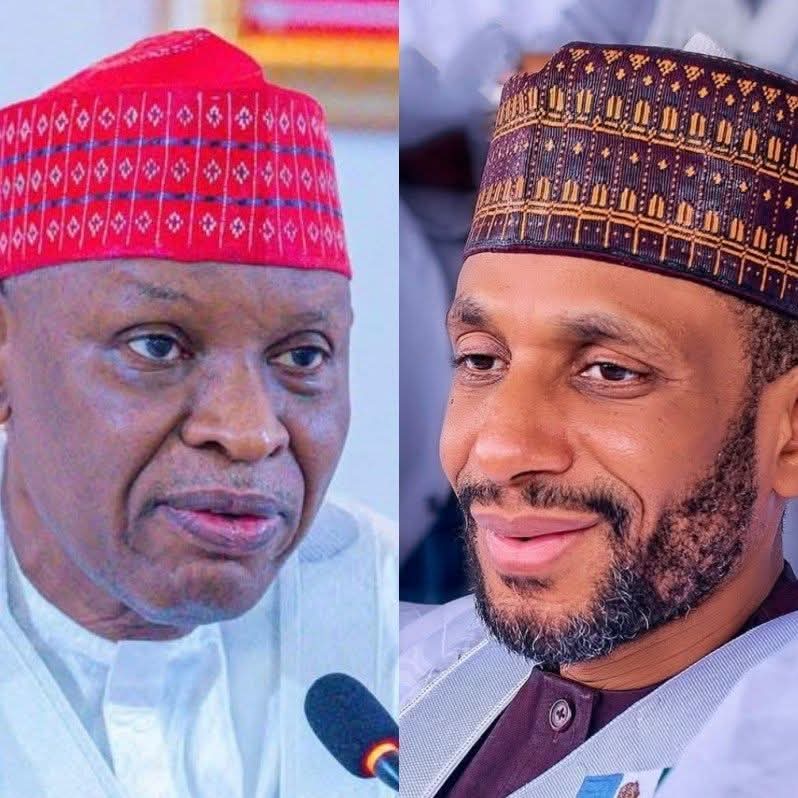
I chose to caption this piece “2027 Loyalty Reloaded…” bearing in mind what His Excellency Governor of Kano State, Abba Kabir Yusuf said, to show his absolute confidence in his Deputy His Excellency Murtala Sule Garo, as governance pays back for loyalty.
It was at the instance of all federal political appointees meeting with the governor at Governor’s Lodge, Asokoro, Abuja, when the Governor bluntly announced to the faces and hearing of all that, “I have no regrets for choosing Garo as my Deputy in the last few months, and he has proven to be the right choice so far. I want to confirm to you that I have every confidence in him.”
This puts a halt to all speculations before picking HE Garo as Deputy Governor that, his loyalty could be divided when appointed as the Deputy Governor after the resignation of the former Governor, His Excellency Aminu Abdussalam Gwarzo.
To zip the mouth and bad intention of some politicians and to let everyone who cares to listen that, in less than four months, Governor Yusuf believes in HE Garo’s total and absolute loyalty, he picks him again to become his running mate come 2027.
He disclosed this during the meeting as disclosed by Sunusi Bature Dawakin Tofa Director General Media and Publicity, in a press release issued, that “Kano State Governor, Alhaji Abba Kabir Yusuf, has officially announced the nomination of his Deputy, His Excellency Murtala Sule Galadima Garo, as his running mate for the 2027 governorship election.”
The release discloses that, “He expressed satisfaction with the working relationship between them, noting that Garo had demonstrated competence, dedication, and a strong sense of responsibility in the discharge of his duties.” I now understand the main reason and wisdom behind Governor’s bold decision in sending his Deputy as his representative, in major events. Within and outside Kano.
If not because of this trust and confidence the Governor has in his Deputy he wouldn’t have sent the Deputy to stand for him, during the visit of the high-powered delegation from European Union Ambassadors, USA Independence Day held in US Embassy Abuja and the just concluded Northern Governors Security Summit, among many other equally important events. Only loyalty, from Deputy’s side and confidence from Governor’s side, give this golden opportunity.
Part of the testimony given by the Governor for his choice in HE Garo, as running mate for 2027 is for his “… outstanding loyalty, commitment, and unwavering passion for the development of Kano State since assuming office as Deputy Governor,” speaks volumes about Deputy’s place in both the heart of his principal, the Governor and the art of governance in the state. By now HE Garo understands most significantly and clearly that, loyalty pays. What pays the most, is trust in Allah’s overall decisions, as says repeatedly by the Deputy. All those close to him know what I’m saying exactly.
The release reiterated that, the Governor has all the backing and goodwill support for the Deputy, indicating the nadir of the confidence of the Governor in his Deputy. As the release reads, “The Governor also passed a vote of confidence on the Deputy Governor, describing him as a dependable partner whose contributions have strengthened the administration’s drive to deliver meaningful development across Kano State.”
As a responsible leader who cares about the the unity, strength and the survival of the party beyond election periods, he urged, “… party leaders, political appointees, and supporters to remain united and committed as the administration continues to consolidate on its achievements while preparing for the 2027 general elections.”
By whatever standard and measurement, the union between Governor Yusuf and his Deputy, Garo, started on sound footing with the full support, cooperation and honest engagement of the Governor. While the Deputy is paying back with true loyalty embedded with good substance.
This features stronger administration and focused leadership. The way HE Garo responds to party demands and governance, with the consent of his principal, the Governor, it becomes clearer that, it will be a finer, healthier and merrier 2027 and beyond.
Anwar writes from Kano
Tuesday, 14th July, 2026

President Tinubu Adds Days to Working Vacation, Returns at Weekend

Court Adjourns El-Rufai’s N1 billion Suit Against ICPC, AGF, Police

Tinubu Becomes First Post-1999 Nigerian President to Miss Three Consecutive UNGAs

FRAMAZAZ Foundation, Brigade Zumunci Train 50 Youths in Digital Entrepreneurship

UNGA81: Shettima Leads Nigeria’s Delegation to New York

95% of Governor Abba Kabir Yusuf’s Promises Have Been Fulfilled — CPS Interview By Musa Diso, In Kano

Bello Sharada: A Great Writer, A Bookish Soul, Gone Too Soon

NUT Launches ‘Go Public’ Campaign to Promote Public Education in Nigeria

Nigerians Are Tired of Promises’ — CAN Demands Action on Insecurity, Hardship In Eid-el-Maulud Message

Imam Jingir Sells Out, Deploys Muslim-Muslim Chants Minutes After ₦600 Million APC Windfall
President Tinubu Adds Days to Working Vacation, Returns at Weekend
Court Adjourns El-Rufai’s N1 billion Suit Against ICPC, AGF, Police
Tinubu Becomes First Post-1999 Nigerian President to Miss Three Consecutive UNGAs
FRAMAZAZ Foundation, Brigade Zumunci Train 50 Youths in Digital Entrepreneurship
UNGA81: Shettima Leads Nigeria’s Delegation to New York
95% of Governor Abba Kabir Yusuf’s Promises Have Been Fulfilled — CPS Interview By Musa Diso, In Kano
Bello Sharada: A Great Writer, A Bookish Soul, Gone Too Soon
NUT Launches ‘Go Public’ Campaign to Promote Public Education in Nigeria
Nigerians Are Tired of Promises’ — CAN Demands Action on Insecurity, Hardship In Eid-el-Maulud Message
Imam Jingir Sells Out, Deploys Muslim-Muslim Chants Minutes After ₦600 Million APC Windfall
-

 Opinion5 years ago
On The Kano Flyovers And Public Perception
-

 Features5 years ago
How I Became A Multimillionaire In Nigeria – Hadiza Gabon
-

 Opinion6 years ago
Kano As future Headquarters Of Poverty In Nigeria
-

 History5 years ago
Sheikh Adam Abdullahi Al-Ilory (1917-1992):Nigeria’s Islamic Scholar Who Wrote Over 100 Books And Journals
-

 Opinion5 years ago
My First Encounter with Nasiru Gawuna, the Humble Deputy Governor
-

 History5 years ago
The History Of Borno State Governor Professor Babagana Umara Zulum
-

 History5 years ago
The Origin Of “Mammy Market” In Army Barracks (Mammy Ochefu)
-

 News4 years ago
Federal University Of Technology Babura To Commence Academic Activities September