
News
Boy Forced To Live With Animals Rescued
By Muhammad Sharada
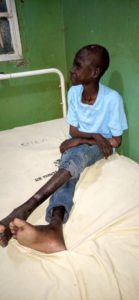
In the early hours of Sunday, August 9, 2020, a delegation from the Kebbi State Government took over the care of Jamilu Aliyu, a 10-year-old boy, forced by his parents to live with animals in a stable for two years.
Jamilu from Badariya in Birnin Kebbi Local Government Area of Kebbin State, Northwest Nigeria, was chained in a stable with goats and other animals for about two years, soon after his mother died.
The boy was under the care of his father and two stepmothers, who denied him food, sometimes for weeks or months and as a result, he had to eat food given to animals in a cowshed or feed on dung.
Neighbors discovered the boy and the news quickly spread through video footage.
Through the intervention of the International Federation of Women Lawyers and National Human Rights Commission, the government came in to rescue the lad who was emaciated, dehydrated, and partially deformed and behaving like the animals he lived with.
His father, Malam Aliyu Badariya, and his stepmothers were arrested and detained by the police in Kebbi, while he was taken to the hospital for medical attention.
Hajiya Zara’s Wali, the Special Adviser to the Governor Abubakar Atiku Bagudu of Kebbi State on Women and Social Development, visited the boy at Sir Yahaya Memorial Hospital, Birnin Kebbi and said: “Evaluation will be done by the doctors and any kind of problems diagnosed will be fully taken care of by the state government.”
A human rights lawyer, Mr. Hamza Attahiru Wala, said, “Jibirilu was met tied in an animal stall as he was eating dried animal faeces, the parents fabricated that Jibirilu has epilepsy.”
Human Angle an online Newspaper said The Chairman of Birnin Kebbi Local Government, Alhaji Aminu Ahmad SarkinFada, expressed shock over the development and pledged to complement efforts by the state government in treating and rehabilitating the boy as well as the prosecution of the parents.
He called on members of the community, particularly community leaders, to be vigilant and report any case of abuse to the relevant authorities.
Meanwhile, the state Governor, Mr. Abubakar Atiku Bagudu, expressed sadness over the development.
The governor long ago submitted a bill to Kebbi State House of Assembly for the domestication of the Child Rights Act for the protection of children but it has yet to be passed.





News
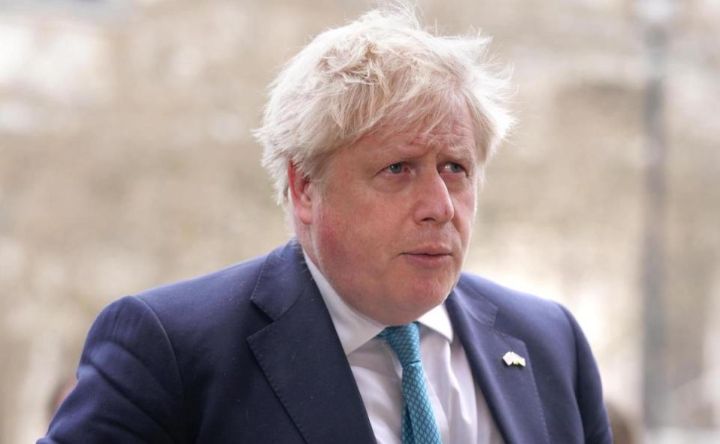
Ex-UK PM Boris Johnson Narrowly Escapes as Russian Drone Hits Warsaw-bound Train
By Yusuf Danjuma Yunusa
Ukrainian and Polish governments have accused Russia of launching drone strikes on the locomotive of a passenger train carrying 206 people headed for Warsaw on Sunday morning.
Ukraine said it forewarned the railway operators of likely drone strikes, adding that no one was hurt.
“The monitoring team gave the train crew advanced warning, and thanks to that, no one was injured,” Ukrainian railway operator, Ukrzaliznytsia, wrote in social media.
Ukrzaliznytsia said that a diplomatic train conveying VIPs such as a former British Prime Minister Boris Johnson; ex-CIA chief, David Petraeus, passed through the Yagodyn station shortly before the drone strike.
“Shortly before the locomotive was hit at the Ukrainian-Polish border, a diplomatic train was at Yagodyn station,” Ukrzaliznytsia said. “There were, among others, security advisers from several EU member states and former European leaders on board, including former UK Prime Minister Boris Johnson. In another train that was at Yagodyn station at the very moment of the attack was former CIA Director David Petraeus.”
The Warsaw-bound train was carrying 206 people, none of whom were Polish citizens.
Poland’s Foreign Minister Radoslaw Sikorski described the incident as an escalation.
“This is an escalation, this is another great challenge for Ukraine and for the hypothetical future victims of Russian aggression and this means that we should double our efforts to support victims of aggression,” Mr Sikorski said at a press briefing.
The train was transporting 206 individuals and there was no Polish citizen among
“The train is carrying 206 people. There are no Polish citizens among the passengers,” the operator said online. “After completing customs clearance, it will continue its journey towards Warsaw.”
The former UK leader advocated Russia’s frozen funds in Belgium to be transferred to Ukraine.
“I don’t know what warped logic drove Putin to blow up a stationary Ukrainian locomotive on the Polish border this morning,” Mr Johnson said. “When are we going to give them the air defences they need? Why won’t we unfreeze Putin’s cash and give it to Ukraine? There is more than €140 billion ($163 billion) in a Belgian bank account — and about £10 billion (€11.7 billion or 13.5 billion) in London.”
News
KANSIEC Chairman Advises Fruits Sellers Association to Modernize Business
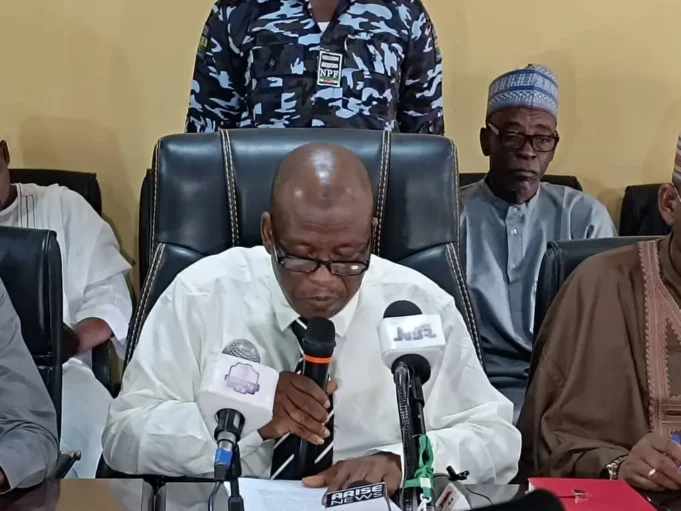
The Fruits Sellers Association, Kano State Chapter, has been advised to develop a strategic plan within a specific timeframe to modernize its business operations.
The Chairman of the Kano State Independent Electoral Commission, KANSIEC, Professor Sani Lawal Malumfashi, gave the advice during a courtesy visit by members of the association to his office.
Professor Malumfashi stated that the fruit business anywhere in the world serves customers from all backgrounds, both rich and poor, due to the importance of fruits in food consumption.
He maintained that the association should seek recognition across the three tiers of government in order to benefit from government policies and programmes.
The KANSIEC Chairman added that the present administration under the Executive Governor, Alhaji Abba Kabir Yusuf, is transforming Kano into a modern metropolitan city with many parks. He said fruit sellers should secure designated spaces around the corners of flyovers across the city.
Earlier, the Chairman of the Fruits Sellers Association of Nigeria, Kano State Chapter, Alhaji Safiyanu Abdullahi, said they visited KANSIEC to seek guidance on how to conduct free, fair, and peaceful elections within the association.
Bashir Habib Yahya
Media Aide to the KANSIEC Chairman
Date: 11/09/2026
News
Breaking :Former PDP National Chairman Alhaji Bamanga Tukur Is Dead
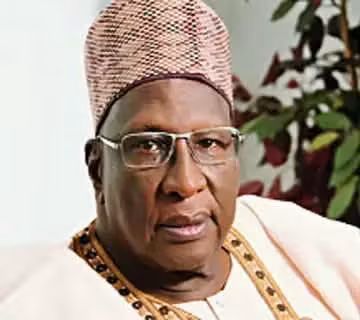
Former Chairman of the peoples Democratic party during Jonathan’s administration Alhaji Bamanga Tukur is dead .
A credible source in Yola the capital of Adamawa state informed Nigerian Tracker that Alhaji Bamanga Tukur passes on in Abuja.
The source said his body will later be conveyed to Yola the capital of Adamawa state for funeral at the palace of Lamidon Adamawa Alhaji Muhammad Barkindo .
Alhaji Dr. Bamanga Mahmud Tukur (CON) was a prominent Nigerian politician, businessman, administrator, and elder statesman who has had a towering impact on Nigeria’s socio-political and economic sectors for over six decades.
He was widely recognized for his roles as the former Governor of the old Gongola State, the former Minister of Industries, and the former National Chairman of the People’s Democratic Party (PDP).
Early Life and EducationDate of Birth: Born on 15 September 1935 in what is today Adamawa State, Nigeria.
Higher Education: He obtained a Master of Science (M.Sc.) degree from the University of Pittsburgh in the United States.
Honorary Recognition: He was awarded an honorary Doctorate Degree in Law (Honoris Causa) by Benue State University in Makurdi, Nigeria.
Traditional Titles: Reflecting his high regional and cultural status, he holds the distinguished traditional titles of Tafidan Adamawa and Wakilin Ganye in Adamawa State.
Career in Public Service & Governance
Nigerian Ports Authority (NPA):
Served as General Manager/Chief Executive from 1975 to 1982, managing port congestion and modernizing seaports.
Governor of Old Gongola State: Elected during the Second Republic in 1982, serving a brief term before the December 1983 military coup.
Minister for Industries: Served under General Sani Abacha’s military administration from 1993 to 1995.
Business and Continental Leadership Founder of BHI Holdings (Daddo Group),
Tukur expanded his economic influence across Africa:
Africa Business Roundtable (ABR): Founder, past president, and Life Patron.
NEPAD Business Group: Elected Chairman in March 2002.
International Maritime Stature: First African Vice President of the International Association of Ports and Harbours (IAPH)
PDP National Chairmanship (2012–2014)Elected PDP National Chairman in March 2012.

Ex-UK PM Boris Johnson Narrowly Escapes as Russian Drone Hits Warsaw-bound Train

From Desks to Degrees: How Governor Yusuf Is Bankrolling A Generation’s Future

KANSIEC Chairman Advises Fruits Sellers Association to Modernize Business

Breaking :Former PDP National Chairman Alhaji Bamanga Tukur Is Dead

Nigeria’s Oil Output Hits 1.573m bpd as OPEC Production Rises–Report Says
From World’s 9th Most Populous City to Perfect: As Gov Yusuf Revisits Kano Master Plan

95% of Governor Abba Kabir Yusuf’s Promises Have Been Fulfilled — CPS Interview By Musa Diso, In Kano

Bello Sharada: A Great Writer, A Bookish Soul, Gone Too Soon

Call Me Chairman, Not Tony!’: Elumelu’s Blunt Correction of Trainee Splits Internet as Old Video Sparks Double Standard Fury

Nigerians Are Tired of Promises’ — CAN Demands Action on Insecurity, Hardship In Eid-el-Maulud Message
Ex-UK PM Boris Johnson Narrowly Escapes as Russian Drone Hits Warsaw-bound Train
From Desks to Degrees: How Governor Yusuf Is Bankrolling A Generation’s Future
KANSIEC Chairman Advises Fruits Sellers Association to Modernize Business
Breaking :Former PDP National Chairman Alhaji Bamanga Tukur Is Dead
Nigeria’s Oil Output Hits 1.573m bpd as OPEC Production Rises–Report Says
From World’s 9th Most Populous City to Perfect: As Gov Yusuf Revisits Kano Master Plan
95% of Governor Abba Kabir Yusuf’s Promises Have Been Fulfilled — CPS Interview By Musa Diso, In Kano
Bello Sharada: A Great Writer, A Bookish Soul, Gone Too Soon
Call Me Chairman, Not Tony!’: Elumelu’s Blunt Correction of Trainee Splits Internet as Old Video Sparks Double Standard Fury
Nigerians Are Tired of Promises’ — CAN Demands Action on Insecurity, Hardship In Eid-el-Maulud Message
-

 Opinion5 years ago
On The Kano Flyovers And Public Perception
-

 Features5 years ago
How I Became A Multimillionaire In Nigeria – Hadiza Gabon
-

 Opinion6 years ago
Kano As future Headquarters Of Poverty In Nigeria
-

 History5 years ago
Sheikh Adam Abdullahi Al-Ilory (1917-1992):Nigeria’s Islamic Scholar Who Wrote Over 100 Books And Journals
-

 Opinion5 years ago
My First Encounter with Nasiru Gawuna, the Humble Deputy Governor
-

 History5 years ago
The History Of Borno State Governor Professor Babagana Umara Zulum
-

 History5 years ago
The Origin Of “Mammy Market” In Army Barracks (Mammy Ochefu)
-

 News4 years ago
Federal University Of Technology Babura To Commence Academic Activities September