
News
Over 100 Traditional Leaders Attend Emir Bayero’s Coronation
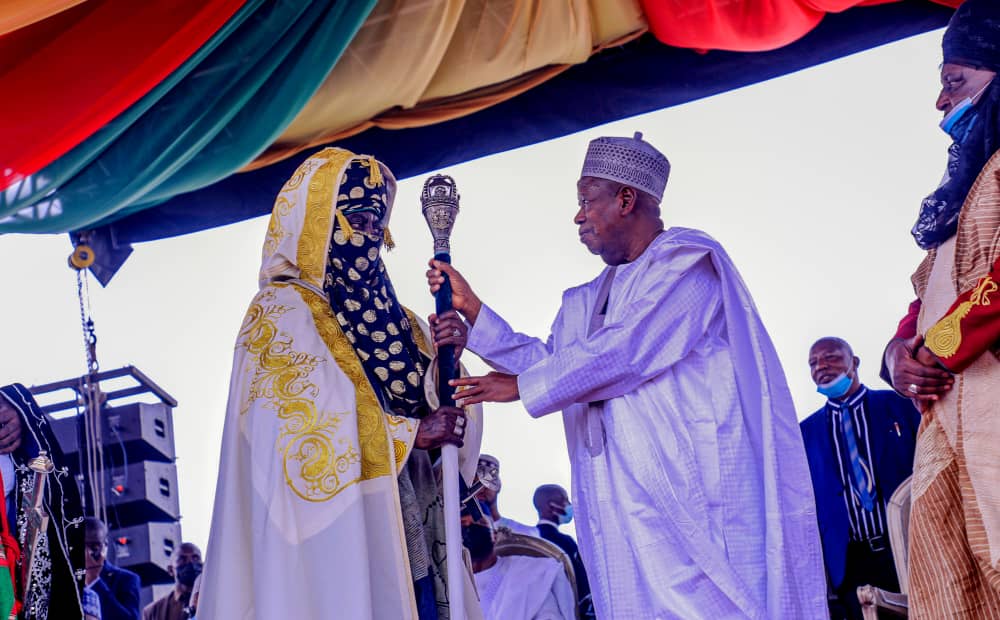
Bayero, President Muhammadu Buhari, who was represented by the Vice President, Prof Yemi Osibanjo, thanked governor Abdullahi Ganduje of Kano state, for the appointment and coronation of the Emir as generational change.
He made the statement during the Coronation of Emir Bayero held at Sani Abacha Indoor Stadium, Saturday, “Your Excellency Abdullahi Umar Ganduje I congratulate you on this period of joy as you midwifed a generational change of guards…with the swearing-in and handing over of the Staff of Office to the new Emir of Kano, Alhaji Aminu Ado Bayero.”
He said “It is for me a special privilege to be in this city of proud history of exquisite culture to represent the President of the Federal Republic of Nigeria, President Muhammadu Buhari to witness this historic Coronation of Alhaji Aminu Ado Bayero, as the 15th Fulani Emir of Kano.”
“Your Royal Highness I need not to say to you that this city of Kano is not ordinary city in both historical and modern times. Kano has always been revered as a major commercial and economic centre in Africa.
And a melting pot of diverse tribes and cultures, assimilated into a robust, vibrant and cohesive whole,” he observed.
He continued appreciating that, “It is only with the tolerance of the culture of Kano where opposite ideas can co-exist peacefully. That you could have a thriving free market economy, with several Millionaires and yet also be the best of the radical centre left of political ideas.”
Adding that, “This is afterall the city of the socialist man of the masses, Malam Aminu Kano and many of his disciples. And Kano is also the home of the capitalist richest man in Africa, Alhaji Aliko Dangote. From wherever you come to Kano, you must feel at home.”
In a letter from President Buhari to the Emir, that was read by the Chief of Staff to the President, Professor Ibrahim Gambari, said “I wish to extend my whole hearted congratulation to you for your ascension to the throne of your forefathers, as the 15th Fulani Emir of Kano, from the Sullubawa clan, culminating in a well deserved installation that has just taken place here on this Saturday, 3rd of July, 2021.”
The letter states “Your coronation and turbanning is providential, because it is happening at a time in the history of our country when the prevailing social and political conditions resonate from the ascension of my friend, your late father, the Emir of Kano, Alhaji Ado Bayero. May his soul rest in perfect peace.”
“As I continue to pray for your success and look forward to your contribution to uplifting the people of Kano Emirate in particular, and the nation in general. I wish to assure you of my support for you to leave a sustainable legacy,” the letter concludes.
“All the traditional leaders who have gathered here, particularly the Sultan of Sokoto, have done us a great honour, with their presence. The last time we witnessed a historic event like this, was when the late Emir of Kano, Alhaji Ado Bayero, was handed over the Oath of Office here.”
“It is without any doubt that, all these celebrations up to this grand occasion are well received by the people of Kano. That is why wherever you go in Kano today people are celebrating because of this coronation. Which shows how people accepted this historic event.
It is accepted by our religious leaders, by our youth and women, by business community and by all segments of society, including his blood relations within the Emirates,” he said.
Governor Ganduje said “Your Highness we are very happy with the way you are conducting yourself and the way you operate in this exalted Emirate. We are witnessing how you are helping government on many developmental spaces. We are happy with that. We pray that may Allah guide and guard you on this throne.”
Appreciating further that, there was no doubt that the late Emir Ado Bayero who ruled for over 50 years, had promoted peace and stability in the state.
Adding that, “He worked with many governors in the state. He worked with many military governors and worked with civilian governors. Then worked again with other military governors.
Then from 1998 he worked with civilian governors. And there was no point in time when there was clash between the Emirate and the state.”
Explaining further that it was a very welcome development that the new Emir fits into the shoes of his late father, “…since his ascension to the throne he moved to continue with the good relationship that his father left between Kano Emirate and other Emirates across the nation.
He respected them very well in their palaces. That is why they said they would reciprocate back. This is why we are seeing them all here.”
Over 100 Emirs/traditional leaders from across the nation and other nations of the world graced the occasion. Many came from each of the six geo-political zones of the country.
Not less than 8 governors from parts of the country were physically at the occasion, these are governors of Jigawa, Katsina, Zamfara, Kebbi, Sokoto, Bauchi, Kogi, and Lagos were there.
The Senate President, Dr Ahmad Lawan and many Principal Officers of the National Assembly, alongside many members of the National Assembly were also there.
Those at the occasion included the Sultan of Sokoto Muhammad Sa’ad Abubakar III, Shehu of Borno, the Imperial Majesty Ooni of Ife, Adeyeye Enitan Ogunwusi, His Royal Majesty Oba of Benin, Omo N’oba Ewuare III, His Royal Majesty Ooni of Oni, and His Highness the Emir of Gwandu, among many others.
Many traditional leaders from Senegal, Tchad Republic, Cameroon, Niger Republic, and Ambassadors from South Africa, India among many other foreign diplomats were present at the grand event.
Ministers of the Federal Republic of Nigeria were there. Along heads of federal government agencies, departments and parastatals.
News
ADC Accuses APC of Avoiding Performance Record, Shifting Focus to Personalities Ahead of 2027
By Yusuf Danjuma Yunusa
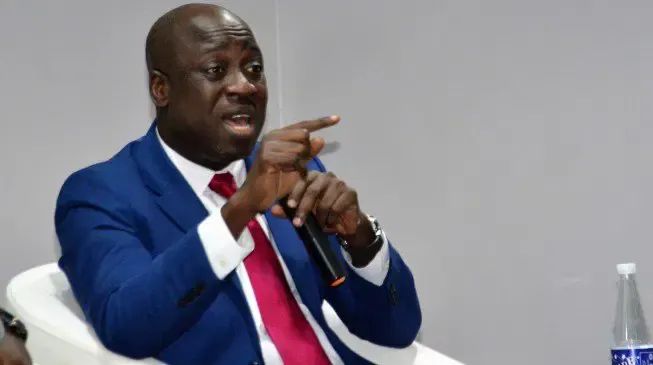
The African Democratic Congress (ADC) has accused the ruling All Progressives Congress (APC) of attempting to divert public attention from its economic and security record by obsessively focusing on opposition candidate Atiku Abubakar and former President Olusegun Obasanjo’s personal opinions.
In a statement issued Monday, ADC National Publicity Secretary Mallam Bolaji Abdullahi said the APC’s response to recent criticism from Catholic Bishops reveals a party unable to defend its governance record.
“The APC wants the 2027 election to be about personalities because it cannot defend its performance,” Abdullahi said. “They want this election to be about Obasanjo’s personal opinion of Atiku based on a distant past because they cannot defend Bola Ahmed Tinubu’s record based on current performance.”
The statement comes after Catholic Bishops reportedly raised concerns about worsening poverty, insecurity, and the rising cost of living during a recent meeting with President Tinubu. The ADC accused the ruling party of attacking the Bishops rather than addressing their substantive concerns.
“Whenever respected Nigerians point to the deepening poverty, worsening insecurity, rising cost of living, or the collapse of public confidence under this administration, the APC never answers for its record,” Abdullahi said. “Instead, it looks for someone to attack. Yesterday, it was the Catholic Bishops. Today, it is Alhaji Atiku Abubakar. Tomorrow, it will be someone else.”
The ADC challenged the APC government to answer specific questions about its economic management, including why food prices continue to soar despite proclaimed economic growth, why poverty has deepened, and why the government is spending 69% of revenue on debt servicing—a figure the World Bank has described as dangerously high.
The party also defended Atiku Abubakar’s record as Vice President under Obasanjo, noting that Nigeria experienced stronger economic growth and greater macroeconomic stability during that period.
“While President Obasanjo was in office, with Alhaji Atiku Abubakar serving as Vice President and Chairman of the National Economic Council, Nigeria experienced stronger economic growth, greater macroeconomic stability, stronger investor confidence, and a far more affordable cost of living than Nigerians endure today,” the statement read.
“Whatever political differences may now exist between the two men, that record remains a matter of public history and cannot be erased.”
The APC had not issued an official response to the ADC’s allegations at the time of this report. However, party officials have previously dismissed opposition criticism as politically motivated.
Political analysts note that the exchange reflects an intensifying campaign season, with both parties already positioning themselves for the 2027 presidential election. The ADC, while a smaller opposition party, has sought to align itself with the broader critique of the APC’s economic policies under President Tinubu.
News
Atiku Fires Back at the Presidency: “767 Factories Shut, 335 Others in Distress Under Tinubu”
By Yusuf Danjuma Yunusa
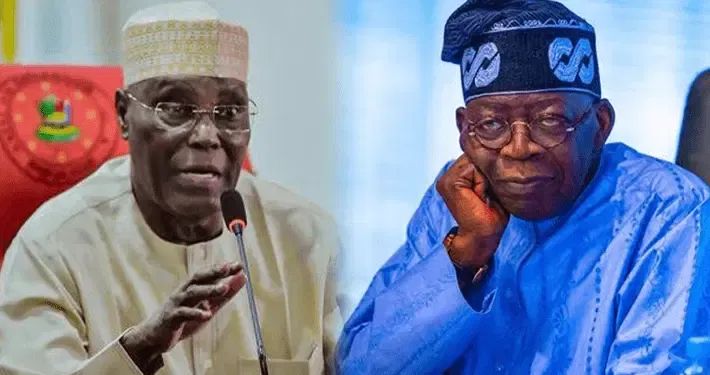
Former Vice-President Atiku Abubakar has accused the Tinubu administration of presiding over an increasingly hostile business environment, alleging that 767 factories had shut down while another 335 were operating under severe distress.
Mr Atiku said the closures and difficulties facing manufacturers contradicted the Federal Government’s claims that its economic reforms were restoring growth and improving the business environment.
The former vice-president, who is the presidential candidate of the African Democratic Congress, ADC, stated this in a response to the Presidency’s defence of President Bola Tinubu’s economic record.
In a statement issued by his Senior Special Assistant on Public Communication, Phrank Shaibu, Mr Atiku said the government’s claims of economic prosperity existed largely in official statements and had not been reflected in the experiences of businesses and ordinary Nigerians.
He said the administration was celebrating Gross Domestic Product, GDP, growth and other macroeconomic indicators while manufacturers, small businesses and households faced rising operating costs and declining purchasing power.
“The Presidency proudly announced that Nigeria’s GDP has increased significantly since the exchange-rate adjustment. We ask a simple question: Has the purchasing power of the average Nigerian increased?” Mr Atiku said.
“Are manufacturers paying less for energy? Have small businesses become more profitable? The answer, tragically, is no.”
He said the closure of hundreds of factories and the distress faced by many others reflected the pressure created by high energy costs, multiple taxes, expensive logistics, rising electricity tariffs and weak consumer demand.
Mr Atiku argued that government policies could not be described as successful if they increased public revenue while reducing the productive capacity of the economy.
“Government cannot tax its way into prosperity while simultaneously shrinking the productive capacity of the economy,” he said.
“Manufacturers are battling record energy costs. Small businesses face multiple taxes, rising electricity tariffs, escalating logistics expenses and declining consumer demand.”
The former vice-president said tax reforms should be designed to encourage production, create jobs and expand the tax base rather than place additional pressure on struggling businesses.
“A tax reform that expands government revenue while ordinary citizens become poorer cannot honestly be described as progressive,” he said.
He added that successful tax systems were built on productivity and economic growth, not by extracting more revenue from businesses and households already facing financial pressure.
Mr Atiku also questioned the government’s borrowing policy, saying the debate should not focus solely on Nigeria’s debt-to-GDP ratio but on the economic value generated by borrowed funds.
“No serious economist argues that borrowing is inherently wrong. Nations borrow. The real question is this: what has Nigeria obtained in return for the unprecedented debts accumulated under this administration?” he asked.
He said Nigerians had a right to demand evidence that borrowed funds were being used to improve infrastructure, create jobs, strengthen public services and raise living standards.
Mr Atiku noted that businesses continued to spend heavily on alternative sources of electricity, while high logistics costs and poor infrastructure remained major obstacles to production.
“After record borrowing and record budgets, businesses are still forced to spend enormous sums generating their own electricity,” he said.
“Logistics costs remain among the highest in Africa. Manufacturers continue to struggle under crushing operating costs, while many roads remain in deplorable condition.”
The former vice-president said infrastructure should be assessed by its economic impact rather than the number of projects announced or commissioned by the government.
“Every administration announces projects. Nigerians are interested in completed projects that reduce the cost of doing business, improve mobility, guarantee stable electricity and stimulate economic growth,” he said.
Mr Atiku also challenged the Presidency’s explanation concerning crude-backed financing arrangements, arguing that the government had admitted that future oil earnings had been committed in ways that limited the country’s ability to benefit from favourable crude oil prices.
He said Nigerians deserved full disclosure on the terms of such arrangements, including the volume of crude committed, repayment conditions, funds received and projects financed.
News
Presidency Sets Seven-Week Deadline for State Police Bill Draft

By Yusuf Danjuma Yunusa
The presidency has officially set a seven-week timeline for the completion of the draft executive bill on state policing, with the proposed legislation expected to reach President Bola Tinubu for review by September 3, 2026.
Femi Gbajabiamila, chairman of the presidential working group on the national policing bill, disclosed the schedule on Monday, confirming that the draft will be formally transmitted to the president exactly seven weeks from now.
Gbajabiamila’s announcement underscores the administration’s accelerated push to overhaul Nigeria’s centralized policing structure, a reform initiative that has gained significant traction amid growing calls for decentralized security architecture to address the nation’s complex law enforcement challenges.

ADC Accuses APC of Avoiding Performance Record, Shifting Focus to Personalities Ahead of 2027

Atiku Fires Back at the Presidency: “767 Factories Shut, 335 Others in Distress Under Tinubu”

WARAKA: The Story of Kano Sexual Assault Referral Centre (SARC)

Presidency Sets Seven-Week Deadline for State Police Bill Draft

How Kano Digitized Land Turns N50m to N750m Monthly

Alhaji Tijjani Rabiu Spikin: A Neighbour, Philanthropist, and Friend of Children

Is N100,000 Worth the Risk?’ Nigerians React to Soldiers’ Salary Increase

Goodwill, Visibility, and Operational Security: A Strategic Communication Reading of Senator Ahmad Lawan’s DIA Post

MAAUN Clarifies Status of Former Visiting Lecturer, Reaffirms Zero-Tolerance Policy on Sexual Harassment
Kano Governor Yusuf Shortlisted for Africa’s SANKOFA Award of Excellence in Infrastructural Development
ADC Accuses APC of Avoiding Performance Record, Shifting Focus to Personalities Ahead of 2027
Atiku Fires Back at the Presidency: “767 Factories Shut, 335 Others in Distress Under Tinubu”
WARAKA: The Story of Kano Sexual Assault Referral Centre (SARC)
Presidency Sets Seven-Week Deadline for State Police Bill Draft
How Kano Digitized Land Turns N50m to N750m Monthly
Alhaji Tijjani Rabiu Spikin: A Neighbour, Philanthropist, and Friend of Children
Is N100,000 Worth the Risk?’ Nigerians React to Soldiers’ Salary Increase
Goodwill, Visibility, and Operational Security: A Strategic Communication Reading of Senator Ahmad Lawan’s DIA Post
MAAUN Clarifies Status of Former Visiting Lecturer, Reaffirms Zero-Tolerance Policy on Sexual Harassment
Kano Governor Yusuf Shortlisted for Africa’s SANKOFA Award of Excellence in Infrastructural Development
-

 Opinion4 years ago
On The Kano Flyovers And Public Perception
-

 Features5 years ago
How I Became A Multimillionaire In Nigeria – Hadiza Gabon
-

 Opinion6 years ago
Kano As future Headquarters Of Poverty In Nigeria
-

 History5 years ago
Sheikh Adam Abdullahi Al-Ilory (1917-1992):Nigeria’s Islamic Scholar Who Wrote Over 100 Books And Journals
-

 Opinion5 years ago
My First Encounter with Nasiru Gawuna, the Humble Deputy Governor
-

 History5 years ago
The History Of Borno State Governor Professor Babagana Umara Zulum
-

 History5 years ago
The Origin Of “Mammy Market” In Army Barracks (Mammy Ochefu)
-

 News4 years ago
Federal University Of Technology Babura To Commence Academic Activities September