
Features
Zamfara First lady and her Passion in assisting the poor,vulnerable Women and Children
By Ahmed Attahir Gusau
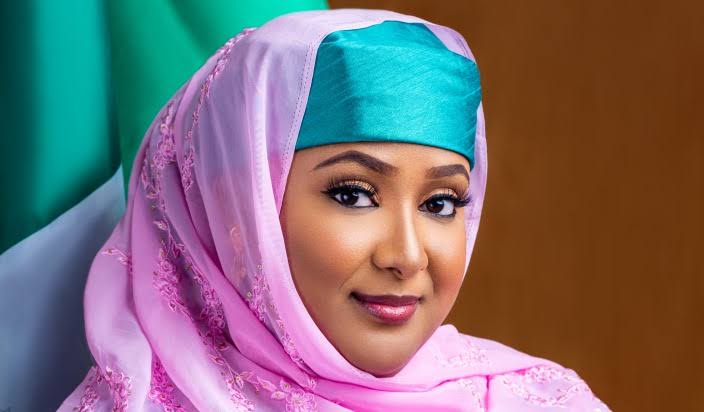
Hajiya Aisha Bello Mohammed Matawalle is the first lady and wife of the zamfara state Governor,she has been working day in day out with a view to assisting her husband to succeed in his human endeavors.
Ahmed Attahir Gusau looks at her unrelating efforts towards touching the lives of people particularly vulnerable women and children in zamfara state.
When Bello Mohammed Mattawale assumed office as Executive Governor of Zamfara State,he engaged his Wife Hajiya Aisha Bello Mohammed Matawalle the First Lady of the state who key into how best this administration can eradicate hardship among women particularly in rural areas for them to become self reliance at their respective matrimonial homes and those who do not have husbands who will take care of them and their children.She introduced Women Empowerment Scheme (WES) which was run by her Office with Monthly Cash transfer program, from inception of the Women Empowerments Program, a total of 28, 600 women have benefitted from the program across the 14 Local Government Areas of the state with the sum of N20,000 each.
Broadcast Journalist Found 3000 US Dollar,Handed To Its Owner
The Women Education Support Program had contributed immensely and vigorously towards improving livelihood and economic status of women in the state. Governor Bello Matawalle in his inaugural speech on the 29th May, 2019 has declared state of emergency on education Sector with emphasis on girl child education for the children of vulnerable poor parents to have access to basic education free.
Hajiya Aisha Bello Mohammed Matawalle an educationist, has played a vital role towards sustaining the policy as thousands out of school girls due to poverty syndrome have access to basic education across the state.
Considering the sorry state of all skills acquisition centers in the state which was abondoned by the previous government, Zamfara State Government under the leadership of Governor Bello Mohammed Matawalle had revived the centers with a view to enable Youths undergo some training skills acquisition Programme to get means of survival. The First Lady since inception to date, trained about 60 women on face mask and hand sanitizer production across the 3 senatorial zones, Provided 30 sewing machines and 30 hand sanitizer production materials as start-up with N10,000 cash to beneficiaries.
She also Trained 10 women on the production of reusable sanitary pads,Trained 10 women on the production of petroleum jellyProvided 10 sewing machines for tailors and 10 set of raw items for petroleum jelly production with N5,000 cash grant for start up respectively.
Marternal morality rates:
Zamfara State is one of the state previously battling with high rate of maternal and Child Mobidity and motality rates, the First Lady had introduced the new scheme tagged, First Lady Maternal and Child Care Health program, the Program is also one of her topmost priorities with free maternal delivery kits tagged as ‘Mama kit’ for pregnant women in which She distributed 10,000 kits across the 14 local Government Areas in Zamfara state.The Mama Kit bag contains unisex baby clothing, Ankara clothing for Mother, Pampers, sanitary pad , baby skin care products(Lotion , oil, Soap, Powder , petroleum jelly) , for use after child birth .
She donated relief materials to families affected by flood in Bungudu local Government rural communities.The package includes:rice, carton of noodles, mats ,buckets, washing soap, bathing soap, detergents, petroleum jelly, Ankara, etc.Facilitated the production of 10,000 reusable face mask for the state government by the trained mask up zamfara trainees.
The First Lady has always been at the fore-front in the campaign against Gender Based Violence considering the fact that She is an active member of the Nigerian Governors Wives against Gender Based Violence Forum. She is currently championing the adoption of the Child Rights Act, which due to her influence, the state government have already commenced the review of the draft document with all the relevant stakeholders for speedy approval.
The First Lady had also implemented activities in commemoration of the 16 days of activism which include, flag off of the 16 days of Activism in support and solidarity with the First Lady’s Initiatives on ending Gender Based Violence by the Executive Governor of the State, Dr. Bello Muhammad Matawalle.
The committee comprise of all the relevant stakeholders that will push for the change towards ending violence against women and children .The First Lady is chairing the committee while the permanent Secretary of the Ministry for Women Affairs is the secretary of the committee while a road walk on the campaign for ending violence against women and Children was conducted with the Executive Governor of the State.Meeting with relevant stakeholders on the collation of a consolidated GBV data from the relevant stakeholders.
She had also Supported Zamfara Sexual Assault Referral Centre in Gusau with N300,000 for the purchase of Medical Supplies .The supply will be used for Rape victims in the state.
The Zamfara State First Lady Hajiya Aisha Bello Mohammed Matawalle had visited about 50 almajiri schools in the 14 LGAs and donated clothes ,food items and mats and blankets as well as Participated in the National conference on repositioning the Muslim Family for National Development organized by the Nigerian supreme council for Islamic Affairs in conjunction with Aisha Buhari’s Future Assured in AbujaDistributed Rams and clothings as sallah gifts to 5,000 poor and vulnerable families during the two eid celebrations.Renovated islamiyya schools in kaura Namoda and Gusau Local Government Areas.
During the period of the Corona Virus pandemic that spanned almost throughout the year 2020 as well as ravaging the socioeconomic potentials of the entire Nigerians and all over the World, the Zamfara State First Lady had swung into action and initiated programs to alleviate the effect of the lockdown on vulnerable women and children which includes, Distribution of 10,000 Personal protective Equipment such as face masks, hand sanitizers, hand gloves and liquid soap.Sensitization leaflets in the local language and hand gloves to women within Gusau and across the 14 Local government areas in order to protect them from exposure as well as reduce the risk of spread of the virus in their respective communities.
Notwithstanding, the First Lady had also Distributed some Palliatives to women throughout the period which comprised rice, millet, sugar, cooking oil, soap and textile materials to over 10,000 families as well as face masks and hand sanitizers at orphanage , and to the public on the road, market places among others.
Commemoration of Walk away cancer dayAward Ceremony for women Achievers on International women’s Day.Facilitated a high level advocacy meeting of children with the Executive Governor to mark the children’s day celebration , as part of efforts to give children a voice.Road walk was conducted to mark the “International day on the elimination of sexual violence in conflict’’.Supported 20 widows with N20,000 financial support to mark the observance of International Widows Day.
On world Menstrual Day, Hajiya Aisha Bello Mohammed Matawalle had also supported young school girls with sanitary pads, N5,000 cash and a health talk on hygiene during menstruation for their overall well-being in collaboration with the Northern Governors Wives Forum.Celebrated Democracy Day to measure achievements , analyze challenges and proffer solutions in governance and Marked day of the African child via social media campaign on access to child friendly justice systems in Africa.
However, in commemoration of the world humanitarian day the First Lady Hajiya Aisha Bello Mohammed Matawalle has collaborated with the 14 LGA chairmen wives forum in Zamfara State, and donated N800,000 in cash, 200 Ankara, and 200 packs of noodles to displaced women and children in camp.
Looking at Hajiya Aisha Bello Mohammed Matawalle efforts for boosting the morale decadence of women and children in all aspects of human endeavors, the Governor’s wife is no doubt bringing positive changes as regard to poverty reduction, wealth creation and peaceful coexistence among women and human development, hence the need for her counterpart Governors Wives to copy from her for better future generations in the Country.
Features
EVERY WOMAN IS HER EXCELLENCY: GIRL’S GATE INITIATIVE BRINGS THE CONVERSATION ON INCLUSIVE LEADERSHIP TO THE FOREFRONT
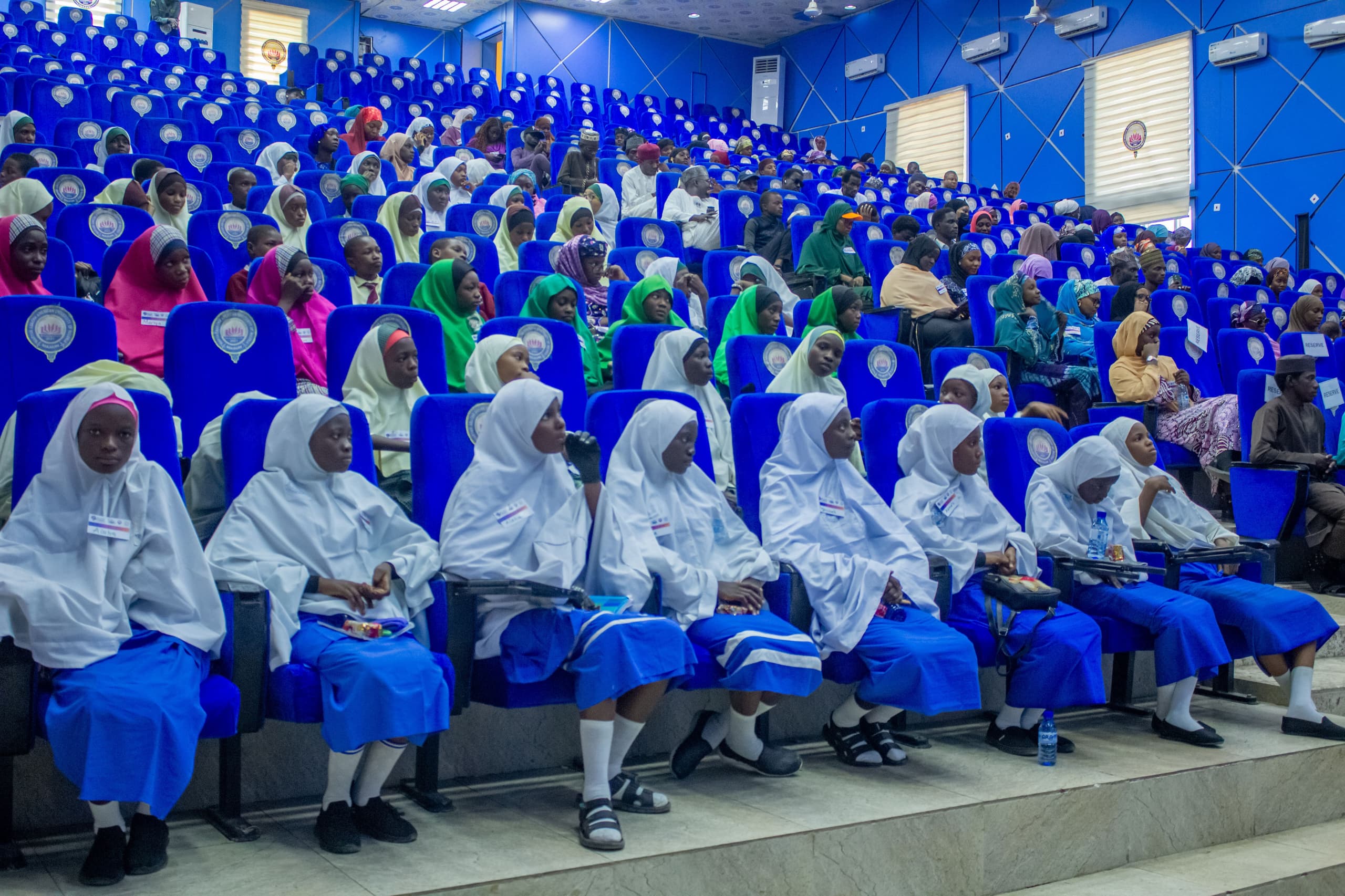
At SHE IS THE FUTURE CONFERENCE 4.0, Girls’ Gate Initiative brought together women leaders, professionals, advocates and young people to examine women’s representation, leadership opportunities and the importance of making decision-making more inclusive.
Who gets to lead? Whose voices are heard when important decisions are made? And what would it take to ensure that women and girls are not just represented, but are able to influence the decisions that shape their lives and communities?
These questions were at the heart of the fourth edition of the SHE IS THE FUTURE CONFERENCE, organised by Girls’ Gate Initiative for Empowerment and Development (GGI) on 21 November 2026 at Maryam Abacha American University of Nigeria (MAAUN), Kano Campus.
Held under the theme “Inclusive Leadership: Every Woman is HER Excellency,” the conference created a platform for conversations around women’s leadership, representation, civic participation and the importance of preparing young people, particularly girls, to take up leadership roles.
The theme was built around an important idea: leadership should not be determined by gender, background or social position. Women and girls should have opportunities to contribute their knowledge, experiences and perspectives to decisions affecting their families, institutions, communities and the wider society.
For Girls’ Gate Initiative, this conversation is closely connected to its broader commitment to girls’ empowerment, education, leadership development and meaningful participation.
The conference featured a keynote presentation by Dr Khadija Sunusi Gumbi, Keynote Speaker and Co-Convener, who addressed the theme of inclusive leadership and women’s participation in decision-making.
The presentation contributed to the wider conversation about the need to recognise women’s leadership potential, address barriers to participation and create environments where women can contribute meaningfully across different sectors.
The discussion was particularly relevant in considering how leadership opportunities are created, who has access to them and how institutions can become more inclusive.
A major part of the programme was the panel session titled “Women’s Leadership Journey from Lived Experiences.” Rather than approaching leadership only as a question of titles and positions, the session brought attention to the experiences, challenges and perspectives of women navigating different professional and social environments.
Moderated by Dr Hadiza Shettima, the panel featured Her Worship, Aisha Ismail; Jamila Musa, Gender and Community Inclusion Specialist and SRHR Advocate; Simbiat Bakare, representing RFLD virtually; and Bilkisu Ado Zango, a journalist, communications professional and disability rights advocate.
The diversity of the panellists’ backgrounds allowed the discussion to consider leadership from different perspectives, including professional experience, gender inclusion, disability rights and women’s participation in public life.
A key issue running through these conversations was the distinction between simply having women represented and ensuring that their contributions are taken seriously. Meaningful inclusion requires more than inviting women into leadership spaces; it requires recognising their voices, experiences and capacity to influence decisions.
The discussion also brought attention to the importance of including women with disabilities in leadership conversations and ensuring that inclusion extends beyond statements of commitment to practical opportunities for participation.
The conference did not limit the conversation to women already occupying leadership positions. It also turned attention to the girls and young women who will shape the next generation.
Students from Bayero University Kano (BUK), Khalifa Isyaku Rabiu University (KHAIRUN), Northwest University and Maryam Abacha American University of Nigeria (MAAUN), alongside students from more than 10 selected secondary schools, participated in the conference.
Their involvement reflected the importance of introducing leadership conversations to girls early and allowing them to interact with different experiences, perspectives and possibilities.
For many young participants, such platforms provide opportunities to ask questions, engage with people from different professional backgrounds and begin considering the roles they can play in their communities.
The conference also featured the Presidential Mock Debate, where students representing the FGC Party and MIA Party presented their manifestos and discussed issues affecting Nigeria. The exercise, followed by a mock election supervised by the Girls Independent Electoral Commission (GINEC), provided practical exposure to leadership, public speaking and democratic participation.
These activities reinforced the conference’s wider message that young people should not only be encouraged to aspire to leadership but should also have opportunities to practise participation and develop the skills needed to take responsibility.
Another major highlight was the launch of the HER EXCELLENCY Project, further reflecting GGI’s commitment to promoting girls’ empowerment and leadership.
The conference also featured a documentary highlighting the stories of Asiya and Sadiya. Through their experiences, dreams and aspirations, the documentary brought a human perspective to the broader conversations about girls’ opportunities, education and personal development.
For Huzaifa Jamil Kmata, Executive Director of Girls’ Gate Initiative and Convener of the conference, the vision is to create platforms where girls and young people can develop confidence, express themselves, engage with important issues and participate in shaping their future.
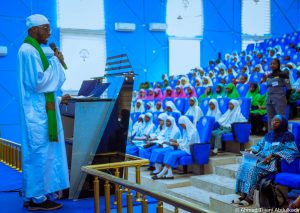
Huzaifa Jamil Kofar Mata
In his welcome address, he emphasised the importance of moving beyond conversations about empowerment to creating opportunities that allow young people to take an active role in their communities and society.
That vision is reflected in the conference’s approach: bringing together established voices and emerging leaders, connecting discussions to practical experiences and ensuring that girls are part of conversations about the future they will inherit.
Since its first edition in 2023, SHE IS THE FUTURE has provided a platform for young people to engage with issues around education, girls’ empowerment, technology, innovation and leadership.
The fourth edition expanded that conversation by placing particular emphasis on inclusive leadership, women’s representation and civic participation.
But the question raised by the conference extends beyond one day or one gathering. How can institutions, communities and society create environments where women and girls have genuine opportunities to lead? How can young people be prepared to participate in decisions rather than remain spectators? And how can the experiences of those often excluded become part of the decisions that affect everyone?
These are questions that require continued engagement, collaboration and practical action.
For Girls’ Gate Initiative, the message behind “Every Woman is HER Excellency” is not simply about giving women titles. It is about recognising their capacity, creating opportunities for their participation and ensuring that leadership spaces reflect the diversity of the people they serve.
The conference offered a platform for that conversation, bringing together women with lived experiences and young people with aspirations for the future.
Because inclusive leadership is not achieved when women are merely invited to the table. It is achieved when their voices help shape the decisions made there and when the next generation has the opportunity to take its place.
Features
Why I want To Rewrite Kannywood’s Playbook – Dan Hausa

By Saif Ibrahim, Kano
Who is Dan Hausa?
I am Kamilu Ibrahim born 31 years ago, but most people know me as Dan Hausa. I was born in Fagge, Kano State, and from the very beginning I knew I wanted to tell stories that reflect the realities of my people. I trained at the High Definition Film Academy in Abuja, SAE Institute, and also took part in the U.S. Embassy’s Filmmaking for Impact program. I join the fikm making industry and started directing in 2017 because I wanted full control over how my stories are told.
Can you tell us a bit about yourself and your journey into film directing?
My journey began with a love for storytelling—I started as a scriptwriter, then worked closely with experienced filmmakers before directing my first film. Over the years, I’ve learned that directing isn’t just about cameras and lights, but about understanding people, culture, and the power of narrative.
Growing up, I saw how films could educate and inspire people. In Arewa, cinema is more than entertainment—it’s a mirror of society. I wanted to use that mirror to reflect our values, challenges, and hopes. That desire to make meaningful films pushed me into directing.
What sets your work apart in today’s Kannywood?
For me, it’s about merging modern cinematic techniques with our Hausa cultural identity. I love bold visuals and tight storytelling, but I never want to lose that traditional heartbeat of my origin. My goal has always been to raise our production quality to international standards while staying true to our roots”, proof of that is clear in my current and biggest project, “Wata Shida.
How would you describe your directing style?
I like to call my style “realism with purpose.” I focus on authenticity—every scene, every performance, every frame must feel true to life. But I also ensure that there’s always a message, something the audience can take home and reflect on.
Can you highlight some of your notable works?
Sure, there is Wata Shida which is currently airing and has an overwhelming response from the public and the likes of Lulu Da Andalu a myth-inspired adventure series showing on AREWA24 and YouTube. YouTube pushed us to think bigger in terms of story and production. Mijin Hajiya earned me Best Director at the 2024 Kano Entertainment Awards, while Tataburza made waves at film festivals. Earlier films like Bakon Yanayi (2019) and my debut Kulba Na Barna (2017) helped me define my style. My latest project, Amaryar Lalle, starring Rahama Sadau, premieres August 2025 on Sadau Pictures TV. Each project is a step forward in showing what Kannywood can achieve.
What awards and recognitions have you earned?
I have also been recognized by the Arewa5050 Awards and Kaduna International Film Festival (KIFF) for Lulu Da Andalu, which even won Best Indigenous Hausa Film. There’s also an AMVCA nomination for best Africanindigenous language , which is exciting because it means Hausa stories are getting wider attention.”
Who are your key collaborators?
Filmmaking is teamwork; TY Shaba has been a creative partner on several projects, especially on Lulu Da Andalu. I have WORKED with Rahama Sadau on Amaryar Lalle has been fantastic; she brings so much energy to the screen.”
What themes do you explore in your films?
I like telling stories where modern life clashes with traditional values—family conflict, cultural identity, gender roles. These are real issues in our society, and I try to explore them honestly but cinematically. I believe film should make people feel and also think.”
What is your next project?
I am working on Wata Shida Season 2, a story about a woman who enters a six-month sham marriage to protect her inheritance. It’s socially meaningful but also very entertaining. I will also continue with season 2 of “Amaryar Lalle.”
Can you tell us a little about your latest project?
This project is very close to my heart. It follows a young girl fighting to get an education in a society full of obstacles. Through her eyes, we see how family, tradition, and resilience collide, and how hope can survive even in the harshest situations.”
What inspired you to make this story?
Growing up, I saw so many bright young girls whose dreams were cut short just because they were girls. I felt a responsibility to tell this story—not as fiction, but as a mirror of what is happening around us.
How do you balance tradition and modernity in your work?
A: It’s about respect. I respect our traditions, but I also embrace new technology and ideas. In my films, I make sure traditional values are represented truthfully, while using modern techniques to improve production quality.
What challenges do you face as a director in Kannywood?
Budgets are often limited, and resources can be scarce. But the biggest challenge is sometimes societal misunderstanding of what we do as filmmakers. People forget that film is also an art form and a tool for change, not just entertainment.
Can you tell us your favourite project
Every project has its own special memory, but I’m proudest when a film sparks conversation or impacts people’s lives. For example, one of my recent films about youth unemployment led to community discussions and even small initiatives to help young people. That’s when I feel film is doing its job.
What advice would you give to aspiring directors?
Learn the craft—don’t rush. Watch films, study scripts, spend time on set even if it’s just to observe. Most importantly, stay humble and focused. Filmmaking is about patience, teamwork, and vision.
What should audiences expect from your upcoming projects?
Expect more powerful stories rooted in our culture, with better technical quality. I’m working on projects that tackle real societal issues, and I believe they’ll resonate with audiences not just in Arewa, but globally.
Features
Antenatal Care: Why some women misses several sessions

By Aisha Muhammad Rabiu
In many parts of Northern Nigeria, antenatal care is a vital step in ensuring the health of both mother and the unborn child. Yet, an increasing number of women are neglecting this crucial stage of pregnancy, putting themselves and their babies at serious risk, hence the high infant, mother mortality rate.
Health experts have been warning that antenatal visits help detect pregnancy complications at its early stage, provide essential supplements for healthy mother/child development, and educate mothers on safe delivery practices. But for some women, they find antenatal care as a burden either due to poverty or lack of awareness based on cultural practices and beliefs. As such antenatal remains a neglected priority.
In Kadawa, Fatima Sani, a 28-year-old expectant mother, admits she has not attended a single session of antenatal since the start of her pregnancy. she said “It’s not that I don’t want to go, but the clinic is far from my house, and my husband says we should save the transport money for delivery day. I just pray Allah protects me and my baby.”
From Dan Bare, Shago Tara precisely, Khairat a mother of 4 shares her reasons for not attending antenatal session even though she is fully aware that the session is very important to pregnant women. She said “I feel healthy, so I don’t see the need to go for antenatal. My mother gave birth to all her children at home without any clinic visits, and they all survived.”
In Rijiyar Zaki, Hadiza Mukhtar recalls her previous pregnancy, where she skipped antenatal visits entirely. “The nurses were rude to me when I first went. I decided I would not return. This pregnancy, I haven’t gone at all,” she confesses.
For Usaina Muhammad of Kurna, the problem is financial. “I can’t afford the registration fee, and I also have other children to feed. I know antenatal is important, but survival comes first.”
Meanwhile, Maryam Lawan of Layi Kaji reveals that misinformation has influenced her decision. “Someone told me that the iron tablets they give at the clinic make the babies grow too big, making delivery harder. So, I decided to avoid it altogether.”
Medical professionals emphasize that skipping antenatal care increases the risk of complications such as anemia, high blood pressure, infections, and even maternal or infant death. Dr. Ibrahim Musa, a gynecologist in Kano, warns: “We see many emergencies that could have been avoided if the mother had attended antenatal. Most of these cases arrive late, making it harder for the doctors to save lives.”
Experts and community leaders agree that raising awareness is key in addressing the matter. Antenatal care should be made more affordable, accessible, and culturally acceptable for all women. Religious leaders, health workers, and family members all have a role to play in encouraging expectant mothers to attend regular check-ups.
Neglecting antenatal care is not just a personal choice; it’s a public health concern that affects families, communities, and the future of the nation. Ensuring that every mother has the knowledge, resources, and support to seek antenatal care is a step toward a healthier society.
Aisha Muhammad Rabiu writes from Bayero University Kano (BUK) and she can be reached at Email: aishatama2020@gmail.com
Phone no.08084273341

WHY I WILL VOTE FOR ABBA

Kwankwaso Accuses Kano Governor Abba of Using EFCC to Intimidate Him, Block NDC Candidate

2027: After Clerics, Barau Mobilises 3,405 Traditional Rulers in Kano for Tinubu, Abba, Other APC Candidates

A Moment in Time-Binta Spikin

2027: Amupitan Raises Alarm over Threats to His Life, Warns RECs Against Operational Lapses

Kano’s War On Drugs: How Barr. Muhyi’s Taskforce Is Changing The Game

Begging in Northern Nigeria: What Future Are We Preparing for Our Society?

NDC Deputy Governorship Candidate Gives Kano Information Commissioner 48-Hour Ultimatum Over Alleged Defamation

Bauchi Govt Suspends Emir over Alleged Misconduct, Inaugurates Probe Panel

Senator Kawu Sumaila Commends Kano Drug Task Force, Donates ₦5m to Operatives, Supports Rescued Children
WHY I WILL VOTE FOR ABBA
Kwankwaso Accuses Kano Governor Abba of Using EFCC to Intimidate Him, Block NDC Candidate
2027: After Clerics, Barau Mobilises 3,405 Traditional Rulers in Kano for Tinubu, Abba, Other APC Candidates
A Moment in Time-Binta Spikin
2027: Amupitan Raises Alarm over Threats to His Life, Warns RECs Against Operational Lapses
Kano’s War On Drugs: How Barr. Muhyi’s Taskforce Is Changing The Game
Begging in Northern Nigeria: What Future Are We Preparing for Our Society?
NDC Deputy Governorship Candidate Gives Kano Information Commissioner 48-Hour Ultimatum Over Alleged Defamation
Bauchi Govt Suspends Emir over Alleged Misconduct, Inaugurates Probe Panel
Senator Kawu Sumaila Commends Kano Drug Task Force, Donates ₦5m to Operatives, Supports Rescued Children
-

 Opinion5 years ago
On The Kano Flyovers And Public Perception
-

 Features5 years ago
How I Became A Multimillionaire In Nigeria – Hadiza Gabon
-

 Opinion6 years ago
Kano As future Headquarters Of Poverty In Nigeria
-
 History6 years ago
Sheikh Adam Abdullahi Al-Ilory (1917-1992):Nigeria’s Islamic Scholar Who Wrote Over 100 Books And Journals
-

 Opinion5 years ago
My First Encounter with Nasiru Gawuna, the Humble Deputy Governor
-
 History5 years ago
The History Of Borno State Governor Professor Babagana Umara Zulum
-
 History6 years ago
The Origin Of “Mammy Market” In Army Barracks (Mammy Ochefu)
-

 News5 years ago
Federal University Of Technology Babura To Commence Academic Activities September