
Opinion
Why Digital Marketing is a Driving Force to Small Business in Nigeria

Harun Muhammad
Our world, today, is electronically connected. From China to Australia, Africa to the US, Europe to Russia, we are connected through the power of the internet web. This brings the ease of doing business and favours a significant increase in business profitability.
Why digital marketing?
Organizational goals and business models become achievable through digital technologies and social media platforms. Digital marketing is a form of marketing that solely drives market forces to market products on digital media platforms using digital technologies. These digital technologies are the Organization’s website, Mobile Applications, Pages of a company on social media, search engines, digital advertising platforms, emails, etc.
According to a report by the Nigerian Finder in 2020, Nigeria’s digital marketing is worth $2B. Looking at the huge increase of digital subscribers in Nigeria we can boldly say the figures are way bigger than this now. In Nigeria of today, at the comfort of your house, you could place an order of anything you want and be delivered to your doorstep. To the west and south, logistics companies are becoming one kind of big thing. Thanks to digital marketing.
Small Businesses and Digital Marketing in Nigeria
Nigeria’s business landscape is unarguably lucrative. We can talk about the unfavourable business environment later, but many businesses in Nigeria fight through ups and downs, ins and outs, ons and offs, to raise a formidable brand. Some of these brands are locally and internationally recognized.
For every nation’s economic prosperity, you will have a small business behind that silent success story. Is it in the US? In China or Germany? Mention any country that doesn’t passionately invest in digital legislation to uplift the status of its small businesses. In India, according to a report from the ministry of commerce, the micro, small and medium enterprises are the largest employers after the Agriculture industry.
But then, small businesses owners are being faced with the overwhelming issue of digital-know-how to integrate the art of digital marketing in their business. Every so often, when business kicks off, business owners make sins of relying on conventional ways of marketing like print ads, big signs on Billboards or even flooding their social media timelines with, sometimes, countless pictures of products.
While this marketing strategy is spontaneously tasking, how about me telling you there is a simpler and more stress-free way to marketing your business? That is adopting the concept of digital marketing.
U.N Lauds Dangote Women, Harps on Gender Roles for Global Economic Recovery
Believe me, small businesses can thrive exponentially by employing digital technologies to drive the marketing modules and target your potential customers before you Jack Robinson.
In March 2020, Nigerian Communication Commissions released statistics of 128.3 mobile network subscribers using the internet. This presents a huge opportunity for small businesses to reach out to potential customers online. No business, big or small, should neglect the monumental impact of digital marketing and locating customers using digital technologies.
The battalions of would-be customers that can be located on digital platforms are pretty much bigger than the type of customers you will identify locally and physically. Through the effective use of digital marketing, the probability of your business reaching a large number of people is measurably high.
Amongst other importance of digital marketing are: customer service, reaching out to a vast global marketplace, locating your potential customers most sufficiently, less cost when compared to conventional marketing methods, getting the right feedback to improve your business modules, etc.
Many business owners in Nigeria have this way imaginary thinking of they don’t enough resources to lunch a digital marketing campaign. Many of them prefer to hold onto the traditional means of marketing and believe that as time goes by customers will find them since they have a small number of customers.
While this is true, it is not the best market strategy to reach out to an enormous audience. Today, to give your brand/business a professional stand, you need an online presence. If your customers can’t find you online, then there is a possibility of them avoiding your business like a plague. This what people do: They first use Search Engines or Social Media Platforms for a product and if they find what they are looking for, that is the end – one-click and boom, they become your customers. Plus, they may even refer customers to you. That’s easy, you know!
If you live in Nigeria and have been avoiding digital marketing, you may have a rethink because that is where the money is – where you can drive your business goals to reach out to customers. And remember, competition is increasing rapidly.
You make a choice!
Harun Inuwa
Content Strategists









Opinion
Kano Governor Yusuf Shortlisted for Africa’s SANKOFA Award of Excellence in Infrastructural Development
By Abba Anwar
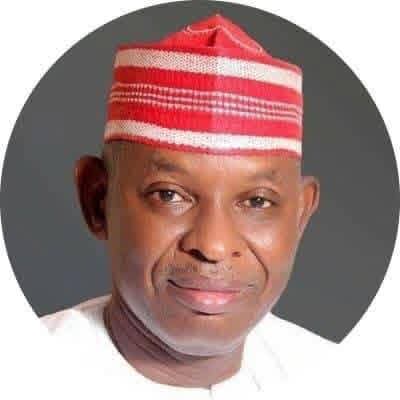
Kano State Governor Abba Kabir Yusuf makes a list of potential Awardees across West African sub-region, observed and screened by an African association named Réseau des Jeunes du Sahel pour le Progrès, le Développement et la Démocratie (Network of Sahel Youth for Progress, Development and Democracy), on infrastructural development in their respective states.
The top most Award from the association, called Sankofa Award of Excellence across various sectors, is given to people or leaders who excel in their respective areas of work or responsibilities.
With the recent disclosure made by the Commissioner of Public Procurement, Projects Monitoring and Evaluation, Nura Ma’aji Sumaila, on the state of infrastructural development and payments of contracts in the state, the association included Kano to be part of the states across Nigeria and West African countries, screened for an Award of Excellence.
Source close to the association reveals that, Governor Yusuf’s achievements in the area of infrastructural development, could not be neglected and the Governor stands a better position to be seen and amplified across the globe. As a result of his commitment and service to humanity.
Parts of the major reasons that informed the association’s decision to include Governor Yusuf for Sankofa Award of Excellence for Infrastructural Development in West Africa is his genuine inclusion of infrastructures that are human centred, modern, location specified and standardization process and procedures.
According to the source, the Screening Committee saddled with the responsibility of selecting qualified personalities across West Africa are in their final stage of releasing the result. Assuring that, under infrastructural development, Kano excels. Though not officially announced.
When Governor Yusuf gets this Award, he will be the second person from Nigeria who bags the Award. Last year the Deputy Senate President Barau I Jibrin, PhD, CFR, got the SANKOFA Award for Legislative Excellence in Africa. Coincidentally, Governor Yusuf who is also from Kano state, would be the second Nigerian in this category.
The President of the association Mr Fassoko Doumbia, from Mali, confirmed to my source that, from all indication, “Kano State Governor, from Nigeria, Mr Abba Kabir Yusuf is in the forefront of those screened for the Award.”
With this recognition of excellence, the Award places Governor Yusuf to be one of the best Nigerian governors. And the best across West Africa on infrastructural development. One good thing about the Award is, it will as well serve as an engine oil for state commitment and unwavering service delivery.
Mr Doumbia reveals further that “… it is amazing looking at the unmatched number of completed and ongoing projects as Kano has 799 completed projects and 709 projects at various stages of completion. It is encouraging to see that Governor Yusuf is executing over 1,508 developmental projects across all 44 LGAs.”
What keeps hope and commitment alive are the transparent monitoring, evaluation and effective payment to contractors. Of which out of N928 Billion of the total contract sum, the state has already paid over N600 Billion, that’s 64.7% payment rate.
Unlike in many states in Nigeria and West Africa. The association believes that Kano institutionalized transparency through the Ministry of Public Procurement, Projects Monitoring and Evaluation.
The screening committee appreciated Kano’s strategic and balanced infrastructure spread, between urban and rural areas plus improved security. For urban renewal it has the sum of N169 Billion. While there are 5km roads in 38 LGAs with the sum of N118 Billion. They appreciated the rural infrastructure across 44 LGAs with the sum of N397 Billion for roads, education, healthcare, and social services.
While under security infrastructure the total sum of N6.863 Billion for Neighborhood Security Watch offices in 36 LGAs. This assured deliberate, balanced development with value for money, quality delivery, and measurable impact on the lives of the people. All courtesy Governor Yusuf.
It serves also as indices of how Governor Yusuf makes the list for such Award, that his infrastructures are signals for the delivery of landmark, human-centered projects as Kano completed tangible projects that directly improve lives of the citizenry, with 40 metropolitan roads, 44 PHCs, 120 schools, 5 water plants, with the ongoing Dan Agundi and Tal’udu flyovers at over 80% completion.
It has also been discovered that, Kano enjoys proven technical leadership and political will. Which glaringly displays the political will and technical competence required to drive massive infrastructure without corruption or delays. This is part of the major engagements being identified, which eventually resulted into the popular Sankofa Award of Excellence.
Anwar writes from Kano
Saturday, 25th July, 2026
Opinion
Beyond the Numbers: What the Ekiti 2026 Governorship Results Reveal About Coalition Politics and Path to 2027
By Abass Sherifat Taiwo
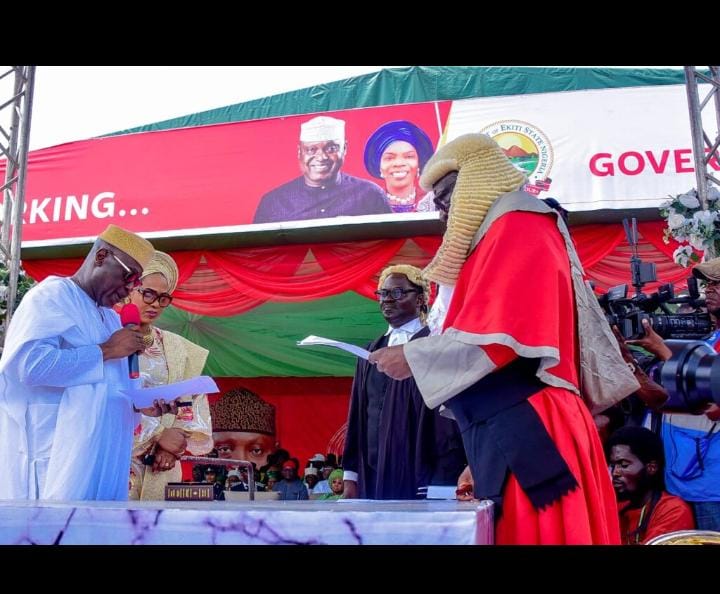
Returning Officer Adenike Oladiji, a professor and Vice-Chancellor of the Federal University of Technology, announced the results in the early hours of Sunday, at roughly 3:13 a.m. Incumbent Governor Biodun Oyebanji of the APC won comfortably, polling 319,224 votes across the state’s 16 local government areas. His closest challenger, the PDP’s Oluwole Oluyede, trailed far behind with 40,543 votes, while the ADC’s Dare Bejide came in third with 12,872 votes.
Of the 384,940 voters accredited for the election, 375,777 cast valid votes, a validity rate of about 97.6%, suggesting relatively few spoiled or rejected ballots.
Oyebanji’s win carries added weight as the first consecutive re-election in Ekiti’s history, a state known for unseating incumbents since 1999. His dominance was also total: he won all sixteen LGAs, and even his closest contest, in Ikere, was still a comfortable margin. His five strongest councils alone delivered nearly half his statewide votes, showing concentrated rather than thin support.
Elite alignment mattered too. For the first time, every living former Ekiti governor backed his re-election, leaving the opposition without any prominent defectors to rally behind. This unified backing functioned as a coordinated endorsement strategy, a visible signal of consensus that opposition parties had no comparable message to counter.
Between the opposition parties, PDP’s showing is more telling than ADC’s. ADC placing third as a newer platform isn’t surprising, but PDP, a long-established national party, barely crossed 3,000 votes in most councils, pointing to weak grassroots structure rather than just a bad cycle. The deeper question is whether this reflects a structural failure or a failure to sustain visibility and message presence at the ward level between election cycles.
Party | Votes | % of Valid Votes
APC | 319,224 | 84.95%
PDP | 40,543 | 10.79%
ADC | 12,872 | 3.43%
ADP | ~1,289 | 0.34%
Accord | 564 | 0.15%
LP | ~263 | 0.07%
AAC | ~188 | 0.05%
When the vote totals of every opposition party are combined, they amount to roughly 55,719 votes, or about 14.83% of all valid votes cast, a stark contrast to the APC’s dominant 84.95% share on its own. Even in a hypothetical scenario where every opposition party ran on a single, fully united ticket, their combined total would still fall short of the APC’s by approximately 263,505 votes. This gap illustrates just how commanding Oyebanji’s victory was: it was not simply a matter of a divided opposition splitting votes among several parties, but a result that would have withstood even total opposition unity.
Following the Ekiti result, APC framed it as proof of growing national support ahead of 2027, pointing to the rise in its vote totals in the state from about 187,000 in 2022 to roughly 318,000 in 2026, and projecting even higher numbers for Tinubu in 2027. Opposition parties, including the ADC and SDP, pushed back, arguing that Ekiti’s off-cycle, low-turnout nature makes it a poor predictor of a national contest.
Both claims need scrutiny. APC’s growth trend is real, but it happened in a state the party already governs, where incumbency and federal attention worked in its favour, so it says more about consolidating an existing stronghold than expanding into contested territory. The opposition’s caution is fair, but understates that APC’s structural advantages, incumbency and federal resources, aren’t unique to Ekiti and could repeat elsewhere. The more accurate takeaway is that Ekiti confirms APC’s strength where it already holds power, without proving it can replicate that in genuinely competitive states by 2027.
ADC’s third-place finish in Ekiti, just 3.43% of the vote, looks unremarkable on its own, but it only makes sense next to the party’s national story. A year earlier, ADC had positioned itself as the face of a new opposition coalition, pulling in heavyweight names like Atiku Abubakar and Peter Obi with the promise of a unified front against the APC. That promise hasn’t held: Obi and Kwankwaso have since defected to a rival platform, the NDC, while ADC battles leadership disputes and court cases that put its own 2027 participation in doubt.
That is the real lesson here for coalition politics as a communication problem, not just a structural one. ADC did not fail for lack of big names, it had plenty. What it could not do was hold one coherent message together once multiple egos and regional bases began pulling in different directions. Whether it can still become the platform it promised by 2027 is uncertain, but Ekiti is an early sign of a bigger unraveling.
Beyond Ekiti, the result speaks to a deeper pattern in Nigerian opposition politics: alliances are far easier to announce than to sustain. This suggests APC’s greatest advantage going into the next general election may not be its own performance, but the opposition’s continued inability to stay united. The near-total validity rate and one-sided outcome in Ekiti also raise questions about how genuinely competitive Nigeria’s state elections currently are, and whether low-turnout, off-cycle polls like this one can reliably signal national voter sentiment.
The Ekiti result is less a story about Oyebanji’s popularity alone than about the opposition’s structural fragility. Even a fully united opposition ticket would not have closed the gap, which means the problem isn’t vote-splitting, it’s organisational weakness, unstable coalitions, and the absence of a party capable of matching APC’s machinery and incumbency advantages. What Nigeria’s opposition needs before 2027 isn’t just structural unity, but a coherent, disciplined communication strategy capable of sustaining one message across factions, something no coalition has yet demonstrated. Until Nigeria’s opposition can build a coalition that survives contact with real electoral pressure, results like Ekiti’s are likely to repeat themselves in APC strongholds heading into 2027.
By Abass Sherifat Taiwo
Department of Development and Strategic communication University of Abuja
200level
Opinion
Governor Abba Kabir Yusuf Has Earned a Vote of Confidence on Education
By Hon. Muhammad Sanusi S. Kiru, FCIA
(Former Commissioner of Education, Kano State)
There comes a time in public discourse when fairness must prevail over partisanship and facts must take precedence over preconceived opinions. That moment has come in my assessment of the educational reforms being implemented by the administration of His Excellency, Governor Abba Kabir Yusuf.
As a former Commissioner of Education and someone who has consistently evaluated government performance with candour, I owe the people of Kano State an honest appraisal of the Governor’s performance in the education sector. After objectively reviewing the administration’s interventions from 2024 to 2026, particularly its determined efforts to address the acute shortage of teachers, I have reached an inescapable conclusion: Governor Abba Kabir Yusuf deserves a vote of confidence for his outstanding commitment to the development of education in Kano State.
One of the greatest challenges confronting our educational system has been the persistent shortage of teachers, resulting in unfavourable teacher-pupil and teacher-student ratios across many public schools. This problem has adversely affected the quality of teaching and learning for many years.
The present administration has confronted this challenge with courage and determination. Between 2024 and 2026, the government recruited or absorbed 8,715 permanent teachers and engaged 3,688 temporary BESDA Cohort V teachers, bringing the documented total to 12,403 education personnel. With recruitments by other education agencies, the overall figure is widely estimated at approximately 13,000 teachers.
This represents one of the largest teacher recruitment exercises in the history of Kano State. More importantly, it is a strategic investment in the future of our children and in the long-term development of the state. By substantially reducing the teacher deficit, the administration has strengthened both the basic and post-basic education subsectors and created a stronger foundation for improved educational outcomes. The new recruitment not only means making our classrooms more vibrant and ensuring that teaching is consistently taking place, but it also signifies a positive shift in the narrative reflected in monitoring reports, the annual school census, and national personnel data.
Looking at the tangible achievements now before us, particularly in education, it is clear that the administration has made significant and commendable progress. Leadership should always be judged by measurable accomplishments, and in this regard, the Governor has acquitted himself admirably.
One area where the administration must, however, improve is public communication. Many of its remarkable achievements have not received the publicity they deserve. A well-coordinated and effective publicity strategy would ensure that citizens fully appreciate the scope and impact of these landmark interventions.
As His Excellency prepares to personally attend the special ceremony for the presentation of appointment letters to the newly employed teachers on Tuesday, 21st July 2026, I consider it appropriate to congratulate him on this historic milestone. The ceremony is more than a presentation of appointment letters; it is a celebration of renewed hope for thousands of families, a reaffirmation of government’s commitment to quality education, and a significant step towards building a stronger educational system for future generations.
I wish His Excellency a successful and hitch-free ceremony and pray that Almighty Allah grants him wisdom, good health, and continued strength to sustain the ongoing transformation of the education sector. May this programme mark the beginning of even greater achievements in the quest to provide every child in Kano State with access to quality education delivered by competent and dedicated teachers.
Governor Abba Kabir Yusuf deserves sincere commendation for these giant strides. If this policy of continuous recruitment and investment in teachers is sustained, it will undoubtedly be remembered as one of the defining legacies of his administration. Future generations will look back on this period as a turning point in the educational history of Kano State.
I therefore extend my heartfelt congratulations to His Excellency and offer him a well-deserved vote of confidence. I also wish him every success as he formally presents appointment letters to these newly recruited teachers on Tuesday. May the occasion be memorable, successful, and another milestone in the march towards educational excellence in Kano State.

Arewa Youths Merger Group APC Raises Alarm Over Kachalla Maha,Seeks Barracks In Kano

Okonjo-Iweala to Tinubu: Borrow Cautiously, Reforms Should Create Jobs for Nigerians

U.S. Discontinues Routine Visa Services in Abuja, 24 Other African Cities

Breaking:Sardaunan Sokoto Alhaji Abubakar Alhaji Is Dead

ADC Youths Call on Atiku to Intervene Over Allegations of Injustice in Primary Elections, Demand Resignation of David Mark

Alhaji Tijjani Rabiu Spikin: A Neighbour, Philanthropist, and Friend of Children

What Saheeba Taught Me About Waiting for Love

Is N100,000 Worth the Risk?’ Nigerians React to Soldiers’ Salary Increase

Goodwill, Visibility, and Operational Security: A Strategic Communication Reading of Senator Ahmad Lawan’s DIA Post

MAAUN Clarifies Status of Former Visiting Lecturer, Reaffirms Zero-Tolerance Policy on Sexual Harassment
Arewa Youths Merger Group APC Raises Alarm Over Kachalla Maha,Seeks Barracks In Kano
Okonjo-Iweala to Tinubu: Borrow Cautiously, Reforms Should Create Jobs for Nigerians
U.S. Discontinues Routine Visa Services in Abuja, 24 Other African Cities
Breaking:Sardaunan Sokoto Alhaji Abubakar Alhaji Is Dead
ADC Youths Call on Atiku to Intervene Over Allegations of Injustice in Primary Elections, Demand Resignation of David Mark
Alhaji Tijjani Rabiu Spikin: A Neighbour, Philanthropist, and Friend of Children
What Saheeba Taught Me About Waiting for Love
Is N100,000 Worth the Risk?’ Nigerians React to Soldiers’ Salary Increase
Goodwill, Visibility, and Operational Security: A Strategic Communication Reading of Senator Ahmad Lawan’s DIA Post
MAAUN Clarifies Status of Former Visiting Lecturer, Reaffirms Zero-Tolerance Policy on Sexual Harassment
-

 Opinion4 years ago
On The Kano Flyovers And Public Perception
-

 Features5 years ago
How I Became A Multimillionaire In Nigeria – Hadiza Gabon
-

 Opinion6 years ago
Kano As future Headquarters Of Poverty In Nigeria
-

 History5 years ago
Sheikh Adam Abdullahi Al-Ilory (1917-1992):Nigeria’s Islamic Scholar Who Wrote Over 100 Books And Journals
-

 Opinion5 years ago
My First Encounter with Nasiru Gawuna, the Humble Deputy Governor
-

 History5 years ago
The History Of Borno State Governor Professor Babagana Umara Zulum
-

 History5 years ago
The Origin Of “Mammy Market” In Army Barracks (Mammy Ochefu)
-

 News4 years ago
Federal University Of Technology Babura To Commence Academic Activities September