
Politics
REJOINDER: DOSARA’S RE-THE ZAMFARA MODEL IS THE DISMAL TUNNEL SO SELF-DESTRUCTION.
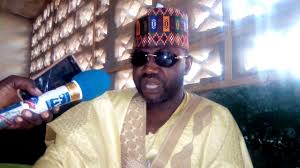
BY HON. BELLO SOJA BAKYASUWA MARADUN,
NATIONAL PRESIDENT, APC RESCUE MISSION.
Before I go much further let me first of all ask Hon. Commissioner Dosara some questions;
-As a commissioner of information who claimed to know it all about the security situation in Zamfara state, kindly tell Nigerians what happened when a team of government Officials led by the Speaker of the state Assembly took those students to Jangebe? What happened with the two people that were shot dead in Jangebe that very day?
-Why do you think that the federal Government banned all mining activities in Zamfara State and placed all of you under surveillance?
-Since you claimed to know too much, Explain to Nigerians the role of various Security Agencies in the released of Jangebe Students as against the role of your so called repented bandits whom your Governor Recognized more than the security agencies?
-Since you claimed to know too much, Explain to Nigerians the role of various Security Agencies in the released of Jangebe Students as against the role of your so called repented bandits whom your Governor Recognized more than the security agencies?
-We can accept the fact that he knows all on Insecurity situation in Zamfara State, because he was the Special Adviser on Public enlightenment in the past administration. Since your boss cannot inform Nigerians nor unmask the people behind Jangebe’s Abduction and many other Attacks Within the state. You should tell us please.
-By mentioning only the guard’s man the School involved is not enough and motive behind the rejection of National Security Council resolutions By Governor Matawalle Assembly Members.
Hon. Commissioner, Zamfara state people expect answers to the above questions as soon as possible!
Now going back to your disrespectful comments to professor Jibrin Ibrahim, I must confess that I’m not surprised with your actions for obvious reasons; first you just got the job and you needed to proof to your boss that you are on top of the situation, Secondly, your Job is to depending the image of the Government no matter what the cost.
However, in case you are stuck along the way, Channels Television is a reliable media organization in Nigeria and has covered live, every inch of the events leading to the release of the students, I left some links so that you will not say I’m also relying on social media as you did to professor, who obviously the facts I enumerated herein shows that professor don’t rely on social media to comment on issues as sensitive as security.
https://www.channelstv.com/2021/02/26/zamfara-school-abduction-mob-attack-journalists/
Hon. Commissioner, Zamfara state people expect answers to the above questions as soon as possible!
Now going back to your disrespectful comments to professor Jibrin Ibrahim, I must confess that I’m not surprised with your actions for obvious reasons; first you just got the job and you needed to proof to your boss that you are on top of the situation, Secondly, your Job is to depending the image of the Government no matter what the cost.
To people like you, whatever the boss does is right and question asked, to your people, depending the image of your governor is more important than the lives of hundreds and thousands of people leaving in constantly fear at every hour, every minute and every second in Zamfara state.
Who is a Professor?
Hon. Dosara , at this point I felt I should educate more about who professor is really is and what it takes to become one In a many countries including Nigeria; the title “professor” refers to an academician who is exclusively or mainly engaged in research, and who has few or no teaching obligations.
For example, the title is used in this sense in the United Kingdom (where it is known as research professor at some universities and professorial research fellow at some other institutions) as in the case of Professor Jibrin Ibrahim who is a fellow of the Democratic Institute.
Professor is usually the most senior rank of a research-focused career pathway and the position is often held by particularly distinguished scholars; thus the position is often seen as more prestigious than an ordinary Lecturer.
The scholarly method or scholarship is the body of principles and practices used by scholars and academics to make their claims about the subject as valid and Trustworthy as possible, and to make them known to the scholarly public.
It is the methods that systemically advance the teaching, research, and practice of a given scholarly or academic field of study through rigorous inquiry. Scholarship is noted by its significance to its particular profession and is creative, can be documented, can be replicated or elaborated, and can be and is peer-reviewed through various methods.
The Scholarly Method includes the subcategories of the Scientific Method, in which scientists prove their claims and the Historical Method, in which historians verify their claims.
Originally begun in order to reconcile the philosophy of the ancient classical philosophers with medieval theology, scholasticism is not a philosophy or theology in itself but a tool and method for learning which places emphasis on dialectical reasoning.
The primary purpose of scholasticism is to find the answer to a question or to resolve a contradiction. It was once well known for its application in medieval theology but was eventually applied to classical philosophy and many other fields of study.
The historical method comprises the techniques and guidelines by which historians use primary sources and other evidence to research and then to write history. The question of the nature, and indeed the possibility, of sound historical method is raised in the philosophy of history, as a question of epistemology. History guidelines commonly used by historians in their work require external criticism, internal criticism, and synthesis.
The above classical explanation of who is really a professor and what it takes to become one, shall clearly explain to you that a professor is not your room mate or someone whom you think can just made a statements without proper research about what he is writing, he has to be absolutely sure before making it public.
Who is Professor Jibrin Ibrahim?
Prof Jibrin Ibrahim is a Senior Fellow at the Centre for Development, CDD. He was the Director of the Centre for Democracy and Development and an outstanding scholar-activist with an international reputation. Prof. Ibrahim received degrees in Political Science from the Ahmadu Bello University, Zaria, Nigeria and a doctorate in Politics from the University of Bordeaux in France. Research Professor at the Institute of Federalism in Fribourg, Switzerland among several other academic accomplishments, Prof. Ibrahim has lectured, published and consulted extensively on democratization and governance in Africa. A well-regarded leader in civil society, Prof. Ibrahim is the Chair of the West Africa Civil Society Forum. He was also a member of the Electoral Reform Committee established by President Umaru Musa Yar’Adua and has observed elections in Nigeria, Ghana, Malawi, Togo, Senegal, Cote d’Ivoire, Liberia and Guinea for the Centre for Democracy and Development, Economic Community of West African States, the Carter Centre and the Commonwealth. Prof. Ibrahim has been the founding Director of Global Rights in Nigeria – the international human rights NGO in Nigeria and served in the leadership of several national and international advocacy and research networks of constitutional reform, electoral reform and civil society strengthening.
He has published many books, monographs and articles in refereed journals and has consulted extensively for the UNDP, DFID, and FOSTER, amongst many other agencies. He runs a weekly column “Deepening Democracy” in the Daily Trust, a Nigerian daily newspaper, and has sat on many editorial boards of learned journals.
Now I find it hard to believe that someone with the above qualifications and vast of experience will defend on social media to learn about what is happening in Zamfara State with all the news reports by mainstream media organization both foreign and domestic, besides, one doesn’t need to come to Zamfara to know what is happening, the facts are everywhere Mr. Commissioner. In facts there is no single day Nigerian reliable media organizations will not give report about the situation in Zamfara.
I shall give you several examples in due course which perhaps shows a failure of your office which include monitoring all media houses in respect to issues relating to your state.
Dosara’s Pay lip service to gain acceptance
Hon. Dosara in his attempt to protect his government and his boss, denied the facts that about 60 persons were abducted nearly 24 hours after the release of the Jangebe students. In his words:
“The Professor for example, quoted a report on the abduction of 60 persons including women and children at Ruwan Tofa in Maru local government area of the state. In that report, it was alleged that 40 people were killed which is a blatant lie, but yet, the Professor went ahead to use that report in his article, without clarification.”
While this story was widely reported by mainstream media organizations in Nigeria and its really confirmed the professor’s comments as in the below link story by Channels Television which you will agree with me is the Nigeria’s most reliable news source.
https://www.channelstv.com/2021/03/04/bandits-abduct-dozens-in-fresh-zamfara-village-attack/
Dosara also desperately reacted to the ‘None fly zone’ declaration in Zamfara state by the federal government when he related it to what the professor said in his article and I quotes:
“It was recently argued by the National Security Adviser to the president that helicopters were used in supplying weapons to bandits in Zamfara, hence declared the state “None fly Zone”. Did Prof Care to question who owns these helicopters and whose responsibility it is to monitor the nation’s airspace and movement of aircrafts?”
In this, how do you expect the prof. to go about asking you people to tell him who are responsible? Even if you know Mr. Dosara would you have disclosed it to the professor? Now let assume you don’t know but your governor does, when he told the press that Nigerians will be shocked to hear those behind this act, he went to further to say he will find time to grant exclusive interview regarding the sponsors of these banditry.
At this point, I asked you again Mr. Dosara, do you expect the prof. for the sake of research to pre-empt the Governor by going around asking who owns the Helicopters, who are those the Governor is referring to? The answer is no! He has to wait since the governor has made the following commitments was aired live on Channels Television.
The above link has answered many questions raised by the Hon. Commissioner, including the issues of peace initiative or dialogue by the bandits and role played by the so called repented bandits. If you listen carefully, you will come to realized how the Matawalle led Governmeent reduced all security agencies to almost nothing when he made mention that the release of the girls was as a results of the efforts of the repented bandits as against what the commissioner of police in the state said.
Technically this tells me Dosara has little or no knowledge of what is happening within the cabinet he was appointed to serve as its image maker… what a season Journalist! Someone that ought to be providing up to date information regarding the development in the fight against banditry is busy attacking a professor who is constructively pointing out your weak points when even your Governor could not come out to reveal those behind the act despite his promises of granting exclusive interviews to mention names; of course Channels Television gave him the chance instead he was only able to revealed the involvement of the school poor security guard while deliberately neglecting the major players, if at all they exist.
As a security expert, I do believed that you don’t negotiate with criminals, negotiating with criminals means given them exactly what they wanted and by so doing you are encouraging them to carry more arms to commit more atrocities. Again here is matawalle insisting on his peace dialogue.
The Politics of Dosara!
The newly appointed commissioner also in his response to the professor, did say that he wanted the Prof. To compare the present administration of Bello Matawalle with that of Abdulaziz Yari in terms of damages course to the state owing to the banditry activities.
“I also expected that the Professor should have made a comparative study and analysis of the damages that the bandits had caused to the people of Zamfara before the coming of the present administration, with the damages incurred during the just 2 year period of the present administration.
Did Prof Cares to question how the bandits come into the country or how they are getting their weapons?”
First of all I find that politically selfish statement from someone who serve as special Advicer on public affairs to Governor Yari, in one hand, while on the other hand I could say the failure of you and your likes to offer credible advice to the then government is largely responsible for the increasing security threats if at all it’s was that serious as you are saying.
In comparison however, has there been any incident of School kidnapped during Yari? The answer is no! Has the situation escalated to the state capital? Again the answer is no! Did Abdulaziz Yari Dismantle Vigilante Group whom most communities and villages look up to as the first responders whenever they were attacked? Again the answer is no.
All the above mentioned had happened and are still happening during your new found government Mr. Dosara.
On the issue of how the bandits came into the country and how they got their weapons, I guess Hon. Commissioner is trying to deny the facts that these bandits are some kind foreigners! While in that case the answer is staying with you… You tell us since you are the ones who knows the repented bandits, you can tell us if they are Nigerians or not.
Because to me, if they not Nigerians why bother negotiating with foreign enemy whom you have no knowledge of his identity apart from the AK47 rifle he is carrying around your villages and towns?
According to the Governor, no ransom was paid for the release of the students, that wonders me how can foreign bandits cross over to Nigeria just to kidnapped innocent students and then release them free of charge.
In my experience as a security expert, there is three reasons people take a hostage; Ransom, Human shield or for leverage and these reasons forms part of their demands that most be met before the victim is release. Therefore, there is point to fool people by telling them the bandits just gave you the students because of your persuasive techniques.
Mr. Commissioner I hope you will re-think and offer unconditional apology to our respected professor who is only trying to show us a way out.
Hon. Bello Soja Bakyasuwa Maradun,
National President, APC Rescue Mission.
Politics
US Midterm Elections: What Does It Mean for Nigerian Female Politicians?

By Oniyeh Shukura
Department of Development and Strategic Communication, University of Abuja.
oniyeshukrah@gmail.com
The 2026 United States Midterm Elections have once again brought women’s political representation into the spotlight. Beyond the contest for seats in Congress and state governorships, the elections have demonstrated the growing influence of women in American politics. Reports following the November 3 elections indicate that women have made significant gains in gubernatorial races, with 17 states electing female governors, marking a historic moment for women’s political leadership in the country.
These developments raise an important question: what does this mean for Nigerian female politicians?
In the United States, the increasing presence of women in political leadership reflects decades of political participation, advocacy, institutional reforms and sustained efforts to challenge gender-based barriers. Women are increasingly occupying positions that were historically dominated by men, demonstrating that political leadership should not be determined by gender.
However, the American experience cannot be directly compared with Nigeria’s political reality. Both countries operate different political systems and have distinct socio-cultural, religious and economic backgrounds. While the United States has its own challenges with gender discrimination, Nigeria’s political environment is shaped by additional complexities, including deeply rooted patriarchal structures, religious and cultural expectations, financial barriers and political godfatherism. These factors often make political participation particularly difficult for Nigerian women.
The difference becomes clearer when we consider the numbers. According to the Inter-Parliamentary Union, women currently occupy approximately 4.2 per cent of seats in Nigeria’s House of Representatives and 3.7 per cent in the Senate. Nigeria also has no elected female governor across its 36 states. These figures reveal a significant gap between women’s participation in the electorate and their representation in political decision-making.
For Nigerian female politicians, the American midterm experience offers several lessons.
First, representation must move beyond symbolic appointments. Women’s inclusion in politics should translate into actual electoral victories, decision-making authority and opportunities to influence policies. It is not enough to celebrate women in leadership elsewhere while the Nigerian political structure continues to limit their access to elective positions.
Second, political parties must become more intentional about creating opportunities for women. Access to party tickets, campaign financing, internal party leadership and political networks remains a significant challenge. Supporting female candidates should go beyond political statements; it requires practical institutional commitments.
Third, women must continue building political networks, alliances and grassroots support. The American experience demonstrates that electoral success requires more than visibility. It demands organisation, strategic communication, political mobilisation and sustained engagement with voters. Nigerian women must also be encouraged to participate not only as voters and campaign supporters but as candidates and decision-makers.
Importantly, Nigeria must develop solutions that reflect its own realities. Religious sensitivities, cultural expectations, regional differences and traditional gender roles influence how female political ambition is received. Addressing these challenges requires community engagement, civic education, mentorship and constructive conversations with traditional and religious institutions.
Ultimately, the 2026 US Midterm Elections should not be viewed simply as an American political achievement. They provide an opportunity for Nigeria to reflect on its own democratic institutions and the place of women within them.
Nigerian women do not necessarily need to replicate the American political experience. They need a political environment where competence is not questioned because of gender, where access to leadership is not determined by patriarchal expectations and where political ambition is not treated as a departure from cultural identity.
The question is no longer whether Nigerian women are capable of political leadership. It is whether Nigeria’s political system is willing to create the conditions that allow them to lead.
Politics
Beyond Politcal Boundaries: Why I Choose To Recognize Senator Barau I Jibrin’s Contributions To Kano
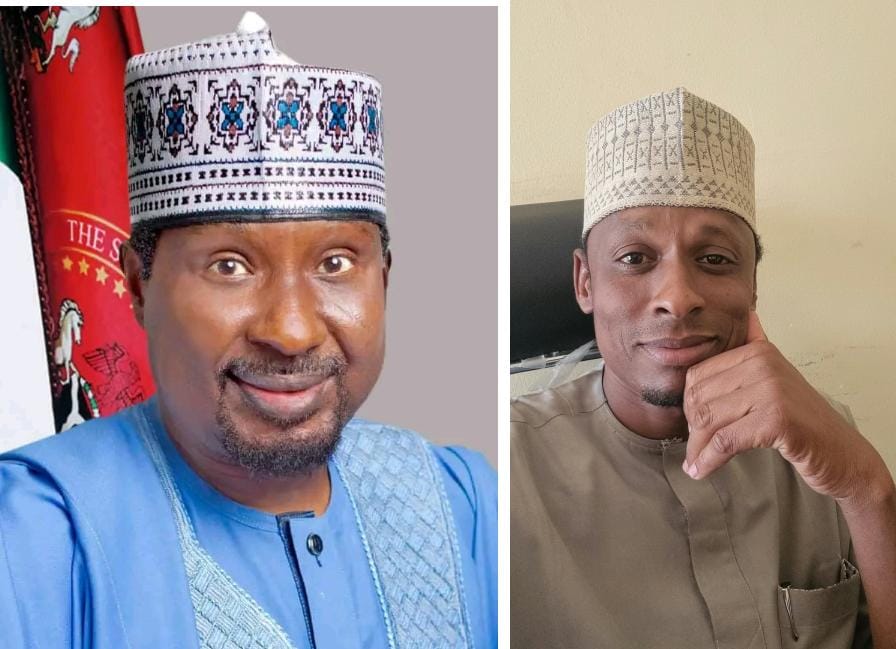
An Opinion Article by Hassan Auwalu Muhammad
In a society where political loyalty often determines who receives praise, it is important to recognise individuals whose contributions to development deserve appreciation beyond political, geographical, and senatorial boundaries. One such individual, in my considered opinion, is Senator Barau I. Jibrin, the Deputy President of the Nigerian Senate.
I write this article not as a constituent of Kano North Senatorial District, but as a son of Kano Central, the heart of Kano metropolis. I do not belong to the senatorial district represented by Senator Barau. Nevertheless, his contributions to education, youth development, and the advancement of Kano State have inspired me to put these thoughts into writing.
My decision to write about him is not an expression of political allegiance. Rather, it is a recognition that when a public official’s actions contribute to the progress of a wider community, such contributions deserve acknowledgement beyond the boundaries of his constituency.
Education: Bringing Opportunities Closer to the People
One of the most commendable aspects of Senator Barau’s public service is his emphasis on education. Education is not merely the acquisition of certificates; it is an investment in human capital, economic growth, innovation, and the future of society.
Through his interventions and the Barau I. Jibrin Foundation, Senator Barau has supported initiatives aimed at making higher education more accessible to young people. Among these efforts is the establishment of university study centres in different parts of Kano State.
One of his notable educational interventions was facilitating the establishment of 13 study centres of the National Open University of Nigeria (NOUN) across the 13 local government areas of Kano North Senatorial District. The centres were inaugurated in February 2021, bringing university education closer to people who might otherwise struggle to access higher education because of distance, financial constraints, and family responsibilities. Utility buses were also provided to support the operations of these centres.
In my opinion, this was a meaningful intervention because it recognised that the opportunity to acquire a university education should not be reserved for those who can afford to travel far from their communities. By bringing learning opportunities closer to the people, Senator Barau contributed to an approach to education that can benefit workers, business owners, young people, and others seeking to improve their qualifications and future prospects.
As someone from Kano Central rather than Kano North, I see this initiative as an example of development whose significance extends beyond the constituency it directly serves.
In addition to the NOUN study centres, four other study centres were established in Gwarzo, Danbatta, Dawakin Tofa, and Gabasawa Local Government Areas in collaboration with the Federal University Dutsin-Ma, Katsina State. These centres are intended to bring degree and diploma programmes closer to students who might otherwise face financial and geographical barriers to university education.
There is also an initiative to establish seven additional study centres in Kano Central and Kano South, including Madobi, Kiru, Tudun Wada, Rano, Gaya, Dawakin Kudu, and Minjibir. This initiative is accompanied by a scholarship programme for 1,000 students to pursue ICT-related degree programmes.
These interventions demonstrate an approach to development that recognises a simple but important reality: talented young people should not be denied educational opportunities merely because they come from families that cannot afford the cost of travelling far away to study.
The ambition to expand access to education across Kano’s 44 local government areas is particularly significant. Although Senator Barau represents Kano North, the vision behind these initiatives reaches beyond his immediate constituency.
Scholarships Abroad: Investing in the Next Generation
Another important aspect of Senator Barau’s educational interventions is his support for students pursuing advanced studies in specialised fields.
In 2024, 70 students benefited from overseas postgraduate scholarship opportunities through the Barau I. Jibrin Foundation. Their areas of study included Artificial Intelligence, Cybersecurity, Forensic Science, and other technology-related disciplines, with study destinations including India, Europe, Canada, and the United States.
This kind of investment is important at a time when countries around the world are competing to develop expertise in emerging technologies. Artificial intelligence, cybersecurity, robotics, and digital innovation are increasingly shaping economies, public institutions, national security, and employment opportunities.
By supporting students in these fields, Senator Barau is helping to develop the knowledge and skills that Kano State and Nigeria need for the future.
Beyond the financial assistance, international education exposes students to new ideas, research methods, cultures, and professional networks. When beneficiaries return home and apply their knowledge effectively, the benefits can extend to universities, businesses, public institutions, and the wider community.
His commitment to educational development has also extended to institutions within Nigeria. In November 2026, Senator Barau announced a new postgraduate scholarship initiative involving 85 beneficiaries studying specialised disciplines at Bayero University Kano. The courses include Computer Science, Software Engineering, Cybersecurity, Information Technology, Engineering, and Environmental Management.
This initiative further demonstrates the importance of sustained investment in higher education, both locally and internationally.
Scholarships are not simply gifts to individuals; when properly implemented, they are investments in the intellectual resources of an entire society.
Federal University of Science and Technology, Kabo: A Major Educational Milestone
Another significant development associated with Senator Barau’s legislative efforts is the establishment of the Federal University of Science and Technology, Kabo, in Kano State.
Senator Barau’s involvement in the project dates back to 2016, when he sponsored a bill seeking to establish a federal polytechnic in Kabo. The institution subsequently evolved into a university following the approval of its conversion by President Bola Ahmed Tinubu in 2025.
The emergence of a federal university dedicated to science and technology is a significant opportunity for Kano State and the wider northern region.
Science, technology, engineering, computing, and health-related disciplines are central to modern economic development. An institution capable of training skilled graduates in these areas can contribute to innovation, entrepreneurship, research, and the development of a competitive workforce.
For young people in Kano and neighbouring communities, the university represents an opportunity to pursue higher education closer to home.
Its importance, therefore, should not be measured solely by its physical location in Kabo or by the senatorial district in which it stands. Its potential benefits extend to students, employers, families, and communities across Kano State and beyond.
The university has also recorded progress in its academic development, including the accreditation of 20 academic programmes in 2026. Sustaining this progress will require continued investment in facilities, qualified lecturers, research, and high academic standards.
Yusuf Maitama Sule Federal University of Education, Kano
Senator Barau’s legislative efforts have also contributed to the development of teacher education in Kano.
President Bola Ahmed Tinubu approved the conversion of the Federal College of Education in Kano into a federal university of education in September 2024. The institution was subsequently named Yusuf Maitama Sule Federal University of Education, Kano, following presidential approval in May 2025.
In October 2026, the Senate passed a bill sponsored by Senator Barau to provide a legal framework for the university’s effective administration and management.
This is an important development because the quality of education in any society depends significantly on the quality of its teachers. A well-supported university of education can help improve teacher preparation, professional development, educational research, and the overall standard of teaching in schools.
The institution’s future success will depend on effective administration, adequate funding, qualified personnel, and a strong commitment to academic excellence. Nevertheless, these legislative and institutional developments represent important steps towards strengthening teacher education in Kano.
For me, this is another example of why public service should be assessed not only through political speeches but also through efforts that can create lasting institutions.
Beyond Universities: Other Contributions to Kano’s Development
While education remains a central theme in Senator Barau’s public interventions, other initiatives also deserve attention.
In 2024, he facilitated the provision of 1,000 motorcycles to the Kano State Police Command to support policing and security operations across the state’s 44 local government areas. Effective security is essential for education, commerce, agriculture, transportation, and everyday community life.
He also launched the Kano North Transport Service, comprising 107 buses, with the objective of improving transportation and supporting commercial activities. Reliable transport can make it easier for people to access markets, workplaces, educational institutions, and other essential services.
In agriculture, Senator Barau initiated the distribution of fertiliser to farmers across Kano State. Agricultural support is particularly important in a state where farming provides livelihoods for many households and contributes significantly to food production and economic activity.
These initiatives address different aspects of development. Their long-term value will depend on effective implementation, maintenance, accountability, and the extent to which the intended beneficiaries experience measurable improvements.
Nevertheless, they illustrate the breadth of issues that public representatives can address through legislative advocacy, institutional engagement, and development-oriented interventions.
Why I Am Writing as a Son of Kano Central
At this point, I consider it necessary to return to the reason for writing this article.
I am not from Kano North. I am from Kano Central, within the historic metropolis of Kano. Senator Barau does not represent me directly in the Senate.
Yet, I believe that development should never be confined to political boundaries, and recognition should never be restricted to the people who cast their votes for a particular representative.
When a representative facilitates educational opportunities, supports scholarships, advocates for universities, or contributes to initiatives that benefit people beyond his immediate constituency, such efforts deserve objective consideration.
I do not suggest that every initiative is without challenges, nor that any public official should be exempt from scrutiny. Public service must always be assessed with fairness, transparency, and accountability. Promises must be distinguished from completed projects, and announcements must ultimately translate into tangible benefits for citizens.
However, fairness also requires us to acknowledge achievements where there are genuine reasons to do so.
If a young person from Kano Central benefits from an educational opportunity facilitated by a representative of Kano North, should that achievement be ignored simply because of geography? If a university established in one part of Kano provides opportunities to students from other parts of the state, should its significance be restricted to the locality in which it stands?
I believe the answer to both questions is no.
Kano is one state, with a shared history, interconnected communities, and a common interest in progress. The advancement of one part of Kano can contribute to the advancement of the entire state.
Leadership Should Be Measured by Lasting Impact
The most enduring measure of leadership is not the number of political supporters a leader commands, the titles attached to his name, or the frequency with which his achievements are celebrated. It is the lasting impact of his work on people’s lives.
For Senator Barau I. Jibrin, the initiatives discussed in this article raise important questions about the future of education, technology, youth empowerment, and institutional development in Kano State.
The establishment and expansion of universities, the provision of scholarships, and the development of study centres can create opportunities that outlive the political tenure of the individuals who helped facilitate them.
A student who becomes an engineer, a cybersecurity specialist, a teacher, a researcher, or a medical professional may go on to improve the lives of hundreds or even thousands of other people. That is the multiplier effect of investing in education.
For these reasons, I believe that educational development deserves particular attention when assessing Senator Barau’s public contributions.
At the same time, the people of Kano should continue to demand that these institutions receive adequate resources, that scholarship opportunities are administered fairly, and that development programmes are accessible to deserving beneficiaries regardless of their political affiliations or social backgrounds.
Recognition and accountability are not opposites. They are both necessary elements of responsible citizenship.
Conclusion: Acknowledging Service Beyond Political Boundaries
I have written this article because I believe that meaningful contributions to society deserve recognition, irrespective of the geographical boundaries that separate us.
As a son of Kano Central, I have no direct constituency relationship with Senator Barau I. Jibrin. Nevertheless, his educational initiatives, scholarship programmes, legislative efforts, and other development interventions have given me sufficient reasons to acknowledge his contributions to Kano State.
My intention is not to declare him beyond criticism or to suggest that the work of other leaders should be overlooked. Rather, it is to encourage a culture in which we evaluate public officials according to their actions, recognise genuine achievements, and hold all leaders to the same standards of accountability.
Political differences may divide opinions, and senatorial boundaries may define representation, but the benefits of education, security, and development are not restricted to one constituency.
When a public servant contributes to building institutions and expanding opportunities for young people, the significance of those efforts can extend far beyond the constituency that elected him.
That is why I believe Senator Barau I. Jibrin’s contributions to the educational and developmental landscape of Kano deserve recognition and continued scrutiny in equal measure.
Good leadership should be acknowledged wherever it is found, and good governance should always be encouraged wherever it benefits the people.
Senator Barau I. Jibrin — “Maliya da ba a iya ganin ƙarshenta.”
For correspondence:
Email: m.shareef1980@gmail.com
Phone: +234 703 232 0027
Politics
The Political Awakening:Why Nigeria Needs More Youth Participation In Governance- Zubair -A -Zubair
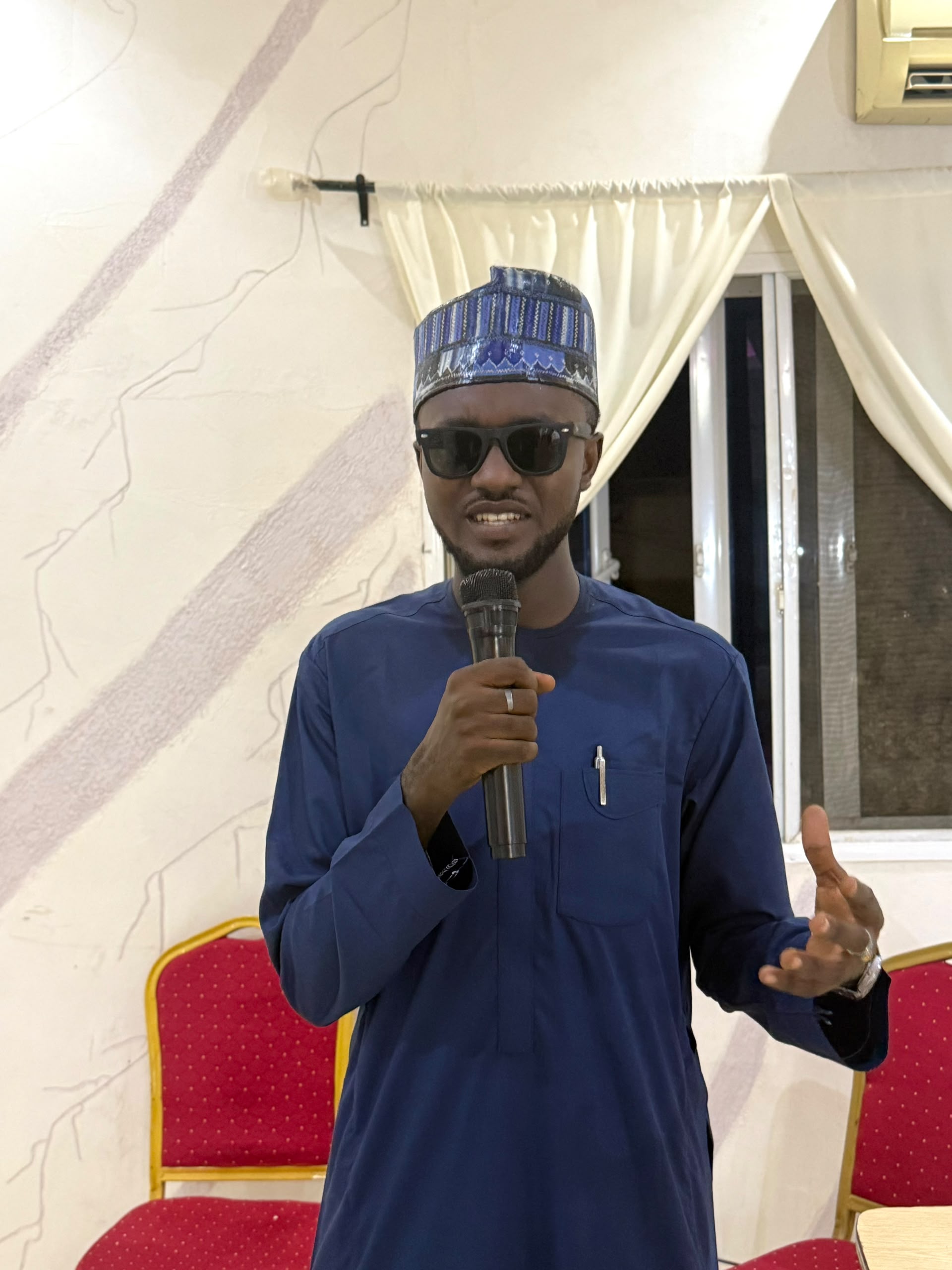
As we witnessed a massive political shockwave among American voters yesterday, one thing particularly caught my attention. Interestingly, about 98% of American politicians appear comfortable with public speaking, while a significant proportion, perhaps 70%, demonstrate exceptional oratory skills, like Barack Obama and Zohran Mamdani.
Unlike what we often experience here in Nigeria, where some political candidates shy away from media interviews, town hall meetings, debates and direct interactions with the very people they seek to represent. These platforms provide citizens with the opportunity to ask questions, demand clarification and obtain answers from those aspiring to occupy public offices. Leadership should not be about making promises during election campaigns; it should also involve the willingness to engage, communicate and be held accountable.
We need more educated, dedicated, intellectually grounded and visionary young people to participate actively in politics and governance. It is encouraging to see young Africans increasingly occupying important political positions. While some of our contemporaries are already serving as senators, members of the House of Representatives, mayors and political spokespersons, we must also recognise that age should never be a barrier to meaningful leadership and public service.
A remarkable example is Karoline Leavitt, the former White House Press Secretary, who assumed that responsibility at just 27 years old. Yes, 27! A young woman entrusted with one of the most prominent communication positions in a country as influential as the United States. Her experience demonstrates that young people can occupy significant positions of responsibility when given the opportunity and entrusted with the necessary responsibilities.
As my mentor, Dr. Nelson Aluya, MD, MBBS, has consistently advocated, youth participation should extend beyond politics. Young people must also be actively involved in technology, innovation, education, entrepreneurship and the fight against drug abuse. These are critical areas that will determine the future of our society and the direction of the next generation.
What we are witnessing is a welcome indication of democratic engagement and generational progress. Nigerian youths must move beyond political commentary, social media arguments and online activism to become active participants in the political process. We must develop the intellectual capacity, courage, competence and civic consciousness required to influence governance and contribute meaningfully to nation-building.
If Americans can create opportunities for young people to participate in leadership, Nigerians can equally embrace a political culture that recognises competence, accountability and youthful innovation.
Come 2027, Nigeria needs more than political enthusiasm; we need informed participation, credible leadership and a generation of young people ready to take responsibility for the country’s future.
Zubair A. Zubair
Journalist, Computer Programmer and Farmer
Writes from Kano, Nigeria.

NASWDEN backs FG’s move to license, regulate scrap business, raises alarm over attack on members

ASUU Declares Strike at Zamfara State University

US Midterm Elections: What Does It Mean for Nigerian Female Politicians?

Tinubu’s Jigawa Rally Signals Growing Northern Support, TMS Says as President Defends Economic Reforms

Beyond Politcal Boundaries: Why I Choose To Recognize Senator Barau I Jibrin’s Contributions To Kano

Kano Monitors ₦48.9bn Projects Across Six LGAs

Open The Social Sciences “A Tribute to a Heterodox Scholar: Mallam Ibrahim Muazzam

Senate Passes Barau’s Bill to Provide Legal Framework for Yusuf Maitama Sule Federal University of Education, Kano

Gov. Yusuf Appoints Inuwa Waya Director of International Corporations Engagement

Emir Sanusi Seeks Compensation, Reallocation of Demolished Eid Ground Stalls
NASWDEN backs FG’s move to license, regulate scrap business, raises alarm over attack on members
ASUU Declares Strike at Zamfara State University
US Midterm Elections: What Does It Mean for Nigerian Female Politicians?
Tinubu’s Jigawa Rally Signals Growing Northern Support, TMS Says as President Defends Economic Reforms
Beyond Politcal Boundaries: Why I Choose To Recognize Senator Barau I Jibrin’s Contributions To Kano
Kano Monitors ₦48.9bn Projects Across Six LGAs
Open The Social Sciences “A Tribute to a Heterodox Scholar: Mallam Ibrahim Muazzam
Senate Passes Barau’s Bill to Provide Legal Framework for Yusuf Maitama Sule Federal University of Education, Kano
Gov. Yusuf Appoints Inuwa Waya Director of International Corporations Engagement
Emir Sanusi Seeks Compensation, Reallocation of Demolished Eid Ground Stalls
-

 Opinion5 years ago
On The Kano Flyovers And Public Perception
-

 Features5 years ago
How I Became A Multimillionaire In Nigeria – Hadiza Gabon
-

 Opinion6 years ago
Kano As future Headquarters Of Poverty In Nigeria
-
 History6 years ago
Sheikh Adam Abdullahi Al-Ilory (1917-1992):Nigeria’s Islamic Scholar Who Wrote Over 100 Books And Journals
-
 Opinion5 years ago
My First Encounter with Nasiru Gawuna, the Humble Deputy Governor
-
 History5 years ago
The History Of Borno State Governor Professor Babagana Umara Zulum
-
 History6 years ago
The Origin Of “Mammy Market” In Army Barracks (Mammy Ochefu)
-
 News5 years ago
Federal University Of Technology Babura To Commence Academic Activities September