
News
President Muhammad Buhari’s Full Address, On The END SARS PROTESTS,
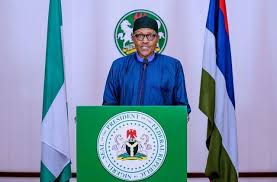
Fellow Nigerians,
It has become necessary for me to address you having heard from many concerned Nigerians and having concluded a meeting with all the Security Chiefs.
- I must warn those who have hijacked and misdirected the initial, genuine and well-intended protest of some of our youths in parts of the country, against the excesses of some members of the now-disbanded Special Anti-Robbery Squad (SARS).
- On Monday 12th October, I acknowledged the genuine concerns and agitations of members of the public regarding the excessive use of force by some members of SARS.
- The choice to demonstrate peacefully is a fundamental right of citizens as enshrined in Section 40 of our Constitution and other enactments, but this right to protest also imposes on the demonstrators the responsibility to respect the rights of other citizens, and the necessity to operate within the law.
- As a democratic government, we listened to, and carefully evaluated the five-point demands of the protesters. And, having accepted them, we immediately scrapped SARS, and put measures in place to address the other demands of our youth.
- On approving the termination of SARS, I already made it clear that it was in line with our commitment to the implementation of extensive Police reforms.
- Sadly, the promptness with which we have acted seemed to have been misconstrued as a sign of weakness and twisted by some for their selfish unpatriotic interests.
- The result of this is clear to all observers: human lives have been lost; acts of sexual violence have been reported; two major correctional facilities were attacked and convicts freed; public and private properties completely destroyed or vandalised; the sanctity of the Palace of a Peace Maker, the Oba of Lagos has been violated. So-called protesters have invaded an International Airport and in the process disrupted the travel plans of fellow Nigerians and our visitors.
- All these executed in the name of the END SARS protests. I am indeed deeply pained that innocent lives have been lost. These tragedies are uncalled for and unnecessary. Certainly, there is no way whatsoever to connect these bad acts to legitimate expressions of grievance of the youth of our country.
- The spreading of deliberate falsehood and misinformation through social media in particular, that this government is oblivious to the pains and plight of its citizens is a ploy to mislead the unwary within and outside Nigeria into unfair judgment and disruptive behavior.
- On the contrary, both our deeds and words have shown how committed this administration has been to the wellbeing and welfare of citizens, even with the steadily dwindling revenues, and the added responsibilities and restrictions due to the Coronavirus pandemic.
- Government has put in place measures and initiatives principally targeted at youths, women and the most vulnerable groups in our society. These included our broad plan to lift 100 million Nigerians out of poverty in the next 10 years; the creation of N75 billion National Youth Investment Fund to provide opportunities for the youths and the Micro, Small and Medium Enterprises (MSME) Survival Fund, through which government is:
- paying three months salaries of the staff of 100,000 micro, small – and medium – enterprises,
- paying for the registration of 250,000 businesses at the Corporate Affairs Commission,
- giving a grant of N30,000 to 100,000 artisans; and
- guaranteeing market for the products of traders.
- These are in addition to many other initiatives such as;
- Farmermoni,
- Tradermoni,
- Marketmoni,
- N-Power,
- N-Tech and
- N-Agro.
- No Nigerian Government in the past has methodically and seriously approached poverty-alleviation like we have done.
- With regard to the welfare of police personnel, the National Salaries, Income and Wages Commission has been directed to expedite action on the finalization of the new salary structure of members of the Nigeria Police Force. The emoluments of other paramilitary services are also being reviewed upwards.
- In order to underscore the importance of education in preparing youths for the future, this administration has come up with a new salary structure and other incentives for our teachers.
- Let me at this point reaffirm the Federal Government’s commitment to preserving the unity of this country.
- We will continue to improve good governance and our democratic process, including through sustained engagement.
- We shall continue to ensure that liberty and freedom, as well as the fundamental rights of all citizens are protected.
- But remember that government also has the obligation to protect lives and properties, as well as the right of citizens to go about their daily businesses freely and protected from acts of violence.
- To our neighbors in particular, and members of the international community, many of whom have expressed concern about the ongoing development in Nigeria, we thank you and urge you all to seek to know all the facts available before taking a position or rushing to judgment and making hasty pronouncements.
- In the circumstances, I would like to appeal to protesters to note and take advantage of the various well-thought-out initiatives of this administration designed to make their lives better and more meaningful and resist the temptation of being used by some subversive elements to cause chaos with the aim of truncating our nascent democracy.
- For you to do otherwise will amount to undermining national security and the law and order situation. Under no circumstances will this be tolerated.
- I, therefore, call on our youths to discontinue the street protests and constructively engage the government in finding solutions. Your voice has been heard loud and clear and we are responding.
- And I call on all Nigerians to go about their normal businesses and enjoin security agencies to protect the lives and properties of all law-abiding citizens without doing harm to those they are meant to protect. Let me pay tribute to officers of the Nigeria Police Force who have tragically lost their lives in the line of duty.
- I would like to thank those state Governors, traditional and religious leaders who have appealed for calm and restraint. I also thank youth leaders who have restrained their followers from taking the law into their hands.
- This government respects and will continue to respect all the democratic rights and civil liberties of the people, but it will not allow anybody or groups to disrupt the peace of our nation.
Thank you all. God bless the Federal Republic of Nigeria.












News
Kano Task Force Accuses Pharmaceutical Council of Nigeria of Shielding Drug Dealers
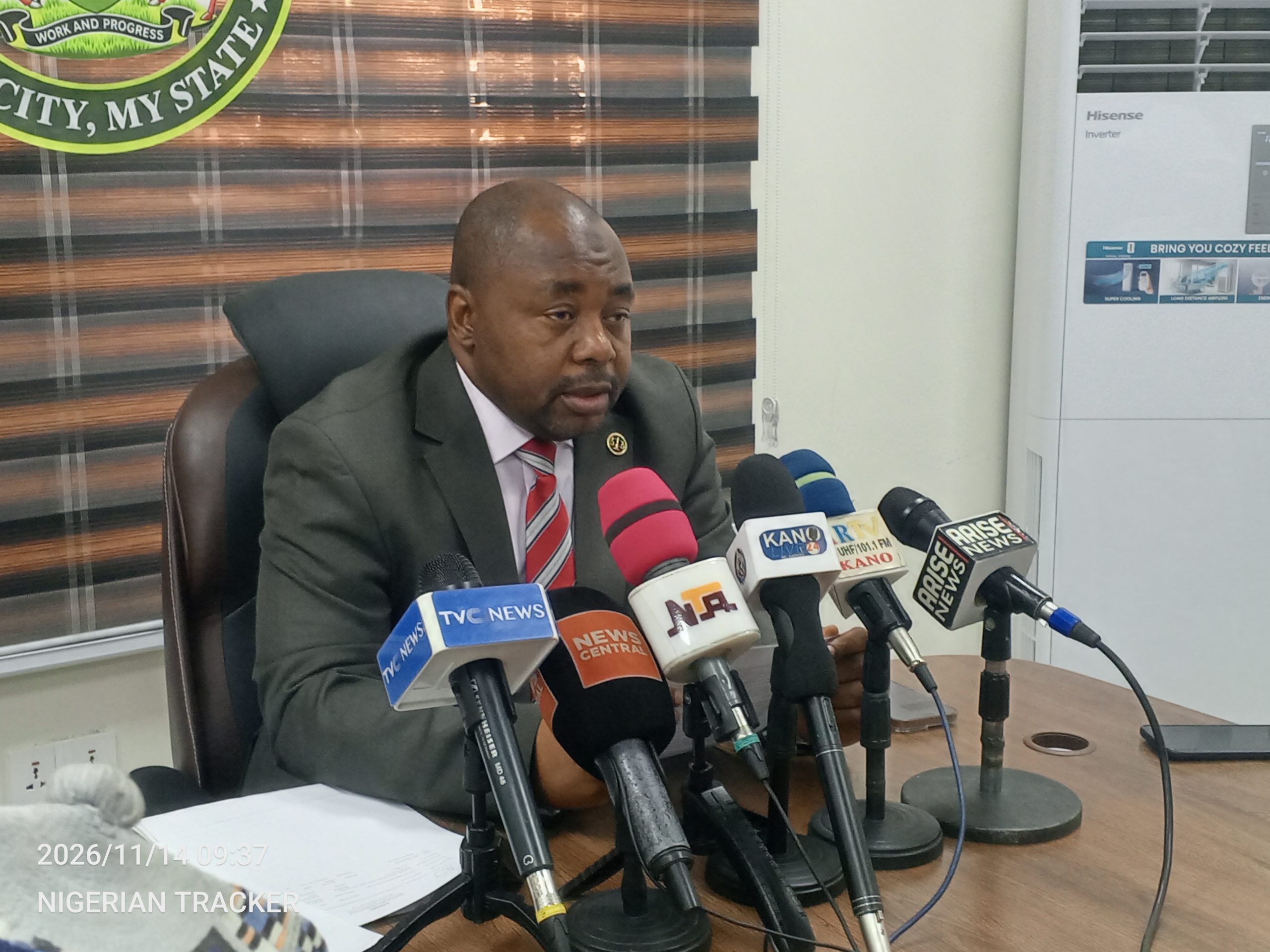
The Chairman of the Kano State Multi-Agency Taskforce on Drug Abuse and Illicit Trafficking, Muhuyi Magaji Rimingado, has accused the Pharmaceutical Council of Nigeria (PCN) of allegedly shielding drug dealers and facilitating the distribution of illicit substances in Kano State.
Rimingado made the allegations while addressing journalists in Kano, where he expressed concern over what he described as the involvement of some public officials in activities that undermine the state’s efforts to combat drug abuse and illicit drug trafficking.
The task force chairman said the fight against drug abuse in Kano had reached a critical stage requiring decisive measures against individuals and institutions allegedly using their public positions to create an enabling environment for illegal drug trafficking.
According to him, the task force would no longer concentrate exclusively on arresting drug users while individuals and organisations allegedly responsible for supplying the substances continued to enjoy protection from regulatory authorities.
Rimingado said pregabalin and other controlled substances remained among the most widely abused drugs in Kano State, adding that the situation required regulatory agencies to discharge their responsibilities with patriotism, professionalism and fear of Allah.
He argued that if regulatory institutions performed their statutory duties effectively, there would be little need for the state government to establish additional mechanisms to confront the growing problem of drug abuse.
The chairman disclosed that the task force had recorded 1,760 arrests since the commencement of its operations, with 890 suspects convicted for various drug-related offences.
He further stated that 63 suspects were awaiting trial, while approximately 690 convicted persons were being held in various correctional facilities.
Rimingado explained that other offenders had either been referred for rehabilitation, fined or sentenced to community service, describing the figures as evidence of the task force’s extensive efforts towards reducing drug demand, disrupting supply networks and confronting thuggery.
He maintained that the task force’s strategy recognised the direct relationship between drug abuse and the activities of street gangs and thugs, stressing that tackling the supply chain was essential to achieving sustainable results.
However, Rimingado said the task force could not continue arresting drug users without confronting those allegedly responsible for making the substances available to them.
He specifically accused some regulatory officials of shielding drug dealers despite having statutory responsibilities to prevent unauthorised access to controlled pharmaceutical products.
The task force chairman recalled the recent seizure of 3.18 million pregabalin capsules by the agency, describing the development as an indication of the scale of the drug distribution problem confronting Kano State.
According to Rimingado, eight out of every 10 suspected drug users arrested in Kano were either found in possession of pregabalin or confessed to abusing the substance.
He questioned the circumstances surrounding the issuance of import licences to pharmaceutical companies dealing in pregabalin, particularly following its rescheduling as a controlled drug by the National Agency for Food and Drug Administration and Control (NAFDAC) on September 14, 2026.
Rimingado wondered what regulatory data informed the issuance of import licences to several companies, alleging that some businesses had exploited the privileges granted to them to facilitate the distribution of controlled substances.
In what he described as findings from preliminary investigations, Rimingado alleged that an import licence granted to UGO Lab Production Nigeria Limited on October 23, 2026, was part of a wider network of companies allegedly involved in the unlawful distribution of pregabalin.
He claimed that investigations revealed that the owner of UGO Lab Production Nigeria Limited had also established another company known as SEEMARK Pharmaceutical Nigeria Limited, which he alleged was created as a front for clandestine drug distribution activities.
The task force chairman further accused the Pharmaceutical Council of Nigeria of facilitating the alleged activities by registering a property at No. 10 Apple Avenue, which he described as a purely residential location, for pharmaceutical operations.
According to Rimingado, the property was allegedly used as a concealed distribution outlet for pregabalin, thereby providing a channel through which the substance found its way into the streets of Kano.
He argued that registering a residential property for such activities amounted to a breach of the provisions of the Land Use Act and raised serious questions about the regulatory procedures followed by the PCN.
Rimingado said the alleged actions of the council had undermined the objectives of the Controlled Wholesale Chain (CWC), which he said the regulatory institution itself advocated.
He challenged the regulatory authorities to explain how pregabalin had become widely available on the streets of Kano despite its controlled status, insisting that the substance was rarely found in conventional pharmaceutical outlets across the state.
The chairman maintained that the widespread availability of pregabalin outside recognised pharmaceutical channels could not be dismissed as accidental, arguing that it pointed to possible weaknesses or deliberate compromises within the regulatory system.
Rimingado also alleged that some staff members of the Pharmaceutical Council of Nigeria were deeply involved in clandestine pharmaceutical businesses, claiming that such involvement explained what he described as the council’s excessive protection of its regulatory jurisdiction.
He expressed concern over what he considered the council’s insistence on exclusive authority to seal premises, even in situations where other government agencies had uncovered alleged wrongdoing.
The task force chairman noted that the PCN had fewer than 20 staff members in Kano State but continued to insist that it alone possessed the authority to seal premises suspected of violating pharmaceutical regulations.
He argued that such an approach was counterproductive, particularly when the state government’s multi-agency task force was working to address a public health and security challenge affecting thousands of residents.
Rimingado stressed that the statutory responsibilities of federal regulatory agencies should not be interpreted as immunity from legitimate oversight, collaboration or accountability by other relevant government institutions.
He maintained that public officials were expected to operate within the limits of the law and should not use their positions to obstruct efforts aimed at protecting the public from the dangers of illicit drug trafficking.
The chairman warned that any public official who acted contrary to the provisions of the law could face criminal liability, adding that the task force was prepared to deploy all necessary legal measures to address the alleged misconduct.
He reaffirmed the task force’s commitment to pursuing drug dealers, disrupting distribution networks and ensuring that individuals and institutions allegedly contributing to the drug abuse crisis were held accountable.
Rimingado said the fight against drug abuse in Kano required collective responsibility, insisting that regulatory agencies must demonstrate transparency, integrity and commitment if the state was to make meaningful progress in tackling the menace.
News
2027: INEC to Conduct Mock Presidential Poll Nov 28
By Yusuf Danjuma Yunusa
The Independent National Electoral Commission has fixed November 28, 2026, for a nationwide mock accreditation and voting exercise ahead of the 2027 general elections to test upgrades to its Bimodal Voter Accreditation System and electronic results transmission.
This comes as the commission said it has commenced the distribution of non-sensitive materials to some states ahead of the 2027 general elections.
INEC Chairman, Prof. Joash Amupitan (SAN), announced the mock election on Thursday during a dialogue at Chatham House in London, organised in partnership with the Kimpact Development Initiative, with the theme, “Nigeria’s 2027 Elections: Democratic Trajectory and Regional Stability Beyond the Ballot.”
According to a press statement issued in Abuja and signed by the Chief Press Secretary and Media Adviser to the INEC Chairman, Adedayo Oketola, Amupitan said the exercise would simulate the presidential election and enable the commission to assess the effectiveness of its accreditation and electronic transmission systems before the polls.
“On the 28th of this month, we will conduct a mock accreditation and voting exercise across all states of the federation to simulate the presidential election and verify that we have gotten both accreditation and electronic result transmission right,” he said.
The INEC chairman also disclosed that the commission had introduced technical safeguards to prevent inaccurate polling unit results and figures reflecting over-voting from being uploaded to its Result Viewing Portal.
News
Federal Character Commission Sues Customs, CG Adeniyi Over Alleged Recruitment Law Violations
By Yusuf Danjuma Yunusa
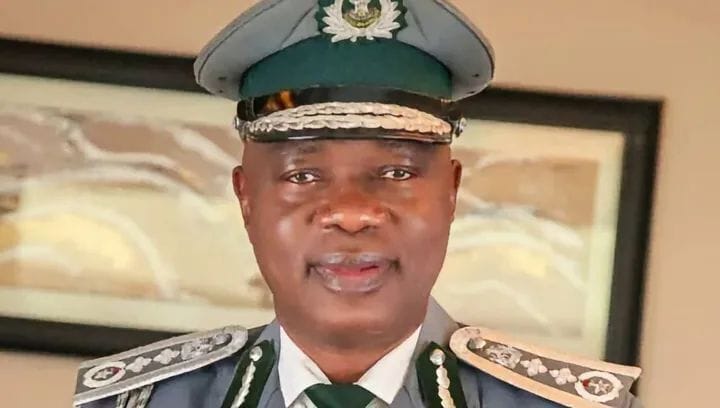
The Federal Character Commission has filed a four-count criminal charge against the Nigeria Customs Service and its Comptroller-General, Bashir Adeniyi, over alleged violations of federal character requirements in the Service’s 2025/2026 recruitment exercise.
The charge sheet, which was sighted by newsmen on Friday, was filed on Thursday at the Federal High Court, Abuja.
The charge accused the Customs Service and Adeniyi of failing to provide recruitment records to the commission, preventing it from monitoring the exercise and disregarding its directive to suspend recruitment and training activities.
In the first count, the commission alleged that the Customs Service failed to submit the nominal rolls for its 2025 recruitment exercise despite receiving a request for the records in a letter dated March 25, 2026.
It also accused Adeniyi of recklessly, negligently or wilfully allowing the Service to disregard the commission’s request.
“That you Bashir Adewale Adeniyi, being an officer of the 1st Defendant, recklessly, negligently or willfully acquiesced in the 1st Defendant’s failure to comply with the directives of the Commission, thereby committed an offence contrary to Section 14(3) (b) of the Federal Character Commission (Establishment, etc.) Act, Cap. F7, LFN 2004 and punishable under Section 15 of the Federal Character Commission (Establishment, etc.) Act, Cap. F7, LFN 2004,” the first count read.
In the second count, the FCC alleged that the Customs Service and its Comptroller-General failed to invite or submit themselves to the commission for monitoring of relevant stages of the 2025/2026 recruitment exercise between September 14 and October 7, 2026.
The third count accused the defendants of continuing with recruitment and training activities despite receiving a letter dated October 23, 2026, directing the Service to suspend the exercise pending a review.
The commission alleged that the Service disregarded the directive and failed to preserve relevant records and allow its monitoring.
In the fourth count, the FCC accused the defendants of failing to provide clear eligibility criteria and comprehensive recruitment guidelines despite repeated requests between January 30 and October 20, 2026.
It alleged that the failure prevented the Commission from determining the state and zonal distribution of vacancies in the recruitment exercise.
The charges were brought under Section 14(3) of the Federal Character Commission (Establishment, etc.) Act, Cap. F7, Laws of the Federation of Nigeria 2004, and are punishable under Section 15 of the Act.
The commission listed three witnesses, including the Chairman of its Committee on Financial Services, Abdulwasiu K. Bawa-Allah, committee member Isa Jibrin Bida, and clerk of the committee, Usman Yaruwa.
It also listed 14 documents it intends to tender during the trial, including correspondence between the commission and the Customs Service, a report on the Service and records of the commission’s October 22 press conference.
The prosecution said it might call additional witnesses as the court considers necessary.
The charge followed a dispute between the commission and the Customs Service over the conduct of the 2024/2025 recruitment exercise, particularly complaints by applicants who said they were shortlisted but later excluded from the training programme.

Kano Task Force Accuses Pharmaceutical Council of Nigeria of Shielding Drug Dealers

2027: INEC to Conduct Mock Presidential Poll Nov 28

Federal Character Commission Sues Customs, CG Adeniyi Over Alleged Recruitment Law Violations

2027: We Received Phone Call From Buhari’s Grave to Vote Atiku — Dalung Claims

Ibrahim Ali-Amin (little): A Long Awaited Voice In Kano’s Governorship Conversation

Open The Social Sciences “A Tribute to a Heterodox Scholar: Mallam Ibrahim Muazzam

NDC Deputy Governorship Candidate Gives Kano Information Commissioner 48-Hour Ultimatum Over Alleged Defamation

Kano’s War On Drugs: How Barr. Muhyi’s Taskforce Is Changing The Game

Gov. Yusuf Appoints Inuwa Waya Director of International Corporations Engagement

Sen. Kalu Admits Selling Heavy Weapons to Any Buyer
Kano Task Force Accuses Pharmaceutical Council of Nigeria of Shielding Drug Dealers
2027: INEC to Conduct Mock Presidential Poll Nov 28
Federal Character Commission Sues Customs, CG Adeniyi Over Alleged Recruitment Law Violations
2027: We Received Phone Call From Buhari’s Grave to Vote Atiku — Dalung Claims
Ibrahim Ali-Amin (little): A Long Awaited Voice In Kano’s Governorship Conversation
Open The Social Sciences “A Tribute to a Heterodox Scholar: Mallam Ibrahim Muazzam
NDC Deputy Governorship Candidate Gives Kano Information Commissioner 48-Hour Ultimatum Over Alleged Defamation
Kano’s War On Drugs: How Barr. Muhyi’s Taskforce Is Changing The Game
Gov. Yusuf Appoints Inuwa Waya Director of International Corporations Engagement
Sen. Kalu Admits Selling Heavy Weapons to Any Buyer
-

 Opinion5 years ago
On The Kano Flyovers And Public Perception
-

 Features5 years ago
How I Became A Multimillionaire In Nigeria – Hadiza Gabon
-

 Opinion6 years ago
Kano As future Headquarters Of Poverty In Nigeria
-
 History6 years ago
Sheikh Adam Abdullahi Al-Ilory (1917-1992):Nigeria’s Islamic Scholar Who Wrote Over 100 Books And Journals
-
 Opinion5 years ago
My First Encounter with Nasiru Gawuna, the Humble Deputy Governor
-
 History5 years ago
The History Of Borno State Governor Professor Babagana Umara Zulum
-
 History6 years ago
The Origin Of “Mammy Market” In Army Barracks (Mammy Ochefu)
-
 News5 years ago
Federal University Of Technology Babura To Commence Academic Activities September