
News
Senate Sets Up Committee to Harmonise Electoral Act Amendments Ahead of 2027 Polls
By Yusuf Danjuma Yunusa
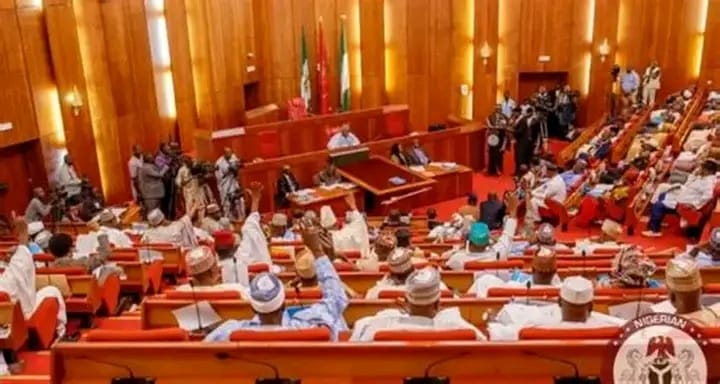
The Senate has constituted a seven-member ad hoc committee to harmonise and distil senators’ inputs on the proposed amendment of the Electoral Act, as lawmakers intensify efforts to strengthen Nigeria’s electoral framework ahead of the 2027 general elections.
The decision followed a three-hour closed-door executive session held on Thursday, during which senators further scrutinised the Electoral Act (Repeal and Enactment) Bill currently before the National Assembly.
Announcing the outcome of the session, Senate President Godswill Akpabio said the committee was set up to synthesise lawmakers’ views and address outstanding concerns on the proposed amendments.
He said the panel was “mandated to contribute, galvanise and distil the opinion of senators on the bill.
“In no particular order, the committee will be led by Niyi Adegbonmire, chairman of the Senate Committee on Judiciary, Human Rights and Legal Matters,” Akpabio said.
Other members of the committee are Adamu Aliero, Aminu Tambuwal, Adams Oshiomhole, Danjuma Goje, Tony Nwoye and Titus Zam.
Akpabio added that the committee has a maximum of three days to conclude its assignment and submit its report to the Senate by Tuesday.
The Senate had on Wednesday stepped down consideration of the report on the Electoral Act amendment bill, opting instead for an executive session to allow for deeper examination of the proposed legislation.
The move followed deliberations on the report of the Senate Committee on Electoral Matters, which was presented in the absence of its chairman, Simon Lalong. Lawmakers agreed to suspend debate to give senators additional time to study the bill, citing its far-reaching implications for Nigeria’s electoral process.
Although the House of Representatives has already passed the bill, Akpabio stressed that the Senate must exercise due diligence before concurrence.
“This is a very important bill, especially as it’s election time. We must take our time to ensure justice is done to all, so that we do not end up at the tribunal,” he said.
According to the report of the Senate Committee on Electoral Matters, a clause-by-clause review indicates that the proposed amendments would strengthen electoral integrity, enhance transparency and boost public confidence in the electoral system.
The committee consequently recommended the passage of the Electoral Act (Repeal and Enactment) Bill, 2025, as amended, noting that the reforms would expand voter participation, curb electoral malpractice and strengthen the institutional capacity of the Independent National Electoral Commission.
Earlier, Senate Leader Opeyemi Bamidele outlined key components of the proposed amendments, describing the bill as a major step towards improving electoral credibility and safeguarding institutional independence.
He said the bill introduces stiffer sanctions for electoral offences such as vote-buying, including fines of up to N5m, a two-year jail term, and a 10-year ban from contesting elections.
The proposed law also prescribes tougher penalties for result falsification and obstruction of election officials, introduces electronically generated voter identification — including a downloadable voter card with a unique QR code — and mandates the electronic transmission of polling unit results.
Bamidele further disclosed that the bill recognises the voting rights of prisoners, mandates INEC to register eligible inmates, standardises delegates for indirect party primaries, and requires the release of election funds at least one year before polling day.
According to him, the reforms are aimed at guaranteeing credible, transparent and secure elections beginning with the 2027 general polls, subject to approval by at least two-thirds of state Houses of Assembly, in line with constitutional requirements.
“At the end of it all, good governance, enhanced security and the welfare of our constituents shall remain our cardinal objectives,” Bamidele said.
















News
JUST IN: EFCC Re-declares Abdulrasheed Maina Wanted over Alleged Receipt of Stolen Property

By Yusuf Danjuma Yunusa
The Economic and Financial Crimes Commission, EFCC, has declared former Chairman of the Presidential Task Force on Pension Reforms, Abdulrasheed Abdullahi Maina, wanted over an alleged case of receiving stolen property.
Mr Maina, 61, was listed in a wanted notice issued by the anti-graft agency, which described him as an indigene of Biu, Borno State.
The EFCC urged members of the public with information about his whereabouts to contact any of its offices across the country or provide information through its designated telephone line and email address.
The commission said information on Mr Maina could be passed to its offices in Ibadan, Uyo, Sokoto, Maiduguri, Benin, Makurdi, Kaduna, Ilorin, Enugu, Kano, Lagos, Gombe, Port Harcourt and Abuja.
It also advised members of the public to contact the nearest police station or other security agencies with any useful information.
The notice was signed by the EFCC Head of Media and Publicity, Dele Oyewale.
The latest development comes against the backdrop of Mr Maina’s long-running legal troubles over allegations relating to pension funds.
Mr Maina was previously declared wanted by the EFCC after he failed to appear for his trial in a case involving alleged N2 billion fraud linked to the pension reform programme.
He was subsequently arrested in Niger Republic in 2019 and brought back to Nigeria to face trial.
In November 2021, a Federal High Court in Abuja convicted Maina and sentenced him to eight years in prison for money laundering offences. Reports on the case said the prosecution had linked him to the handling of funds allegedly derived from unlawful activities.
The Nigerian Correctional Service later disclosed that Mr Maina was released from custody on February 25, 2025, after serving part of his sentence.
The service attributed his release to good conduct in prison and said the decision was made in accordance with applicable laws and regulations.
More recently, investigations by the Platform to Protect Whistleblowers in Africa, PPLAAF, the Organised Crime and Corruption Reporting Project, OCCRP, and Premium Times linked properties in the United States and Dubai to Mr Maina.
The investigation reported that some of the properties were acquired between 2010 and 2013.
A separate investigation published in September 2026 also identified Mr Maina among former Nigerian officials linked to properties in the United States.
The report said 61 current and former Nigerian officials, their families, associates and affiliated companies were connected to 284 properties valued at nearly $271 million.
However, the EFCC’s latest notice specifically identifies the allegation for which Mr Maina is currently wanted as receiving stolen properties.
The commission did not disclose in the notice the value or nature of the property allegedly received by Maina, nor did it state when the alleged offence occurred.
The EFCC appealed to anyone with credible information that could assist in locating him to contact the commission through its hotline, 08093322644, or email, info@efcc.gov.ng.
The agency’s official website also provides channels for members of the public to submit petitions and other information to the commission.
News
Zamfara Varsity ASUU Threatens Warning Strike Over FG-ASUU Agreement, Promotion Arrears

The Academic Staff Union of Universities (ASUU), Zamfara State University, Talata Mafara Branch, has issued a two-week ultimatum to the Zamfara State Government to implement the December 2025 Federal Government-ASUU agreement and settle other outstanding financial obligations owed to its members.
The union disclosed this in a statement signed by its Acting Secretary-General, Abdussamad Muhammad Usman, following its second congress meeting held on September 21, 2026, under the leadership of the branch chairman, Comrade Anas Dogo.
According to the union, its members have reached a point where they can no longer guarantee the uninterrupted provision of academic and intellectual services in the university if the state government continues to delay the implementation of the agreement.
The ASUU branch said the December 2025 Federal Government-ASUU agreement remains a major part of its demands, insisting that academic staff of Zamfara State University should enjoy the same conditions and benefits being implemented for their counterparts in other states of the federation.
Comrade Anas Dogo said the union had exhausted what it described as all available political, diplomatic and administrative avenues to persuade the state government to address the concerns of its members without resorting to industrial action.
Dogo, according to the statement, said repeated engagements with the relevant authorities had failed to produce the desired outcome, leaving the union with the option of issuing a formal ultimatum before taking further action.
The union leadership said its demands go beyond the implementation of the Federal Government-ASUU agreement, adding that it is also demanding the payment of outstanding promotion arrears and other financial obligations incurred by the state government.
According to ASUU, the unresolved promotion arrears have continued to constitute a financial burden for affected academic staff, while the non-implementation of the December 2025 agreement has created disparities between lecturers at Zamfara State University and their counterparts in other universities.
The union said its decision to give the government a two-week ultimatum followed a series of meetings and consultations with stakeholders connected to the university and the state education sector.
The statement said the union had engaged the chairperson of the university’s governing council and the university management in an effort to resolve the issues internally before escalating the matter to other authorities.
ASUU further said it subsequently wrote letters requesting meetings with the Commissioner for Education, the Head of Service and the Secretary to the Zamfara State Government, but alleged that its efforts to secure meaningful engagement with the officials were unsuccessful.
The union described the failure of the various engagements as the reason for its decision to set a two-week deadline for the government to respond to its demands and take concrete steps towards implementation.
Dogo said the union was still committed to dialogue and would prefer an amicable resolution of the dispute, but stressed that its members could not continue to provide uninterrupted academic services indefinitely without the outstanding issues being addressed.
According to the union, failure by the state government to meet its demands within the two-week ultimatum would trigger a warning strike by academic staff of Zamfara State University, Talata Mafara.
The union leadership further warned that if the warning strike failed to produce a resolution, it could proceed to a total and indefinite industrial action, which would have wider implications for academic activities at the institution.
Abdussamad Muhammad Usman, Acting Secretary-General of Zamfara State University ASUU Branch, said the union was communicating its position to the government and the public in the interest of resolving the dispute before it escalates.
The union urged the Zamfara State Government to use the two-week period to address the implementation of the December 2025 Federal Government-ASUU agreement, promotion arrears and other outstanding financial obligations in order to avert disruption of academic activities at the university.
News
Kano Task Force Arrests 380 Suspects, Secures Over 230 Convictions in Two Months
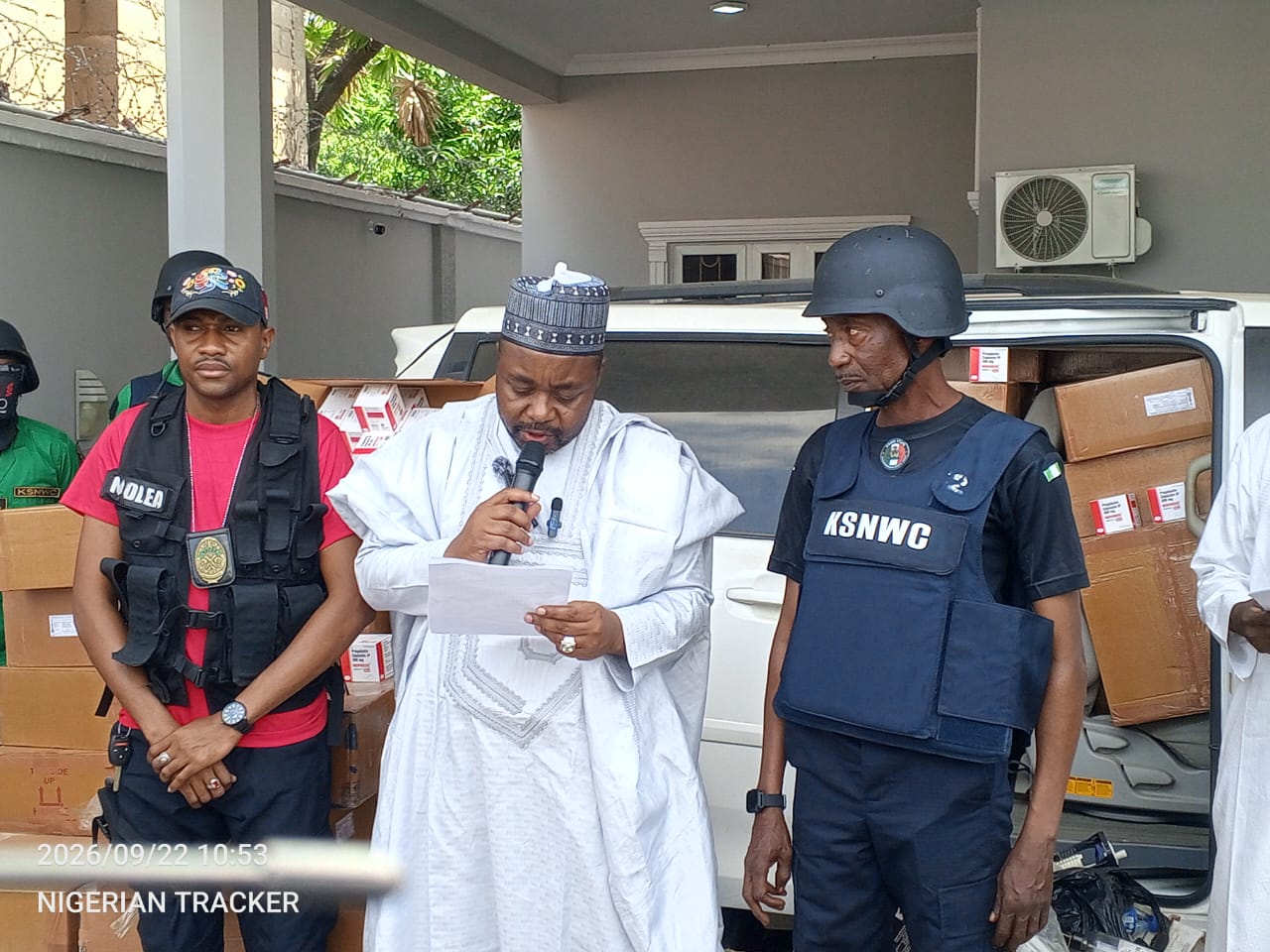
The Kano State Multi-Agency Task Force on Drug Abuse and Illicit Trafficking says it has arrested more than 380 suspects and secured over 230 convictions within two months of its inauguration, as part of intensified efforts to combat drug abuse, illicit trafficking, thuggery and other related crimes in the state.
Chairman of the Task Force, Barrister Muhuyi Magaji Rimin Gado, disclosed this on Tuesday,while briefing journalists on the activities and achievements of the committee since its inauguration on July 22, 2026. The task force was established as part of the Kano State Government’s response to substance abuse and drug-related criminal activities.
According to Rimin Gado, the committee has conducted a series of joint enforcement and dislodgment operations targeting drug joints, criminal hideouts and locations where youths allegedly gather to abuse illicit substances before engaging in activities including thuggery, phone snatching and other crimes.
Rimin Gado said the operations covered several identified black spots in Kano metropolis, including Race Course, Filin Idi, Filin Mahaha, Tashar Rami, Kawo and Tashar Rimi, among other locations.
The Task Force chairman said the operations resulted in the arrest of more than 380 suspects and the recovery of assorted substances, including Cannabis Sativa, Exol-5, Diazepam, Pentazocine injection, Tramadol, Pregabalin capsules, Rubber Solution and other substances identified by the task force as being abused illicitly.
He said the committee also recovered locally made weapons from some of the locations, including knives, cutlasses, daggers, clubs and other offensive weapons allegedly used by suspected drug dealers and members of criminal groups.
Rimin Gado said the recovery of the weapons was significant because some of the suspects allegedly used them to intimidate residents, commit crimes and resist arrest during enforcement operations.
The Task Force chairman also disclosed that about 870,000 capsules of Pregabalin were seized from a pharmaceutical company in the state over suspected diversion of the controlled substance for illicit use.
According to Rimin Gado, the circumstances surrounding the discovery raised concerns about compliance with federal and state regulations governing pharmaceutical warehouse operations and the distribution of controlled medicines.
He therefore called on pharmaceutical companies, pharmacy managers, superintendent pharmacists and other personnel in the pharmaceutical supply chain to strengthen their internal controls and ensure that controlled medicines do not find their way into illicit markets.
Rimin Gado warned that the Task Force would investigate anyone found culpable in the diversion of controlled drugs, stressing that legitimate pharmaceutical businesses must cooperate with inspections and inquiries.
The chairman further disclosed that more than 230 convictions had already been secured from cases handled by the Task Force since its inauguration.
He cited the conviction of two men, Kabiru Isa, popularly known as Mada, and Usman Hamisu, also known as Mani, over their alleged involvement in exposing 43 underage children to intoxicating substances.
The two men were previously reported to have been sentenced by Magistrate Muhammad Alhaji Sani of Magistrate Court No. 44, Gwammaja, Kano, after being convicted of offences including criminal conspiracy, membership of an unlawful society and administering intoxicating substances.
Rimin Gado said the 43 children, many of whom were involved in street scavenging, were allegedly supplied with Rubber Solution and other intoxicating substances instead of being properly paid for their work.
He said the children had been rescued and subjected to medical examinations, counselling and treatment, while efforts were ongoing to trace their families.
The chairman said some of the children’s families had already been identified and reunited with them, while the rehabilitation and reintegration process for others was continuing.
Rimin Gado also disclosed what he described as a landmark case involving alleged illegal administration and distribution of Pentazocine.
According to him, the Task Force acted on a complaint concerning the alleged administration of Pentazocine to a 63-year-old woman by former Chairman of Rogo Local Government Area, Yahuza Musa.
He said the allegation was further corroborated by a 24-year-old man who claimed to have spent more than N10 million and a plot of land to purchase the same injection from the former local government chairman.
Rimin Gado said the former chairman had subsequently been charged before a competent court, where the case remains pending.
The chairman said the Task Force had also intensified its campaign against the activities of criminal gangs popularly referred to as Daba, with several suspected gang members arrested and convicted.
Rimin Gado identified some of those convicted as Abdullahi Ahmad, popularly known as Horror; Abubakar Sada, also known as Daburi; Abdullahi Sani, known as Sarki Ale; and Umar Aliyu, among others.
He said some suspected gang members had used social media platforms to allegedly glorify or encourage thuggery and violence, adding that the Task Force would continue to pursue individuals involved in such activities.
Rimin Gado said the convictions were intended to demonstrate that drug abuse, gang activities and violent thuggery would be treated as criminal matters requiring enforcement and prosecution.
The chairman also announced a breakthrough in the investigation of a phone-snatching syndicate known as ‘Yan Liya, which allegedly uses commercial tricycles, popularly called Adaidaita Sahu or Keke Napep, to steal mobile phones from members of the public.
According to Rimin Gado, the Task Force arrested a suspect linked to the syndicate, secured his conviction and obtained the forfeiture of a tricycle allegedly used in the commission of the crime.
He said the suspect reportedly confessed that he could not count the number of phones allegedly stolen by the syndicate.
Rimin Gado further alleged that some owners of the tricycles used by the syndicate were aware of the criminal activities of their riders and sometimes demanded higher payments because of the proceeds generated from the illicit operations.
The chairman therefore urged members of the public to exercise caution when using commercial tricycles and warned owners against knowingly allowing their vehicles to be used for criminal activities.
He said the Task Force would pursue not only individuals involved in criminal activities but also the instruments allegedly used to commit the offences, including vehicles, where the law permits forfeiture.
Beyond arrests and prosecutions, Rimin Gado said the Task Force was combining enforcement with prevention, treatment and rehabilitation.
He said about 125 people had been referred to the Kano Reformatory Institute in Kiru for rehabilitation as part of efforts to address substance abuse as a problem requiring treatment and recovery rather than enforcement alone.
The Task Force had earlier announced plans to establish additional rehabilitation facilities and engage stakeholders in prevention and treatment programmes across the state.
Rimin Gado said the committee had also embarked on sensitisation programmes involving communities, religious institutions, schools, markets and other stakeholders to educate residents about the dangers associated with drug abuse.
The chairman said the growing demand for rehabilitation had placed significant pressure on the Kano State Reformatory Institute in Kiru, which he said had reached capacity.
According to Rimin Gado, Governor Abba Kabir Yusuf had provided an additional facility in Tofa Local Government Area to serve as an extension of the rehabilitation infrastructure.
He said the facility would be equipped and put into operation to accommodate people seeking treatment and rehabilitation, particularly as more families were voluntarily bringing relatives affected by substance abuse for assistance.
Rimin Gado said the broader objective of the intervention was to take 10,000 youths off the streets, rehabilitate them, provide skills acquisition opportunities and support their eventual reintegration into society.
He said the Task Force was engaging industrial stakeholders and other relevant organisations on strategies for creating employment and productive opportunities for youths who complete rehabilitation.
According to him, the objective is to ensure that rehabilitated youths return to their communities with useful skills and opportunities that can reduce the risk of relapse and re-engagement in criminal activities.
The proposed 10,000-person intervention is consistent with earlier statements by the Task Force that its strategy would combine enforcement with detoxification, rehabilitation, skills acquisition and economic reintegration.
Rimin Gado attributed the progress recorded by the Task Force to the cooperation among security, law enforcement, government and community-based institutions working under the multi-agency framework.
He specifically appreciated personnel from the National Drug Law Enforcement Agency, Nigeria Police Force, Department of State Services, Nigeria Security and Civil Defence Corps, Nigeria Customs Service, Nigerian Correctional Service, KOSSAP, Vigilante groups, Hisbah and KAROTA for their participation in the operations.
The chairman said the multi-agency structure was designed to reduce inter-agency rivalry and improve intelligence sharing, joint operations and coordinated responses to drug abuse and associated criminal activities.
Governor Abba Kabir Yusuf had, at the inauguration of the Task Force in July, directed the committee to coordinate intelligence gathering, enforcement, public enlightenment, rehabilitation and collaboration among relevant agencies.
Rimin Gado also acknowledged the contributions of non-governmental organisations, civil society groups, traditional institutions, religious organisations and the media to the campaign against drug abuse.
He appealed to residents to provide timely and relevant information to the Task Force and other security agencies on drug trafficking, criminal hideouts and activities that threaten public safety.
The chairman said the Task Force’s activities were in line with Governor Yusuf’s objective of achieving a drug-free Kano under his administration’s “Kano First Agenda.”
Rimin Gado expressed appreciation to Governor Yusuf for what he described as the political will and institutional support behind the establishment of the Task Force, saying the administration’s approach had brought several agencies together under a common framework to confront drug abuse, illicit trafficking and related criminal activities.
The Kano State Government inaugurated the multi-agency task force on July 22, shortly after the governor signed an executive order aimed at tackling substance abuse, thuggery and related criminal activities across the state.
The Task Force chairman said the committee would sustain its enforcement, prevention, rehabilitation and reintegration programmes, with the stated objective of making Kano safer while providing vulnerable youths affected by substance abuse with opportunities to recover, acquire skills and return to productive community life.

JUST IN: EFCC Re-declares Abdulrasheed Maina Wanted over Alleged Receipt of Stolen Property

Zamfara Varsity ASUU Threatens Warning Strike Over FG-ASUU Agreement, Promotion Arrears

Kano Task Force Arrests 380 Suspects, Secures Over 230 Convictions in Two Months

Uromi Killings: Human Rights Group Demands Explanation Over N6m Given to Kano Victims’ Families

President Tinubu Adds Days to Working Vacation, Returns at Weekend
Zamfara Varsity ASUU Threatens Warning Strike Over FG-ASUU Agreement, Promotion Arrears

Bello Sharada: A Great Writer, A Bookish Soul, Gone Too Soon

NUT Launches ‘Go Public’ Campaign to Promote Public Education in Nigeria

Nigerians Are Tired of Promises’ — CAN Demands Action on Insecurity, Hardship In Eid-el-Maulud Message

Kano Chemists Threaten Warning Strike Over Alleged PCN Pressure
JUST IN: EFCC Re-declares Abdulrasheed Maina Wanted over Alleged Receipt of Stolen Property
Zamfara Varsity ASUU Threatens Warning Strike Over FG-ASUU Agreement, Promotion Arrears
Kano Task Force Arrests 380 Suspects, Secures Over 230 Convictions in Two Months
Uromi Killings: Human Rights Group Demands Explanation Over N6m Given to Kano Victims’ Families
President Tinubu Adds Days to Working Vacation, Returns at Weekend
Zamfara Varsity ASUU Threatens Warning Strike Over FG-ASUU Agreement, Promotion Arrears
Bello Sharada: A Great Writer, A Bookish Soul, Gone Too Soon
NUT Launches ‘Go Public’ Campaign to Promote Public Education in Nigeria
Nigerians Are Tired of Promises’ — CAN Demands Action on Insecurity, Hardship In Eid-el-Maulud Message
Kano Chemists Threaten Warning Strike Over Alleged PCN Pressure
-

 Opinion5 years ago
On The Kano Flyovers And Public Perception
-

 Features5 years ago
How I Became A Multimillionaire In Nigeria – Hadiza Gabon
-

 Opinion6 years ago
Kano As future Headquarters Of Poverty In Nigeria
-

 History5 years ago
Sheikh Adam Abdullahi Al-Ilory (1917-1992):Nigeria’s Islamic Scholar Who Wrote Over 100 Books And Journals
-

 Opinion5 years ago
My First Encounter with Nasiru Gawuna, the Humble Deputy Governor
-

 History5 years ago
The History Of Borno State Governor Professor Babagana Umara Zulum
-

 History5 years ago
The Origin Of “Mammy Market” In Army Barracks (Mammy Ochefu)
-

 News4 years ago
Federal University Of Technology Babura To Commence Academic Activities September