
News
5,800 Plateau Children Suffer Acute Malnutrition – Report

By Asile Abel,Jos
For decades, malnutrition in Nigeria has been described in statistics, often reduced to charts and policy debates. But in places like Jos North, the crisis has a face, small arms that barely fit a measuring tape, sunken eyes that betray hunger, and children who, at five years old, weigh less than they should at two.
Despite being one of Nigeria’s agricultural strongholds, Plateau State has not been spared from the nutrition crisis gripping the country. According to the 2023 Multiple Indicator Cluster Survey (MICS), nearly half of the children in the state are stunted, with more than 326,000 affected, a staggering figure for a state blessed with fertile soil and local food options.
Still, in the midst of the crisis, voices of resilience rise.
Cynthia Raymond, a mother of a six-month-old baby, sits proudly with her daughter in her arms. Nothing else, just breast milk. It’s been good. No illness. I eat well, eggs, meat, fruits and I see the strength in my baby. She hardly falls sick.” she says with confidence.
Cynthia is one of many mothers embracing exclusive breastfeeding, a low-cost, high-impact intervention proven to prevent disease and promote healthy growth in children under six months.
“After six months, I plan to introduce complementary feeding. I’ll make Tamba, groundnut, grains with crayfish and vegetables. I want her strong,” she added.
Another mother, Tabita Solomon, shares a similar story. “I prepared puff from ground grains, soybean, and crayfish. He ate it and loved it. They said breastfed babies don’t eat much, but mine? He eats everything. He started crawling before five months. He walks now. Teething was easy.”
These mothers represent a growing movement: women returning to traditional, nutritious foods and health education to combat a crisis once thought insurmountable.
Yet, the scale of the challenge is immense. Across Nigeria, over 15 million children are stunted, 10 million are wasted, and 12 million are anaemic. Numbers second only to India globally. In Plateau alone, 5,800 children suffer from severe acute malnutrition. And the consequences are deadly: weakened immunity, poor brain development, and a high risk of death before the age of five.
Philomena Irene, a Nutrition Specialist at UNICEF Nigeria, Bauchi Field Office, did not mince words during a two-day media dialogue with journalists in Jos. “Nigeria ranks number one in Africa for child malnutrition. Not because of war like in Sudan or Chad but because of our child population size and systemic health gaps.
She painted a grim picture “31 million Nigerians don’t know where their next meal will come from. And among children aged 0–6 months, only one in three is exclusively breastfed. We’re already shortchanging the future,” she warned.
Plateau’s statistics align with this national crisis. 46.4% of children are stunted, 4.8% are wasted, and 22.3% are anaemic. The under-five mortality rate is 105 per 1,000 live births, well above global targets.
She stressed that reversing malnutrition requires a shift not just in policy, but in attitude. “This is about our own children. Not someone else’s but ours. Feeding them right is our first responsibility.”
The mid-upper arm circumference (MUAC) band, a simple strip used to measure a child’s nutrition status. “When the arm falls in the red zone, we know we must act immediately. That child is severely wasted”; Irene explained, holding up the strip.
In Plateau, the red-zone children number in thousands. Yet, the awareness is growing.
UNICEF called on local leaders, families, and policymakers to act. “Start from your kitchen. Choose wisely. That sugary beverage? It’s 90% sugar, 1% cocoa. That’s not food,” Philomena said, her voice tinged with frustration.
Malnutrition, as the Nutritionist say, is not incurable. But it is sneaky, it hides behind full stomachs and cultural norms. “Just because a child eats doesn’t mean they’re nourished,” warned Philomena
Irene revealed that every $1 invested in child nutrition generates a $16 return, emphasizing the economic and developmental urgency of tackling malnutrition among children aged 6 to 23 months in Plateau State.
The nutritionist said that while exclusive breastfeeding is vital for children from birth to six months, attention must shift to ensuring nutrient-rich complementary foods are introduced afterward.
“In Plateau State, according to the 2021 Multiple Indicator Cluster Survey, two out of every three children suffer from food poverty, meaning they lack access to the minimum dietary diversity needed for proper growth. Our goal with this dialogue is to mobilize awareness and foster government and community action to improve child nutrition outcomes,” she said.
Irene highlighted the significant consequences of malnutrition on cognitive and physical development, especially in the 6–23 months age range, which falls within the first 1,000 days of life, a scientifically proven window critical to lifelong development.
The nutrition specialist warned that failing to invest in nutrition carries steep costs for families and the country. “It costs ₦21,000 to prevent malnutrition, but more than ₦190,000 to treat it. The return on investment is clear for every $1 spent on nutrition, we get $16 in economic return,” Irene added, citing research from the World Bank and Lancet Series.
One of the key interventions spotlighted at the event was the introduction of Small Quantity Lipid-Based Nutrient Supplements (SQ-LNS)—a specialized supplement for enriching the diets of children during the complementary feeding period.
She explained that in 2024, Plateau State committed $200,000 to the Child Nutrition Fund, which was matched by UNICEF. The joint funding enabled the state to procure over 5,900 cartons of SQ-LNS for distribution.
Irene also revealed that discussions are underway to commence local production of SQ in Nigeria, a move aimed at reducing costs and creating jobs.
She emphasized that community awareness, sustained political will, and strategic government investments are vital in reversing the alarming trend of malnutrition. “This is not just a health issue, it is an economic and national development issue,” Irene said.
At the Township Primary Health Centre in Jos North, Halima Chantu, the acting officer-in-charge, leads the charge with hands-on education. “We give health talks every day during immunization and antenatal care. We teach them breastfeeding, complementary feeding, and local food prep,” she said.
Halima said that using locally available food is key. “Why spend money on packaged food when yam, sweet potato, and vegetables are right here? We teach them how to combine these. We even encourage them to grow spinach.”
Halima’s team monitors babies’ growth, checks weights, and follows up when signs of malnutrition appear. “We don’t stop at advice. We follow through,” she added.
The World Bank warns that stunting alone can reduce GDP, a stark reminder that malnutrition is not just a health issue, but a national development threat.
Across Jos and its neighboring communities, a quiet revolution is taking shape, one vegetable garden, one feeding demonstration, one mother at a time.
Mothers like Tabita and Cynthia are leading the way not with slogans, but with practice. Their message is clear: start early, feed right, and never underestimate the power of knowledge passed from one mother to another.
In a nation as young as Nigeria where nearly half the population is under 18, this revolution could shape the country’s destiny.
News
Scrap Dealers Begin 15-Day Strike, Blame Chinese, Foreign Firms for Market Crisis
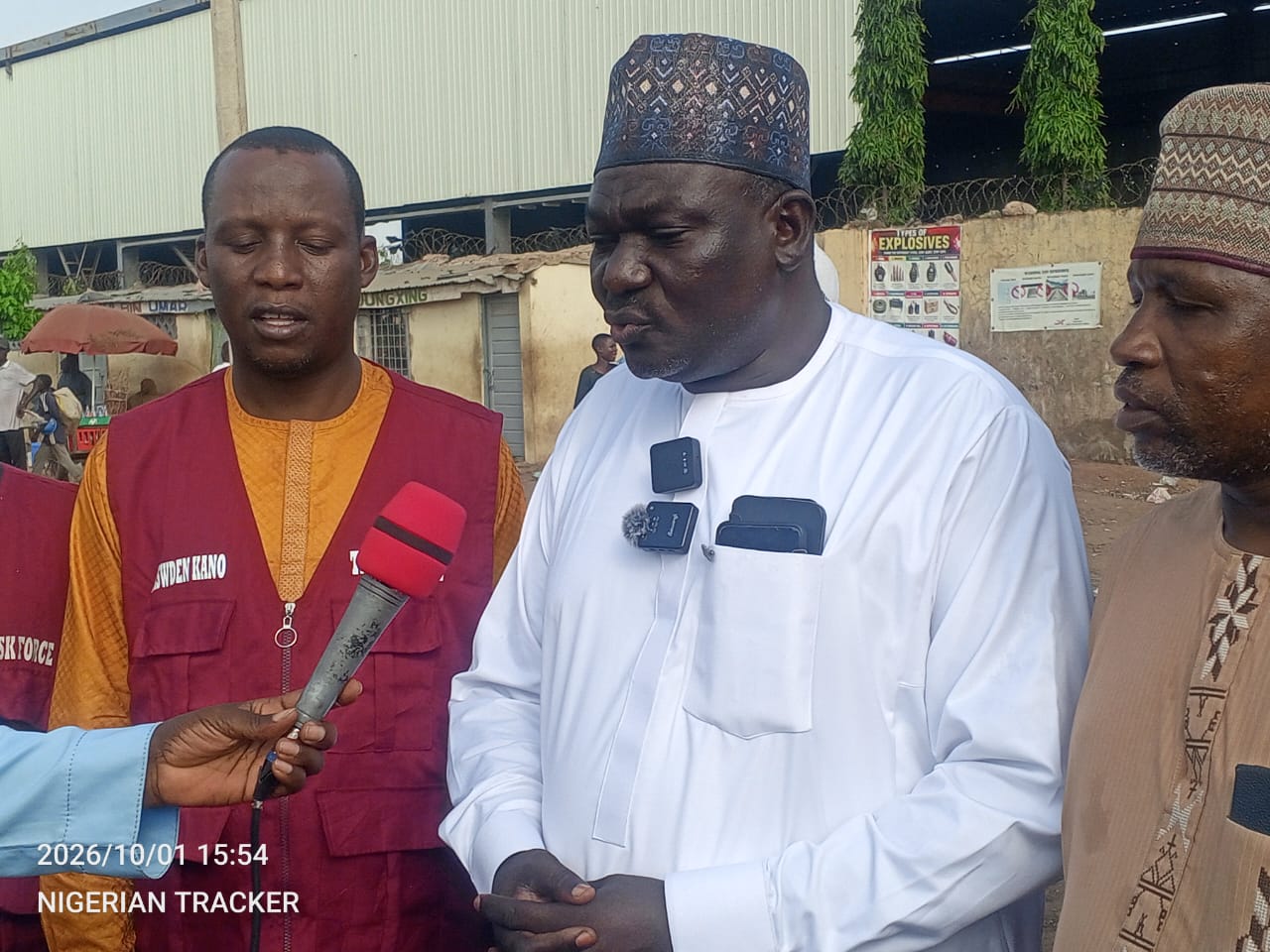
The National Association of Scrap and Waste Dealers Employers of Nigeria has commenced a 15-day nationwide warning strike over what it described as the devaluation of its members’ businesses by Chinese and other foreign companies operating in Nigeria.
The association announced the commencement of the strike on Thursday, saying its members were withdrawing their services to draw the attention of the Federal Government and relevant authorities to what it described as unfair practices threatening the survival of the scrap and waste recycling industry.
The Vice President of the association, Aminu Hassan Soja, popularly known as Sarkin Karafan Kasar Hausa, disclosed the decision while addressing journalists in Kano on Thursday.
Hassan said members of the association were losing between ₦2 million and ₦3 million on every truckload of scrap materials as a result of what he alleged were activities of Chinese and other foreign companies in the sector.
According to him, the situation had significantly affected the prices of scrap materials and was making it increasingly difficult for Nigerian-owned businesses to remain viable.
The association’s vice president further alleged that some foreign operators were involved in practices that were affecting the quality of construction materials produced from recycled metals.
Hassan specifically alleged that 12-millimetre iron rods were being presented or processed as 10-millimetre rods, a development he linked to concerns over the quality of building materials and the reported collapse of buildings in different parts of the country.
He said the alleged practices were taking place despite existing laws and regulations governing the production and marketing of construction materials in Nigeria.
The association’s leader expressed concern that foreign companies were allegedly operating as though there were no effective laws regulating their activities in the country.
Hassan said the decision to embark on the 15-day strike followed efforts by the association to draw the attention of relevant authorities to the challenges facing its members.
He said the association had written to relevant government agencies as well as security agencies to formally notify them of the warning strike and its implications.
According to him, the association has a membership of more than two million people across the country, stressing that its members had complied with the directive to withdraw their services.
Hassan described the association as one of the largest employers of labour in the country outside the agricultural sector, saying the activities of its members contribute significantly to employment and the recycling economy.
He said the strike was therefore intended to compel the authorities to address the concerns raised by the association and protect local operators in the scrap and waste business.
Soja says the association’s leadership had information that some individuals could attempt to act as saboteurs from within the association.
Hassan urged members to remain united and adhere to the directive throughout the 15-day warning strike, while calling on government agencies to intervene in the issues raised by the association.
He said the association remained open to dialogue with the Federal Government and other stakeholders, but insisted that the concerns of its members must be addressed to prevent further losses and protect businesses operating in the sector.
News
Kaduna Court Dismisses El-Rufai Trial Judge Recusal Application, Orders Accelerated Hearing

The Kaduna State High Court has dismissed an application seeking the recusal of Justice Darius Khobo from the trial of former Kaduna State Governor, Mallam Nasir Ahmed El-Rufai.
The court, in its ruling last week on the application, held that the applicant had not waived his right to complain of alleged bias by his conduct.
Justice Khobo, however, ruled that the multiple processes filed by the applicant before the Court of Appeal and the Kaduna State High Court constituted an abuse of court processes.
The court also held that the applicant failed to establish a likelihood of bias against him.
The court formulated three issues for determination in resolving the application.
On whether the applicant had waived his right to complain of bias by his conduct, the court resolved the issue in favour of the applicant, holding that the right had not been waived by mere conduct.
However, in the second issue, whether the applicant had abused the processes of the court, the court ruled in favour of the respondent, finding that the multiple processes filed before the Court of Appeal and the State High Court constituted an abuse of court process.
The third issue, which concerned whether there was a likelihood of bias against the applicant, was also resolved in favour of the respondent, with the court holding that the applicant failed to prove such likelihood.
In its final analysis, the court held that the application for recusal lacked merit and consequently refused and dismissed it.
The court directed that the trial on the substantive charge should continue on a day-to-day basis, as practicable in the circumstances.
It further ordered that the defendant remain in the custody of the Independent Corrupt Practices and Other Related Offences Commission, ICPC, pending the continuation of the trial.
The case was adjourned to October 12 and 13, 2026, for accelerated hearing.
News
Chinese, Nigerian workers celebrate Mid-Autumn Festival
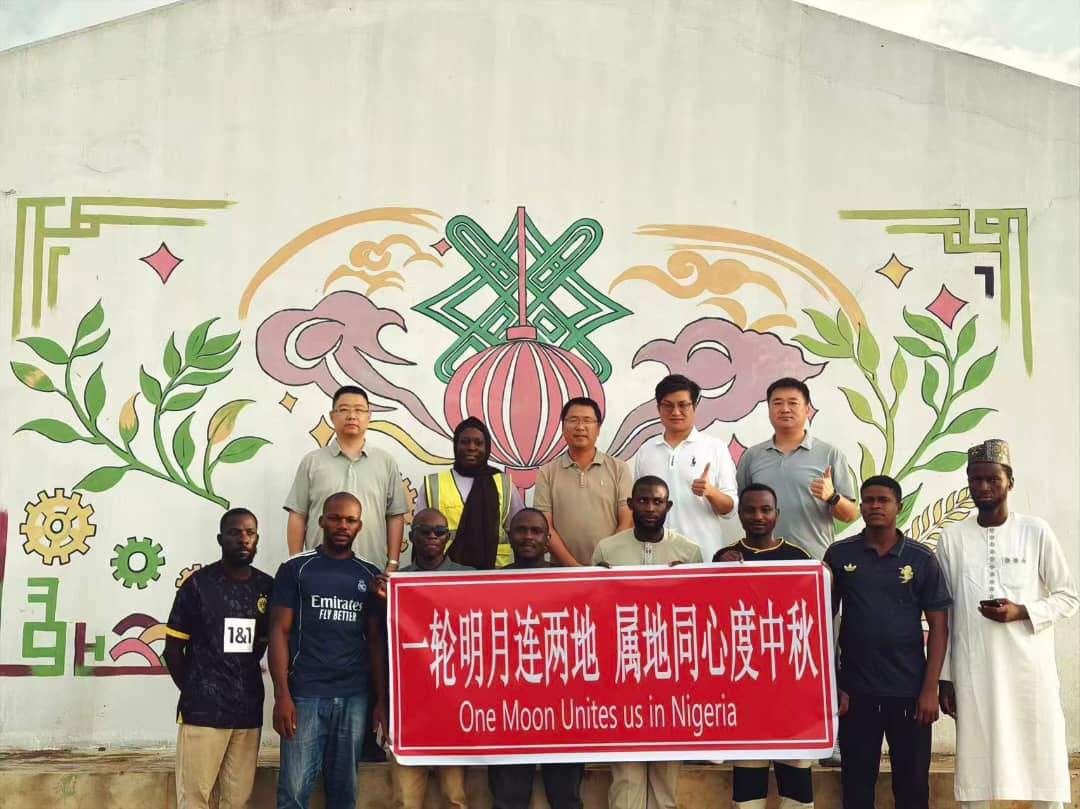
Chinese and Nigerian workers at a project site in Nigeria have celebrated the Mid-Autumn Festival with storytelling, poetry, traditional food and discussions aimed at promoting cultural understanding between the two countries.
The celebration, organised by the project team, brought Chinese and Nigerian colleagues together under the theme of cultural exchange, with participants sharing traditions and beliefs associated with the moon in their respective societies.
The event featured lantern displays, mooncakes, poetry recitals and presentations on the history and customs of the Chinese Mid-Autumn Festival.
Chinese staff introduced their Nigerian colleagues to traditional stories associated with the festival, including the legend of Chang’e flying to the moon and the story of Wu Gang and the cassia tree.
They also explained customs such as moon-gazing, eating mooncakes, displaying lanterns and solving riddles.
A major focus of the presentation was the Chinese cultural understanding of the festival as a time for family reunion.
The Chinese team explained that, even when family members are separated by distance, the full moon provides a symbolic connection as people look at the same moon and share thoughts and blessings with their loved ones.
The Nigerian participants said the emphasis on family togetherness resonated with values deeply rooted in Nigerian communities.
Sharing Nigerian moon traditions
The cultural exchange continued with a session in which Nigerian colleagues shared stories and traditions surrounding the moon in different Nigerian communities.
Participants spoke about local beliefs linking the moon with harvest, love, time and seasonal changes, while others explained how the moon has traditionally featured in communal gatherings and storytelling.
One of the Nigerian participants observed that full-moon nights in some communities are occasions for gathering, singing, dancing and storytelling, drawing parallels with the Chinese Mid-Autumn Festival.
The observation attracted laughter and applause from the participants, who noted the similarities between the two cultures despite their geographical distance.
Chinese staff also discussed the place of the moon in Chinese poetry and folk traditions, with participants agreeing that the shared appreciation of the moon provided a common cultural connection.
Poetry brings colleagues together
The celebration also featured a Chinese poetry session during which Nigerian colleagues were introduced to poems by renowned Chinese poets Su Shi and Li Bai.
The participants recited lines from Shui Diao Ge Tou and Jing Ye Si, with Chinese colleagues explaining the meanings of the verses and helping their Nigerian counterparts with pronunciation.
Particular attention was given to the famous sentiment wishing that loved ones would live long enough to share the beauty of the same moon despite being separated by distance.
The participants described the message as a universal expression of love, friendship and longing that transcends cultural boundaries.
Mooncakes symbolise friendship
The celebration ended with the presentation and sharing of mooncakes, a major traditional food associated with the festival.
Chinese staff explained that the round shape of the mooncake symbolises reunion and completeness before inviting their Nigerian colleagues to taste different varieties, including lotus seed, red bean and mixed-nut fillings.
For some of the Nigerian participants, it was their first experience of eating mooncakes.
One participant described the experience as more than tasting a new food, saying the gesture reflected the care and thoughtfulness of the project team.
The organisers said the celebration provided an opportunity for Nigerian colleagues to experience Chinese culture while enabling Chinese staff to learn more about Nigerian traditions.
They said such activities could strengthen mutual understanding, friendship and cooperation between Chinese and Nigerian workers.
The project team said it would continue to use traditional festivals and other cultural activities as platforms for people-to-people exchanges, with the aim of deepening China-Nigeria relations at the community and workplace levels.
The celebration, they added, demonstrated how cultural traditions can provide a bridge between people from different backgrounds and promote greater understanding and cooperation.

Scrap Dealers Begin 15-Day Strike, Blame Chinese, Foreign Firms for Market Crisis

Kaduna Court Dismisses El-Rufai Trial Judge Recusal Application, Orders Accelerated Hearing

Chinese, Nigerian workers celebrate Mid-Autumn Festival

Muhuyi and the Fight for Kano’s Future-Ismail Auwal

Independence Day: FG Declares October 1 Public Holiday

Zamfara Varsity ASUU Threatens Warning Strike Over FG-ASUU Agreement, Promotion Arrears

Kano Chemists Threaten Warning Strike Over Alleged PCN Pressure

Per Ishaq Samaila: “Waziri” for Strategy. “Mai Jama’a” for Service. One Man. One Mission. Ibrahim Kabir Masari

Goje’s Electoral War:The Confrontation With Tinubu,Governor Inuwa,Usman Kumo And APC candidates Ahead Of 2027

Maulud: Best Choice Specialist Hospital Congratulates Kano Governor, Muslims Globally
Scrap Dealers Begin 15-Day Strike, Blame Chinese, Foreign Firms for Market Crisis
Kaduna Court Dismisses El-Rufai Trial Judge Recusal Application, Orders Accelerated Hearing
Chinese, Nigerian workers celebrate Mid-Autumn Festival
Muhuyi and the Fight for Kano’s Future-Ismail Auwal
Independence Day: FG Declares October 1 Public Holiday
Zamfara Varsity ASUU Threatens Warning Strike Over FG-ASUU Agreement, Promotion Arrears
Kano Chemists Threaten Warning Strike Over Alleged PCN Pressure
Per Ishaq Samaila: “Waziri” for Strategy. “Mai Jama’a” for Service. One Man. One Mission. Ibrahim Kabir Masari
Goje’s Electoral War:The Confrontation With Tinubu,Governor Inuwa,Usman Kumo And APC candidates Ahead Of 2027
Maulud: Best Choice Specialist Hospital Congratulates Kano Governor, Muslims Globally
-

 Opinion5 years ago
On The Kano Flyovers And Public Perception
-

 Features5 years ago
How I Became A Multimillionaire In Nigeria – Hadiza Gabon
-

 Opinion6 years ago
Kano As future Headquarters Of Poverty In Nigeria
-

 History5 years ago
Sheikh Adam Abdullahi Al-Ilory (1917-1992):Nigeria’s Islamic Scholar Who Wrote Over 100 Books And Journals
-

 Opinion5 years ago
My First Encounter with Nasiru Gawuna, the Humble Deputy Governor
-

 History5 years ago
The History Of Borno State Governor Professor Babagana Umara Zulum
-

 History6 years ago
The Origin Of “Mammy Market” In Army Barracks (Mammy Ochefu)
-

 News4 years ago
Federal University Of Technology Babura To Commence Academic Activities September