
Opinion
THE ’12- DAY WAR : lesson for tomorrow-Inuwa Waya
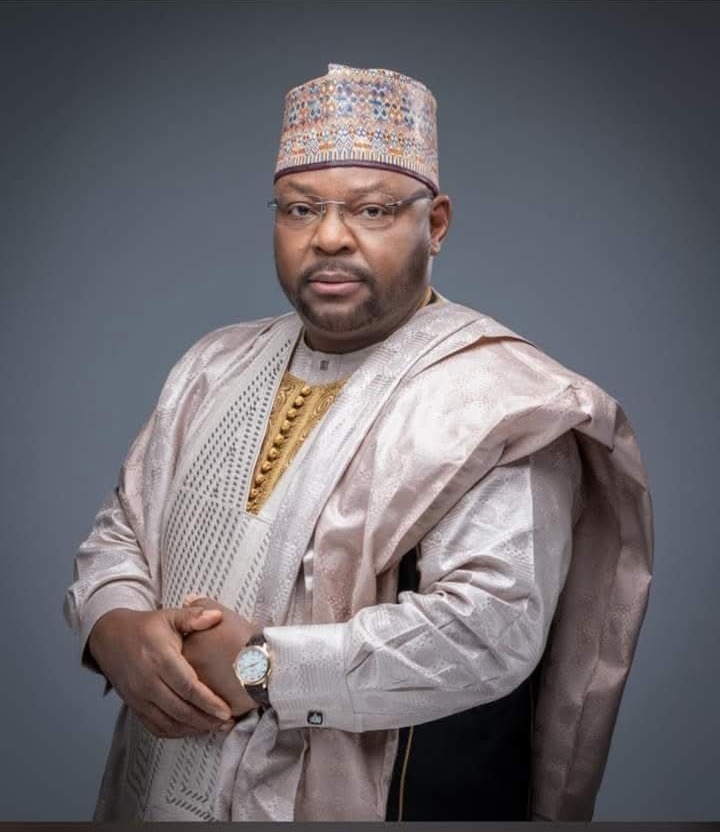
Let me start with a hypothetical scenario. You have a neighbour who was full of pride because he is strong economically and otherwise. He has friends equally very powerful who come to his assistance whenever he requested.
Because of that, he holds every household in your area with disdain and contempt. With or without provocation, he enters any household, maim, and even kill if there is resistance. His powerful friends rearmed him with weapons and money from time to time for him to continue oppressing and frightening the neighbourhood. Everyone in the environs and beyond is afraid of him, and nobody dare challenge his impunity and wanton display of power and arrogance. Any perceived threat to his power is met by maximum punishment. When the situation became unbearable, you started showing signs of disapproval. You began to raise awareness for the neighbourhood to address his excesses. Once he noticed your actions, he became more aggressive and started planning on how to deal with you. He began by planning with his powerful friends to kill your relations who are staying
in a nearby neighbourhood. He followed that with clandestine actions to intimidate you for daring him. One day in your absence, he entered your house, vandalised properties, and killed some members of your family whilst others managed to escape. He also left an inscription on your door stating that you are the next target. When you returned home and saw the carnage, you became confused. You started having a dilemma on whether to avenge or beg him to spare your life and those of the remaining members of your family. The aforementioned hypothetical narration typified the situation between the Islamic Republic of Iran and Israel. We assumed you are IRAN and ISRAEL is the neighbour who has been terrorising the neighbourhood and the one that conducted the assault in your house. Let’s move out of the hypothetical World into the realm of reality. After the Israel preemptive attack against Iran on the 13th of June, it took less than twenty- four hours for Iran to exert her revenge. The revenge itself was one, it’s significance however was the show of determination and courage on the part of the Iranian nation to confront the state of Israel. Since its creation in 1948, Israel uprooted and expelled the Palestinians who are the original inhabitants of the land. Over time, they expanded their land grab by building more settlements in occupied lands of Jerusalem, Jericho, West Bank, and Bethlehem, actions which are illegal under the International Law. They invaded Southern Lebanon in 1982 and participated in planning, preparation and execution of Sabra and Chatila massacre in which nearly three thousand five hundred Labanese and Palestinians were killed. In June 1967, Israel entered and gained control of Golan Heights, which was under the control of the Syrian Arab Republic. From time to time, Israel made incursions into any territory to conduct covert and overt military and intelligence operations. Through targeted assassinations, Israel killed a number of persons. In Palestine for instance, Israel assassinated Yahaya Ayesh, Sheik Ahmed Yasin, Mahmoud Rantisi his brother Abdulaziz Rantisi, Yahaya Sinwar, Mohammed Sinwar, Ismail Haneya, Chairman Yasser Arafat, to mention but a few. On 27th November 2020, Israel assassinated Mohsen Fakhrizadeh Mahabad an Iranian nuclear scientist. In the 13th June attack, Israel killed fourteen Iranian nuclear scientist along with their neighbours and members of their families. At the behest of Israel, the United States assassinated Iranian Genaral Qasim Soleimani on the 3rd January 2020 at the Baghdad airport. It was based on Israel false intelligence that America and the rest of the West invaded Iraq and deposed Saddam Hussain in March 2003. Tens of thousands of people were killed in that war. In the end, no weapons of mass destruction were found as stated by the Israeli intelligence. In Gaza where Israel is raging a relentless war against unarmed people, over 56,000 thousand Palestinians were killed and 2.1 million of them were displaced and subjected to starvation. All infrastructures in Gaza were destroyed by Israel bombs. The strip is now unhabitable for ordinary human beings. This war followed the Hamas attack on Israel which killed 1200 Israelis. In addition to the general subjugation the Palestinians are going through since Israel was created in 1948, the people of Gaza suffered additional humiliation by living in what is generally referred to as the largest open prison in the World. In this particular war, Israel tested lethal weapons that were never use in any warfare. When they run out of bombs, America, replenished them with new supplies. Millions of Palestinians are scattered all over the World as refugees or on exile to escape Israel onslaught.
Israel is a very powerful Country. It is the only nuclear state in the Middle East, although it maintained policy of silence regarding its nuclear weapons. The Israel nuclear possession came to the World’s attention in 1986, when Mordachai Vanunu a former Israel nuclear technician gave detailed information and photos of Israel’s nuclear program to the British newspaper The Sunday Times. His revelations indicated that Israel had developed a substantial nuclear arsenal. After that revealing interview, Vanunu was kidnapped in Rome and brought to Israel by the Israel intelligence outfit, Mossad. He was tried in secret and was sentenced to 18 years imprisonment. To date Israel refused to join the International Atomic Energy Agency ( IAEA) and denied it’s inspectors entry visa to visit the County for inspection.
Through the work of the American Israel Public Affairs Committee ( AIPAC), Israel was able to get political and diplomatic cover from the United States of America. It was estimated that the United Nations Security Council had passed over 30 resolutions that Israel is accused of contravening. Additionally, the US had used its veto power over 40 times to block resolutions critical of Israel in the Security Council. Most of these resolutions relates to Israel’s activities in Palestine, Lebanon, Syria and Jerusalem. In today’s World, political analysts have concluded that Israel is the most powerful Country, more powerful than even the United States that gives it all the protection at the International level.
When a Country like Israel attacks one, it is in One’s interest to retreat and run away. That brought us to the significance of the revenge carried out by the Islamic Republic of Iran against the Jewish state. The Iranian bravery demystified the vulnerability of the invulnerability of the state of Israel. It further exposed the myth that no Country can attack Israel and remain a Country. In the twelve days war, the Iranian short, medium and long range missiles caused massive destruction in Israel. The Iranian drones and missiles penetrated the Israel’s iron dome, David sling and arrows, to cause maximum damage in Tel Aviv, Haifa, Dimona, Hora, Hod HaSharon, Beersheba, and Rishon LeZion. During the period of the war, the Israelis experienced terrible consequences of their actions. Schools were closed, workers were asked to go home, sirens were activated every now and then and people were in and out of public shelters. At home, people were asked to listen to radios and television for intermittent announcements. The restaurants, beaches and night clubs were all deserted. People were running helter skelter. Before the 13th of June, if you ask the Israelis that they would experience such, they would say you are deluded. But it happened, it was a reality and not a dream. The government became confused just as the people were. The jews are pampered people full of pride and lavish lifestyle. The Iranians are not. They are prepared for a long war. They experienced it before fighting the Iraqis for eight years. The Iranians have been in one form of sanction or another since the Islamic revolution of 1979. The sanctions made them resilient and enable to make inventions and innovations for their progress and development. They also have pride about their religion and their ancestry. You just can not beat them easily.
When Israel realised that their military campaign is ineffective, they begged the Americans to come to their rescue. Back home, the majority of the Americans do not have the appetite for war. President Trump was elected to stop Americans from going to war. However in order not to embarrass the Israelis, President Trump decided to intervene in the war by striking the Iranian nuclear facilities on June 22. On that day, the United States Air Force and Navy attacked three Iranian nuclear sites at Fordow, Natanz, and Isfahan. The operation was conducted using bunker buster bombs. President Trump said the Iranian nuclear programme has been obliterated. Israel said the same thing. Iran and other intelligence sources in the US said otherwise. They believe the programme was only delayed with a month or two. Be that as it may, the Islamic Republic of Iran had always insisted that its nuclear programme is for civilian purposes and nobody can stop it from exercising that right under whatever guise. On June 23, Iran retaliated by attacking the American air base at Al Udeid in Qatar. One hour before the attack, the Iranians gave the Qatari government notice of the attack, and also to the Americans through Qatar. There were no casualties in the attack.
On the 12th day of the war, President Trump informed the World that both Iran and Israel agreed on ceasefire. From the way President Trump spoke, it appears both Iran and Israel showed signs of exhaustion. More importantly, Israel who started the unjustified pre-emptive military strikes was severely devastated . It was a tactical blunder on their part. They should have known that there is a limit to nations endurance. The ceasefire which everyone has been asking them for over 15 months in respect of their war in Gaza, they now agree to it in 12 days in the war with Iran. Their pre-emptive strike at this time boomerang. As for the Middle Eastern region and the World in general, the ceasefire has brought a welcome relief. The global economy would have been adversely affected had the war continue.
In conclusion, it is our hope that the International community especially the United Nations Security Council (UNSC) will take a lesson from these. They should put the necessary mechanisms in place to ensure that all members of the United Nations are treated equal. They must ensure that every member respects the UN charter and also abide by the UNSC resolutions. They should immediately call for ceasefire in respect of the Israel war in Gaza. That war is an embarrassment to the International community. Human rights has no meaning if human life is not guaranteed. Solving the Palestinian issue is solving half of the global conflicts. Just as the Israelis are leading their free lives, the Palestinians deserve to live in peace and dignity. God created human beings as equals. There is no superior race or races. Blacks and whites are the same.
I rest my case.












Opinion
Arewa Media Summit:Big Promises, Little Substance-Tijjani Sarki
Tijjani Sarki
I was genuinely amazed that the inaugural Arewa Media Summit ended with a communique. For an event presented as a defining conversation on media, governance and accountability in Northern Nigeria, the silence was difficult to understand. It was only after analysts and observers questioned the omission that a comprehensive communiqué eventually emerged.
I have read the document carefully. It is professionally written, politically appealing and rich in democratic vocabulary. Unfortunately, it is also painfully short on substance.
Beyond the impressive language, there is no implementation framework, no timelines, no measurable targets and no independent mechanism to ensure that its resolutions become reality. That is not how transformational policy conversations are measured. It is how public relations documents are often written.
Even more disappointing is what the communiqué failed to confront. The media space in Arewa is under siege, not only from misinformation but from increasing political manipulation. Today, media platforms are too often deployed to inflame unnecessary controversies, deepen divisions, promote personality cults, settle political scores and manufacture enemies instead of advancing public enlightenment and good governance. This dangerous trend deserved to be the centrepiece of the summit, yet it received only passing attention.
If the gathering truly sought to reshape the future of media in Northern Nigeria, it should have produced practical strategies to strengthen investigative journalism, protect editorial independence, support indigenous media institutions and insulate the media from political capture.
Arewa does not need another annual media jamboree with polished speeches and elegant communiqués. It needs a platform that speaks truth to power, promotes professional journalism, unites rather than divides our people, and produces measurable reforms. Until then, many will continue to question whether this summit advanced the public interest or merely refined the language of political communication.
Tijjani Sarki
Good Governance Advocate and Public Policy Analyst
Opinion
IDP Is More Than A Humanitarian Case-Ekanem Joan
By
EKANEM JOAN
When discussions about Internally Displaced Persons (IDPs) arise, attention often turns to numbers and relief packages. Yet behind every statistic is a family that has lost a home, a child whose education has been disrupted, and a community torn apart by conflict. While compensation may replace damaged structures, it cannot restore the memories, dignity, and sense of belonging that displacement takes away.
Recompensation does not make it fine; How do you compensate a child staring at the fire and iron as it takes their lands, while uniforms hang up in a room? How do you price the memory of a mother who once called these lands home. She cuddled her children and the savoury flavour of meals each smiles on her family’s faces, or, the men who spent decades building a life, a family, a shelter, only to watch unconventional disasters take it away. The youths! With their lives sketched on a rough map, all gone – indefinitely. IDPs are just victims of a conflict or a humanitarian crisis waiting to be part of a scheme but humans with lives.
Nigeria is transitioning into durable solutions and we must remind the policy makers that a house is not merely a structure to be replaced but a sanctuary that has been entirely erased, some are memories. These compensations do not weigh the emotional fabric of what has been torn away. At first, it was a crisis to put an end to but then the plan changed, by the end of year 2023, statistics recorded by United Nations High Commissioner for Refugees to about 1.1 million IDPs (approximately 1,134,828 persons) with 50.3% below 18 years old and 49.7% above 18 years old. The same year saw 81.2% Boko Haram insurgency, 1.6% banditry and 16.2% herder clashes. This crisis was most prominent in the North-West region. The issue was worsening, leading to a humanitarian disaster and as the years grew the IDP numbers rose to 3.5 million persons.
This rise in persons is alarming. An increase of 2.4 million estimated is not fine. Compensation is not enough! as the number of internally displaced persons increased the government shifted its focus from protection and curbing the disaster to putting infrastructure in place. These infrastructures included the 2025 financial injection and the African Union Convention for Protection and Assistance of IDPs into law to provide food and shelter (United Nations High Commissioner for Refugees). The policy makers have decided to place these infrastructures but numbers alone cannot capture the true weight of internal displacement. Statistics do not feel hunger, do not grieve the sudden loss of an ancestral home, and do not carry the psychological weight of an uncertain tomorrow.
The last IDP count done in 2026 by United Nations High Commissioner for Refugees shows total displaced persons as over 3.7 million. The causes still remain armed insurgency, farmer-herder conflicts, banditry and climate change across the affected regions including the North-East, Middle Belt and North-West (Borno, Zamfara, Sokoto and Benue).
87% of the IDPs live below the international poverty line and 60% face high levels of food insecurity, close to decades of displacement leads to limited access to healthcare and schooling. How do we fight a problem without digging out its roots. Across Nigeria millions of Nigerians have lost their land, homes and monuments of memories because of armed conflicts, terrorism, communal clashes, flooding and other disasters.
This does not end in loss of structures but lives too. Imagine a mother who carried a child for 9 months – nurtured and bred, that child wasted! or a father who struggled to give a child all that is needed to watch his own flesh and blood lay on the floor, lifeless.
Displacement hits the most vulnerable demographics hardest. Children are exposed to interrupted education and emotional distress or what about gender-based violence? The uncertainty and emotional weight of being displaced in your own country, your own land.
The Government must address the security gap. There must be increased, professionalized, and transparent security presence in vulnerable regions to prevent the “unconventional disasters” that turn citizens into refugees in their own country. Banditry and herder-farmer clashes are often hyper-local. Success requires empowering local traditional leaders, civil society, and grassroots peace committees to mediate disputes before they escalate into armed conflict.
As the policy makes provision for emergency food, clean water and canvas tents. Yet we know that the deepest wounds of displacement are ones that don’t bleed. Displacement is not just a change of address; it is a sudden, violent fracturing of life, identity and dignity. It is the theft of a person’s yesterday and the total blinding of their tomorrow. The approach is shifting from short term “crisis management” to long term poverty reduction and healing but our main focus should be the roots – reduce or eradicate banditry, set infrastructure to settle communal crisis and provide resources for all citizens, it is not just about moving the CSR to invest in vocational rehabilitation but removing the cause for a better Nigeria.
Fight for IDP and fight for a better Nigeria! It could be you and it could be I. Together we fix this humanitarian crisis.
EKANEM JOAN
200LVL STUDENT OF DEVELOPMENT AND STRATEGIC COMMUNICATION, UNIVERSITY OF ABUJA.
1ST JULY, 2026.
Opinion
Arewa Media Summit:A Political Jamboree-Tijjani Sarki
By Tijjani Sarki
The recently concluded Arewa Media Summit in Kano was presented as a platform to redefine the role of the media in Northern Nigeria. From my observation, however, it fell short of the expectations of a summit and looked more like a political jomboree than a strategic forum for regional renewal.
A summit that claims to speak for Arewa should reflect the diversity of the region’s media ecosystem by bringing together journalists, editors, broadcasters, communication strategists, digital influencers, academics, policymakers and development partners. My observation is that many of these critical voices were either missing or insufficiently represented, giving the event the appearance of a gathering of familiar faces rather than the North’s broad media constituency.
Another observation is that no communiqué or clear resolutions emerged in the public domain after the event. If a summit ends without publicly outlining its decisions, implementation framework or policy direction, it becomes difficult to measure its value beyond the speeches and photographs.
I also observed concerns that the Honourable Commissioners of Information and Internal Affairs from the Northern states, particularly Kano State’s Comrade Ibrahim Abdullahi Waiya the host state, were not visibly integrated into the programme. If that perception is accurate, it represents a missed opportunity to build a truly inclusive regional media agenda.
Politically, this was also a missed opportunity to provide an inclusive platform for constructive engagement on national issues, including the policies of President Bola Ahmed Tinubu’s administration. Genuine dialogue requires broad participation, not selective representation.
Arewa deserves a media summit defined by vision, inclusiveness, measurable outcomes and institutional credibility, not by optics alone. Until those elements become evident, many will continue to question whether the gathering advanced the North’s aspirations or merely added another event to the calendar.
Tijjani Sarki
Good Governance Advocate and Public Policy Analyst
Can be reach via responsivecitizensinitiative@gmail.com

APC Ends Speculation, Unveils Shettima as Tinubu’s 2027 Running Mate

Arewa Media Summit:Big Promises, Little Substance-Tijjani Sarki

Gombe Assembly Screens, Confirms Hon. Maigari as Commissioner, thrice

IDP Is More Than A Humanitarian Case-Ekanem Joan

MAAUN Clarifies Status of Former Visiting Lecturer, Reaffirms Zero-Tolerance Policy on Sexual Harassment

Governor Yusuf Apppoints Ibrahim Adam Special Adviser On Social Media, Other Advisers

In a leaked letter: Deputy Senate President Writes Minister, Seeks Revocation of multi billion Naira Kano–Gwarzo–Dayi Road Contract Over Poor Performance

IMF Recommends New Taxes on Fuel Products, Telecom Services in Nigeria

Northern Youths Hail National Assembly’s Approval of State Police, Describe Move as Landmark Security Reform

FGCKOSA Sues Federal Government, Developer Over Alleged Conversion of FGC Kano Land to Private Estate
APC Ends Speculation, Unveils Shettima as Tinubu’s 2027 Running Mate
Arewa Media Summit:Big Promises, Little Substance-Tijjani Sarki
Gombe Assembly Screens, Confirms Hon. Maigari as Commissioner, thrice
IDP Is More Than A Humanitarian Case-Ekanem Joan
MAAUN Clarifies Status of Former Visiting Lecturer, Reaffirms Zero-Tolerance Policy on Sexual Harassment
Governor Yusuf Apppoints Ibrahim Adam Special Adviser On Social Media, Other Advisers
In a leaked letter: Deputy Senate President Writes Minister, Seeks Revocation of multi billion Naira Kano–Gwarzo–Dayi Road Contract Over Poor Performance
IMF Recommends New Taxes on Fuel Products, Telecom Services in Nigeria
Northern Youths Hail National Assembly’s Approval of State Police, Describe Move as Landmark Security Reform
FGCKOSA Sues Federal Government, Developer Over Alleged Conversion of FGC Kano Land to Private Estate
-

 Opinion4 years ago
On The Kano Flyovers And Public Perception
-

 Features5 years ago
How I Became A Multimillionaire In Nigeria – Hadiza Gabon
-

 Opinion5 years ago
Kano As future Headquarters Of Poverty In Nigeria
-

 History5 years ago
Sheikh Adam Abdullahi Al-Ilory (1917-1992):Nigeria’s Islamic Scholar Who Wrote Over 100 Books And Journals
-

 Opinion5 years ago
My First Encounter with Nasiru Gawuna, the Humble Deputy Governor
-

 History4 years ago
The History Of Borno State Governor Professor Babagana Umara Zulum
-

 History5 years ago
The Origin Of “Mammy Market” In Army Barracks (Mammy Ochefu)
-

 News4 years ago
Federal University Of Technology Babura To Commence Academic Activities September