
News
News Analysis: Emergency Rule on Return to Democracy
By Abbas Yushau Yusuf
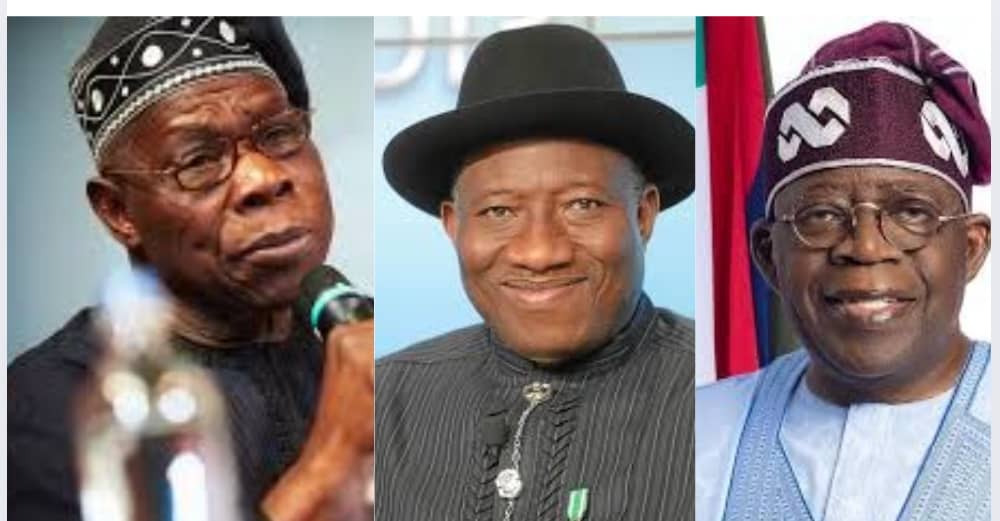
When Nigeria returned to democracy on May 29, 1999, General Olusegun Obasanjo was the first beneficiary of the country’s return to civilian rule. A four-star general who had handed over power to President Shehu Shagari on October 1, 1979, twenty years later, destiny beckoned on Obasanjo, and he took charge again as Nigeria’s President.
But before General Obasanjo’s return in 1999, Nigeria, especially the northern part of the country, experienced serious religious upheavals and uprisings, starting from the Maitatsine riots of 1980 in Kano and the Zangon Kataf religious crisis of 1987 in Kaduna State, in which former Governor of Rivers State, General Zamani Lekwot, was the mastermind.
Then another religious crisis engulfed the city of Kano over the visit of a Christian monk in 1991, Reverend Rent Harnboky. The people of Kano resisted the visit because earlier, a renowned Islamic scholar of comparative religion, Sheikh Ahmad Deedat, intended to visit the state. He was denied, and when that of Rent Harnboky was approved, it turned into serious attacks on non-Muslims in the state.
It took the military Governor of Kano state retired Major General Idris Garba to deploy soldiers in Mosques and churches across the city.
Another deadly religious riot that shook northern Nigeria again was the 2000 religious Shariah crisis in Kaduna when former Governor Ahmad Makarfi intended to introduce Shariah in the state. An unaccounted number of people were killed during the Obasanjo regime. Another killing took place in Lagos by the Odua People’s Congress during the time of Governor Bola Ahmad Tinubu, now President Tinubu, in the year 2000.
In 2001, the once peaceful northern city of Jos, Plateau State, was rocked with a serious crisis of unprecedented proportion in which many Muslims and Christians were killed.
During the second term of President Olusegun Obasanjo, a local government in the depths of Plateau State, Yelwa Shendam, was thrown into religious conflict during the time of Governor Joshua Chibi Dariye, where Muslims were killed in unprecedented proportions.
On May 11,2004 , the Yelwa Shendam crisis spilled over to Kano, where reprisal attacks took center stage, in which many Christians were killed.
On Tuesday, May 18, 2004, President Olusegun Obasanjo addressed the nation, in which he declared a state of emergency in Plateau State and removed democratic structures in the state.
President Obasanjo accused Governor Joshua Chibi Dariye of aiding the Plateau crisis. He appointed General Chris Alli as the administrator of the state for six months, where it ended on November 18, 2004.
Analysts say the removal of Governor Dariye by President Obasanjo was because the crises were threatening the whole country, hence his decision to take decisive action.
In his address, Chief Obasanjo said the crisis had already reverberated to Kano and was now threatening the FCT and some parts of Katsina State. While his state was boiling, Governor Joshua Dariye was somewhere in Abuja attending the National Sports Festival.
Another political crisis in 2006 engulfed Ekiti State, where President Obasanjo suspended democratic structures, including Governor Ayodele Fayose, and appointed an administrator.
Obasanjo’s state of emergency differs from that of President Goodluck Ebele Jonathan, who declared a state of emergency in three northeastern states of Adamawa, Borno, and Yobe in 2013 as a result of the Boko Haram crisis that turned the states into a killing field.
Governors Murtala Nyako, Kashim Shettima (now Vice President), and Governor Ibrahim Gaidam were not affected, as President Jonathan did not suspend the democratic structures, only massively deployed the military.
Jonathan’s approach, analysts say, is more in tandem with Nigeria’s constitution than Obasanjo’s. Now, President Tinubu’s declaration in Rivers State, where Governor Fubara and the state assembly were suspended on March 18, 2025, through a presidential broadcast, has sparked debate.
Some lawyers flayed President Tinubu’s declaration as autocratic and partisan because the Minister of the FCT is being accused of fueling the Rivers crisis due to the lack of influence he has over his successor, Governor Siminalayi Fubara. Many international human rights associations did not back President Tinubu’s declaration in Rivers State because they see it as more political than aimed at returning peace to the oil-rich state.
Of the four Presidents Nigeria has had from 1999 to date, only the late President Umaru Musa Yar’Adua and President Muhammadu Buhari did not declare a state of emergency in crisis states like Zamfara, Borno, and Yobe during the term of President Muhammadu Buhari from 2015 to 2023, when banditry took a serious toll on the lives of many.








News
ABCOAD, UNESCO Partner to Boost Technical Skills in Rice Processing
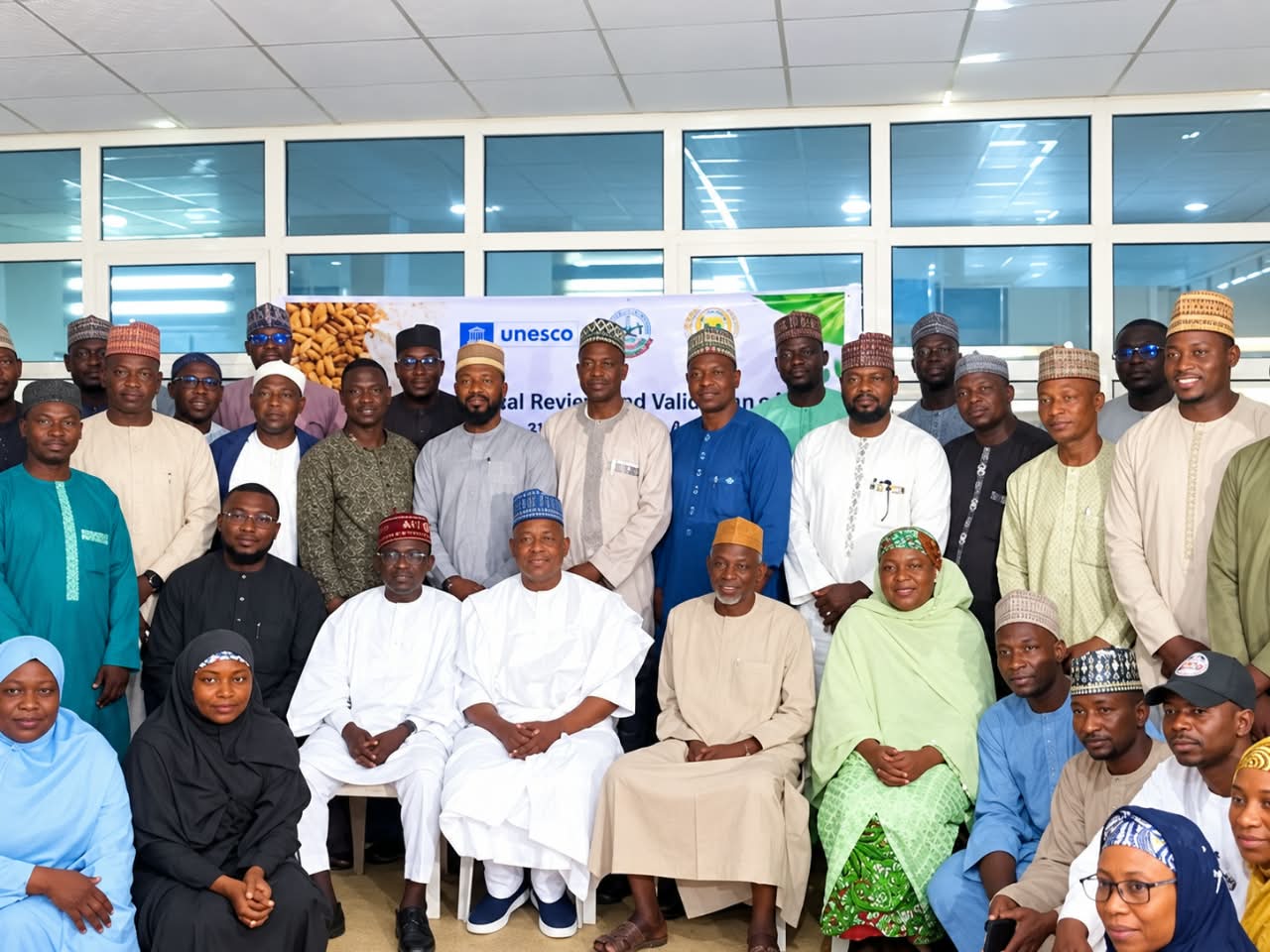
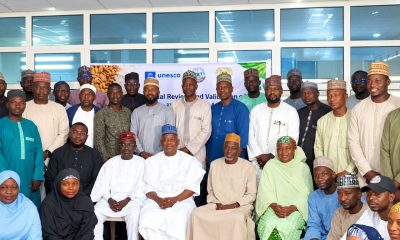
The Audu Bako College of Agriculture, Dambatta (ABCOAD), and the United Nations Educational, Scientific and Cultural Organisation (UNESCO) have partnered to strengthen competency-based training in rice processing and bridge the skills gap among Nigerian graduates.
The partnership is being implemented under the Better Education for Africa’s Rise (BEAR II) project, which seeks to strengthen Technical and Vocational Education and Training (TVET), particularly in agriculture and agro-processing.
The initiative features a three-day capacity-building workshop for master trainers on competency-based training in rice processing, scheduled for Oct. 21 to Oct. 23 at Alhamsad Rice Mill, Kano.
Speaking at the workshop, the Provost of ABCOAD, Dr Hassan Ibrahim, called for stronger collaboration between educational institutions and industry partners to equip graduates with practical skills required by employers.
Ibrahim said many graduates left educational institutions without the practical competencies needed in the workplace, stressing the need to align training programmes with industry requirements.
He said the partnership would strengthen vocational education and improve graduates’ employability by ensuring that students acquired relevant, industry-oriented skills.
The provost commended UNESCO and industry partners for supporting skills development and youth employment.
He said the college was committed to sustaining the initiative beyond the project period through stronger partnerships with industry stakeholders.
Ibrahim added that such collaboration would enable industry requirements to inform curriculum development and training delivery.
He urged participants and other stakeholders to contribute to achieving the objectives of the programme, expressing optimism that the workshop would improve the quality of vocational training in rice processing.
Declaring the workshop open, the Executive Secretary of the Kano State Science and Technical Schools Board, Prof. Dahiru Saleh, reaffirmed the state’s commitment to strengthening technical and agricultural education through modern equipment and skills development programmes.
Saleh said the initiative would promote practical skills by integrating technical education with agricultural practices and industry requirements.
He said the participation of the National Board for Technical Education (NBTE), ABCOAD, industry partners and UNESCO demonstrated a collaborative approach to improving vocational training.
According to him, stakeholders participated in developing the training manual, which would undergo scrutiny by the NBTE for certification under the National Skills Qualification (NSQ) framework.
He said the certification process would ensure that the training materials met the required standards for competency-based skills development.
Saleh commended the Kano State Government for providing modern agricultural equipment to support practical training in educational institutions.
He listed a combine harvester, tractor and planter among the equipment provided to Government Technical College to enhance hands-on learning and equip students with skills relevant to modern agriculture and agro-processing.
Earlier, the Executive Secretary of NBTE, Prof. Idris Bugaje, called on experts and stakeholders to contribute to the review and validation of the training manual developed to strengthen competency-based training in rice processing.
Bugaje, represented by Rukayya Rabiu, said the manual was designed to translate National Occupational Standards (NOS) into practical learning materials for trainers and trainees.
He said the standards covered rice processing and were intended to support certification under the NSQ framework.
According to him, the standards needed to be developed into comprehensive training manuals to facilitate effective instruction and ensure that learners acquired the required competencies.
He said the draft manual was presented for review and validation by experts and other stakeholders before its adoption for training programmes.
Bugaje urged participants to identify gaps, suggest improvements and make recommendations to enhance the quality of the document.
He expressed optimism that the exercise would produce a comprehensive manual to support effective skills development and facilitate the certification of trainees under the NSQ framework.
News
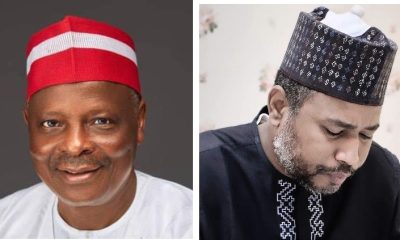
Kwankwaso May Become Nigeria’s Oldest Vice-Presidential Running Mate, Says Activist
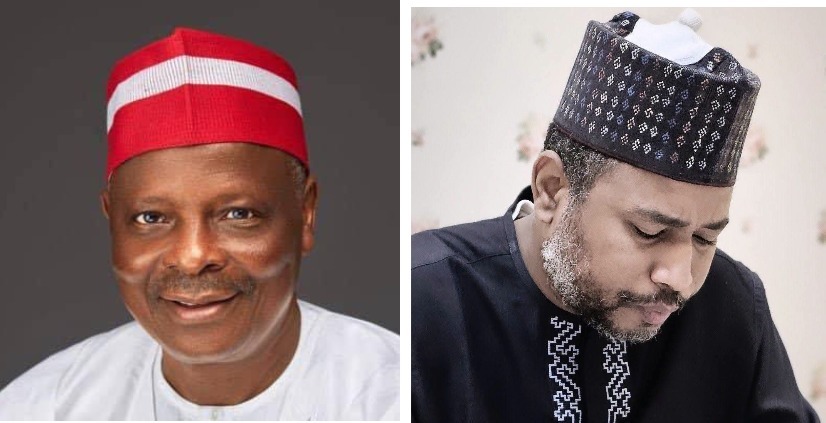
A social media activist and Nigerian diaspora member, Usman Isiyaku, has criticised supporters of Peter Obi and Rabiu Musa Kwankwaso over what he described as double standards in their arguments about the age of presidential candidates ahead of the 2027 general elections.
Isiyaku made the remarks in a post on his verified Facebook page, where he questioned why supporters of Obi and Kwankwaso allegedly criticised former Vice-President Atiku Abubakar over his age while celebrating the possibility of Kwankwaso becoming a vice-presidential candidate at 70.
The activist argued that Kwankwaso, a former governor of Kano State and leader of the National Democratic Congress would be among the oldest politicians to contest for Nigeria’s vice-presidency if he eventually runs alongside a younger presidential candidate.
According to Isiyaku, the criticism directed at Atiku, who is 79, by supporters of Obi and Kwankwaso contrasts with their apparent willingness to support Kwankwaso, who is 70, for the same position.
He questioned the consistency of the arguments surrounding age and leadership, insisting that a 70-year-old politician should also be considered elderly by the same standards used to criticise Atiku.
“The Obidients and Kwankwasites have built a whole campaign narrative against Atiku because he’s 79 years old. But Rabiu is 70 years old today, and they are celebrating him running for a VP at this age,” Isiyaku wrote.
“By every standard, a 70-year-old man is old. I mean, really old. Why the double standard?” he added.
Isiyaku further argued that it was unusual in Nigeria’s political history for a politician aged 70 to seek the vice-presidency alongside a younger presidential candidate, noting that previous civilian presidents generally had younger deputies.
He cited former Vice-President Namadi Sambo as an exception, explaining that Sambo was younger than former President Goodluck Jonathan by three years.
According to the activist, Sambo’s emergence as Jonathan’s running mate followed the death of former President Umaru Musa Yar’Adua in office, after which Jonathan became president and selected Sambo as his vice-president.
Isiyaku also compared Kwankwaso’s age with those of other former Nigerian vice-presidents at the time they assumed office, including Atiku Abubakar, Namadi Sambo, Yemi Osinbajo and Alex Ekwueme.
He stated that Atiku became vice-president at 52, Sambo at 49, Osinbajo at 58 and Ekwueme at 49 during the Second Republic, arguing that Kwankwaso’s possible entry into the vice-presidential race at 70 would represent a significant departure from the age profile of previous occupants of the office.
The activist maintained that political supporters should avoid using age as a weapon against their opponents, particularly when politicians they support are also advancing in age.
“Everybody will either grow old or die young. They should stop this age shaming because their VP candidate is a septuagenarian too!” he wrote.
Isiyaku’s comments come amid political discussions and alignments ahead of the 2027 general elections, with the ages, experience and suitability of prospective candidates featuring in debates among supporters of different political figures.
However, Kwankwaso’s possible emergence as a vice-presidential candidate remains a political proposition in Isiyaku’s post.
The debate highlights the continuing arguments over age, experience and political leadership in Nigeria, as supporters of different political camps assess potential candidates ahead of the next general elections.
News
APC Denies Plot to Assassinate Atiku, Urges Security Agencies to Question Timi Frank
By Yusuf Danjuma Yunusa
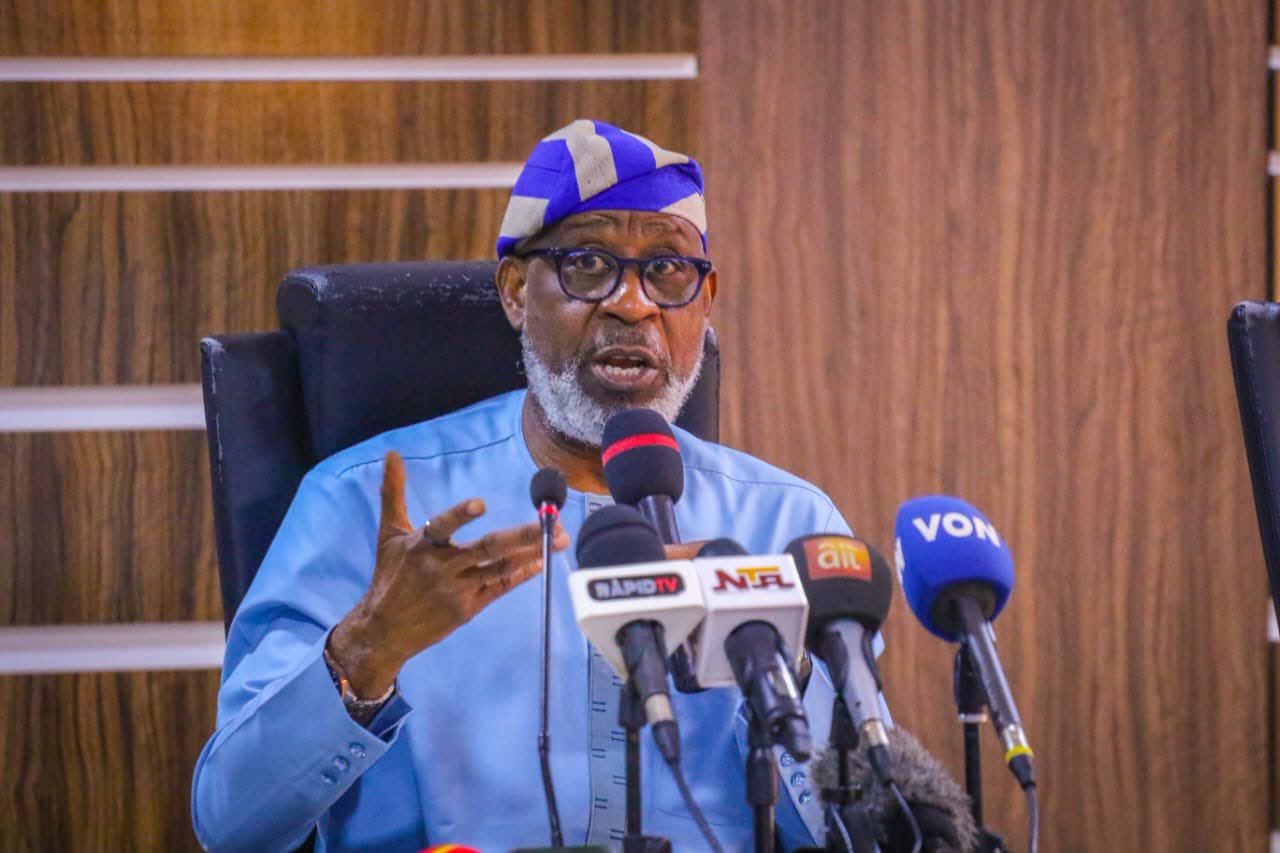
The All Progressives Congress Presidential Campaign Council has denied allegations that the Nigerian Government is plotting to assassinate former Vice President Atiku Abubakar, the ADC presidential candidate, and called on security agencies to invite Timi Frank to substantiate the claim.
In a statement signed by its spokesperson, Dele Alake, dated October 20, 2026, the council said:
“Our attention has been drawn to the statement by Timi Frank, a member of the African Democratic Congress, alleging that the Nigerian Government is plotting to assassinate former Vice President Atiku Abubakar, the Presidential candidate of the ADC. This is a grave allegation that Mr Frank must prove. We thus urge security agencies to invite him to substantiate the allegation, given its gravity and the urgent need to preserve life.”
The council also rejected any involvement by the presidency or the APC Campaign Council, stating:
“We categorically reject the claim that the presidency of Nigeria or the APC Campaign Council is involved in any plot to assassinate former Vice President Atiku Abubakar or any opposition figure.”
It further dismissed as false claims that security personnel attached to Atiku had been withdrawn, saying the former vice president is protected by the police and the Department of State Security. According to the statement, President Bola Tinubu recently directed security agencies to reinforce and increase protection for all presidential, vice-presidential, governorship and deputy governorship candidates across the country.
The council said security around the ADC presidential candidate had never been compromised and that, as a former vice president, Atiku enjoys two levels of state-funded security protection, which the statement said Tinubu had increased ahead of the 2027 general elections.
It urged candidates, parties and supporters to be factual and responsible in public statements and to avoid utterances that could trigger avoidable tension, accusing Frank of “typical opposition rabble-rousing.”

ABCOAD, UNESCO Partner to Boost Technical Skills in Rice Processing

Kwankwaso May Become Nigeria’s Oldest Vice-Presidential Running Mate, Says Activist

APC Denies Plot to Assassinate Atiku, Urges Security Agencies to Question Timi Frank

Kano Youths Condemn Lawmaker Over Alleged Mockery of Governor Yusuf

IITA Trains Over 1,800 Farmers on Modern Farming Techniques in Kano

Zamfara Varsity ASUU Threatens Warning Strike Over FG-ASUU Agreement, Promotion Arrears

PCACC Arrests Man Over Alleged ₦4.5m Sale, Illegal Leasing of Kano Government Horse Stable

Kano Monitors ₦48.9bn Projects Across Six LGAs

Goje’s Electoral War:The Confrontation With Tinubu,Governor Inuwa,Usman Kumo And APC candidates Ahead Of 2027

Kano Spends ₦10.36bn on Hospitality, Sitting Allowances, Others in Six Months
ABCOAD, UNESCO Partner to Boost Technical Skills in Rice Processing
Kwankwaso May Become Nigeria’s Oldest Vice-Presidential Running Mate, Says Activist
APC Denies Plot to Assassinate Atiku, Urges Security Agencies to Question Timi Frank
Kano Youths Condemn Lawmaker Over Alleged Mockery of Governor Yusuf
IITA Trains Over 1,800 Farmers on Modern Farming Techniques in Kano
Zamfara Varsity ASUU Threatens Warning Strike Over FG-ASUU Agreement, Promotion Arrears
PCACC Arrests Man Over Alleged ₦4.5m Sale, Illegal Leasing of Kano Government Horse Stable
Kano Monitors ₦48.9bn Projects Across Six LGAs
Goje’s Electoral War:The Confrontation With Tinubu,Governor Inuwa,Usman Kumo And APC candidates Ahead Of 2027
Kano Spends ₦10.36bn on Hospitality, Sitting Allowances, Others in Six Months
-

 Opinion5 years ago
On The Kano Flyovers And Public Perception
-

 Features5 years ago
How I Became A Multimillionaire In Nigeria – Hadiza Gabon
-

 Opinion6 years ago
Kano As future Headquarters Of Poverty In Nigeria
-

 History6 years ago
Sheikh Adam Abdullahi Al-Ilory (1917-1992):Nigeria’s Islamic Scholar Who Wrote Over 100 Books And Journals
-

 Opinion5 years ago
My First Encounter with Nasiru Gawuna, the Humble Deputy Governor
-

 History5 years ago
The History Of Borno State Governor Professor Babagana Umara Zulum
-

 History6 years ago
The Origin Of “Mammy Market” In Army Barracks (Mammy Ochefu)
-

 News5 years ago
Federal University Of Technology Babura To Commence Academic Activities September