
News
Rep Bichi to Commission 3,000-Capacity Juma’at Mosque Named After Late Sheikh Gumi
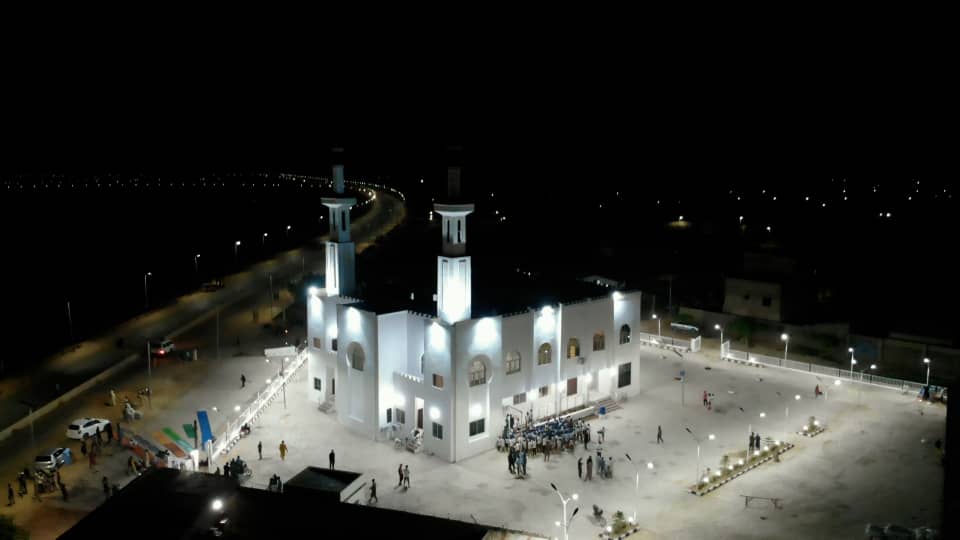
Muslim faithful from the nooks and crannies of Kano and beyond will today converge on Bichi town of Bichi Local Government Area of the state for the official commissioning of a 3,000-capacity modern Juma’at Mosque and an Islamiyyah school built by Hon. Abubakar Kal Abubakar, member representing Bichi Federal Constituency at the House of Representatives.
The Juma’at Mosque located along Gwarzo road in Bichi was named after the renowned Islamic scholar and Jurist, late Sheikh Abubakar Mahmood Gumi. The event, which is scheduled to take place between 11am-1pm, will have the National Chairman of the Jama’at Izalatul Bid’ah Wa Iqamatis Sunnah, Sheikh Abdullahi Bala Lau, as a special guest of honor.
The Abubakar Mahmood Gumi Juma’at Mosque was constructed alongside an Islamiyyah school and toilets within its premises, as part of efforts to boost Islamic education in the community. Four new modern Juma’at mosques are being constructed by the lawmaker in four different communities of Bichi Local Government Area of Kano State..
Hon. Bichi is also constructing an e-library in Bichi, even as he built several roads across the constituency in addition to sponsoring hundreds of students to further their studies in various universities within and outside the country. For instance, he sponsored 21 indigenes of Bichi to Malaysia for their postgraduate studies.
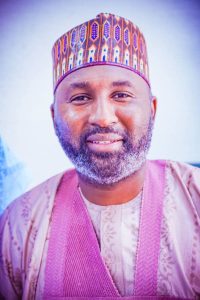
Rep Kabir Abubakar Bichi
The multi-billion naira project is part of the lawmaker’s efforts to give back to his constituents. He has built several schools, including Islamiyyah schools, roads, healthcare facilities, and culverts, among other projects geared towards improving the well-being of his constituents.
A resident of Bichi, Malam Ibrahim Yusuf, described the gesture as huge and timely, saying, “Hon. Bichi has done everything for his constituents. He has built several roads, healthcare facilities, a library, schools, and now a modern Juma’at mosque with an Islamiyyah school. The man has also secured jobs for many people in this local government. So, I think he has done everything for us. We are indebted because he has done his part; the ball is now in our court to pay him back during the election. He has spent so much improving our well-being in different ways. I am overwhelmed by his generosity. Any time he is approached with a problem, Hon. Bichi will do his best to help in addressing it.”
Another resident, Muhammad Musa, said he was short of words to thank Hon. Bichi for all the gestures he did for the people of Bichi in particular and Kano State in general, noting that “A representative that will spend such a huge amount of money to improve the well-being of his constituents deserves commendation. This is not the first time he is assisting his people. Currently, Hon. Bichi is constructing new Juma’at mosques in various communities in Bichi Local Government.
“This is in addition to other projects he has executed across Bichi Local Government. This single project has greatly solved our problem. You know, Bichi is one of the fastest-growing towns in Kano, and we need such modern mosques around us. With our growing population, we need five of such mosques in the town, and we thank God that Hon. Bichi has constructed three so far. Only God knows what will happen in the next few years with Hon. Bichi as our representative at the National Assembly. So far, he has resolved more than half of our problems regarding decongesting our Juma’at mosques within Bichi town, and we thank him for the gesture.”
On his part, Ustaz Amani Ibrahim Bichi described the gesture as a step towards promoting Islamic Dawah within Bichi town, noting that as a modern Juma’at mosque, the place would be a center of learning, especially for young people interested in acquiring Islamic knowledge. “I am sure the Jama’at Izalatul Bid’ah Wa Iqamatis Sunnah will make the mosque a center of preaching by organizing lessons for the younger generation.”
A member of the Jama’at Izalatul Bid’ah Wa Iqamatis Sunnah, who doesn’t want his name in print because he is not in a position to speak for the association, said, “Though I am not an official of the JIBWIS to comment on its behalf, as a member of the association, I feel delighted with what Hon. Bichi has done for us. Apart from constructing the mosque, the edifice was named after our scholar, late Sheikh Abubakar Mahmood Gumi. This is something I cherish. I am sure the JIBWIS will forever remain grateful to Hon. Bichi for this single gesture.
“My appeal to the people of Bichi, especially the youth, is to devote their time to acquiring knowledge when such lessons for Islamic knowledge commence at the Juma’at mosque. This is a golden opportunity for the youth to educate themselves through various Islamic activities that are going to take place at the mosque. We must utilize the opportunity to brighten our future. For Bichi, we thank him very much for the gesture. This is something we will never forget because any man that helps you to shape your life through acquiring knowledge deserves commendation.”
Another member of the Jama’at Izalatul Bid’ah Wa Iqamatis Sunnah, who doesn’t want his name in print, said, “Though I am not an official of the JIBWIS to comment on its behalf, as a member of the association, I feel delighted with what Hon. Bichi has done for us. Apart from constructing the mosque, the edifice was named after our scholar, the late Sheikh Abubakar Mahmood Gumi. This is something I cherish much. I am sure the JIBWIS will forever remain grateful to Hon. Bichi for this singular gesture. Immortalizing the late Abubakar Gumi alone is something worthy of commendation, and we thank Hon. Bichi for remembering our great scholar. The entire members of the JIBWIS within and outside Bichi are happy with this development and will forever remain grateful to the lawmaker.
“I hope and pray that other lawmakers will borrow a leaf from Hon. Bichi to initiate similar projects in their respective constituencies with a view to improving the well-being of the constituents. At least, Hon. Bichi has set an example of good representation for others to emulate. You are free to conduct a sampling survey to hear what his constituents are saying about his representation. He has done a lot for his constituents since he was elected as representative of Bichi Federal Constituency. This is what the electorate are looking forward to from their representatives at both state and federal levels. Hon. Bichi’s representation has paid off, and we are thankful to him for remembering his constituents when they needed his support.”
Though Hon. Bichi could not be reached for comment, one of his aides, Abubakar Aminu, however, said the gesture was a sign of appreciating the people of Bichi Federal Constituency, as according to him, “the people of Bichi stood behind Hon. Bichi during the election, and so it is time for him to pay them back. The gesture is nothing new from Hon. Bichi because he is always willing to do the bidding of his people, and this is one of the things they demanded from him.
“The man has a lot of projects to execute for his people, and he is committed towards achieving his goals because so far he has executed some of the projects he planned for his people, including this edifice of a modern Juma’at mosque. We thank God Almighty for giving Hon. Bichi the wisdom and courage to fulfill some of his campaign promises.”










News
Al-Istiqama University to Hold Convocation, Honours Late Aminu Dantata, Sheikh Ibrahim Khalil
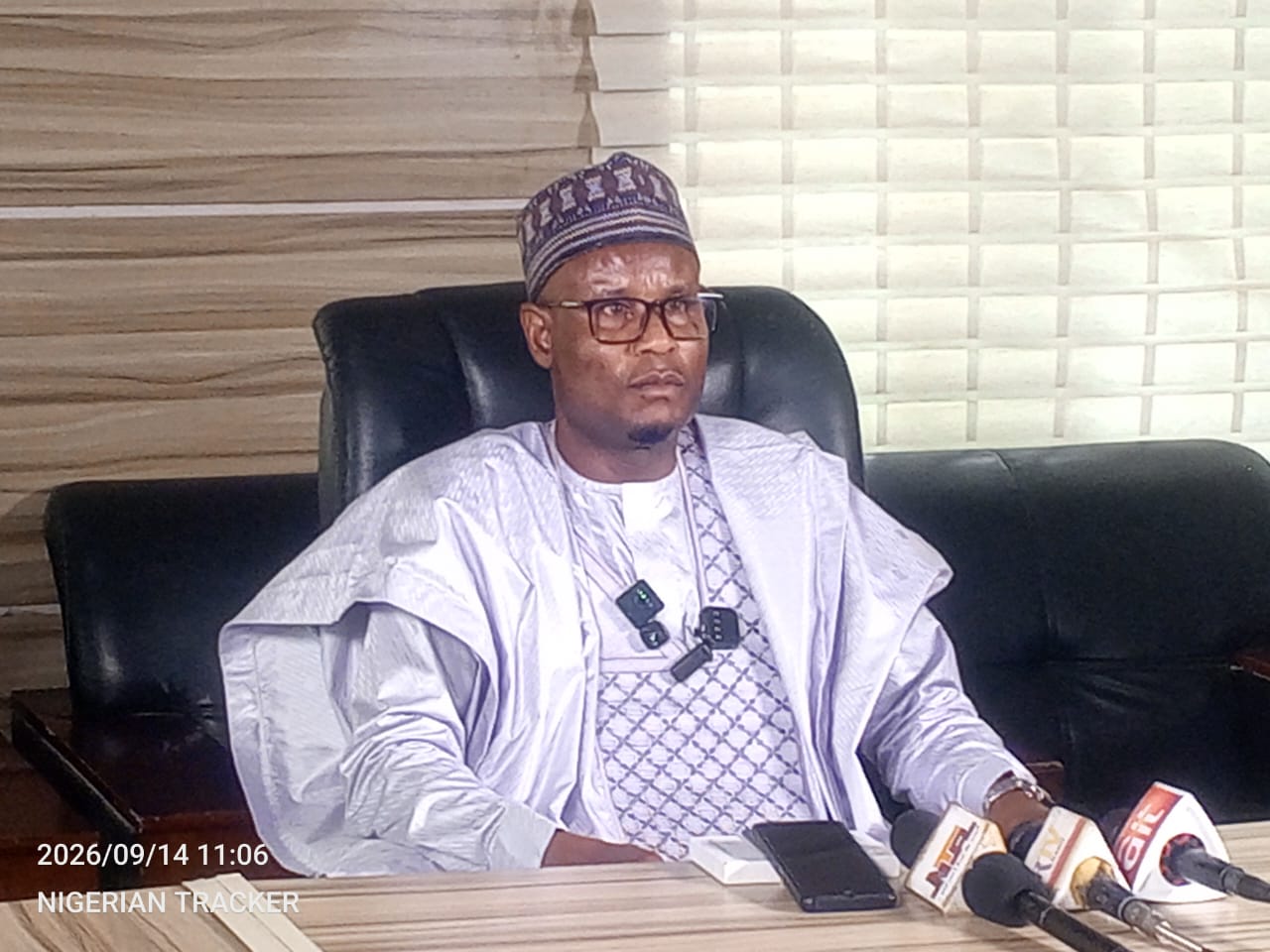
Al-Istiqama University, Sumaila, Kano State, is set to hold its 2nd and 3rd combined convocation ceremony, during which the institution will graduate 1,104 students and confer honorary and posthumous doctorate degrees on distinguished Nigerians.
The Vice-Chancellor of the university, Professor Abdulhadi Sale Kumurya, disclosed this while addressing journalists ahead of the combined convocation ceremony, describing the event as a significant milestone in the development of the institution.
Professor Kumurya said the ceremony would be particularly significant because it would be the first convocation he would preside over since becoming the second substantive Vice-Chancellor of Al-Istiqama University.
According to him, the convocation would also feature a pre-convocation lecture to be delivered by the Vice-President of Nigeria, Senator Kashim Shettima, GCON, who is expected to grace the occasion as the guest lecturer.
The Vice-Chancellor said another major highlight of the ceremony would be the graduation of the university’s first-ever set of postgraduate students, describing their graduation as a historic moment in the academic development of the institution.
Professor Kumurya explained that three postgraduate students who had successfully completed their programmes would be awarded their respective higher degrees during the ceremony.
He said although the number of pioneer postgraduate graduands was small, their graduation represented the foundation upon which the university’s postgraduate academic legacy would be built.
The Vice-Chancellor further disclosed that the university would confer honorary doctorate degrees on three distinguished Nigerians in recognition of their contributions and achievements in their respective fields.
Professor Kumurya said Alhaji Abdulmumini Maishanu, popularly known as A.Y. Shafa, would be conferred with an Honorary Doctor of Business Administration, Honoris Causa, for his achievements and contributions in the business sector.
He added that Sheikh Malam Ibrahim Khalil would receive an Honorary Doctor of Divinity, Honoris Causa, in recognition of his contributions to religious scholarship and other areas of service to society.
According to Professor Kumurya, the late business magnate Alhaji (Dr.) Aminu Alhassan Dantata would also be honoured posthumously with a Doctor of Business Administration, Honoris Causa.
The Vice-Chancellor said the posthumous recognition of the late Dantata was part of the university’s decision to acknowledge distinguished Nigerians whose contributions had made a lasting impact on society.
Professor Kumurya also described the presentation of certificates to graduands during the convocation as another major departure from merely symbolic graduation ceremonies.
He said the graduands would not only be formally admitted to their respective degrees but would also receive their academic certificates during the ceremony, stressing that certificates were essential documents required by graduates for employment, further education and professional advancement.
The Vice-Chancellor disclosed that a total of 1,101 students would graduate with first degrees from 12 academic programmes spread across three faculties of the university.
According to him, the graduating class comprises 44 First Class graduates, 271 Second Class Upper Division graduates, 443 Second Class Lower Division graduates, 100 Third Class graduates and two graduates in the Pass category.
Professor Kumurya further stated that another 241 graduates from the Faculty of Health Sciences fell under the unclassified category, bringing the total number of first-degree graduands to 1,101.
He added that the three postgraduate graduands would bring the total number of students receiving degrees at the combined convocation to 1,104.
The Vice-Chancellor said all the 1,104 graduands had fulfilled the academic requirements prescribed by the university’s Senate and had consequently been found worthy of being admitted to their respective degrees.
Professor Kumurya said the university was proud of the achievement because the graduating students represented an addition to the human-resource base required for national, continental and global development.
He therefore appealed to journalists and other media organisations to publicise the convocation and its activities widely so that the achievements of Al-Istiqama University and its graduands could reach a wider audience.
The Vice-Chancellor also disclosed that the university had commenced the development of its medical education programme, noting that students had already been admitted to study Medicine and Surgery, with the pioneer MBBS students now in their second year.
Professor Kumurya said the admission of MBBS students was part of the institution’s broader effort to expand its academic programmes and contribute to the training of professionals needed in the health sector.
He further stated that the university had also commenced admitting students into its doctorate programmes, indicating that the institution was gradually expanding its postgraduate education and research capacity.
The Vice-Chancellor described the combined convocation as an important chapter in the history of Al-Istiqama University, particularly because it would showcase the institution’s progress in undergraduate, postgraduate and professional education.
Professor Kumurya said the management of the university remained committed to producing graduates who would contribute meaningfully to the development of Nigeria and the wider world.
He expressed appreciation to journalists for their continued partnership with the institution and urged them to help project the achievements of the university and its graduates to the public.
Professor Kumurya concluded by thanking members of the press for attending the briefing and prayed for the continued progress of the university, its students and staff.
News
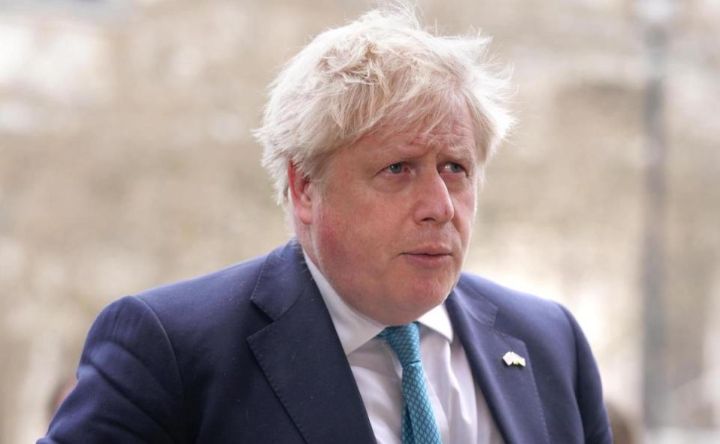
Ex-UK PM Boris Johnson Narrowly Escapes as Russian Drone Hits Warsaw-bound Train
By Yusuf Danjuma Yunusa
Ukrainian and Polish governments have accused Russia of launching drone strikes on the locomotive of a passenger train carrying 206 people headed for Warsaw on Sunday morning.
Ukraine said it forewarned the railway operators of likely drone strikes, adding that no one was hurt.
“The monitoring team gave the train crew advanced warning, and thanks to that, no one was injured,” Ukrainian railway operator, Ukrzaliznytsia, wrote in social media.
Ukrzaliznytsia said that a diplomatic train conveying VIPs such as a former British Prime Minister Boris Johnson; ex-CIA chief, David Petraeus, passed through the Yagodyn station shortly before the drone strike.
“Shortly before the locomotive was hit at the Ukrainian-Polish border, a diplomatic train was at Yagodyn station,” Ukrzaliznytsia said. “There were, among others, security advisers from several EU member states and former European leaders on board, including former UK Prime Minister Boris Johnson. In another train that was at Yagodyn station at the very moment of the attack was former CIA Director David Petraeus.”
The Warsaw-bound train was carrying 206 people, none of whom were Polish citizens.
Poland’s Foreign Minister Radoslaw Sikorski described the incident as an escalation.
“This is an escalation, this is another great challenge for Ukraine and for the hypothetical future victims of Russian aggression and this means that we should double our efforts to support victims of aggression,” Mr Sikorski said at a press briefing.
The train was transporting 206 individuals and there was no Polish citizen among
“The train is carrying 206 people. There are no Polish citizens among the passengers,” the operator said online. “After completing customs clearance, it will continue its journey towards Warsaw.”
The former UK leader advocated Russia’s frozen funds in Belgium to be transferred to Ukraine.
“I don’t know what warped logic drove Putin to blow up a stationary Ukrainian locomotive on the Polish border this morning,” Mr Johnson said. “When are we going to give them the air defences they need? Why won’t we unfreeze Putin’s cash and give it to Ukraine? There is more than €140 billion ($163 billion) in a Belgian bank account — and about £10 billion (€11.7 billion or 13.5 billion) in London.”
News
KANSIEC Chairman Advises Fruits Sellers Association to Modernize Business
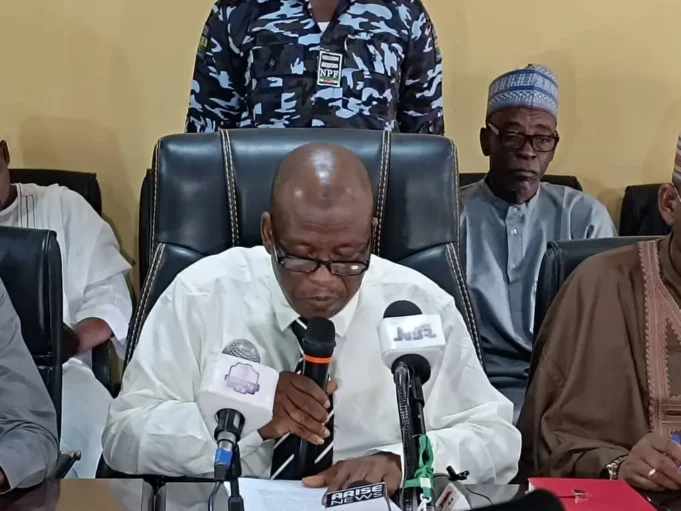
The Fruits Sellers Association, Kano State Chapter, has been advised to develop a strategic plan within a specific timeframe to modernize its business operations.
The Chairman of the Kano State Independent Electoral Commission, KANSIEC, Professor Sani Lawal Malumfashi, gave the advice during a courtesy visit by members of the association to his office.
Professor Malumfashi stated that the fruit business anywhere in the world serves customers from all backgrounds, both rich and poor, due to the importance of fruits in food consumption.
He maintained that the association should seek recognition across the three tiers of government in order to benefit from government policies and programmes.
The KANSIEC Chairman added that the present administration under the Executive Governor, Alhaji Abba Kabir Yusuf, is transforming Kano into a modern metropolitan city with many parks. He said fruit sellers should secure designated spaces around the corners of flyovers across the city.
Earlier, the Chairman of the Fruits Sellers Association of Nigeria, Kano State Chapter, Alhaji Safiyanu Abdullahi, said they visited KANSIEC to seek guidance on how to conduct free, fair, and peaceful elections within the association.
Bashir Habib Yahya
Media Aide to the KANSIEC Chairman
Date: 11/09/2026

Al-Istiqama University to Hold Convocation, Honours Late Aminu Dantata, Sheikh Ibrahim Khalil

Ex-UK PM Boris Johnson Narrowly Escapes as Russian Drone Hits Warsaw-bound Train

From Desks to Degrees: How Governor Yusuf Is Bankrolling A Generation’s Future

KANSIEC Chairman Advises Fruits Sellers Association to Modernize Business

Breaking :Former PDP National Chairman Alhaji Bamanga Tukur Is Dead
From World’s 9th Most Populous City to Perfect: As Gov Yusuf Revisits Kano Master Plan

95% of Governor Abba Kabir Yusuf’s Promises Have Been Fulfilled — CPS Interview By Musa Diso, In Kano

Bello Sharada: A Great Writer, A Bookish Soul, Gone Too Soon

Call Me Chairman, Not Tony!’: Elumelu’s Blunt Correction of Trainee Splits Internet as Old Video Sparks Double Standard Fury

NUT Launches ‘Go Public’ Campaign to Promote Public Education in Nigeria
Al-Istiqama University to Hold Convocation, Honours Late Aminu Dantata, Sheikh Ibrahim Khalil
Ex-UK PM Boris Johnson Narrowly Escapes as Russian Drone Hits Warsaw-bound Train
From Desks to Degrees: How Governor Yusuf Is Bankrolling A Generation’s Future
KANSIEC Chairman Advises Fruits Sellers Association to Modernize Business
Breaking :Former PDP National Chairman Alhaji Bamanga Tukur Is Dead
From World’s 9th Most Populous City to Perfect: As Gov Yusuf Revisits Kano Master Plan
95% of Governor Abba Kabir Yusuf’s Promises Have Been Fulfilled — CPS Interview By Musa Diso, In Kano
Bello Sharada: A Great Writer, A Bookish Soul, Gone Too Soon
Call Me Chairman, Not Tony!’: Elumelu’s Blunt Correction of Trainee Splits Internet as Old Video Sparks Double Standard Fury
NUT Launches ‘Go Public’ Campaign to Promote Public Education in Nigeria
-

 Opinion5 years ago
On The Kano Flyovers And Public Perception
-

 Features5 years ago
How I Became A Multimillionaire In Nigeria – Hadiza Gabon
-

 Opinion6 years ago
Kano As future Headquarters Of Poverty In Nigeria
-

 History5 years ago
Sheikh Adam Abdullahi Al-Ilory (1917-1992):Nigeria’s Islamic Scholar Who Wrote Over 100 Books And Journals
-

 Opinion5 years ago
My First Encounter with Nasiru Gawuna, the Humble Deputy Governor
-

 History5 years ago
The History Of Borno State Governor Professor Babagana Umara Zulum
-

 History5 years ago
The Origin Of “Mammy Market” In Army Barracks (Mammy Ochefu)
-

 News4 years ago
Federal University Of Technology Babura To Commence Academic Activities September