
News
Dangote Industries Limited, again emerges as the Most Valuable Brand in Nigeria for 7th time
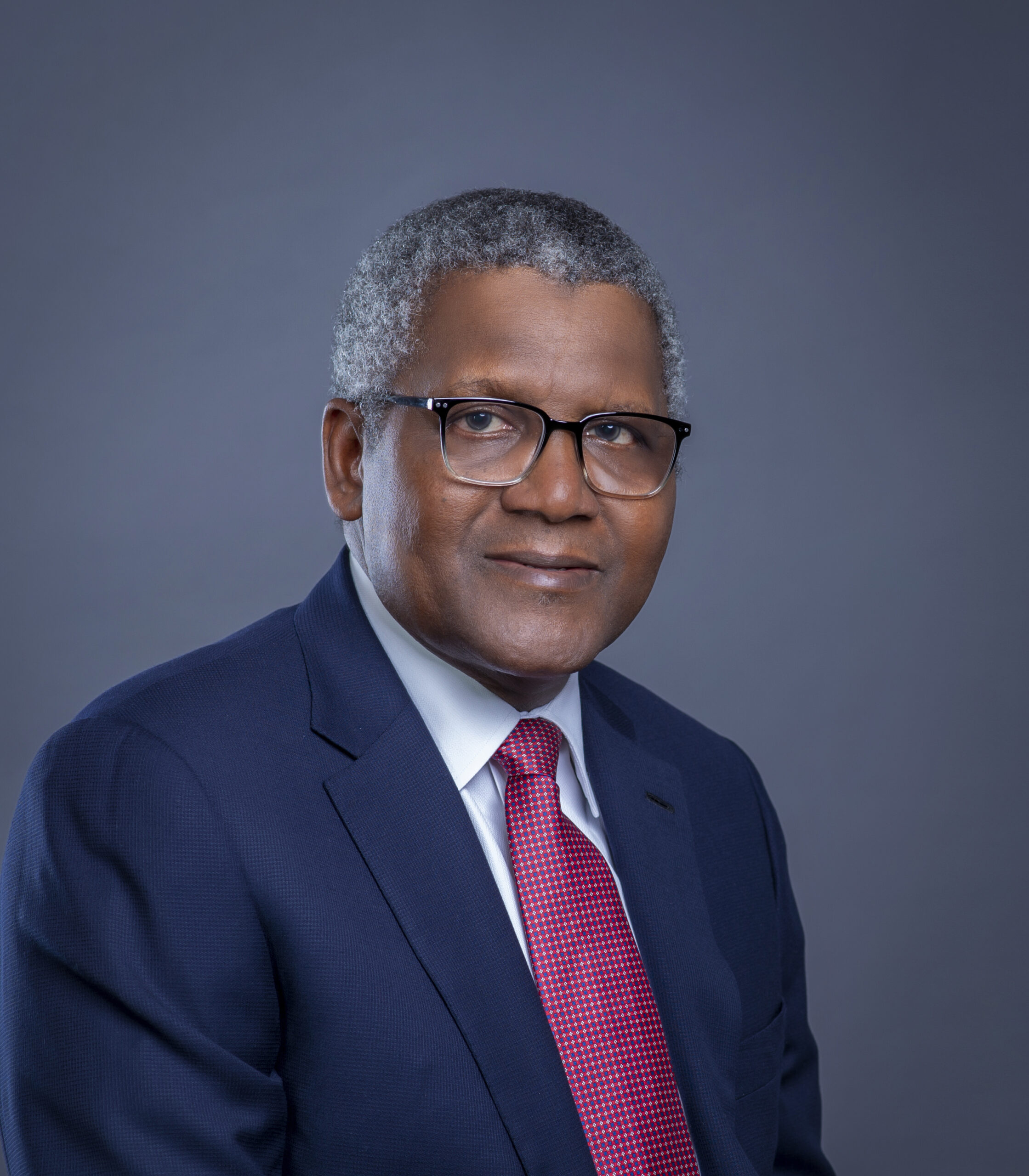
For the seventh consecutive years, Dangote Industries Limited, has again emerged as most valuable brand in Nigeria, leading other top brands like MTN, Airtel, Access Bank, Globacom and many others.
The latest report of the TOP 50 BRANDS NIGERIA® rankings, an annual celebration of the most influential and valuable brands in the country, revealed this.
Dangote is immediately followed by MTN Nigeria, which not only ranks second overall but also emerged as the Most Popular Brand in the country for the year, according to the Top-of-Mind (TOM) survey. MTN’s strong consumer connection and widespread recognition highlight its significant impact on the telecommunications sector and beyond.
At the third place this year is Globacom Nigeria, a leading Nigerian multinational telecommunications company known for its innovative solutions and commitment to progress. Globacom’s consistent ranking among the top brands indicate its significant role in Nigeria’s digital and technological advancement. Airtel Nigeria, another key player in the telecommunications sector, secured the fourth position. Access Bank ranked in the fifth position, topping the Banking & Financial Services sector.
The organisers stated that: “This year’s list is a testament to the resilience, innovation, and enduring relevance of brands that continue to shape Nigeria’s economic, particularly in challenging times.
A significant highlight this year is that seven of the first 10 brands out of the 50 are Nigerian, emphasizing the resilience and global competitiveness of home-grown brands, most of which had spread abroad.
Additionally, it is impressive to note the consistency among the top brands, with seven of them maintaining their positions from last year. This stability reflects their continued relevance, strong market presence, and ability to navigate the complexities of the Nigerian business environment.
Nigerian brands account for 24 spots on the top brands list this year, while international brands hold 26 positions, representing 52% of the total.
The 2024 list also witnessed the entry of two new brands, these are Opay Nigeria and Flutterwave, which made their debut in the annual Top 50 evaluation. These new entrants highlight the growing influence of fintech and digital payment platforms in shaping Nigeria’s economic future.
Notably, 14 brands maintained their positions from the previous year, reflecting their consistent performance and consumer trust.
Another set of notes in the presentation are the 10 Brands to Watch – These are vibrant and upcoming brands, who, though not among the 50 Top Brands yet, but with significant visibility and promises. This year, 9 of the 10 Brands to Watch are Nigerian.
During the public presentation, Taiwo Oluboyede, CEO of TOP 50 BRANDS NIGERIA®, commended the brands for their exceptional performance resilience, particularly in the face of the present economic challenges. “These brands deserve commendation, really, especially in times like this. The past year has been tough for many businesses, with some relocating out of Nigeria and others barely holding on. However, the majority of these brands have shown the resilient Naija spirit by weathering the storms and standing strong with positive projections into the future” He went on “As the saying goes, tough times never last, but tough people do. It’s in times like this that you differentiate between the boys and the men, as these brands have shown.” Concluded Oluboyede.
The 2024 TOP 50 BRANDS NIGERIA® list is a celebration of excellence, resilience, and the relentless pursuit of growth. As these brands continue to innovate and adapt, they set the standard for what it means to be a top brand in Nigeria. We look forward to witnessing their continued success and contribution to Nigeria’s economic development in the years to come.















News
Kano Rises to Third Place in 2026 Subnational Climate Governance Performance Ranking

Kano State has risen to third position out of Nigeria’s 36 states in the 2026 Subnational Climate Governance Performance Rating and Ranking (SCGPR 3.0), further consolidating its remarkable progress in climate governance.
The latest ranking represents another significant improvement for the state, which moved from 35th position in 2024 to fourth in 2025, before advancing to third place in the 2026 assessment.
Speaking at the launch of the third edition of the ranking in Abuja on Thursday, the Honourable Commissioner for Water Resources, Environment and Climate Change, Dr. Dahiru Muhammad Hashim, attributed the sustained improvement to the deliberate reforms and strengthened coordination introduced under the leadership of His Excellency, Governor Abba Kabir Yusuf.
Dr. Hashim said Kano had treated the rankings not merely as an assessment of performance but as an opportunity to identify institutional weaknesses, strengthen climate governance and translate policy commitments into measurable action.
“Kano’s rise from 35th to fourth position gave us a stronger foundation to build upon. Our task now is to sustain that progress through institutions that function consistently and programmes whose benefits can be demonstrated,” he said.
The Commissioner highlighted the Kano State Climate Change Policy and the ongoing advancement of the Kano State Climate Change Bill as key steps towards establishing clearer institutional responsibilities, continuity and accountability in climate action.
He also pointed to the state’s grassroots interventions, including the 10 Million Trees Campaign, which builds on the distribution of 5.5 million tree seedlings across the state’s 44 local government areas in 2025. The campaign incorporates digital monitoring, including GPS-verified planting locations, seedling allocation records and survival reporting, to ensure that tree-planting efforts translate into lasting environmental benefits.
According to Dr. Hashim, Kano is also strengthening climate coordination across its 44 local government areas, recognising that communities experience climate risks differently and that effective adaptation requires local knowledge and participation.
He said the integration of water resources, environment and climate change under one ministry provides an opportunity for the state to address interconnected challenges such as flooding, erosion, land degradation, water insecurity, pollution and changing rainfall patterns through more coordinated planning.
“Across these priorities, our objective is to make climate resilience a routine consideration in public decisions. It should inform how we plan infrastructure, support agriculture, manage water resources and prepare for disasters,” he said.
The Commissioner identified institutional strengthening, evidence-based monitoring and climate financing as priorities for the next phase of Kano’s climate response. He said the state would focus on developing well-prepared projects capable of attracting domestic and international financing, particularly in adaptation, water resources, renewable energy and land restoration.
Dr. Hashim also called for stronger partnerships among government institutions, development partners, universities, civil society organisations, businesses and communities to strengthen research, investment, technical capacity and local implementation.
He said the ultimate measure of Kano’s climate governance performance would not be its position on a ranking table alone, but the impact of government interventions on residents.
“For Kano, the ultimate measure of progress is the difference these decisions make to people’s lives: whether farmland remains productive, communities have dependable access to water, and homes and public assets are better protected from environmental hazards,” he said.
The Commissioner expressed appreciation to the Federal Ministry of Environment, the Society for Planet and Prosperity (SPP), development partners, assessors and technical teams for sustaining the Subnational Climate Governance Performance Rating and Ranking.
He also acknowledged Governor Abba Kabir Yusuf for his sustained support for climate governance reforms, as well as civil servants, local government officials, partners and communities whose efforts have contributed to the state’s progress.
Dr. Hashim said Kano would study the findings of the 2026 assessment, consolidate areas of progress and address identified weaknesses.
“Kano State will take the findings of this report back home, use them to refine our priorities and continue the work of protecting our people and their livelihoods,” he said.
Signed
Dr. Dahiru M. Hashim
Honourable Commissioner
Ministry of Water Resources, Environment and Climate Change
Kano State
News
Kebbi Governor’s Aide Threatens to Bar Malami Over Alleged Billboard Vandalism

An aide to Kebbi State Governor, Nasir Idris, has threatened to prevent former Attorney-General of the Federation and Minister of Justice, Abubakar Malami, from entering the state over alleged destruction of billboards linked to political activities.
The governor’s adviser on cemetery affairs, Hon. ATM Jega, issued the warning while reacting to allegations that some individuals were tearing down billboards in different parts of Kebbi State.
Jega warned that he would not allow the alleged destruction of the billboards to continue, insisting that action would be taken if those responsible failed to stop the activity.
The governor’s aide specifically warned Malami, who is the governorship candidate of the African Democratic Congress (ADC) in Kebbi State, to caution individuals he described as his boys against allegedly vandalising the billboards.
“We will prevent Abubakar Malami from entering Kebbi State if he does not stop his boys from tearing down our billboards,” Jega was quoted as saying.
Jega maintained that he would not remain silent while the billboards were allegedly being destroyed, warning that Malami could face restrictions on entering the state if the alleged activities continued.
The threat comes as political activities intensify in Kebbi State ahead of the 2027 general elections, with political parties and their candidates positioning themselves to challenge for elective offices.
Malami, a former minister under the administration of President Muhammadu Buhari, is seeking to become governor of Kebbi State on the platform of the ADC after declaring his intention to contest the 2027 election.
The former minister has since stepped up political mobilisation in the state, including the inauguration of a 600-member ADC campaign council in August 2026 to coordinate the party’s activities across Kebbi’s 21 local government areas.
However, the allegations of billboard destruction and Jega’s threat to prevent Malami from entering the state could further heighten political tensions as preparations for the next general elections gather momentum.
News
KIRS seeks wider tax compliance to boost Kano revenue
The Executive Chairman, Kano State Internal Revenue Service (KIRS), Alhaji Bashir Maitama has urged taxpayers to pay their taxes correctly and as when due.
Maitama made the call while speaking in Kano on Wednesday during the Customer Service Week of the service.
He said the celebration provided an opportunity for the agency to appreciate taxpayers for their contributions to the development of the state.
The chairman described taxpayers as important stakeholders whose contributions were valued by the agency and the state government.
Maitama said KIRS’ digital tax platforms had made tax payment easier, adding that the agency was committed to resolving challenges experienced by taxpayers.
He urged taxpayers facing difficulties with the platforms to contact the agency for prompt assistance.
On revenue performance, the chairman said KIRS had recorded significant improvement in its collections and expressed confidence that it would meet the revenue target set by the state government.
He said the agency would continue to promote voluntary compliance and expand the tax net by bringing more eligible taxpayers into the system.
“There are many people doing businesses who are not yet in the tax net. We want to ensure that more taxpayers are captured and encouraged to comply voluntarily,” he said.
The chairman explained that the digitization of KIRS operations was aimed at blocking revenue leakages, improving transparency and simplifying tax payment.
He said the agency would continue to adopt technology to improve efficiency, revenue collection and service delivery.
Maitama, therefore, urged taxpayers to fulfil their tax obligations promptly and correctly.
Earlier, The Executive Director, Revenue Operations, (KIRS), Kasim Ismael urged taxpayers to pay their taxes correctly and as when due, describing tax payment as essential to the development of the state.
He said taxes were an important source of revenue for the government to provide essential services, maintain institutions and promote peace and development.
The executive director also called for improved cooperation between the agency and taxpayers to strengthen compliance and revenue generation in the state.
Speaking also, Mr Michael Daniel, who spoke on behalf of the customers, said that taxpayers appreciated the efforts of KIRS in improving its services and strengthening its relationship with taxpayers.
He urged the agency to sustain its commitment to transparency, professionalism and efficient service delivery, saying improved customer service would encourage more people to comply with their tax obligations.
NAN

Kano Rises to Third Place in 2026 Subnational Climate Governance Performance Ranking

Kebbi Governor’s Aide Threatens to Bar Malami Over Alleged Billboard Vandalism

KIRS seeks wider tax compliance to boost Kano revenue

Breaking:FG Offers 30 Day Fuel Subsidy To Nigerians
OPEN LETTER TO HIS EXCELLENCY, MR. PRESIDENT BOLA AHMED TINUBU, GCFR PRESIDENT AND COMMANDER-IN-CHIEF OF THE FEDERAL REPUBLIC OF NIGERIA

Zamfara Varsity ASUU Threatens Warning Strike Over FG-ASUU Agreement, Promotion Arrears

Goje’s Electoral War:The Confrontation With Tinubu,Governor Inuwa,Usman Kumo And APC candidates Ahead Of 2027

Per Ishaq Samaila: “Waziri” for Strategy. “Mai Jama’a” for Service. One Man. One Mission. Ibrahim Kabir Masari

PCACC Arrests Man Over Alleged ₦4.5m Sale, Illegal Leasing of Kano Government Horse Stable

Prof Yusuf Adamu Delivers BUK’s 63rd Professorial Inaugural Lecture, Reflects on Medical Geography and Academic Legacy
Kano Rises to Third Place in 2026 Subnational Climate Governance Performance Ranking
Kebbi Governor’s Aide Threatens to Bar Malami Over Alleged Billboard Vandalism
KIRS seeks wider tax compliance to boost Kano revenue
Breaking:FG Offers 30 Day Fuel Subsidy To Nigerians
OPEN LETTER TO HIS EXCELLENCY, MR. PRESIDENT BOLA AHMED TINUBU, GCFR PRESIDENT AND COMMANDER-IN-CHIEF OF THE FEDERAL REPUBLIC OF NIGERIA
Zamfara Varsity ASUU Threatens Warning Strike Over FG-ASUU Agreement, Promotion Arrears
Goje’s Electoral War:The Confrontation With Tinubu,Governor Inuwa,Usman Kumo And APC candidates Ahead Of 2027
Per Ishaq Samaila: “Waziri” for Strategy. “Mai Jama’a” for Service. One Man. One Mission. Ibrahim Kabir Masari
PCACC Arrests Man Over Alleged ₦4.5m Sale, Illegal Leasing of Kano Government Horse Stable
Prof Yusuf Adamu Delivers BUK’s 63rd Professorial Inaugural Lecture, Reflects on Medical Geography and Academic Legacy
-

 Opinion5 years ago
On The Kano Flyovers And Public Perception
-

 Features5 years ago
How I Became A Multimillionaire In Nigeria – Hadiza Gabon
-

 Opinion6 years ago
Kano As future Headquarters Of Poverty In Nigeria
-

 History5 years ago
Sheikh Adam Abdullahi Al-Ilory (1917-1992):Nigeria’s Islamic Scholar Who Wrote Over 100 Books And Journals
-

 Opinion5 years ago
My First Encounter with Nasiru Gawuna, the Humble Deputy Governor
-

 History5 years ago
The History Of Borno State Governor Professor Babagana Umara Zulum
-

 History6 years ago
The Origin Of “Mammy Market” In Army Barracks (Mammy Ochefu)
-

 News5 years ago
Federal University Of Technology Babura To Commence Academic Activities September