
News
How Ganduje hired fake NGO to rate Kano low in an attempt to cover his wasted 8 years
By Sunusi Bature Dawakin Tofa
Our attention has been drawn to an article entitled “Kano worst governed, least performing state in Nigeria – Report,” authored by Taofeek Lawal and featured on Tribune online on April 23, 2024.
Taofeek based his narrative on an alleged report by the Centre for Democracy and Human Rights (CEDEHUR), which maliciously portrays Kano State as the most poorly governed and underperforming state in the nation since the inception of the new administration in May 2023.
Available records at both internet and CAC, confirmed that the NGO is not registered and in last few years of its illigal operation, it has engaged itself on various dubious and controvercial activities serving as a hired street dog.
Ganduje and his co-travellers who promote corruption are hiring fake NGOs who hide behind promoting good governance to share none existing reseaches in an attempt to damage the hard earned reputation of the arguably best performing governor in the 2023 new breeds of governors His Excellency Alh. Abba Kabir Yusuf.
The former Governor of Kano state who did nothing in his eight year wasted tenure between 2015 and 2023 other than promoting political violence through hiring of thugs to distroy, miame, injure or kill innocent citizens.
“No matter the cover up, Ganduje must face the consequencies of his utterances during which he governed Kano recklessly, with nepotism, corruption and impunity as guiding principles”
As it is well known, performance evaluation is done using specific parametres against indicators which the so called NGO did not anyway meet the requirememt for rating the performance of any governor against another. Thefore, we wish to dismiss in totality and declare the purported report as fake, malicious and ill intended to cover Ganduje’s failure to make Kano great.
Initially, we contemplated dismissing the report due to the questionable nature of the individuals associated with CEDEHUR.
However, upon further reflection, we opted to respond to prevent discerning Nigerians from being misled by the fabricated falsehoods propagated by dubious figures within CEDEHUR, who, in collaboration with the opposition and their backers, are engaged in a futile attempt to discredit the effective governance of His Excellency, Engr. Abba Kabir Yusuf.
Undoubtedly, the report from CEDEHUR is not simply a piece of refuse; it is built upon malevolent, contrived, and unfounded information and misinformation sourced from the so-called “stakeholders” who were commissioned to distort truths and denigrate Governor Yusuf’s administration.
Despite the global recognition of the ongoing socio-economic transformation in Kano, spanning various sectors such as education, healthcare, agriculture, infrastructure, and human development, it is evident that the members of CEDEHUR did not physically inspect Kano to ascertain the situation first-hand.
Instead, they chose to consort with politicians in Abuja and fabricate falsehoods for public consumption, following the exchange of monetary incentives.
I strongly urge Nigerians to disregard CEDEHUR and their web of deceit, as Governor Yusuf has achieved within a year what the previous administration and the sponsors of CEDEHUR failed to accomplish in eight years.
I challenge Ambassador Adebayo Lion Ogorry, who represented CEDEHUR at a Press Conference in Abuja aimed at tarnishing Governor Yusuf’s administration, to provide tangible evidence of any lack of transparency and accountability in the Kano state government under Governor Yusuf’s leadership.
On the contrary, Kano has maintained its reputation as one of the least corrupt states in Nigeria, with a renewed commitment to combating corruption through the revamped Kano State anti-corruption agency.
Furthermore, I challenge CEDEHUR to identify any political appointee in Governor Yusuf’s cabinet who is undeserving of their role—there is unequivocally none.
While the case of Mustapha Rabi’u Musa Kwankwaso, the Honourable Commissioner of Youths and Sports, may be raised, Governor Yusuf has consistently emphasized that Mustapha’s appointment was based entirely on merit: his unwavering party loyalty, youthfulness, dynamism, intelligence, and qualifications make him apt for the Ministry.
The concept of political vendetta from CEDEHR eludes me, but I am convinced that no conscientious and responsive government would permit the extensive corruption perpetrated by the previous administration to go unpunished.
We will in our endeavours to recover public assets and the billions of Naira embezzled by the prior administration.
Allow me to elucidate on some of the notable accomplishments of Governor Yusuf’s administration for archival purposes.
*Infrastructure Development*
Governor Yusuf, in the latter part of the previous year, inaugurated the N27 billion Interchange projects aimed at alleviating traffic congestion in the heart of Kano city.
These projects include the Tal’udu interchange, featuring a cloverleaf flyover valued at N12 billion, and the Dan Agundi interchange, comprising a flyover and underpass estimated at N15 billion.
During the foundation stone laying ceremony, Governor Yusuf underscored the significance of these pivotal initiatives in addressing traffic congestion, enhancing transportation efficiency, beautifying the cityscape, reducing pollution, and fortifying the city’s infrastructure.
Governor Yusuf reiterated his administration’s dedication to advancing state infrastructure and expressed a firm resolve to deliver more equitable dividends, particularly to the marginalized segments of society.
He emphasized that Kano, as a burgeoning metropolis, necessitates substantial infrastructural enhancements to cater to its over 10 million urban denizens and uplift the socio-economic well-being of its inhabitants.
Governor Yusuf underscored that the 2024 budget, which he ratified, prioritizes capital projects, allocating a substantial 60% share to this crucial sector.
The impact of the flyover construction in mitigating traffic congestion has been evaluated in terms of traffic decongestion, time savings, fuel efficiency, and emission reduction.
Studies have confirmed that utilizing the flyover results in a notable 60 to 70 percent reduction in travel time compared to using the main road, particularly when traffic signals are predominantly red.
The savings in fuel consumption and associated costs accrued from waiting for signal changes are also significant.
The approval by the Kano State government for the construction of two new underpasses and flyovers has been welcomed by the city’s residents, where chronic traffic congestion has posed a social and environmental challenge.
Kano, being the most populous state in the country with approximately 100,000 registered commercial tricycles plying the roads daily, faces a congestion crisis exacerbated by the presence of cars, commercial tricycles, and motorcycles notorious for their impatience.
The primary objective behind the construction of these two Interchanges is to alleviate congestion at the bustling junctions, facilitate smoother traffic flow, stimulate commercial activities, and bolster the overall economic growth of the state.
The government has taken note of the public’s enthusiastic reception towards the planned construction of these two interchanges.
While a few individuals may lack comprehensive information regarding the rationale behind the government’s pursuit of these vital projects, the administration under Governor Yusuf’s leadership has demonstrated a paradigm shift in its approach to project execution, emphasizing probity, accountability, and transparency.
Governor Yusuf’s administration assures the public and the citizens of Kano State of the timely completion of these two projects and the initiation of additional public-centric and developmental projects in both rural and urban areas to enhance the general welfare of the populace and foster comprehensive development across all sectors, in fulfilment of its electoral pledges.
*Agricultural Transformation*
Undoubtedly, agriculture stands as the cornerstone of the economies of most nations across Sub-Saharan Africa, significantly contributing to the Gross Domestic Product (GDP) and serving as the primary employer for over two-thirds of the population on the continent.
The economic, environmental, and social prosperity of a country is intricately linked to the vitality of its agricultural sector.
Augmented agricultural investments can yield substantial developmental benefits, including bolstering rural incomes, enhancing food security, providing affordable and nutritious sustenance to Africa’s burgeoning populace, and promoting environmental sustainability through innovations like climate-smart agriculture.
On October 10, 2023, at the Coronation Hall in Kano, the Kano state government, in partnership with the African Enterprise Challenge Fund (AECF), extended opportunities to women in Small and Medium Enterprises (SMEs) and women cooperatives in Kano to engage in agriculture and earn a livelihood.
The program provided financial support to businesses in the form of performance-based grants, with a particular focus on empowering vulnerable groups such as youth, women, and those residing in fragile contexts.
The initiative also underscored the imperative of augmenting women’s participation across various agricultural value chains. Governor Yusuf’s administration remains steadfast in its commitment to empowering women in agriculture, recognizing the pivotal role they play in enhancing the state’s economic landscape, given Kano’s status as a prominent commercial hub.
Governor Yusuf has consistently affirmed that the state will collaborate closely with the Federal Ministry of Agriculture to ensure that farmers in rural areas, especially women and youth, receive adequate support.
These ongoing projects exemplify how Governor Yusuf’s administration is leveraging agriculture to empower rural dwellers, particularly women and youth.
Grazing reserve development
The grazing reserve at Donsoshiya, Kiru Local Government is presently undergoing development, intending to plant 3000 hectares of grass.
Currently, about 324.3 hectares of grass have been sown. Contractors have been mobilized to construct schools, veterinary clinics, markets, hospitals, livestock loading ramps, dams, and other essential socio-infrastructural facilities to facilitate pastoralists in their day-to-day activities.
The primary objective of this initiative is to settle pastoralists at the reserve, thereby curbing uncontrolled movement, which has historically led to conflicts between farmers and herders.
Large scale (Commercial) fodder herders
The large-scale (commercial) fodder production project aims to graze approximately 1000 hectares. The process of selecting participants/beneficiaries is ongoing.
The project intends to promote commercial fodder production, enabling increased access to feed for livestock.
Commercial fodder farmers will invest in fodder production as entrepreneurs, and they will receive support in the form of baling equipment and capacity building.
Improving animal health care
In the realm of animal health
services, around 220 unemployed youths with relevant qualifications in animal health have been engaged. These individuals have been trained and empowered to provide private para-veterinary services in the 44 Local Government Areas of the state, serving as Community Animal Health Workers.
They also aid in the conduct of animal livestock vaccination exercises.
Veterinary reference laboratory
The Governor Yusuf administration has established a Veterinary Clinic in Gwale Local Government Area, known as the Gwale Veterinary Clinic. This facility provides referral services, drugs, vaccines, test services, and research into livestock diseases.
It operates in close partnership with the Faculty of Veterinary Medicine, Bayero University, Kano (BUK).
Breed improvement
The state government has upgraded the Kadawa Artificial Insemination Centre, renovating the facility and providing state-of-the-art equipment.
Additionally, five purebred bulls were procured for semen collection, and the staff of the Centre were trained.
The Centre is expected to provide comprehensive services to 25,000 cows annually.
Demarcation of livestock routes
To address conflicts between farmers and herders, the state government has embarked on the demarcation of approximately 1,950km of livestock routes.
Survey, demarcation, and monumentation of these routes have commenced, with contractors already on site handling the development.
The initiative aims to reduce conflicts between farmers and pastoralists, with 30% progress reported thus far.
Furthermore, plans are underway to increase access for over 2000 farmers to engage in large-scale cultivation of crops three times a year, along with the creation of additional downstream jobs for youths and women in rural communities.
This project targets the development and irrigation of about 1000 hectares of land through the Watari dam irrigation expansion scheme.
Sasakawa cereal crops vale chain intervention
The Sasakawa Cereal Crops Value Chain Intervention aims to teach farmers how to utilize technology to expand cultivation and production of crops.
The project targets the empowerment of 450,000 farmers, with approximately 366,000 farmers already selected to benefit from the initiative.
It focuses on training farmers in modern technologies for rice, maize, millet, sorghum, tomatoes, onions, and cabbage crops production, and supports youths and women in establishing and improving agro-processing centres.
Similarly, the KNARDA legumes crops value chain project aims to empower about 100,000 farmers, with 55,000 already enrolled.
This technology-based project focuses on training farmers in new technologies for the massive production of groundnut, cowpea, and soybean crops.
Governor Yusuf’s administration has prioritized youth empowerment and skills development by reviving 26 Skill Acquisition Training Institutes across the state.
Plans are in place for training and admission into these Institutes, with graduates empowered with capital to start their own businesses.
Moreover, the administration has launched an empowerment programme targeting over 4,840 youths, women, and persons living with disabilities across the 44 Local Government Areas of the state.
This programme is designed to train beneficiaries in various skills and provide them with capital to start their own businesses. Additionally, plans are underway to introduce the Amana taxis and buses scheme to engage youths and upgrade the status of tricycle riders.
Furthermore, over 650 repentant influential youths (Yan Daba’s) have been offered amnesty and engaged in various empowerment and skills initiatives, fostering economic independence and contributing positively to the state and the country at large.
*Education*
In the realm of education, Governor Yusuf’s administration has achieved remarkable success, particularly in ensuring access to high-quality education for those residing in rural areas.
In addition to providing free and high-quality education for our primary and secondary school children, the administration has distributed complimentary exercise books, school uniforms, and other educational materials worth millions of Naira, with the greatest beneficiaries being children in rural areas.
Furthermore, the state government has covered the tuition, feeding, and accommodation expenses of 1001 postgraduate students studying in India, with a significant number of these beneficiaries hailing from rural regions.
The administration has also undertaken the payment of examination fees for 57,000 students sitting for WAEC and NECO, as well as settling tuition fees for 7000 students at Bayero University, Kano (BUK).
Kano indigenes now receive a 50% discount on their fees, and the state has established 26 skill acquisition institutes to train and empower youths across all 44 Local Government Areas.
Moreover, the Governor’s administration has procured and distributed educational support materials to over 9000 schools, benefiting more than three million pupils, with a substantial proportion of recipients coming from rural communities.
Governor Yusuf’s administration swiftly took action to reopen Islamic Studies Schools, Technical Colleges, Skills Acquisition Centres, and Boarding Schools located in rural areas that were previously closed down by the previous administration, all within a span of less than seven months.
*Healthcare facilities*
In the healthcare sector, the Kano state government, under Governor Yusuf’s leadership, is revitalizing the health system, aligning with his campaign promises to enhance healthcare services, especially for rural residents.
Inheriting a deficient healthcare system, Governor Yusuf wasted no time in restoring hope for the populace regarding adequate healthcare delivery, particularly for children, nursing mothers, and others across the state.
Notably, the Governor has instituted free maternity services for women in the state and distributed medical supplies worth over N53 million to various health facilities, benefiting pregnant women and those requiring assisted delivery.
The state government pledges to continue providing free health commodities throughout Governor Yusuf’s tenure.
Governor Yusuf fulfilled his promise to restore the Hasiya Bayero Pediatric Hospital, the only pediatric facility in the state with an 86-bed capacity, catering to thousands of patients daily.
Through medical outreach programs, the Ministry of Health has been directed to reach underserved rural areas where healthcare services are lacking, providing free consultations for minor ailments and referring patients to specialized hospitals for more severe conditions.
Recognizing the healthcare personnel, Governor Yusuf initiated the recruitment of additional doctors and nurses in rural communities to enhance healthcare provision.
The state government is constructing one primary health centre in each political ward across the 44 Local Government Areas and has established a committee to assess the immediate needs of health facilities for rehabilitation.
Efforts are also underway to identify areas requiring primary healthcare centres urgent attention.
In conclusion, I wish to inform the esteemed citizens of Kano State about the ongoing dialogues with both local and foreign investors aimed at bolstering the state’s economy by harnessing its natural resources and economic potentials.
The state government has finalized plans to fortify the Kano Hydro Electricity Company to boost revenue generation. Governor Yusuf has conducted a comprehensive review of the state’s Internally Generated Revenue management, leading to the establishment of the IGR Standing Committee to ensure robust revenue generation.
Furthermore, Governor Yusuf has instituted the State Gross Domestic Product (GDP) under the auspices of the Kano State Bureau of Statistics.
The Bureau of Statistics has been reinforced to provide monthly reports on inflation rates and the consumer price index, fostering accelerated economic progress.
Governor Yusuf has instructed the Kano State Bureau of Statistics to update the Social Register to facilitate comprehensive data collection of residents and citizens, enabling the equitable distribution of democratic dividends among the burgeoning population of Kano State.
In his commitment to the advancement of Kano State and its populace, Governor Yusuf has expedited the enactment of “The Restoration and Transformation Budget,” ensured timely disbursement of civil servants’ salaries and pensions, expedited file processing, adopted a zero-tolerance stance towards corruption, disbursed retirement benefits, reinstated REMASAB, revamped the Civil Service system, and plugged revenue leakages.
These measures were implemented to uphold fiscal governance, quality governance, and institutional efficacy within the Civil Service system. Additionally, the Governor’s administration has reopened the Kiru Reformatory Institute, recruited over 2,600 security personnel, provided support and logistics to the police and other security agencies to bolster security of lives and property state-wide.
The government has introduced the E-Governance system, endorsed open government policies, supported the planting of millions of trees, and inaugurated sanitation projects to ensure a clean and healthy environment throughout the state. Kano is progressing.
Let us unite in solidarity to construct a better Kano.
Sunusi Bature Dawakin Tofa is the spokesperson to Kano state governor Abba Kabir Yusuf writes from Kano*










News
Rep. Abubakar Bichi Employs 100 New Islamic School Teachers in Bichi
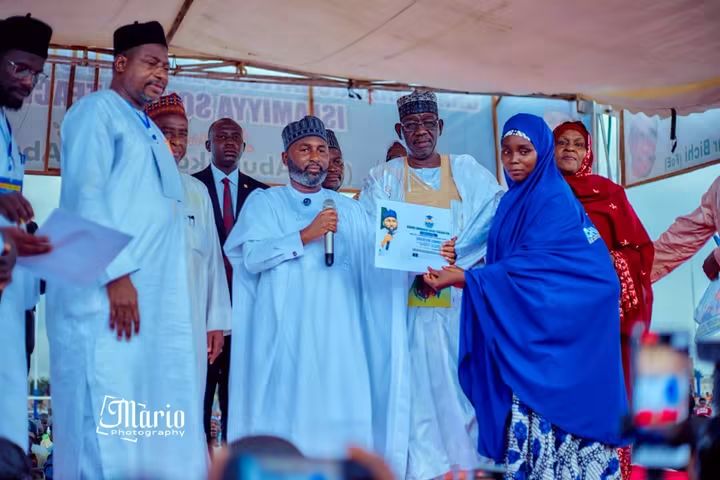
The Federal lawmaker representing the Bichi Federal Constituency, Hon. Abubakar Kabir Abubakar Bichi, has inaugurated 100 new Islamic school teachers as part of efforts to strengthen Islamic education in the Bichi Local Government Area of Kano State.
The inauguration ceremony was held on Sunday, 27 September 2026, and marked the fourth batch of School Teachers employed under the lawmaker’s initiative bringing the total of number of teachers engaged through the programme to 600.
Before their employment, the 100 teachers underwent a special examination conducted at the directive of the lawmaker. Those who obtained the highest scores across the 11 wards of Bichi Local Government Area were selected for the teaching positions.
The lawmaker had previously supported the teachers by paying their monthly allowances as volunteers before formally employing them as full-time teachers in Islamic schools across the local government area.
Prominent Islamic scholars and dignitaries attended the inauguration ceremony, including Sheikh Habibu Dan Almajiri, Chairman of the Kano State Zakkah Commission; Dr. Nazifi Ishak, former Kano State Commissioner for Religious Affairs; Dr. Zahrau Muhammad Umar, former Commissioner for Women Affairs; and Sheikh Sanusi Sharif Bichi.
Also in attendance were the Chairman of Bichi Local Government Area, Alhaji Hamza Sule Maifata; the Director-General of the APC Campaign Council in Bichi, Alhaji Sani Mukaddas, and the Kano State APC Secretary, Prof. Yusuf Muhammad Sabo.
The Islamic scholars and other dignitaries commended Hon. Abubakar Kabir Abubakar Bichi for his efforts towards improving both Islamic and modern education in the Bichi Local Government Area.
Hon. Abubakar Kabir Abubakar has also previously engaged several youths in various sectors, including healthcare, environmental services, education and other community development activities, as part of his efforts to create opportunities for young people across Bichi Federal Constituency and Kano State.
The lawmaker, who serves as the Chairman of the House Committee on Appropriation, has consistently expressed his commitment to youth development and community empowerment through various initiatives across the constituency.
News
FG Seeks Fresh $1.5bn World Bank Loans As Nigeria’s Debt Hits N166.79tn

By Yusuf Danjuma Yunusa
The Federal Government is in discussions with the World Bank for three new loans worth a combined $1.5 billion, even as Nigeria’s total public debt climbed to a record N166.79 trillion by June 2026.
The proposed facilities consist of three $500 million loans targeting climate resilience, social protection and early childhood development.
The first is an additional $500 million for the Agro-Climatic Resilience in Semi-Arid Landscapes (ACReSAL) project, which would increase its total financing to $1.2 billion. The funds are expected to support land restoration, flood and erosion control, irrigation, water management and other climate-resilience measures across northern Nigeria.
Another $500 million facility is proposed for the Household Prosperity and Empowerment-Social Protection (HOPE-SP) project. It is designed to support poor and vulnerable households through cash transfers, an improved social registry and stronger social protection systems.
The third $500 million loan would finance the Nigeria Early Childhood Development programme, covering all 36 states and the Federal Capital Territory. The programme aims to improve access to healthcare, nutrition, early learning, childcare, water and sanitation for children aged zero to five.
Meanwhile, figures from the Debt Management Office show that Nigeria’s public debt increased by N14.39 trillion , from N152.40 trillion in June 2025 to N166.79 trillion in June 2026. Domestic debt stood at N91.59 trillion, while external debt was N75.20 trillion.
Nigeria’s debt to the World Bank Group also rose to $20.73 billion by June 2026, accounting for about 38 per cent of the country’s $54.52 billion external debt.
Economist Adewale Abimbola said concessional loans could support development if properly structured and effectively utilised, stressing that the key issue was how the borrowed funds were deployed.
News
Report: Nigeria Records N166trn Public Debt
By Yusuf Danjuma Yunusa
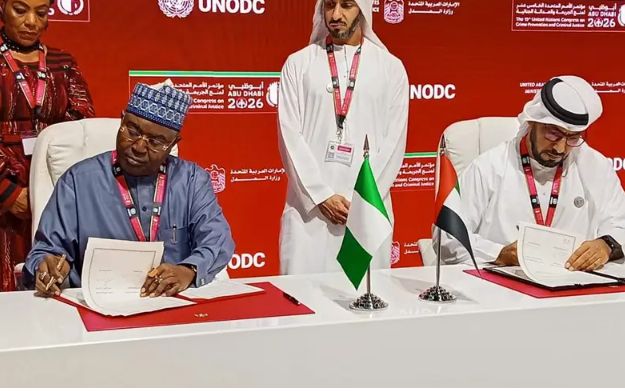
The Debt Management Office (DMO) says Nigeria’s total public debt rose to N166.79 trillion as of June 30, 2026.
The DMO published the latest public debt portfolio report on Friday.
The figure represents a 9.4 percent or N14.39 trillion increase from the N152.4 trillion recorded at the end of June 2025.
It also represents an increase of N7.44 trillion or 4.7 percent compared with the N159.35 trillion recorded at the end of the first quarter (Q1) of 2026.
According to the latest report, the debt stock comprises N91.59 trillion in domestic debt, which accounts for 54.91 percent of the total debt stock, and N75.2 trillion in external debt, representing 45.09 percent.
The debt office said domestic debt increased by N11.04 trillion (13.7 percent) from N80.55 trillion recorded in June 2025.
The office said external debt also rose by N3.35 trillion (4.7 percent) from N71.85 trillion in the same period.
According to the DMO, the federal government accounted for N152.77 trillion of the total debt stock, comprising N86.99 trillion in domestic debt and N65.77 trillion in external debt.
On the other hand, states and the Federal Capital Territory (FCT) accounted for the remaining N14.01 trillion — N4.59 trillion in domestic debt and N9.42 trillion in external debt.
In dollar terms, the agency said Nigeria’s total public debt stood at $120.93 billion as of June 30, 2026 — up from $99.66 billion recorded in June 2025.
The DMO said the Central Bank of Nigeria (CBN) official exchange rate of N1,379 per dollar as of June 30 was used to convert the external debt to naira.

Dry Taps Gone, Kano Flows Again: The Abba Yusuf Water Comeback By Abba Anwar

Rep. Abubakar Bichi Employs 100 New Islamic School Teachers in Bichi

The Tinubu Health Reset: A Consultant Examines Nigeria’s Healthcare Reforms

FG Seeks Fresh $1.5bn World Bank Loans As Nigeria’s Debt Hits N166.79tn

RE:WE ARE UNDER SIEGE: TARABA MONARCH BREAKS SILENCE AS FULANI BANDITS OVERRUN THE ANCIENT KWARARAFA KINGDOM:

Zamfara Varsity ASUU Threatens Warning Strike Over FG-ASUU Agreement, Promotion Arrears

Bello Sharada: A Great Writer, A Bookish Soul, Gone Too Soon

Kano Chemists Threaten Warning Strike Over Alleged PCN Pressure

Per Ishaq Samaila: “Waziri” for Strategy. “Mai Jama’a” for Service. One Man. One Mission. Ibrahim Kabir Masari

Education Stakeholders, SBMC Train Students on Skills for Self-Reliance
Dry Taps Gone, Kano Flows Again: The Abba Yusuf Water Comeback By Abba Anwar
Rep. Abubakar Bichi Employs 100 New Islamic School Teachers in Bichi
The Tinubu Health Reset: A Consultant Examines Nigeria’s Healthcare Reforms
FG Seeks Fresh $1.5bn World Bank Loans As Nigeria’s Debt Hits N166.79tn
RE:WE ARE UNDER SIEGE: TARABA MONARCH BREAKS SILENCE AS FULANI BANDITS OVERRUN THE ANCIENT KWARARAFA KINGDOM:
Zamfara Varsity ASUU Threatens Warning Strike Over FG-ASUU Agreement, Promotion Arrears
Bello Sharada: A Great Writer, A Bookish Soul, Gone Too Soon
Kano Chemists Threaten Warning Strike Over Alleged PCN Pressure
Per Ishaq Samaila: “Waziri” for Strategy. “Mai Jama’a” for Service. One Man. One Mission. Ibrahim Kabir Masari
Education Stakeholders, SBMC Train Students on Skills for Self-Reliance
-

 Opinion5 years ago
On The Kano Flyovers And Public Perception
-

 Features5 years ago
How I Became A Multimillionaire In Nigeria – Hadiza Gabon
-

 Opinion6 years ago
Kano As future Headquarters Of Poverty In Nigeria
-

 History5 years ago
Sheikh Adam Abdullahi Al-Ilory (1917-1992):Nigeria’s Islamic Scholar Who Wrote Over 100 Books And Journals
-

 Opinion5 years ago
My First Encounter with Nasiru Gawuna, the Humble Deputy Governor
-

 History5 years ago
The History Of Borno State Governor Professor Babagana Umara Zulum
-

 History6 years ago
The Origin Of “Mammy Market” In Army Barracks (Mammy Ochefu)
-

 News4 years ago
Federal University Of Technology Babura To Commence Academic Activities September