
News
Plateau State Governor Engages Abuja-Based Indigenes to Boost State Development”
By Asile Abel, jos
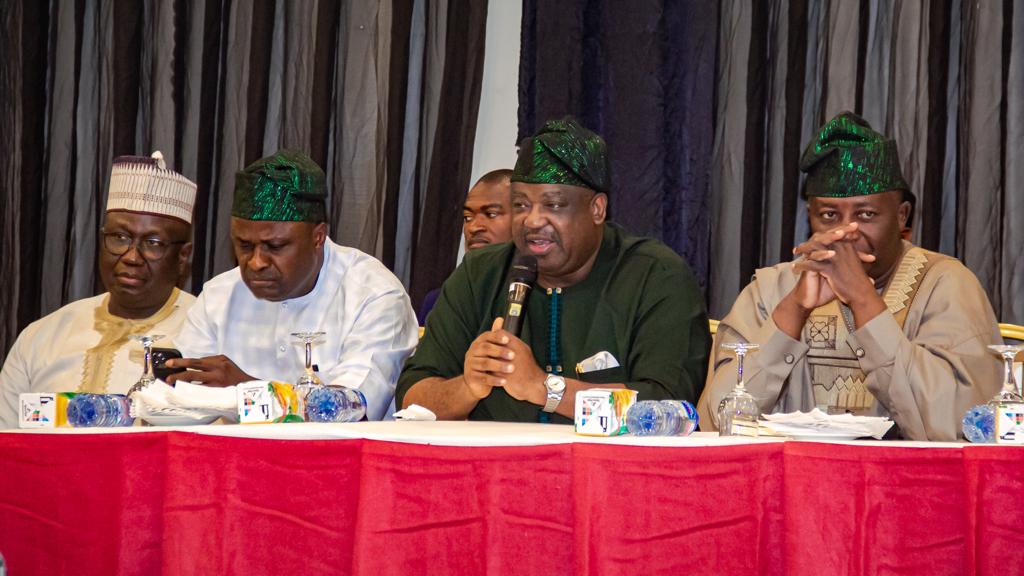
The Governor of Plateau State, Barr. Caleb Manasseh Mutfwang, has convened an assembly of Plateau indigenes employed in the Federal Civil Service in Abuja, calling for their collective efforts to enhance the state’s progress.
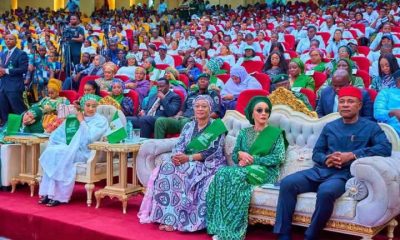
The meeting which was the first of its kind held at the Ladi Kwali Hall, Continental Hotel, Abuja, had in attendance, Directors, Deputy Directors, Assistant Deputy Directors, and representatives of Non Governmental Organizations. The Governor urged them to work in unison across all the Federal Ministries, Departments and Agencies and ensure that what belongs to Plateau State is diligently protected and delivered to the people.
He said Plateau people are looking up to them for their contributions to the uplifment of the state. ³Describing the interface as historic, Governor Mutfwang noted that elections have come and gone and it is now time for the people to join hands to correct the negative narrative about the state in order to attract development.
He said, “All of you came into Abuja in search for greener pastures for you and your families but God has raised you to somewhere that you need to look beyond your families. You need to know that the destinies of many people are connected to your destinies.
“There is need for us to begin to put our heads together and create the necessary synergy that will help us to build the image of Plateau state within the federal system and hopefully, there will be dividends that we can bring from such synergy”,
Governor Mutfwang encouraged them to be their brother’s keepers and look after each other to build a synergy that would impact the state positively.
“The Federal Government has the largest share of the budget of the Federation. We are looking forward to having more federal presence in Plateau State in every sector. We need to see roads that belong to the Federal Government brought back to life to enhance transportation.
“We want to see federal government’s presence in health, education. We want to partner with the Federal Government in mineral development because Plateau is a basket of mineral resources. We want to see how we can rebuild our relationship within the Federal authorities to ensure all the advantages that come to Plateau State from the Federation are well harness”, he stated.
The Governor said his administration is doing everything possible to carry every segment of the society in governance, saying the veterans, the young and the middle aged have been appointed as Commissioners and into other positions in order to give all a sense of belonging.
He emphasized that women and people with disabilities were also appointed into key government functionaries and expressed the desire to ensure that everybody have a sense of belonging.
He praised the former Deputy Speaker of the House of Representative, Hon. Ahmed Idris Wase, Senator Istifanus Gyang and Senate Minority Leader, Senator Simon Mwadkwon who influencing the siting of Federal Government projects in the state.
The Senate Minority Leader and Senator representing Plateau North, Sen. Simon Mwadkwon applauded Governor Mutfwang for the initiative, and called for brotherhood among Plateau indigenes working in the Federal Capital Territory.
In the same vein, former Nigerian Ambassador and Former Minister of Foreign Affairs, Bagudu Hirse also applauded the initiative and urged Plateau indigenes in Abuja to cultivate the spirit of brotherhood.
In their separate remarks, Member representing Langtang North/Langtang South constituency in the House of Representatives, Hon. Beni Lar and Secretary to the Government of the State, Arc. Samuel Jatau, expressed gratitude for the turnout and said the meeting should be sustained in the spirit of one Plateau.
Other prominent personalities who attended the meeting included Senator representing Plateau South, AVM Napoleon Bali (Retired), Chief of Staff, Government House, Hon. Jeremiah Satmark, Member representing Jos South/Jos East Federal Constituency, Dachung Musa Bagos, Member representing Barkin-Ladi/Riyom Federal Constituency, Hon. Ibrahim Peter Gyendeng, Member representing Shendam/Quan’apan/Mikang Federal Constituency, Hon. Isaac Kwallu, Member representing Bassa/Jos North Federal Constituency, Hon. Musa Agah, members of the State Executive Council, and illustrious sons and daughters of Plateau State residence in Abuja.






News
JIBWIS Calls For Arrest,Investigation Of Man In JIBWIS Uniform Over Viral Video Threatening Attack On Enugu On Sunday
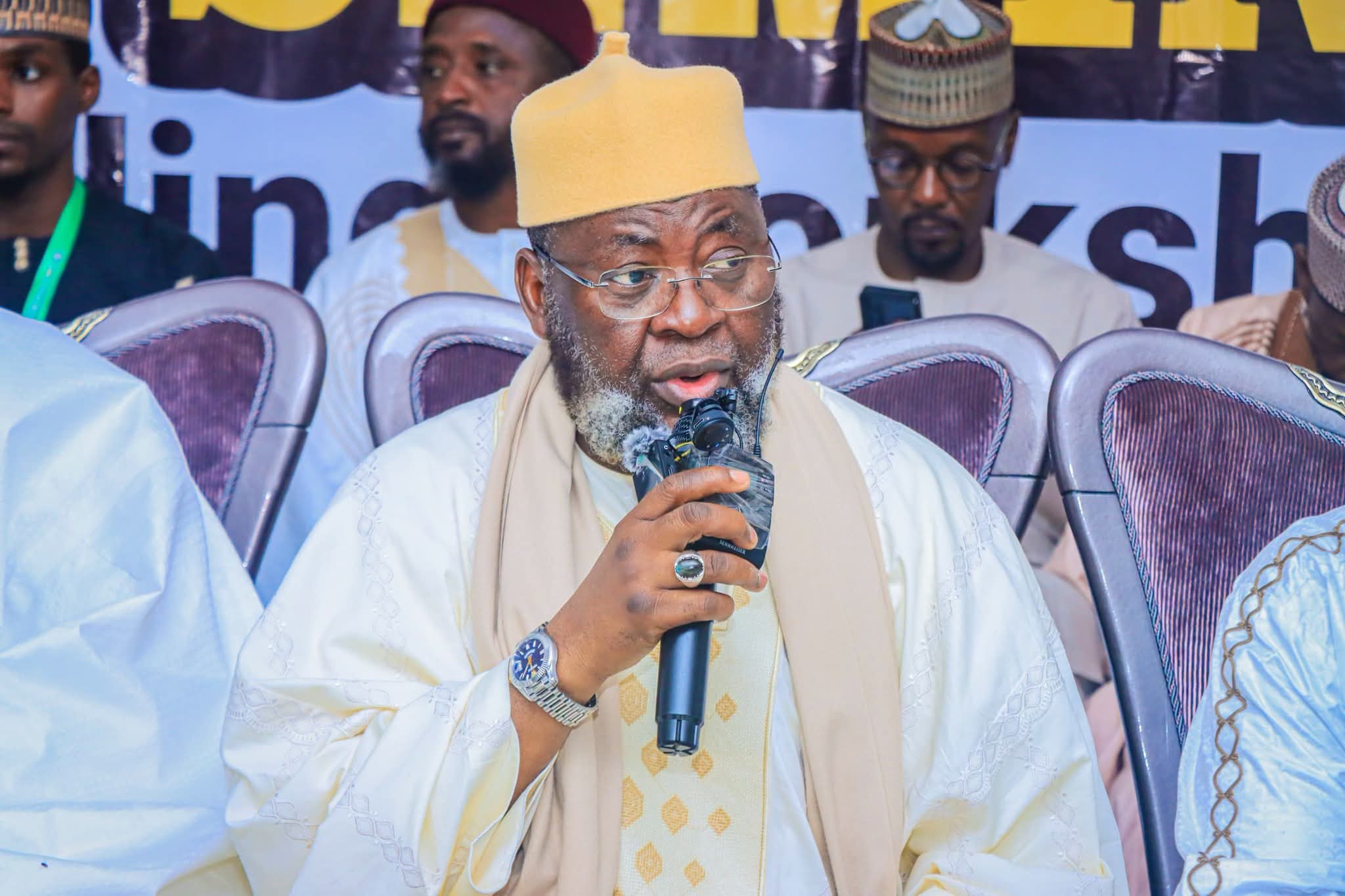
The National Chairman of Jama’atu Izalatil Bid’ah Wa Iqamatis Sunnah (JIBWIS), Sheikh Abdullahi Bala Lau, has strongly condemned a viral video showing a man dressed in the uniform of the organisation’s First Aid Group, participating in a jogging exercise and chanting provocative statements calling for AK-47 rifles to be given to them to enable them to travel to Enugu on Sunday and carry out an attack.
Reacting to the disturbing development, Sheikh Bala Lau called on the Department of State Services (DSS), the Nigeria Police Force and other relevant security agencies to immediately investigate the incident, identify those responsible and ensure that anyone found culpable is brought to justice in accordance with the law.
The National Chairman categorically dissociated JIBWIS from the inflammatory statements, stressing that such expressions of violence, intimidation and threats against any community are completely alien to the principles, teachings and objectives upon which the organisation was established.
He emphasised that wearing the uniform of the JIBWIS First Aid Group or appearing among its members does not automatically establish that an individual is acting on behalf of the organisation or with its authorisation.
Sheikh Bala Lau further expressed concern that the incident could represent a deliberate attempt by individuals or external interests to misrepresent the organisation and damage its longstanding reputation. He therefore urged security agencies to thoroughly investigate the circumstances surrounding the video, including the identity, affiliation and possible motives of those involved.
The Chairman recalled that JIBWIS recently organised an international conference in Abuja, bringing together Christian leaders, Muslim scholars from different Islamic schools of thought, prominent personalities and participants from different parts of the world, with the central objective of promoting interfaith dialogue, mutual understanding, religious tolerance and peaceful coexistence.
He questioned how an organisation that has consistently invested its resources, leadership and institutional efforts in building bridges across religious and ethnic divides could reasonably be associated with statements advocating violence against fellow Nigerians.
For approximately 48 years since its establishment, JIBWIS has remained committed to the propagation of authentic Islamic teachings, the promotion of the Sunnah of Prophet Muhammad (SAW), moral reformation, education, humanitarian services and the peaceful coexistence of people irrespective of their religious, ethnic or geographical backgrounds.
News
Ebola: NCDC to Provide N100,000 Weekly Allowance for Isolated People
By Yusuf Danjuma Yunusa
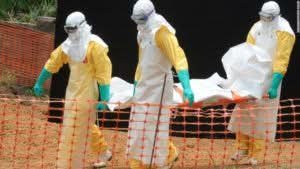
The Nigeria Centre for Disease Control and Prevention has announced the provision of a N100,000 weekly allowance for each of the 53 isolated contacts traced to the female Ebola patient in Abuja.
Jide Idris, NCDC director-general, told reporters on Sunday, stating that the stipend became necessary after isolated people complained about the financial impact of their isolation on their families.
“We are paying for their accommodation; we are paying for their feeding. Some of them are asking for a stipend to maintain their families,” the NCDC boss said.
He added, “We are providing N100,000 per person per week just to maintain their comfort and feeding, because they were complaining.”
Mr Idris explained that the allowance is an unplanned emergency measure that could be reviewed as the situation evolves.
“This was not planned for, but it is an emergency. We will continue to review it as we go along,” Mr Idris said.
That the Ebola patient was discovered in FCT, according to Mr Idris, did not mean the responsibility for managing the outbreak rested solely with the FCT government.
He enjoined other states to prepare to support persons impacted by public health emergencies, should any case be detected in their jurisdiction.
“This is not the responsibility of the FCT alone. What we have to do for the FCT, we have to do for any other state, just in case,” he said.
He confirmed the isolation of seven additional persons linked to the Ebola virus patient in Abuja, raising the number of isolated persons to 53.
Peoples Gazette last week reported that NCDC added the patient’s two domestic staff to the 44 isolated persons.
“As of now, we have 53 primary contacts. These comprise 44 people from the health facility where the patient was treated and nine additional contacts,” the NCDC boss said at a press briefing on Sunday.
He explained that the newly traced contacts were largely the healthcare workers who first attended to the patient in Julius Berger Clinic before she went to Nizamiye Hospital, where she was diagnosed with Ebola.
Mr Idris said none of the isolated people has, so far, tested positive to the virus.
A 42-year-old female patient, who was born in Uganda and married to a Swiss diplomat, tested positive to the Bundibugyo strain of the Ebola virus disease on October 20.
She had departed Uganda for Nigeria on October 3.
Nigeria’s health minister Ali Pate said genomic analysis indicates that the virus identified in Nigeria is highly similar to the case reported in Kenya.
He implied that there was a high possibility that the patient in Nigeria crossed paths with a Kenyan man at the airport in Uganda. The Kenyan man died days after arriving in Nairobi.
Uganda’s Ministry of Health denied exporting the virus to Nigeria, reaffirming its Ebola-free status as declared by the World Health Organisation in August.
News
IGP Proposes 200% Gratuity, Pension for Retired Officers
By Yusuf Danjuma Yunusa
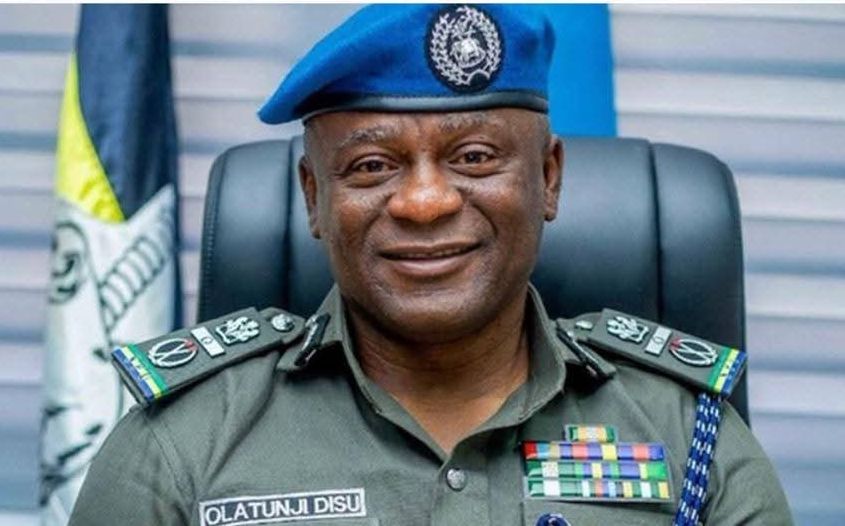
Inspector-General of Police Olatunji Disu has proposed a 200 per cent gratuity and pension for retired police officers as part of the ongoing reforms in the Nigeria Police Force.
Mr Disu told journalists on Sunday in Abuja that the proposal was before a presidential committee set up to examine police concerns and recommend sustainable solutions.
He said the proposal was to intensify efforts to secure improved retirement benefits for personnel of the Nigeria Police Force (NPF) and address the longstanding pension challenges.
The IGP also said the committee was made up of representatives of the Ministry of Finance and the Office of the Accountant-General of the Federation.
According to him, other representatives in the committee are the National Salaries, Incomes and Wages Commission, the Budget Office of the Federation, and the National Pension Commission (PenCom).
“Under the proposed arrangement, eligible officers can retire on pension benefits linked to their last salaries, alongside the enhanced gratuity,” the IGP said.
Mr Disu said the package was also expected to address recurring protests by serving officers, seeking to exit the Contributory Pension Scheme (CPS), a contentious issue within the force.
“The initiative is aimed at resolving the outstanding pension liabilities, providing more adequate retirement benefits, and creating a more efficient pension administration system.
“It also seeks to cover officers who retired before the new framework takes effect, with provisions to review their benefits in line with the revised terms, rather than limiting reform to future retirees,” he said.
The IGP said the intervention of President Bola Tinubu in the police pension crisis had raised expectations among retired officers, who had long complained about inadequate benefits, delayed payments, and administrative bottlenecks.
According to him, for many pensioners, timely access to benefits is essential for meeting household expenses and medical bills amid rising living costs.
He said the federal government had cleared the backlog of pension payments that previously left some retirees waiting for up to two years and introduced pension increment.
Mr Disu revealed that some of the beneficiaries currently receive almost double their previous payments.
“Our engagement with the presidency, PenCom, and other relevant institutions is seen as important to sustain the NPF reform momentum.
“The committee is expected to recommend measures on outstanding liabilities, funding arrangements, and benefit administration.
“It is also to provide a framework to resolve pension challenges and improve coordination among the institutions responsible for policy, funding, and administration,” he said.
He added that the proposal remained subject to the committee’s deliberations, relevant government approvals, funding arrangements, and implementation guidelines.
Mr Disu said the 200 per cent gratuity should not be regarded as approved or existing entitlement, adding that the final outcome would determine whether it would be adopted.

JIBWIS Calls For Arrest,Investigation Of Man In JIBWIS Uniform Over Viral Video Threatening Attack On Enugu On Sunday

Ebola: NCDC to Provide N100,000 Weekly Allowance for Isolated People

IGP Proposes 200% Gratuity, Pension for Retired Officers

Dagumawa Promises to Connect Wudil/Garko to Global Economy Through ICT Hub

Hamma Urges Political Candidates to Prioritise Unity, Ideology Over Personal Interests

PCACC Arrests Man Over Alleged ₦4.5m Sale, Illegal Leasing of Kano Government Horse Stable

Kano Monitors ₦48.9bn Projects Across Six LGAs

Kano Spends ₦10.36bn on Hospitality, Sitting Allowances, Others in Six Months

Goje’s Electoral War:The Confrontation With Tinubu,Governor Inuwa,Usman Kumo And APC candidates Ahead Of 2027

Open The Social Sciences “A Tribute to a Heterodox Scholar: Mallam Ibrahim Muazzam
JIBWIS Calls For Arrest,Investigation Of Man In JIBWIS Uniform Over Viral Video Threatening Attack On Enugu On Sunday
Ebola: NCDC to Provide N100,000 Weekly Allowance for Isolated People
IGP Proposes 200% Gratuity, Pension for Retired Officers
Dagumawa Promises to Connect Wudil/Garko to Global Economy Through ICT Hub
Hamma Urges Political Candidates to Prioritise Unity, Ideology Over Personal Interests
PCACC Arrests Man Over Alleged ₦4.5m Sale, Illegal Leasing of Kano Government Horse Stable
Kano Monitors ₦48.9bn Projects Across Six LGAs
Kano Spends ₦10.36bn on Hospitality, Sitting Allowances, Others in Six Months
Goje’s Electoral War:The Confrontation With Tinubu,Governor Inuwa,Usman Kumo And APC candidates Ahead Of 2027
Open The Social Sciences “A Tribute to a Heterodox Scholar: Mallam Ibrahim Muazzam
-

 Opinion5 years ago
On The Kano Flyovers And Public Perception
-

 Features5 years ago
How I Became A Multimillionaire In Nigeria – Hadiza Gabon
-

 Opinion6 years ago
Kano As future Headquarters Of Poverty In Nigeria
-

 History6 years ago
Sheikh Adam Abdullahi Al-Ilory (1917-1992):Nigeria’s Islamic Scholar Who Wrote Over 100 Books And Journals
-

 Opinion5 years ago
My First Encounter with Nasiru Gawuna, the Humble Deputy Governor
-

 History5 years ago
The History Of Borno State Governor Professor Babagana Umara Zulum
-

 History6 years ago
The Origin Of “Mammy Market” In Army Barracks (Mammy Ochefu)
-

 News5 years ago
Federal University Of Technology Babura To Commence Academic Activities September