
News
Friday Sermon] Ramadan: The Blessed Month, Month Of Forgiveness, Mercy And The Qur’an
By Imam Murtadha Gusau
In the name of Allah, the Most Gracious, the Most Merciful
All praise is for Allah, we praise Him, we seek His help, we ask for His forgiveness, and we seek refuge with Allah from the evils of our own souls and the wickedness of our actions, whoever Allah guides, there is none that can lead him astray, and whoever Allah allows to go astray, there is none that can lead him to the right path.
I testify and bare witness that there is no deity worthy of worship in truth but Allah, alone, without any partners. And I testify and bare witness that Muhammad (Peace be upon him) is His Servant and Messenger. As for what’s after:
Dear brothers and sisters! Know that the fourth pillar among the pillars of Islam is fasting (It is called Siyam or Sawm in Arabic). And it is to fast throughout the month of Ramadan (the ninth month of the Islamic calendar). This is an act of worship that draws the Muslim closer to Allah, as the noble Qur’an stated:
“Fasting has been prescribed upon you as it was prescribed upon those who came before you so that you may attain piety.” [Qur’an, 2:183]
In this blessed month the Muslim pushes himself physically and spiritually in order to come closer to Allah. Muslim do good deeds in order to be forgiven by Allah Almighty, and the mercy of Allah will be shower on him.
Friday Sermon] A Strong Message To The Nigerian Muslims And Non-Muslims
Fasting and spirituality means that every Muslim should:
1. Focus on getting closer to Allah Almighty
2. Study and recite the Qur’an plentifully
3. Improve obedience to Allah
4. Give in charity, sadaqah etc
5. Pray the night prayers
6. Show kindness and generosity
7. Seek forgiveness for sins
Fasting as a physical activity means:
1. That a Muslim has no food or drink from dawn till sunset
2. No sexual relations from dawn till sunset
3. No immoral behaviour such as lying, deception, rumour-mongering, backbiting, and other sins. This he endeavours to avoid throughout his life.
In Muslim countries or communities, life continues as normal but cafes, restaurants and work-place canteens close during the day because no one is eating or drinking. A Muslim takes a pre-dawn meal (Suhur) as the Prophet Muhammad (Peace be upon him) commanded before the morning prayer. Throughout this month people spend more time in reading the Qur’an and remembering Allah with words of praise and glorification (Zikr). Hundreds of millions of Muslims look forward to Ramadan each year.
At dusk (Sunset) everything changes. The Muslim begins by breaking the fast with some dates and water. He then prays the Maghrib prayer (after the sun has set), after which he returns to his family to share in a well-prepared meal. Even at this stage, a Muslim is commanded not to go to excess in filling his belly. The Muslims should eat food they love that is wholesome and in moderation. Within two hours the Muslim returns to the Mosque and prays the late prayer (Isha) followed by quite a lengthy night prayer (Tarawih) for which there is a huge reward from Allah. In non-Muslim countries for example like Britain withholding from food provides added challenges:
1. If Ramadan falls into the British summer, then the daylight hours are very long (16-18 hours)!
2. Most people around you are eating, drinking and snacking, so that may tempt a Muslim.
Respected servants of Allah! Fasting is not obligatory upon everyone. Some people are exempt, such as children under the age of puberty who have not yet reached adulthood. Adulthood is known by whichever of the following takes place first:
• Coarse hair in the private area.
• Sexual discharge due to desire.
• Reaching the age of fifteen.
For a woman there is an additional point:
• Onset of the menstrual cycle.
Children can be encouraged to fast, but not forced. Some adults are also exempt due to their particular situation:
• Travelers upon a journey.
• The sick who are likely to recover.
• Menstruating women.
• Postnatal bleeding women.
These people are allowed to miss days but must make them up later after Ramadan once they are able. There is yet another group who are exempt:
• Those permanently sick who are not expected to recover.
• The elderly who cannot fast due to their old age.
• Pregnant and breastfeeding women who fear for their babies if they were to fast.
These people must feed a poor person for each day missed since they are not expected to make up what they have missed.
Dear Muslims! Ramadan is known as the month of the Qur’an, because it was during this month that the Qur’an was first revealed, and continued to be revealed by Allah to the angel Gabriel who would bring verses to the Prophet (Peace be upon him) as and when events requiring guidance happened over the next twenty three years, until his death. Allah stated in the Qur’an:
“The month of Ramadan is that in which was revealed the Qur’an, a guidance for the people and clear proofs of guidance and a criterion between truth and falsehood. So whoever sights the new moon of the month, let him fast it; and whoever is ill or on a journey – then an equal number of other days must be made up. Allah intends for you ease and does not intend for you hardship and wants for you to complete the period and to glorify Allah for that to which He has guided you; and perhaps you will be grateful.” [Qur’an, 2:185]
Alhamdulillah, this year’s Ramadan, many committed Muslims set themselves targets and really want to benefit in Ramadan and want to please Allah:
• They want piety – and fasting leads to piety and awareness of the Creator whom they serve.
• Many Muslims try to complete the Qur’an by reading it daily.
• Many attend the Mosque every night and pray the night prayer (Tarawih) behind the Imam. Women too are welcome to attend.
• Many want to change their lives for the better, so Ramadan gives them an ideal opportunity. They cease useless boyfriend/girlfriend relationships; they stop bad habits such as lying, stealing, backbiting, smoking, drinking, listening to music, watching movies and so on.
• A lot of Muslims fall short in their behaviour throughout the year, but they know that Ramadan is a month of forgiveness and mercy, so they obey Allah and the Prophet Muhammad (Peace be upon him) and do good deeds, with the desire to carry on after Ramadan in the same manner. They seek Allah’s Mercy and Forgiveness daily.
They try to understand the message of the Qur’an by sitting with knowledgeable teachers who will teach them from classical works thus avoiding misguided ideologies. Muslims must always protect themselves from being led to extremes and from falling into neglect of established religious practices.
In Ramadan, the Muslim communities become stronger, people show mercy to each other, by being kind and generous, especially to one’s parents, family and the poor.
Ramadan makes Muslims reflect upon the bounties of Allah such as life, happiness, security, food, drink, health, family, wealth and so on. When Muslims go hungry and thirsty, they begin to understand the plight of those who are poor and needy and so they give thanks to Allah for His kindness and grace upon them.
Muslims help those less fortunate than themselves. They feel sympathy for the poor, less privilege, widows, orphans and so they give in charity, thereby receiving more reward from Allah.
Ramadan teaches the Muslims self-control and reminds them that serving Allah must take priority over their own desires.
Devout Muslims exert themselves harder in prayer, recitation and glorification of Allah in the last ten nights of Ramadan because in these nights there is the “Night of Power, Majesty and Decree” (called Lailatul-Qadr) which is better than a thousand months of worship. The Muslims were taught by the Prophet Muhammad (Peace be upon him) to seek out the beginning of Ramadan by looking out for the new moon of the month. It is not correct to use pre-determined calculations for the beginning and end of Ramadan since that opposes the instruction of the Prophet. In fact he said:
“When you see it (the crescent moon) fast, and when you see it again cease fasting, and if there is cloud-cover then complete thirty days.”
Finally, our non-Muslims neighbours should know that Muslims worship only one God (Allah), the Lord of all creation – He is the God of Noah (Nuh), Abraham (Ibrahim), Moses (Musa), Jesus (Isa), Muhammad and all the Prophets (Peace be upon them all).
And Alhamdulillah, today Friday, 1st April 2022, is the 29th of Sha’aban 1443 AH and hence the first day to look for the crescent of Ramadan 1443 AH.
The National Moon Sighting Committee (NMSC) in Nigeria hereby requests the Muslims to kindly look for the Ramadan crescent and then forward to them your observations, whether positive or negative. In your report kindly indicate your full name, location (exact city) and approximate time of observation. It is suggested, if possible, to look for the crescent in a group with others.
Please, you share this reminder with friends and groups for wider publicity please.
Jazakumullah Khairan.
Allah surely knows best and he is the Lords of the universe and May his peace and blessing be on his Messenger, his family, his companions and those who follow them.
I ask Allah, the Most High to grant us success and enable us to be correct in what we say and write, ameen.
Murtadha Muhammad Gusau is the Chief Imam of Nagazi-Uvete Jumu’ah and the late Alhaji Abdur-Rahman Okene’s Mosques, Okene, Kogi State, Nigeria. He can be reached via: gusauimam@gmail.com or +2348038289761.
News
Mass Exodus Looms in Kano APC as More Chieftains Consider Exit — Mansur Ahmed
A former governorship aspirant of the Peoples Democratic Party (PDP), Engr. Mansur Ahmed, has predicted a possible mass exodus of prominent politicians and party stakeholders from the All Progressives Congress (APC) in Kano State amid persistent internal disagreements.
Ahmed made the prediction while addressing journalists following his resignation from the APC, according to a statement signed by Usman Bello on his behalf.
The former APC member described the recent resignation of party chieftain Alhaji Aminu Dabo as an indication of a deeper crisis within the party, suggesting that more prominent members could leave in the coming days.
Ahmed alleged that the Kano APC was experiencing persistent internal disputes that had continued to undermine unity among its members, with little indication that the disagreements would be resolved soon.
He further disclosed that several political leaders and stakeholders across Kano State were holding consultations over their future in the party and were considering formally resigning.
According to Ahmed, the consultations involved prominent political figures and their allies who were weighing their options before deciding on their next political destination.
Reflecting on his political career, Ahmed described himself as a former PDP governorship aspirant who also served as Deputy Coordinator of the 2015 presidential campaign in Kano.
He said he and his associates were currently consulting with political allies to determine the next direction of their political engagement following his departure from the APC.
The statement did not identify the other party leaders allegedly preparing to resign or disclose when they might announce their decisions.
It also did not indicate whether Ahmed and the politicians consulting with him had reached any agreement to join another political party.
Ahmed’s prediction comes amid continuing political realignments in Kano State as political actors assess their options ahead of the 2027 general elections.
News
Kano Donates Equipment to NDLEA
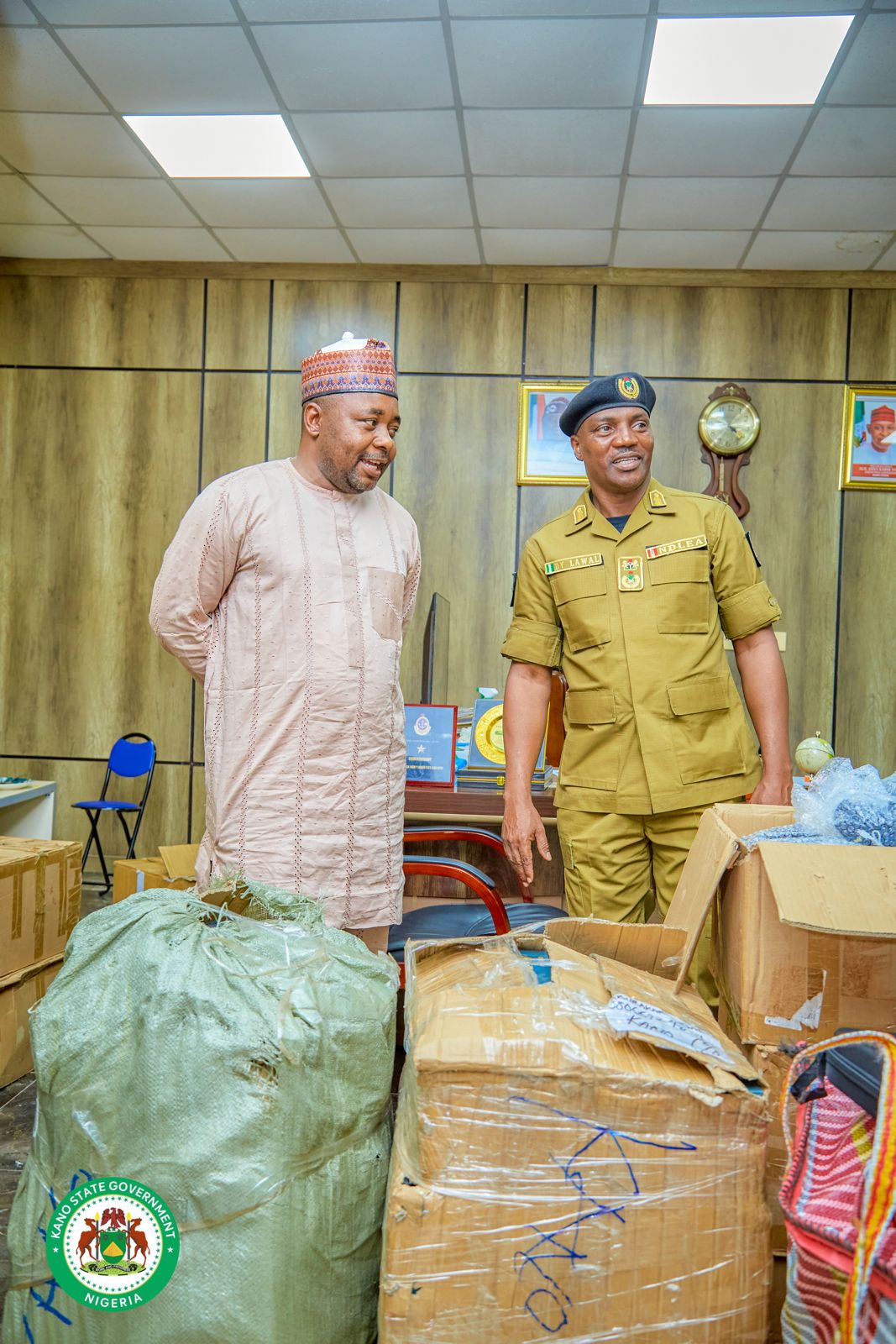
The Kano State Government has donated working tools to the National Drug Law Enforcement Agency (NDLEA), Kano Strategic Command, to strengthen the fight against drug abuse and illicit trafficking.
The items were presented on Thursday, October 22, 2026, by the Chairman of the Kano State Multi-Agency Task Force on Drug Abuse and Illicit Trafficking, Barrister Muhuyi Magaji Rimin Gado, on behalf of Governor Abba Kabir Yusuf.
Speaking at the presentation, Magaji said the donation reflected the government’s determination to tackle drug-related offences, which he identified as a major contributor to social vices in society.
He lamented that substance abuse had reached a frightening dimension, requiring concerted action by the government, security agencies and other stakeholders.
According to him, Governor Yusuf’s administration is committed to providing the necessary support to agencies responsible for combating drug abuse and illicit trafficking, using all available means to address the growing challenge.
Magaji stressed that effective coordination among relevant institutions was essential to curbing the menace and protecting the future of young people in the state.
Receiving the items, CN Dahiru Yahaya Lawan, Kano Strategic Commander of the NDLEA, expressed gratitude to the governor and the state government, describing the intervention as timely.
He said the equipment would enhance the command’s operational capacity and strengthen its efforts to combat drug abuse and illicit trafficking.
Lawan assured the government that the items would be judiciously utilised to achieve their intended purpose.
He emphasised that the fight against drugs was a collective responsibility, calling on residents, community leaders and other stakeholders to support law enforcement agencies in tackling the problem.
The donation underscores the state government’s drive to strengthen inter-agency collaboration and provide operational support for the fight against drug-related offences, with the ultimate goal of creating a safer, drug-free society.
News
NDC Kano Asks INEC to Investigate Conflicting Primary Election Reports

The Nigeria Democratic Congress (NDC), Kano State Chapter, has called on the Independent National Electoral Commission (INEC) to investigate the alleged issuance of multiple inconsistent monitoring reports on the party’s primary elections in the state.
The party made the call in a statement dated October 19, 2026, signed by Senior Advocate of Nigeria (SAN) Magaji Mato Ibrahim and four other lawyers, in response to a public statement issued on October 17 by Bola Aidi, SAN & Co., solicitors to five individuals claiming candidature under the NDC in Kano State.
According to the lawyers representing the NDC Kano State Chapter, the petition submitted to the INEC chairman on October 16 concerned the conduct of Mrs Hauwa Buhari, Head of the Department of Election and Party Monitoring at the commission’s Kano State office.
The lawyers said the petition sought an investigation into what they described as materially inconsistent versions of a monitoring report allegedly signed by the same INEC official concerning the party’s primary elections.
They maintained that the petition was issued with the authority of the NDC Kano State Chapter, dismissing suggestions that the party’s leadership was unaware of the complaint.
“The petition was issued on the instructions of the NDC Kano State Chapter. We have since received and confirmed those instructions,” the lawyers said.
They argued that the state chapter had the right to challenge the integrity of official records purportedly reflecting the outcome of its primary elections, particularly where such documents were being relied upon in court proceedings involving the party’s candidates.
The lawyers further alleged that the different versions of the monitoring report contained material inconsistencies, with some allegedly undated, while listing individuals who, according to the party, were neither screened nor cleared for the relevant constituencies.
They also claimed that the reports excluded candidates recognised by the party whose names appeared on Form EC9D, which they said was signed by the NDC National Chairman and National Secretary and submitted to INEC.
According to the statement, the INEC official had previously acknowledged gaps in the monitoring report, while a corrected version was allegedly forwarded to the commission’s headquarters in Abuja without formal communication or implementation.
The lawyers argued that the alleged discrepancies required an administrative investigation by INEC, irrespective of the ongoing court cases involving the disputed candidatures.
They said the commission had a responsibility to establish the authenticity of its official records and resolve any inconsistencies that could affect the integrity of the electoral process.
Lawyers Raise Concerns Over Court Proceedings
The NDC’s lawyers also questioned the circumstances surrounding the suits filed at the Federal High Court by the five individuals represented by Bola Aidi, SAN & Co., who claim to be candidates of the party in Kano State.
According to the statement, the cases were instituted and prosecuted without notice to the candidates recognised by the party until recently.
The lawyers said the affected candidates had taken steps to establish the status of the proceedings and pursue appropriate legal remedies to defend their nominations.
They expressed concern that individuals whose electoral interests were allegedly directly affected by the cases were not joined in the proceedings from the outset.
The statement argued that the failure to join such interested parties raised questions about compliance with the principles of fair hearing, particularly in pre-election disputes.
The lawyers maintained that all parties whose rights could be affected by a court’s decision should be given an opportunity to participate in the proceedings in accordance with the applicable rules of court.
NDC Questions Response by Bola Aidi, SAN & Co.
The party’s lawyers also questioned why Bola Aidi, SAN & Co. had issued a public statement defending the INEC official instead of directly addressing the allegations concerning the conflicting monitoring reports.
According to them, Mrs Hauwa Buhari is an official of a constitutional body with the institutional capacity and legal responsibility to defend its personnel and official records.
They described the decision by private solicitors representing individuals claiming candidature under the NDC to publicly defend an INEC official against a petition concerning the integrity of electoral records as unusual.
However, the lawyers cautioned against speculation, stating that any relationship between the solicitors, their clients and the conduct of the INEC official should be established through an investigation by the commission.
They insisted that the central issue remained the alleged inconsistencies in the monitoring reports and the need for INEC to determine which version accurately reflected the party’s primary elections.
Party Cites Pending Appeals
The statement also addressed the reliance by Bola Aidi, SAN & Co. on Suit No. FHC/ABJ/CS/1628/2026 and judgments delivered by the Federal High Court in Kano on October 14, 2026.
The NDC’s lawyers said the judgments were the subject of appeals and maintained that the existence of court decisions did not prevent INEC from investigating the authenticity of records generated by its officials.
They cited Section 287(3) of the Nigerian Constitution, arguing that the obligation to obey subsisting court orders did not preclude the commission from examining or correcting defective administrative records.
According to the statement, the proper forum for challenging the judgments was the Court of Appeal, adding that the respondents in the cases had already filed an appeal against the Federal High Court’s decision in Kano.
The lawyers further stated that the appeal had been served on INEC’s Kano office and its national headquarters in Abuja.
They also argued that the party’s screening and clearance records, alongside Form EC9D, showed that the five individuals represented by Bola Aidi, SAN & Co. had not fulfilled the party’s requirements for nomination in the relevant constituencies.
According to the lawyers, an INEC monitoring report could not, by itself, confer candidature on individuals who had not satisfied the party’s screening and clearance requirements.
They further maintained that such a report could not override the party’s official submission under Section 29 of the Electoral Act, 2026.
NDC Demands Immediate Investigation
The lawyers called on the INEC chairman to order an immediate investigation into the circumstances surrounding the alleged issuance of multiple inconsistent and undated monitoring reports signed by Mrs Hauwa Buhari.
They urged the commission to withdraw or disown any versions found to be defective and issue a single, authentic and properly dated report reflecting the candidates nominated by the party and submitted to the commission.
The lawyers also called on INEC to communicate the authentic report to the relevant parties and take appropriate administrative or disciplinary action if the investigation established any wrongdoing.
They argued that the commission’s independence would be strengthened by ensuring the accuracy and consistency of its official records rather than resisting complaints about alleged discrepancies.
In conclusion, the NDC Kano State Chapter reaffirmed its commitment to the rule of law and the integrity of the electoral process, according to the statement.
The lawyers said the party’s recognised candidates would pursue all available legal remedies, including the pending appeals, to protect their nominations.
They also urged all parties to allow INEC to discharge its administrative responsibility of addressing defective records while allowing the Court of Appeal to determine the pending appeals based on the evidence and applicable law.
The statement was signed by Magaji Mato Ibrahim, SAN, I.M. Abdullahi, Esq., Siraj Hamza, Esq., Fengak Obadiah Gokir, Esq., and Uchechukwu Michael Ogbei, Esq., on October 19, 2026.

Mass Exodus Looms in Kano APC as More Chieftains Consider Exit — Mansur Ahmed

Kano Donates Equipment to NDLEA

NDC Kano Asks INEC to Investigate Conflicting Primary Election Reports

Gov. Yusuf Appoints Inuwa Waya Director of International Corporations Engagement

NEC Activates 90-Day Economic Action Plan to Ease Cost of Living

Zamfara Varsity ASUU Threatens Warning Strike Over FG-ASUU Agreement, Promotion Arrears

PCACC Arrests Man Over Alleged ₦4.5m Sale, Illegal Leasing of Kano Government Horse Stable

Kano Monitors ₦48.9bn Projects Across Six LGAs

Goje’s Electoral War:The Confrontation With Tinubu,Governor Inuwa,Usman Kumo And APC candidates Ahead Of 2027

Kano Spends ₦10.36bn on Hospitality, Sitting Allowances, Others in Six Months
Mass Exodus Looms in Kano APC as More Chieftains Consider Exit — Mansur Ahmed
Kano Donates Equipment to NDLEA
NDC Kano Asks INEC to Investigate Conflicting Primary Election Reports
Gov. Yusuf Appoints Inuwa Waya Director of International Corporations Engagement
NEC Activates 90-Day Economic Action Plan to Ease Cost of Living
Zamfara Varsity ASUU Threatens Warning Strike Over FG-ASUU Agreement, Promotion Arrears
PCACC Arrests Man Over Alleged ₦4.5m Sale, Illegal Leasing of Kano Government Horse Stable
Kano Monitors ₦48.9bn Projects Across Six LGAs
Goje’s Electoral War:The Confrontation With Tinubu,Governor Inuwa,Usman Kumo And APC candidates Ahead Of 2027
Kano Spends ₦10.36bn on Hospitality, Sitting Allowances, Others in Six Months
-

 Opinion5 years ago
On The Kano Flyovers And Public Perception
-

 Features5 years ago
How I Became A Multimillionaire In Nigeria – Hadiza Gabon
-

 Opinion6 years ago
Kano As future Headquarters Of Poverty In Nigeria
-

 History6 years ago
Sheikh Adam Abdullahi Al-Ilory (1917-1992):Nigeria’s Islamic Scholar Who Wrote Over 100 Books And Journals
-

 Opinion5 years ago
My First Encounter with Nasiru Gawuna, the Humble Deputy Governor
-

 History5 years ago
The History Of Borno State Governor Professor Babagana Umara Zulum
-

 History6 years ago
The Origin Of “Mammy Market” In Army Barracks (Mammy Ochefu)
-

 News5 years ago
Federal University Of Technology Babura To Commence Academic Activities September