
International
Russia Ukraine War: Western Agenda & International Hypocrisy
By Ahmed Saidu Usman, Unguwar Gini
I don’t have to be an authority before commenting on the on going war between these two brothers who are of the same parentage.
However, I wonder what kind of a fool would allow a sworn enemy to camp at his door step.
The decision of the Russian authorities to invade Ukraine is aimed at preventing that country from not only joining NATO, but also providing an abode to the US and it’s western allies in Ukrain; thereby jeopadising the Russian nation and rendering it’s security naked.
Russia, with it’s no nonsense leader in the person of *Vladimir Putin* is quite conscious of the dangers posed by allowing Ukraine to join NATO.
The alliance have taken enough of some members of the former Soviet Union who have disguisley joined the EU and then crossed over to the north alliance as Russia watched, not helplessly though but concentrated in the fortification of it’s territories and the creation of more lethal weapons to defend itself and it’s interest should such a situation like this spring up at any time.
Kwankwaso: NNPP, PDP, any which way? By Adnan Mukhtar Tudunwada
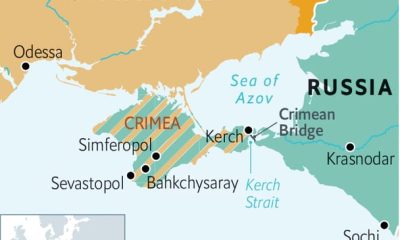
The annexation of Crimea would have been enough a lesson for Ukrain as that part of it all of which including Ukrain itself were part and parcel of Russia.
It is about three years today that Ukraine lost Crimea, what did the west, the EU or the UN do to reverse the situation.
That both know that nothing and no one can force Russia to reverse it’s decision on the annexation.
The pledge for arms and other palliative assistance by the west and other EU or NATO members can only remain a pledge for now for as soon as the Russians complete encircling Ukraine, then there will be no way unless if the items so supplied are meant for the Russians.
Untill and unless the western world and the toothless bulldog in the name of the United Nations comes to terms with realities and also accept the full responsibility of defending the human right and human dignity, which the much desired global peace shall remain elusive.
The United Nations must think outside the box and source for other means of funding rather than depend on the United States and some western Nations who at any point in time could perpetrate any kind of crime without the fear of anyone raising a finger and the so called UN will only look the other way.
The Russians have every right to invade Ukraine for the purpose of securing their nation against an obvious enemy effort of hanging at it’s doorstep.
When Britain invaded the Falkland Island in the early 80s, then nobody condemned her action.
The entire western world were clapping when a group of cronies led by the US invaded and destroyed Iraq under the Bush Administration.
What did the UN do? Isreal has forcefully taken and annexed Palestinian lands and making them refugees in their own lands; did the condemnation by the UN change anything? As we speak Syrian Golan heights and parts of Idlib are in Israeli hands. The UN is watching and Instead, resolutions over resolutions are all it has to show for it.
The American escapade in Afghanistan in pursuit of Alkaeda only resulted in the death of several thousands of innocent people; the world only sat, not even stood to watch the atrocities.
Russia should hold on tight to Ukraine and Belarus and never allow it’s sovereignty to be threatened by the hypocrites who parade themselves as friends only to turn out to be foes when it’s too late to turn back.





International
Ratko Mladić: The Butcher of Bosnia and the Shadow He Leaves Behind
By Lamara Garba Azare
Some names are written into history because of courage, sacrifice and service to humanity. Others become forever associated with suffering, destruction and the darkest chapters of human history. Ratko Mladić belongs to the latter category.
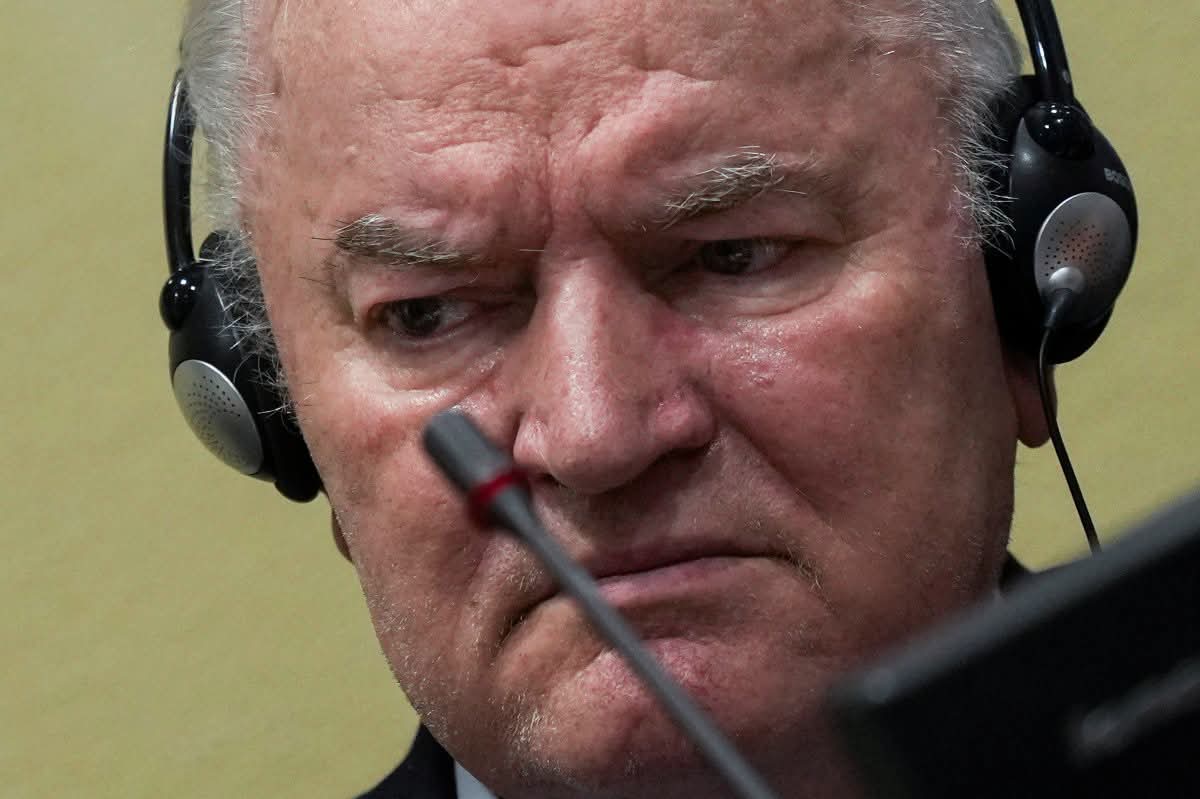
The bull necked Bosnian Serb general, remembered across much of the world as the “Butcher of Bosnia”, died on Thursday, 27 August 2026, at the age of 84 while serving a life sentence in United Nations custody in The Hague. His death closes the physical life of one of the most notorious military commanders of the Bosnian War, but it does not close the history of the crimes for which he was convicted.
Born in 1942, Mladić rose through the Yugoslav military establishment before becoming Commander of the Army of Republika Srpska during the Bosnian War of 1992 to 1995. Under his command, Bosnian Serb forces pursued a campaign of territorial conquest, persecution and ethnic cleansing against Bosnian Muslims, Croats and other non Serbs.
“Ethnic cleansing” became a chilling euphemism for a campaign marked by killings, forced displacement, detention, persecution and the destruction of communities. Behind those words were ordinary human beings driven from their homes, families torn apart and thousands of lives extinguished.
For Mladić and the nationalist project he served, the violence was presented as part of a historic struggle for territory and the creation of what became known as Greater Serbia. The pursuit of that objective transformed Bosnia and Herzegovina into a landscape of fear and suffering. International justice would ultimately determine that Mladić played a central role in a criminal campaign involving genocide, persecution, extermination, murder, deportation and other crimes against humanity.
His fanaticism was fuelled by a narrative of fear. He portrayed Bosnian Muslims as an existential threat to Serbs, helping to turn neighbours into enemies and communities that had lived alongside one another into targets of suspicion and hatred.
As the war intensified, Sarajevo became one of the most enduring symbols of the brutality of the conflict. For almost four years, the city was subjected to bombardment and sniper fire by Bosnian Serb forces. Civilians were killed and wounded as the city endured one of the longest sieges in modern European history. Ordinary people trying to live, work, attend school or obtain food and water were exposed to constant danger.
The siege demonstrated the terrifying consequences of Mladić’s command: civilian suffering became a weapon through which an entire population was terrorised.
Yet nothing defines his place in history more profoundly than Srebrenica.
In July 1995, Bosnian Serb forces overran the United Nations designated safe area of Srebrenica, where thousands of Bosnian Muslims had sought protection. Mladić appeared before frightened civilians, projecting an image of reassurance. What followed became one of the darkest episodes in Europe since the Second World War.
More than 8,000 Bosniak Muslim men and boys were killed in the days that followed. Their bodies were buried in mass graves, while efforts were later made to conceal evidence by moving remains from some graves to secondary locations. International courts determined that the Srebrenica killings constituted genocide.
The horror was not simply the number of lives destroyed. It was the deliberate organisation of the killings, the separation of families, the betrayal of those who believed they were under international protection and the systematic destruction of a community.
It was a crime that stripped away every pretence of military honour.
What makes Mladić’s legacy particularly disturbing was his apparent lack of remorse. Even when eventually brought before the court in The Hague, he remained defiant, rejecting the authority of the tribunal and continuing to present himself as a defender of his people.
To some Serbian nationalists, he remained a hero. To the victims of his forces, survivors and international justice, he became something entirely different: a symbol of the catastrophic consequences of nationalism transformed into violence.
That contradiction remains one of the most troubling aspects of his legacy. How can a man celebrated by some as a defender of his people simultaneously be remembered by others as the commander associated with some of the worst crimes committed on European soil in generations?
The answer lies in the difference between propaganda and historical record.
On 22 November 2017, the International Criminal Tribunal for the former Yugoslavia sentenced Mladić to life imprisonment after convicting him of genocide, crimes against humanity and war crimes. In 2021, the appeals chamber upheld his convictions and life sentence.
Thus, after years of hiding, arrest, trial and imprisonment, Ratko Mladić died behind the walls of a prison hospital in The Hague.
The man who once commanded armies ended his life as a convicted war criminal.
The general who once possessed enormous power could not command history to forget.
Mladić’s life offers one of history’s starkest warnings about what happens when hatred is organised, armed and given authority. He demonstrated how military power can become an instrument of persecution when human life is subordinated to ideology. He showed how propaganda can transform neighbours into enemies and how the language of national destiny can be manipulated to justify the destruction of homes, communities and lives.
Military rank does not confer moral greatness.
A uniform cannot make cruelty noble.
A battlefield victory cannot turn genocide into heroism.
And the passage of time cannot cleanse the record of atrocity.
His death therefore should not be remembered as the end of the story. The real story belongs to the victims.
It belongs to the families who waited for fathers and sons who never returned. It belongs to mothers who buried children. It belongs to survivors who carried memories that no prison sentence could erase. It belongs to Srebrenica, Sarajevo and the countless communities whose lives were shattered during the Bosnian War.
Mladić is gone, but the graves remain.
The memories remain.
The testimonies remain.
And the historical record remains.
Those who wield power through terror may imagine that their authority will last forever. They may believe that fear will silence their victims and that time will bury their crimes. But history has another function. It exposes. It remembers. It judges.
Ratko Mladić died at 84, far removed from the power and command that once surrounded him, carrying the historical weight of convictions for genocide, crimes against humanity and war crimes.
May his death remind humanity that no political ambition, ethnic grievance or military command can ever justify the deliberate destruction of innocent human lives.
May Srebrenica never be forgotten.
May Sarajevo never be forgotten.
May the victims never be forgotten.
And may the world remember Ratko Mladić not as a hero or a symbol of military greatness, but as a warning from history: when hatred is given power and cruelty is mistaken for strength, humanity itself becomes the casualty.
His life has ended.
But the testimony of his victims must never end.
Their memory must outlive him.
And the truth must remain buried nowhere.
Lamara Garba Azare, a veteran journalist, writes from Kano
International
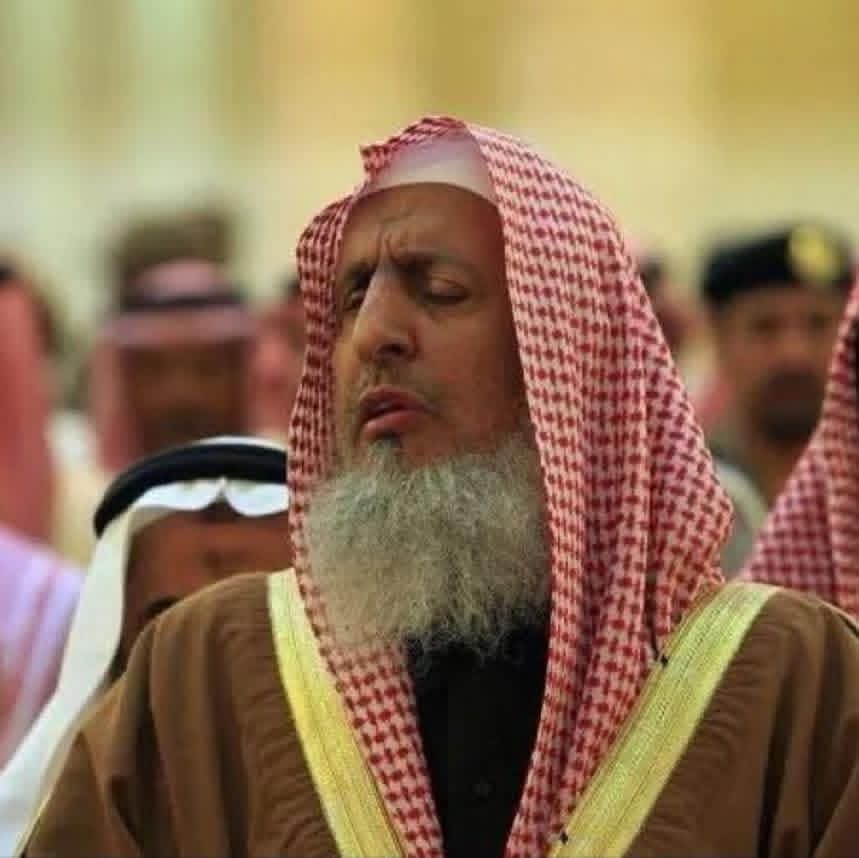
The Life And Times Of Saudis Grand Mufti, Sheikh Abdul Aziz Abdullah Al-Sheikh
By Inside Haramain
The Passing of the Grand Mufti of Saudi Arabia, Sheikh Abdulaziz bin Abdullah Al-Sheikh رحمه الله
With hearts filled with sorrow and submission to the decree of Allah, the Kingdom of Saudi Arabia and the Islamic world bid farewell to Sheikh Abdulaziz bin Abdullah Al-Sheikh (1362 AH / 1943 CE – 1447 AH / 2025 CE), the Grand Mufti of Saudi Arabia, Chairman of the Council of Senior Scholars, and President of the General Presidency of Scholarly Research and Ifta.
Appointed as the third Grand Mufti in the history of the Kingdom in 1420 AH / 1999 CE, succeeding Sheikh Abdulaziz bin Baz, Sheikh Al-Sheikh served the religion and the Ummah with unwavering dedication until his passing on 1 Rabiʿ al-Thani 1447 AH / 23 September 2025 CE.
Born on 3 Dhul-Hijjah 1362 AH / 30 November 1943 CE in Makkah al-Mukarramah, Sheikh Abdulaziz grew up an orphan, losing his father at the tender age of eight. He memorized the Qur’an in his youth under the tutelage of Sheikh Muhammad bin Sinan and pursued his studies in Sharia under the guidance of the former Grand Mufti, Sheikh Muhammad bin Ibrahim Al-Sheikh. Despite losing his eyesight in his twenties, his determination to seek knowledge never faltered.
He went on to study with eminent scholars including Sheikh Abdulaziz bin Baz, Sheikh Abdulaziz bin Saleh Al-Murshid, and Sheikh Abdulaziz Al-Shathri. He graduated from the College of Sharia at Imam Muhammad bin Saud Islamic University in Riyadh, specializing in Arabic and Islamic sciences in 1384 AH / 1965 CE.
Sheikh Abdulaziz began his career as a teacher at Imam al-Da’wah Institute in Riyadh before becoming a professor at the College of Sharia and the Higher Institute of Judiciary. His academic service extended to supervising theses at Imam University and Umm al-Qura University, nurturing generations of scholars and students.
As a khatib, he served at several mosques, most prominently Imam Turki bin Abdullah Mosque in Riyadh, and he was among the most renowned khatibs of Masjid Namirah in Arafat, where he addressed the Hujjaj during Hajj with sermons that resonated across the Islamic world.
His scholarly journey was crowned with key positions:
•Member of the Council of Senior Scholars (from 1407 AH / 1987 CE).
•Deputy Grand Mufti (from 1416 AH / 1995 CE).
•Grand Mufti of Saudi Arabia, President of Scholarly Research and Ifta, and Chairman of the Council of Senior Scholars (from 1420 AH / 1999 CE).
Throughout his tenure, he became a trusted voice of guidance for millions, issuing fatwas on creed, worship, and contemporary issues through platforms such as the famous program Nur ʿala al-Darb. His published works include The Book of Allah and Its Great Status, The Reality of the Testimony that Muhammad is the Messenger of Allah, The Compendium of Arafat Sermons, alongside numerous collections of fatwas on belief, purification, prayer, fasting, zakat, and Hajj.
Sheikh Abdulaziz Al-Sheikh’s voice echoed from the pulpits of Arafat, guiding millions of pilgrims with words of admonition and faith. His lifelong dedication to teaching, issuing fatwas, and serving Islam remains a legacy remembered not only in the Kingdom but across the Ummah.
May Allah envelop him in His vast mercy, accept his deeds, elevate his ranks in Jannah, and reward him for his lifelong service to Islam and the Muslims.
إنا لله وإنا إليه راجعون
International
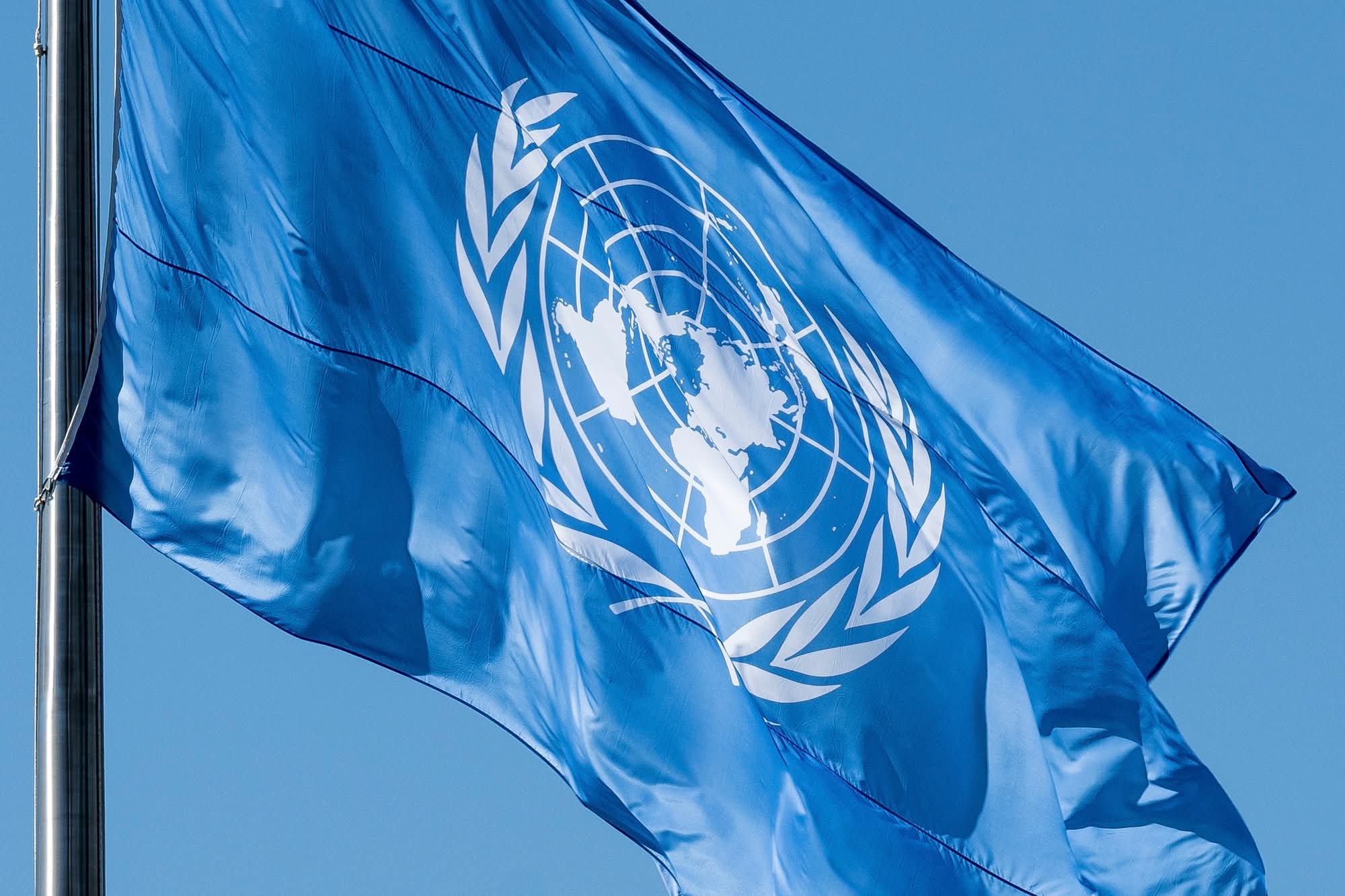
The United Nations and Eight Decades of Impotence
By: Amir Abdulazeez
The United Nations is currently holding its 80th General Assembly sessions in New York. Some days earlier, the U.S. State Department, under the pretext of national security and anti-terrorism laws, revoked visas for dozens of Palestinian officials, including President Mahmoud Abbas slated to participate, at the General Assembly and a high-level two-state conference. This move drew criticism from the UN itself, EU and some human-rights groups, with calls to relocate Palestinian-related meetings outside New York. This echoes historical precedents, notably the 1988 visa denial to Late Yasser Arafat, which forced the UN to shift one of its sessions to Geneva to allow him participate.
Although the 1947 ‘Headquarters Agreement’ obliges the United States to admit all UN participants, Washington occasionally and selectively invoke security and legal excuses to discriminate between entrants. Such practices explain how the UN’s operations remain vulnerable to U.S. control, thereby undermining its independence, authority and credibility. As the UN marks the 80th anniversary of the ratification of its charter on 24th October 2025, the organization which was founded on the ashes of World War II in 1945 faces an existential crisis of credibility and effectiveness.
While it has achieved notable successes in humanitarian aid, educational research and global environmental and health initiatives, its core mission of maintaining international peace and security has been repeatedly undermined by structural and diplomatic flaws. The organization’s inability to meaningfully respond to crises from Syria to Ukraine and most visibly in the Israeli-Palestinian conflict, has exposed fundamental weaknesses that warrant urgent reform. The UN’s record is one of profound paradox: a body designed for action but often defined by its inaction. Nowhere is this impotence more starkly illustrated than in its 70 years’ failure to resolve the Palestinian question or to hold Israel accountable for its international impunities.
From the outset of the Israeli-Palestinian conflict, the United Nations assumed a central role by proposing the 1947 Partition Plan, which sought to establish separate independent states for both parties. Although initially conceived as a potential path to peace, the plan was never enforced and the UN has since struggled to translate its own decisions into reality. Further failures are documented in a paper trail of unimplemented resolutions: Security Council Resolution 242 (1967) called for Israel’s withdrawal from territories occupied during the Six-Day War; Resolution 338 (1973) and countless subsequent resolutions reaffirmed this demand that was not only ignored but instead empowered Israel’s massive expansion of illegal settlements.
Beyond the unimplemented resolutions, a critical UN failure in this regard is that of narrative framing. It has been unable to consistently enforce a foundational principle: that the right to self-determination for one people (Israelis) cannot be predicated on the denial of that same right to another (Palestinians). The organization’s various bodies often treat the conflict as a symmetrical dispute between two equal parties, rather than an asymmetrical struggle between a nuclear-armed occupying power and a stateless, occupied population living under a brutal blockade.
The core of the UN’s ineffectiveness lies in the flawed decision-making structure of its Security Council, where the five permanent members (United States, Russia, China, France and United Kingdom) hold the autocratic privilege of veto power. This system of outdated World War II geopolitics has frequently paralyzed the organization in hours of need. Since 1946, the veto has been selfishly exercised about 300 times. Between 2011 and 2023, Russia and China blocked 16 resolutions on Syria, enabling the Assad regime’s brutal campaign against civilians. The United States, meanwhile, has used its veto more than 50 times to shield Israel from accountability, making Palestine the single most vetoed issue in UN history. Instead of serving as a platform for global security, the Council has become an arena for shameless and hypocritical power politics.
The General Assembly, despite representing all 193 member states equally, has been relegated to a largely ceremonial role in matters of international peace and security. While the Assembly can pass resolutions by majority vote, these carry no binding legal force and are routinely ignored by powerful nations. The 2012 resolution calling for an arms embargo on Syria passed with 133 votes but had no practical effect, as Russia continued supplying weapons to the Assad government. This has created a two-tiered system where the views of the international majority are systematically subordinated to the interests of Security Council Super Powers.
The selective enforcement of international law has become a defining hallmark of UN impotence. While the organization has at times demonstrated resolve such as coordinating global sanctions against apartheid South Africa in the 1980s or authorizing military intervention in Libya in 2011, its responses to other similar crises have been inconsistent and politically driven. Similarly, the International Criminal Court, often operating with UN support, swiftly indicted leaders of Liberia, Sudan and Libya, yet no Western or allied leaders like George W. Bush or Tony Blair have been held to account for baseless interventions in Iraq, Afghanistan or Yemen. These double standards have eroded the UN’s credibility and moral authority, particularly in the Global South, where it is increasingly viewed as an instrument of Western hegemony.
The UN’s peacekeeping apparatus, while successful in some contexts, has also demonstrated significant limitations when confronting determined state actors. The United Nations Disengagement Observer Force (UNDOF) on the Golan Heights and the United Nations Interim Force in Lebanon (UNIFIL) have maintained buffer zones during their operations, but have been powerless to prevent violations by all parties. During the 2006 Lebanon War and subsequent conflicts, these forces could only observe and report violations rather than enforce compliance.
Financial manipulation has emerged as another tool of selective pressure within the UN system. The United States, which contributes 22% of the UN’s regular budget, has repeatedly withheld or threatened to withhold funding to pressure the organization on specific issues. In 2018, the Trump administration cut $285 million from UN peacekeeping operations and reduced contributions to various UN agencies. The UN’s human rights mechanisms face similar challenges of selective application and political manipulation. The Human Rights Council, reformed in 2006 to address criticisms of its predecessor, continues to be influenced by bloc voting and political considerations rather than objective human rights assessments. Countries with questionable human rights records have served on the Council while using their positions to deflect criticism and protect allies.
Critics argue that the UN has become a stage for symbolic debates while real decisions and tangible actions are outsourced to global bullies like the US, less formal coalitions like the NATO and regional actors like the EU. For example, the U.S.-brokered Abraham Accords normalized relations between Israel and several Arab states without addressing core Palestinian concerns while side-lining the UN. Similarly, its response to Russia’s invasion of Ukraine in 2022 was limited to humanitarian aid and symbolic condemnation, as bodies like EU looked more relevant and assertive.
The rise of new global powers and changing geopolitical realities have rendered the UN’s 1945 structure increasingly obsolete. Reform proposals have circulated for decades but have consistently failed due to the resistance of existing power holders. Things have changed since World War II, nations have evolved, others have declined and hence the UN must be reformed to reflect current realities. The permanency of the Security council membership must be reviewed and the senseless veto authority must be abolished or modified along the lines of justice and accountability. As the United Nations approaches its 80th anniversary, the choice is clear: fundamental reform or continued irrelevance.
Maintaining the United Nations system costs about $50–55 billion per year, not counting military deployments and opportunity costs. Beyond money, states commit significant diplomatic, military, humanitarian and bureaucratic resources to maintain their participation. This makes the UN one of the most resource-intensive international organizations ever created. Without serious reforms to address structural inequalities, eliminate veto abuse and restore the primacy of international law over great power politics, the UN risks becoming a historical footnote rather than the cornerstone of the global governance its founders envisioned. The international community must decide whether it will tolerate continued dysfunction or demand the transformative changes necessary to address 21st century challenges.

Kano APC Chieftain Calls For Re-election Of President Tinubu, Governor Yusuf

ADC Urges INEC to Bar Partisan Lecturers from Serving as Returning Officers in 2027 Elections

Male Heir Not My Priority ; My Daughters Are Doing Well, Says Dangote

BREAKING: APC Governors Hold Closed-Door Meeting Over Wike’s ‘Rainbow Coalition’

Oil Prices Rise After Saudi Pipeline Halt and Delayed Hormuz Talks

From World’s 9th Most Populous City to Perfect: As Gov Yusuf Revisits Kano Master Plan

95% of Governor Abba Kabir Yusuf’s Promises Have Been Fulfilled — CPS Interview By Musa Diso, In Kano

Bello Sharada: A Great Writer, A Bookish Soul, Gone Too Soon

Call Me Chairman, Not Tony!’: Elumelu’s Blunt Correction of Trainee Splits Internet as Old Video Sparks Double Standard Fury

Nigerians Are Tired of Promises’ — CAN Demands Action on Insecurity, Hardship In Eid-el-Maulud Message
Kano APC Chieftain Calls For Re-election Of President Tinubu, Governor Yusuf
ADC Urges INEC to Bar Partisan Lecturers from Serving as Returning Officers in 2027 Elections
Male Heir Not My Priority ; My Daughters Are Doing Well, Says Dangote
BREAKING: APC Governors Hold Closed-Door Meeting Over Wike’s ‘Rainbow Coalition’
Oil Prices Rise After Saudi Pipeline Halt and Delayed Hormuz Talks
From World’s 9th Most Populous City to Perfect: As Gov Yusuf Revisits Kano Master Plan
95% of Governor Abba Kabir Yusuf’s Promises Have Been Fulfilled — CPS Interview By Musa Diso, In Kano
Bello Sharada: A Great Writer, A Bookish Soul, Gone Too Soon
Call Me Chairman, Not Tony!’: Elumelu’s Blunt Correction of Trainee Splits Internet as Old Video Sparks Double Standard Fury
Nigerians Are Tired of Promises’ — CAN Demands Action on Insecurity, Hardship In Eid-el-Maulud Message
-

 Opinion5 years ago
On The Kano Flyovers And Public Perception
-

 Features5 years ago
How I Became A Multimillionaire In Nigeria – Hadiza Gabon
-

 Opinion6 years ago
Kano As future Headquarters Of Poverty In Nigeria
-

 History5 years ago
Sheikh Adam Abdullahi Al-Ilory (1917-1992):Nigeria’s Islamic Scholar Who Wrote Over 100 Books And Journals
-

 Opinion5 years ago
My First Encounter with Nasiru Gawuna, the Humble Deputy Governor
-

 History5 years ago
The History Of Borno State Governor Professor Babagana Umara Zulum
-

 History5 years ago
The Origin Of “Mammy Market” In Army Barracks (Mammy Ochefu)
-

 News4 years ago
Federal University Of Technology Babura To Commence Academic Activities September