
News
FG Suspends Proposed WAEC, NECO Fee Hike
By Yusuf Danjuma Yunusa
The Federal Government has suspended the proposed review of registration fees for the 2027 West African Senior School Certificate Examination and the National Examinations Council Senior School Certificate Examination, pending wider consultations with stakeholders.
In a Monday statement issued by the Federal Ministry of Education, the ministry said the letter conveying the proposed fee adjustment, dated June 18, 2026, had been withdrawn to allow for a comprehensive review before any final decision is taken.
The ministry, in the release signed by the Director, Press and Public Relations, Boriowo Folasade, said the suspension followed concerns and feedback from members of the public.
“The Federal Ministry of Education announced that the letter conveying the proposed fee adjustment, dated 18 June 2026, has been withdrawn to allow for a comprehensive review and broader consultations with all relevant stakeholders before a final decision is taken,” the statement said.
According to the ministry, the proposed fee review was driven by rising costs associated with conducting national examinations, noting that registration fees have remained largely unchanged for several years despite increasing operational expenses.
It cited higher costs of logistics, security, printing of examination materials, technology deployment, quality assurance and other services required to maintain the credibility of public examinations.
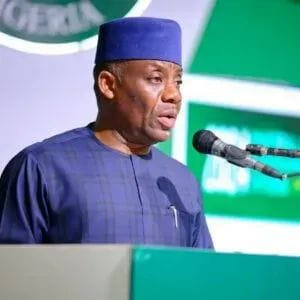
The statement said the Minister of Education, Dr. Tunji Alausa, directed that the proposal be put on hold in line with the Federal Government’s commitment to inclusive and evidence-based policymaking.
“The Honourable Minister of Education, Dr. Maruf Tunji Alausa, CON, has directed that the proposal be placed on hold in line with the Federal Government’s commitment to inclusive, transparent and evidence-based policymaking,” it said.
The ministry said the decision reflects its commitment to ensuring that policies affecting students and their families are carefully considered and responsive to public interest.
It added that consultations would be held with examination bodies, state ministries of education, school proprietors and administrators, parents’ associations, organised labour, education stakeholders and other critical partners before any decision is reached.
Accordingly, the ministry said the proposed review of examination registration fees would not take effect as earlier communicated until the consultation process is concluded.
The Federal Ministry of Education reiterated that students’ welfare, equitable access to quality education and responsible policymaking remain central to the Federal Government’s education agenda and pledged to keep the public informed throughout the consultation process.
FG said it approved N50,000 as the new examination fee for WAEC and NECO for secondary school candidates from 2027.
The initial registration fee was N27,500, which means the new increment comes with an 82 per cent hike.
In a statement on June 18, 2026, issued by the Director of Senior Secondary Education of the Ministry of Education, Adeniji Ibrahim, the approval followed a request by WAEC for an upward review of the fee for the Senior School Certificate Examination for candidates from 2027.
Meanwhile, former Vice President Atiku Abubakar and the National Association of Nigerian Students had earlier kicked against the Federal Government’s approval of a uniform N50,000 fee for candidates.











News
BREAKING: APC Governors Hold Closed-Door Meeting Over Wike’s ‘Rainbow Coalition’
By Yusuf Danjuma Yunusa
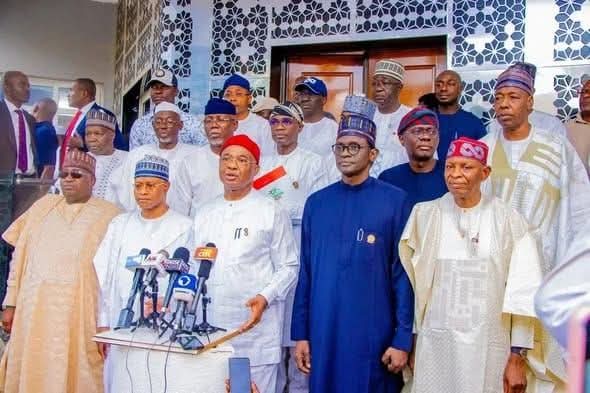
Governors elected on the platform of the All Progressives Congress (APC) are currently meeting behind closed doors at the Imo State Governors’ Lodge in Abuja, amid rising political tension over the “rainbow coalition” being promoted by the Minister of the Federal Capital Territory (FCT), Nyesom Wike.
The meeting, which began on Tuesday, is understood to be centred on recent political realignments that party leaders fear could undermine President Bola Ahmed Tinubu’s interests and weaken APC candidates at all levels.
It was gathered that the governors are expected to issue a statement distancing themselves from any political alliance or arrangement that could work against the President or the ruling party.
The move is widely seen as a direct response to Wike’s coalition, which has reportedly set some APC governors against the FCT minister. The governors are particularly aggrieved over allegations that Wike is sponsoring candidates who lost in the APC under the platform of the Peoples Democratic Party (PDP).
The APC governors are said to be determined to draw a clear line between legitimate political engagement and actions that could damage the party’s electoral fortunes.
As of the time of filing this report, the meeting was still ongoing, and no official communiqué had been issued. A statement is expected shortly.
More details later…
News
Oil Prices Rise After Saudi Pipeline Halt and Delayed Hormuz Talks

By Yusuf Danjuma Yunusa
Oil prices climbed on Monday after talks on the Strait of Hormuz were postponed and Saudi Arabia shut down a major oil pipeline.
Brent crude for November delivery gained nearly three per cent to $107.60 per barrel, approaching the $110 level.
The increase came after prices edged lower on Friday following sharp gains in the preceding days.
Oman announced on Sunday that planned talks between Iran and several Gulf States over the Strait of Hormuz had been postponed.
Omani foreign minister Badr al-Busaidi said the postponement aimed to create conditions for consensus.
Saudi Arabia, the world’s largest oil exporter, has come under pressure following disruptions to major shipping routes and attacks on its oil infrastructure.
The kingdom suspended operations on its East-West pipeline as a precaution after drone attacks in the Riyadh and Medina regions.
The pipeline carries oil from the Persian Gulf to the Red Sea and provides an alternative export route that avoids the Strait of Hormuz.
Analysts warned that any further reduction in Saudi oil exports could drive crude prices higher.
Brent crude has gained nearly 80 per cent since the start of the year, although it remains below its late-April peak of more than $126 per barrel.
News
Atiku Accuses Tinubu of ‘Economic Deception’ Over Subsidy Savings, Demands ‘Where Is the Money?’ as ASUU Threatens Fresh Strike
By Yusuf Danjuma Yunusa
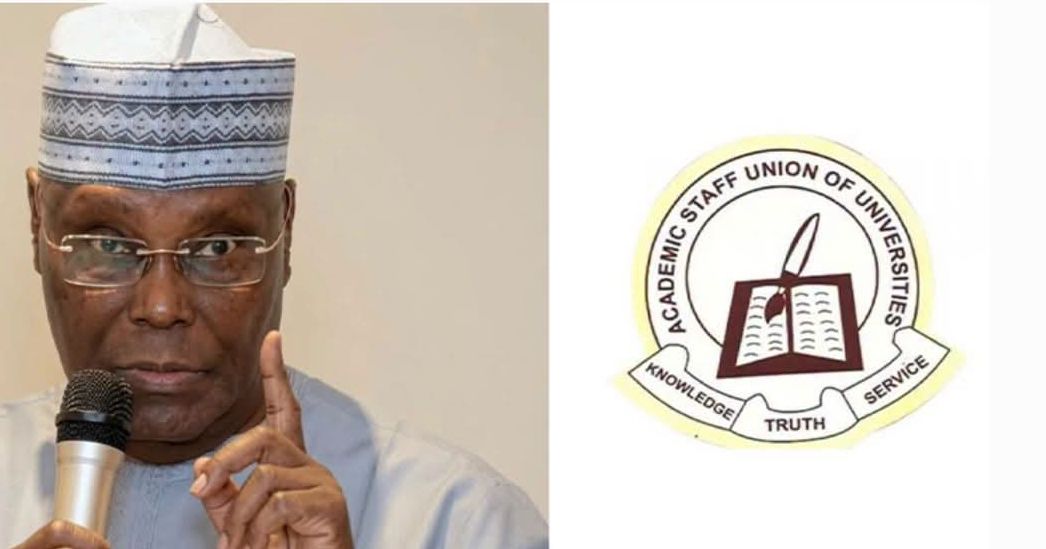
Former Vice President Atiku Abubakar has accused the Bola Tinubu administration of what he called one of the most cynical economic deceptions in Nigeria’s recent history, saying it removed fuel subsidy, imposed crushing hardship on millions of families, promised that savings would transform education and other essential services, and has now failed to meet basic obligations to university lecturers or prevent another round of industrial action.
In a statement issued by his Senior Special Assistant on Public Communication, Phrank Shaibu, Atiku said Nigerians had already paid the price through higher fuel costs, transport fares, food prices, energy bills and school fees. Yet, he said, public universities remain underfunded, lecturers are complaining about unpaid entitlements and unresolved agreements, and students once again face the threat of disruption to the academic calendar.
“If the subsidy is gone and Nigerians have paid for that decision through unprecedented hardship, then President Tinubu owes the country a simple answer: where is the money?” Atiku said.
He said the government sold subsidy removal to Nigerians on the promise that the enormous sacrifice imposed on families would release resources for education, healthcare, infrastructure and other essential services.
“The house of cards of falsehoods erected by the Tinubu administration to justify the suffering of Nigerians is collapsing before our eyes,” he said. “A government that strips citizens of relief, denies them meaningful social protection and fails to deliver the basic improvements it promised has forfeited the moral credibility to continue preaching sacrifice.”
Atiku accused the administration of imposing an unprecedented cost-of-living crisis, saying families are struggling with soaring food prices, punishing transport costs, expensive energy and shrinking incomes. Instead of cushioning the consequences of its own economic decisions, he said, the government has largely abandoned Nigerians to carry the burden alone.
“That is what makes the present university crisis indefensible. Government removed the cushion, collected the supposed savings and imposed the hardship, but Nigerians cannot see the corresponding improvement in their schools, hospitals or everyday lives,” he said.
“More than three years later, lecturers are still raising concerns about unpaid salaries and unresolved agreements. ASUU is again warning of industrial action. University infrastructure remains inadequate, while millions of young Nigerians compete every year for limited admission spaces. So where is the money?”
Atiku also rejected the administration’s defence that subsidy removal has led to increased allocations to state governments, saying it raises an even more troubling question about the condition of public education across the federation.
“Government officials repeatedly tell Nigerians that subsidy savings have translated into larger allocations to states. But if substantially more money is supposedly flowing to the states, why has the condition of public education not improved accordingly?” he asked.
He said public education remains under severe pressure across the country, with several state-owned universities experiencing industrial disputes and disruptions, even as the Federal Government continues to advertise stability in the tertiary education calendar.
“The crisis is therefore not merely a federal university problem. It exposes a wider contradiction between the enormous revenues government celebrates and the deteriorating public services Nigerians actually experience,” he said.
“You cannot boast about record allocations while students sit at home because lecturers are on strike. You cannot celebrate higher revenues when classrooms, laboratories, hostels and teaching facilities remain inadequate. If more money is reaching both the Federal Government and the states, Nigerians are entitled to ask why the quality and capacity of public education remain so painfully deficient.”
Atiku said the crisis also exposes the contradiction at the heart of the administration’s student loan policy.

BREAKING: APC Governors Hold Closed-Door Meeting Over Wike’s ‘Rainbow Coalition’

Oil Prices Rise After Saudi Pipeline Halt and Delayed Hormuz Talks

Atiku Accuses Tinubu of ‘Economic Deception’ Over Subsidy Savings, Demands ‘Where Is the Money?’ as ASUU Threatens Fresh Strike

Al-Istiqama University to Hold Convocation, Honours Late Aminu Dantata, Sheikh Ibrahim Khalil

Ex-UK PM Boris Johnson Narrowly Escapes as Russian Drone Hits Warsaw-bound Train

From World’s 9th Most Populous City to Perfect: As Gov Yusuf Revisits Kano Master Plan

95% of Governor Abba Kabir Yusuf’s Promises Have Been Fulfilled — CPS Interview By Musa Diso, In Kano

Bello Sharada: A Great Writer, A Bookish Soul, Gone Too Soon

Call Me Chairman, Not Tony!’: Elumelu’s Blunt Correction of Trainee Splits Internet as Old Video Sparks Double Standard Fury

NUT Launches ‘Go Public’ Campaign to Promote Public Education in Nigeria
BREAKING: APC Governors Hold Closed-Door Meeting Over Wike’s ‘Rainbow Coalition’
Oil Prices Rise After Saudi Pipeline Halt and Delayed Hormuz Talks
Atiku Accuses Tinubu of ‘Economic Deception’ Over Subsidy Savings, Demands ‘Where Is the Money?’ as ASUU Threatens Fresh Strike
Al-Istiqama University to Hold Convocation, Honours Late Aminu Dantata, Sheikh Ibrahim Khalil
Ex-UK PM Boris Johnson Narrowly Escapes as Russian Drone Hits Warsaw-bound Train
From World’s 9th Most Populous City to Perfect: As Gov Yusuf Revisits Kano Master Plan
95% of Governor Abba Kabir Yusuf’s Promises Have Been Fulfilled — CPS Interview By Musa Diso, In Kano
Bello Sharada: A Great Writer, A Bookish Soul, Gone Too Soon
Call Me Chairman, Not Tony!’: Elumelu’s Blunt Correction of Trainee Splits Internet as Old Video Sparks Double Standard Fury
NUT Launches ‘Go Public’ Campaign to Promote Public Education in Nigeria
-

 Opinion5 years ago
On The Kano Flyovers And Public Perception
-

 Features5 years ago
How I Became A Multimillionaire In Nigeria – Hadiza Gabon
-

 Opinion6 years ago
Kano As future Headquarters Of Poverty In Nigeria
-

 History5 years ago
Sheikh Adam Abdullahi Al-Ilory (1917-1992):Nigeria’s Islamic Scholar Who Wrote Over 100 Books And Journals
-

 Opinion5 years ago
My First Encounter with Nasiru Gawuna, the Humble Deputy Governor
-

 History5 years ago
The History Of Borno State Governor Professor Babagana Umara Zulum
-

 History5 years ago
The Origin Of “Mammy Market” In Army Barracks (Mammy Ochefu)
-

 News4 years ago
Federal University Of Technology Babura To Commence Academic Activities September