
News
Special Report:Fuel Hike and the Weight of Distant Wars
By Yusuf Danjuma Yunusa
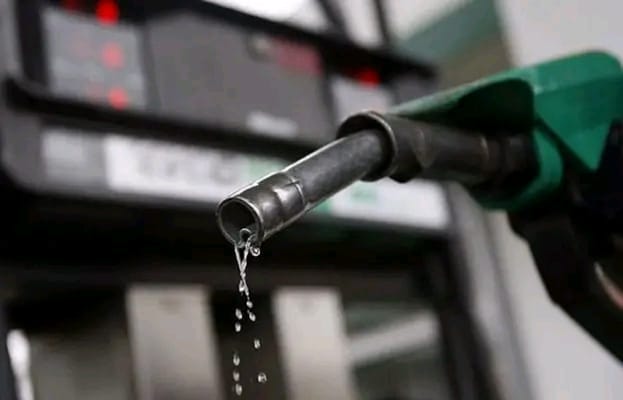
The faint hum of generators, once the relentless backdrop of life in the heart of its place, a heavier quiet has settled—born of grim resignation as the ripple effects of a distant geopolitical storm crash onto the wallets of ordinary Nigerians.
Here in Mararaba, the complaint is not just about the new numbers on the fuel pump. It is about the arithmetic of survival that no longer adds up. The latest hike in the price of Premium Motor Spirit (PMS), which dealers attribute to the escalating crisis in the Middle East—a conflict many here note involves the United States, Israel, and Iran—has plunged residents into familiar but increasingly unbearable hardship.
To understand the human weight of this policy, I took to the streets and queues of Mararaba, annex to the Federal Capital Territory, to speak with those who feel they are paying the price for a war thousands of miles away.
At a crowded NNPC filling station in Nyanya, where the queue of vehicles stretched nearly a kilometer under the harsh sun, I met Nasir, a commercial bus driver. He leaned against his battered Korope bus, wiping sweat from his brow, watching the attendant update the price board.
“Look at this,” Nasir said, his voice a mix of anger and exhaustion. “Just last week, I was managing. Now they tell us because there is war between Israel and Iran, and because America supports Israel, the price must go up again. What does that have to do with us in Abuja?”
Nasir’s math is simple but devastating. “I used to buy fuel here for around N700. Now we are pushing N1,000 and above, and they say it might go to N1,500 if the crisis continues. My transport fare? If I double it, my passengers—civil servants, traders, students—cannot pay. If I don’t, I go home with nothing. The politicians in America and Israel are fighting a war with our stomachs.”
His lament echoes the reality of transport inflation, which has spiked dramatically since the removal of subsidies, now worsened by global tensions.
Across town on Abacha Road, at a modern but nearly empty restaurant, I found Yakubu, a small business owner who runs a catering service. For him, the fuel hike is a “tax” on everything he buys.
“It is a chain. I cook with gas, but the price of gas goes up because the dollar is high and the market fears the war. I transport food to clients, but fuel for my van is now this much,” he said, snapping his fingers. “The government tells us it is ‘market forces’ and the war in the Middle East. I am not a fool. I know the Middle East is unstable because of the US and its allies. But why is Nigeria’s economy tied so tightly to their conflicts? Why are we still importing fuel when we have refineries? We are suffering for their wars and our leaders’ incompetence.”
At Mararaba market, the complaints are less about geopolitics and more about the immediate struggle to fill a pot. Anwar, a tailor, sat idle at his sewing machine. The shop beside him, a provisions store, was dark.
“My neighbor cannot afford to run his generator today,” Anwar said, gesturing to the dark shop. “He sells cold drinks and water. If he has no light, he has no business. If he uses a generator, his profit is gone because diesel is over N1,000 in some places. This is the reality. America, Israel, and Iran are fighting, and my neighbor loses his livelihood.”
The sentiment is backed by data. According to a recent NOIPolls report, 85% of Nigerians disapprove of the fuel subsidy removal, and 93% believe the country is heading in the wrong direction. For people like Anwar, the official explanations ring hollow.
“They say it is deregulation, that it is global politics,” he continued, shaking his head. “I say it is abandonment. We are being buried alive by policies made in Washington and Tel Aviv, carried out by Abuja.”
The geopolitical angle is a particularly bitter pill to swallow. In a country already grappling with high living costs, the idea that a conflict far removed from Africa’s Sahel could dictate the price of commuting to work or powering a small clinic breeds deep resentment.
Ibrahim, a retiree and civil servant, sat on his veranda in Angwa Katsinawa listening to the rare silence where generators once roared.
“Since 2023, when President Tinubu said ‘subsidy is gone,’ we have been on a rollercoaster to poverty. Now this war gives them the perfect excuse to finish us off. The government says the NNPC made this decision based on ‘market realities.’ What reality? The reality that America supports Israel, and Iran threatens retaliation? Why must my pension suffer for that?”
His frustration touches on a key point raised by experts: the escalating conflict threatens to push the subsidy burden—or the cost passed to consumers—past a staggering N644 billion monthly if oil prices spike.
As the sun set over Mararaba, taxis and buses were fewer on the roads. Many drivers, like Sadiq, a university graduate who drives for a ride-hailing app, simply parked for the day.
“I cannot make money if I spend all day in a fuel queue or if 70% of what I earn goes into the tank,” Sadiq said, scrolling through his phone, which showed a fraction of his usual earnings. “They talk about the crisis in the Middle East. But we have a crisis here. It is a crisis of hunger. Until the US, Israel, and Iran stop fighting, we suffer. Until our government decides to fix our refineries, we suffer. We are just pawns.”
As I left him, Sadiq called out, “Tell them we are tired. We are tired of paying for wars we did not start.”
It is a sentiment that hangs heavy in Nigeria’s air—a feeling of being trapped between the anvil of global politics and the hammer of local economic policy.










News
ADC Rejects INEC’s Ruling Interpretation, Vows to Clarify Contradictions
By Yusuf Danjuma Yunusa
The African Democratic Congress (ADC) has sharply criticized the Independent National Electoral Commission (INEC) over its interpretation of a recent Court of Appeal statement, alleging that the commission has abandoned its neutrality by siding with the federal government.
In a press release issued on Wednesday, the ADC’s National Publicity Secretary, Mallam Bolaji Abdullahi, rejected INEC’s position, describing it as “contradictory and inconsistent with facts.” The party claimed that INEC was acting under pressure from a government it characterized as “jittery” due to the ADC’s growing momentum.
“We reject INEC’s interpretation of the Court of Appeal ruling,” the statement read. “We knew that INEC was being pressured by a government that has become jittery from the ADC’s rising momentum even in the face of its relentless assault on all opposition parties.”
The ADC accused the electoral commission of caving to political pressure, asserting that it has effectively chosen to align with the government against the Nigerian people. The party vowed to publicly clarify what it called the contradictions in INEC’s statement.
According to the release, the ADC is currently reviewing its legal and political options and will announce its next steps in the coming days. The party urged its members and the public to remain steadfast.
“We are currently reviewing our options, and we shall make these known soon. Meanwhile, we call on our members and all Nigerians to remain steadfast as they await further directives,” the statement concluded, adding the slogans: “Nigeria is rising. ADC is rising.”
News
ADC Rising: Salga hails influx of political heavyweights as a turning point for justice

Ambassador Abdulrahman Mai Nasara Salga, a prominent ADC leader from Dala, Kano, has welcomed the influx of influential politicians into the party, describing it as a sign of ADC’s growing acceptance.
Salga, who contested for the federal legislature in Dala during the 2023 general election, says the party’s progress is heartening, having worked tirelessly to promote ADC’s agenda and position it as a viable alternative for good governance.
He highlights the entry of Kwankwasiyya leader Dr. Rabiu Musa Kwankwaso, former Kano State Deputy Governor Comrade Aminu Abdulsalam, and APC’s 2025 gubernatorial candidate Dr. Nasir Yusuf Gawuna, among others, as major boosts that are transforming ADC into a formidable opposition force.
Salga believes these developments signal a shift towards justice and better leadership in Kano and Nigeria. He urges party leaders, including Atiku Abubakar, Peter Obi, and Kwankwaso, to unite for success in 2027.
The ADC leader pledges continued efforts to promote the party’s ideals, expressing optimism for a brighter future with these influential additions.
News
BREAKING: INEC Removes David Mark-Led NWC from Portal, Updates Records Amid ADC Leadership Crisis
By Yusuf Danjuma Yunusa
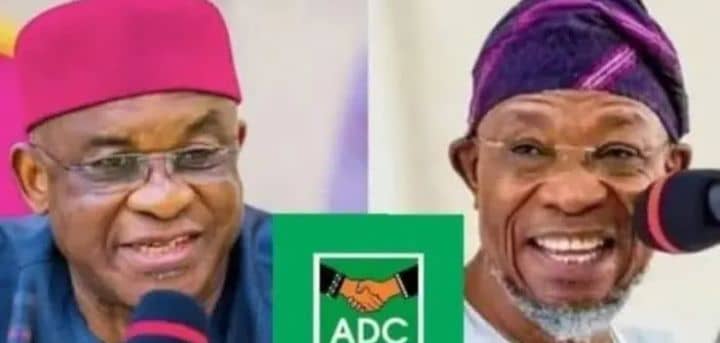
The Independent National Electoral Commission (INEC) has formally updated its official portal to reflect changes in the leadership of the African Democratic Congress (ADC), signaling the commission’s recognition of the leadership dispute within the party.
The commission confirmed that the removal of the National Working Committee (NWC) led by David Mark followed a detailed review of a recent Court of Appeal judgment and an ongoing suit at the Federal High Court in Abuja.
According to INEC, the decision comes after receiving conflicting legal representations from the two factions vying for control of the party. One faction, loyal to Nafiu Bala Gombe, urged the commission to enforce the appellate court’s ruling, which includes withdrawing recognition from the Mark-led NWC. The other faction, aligned with Mr. Mark, advised INEC against recognizing Mr. Gombe as acting national chairman, citing the pending legal proceedings.
The leadership crisis traces back to July 2025, when the ADC’s former leadership resigned, paving the way for a new executive committee headed by Mr. Mark. Mr. Gombe, a former vice-national chairman, has challenged this transition, arguing that the party’s constitution mandates his ascension to the leadership role.
In a ruling delivered on March 12, 2026, the Court of Appeal dismissed an interlocutory appeal filed by Mr. Mark. The court ordered all parties to maintain the status quo ante bellum—the state of affairs before the crisis—pending the resolution of the substantive suit at the Federal High Court.

ADC Rejects INEC’s Ruling Interpretation, Vows to Clarify Contradictions

ADC Rising: Salga hails influx of political heavyweights as a turning point for justice

BREAKING: INEC Removes David Mark-Led NWC from Portal, Updates Records Amid ADC Leadership Crisis

JUST IN: El-Rufai Detained as Bail Ruling Adjourned to April 14

Court Ends NNPP Crisis, Restores Party Leadership to Founder

Governor Abba Kabir Yusuf Holds Exclusive Prerogative to Choose Deputy – Malam Inuwa Waya

The Governor Who Chose His People Over His Politics: Abba Yusuf and the Moral Courage Behind Kano First
Restoring the Glory That Was Always There: Governor Abba Kabir Yusuf and the Historical Vision Behind Kano First

Tinubu to Swear in Olatunji Disu as Inspector-General of Police on Wednesday

NDLEA Clarifies: Drug Case Against Abba Kyari Still Active After Court Discharge
ADC Rejects INEC’s Ruling Interpretation, Vows to Clarify Contradictions
ADC Rising: Salga hails influx of political heavyweights as a turning point for justice
BREAKING: INEC Removes David Mark-Led NWC from Portal, Updates Records Amid ADC Leadership Crisis
JUST IN: El-Rufai Detained as Bail Ruling Adjourned to April 14
Court Ends NNPP Crisis, Restores Party Leadership to Founder
Governor Abba Kabir Yusuf Holds Exclusive Prerogative to Choose Deputy – Malam Inuwa Waya
The Governor Who Chose His People Over His Politics: Abba Yusuf and the Moral Courage Behind Kano First
Restoring the Glory That Was Always There: Governor Abba Kabir Yusuf and the Historical Vision Behind Kano First
Tinubu to Swear in Olatunji Disu as Inspector-General of Police on Wednesday
NDLEA Clarifies: Drug Case Against Abba Kyari Still Active After Court Discharge
-

 Opinion4 years ago
On The Kano Flyovers And Public Perception
-

 Features5 years ago
How I Became A Multimillionaire In Nigeria – Hadiza Gabon
-

 Opinion5 years ago
Kano As future Headquarters Of Poverty In Nigeria
-

 History5 years ago
Sheikh Adam Abdullahi Al-Ilory (1917-1992):Nigeria’s Islamic Scholar Who Wrote Over 100 Books And Journals
-

 Opinion4 years ago
My First Encounter with Nasiru Gawuna, the Humble Deputy Governor
-

 History5 years ago
The Origin Of “Mammy Market” In Army Barracks (Mammy Ochefu)
-

 History4 years ago
The History Of Borno State Governor Professor Babagana Umara Zulum
-

 News4 years ago
Federal University Of Technology Babura To Commence Academic Activities September