
Opinion
Comrade Ibrahim Waiya, Limamin Kano First: The Man Who Turned a Governor’s Vision Into a Governing Philosophy
By Sufyan Lawal Kano
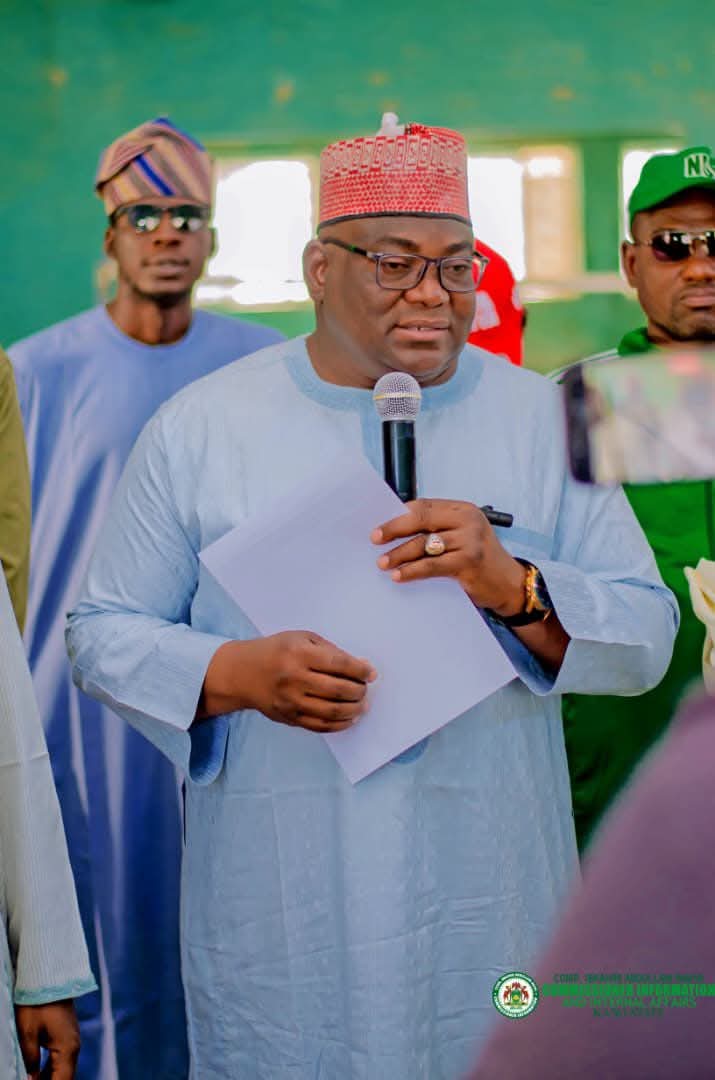
The true measure of leadership has never been the grandeur of its proclamations. It has always been the discipline of its follow-through, the unglamorous, daily, often invisible work of converting a compelling vision into institutional reality, of ensuring that the ideas articulated in policy documents and public speeches actually reach the citizens whose lives they are intended to transform. In Kano State today, that work is being done with a consistency and seriousness that deserves far wider recognition than it has so far received. And at the center of that effort, serving as both the strategic intelligence and the public conscience of the Kano First Agenda, stands the Honourable Commissioner for Information and Internal Affairs, Comrade Ibrahim Abdullahi Waiya, whose unofficial but deeply earned title, Limamin Kano First, speaks volumes about the nature and significance of his contribution.
The Kano First Initiative, conceived under the leadership of Governor Abba Kabir Yusuf as a governing philosophy that places the welfare, dignity, and progress of Kano’s citizens at the irreducible center of every policy decision, represents something genuinely distinctive in the landscape of Nigerian state governance. It is not merely a development agenda in the conventional sense, a list of projects to be completed and targets to be met. It is, at its most ambitious, an attempt to redefine the relationship between government and citizens, to move from a model of governance as service delivery toward a model of governance as shared civic enterprise, one in which citizens are not passive beneficiaries of government attention but active co-owners of the state’s development trajectory. That is a profound ambition, and it requires, to become real, something that infrastructure projects and budget allocations alone cannot provide: a coherent, credible, and consistently communicated philosophy that citizens can understand, trust, and embrace as their own.
It is precisely here that Comrade Waiya’s contribution becomes indispensable. From the moment he assumed office, he brought to the Ministry of Information a clarity of purpose that distinguished his approach from the reactive, image-management orientation that has historically characterized government communication in this country. His mission, as he has articulated it through his public engagements, his institutional reforms, and his personal conduct, has been to build a communication architecture that serves not the government’s convenience but the citizens’ understanding. That is a subtle but enormously consequential distinction, and it is one that has shaped every significant decision he has made since taking office.
Among his earliest and most consequential institutional actions was a systematic engagement with the state’s major government media organizations, including ARTV, Radio Kano, Triumph Publishing Company, and the Kano State Printing Press. These engagements were not ceremonial visits. They were strategic assessments, aimed at understanding the capacity, the constraints, and the potential of the institutions through which government communicates with its citizens, and at beginning the process of revitalizing that machinery so that it could serve its proper democratic function: to inform, to educate, and to create the conditions for genuine public understanding of government policy. A government whose communication infrastructure is weak or dysfunctional cannot build the public trust that effective governance requires, regardless of the quality of its policies. Waiya understood this, and he acted on it.
Equally significant was his investment in human capacity at the grassroots level. The decision to organize training programs for information officers from all forty-four local government areas of Kano State reflected an understanding that strategic communication cannot be confined to the state capital or to the national media. It must penetrate to the ward level, to the market and the mosque and the community meeting, to the spaces where the overwhelming majority of Kano’s citizens actually encounter government and form their judgments about its intentions and its performance. By building a stronger grassroots communication network, Waiya created the infrastructure for the kind of citizen-level engagement that the Kano First philosophy demands but that no amount of press releases or social media content can substitute for.
His engagement with the media profession itself has been another dimension of his work that deserves particular recognition. Recognizing that the quality of public discourse in Kano is inseparable from the quality of its journalism, Waiya has invested consistently in building relationships with journalists, broadcasters, and communication professionals, not to manage their coverage or to cultivate favorable reporting, but to foster the kind of professional standards and development-oriented journalism that a society serious about its own progress requires. His consistent message to media practitioners, that responsible, accurate, and constructive reporting is not merely a professional obligation but a civic contribution, reflects a sophisticated understanding of the media’s role in either deepening or undermining public trust in institutions.
Perhaps the most important philosophical contribution Waiya has made to the Kano First discourse, however, is his insistence that popularizing the agenda is not a political act but a civic duty. This reframing is, in the context of Nigerian political culture, genuinely radical. In a political environment where almost every public initiative is immediately read through a partisan lens, where support for a government programme is routinely interpreted as political allegiance and skepticism as opposition, the assertion that the Kano First Agenda belongs not to the political party or to the Yusuf administration but to the people of Kano is a claim that cuts across the grain of established political behavior. It is also, if it can be made to stick, extraordinarily powerful, because a civic philosophy that transcends partisan boundaries is one that can survive electoral cycles and accumulate the kind of broad, durable public support that transforms individual administrations’ programmes into lasting institutional culture.
The evidence that this reframing is beginning to take hold is visible, if not yet definitive. Citizens across the state are demonstrably more informed about the administration’s policies and the philosophy that underpins them. Public conversations about development are increasingly framed in the language of collective responsibility and civic ownership rather than purely in terms of government performance and political judgment. Community leaders, professional associations, civil society organizations, and youth groups are engaging with the Kano First framework in ways that suggest a growing recognition that the initiative speaks to something real in the shared aspirations of Kano’s people, something that predates the current administration and will, if properly nurtured, outlast it.
None of this diminishes the central role of Governor Abba Kabir Yusuf, whose personal commitment to the Kano First philosophy provides the political authority and executive backing without which no communication strategy, however brilliant, can translate vision into action. The governor’s record of progress across infrastructure development, education, healthcare, youth empowerment, and social welfare initiatives is the material foundation on which the Kano First narrative is built. Without that foundation, the most skillful communication would eventually ring hollow. With it, skillful communication becomes the bridge between government achievement and public understanding, between what is being done and what citizens know and believe about what is being done. That bridge is what Waiya has been building, patiently, consistently, and with considerable skill, since the first day he took office.
What observers of his ministry most frequently note is not any single achievement but a quality of presence and commitment that is, in Nigerian public life, genuinely unusual. Waiya engages, consistently and seriously, with the full range of stakeholders whose participation the Kano First philosophy requires: journalists and community leaders, professional bodies and civil society organizations, youth groups and traditional institutions, media practitioners and policy analysts. He does not manage these relationships from a distance or through intermediaries. He shows up, he listens, he explains, and he follows through. That combination of intellectual seriousness and personal accessibility is, in the world of governance communication, a rare and valuable combination, and it is one that has earned him a reputation that no amount of political positioning could manufacture.
As Kano State continues to navigate the complex terrain of development, democratic consolidation, and social renewal, the work of the Limamin Kano First remains as urgent as it has ever been. The Kano First Initiative is still in its formative stages. Its ultimate success will depend on the quality of its implementation, the consistency of its leadership, and above all, the willingness of Kano’s citizens to claim it as their own rather than leaving it to government alone. Comrade Ibrahim Abdullahi Waiya has done the foundational work of making that claim possible. He has given the governor’s vision an intellectual architecture, a communication infrastructure, and a civic philosophy robust enough to withstand the pressures of a complex political environment. The rest, as it must always be in a genuine democracy, belongs to the people.
Sufyan Lawal Kano is a public affairs writer and civic commentator based in Kano State.
Contact: sefjamil3@gmail.com










Opinion
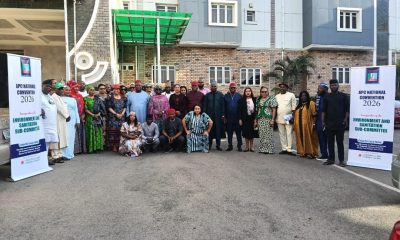
APC National Convention : How DSP Barau Displays Political Sagacity, Deep Knowledge of Democracy Before President Tinubu, Others
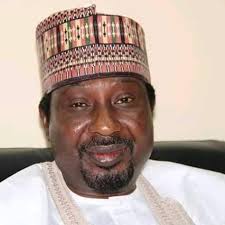
By Abba Anwar
As National Convention for the ruling All Progressives Congress (APC) kickstarts at the famous Eagle Square, Abuja, in the presence of President Bola Ahmed Tinubu, all APC who is who in the country, as well as all delegates from across all the 36 states of the federation, including federal capital territory, Abuja, it was designed that the Deputy Senate President, Barau I Jibrin, CFR, would be amongst the very few, who were selected to move motions for party operations, administration and continuity, during the convention.
The motions moved by big shots like, His Excellency, the Senate President, Godswill Akpabio, GCON and the Right Honorable Speaker, House of Representatives, Tajuddeen Abbas, GCON, ranging from the dissolution of the current national leadership of the party to many other issues surrounding the administrative continuity of the party and so on and so forth.
Under this great recognition and assigned national responsibility, His Excellency Deputy Senate President, was mandated to move an all-important motion for the extension of the tenure of the Caretaker Executive Committees of the party in Ekiti and Osun states.
Our Distinguished Senator, started with the lovely self-introduction, stating and being proud of his root, with passion and feeling of greatness, he said, “My name is Barau I. Jibrin, the member of APC, in Kabo ward in Kabo local government area of Kano state.” With all sense of humility and root-first approach.
The substance of his brief motion statement, hinted to all, how deeply rooted he is in democracy and democratization process. The wordings illuminated, to many, his clear and valued understanding of the ruling party, the APC and its organizational capability within the context of party continuity, at all levels.
He said, “My motion is as follows : I move this motion of urgent administrative and organizational necessity, concerning the leadership structure of our party in Ekiti and Osun states.
The party now operates through duly constituted Caretaker Executive Committees, at the wards, local governments and state levels, in both Ekiti and Osun states. The tenure of the Committees are due to expire at the end of March, 2026.”
“The Caretaker Committees are within the period of their mandate of maintaining party structure, ensuring operational continuity and stabilizing party affairs in the affected states,” he highlighted.
To tell you that, our dear DSP fully understands the workings and demands of politics and political operations, he stated reasons, as to why the call for the extension of the tenure of the caretaker committees became necessary, he clarified that, “Ongoing development in Ekiti and Osun states, particularly the heightened and tensed environment for the forthcoming gubernatorial elections have created conditions that are presently not conducive for the peaceful and orderly conduct of the wards, local governments and state congresses in the affected states.”
He further maintained the grip of the political realities in those states when he highlighted that, “It is expedient in the overall interest of the party to extend the tenure of the caretaker committees to allow for proper coordination, consolidation and preparation for the conduct of the congresses.”
He cited the provision of the APC Constitution, Article 13(1), which gives that mandate and power for the action.
His motion(s) was four-in-one, unlike other motions moved by other movers. This could be seen when he said, “I hereby move that, this National Convention (i) approve the extension of the tenure of the Caretaker Executive Committees of wards, local governments and states in Ekiti and Osun states, (ii) the said extension shall be for the period of 6 months, commencing from the expiration of their current tenure at the end of the March, 2026, uptill the end of September, 2026, (iii) mandate the relevant organs of the party to utilize the period of their extension to conclude all necessary arrangements for the conduct of wards, local governments and state congresses and (iv) enjoy all members of the party to cooperate with the caretaker committees. This motion is moved in the interest of party unity, administrative continuity and orderly conduct of party process.”
Being one of the critical stakeholders of the ruling party in the country, DSP’s national outings are waxing stronger day in day out. The composure, dexterity and depth in his speech, say a lot as a Distinguished Senator, who believes in democracy and democratic principles. The speech was with all vigor and substance of deeper understanding of party politics.
Kudos to His Excellency, the Deputy Senate President, our pride our focus!
Anwar writes from Kano
Friday, 27th March, 2026
Opinion
OPINION: Examining the Sanity of Saner Climes
By: Amir Abdulazeez
Several decades into the global modern era, Africans, Asians and Latin Americans are continued to be held hostage by their colonially indoctrinated inferior mindsets engineered by the blackmail and mythology of western moral supremacy. This error is not in observing western virtues; many of which are real. The error is in the uncritical veneration that renders their vices invisible and their judgements unchallengeable. It is evident from the events of the last three decades alone, that the so-called saner climes of Western Europe and North America are the primary architects of global chaos and instability of nations, all in the name of injecting sanity into ‘less sane’ societies.
The ongoing US-Israel war on Iran, launched in the midst of Ramadan is a typical doctrine of the saner climes, exhibited in its most naked form. Iran’s Foreign Minister had three days before the war declared that a nuclear agreement was ‘within reach’, after a third round of indirect talks had taken place in Geneva. The IAEA itself confirmed there was no evidence of a structured Iranian nuclear weapons programme at the time of the attack. Yet, the surprise assault assassinated Supreme Leader Ali Khamenei, killed his family members and damaged schools, hospitals and even UNESCO-recognized cultural heritage sites. This is a typical catalogue of barbaric war crimes for which the West has condemned others across generations.
The Donald Trump administration whose seemingly rude, dishonest and arrogant officials, has offered a menu of rationalizations and a handful conflicting justifications for the war. However, when Amnesty International confirmed that the United States was responsible for a strike that killed at least 160 primary school girls, the US officials chose more arrogance through denials instead of remorse. In fact, the Head of the Federal Communications Commission simultaneously intimidated his own press, threatening the withdrawal of broadcast licenses of American news outlets whose war coverage he deemed unfavourable. Another trademark saner-climes mythology, muzzled in a way only a few non-saner climes can imagine.
Meanwhile, in all these, it is the ‘lunatic’ Iran that is supposed to apologize and do nothing while it is been attacked. The Iranian Regime, branded autocrats on the premise that it compels women to cover their hairs in public are being lectured by leaders of societies whose women go out naked in the name of civilization and whose governments topple, kill and abduct Heads of States of other countries for recklessly greedy reasons. Now imagine if the erratically behaving Donald Trump was the leader of any African Country, the West would’ve since declared him incoherent and unstable to deal with or labelled his citizens stupid for voting him. Worse still, imagine if the Epstein scandal happened in Asia or Latin America. All these contradictions reveal with crystal clarity that Western principles are instruments of convenience.
To understand the foundations to all these, let us revisit some history. Britain’s Industrial Revolution was fertilised by the profits of the transatlantic slave trade and the systematic plunder of India, a country whose share of global GDP fell from about 25% at the onset of colonial rule to barely 4% at independence. France financed much of its republican grandeur on the forced labour of West Africa and the Caribbean. Belgium’s King Leopold II transformed the Congo into a private abattoir, severing the hands of Africans who failed to meet rubber quotas, leaving behind a traumatized country that still bleeds today. To speak of the sanity of these climes without acknowledging that they were partly built from organised insanity inflicted elsewhere is to ignore the background to what we are witnessing today.
In the last fifty years alone, the so-called saner climes have unleashed a level of violence and destabilisation that would shame any regime they have ever deemed fit to condemn. The United States, the self-acclaimed sentinel of the free world, has engineered irrational regime changes in Chile (1973), Iran (1953 and subsequently), Guatemala (1954), Nicaragua, Panama, Libya, Iraq, Afghanistan and Syria, among others. The 1973 CIA-backed coup against a democratically elected socialist president of Chile Salvador Allende, installed Augusto Pinochet, under whose reign thousands were tortured, disappeared, or executed. Henry Kissinger, the American architect of that atrocity, received the Nobel Peace Prize from his fellow saner clime comrades. The French Government, through its notorious Françafrique policy, maintained a neocolonial empire across West and Central Africa long after the 1960s, propping up murderous dictators and conducting military interventions to protect economic interests, with a consistency that made a mockery of every democratic principle France professed to uphold.
The invasion of Iraq in 2003 by Western Governments is perhaps the most consequential act of manufactured catastrophe of the modern era. The war resulted in the deaths of an estimated 200,000 to one million Iraqi civilians, the obliteration of the country’s infrastructure, the rise of ISIS from the ashes of a disbanded Iraqi army and the triggering of a refugee crisis that continues to destabilise the Middle East. No one was held accountable. George W. Bush and Tony Blair are living happy lives in their saner countries. The International Criminal Court, which has indicted multiple African heads of state on much lesser crimes with considerable alacrity, found no jurisdiction to examine any of them. Meanwhile, the people of Iraq, Syria and Libya who were dismantled in the name of liberation still live in the ruins and pains of what the saner climes call democracy.
While the West was busy bombing the Middle East, Africa, the so-called backward continent, was largely attending to its own affairs of conflict resolution with a remarkable degree of maturity. The African Union mediated crises in Burundi, the Gambia and Lesotho without firing a single bullet. ECOWAS brokered peace agreements in Sierra Leone and Liberia, deployed peacekeeping forces with genuine multilateral mandates without the casual trigger-happiness of Western powers.
Western attitude towards violence is shamelessly selective. When Russia invaded Ukraine in 2022, the Saner Clime’s response was swift, comprehensive and morally unambiguous: sanctions, weapons, diplomatic isolation and a media chorus of civilizational solidarity. This response was appropriate anyway. But the problem is its stark contrast with the Western posture toward other invasions. When Saudi Arabia launched its war on Yemen in 2015, the United States and the United Kingdom did not merely decline to intervene; they allegedly supplied the bombs, refuelled the warplanes and provided intelligence for strikes that killed thousands of Yemeni civilians and engineered one of the worst humanitarian crises on earth.
Many argue that the actions of Western Governments isn’t a true reflection of what their citizens stand for. This is debatable especially when one examines certain incidences. During the Obama presidency, Edward Snowden revealed that the US National Security Agency was conducting mass, warrantless surveillance of American citizens and foreign governments, including the personal telephone of former German Chancellor Angela Merkel in flagrant violation of constitutional protections and international diplomatic norms. The response was not accountability but exile for Snowden and a classification of his revelations as treason. The United States, has the largest prison population on earth both in absolute numbers and per capita administered under a system in which Black Americans are incarcerated at five times the rate of their white counterparts, in conditions that the United Nations has described as cruel. Since 1968, gun violence has claimed more American lives than all of America’s foreign wars combined. One can certainlybe inclined to believe that these are controversies that ordinary western citizens may not approve of.
Climate change is another damning indictment of Western moral authority in the twenty-first century. The Industrial activities enriching Europe and North America still depends on burning carbon at a scale the planet had never experienced. The United States, historically the world’s largest cumulative emitter of greenhouse gases, withdrew from the Paris Climate Agreement under Donald Trump. Australia, another clime reputed to be considerably saner than most, has built its prosperity on coal exports and resisted meaningful emissions reduction. Some Pacific Island nations face sea submersions within this century as a consequence of decisions made in saner capitals. When these nations’ leaders speak at the United Nations with tears in their voices, the saner climes offer symbolic but empty sympathy before later returning to preserving their industrial prerogatives.
The Western Media’s tactical twisting of narratives regarding other climes is another issue. For example, CNN may not run primetime documentaries on the Swiss banking system’s complicity in laundering the proceeds of African kleptocracy, but will rather concentrate on the primary kleptocrats. The BBC does not lead with investigations into the role of British arms dealers in sustaining African conflicts. The New York Times does not dedicate its front page to the tax avoidance schemes through which Western corporations drain billions of dollars annually from African economies (more than the continent receives in foreign aid).
Beside all these, there is something more worrisome. The bulk of support received by these saner climes come from their victims in the third world. In Nigeria for instance, the blind sympathy for religious affiliations drives people to support the brazen oppression and cruel injustices perpetrated by the West. Our solidarities should be among ourselves, not with those who see and treat us as worthless humans and more like animals because of their superior moral hypocrisy. Additionally, our bootlicking governments who are considered close to valueless in the International arena or even insane just like us, must stop intimidating its own citizens who decide to speak up against western double standards. Let’s remember, the phrase “saner climes” is a moral verdict and a devastating condemnation of everywhere else expect Europe and North America. Africans and all peoples of the marginalised world are owed the intellectual inheritance of critical discernment.
The world does not need more or fewer saner climes; it needs a more honest accounting of what sanity actually requires. It requires consistency: the same rules applied to the powerful and the powerless alike. It requires humility: the acknowledgement that no civilisation holds a monopoly on wisdom. And it requires accountability: not the selective justice of indicting the weak and glorifying the mighty, but the universal application of standards that do not bend in the presence of a Security Council veto or the impulse of a self-serving Super power. Until that accounting arrives, the presumption of Western moral authority deserves not deference, but fearless interrogation; the kind that the so-called saner climes have always claimed to celebrate and so rarely been prepared to receive.
23-03-2026
Opinion
DSP Barau on Global Peace, Nigeria’s Insecurity : A Focused Leadership
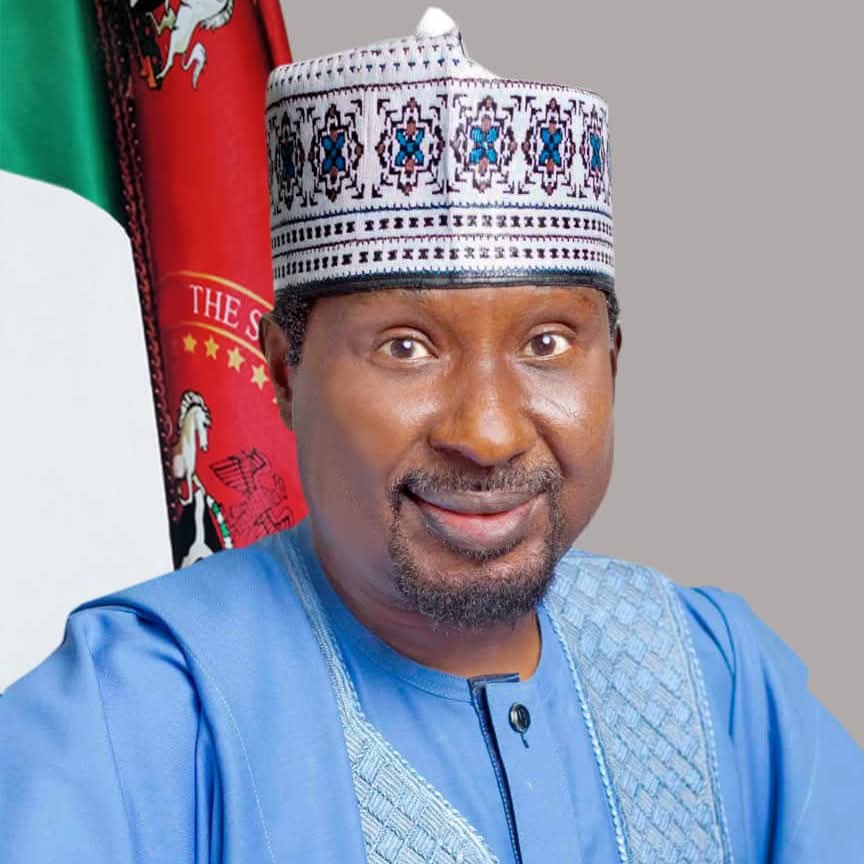
By Abba Anwar
Disturbed by the global price shocks caused by US/Israel-Iran War and the lingering insecurity plaguing our dear nation, the Deputy Senate President, Distinguished Senator Barau Jibrin, CFR, called for consistent prayers for the intervention of The Creator, The Almighty Allah.
It was his major urge for peaceful coexistence in the country, after consistent contributions to the security agencies in the last couple of years, as reflected in his special Eid-el-Fitr message after the completion of the Ramadhan Fasting period.
Part of the statement issued by his Special Adviser, Media and Publicity, Ismail Mudassir, reads, “The Deputy President of the Senate, Senator Barau I. Jibrin, has rejoiced with Muslims in the country on the successful completion of the Ramadan Fast, urging all to sustain prayers for global peace.”
Not only that, DSP Barau, as one of the leading principal officers of the National Assembly, alongside his distinguished senator colleagues, is doing everything possible to restore peace in the land. Sustained peace and tranquility, free from ethnic, political, sectional, or religious crises. His mission is peace, and peace is at the forefront.
His physical contributions to security agencies in his constituency, Kano North and the state in general, are testimonies to his commitment towards everlasting peace and tranquility. Is just like what I always say, not all security interventions need public attention. Because of their nature of high level of secrecy and confidentiality.
Just recently the Deputy Senate President was involved in many regional and global engagements, with the view to promoting regional and global security through the formulation and implementation of viable economic integration and environment-friendly societies. Across nations of the Economic Community for West African States (ECOWAS), up to the platform under Commonwealth of Nations. He has been visible recently under these fora.
Understanding the fact that, legislation is not enough for bringing peace to the society, he uses his wealth of experience and political maturity, to strengthen an effort, however little, in my own estimation, of the Executive arm, by encouraging the President towards that angle, as the release says, the DSP “Commends Tinubu’s relentless efforts to stabilise Nigeria’s economy, tackle insecurity.”
Commending that, “President Tinubu has been up and doing in the fight against insurgency and banditry in the country. And we must all continue to accord him all the support needed to achieve this.” Further stressing optimism that, “President Tinubu’s directive for Security Chiefs to relocate to Maiduguri, following recent terrorists attacks, would help flush out the criminal elements.”
To add spiritual weight and touch to the entire process, he “… prayed to Allah SWT to accept the supplications, prayers, and good deeds of the Ummah during the blessed Month of Ramadhan.” Urging the, “… the Muslim Ummah to sustain the lessons of the Holy Month and to always reflect them in their daily activities, as enjoined by Prophet Muhammad, Peace Be Upon Him.”
Distinguished Jibrin’s humility and being humane, places him some inch above others. So also his hopeful attachment to the Will of our Creator. Hear him, “Glory be to Allah SWT for the successful completion of this year’s Ramadan, 1447AH. I wish to rejoice with fellow Muslims across the country. This is a period of joy and happiness, as well as a time to show appreciation to Almighty Allah.”
His love for peace and the dire need to spread peace, as against acrimonious relationship, he stresses that, “Let’s spread love and help people in need during and after the festive period.”
Anwar writes from Kano
Sunday, 22nd March, 2026

El-Rufai’s Release Sparks Claims of Political Motives, Unjust Detention

APC National Convention : How DSP Barau Displays Political Sagacity, Deep Knowledge of Democracy Before President Tinubu, Others

BREAKING: El-Rufai Released Following Mother’s Death, Son Alleges Unlawful Detention

Breaking:Kano Deputy Governor Resigns

Hajiya Umma El-Rufai, Mother of Former Kaduna Governor, Passes Away

The Governor Who Chose His People Over His Politics: Abba Yusuf and the Moral Courage Behind Kano First

FREEDOM OF SPEECH, NOT FREEDOM FROM CONSEQUENCE: A CITIZEN’S CALL FOR RESPONSIBLE PUBLIC COMMENTARY

Press Freedom: IPI Nigeria Calls on New Acting IGP to End Police Harassment of Journalists
Tinubu to Swear in Olatunji Disu as Inspector-General of Police on Wednesday
Restoring the Glory That Was Always There: Governor Abba Kabir Yusuf and the Historical Vision Behind Kano First
El-Rufai’s Release Sparks Claims of Political Motives, Unjust Detention
APC National Convention : How DSP Barau Displays Political Sagacity, Deep Knowledge of Democracy Before President Tinubu, Others
BREAKING: El-Rufai Released Following Mother’s Death, Son Alleges Unlawful Detention
Breaking:Kano Deputy Governor Resigns
Hajiya Umma El-Rufai, Mother of Former Kaduna Governor, Passes Away
The Governor Who Chose His People Over His Politics: Abba Yusuf and the Moral Courage Behind Kano First
FREEDOM OF SPEECH, NOT FREEDOM FROM CONSEQUENCE: A CITIZEN’S CALL FOR RESPONSIBLE PUBLIC COMMENTARY
Press Freedom: IPI Nigeria Calls on New Acting IGP to End Police Harassment of Journalists
Tinubu to Swear in Olatunji Disu as Inspector-General of Police on Wednesday
Restoring the Glory That Was Always There: Governor Abba Kabir Yusuf and the Historical Vision Behind Kano First
-

 Opinion4 years ago
On The Kano Flyovers And Public Perception
-

 Features5 years ago
How I Became A Multimillionaire In Nigeria – Hadiza Gabon
-

 Opinion5 years ago
Kano As future Headquarters Of Poverty In Nigeria
-

 History5 years ago
Sheikh Adam Abdullahi Al-Ilory (1917-1992):Nigeria’s Islamic Scholar Who Wrote Over 100 Books And Journals
-

 Opinion4 years ago
My First Encounter with Nasiru Gawuna, the Humble Deputy Governor
-

 History5 years ago
The Origin Of “Mammy Market” In Army Barracks (Mammy Ochefu)
-

 History4 years ago
The History Of Borno State Governor Professor Babagana Umara Zulum
-

 News4 years ago
Federal University Of Technology Babura To Commence Academic Activities September