
News
FG Approves Transition for Direct Oil Revenue Remittance to Federation Account
By Yusuf Danjuma Yunusa
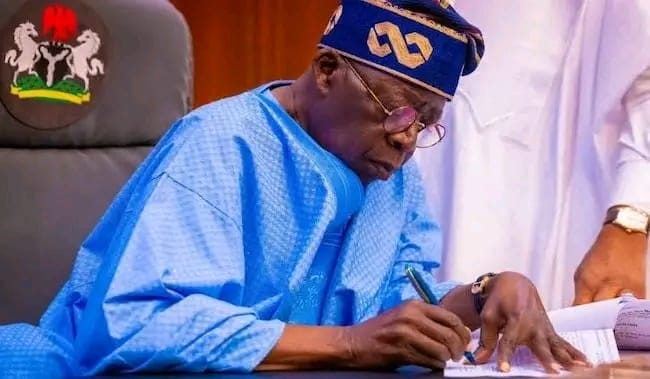
In a decisive move to enhance transparency and curb revenue leakages in the petroleum sector, the Nigerian Government has approved a transition period for oil companies to begin remitting revenues directly into the Federation Account. This directive is a core component of Executive Order 9, recently signed by President Bola Ahmed Tinubu.
The decision was formalized during the inaugural meeting of the Implementation Committee on Executive Order 9, held on February 26, 2026.
In a statement released on Monday, the Minister of Finance and Coordinating Minister of the Economy, Mr. Wale Edun, who chairs the committee, announced the approval of a transition arrangement. He emphasized that this measured approach is designed to prevent any disruption to existing contractual and financing obligations within the oil industry.
The policy’s primary objective is to mandate the direct payment of all revenues from petroleum operations—including profit oil, royalty oil, and tax oil—into the Federation Account. This measure is intended to strengthen public finance management and ensure a more equitable distribution of resources across all three tiers of government (federal, state, and local).
Minister Edun explained that while the government is committed to enforcing the new payment structure, the committee agreed that a cautious implementation is vital to preserving investor confidence.
“With respect to Section 2, Sub-section 3 of Executive Order 9 on direct payments by contractors into the Federation Account, the Implementation Committee agreed that this transition must be implemented in a manner that respects existing contractual and financing arrangements and maintains investor confidence,” he stated.
He further clarified that a defined transition period has been approved before the new remittance system becomes fully operational. Until detailed guidelines are released by the committee, existing payment processes will remain in place.
“Until the Committee issues detailed guidelines, contractors will continue to remit under the current process. During the transition period, the Committee will issue clear, standardised guidance to ensure an orderly changeover,” Mr. Edun added.
To operationalize the directive, the committee has established a technical subcommittee tasked with developing a comprehensive implementation framework within three weeks. This subcommittee will also conduct a review of the Petroleum Industry Act (PIA) to identify structural and fiscal provisions that may be weakening government revenues from petroleum operations.
“The Technical Subcommittee will develop the detailed guidelines for the transition to direct remittance within three weeks and commence a review of the Petroleum Industry Act to address structural and fiscal anomalies that weaken Federation revenues,” Mr. Edun said.
The panel will be chaired by the Special Adviser to the President on Energy, Mrs. Olu Verheijen. Its members include senior officials from the Office of the Solicitor-General of the Federation, the Federal Ministry of Justice, the Nigeria Revenue Service, the Forum of Commissioners of Finance, and representatives of the Minister of State for Petroleum Resources (Oil). The Budget Office of the Federation will serve as its secretariat.
As an immediate part of the reforms under Executive Order 9, the government has directed NNPC Limited to halt certain deductions under Production Sharing Contracts.
According to the committee, NNPC Limited is to immediately stop collecting a 30 per cent management fee and a 30 per cent frontier exploration fund deduction from profit oil and profit gas. Furthermore, the remittance of all gas flare penalties into the Midstream and Downstream Gas Infrastructure Fund has been suspended with immediate effect.
The implementation committee reaffirmed that these sweeping reforms are designed to guarantee that all revenues generated from Nigeria’s oil and gas resources are fully accounted for and paid into the Federation Account, in strict adherence to constitutional provisions.
“The Committee reaffirmed the President’s directive that revenues accruing to the Federation from petroleum operations must be handled in a manner that upholds constitutional principles, protects revenues accruable to the Federation and supports the fiscal stability of all three tiers of government,” the statement concluded.









News
Atiku Faults Tinubu’s Fuel Price Comparison with Kenya, Says Nigerians Worse Off Despite
By Yusuf Danjuma Yunusa
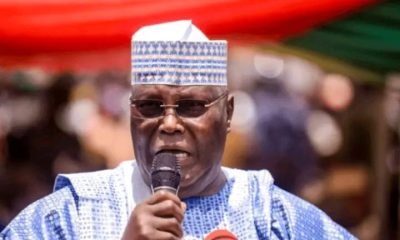
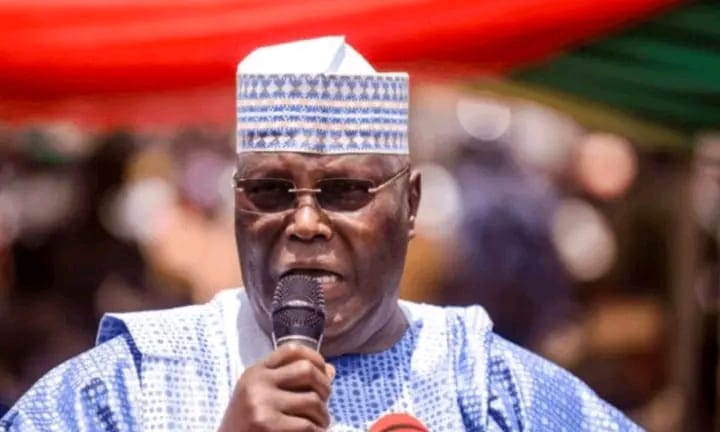
Former Vice President Atiku Abubakar has criticized President Bola Tinubu for comparing Nigeria’s petrol prices with those of other African nations, arguing that such a comparison ignores the severe economic hardship facing Nigerians.
In a statement issued on Saturday by his Senior Special Assistant on Public Communication, Phrank Shaibu, the former vice president described the President’s remarks as misplaced and disconnected from the economic realities on the ground.
President Tinubu had, during a visit to Bayelsa State on Friday, noted that petrol prices in Nigeria remain lower than in countries like Kenya. While acknowledging the pain caused by rising costs, he urged Nigerians to be grateful for the relatively lower pump prices and promised relief measures.
Reacting sharply, Atiku said the President’s selective use of fuel prices as a metric of economic well-being overlooks more critical indicators such as purchasing power, income levels, and the overall cost of living.
“It is both curious and troubling that the President would isolate fuel prices as a metric of economic comfort while ignoring the far more critical indicators of purchasing power, income levels, and cost of living,” Atiku said.
“This selective reasoning betrays either a fundamental misunderstanding of economic realities or a deliberate attempt to deflect from policy failures.”
He acknowledged that Nigeria’s petrol prices may appear lower than those in Kenya or South Africa, but argued that such comparisons collapse when placed against the broader economic context. “Nigeria today is more expensive to live in than Kenya, with the average cost of living significantly higher, despite lower fuel prices,” he added.
Atiku also highlighted the widening gap in earnings between the two countries. “Kenya’s GDP per capita is nearly double that of Nigeria, and a minimum wage earner in Nairobi takes home the equivalent of about ₦170,000—more than twice Nigeria’s ₦70,000,” he said.
“In effect, while a Kenyan earns more and pays more, a Nigerian earns far less and is forced to survive under crushing economic pressure. This is the reality the President chose to ignore.”
The former vice president further criticized Nigeria’s wage structure for failing to reflect regional economic disparities, warning that the current economic environment has severely eroded living standards.
“The implication is clear: affordability is not defined by price alone, but by the relationship between income and expenditure. On this measure, Nigerians have never had it worse,” Atiku stated.
He cautioned that a government which relies on selective comparisons while its citizens grapple with rising poverty, inflation, and declining living standards risks appearing not only out of touch but indifferent.
“It is, therefore, deeply disappointing that at a time when citizens expect empathy, clarity, and decisive leadership, the President has chosen the path of statistical convenience,” he concluded.
News
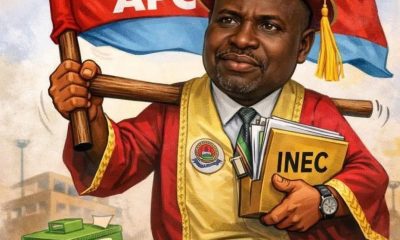
INEC Chairman Faces Allegations Over Alleged Pro-Tinubu Communications
By Yusuf Danjuma Yunusa
The Chairman of the Independent National Electoral Commission (INEC), Joash Amupitan, has denied any prior affiliation with President Bola Tinubu or the All Progressives Congress (APC). However, newly uncovered online evidence appears to contradict his office’s official statement.
On Friday, Amupitan, through his spokesperson Adedayo Oketola, rejected claims that he had been a supporter of the president. Oketola insisted that Amupitan is a neutral appointee, as required by the constitution to safeguard the integrity of Nigeria’s electoral process.
“He does not own or operate any personal account on X (formerly Twitter),” Oketola said in the statement. “He has at no time engaged in partisan commentary, nor has he ever associated himself with any political leaning or activity in his private or public capacity.”
But open-source intelligence (OSINT) findings suggest otherwise.
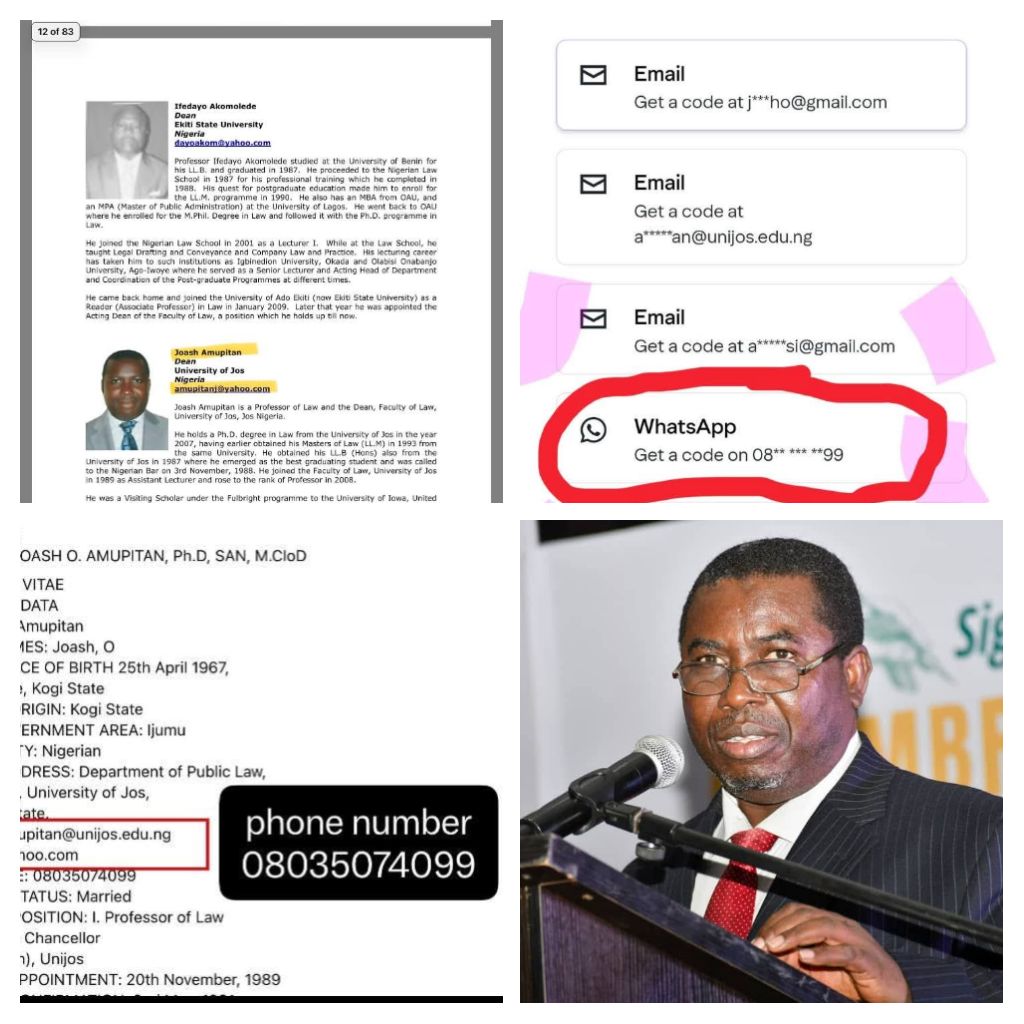
The X account @joashamupitan posted “victory is sure” in March 2023 in response to a message from APC chieftain Dayo Israel, who had announced that the party had won seven out of ten polling units in an opposition stronghold predominantly populated by Igbo voters.
Further investigation revealed that the account was created using the email address amu***anj@yahoo.com—the same email found on a curriculum vitae attributed to Amupitan. That CV also listed his former institutional email, amu***anj@unijos.edu.ng, from his time as a professor at the University of Jos.
To verify the Yahoo email address, the platform sent a notification to the linked phone number: 0803***4099. That same number is tied to an Opay customer account under the username “Joash Ojo Amupitan.” Opay accounts typically use a customer’s phone number without the leading zero—in this case, 8035074099.
When reached by the Peoples Gazette on Saturday for comment on the new findings, Oketola said: “We stand by our statement. A statement was issued yesterday and that is our official position on the matter.”
The connection between the X account, the Yahoo email, and a phone number bearing Amupitan’s full name raises questions about the INEC chairman’s denial of any political allegiance to the APC or President Tinubu, who is widely expected to seek re-election in 2027.
News
Defections and Realignments Shape Kano’s Political Landscape Ahead of Elections-Inuwa Waya
Abbas Yushau Yusuf
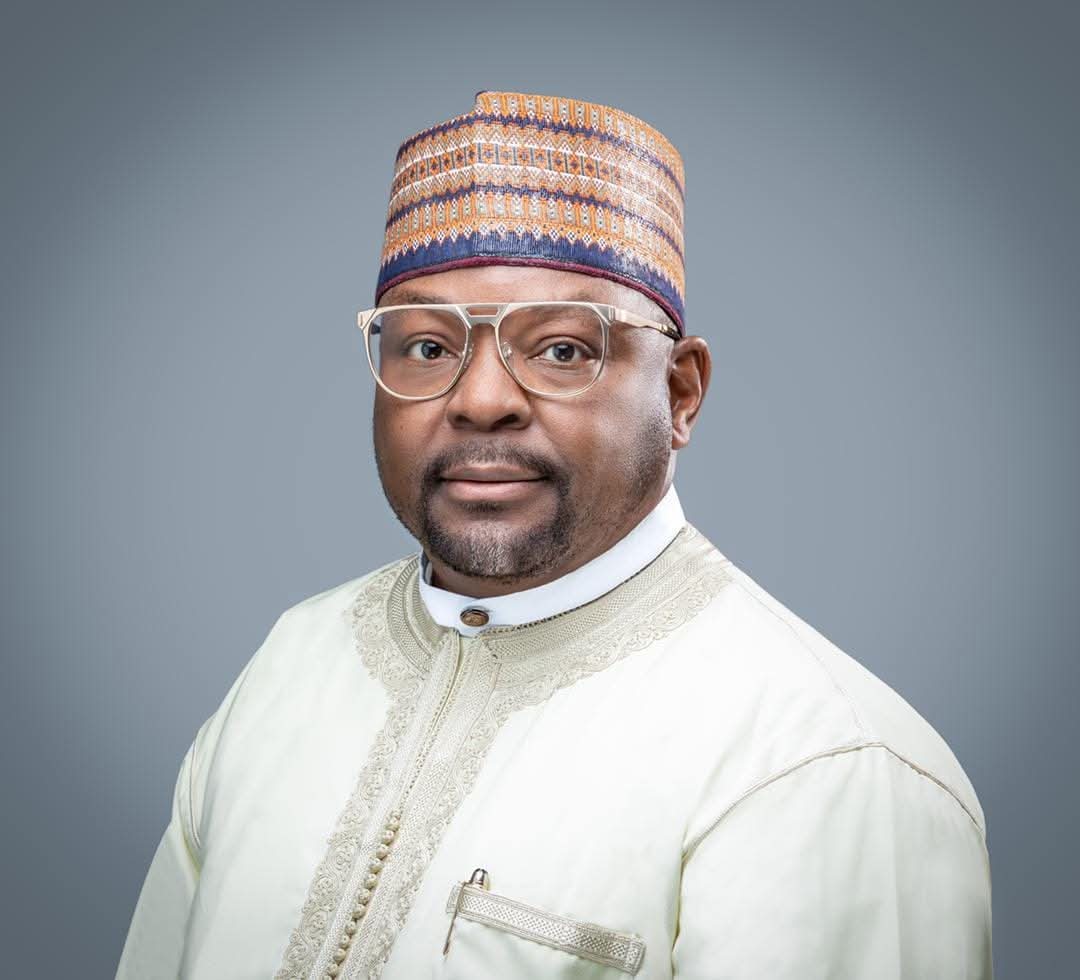
An APC chieftain, Inuwa Waya, has said the wave of political defections and realignments currently unfolding in Kano State reflects the evolving dynamics of Nigeria’s political environment as the country approaches another election cycle.
Waya made the remarks during an interactive session with the Kano Online Media Chapel of the Nigeria Union of Journalists, where he addressed recent developments in party politics and governance in the state.
He explained that periods leading up to elections are often characterized by strategic political movements, as individuals and groups reassess their positions in line with their ambitions and ideological goals. According to him, such transitions are not unusual but rather a defining feature of Nigeria’s democratic process.
“It is a time of changing parties by individuals and also a time for alignment and realignment,” Waya said, noting that the approach of elections tends to expose political bottlenecks due to the fluid nature of the system.
He emphasized that political parties, by definition, are associations of individuals and groups with shared objectives. As a result, politicians naturally gravitate toward platforms that best align with their goals and offer opportunities for achieving them.
Speaking specifically on Kano politics, Waya pointed to the decision of Governor Abba Kabir Yusuf to join the All Progressives Congress, attributing the move to internal crises within the New Nigeria Peoples Party.
He said the challenges within the NNPP, including ongoing legal disputes, created obstacles that hindered effective governance. According to him, the governor’s defection has provided the stability needed to focus on developmental projects and deliver on the expectations of the people.
Waya further argued that political desperation among key actors often disrupts societal stability, but maintained that the governor’s move to the APC has helped restore order in Kano’s political space.
He also commended the administration of Governor Yusuf, stating that it has continued to make meaningful impacts on the lives of residents across the state.
Drawing from political theory, Waya referenced British scholar Alan Ball, noting that politics involves everyone in society, from elites to grassroots actors such as traders and artisans. He reiterated the idea that humans are inherently political beings.
Waya future stressed that politics should serve as a unifying force aimed at advancing society and ensuring good governance. He called on political actors to prioritize collaboration and the collective interest of the people over personal ambitions.

Amupitan and the Credibility of the 2027 Elections-Salihu Tanko Yakasai

Atiku Faults Tinubu’s Fuel Price Comparison with Kenya, Says Nigerians Worse Off Despite

INEC Chairman Faces Allegations Over Alleged Pro-Tinubu Communications

Defections and Realignments Shape Kano’s Political Landscape Ahead of Elections-Inuwa Waya

BREAKING: INEC Postpones Nationwide Voter Revalidation Till After 2027 Elections

ADC Leadership Crisis: State Chairmen to Elect Caretaker Committee on Tuesday
Governor Abba Kabir Yusuf Holds Exclusive Prerogative to Choose Deputy – Malam Inuwa Waya

DSP Barau As A Global Citizen, His Recent Global Engagements

NUJ Kano Online Chapel Tightens Membership Standards, Approves 31 Applicants After Rigorous Screening

APC National Convention : How DSP Barau Displays Political Sagacity, Deep Knowledge of Democracy Before President Tinubu, Others
Amupitan and the Credibility of the 2027 Elections-Salihu Tanko Yakasai
Atiku Faults Tinubu’s Fuel Price Comparison with Kenya, Says Nigerians Worse Off Despite
INEC Chairman Faces Allegations Over Alleged Pro-Tinubu Communications
Defections and Realignments Shape Kano’s Political Landscape Ahead of Elections-Inuwa Waya
BREAKING: INEC Postpones Nationwide Voter Revalidation Till After 2027 Elections
ADC Leadership Crisis: State Chairmen to Elect Caretaker Committee on Tuesday
Governor Abba Kabir Yusuf Holds Exclusive Prerogative to Choose Deputy – Malam Inuwa Waya
DSP Barau As A Global Citizen, His Recent Global Engagements
NUJ Kano Online Chapel Tightens Membership Standards, Approves 31 Applicants After Rigorous Screening
APC National Convention : How DSP Barau Displays Political Sagacity, Deep Knowledge of Democracy Before President Tinubu, Others
-

 Opinion4 years ago
On The Kano Flyovers And Public Perception
-

 Features5 years ago
How I Became A Multimillionaire In Nigeria – Hadiza Gabon
-

 Opinion5 years ago
Kano As future Headquarters Of Poverty In Nigeria
-

 History5 years ago
Sheikh Adam Abdullahi Al-Ilory (1917-1992):Nigeria’s Islamic Scholar Who Wrote Over 100 Books And Journals
-

 Opinion4 years ago
My First Encounter with Nasiru Gawuna, the Humble Deputy Governor
-

 History5 years ago
The Origin Of “Mammy Market” In Army Barracks (Mammy Ochefu)
-

 History4 years ago
The History Of Borno State Governor Professor Babagana Umara Zulum
-

 News4 years ago
Federal University Of Technology Babura To Commence Academic Activities September