
News
Arbitration Victory: Nigeria Signals Procurement Reform as ADSC Boss Oluwafemi Hails DG BPP Adedokun

President of the Africa Development Studies Centre, ADSC, Sir Victor Walsh Oluwafemi warmly congratulates the Director General of the Bureau of Public Procurement, Dr Adebowale Adedokun, the Honourable Attorney General of the Federation and Minister of Justice, Prince Lateef Fagbemi SAN, and the Federal Government of Nigeria under the leadership of President Bola Ahmed Tinubu on the landmark arbitration victory against European Dynamics UK Ltd.
This was contained in a statement issued and signed by Sir Victor Walsh Oluwafemi, an International Development Expert, Reputation Architecture Strategist stating that:
“This decisive outcome is not merely a legal win. It is a governance statement.
“At a time when international contractors often assume that African institutions will capitulate under technical pressure, Nigeria has demonstrated maturity, institutional discipline and contractual courage.
“The dismissal of claims totalling over 6.2 million dollars signals a structural shift in how the country manages public-sector technology contracts.
“This is a defining moment in Nigeria’s procurement evolution, Oluwafemi asserted.
He explained that: “For years, procurement in many developing economies has been vulnerable to inflated milestone claims, loosely defined deliverables and weak enforcement of performance validation mechanisms.
“The tribunal’s affirmation of the centrality of User Acceptance Testing reinforces a fundamental principle: value must be delivered before value is paid for.
“That principle must now become doctrine. The Bureau of Public Procurement has sent a powerful message to the global contracting community that Nigeria will no longer accept distorted contractual interpretations, premature payment claims or technical shortcuts disguised as compliance. Payment must follow performance.
“Performance must be verifiable. Verification must be independent and rigorous.This is how institutions are built.
“The courage shown by Dr Adedokun in resisting premature settlement discussions reflects leadership rooted in fiduciary responsibility rather than convenience.
“The strategic coordination between the Bureau, the Attorney General’s office and Nigerian legal experts further demonstrates that domestic professional capacity can compete and prevail on the international stage.
“This victory should now catalyse a broader reform journey. Nigeria must seize this moment to institutionalise a new procurement architecture anchored on:
• Mandatory performance validated digital milestones
• Strengthened e-procurement oversight frameworks
• Independent technical audit layers embedded into contract execution
• Clear modular phase governance structures
• Structured risk allocation in technology contracting
“Through frameworks such as Policy as a Platform and Results as a Service, Nigeria can move beyond reactive dispute resolution into proactive procurement intelligence. The future of public procurement must be data-driven, performance-coded, and legally fortified.
“This arbitration win should mark the beginning of a national procurement renaissance.
“Let the journey of procurement reform begin in earnest. Let Nigeria’s e-procurement ecosystem evolve into a benchmark for transparency, accountability, and technical excellence across Africa. Let every contractor understand that Nigeria welcomes partnership but insists on performance.
“Today, Nigeria did not simply win a case. Nigeria strengthened its institutions. Nigeria protected public resources. Nigeria restored confidence in the architecture of public accountability.
“The Africa Development Studies Centre stands ready to support the Bureau of Public Procurement and relevant federal institutions in embedding these lessons into sustainable reform frameworks that will redefine public sector contracting for the digital age.
“The message is clear. Nigeria is no longer business as usual. The procurement reform era has begun,” Oluwafemi added.








News
Kano Government Refutes Defection Claims, Says Move Driven by Development Goals
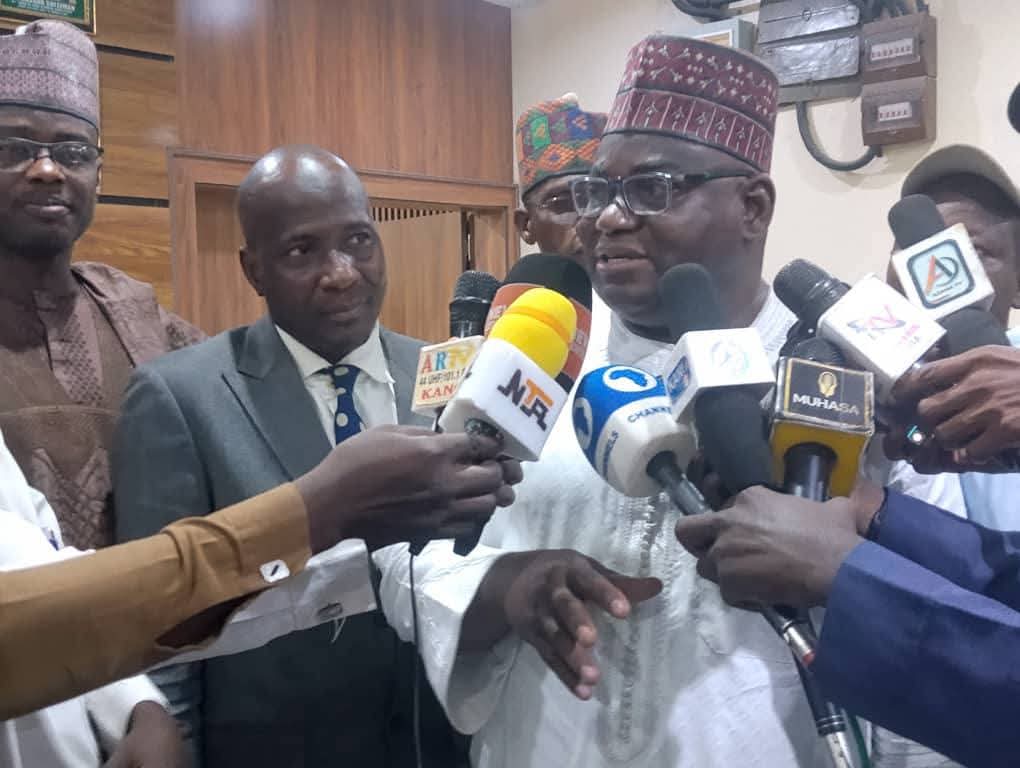
The Kano State Government has strongly dismissed claims that Governor Abba Kabir Yusuf defected to the All Progressives Congress (APC) out of fear of losing his chances for a second-term ticket under the New Nigeria Peoples Party (NNPP), describing the allegation as false and misleading.
In a press statement issued on April 3, 2026, the Commissioner for Information and Internal Affairs, Comrade Ibrahim Abdullahi Waiya, responded to remarks attributed to the immediate past Commissioner for Investment, Commerce and Industry, Shehu Wada Sagagi. Sagagi had reportedly alleged that the governor’s political realignment was motivated by concerns over his political future within the NNPP.
The state government, however, rejected the claim outright, stating that it was “baseless” and a deliberate attempt to misinform the public.
According to the statement, Governor Yusuf’s decision to realign politically was made in the broader interest of peace, unity, and sustainable development in Kano State. The government described the move as strategic and well thought out, aimed at strengthening collaboration and ensuring that the benefits of governance are extended to all residents without discrimination.
“The insinuation that the Governor acted out of fear is not only misleading but disregards his strong political standing and wide acceptance among the people,” the statement said.
The government further emphasized that Governor Yusuf remains committed to his “Kano First” agenda, which focuses on improving infrastructure, boosting economic growth, and enhancing social stability across the state.
Waiya urged the public to disregard Sagagi’s claims, insisting they do not reflect the true situation. He reiterated the administration’s commitment to transparency, accountability, and continued progress.
Despite the controversy, the Kano State Government maintained that it would not be distracted by what it described as unfounded allegations, but would remain focused on delivering its mandate to the people.
News
WADA Marshals Trained on Dangers of Drug Abuse in Schools
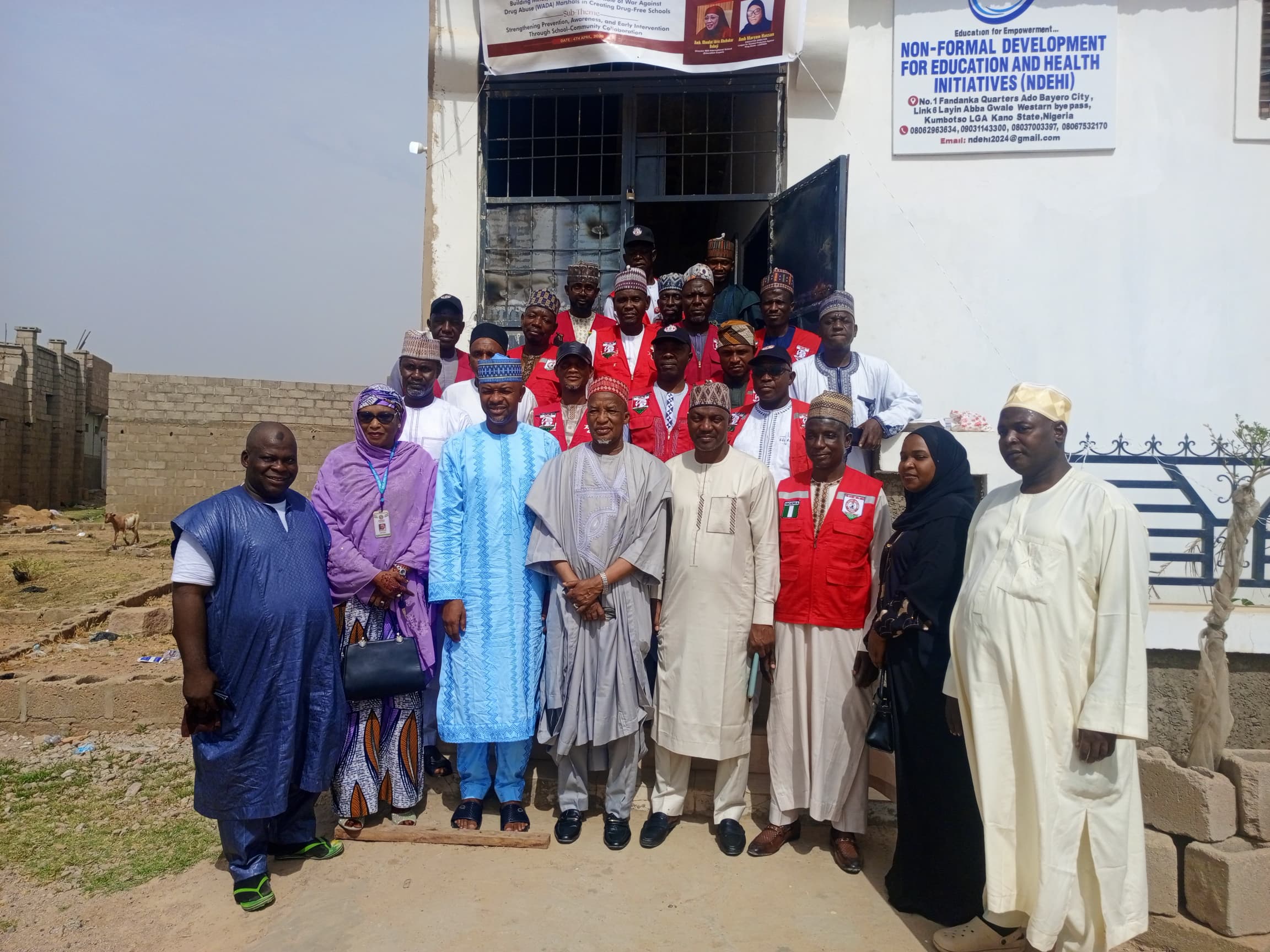
The Non-Formal Development for Health and Education Initiative has launched a training program for War Against Drug Abuse (WADA) marshals, focusing on the dangers of drug abuse among students in secondary and tertiary institutions.
Dr. Auwalu Halilu, the technical adviser of the NGO, explained during the workshop that the initiative is designed to equip WADA marshals with the knowledge and tools to educate young people about the risks of drug abuse. “We are here to tell the children of the ills of drug abuse. It is better to catch them young, using storytelling and experience sharing to help them understand the dangers,” he said.
The workshop emphasized the importance of early intervention, highlighting how drug abuse can derail students’ education and future prospects. Participants were trained to use interactive methods to showcase the dangers of drug trafficking and substance misuse.
State Commandant of the National Drug Law Enforcement Agency (NDLEA), Dahiru Lawan Yahaya, praised the initiative, noting that WADA War Against Drug Abuse was established to mobilize communities against the growing menace. “We are elated by this workshop because it strengthens our collective fight against drug abuse,” he remarked.
Executive Chairman of the Kano State Universal Basic Education Board, Yusuf Kabir Yusuf, also commended the program, stressing its relevance to primary and junior secondary education. “We are protecting the integrity and dignity of our students. If children are thrown into drug abuse, they cannot study, they cannot progress. That is why we are involving parents and village heads in this fight,” he said.
The training is a collaborative approach, bringing together educators, law enforcement, and community leaders to safeguard students from the destructive impact of drugs. Organizers emphasized that awareness and prevention remain the most effective strategies in curbing drug abuse among young people.
News
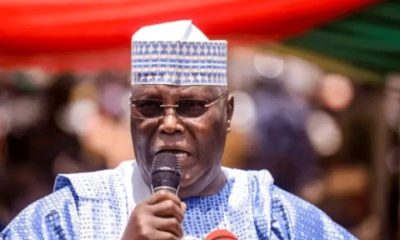
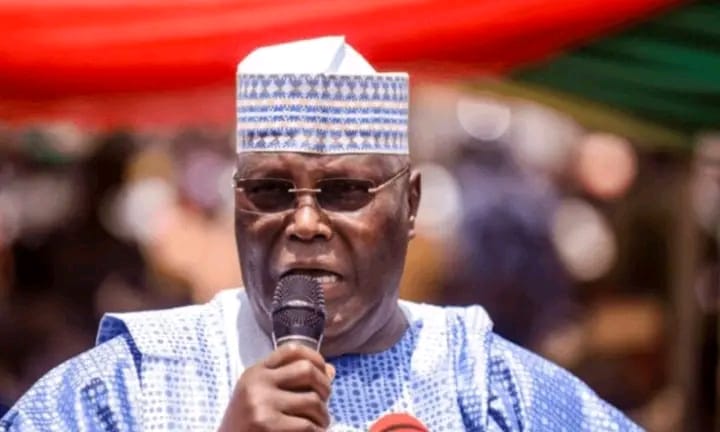
Atiku Vows to Support Anyone Who Wins ADC Presidential Ticket for 2027
By Yusuf Danjuma Yunusa
Former Vice-President Atiku Abubakar has declared that he will back whoever emerges as the presidential candidate of the African Democratic Congress (ADC) in the 2027 election, even as he dismissed concerns that the Independent National Electoral Commission (INEC) could derail the party’s plans.
Speaking in an interview with DW Hausa, Atiku alleged that vested interests were targeting the ADC because of its growing popularity across the country. He also rejected INEC’s recent decision to cease communication with the party’s leadership and not monitor its April 14 national convention, a move the ADC has criticised as a misinterpretation of a court ruling.
“We will support and endorse whoever emerges as the flag bearer,” Atiku said, noting that the ADC’s presidential aspirants are only three or four, compared to more than ten in his former party, the PDP.
The former vice-president described the ADC as youth-friendly, saying young people already dominate its tickets for councillor, state assembly, and national assembly positions. “Our role is to create the opportunity and hand it over to them,” he said.
Asked whether he could support a young presidential candidate, Atiku replied: “Yes, why not?” He added: “Allah has done everything for me. I have brought my sons and grandchildren home. What will be their future and that of their children?”
Atiku expressed confidence that Nigerians are ready for political change, citing worsening economic and security conditions. “They are being pushed to the wall and are prepared to do even more than they did in the previous elections,” he said.
He linked rising insecurity, particularly in northern Nigeria, to youth unemployment and poor access to education. “When you go round the region, you see that education is not receiving the attention it deserves. It has been relegated,” he said, adding that even graduates find no jobs or business opportunities. “I have never witnessed a period like this in Nigeria.”
The former vice-president also accused the government of tolerating corruption. “There is embezzlement on the part of government, and corruption is rampant. The government has turned a blind eye because it is involved,” he said.

Kano Government Refutes Defection Claims, Says Move Driven by Development Goals

WADA Marshals Trained on Dangers of Drug Abuse in Schools

Atiku Vows to Support Anyone Who Wins ADC Presidential Ticket for 2027

The Kid with a Dream-Muhammad Abbas
Garo: The Kano Grassroots Mobiliser

Governor Abba Kabir Yusuf Holds Exclusive Prerogative to Choose Deputy – Malam Inuwa Waya

The Governor Who Chose His People Over His Politics: Abba Yusuf and the Moral Courage Behind Kano First
Restoring the Glory That Was Always There: Governor Abba Kabir Yusuf and the Historical Vision Behind Kano First

NDLEA Clarifies: Drug Case Against Abba Kyari Still Active After Court Discharge

Table Water Producers Increase New Price for Sachet Water in Kano
Kano Government Refutes Defection Claims, Says Move Driven by Development Goals
WADA Marshals Trained on Dangers of Drug Abuse in Schools
Atiku Vows to Support Anyone Who Wins ADC Presidential Ticket for 2027
The Kid with a Dream-Muhammad Abbas
Garo: The Kano Grassroots Mobiliser
Governor Abba Kabir Yusuf Holds Exclusive Prerogative to Choose Deputy – Malam Inuwa Waya
The Governor Who Chose His People Over His Politics: Abba Yusuf and the Moral Courage Behind Kano First
Restoring the Glory That Was Always There: Governor Abba Kabir Yusuf and the Historical Vision Behind Kano First
NDLEA Clarifies: Drug Case Against Abba Kyari Still Active After Court Discharge
Table Water Producers Increase New Price for Sachet Water in Kano
-

 Opinion4 years ago
On The Kano Flyovers And Public Perception
-

 Features5 years ago
How I Became A Multimillionaire In Nigeria – Hadiza Gabon
-

 Opinion5 years ago
Kano As future Headquarters Of Poverty In Nigeria
-

 History5 years ago
Sheikh Adam Abdullahi Al-Ilory (1917-1992):Nigeria’s Islamic Scholar Who Wrote Over 100 Books And Journals
-

 Opinion4 years ago
My First Encounter with Nasiru Gawuna, the Humble Deputy Governor
-

 History5 years ago
The Origin Of “Mammy Market” In Army Barracks (Mammy Ochefu)
-

 History4 years ago
The History Of Borno State Governor Professor Babagana Umara Zulum
-

 News4 years ago
Federal University Of Technology Babura To Commence Academic Activities September