
News
Dangote’s Single Train Refinery, Epileptic Pricing Will Throw Nigeria Into Major Economic Crisis – Spectrum of Marketers

A spectrum of marketers across the downstream oil industry, along with industry watchers, analysts and unions have expressed concerns about the incessant price instability and uncertainty in the supply, distribution, and retailing of petroleum products across the country. This worrisome trend is creating panic in the industry.
This situation is evolving as a result of underlying structural factors bedevilling the industry over the last year.
The industry watchers raised alarm over what they described as the looming danger posed by Dangote Refinery’s single-train structure and unstable pricing regime, warning that Nigeria could be plunged into a major economic crisis if urgent corrective measures are not taken.
Speaking exclusively to the press, an array of marketers noted that Dangote Refinery’s current operational model and pricing practices are inconsistent with the amended Petroleum Industry Act (PIA) and risks destabilizing the nation’s petroleum supply chain.
Concerns Over Pricing Fluctuations
On their part Independent marketers highlighted recent confusion in the petroleum industry, noting that the refinery’s ex-depot price jumped from ₦699 to ₦799, while pump prices have epileptically jumped from ₦731 to ₦920. They described this as “epileptic pricing” that creates uncertainty for marketers and consumers alike.
Allegations of Anti-Competitive Practices
ThoseSome analysts and watchers have accused the Dangote Refinery of engaging in restrictive business practices, including monopolistic tendencies that can pose as barriers to entry for other players. They warned that such anti-competitive behaviour discourages investment, creates price wars, and ultimately undermines the sustainability of the petroleum sector.
“Petroleum is a macro product; its behavior affects all other products, including food. If competition laws and PIA provisions are not strictly enforced, businesses will collapse and the economy will suffer,” they cautioned.
They noted that Dangote’s refinery, with its 650,000 barrels per day capacity, operates as a single-train facility, meaning the entire output depends on one processing line. They explained that this design leaves the refinery vulnerable to disruptions, as any technical fault could halt production entirely.
“The catalytic unit is already down. This shows the danger of relying on a single train. Nigeria requires about 70 million litres per day according to updates by NMPDRA, but Dangote is currently supplying less than 35 million litres. This shortfall exposes the country to energy crises,” they said.
The Unions urged the federal government and the National Assembly to enforce strict compliance with PIA laws, stressing that the legislation was designed to ensure a “win-win” situation for all stakeholders in the petroleum industry.
They also noted that unless the refinery adopts a multi-train structure and pricing transparency, Nigeria’s petroleum supply-demand balance could collapse, triggering wider economic instability.















News
Breaking:Zamfara ASUU Declares Total, Indefinite Strike, Shuts Down University
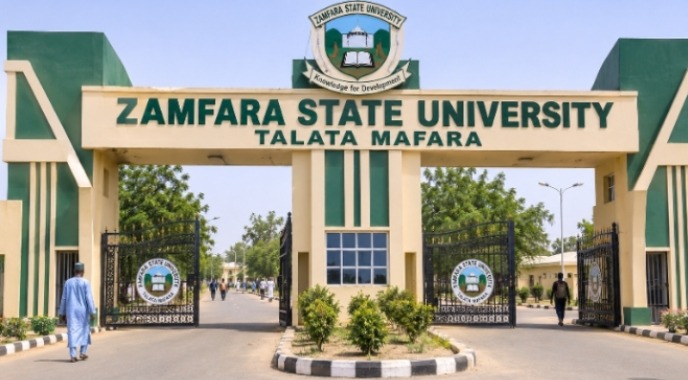
The Academic Staff Union of Universities (ASUU), Zamfara State University, Talata Mafara Branch, has declared a total and indefinite strike beginning Thursday, November 19, 2026, following what it described as the failure of the Zamfara State Government to address its outstanding demands.
The union announced the decision on Wednesday, November 18, 2026, through its Acting Secretary-General, Comrade Abdussamad Muhammad Usman, after an emergency congress meeting held at the university’s temporary site in Talata Mafara, Zamfara State.
The Acting Chairman of the branch, Comrade Anas Abubakar Dogo, who presided over the congress, accused the Zamfara State Government of failing to respond to the demands of the university’s academic staff despite several appeals and efforts by the union to resolve the issues through diplomatic engagements and recognised labour dispute resolution mechanisms.
Dogo said the union’s decision followed the government’s failure to implement the demands, particularly the December 2025 Federal Government-ASUU salary agreement, which the union said should also be extended to its members in Zamfara State University.
He explained that the decision to embark on the indefinite strike was reached after the expiration of the union’s ultimatum and the subsequent warning strike without any meaningful response from the state government.
Addressing members during the congress, the ASUU branch chairman said the union could no longer guarantee the continuation of its academic services under the prevailing circumstances, stressing that its members had been left with no option but to withdraw their services.
The union’s demands, according to Dogo, extend beyond the implementation of the December 2025 salary agreement to include the payment of outstanding promotion arrears and other financial obligations owed to academic staff by the state government.
Dogo further disclosed that the union had held several meetings with relevant stakeholders, including the Chairman of the University’s Governing Council and the university management, in an effort to secure an amicable resolution of the dispute.
He added that letters were also written to the Commissioner for Education, the Head of Service and the Secretary to the State Government, seeking opportunities for dialogue and intervention, but the efforts did not produce the desired outcome.
The ASUU leadership said the indefinite strike became necessary after all its engagements with the relevant authorities failed to yield positive results, despite repeated attempts to resolve the dispute without disrupting academic activities.
The union appealed to students, parents and other stakeholders in the university community to intervene by engaging the state government to address the outstanding issues in the interest of educational development in Zamfara State and the wider region.
It maintained that the decision to withdraw its services was difficult but necessary, describing the indefinite strike as the only option left after exhausting available channels of dialogue and negotiations.
The development followed an earlier one-week warning strike embarked upon by the ASUU branch on November 11, 2026, after the expiration of a two-week ultimatum issued to the state government.
According to the union, the Chairman of the University’s Governing Council had appealed for additional time to enable the government to consider its demands, prompting the union to grant a further two weeks for intervention.
However, Dogo said the additional period also elapsed without any positive outcome, leading the congress to approve the commencement of a total and indefinite strike from November 19, 2026.
The union said its action would remain in force until the outstanding issues affecting its members were addressed by the relevant authorities.
News
Nigeria Govt Makes NIN Verification Mandatory for Domestic Flights
By Yusuf Danjuma Yunusa
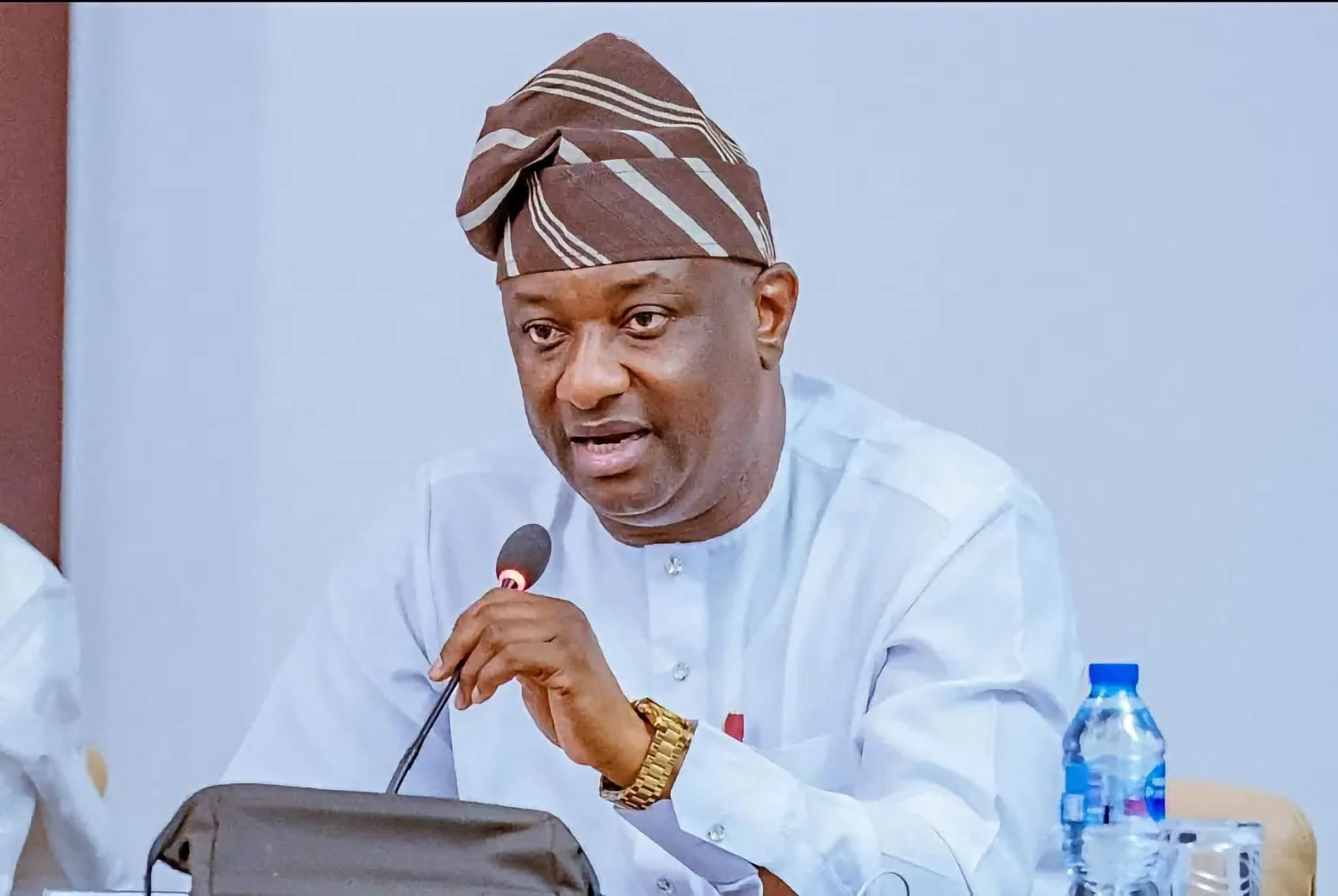
The federal government has directed domestic airlines to introduce mandatory National Identification Number (NIN) verification for passengers before December 31, 2026, warning that airlines that fail to comply will not be allowed to board passengers from January 1, 2027.
Aviation minister Festus Keyamo announced the directive during the unveiling of the Airport Passenger Verification System, known as vPASS, at the Murtala Muhammed Airport in Lagos.
“I have directed the NCAA (Nigerian Civil Aviation Authority) to give all airlines in the country up till December 31st to key into the system,” the minister said.
The new system will link passengers’ NIN details to their flight records and use biometric technology to verify their identities before they enter departure lounges or board aircraft.
Mr Keyamo said the measure was intended to strengthen airport security, prevent identity fraud and address the activities of ticket touts who buy and resell flight tickets using different names.
The minister warned that scheduled domestic airlines that failed to integrate with the platform would not be permitted to board passengers from January. The verification platform is part of the government’s efforts to improve passenger identification and prevent fraudulent activities at Nigerian airports.
The managing director of the Federal Airports Authority of Nigeria, Olubunmi Kuku, said passengers would undergo a registration process linking their NIN to their travel details. Once registered, travellers would be able to access designated airport security gates using the last four digits of their NIN. At boarding points, passengers could be identified through facial recognition, iris scanning or QR codes on their boarding passes.
Mrs Kuku said the system would reduce manual identity checks, shorten queues and improve security at domestic airports.
Passengers will be able to register at airports or through the vPASS application on Android and iOS devices. The initial rollout will cover Lagos and Abuja airports before the technology is extended to other domestic airports across the country.
Mr Keyamo said the government approved the project through the Federal Executive Council in 2025 and was implementing it under a public-private partnership arrangement. He also said any additional charge associated with the platform would be minimal.
The introduction of vPASS follows earlier government efforts to strengthen passenger identification at domestic airports.
In April 2026, the government approved deploying the biometric verification system to address gaps in passenger records and prevent unauthorised boarding.
FAAN subsequently announced plans in July to introduce facial recognition technology, allowing passengers to complete a one-time registration before using biometric checks for future journeys.
News
JAMB Grants Candidates with Disabilities Fee Refunds, Free Audiobooks, Transport Support
By Yusuf Danjuma Yunusa
The Joint Admissions and Matriculation Board has announced special examination support for candidates with disabilities, including refunds of application document fees, free audiobooks and transportation assistance for eligible candidates.
The board said candidates with disabilities who meet the required O’Level qualifications would receive a refund of their application document fees at their respective examination centres.
JAMB disclosed this in an awareness message on its X handle on Wednesday, explaining the special provisions available to candidates with disabilities ahead of the Unified Tertiary Matriculation Examination (UTME).
According to the board, “candidates with visual impairments, particularly those who are blind, would also receive audiobooks of prescribed reading texts to support their examination preparation.”
The board said the initiative was designed to improve access to learning materials and ensure that candidates with visual disabilities could prepare adequately for the examination.
It added that JAMB would cover transportation and accommodation costs for blind candidates and their guides.
The examination body further explained that candidates with disabilities who meet the minimum acceptable UTME score would also be considered for admission into their preferred institutions.

Breaking:Zamfara ASUU Declares Total, Indefinite Strike, Shuts Down University

Kano Pension App: OGP Becomes Dignity, Not Document

Nigeria Govt Makes NIN Verification Mandatory for Domestic Flights

JAMB Grants Candidates with Disabilities Fee Refunds, Free Audiobooks, Transport Support

President Tinubu Announces Up to ₦100m Mortgages at 9.75% Under ₦1tn Housing Fund for Nigerians

Open The Social Sciences “A Tribute to a Heterodox Scholar: Mallam Ibrahim Muazzam

Kano’s War On Drugs: How Barr. Muhyi’s Taskforce Is Changing The Game

Begging in Northern Nigeria: What Future Are We Preparing for Our Society?

NDC Deputy Governorship Candidate Gives Kano Information Commissioner 48-Hour Ultimatum Over Alleged Defamation

Gov. Yusuf Appoints Inuwa Waya Director of International Corporations Engagement
Breaking:Zamfara ASUU Declares Total, Indefinite Strike, Shuts Down University
Kano Pension App: OGP Becomes Dignity, Not Document
Nigeria Govt Makes NIN Verification Mandatory for Domestic Flights
JAMB Grants Candidates with Disabilities Fee Refunds, Free Audiobooks, Transport Support
President Tinubu Announces Up to ₦100m Mortgages at 9.75% Under ₦1tn Housing Fund for Nigerians
Open The Social Sciences “A Tribute to a Heterodox Scholar: Mallam Ibrahim Muazzam
Kano’s War On Drugs: How Barr. Muhyi’s Taskforce Is Changing The Game
Begging in Northern Nigeria: What Future Are We Preparing for Our Society?
NDC Deputy Governorship Candidate Gives Kano Information Commissioner 48-Hour Ultimatum Over Alleged Defamation
Gov. Yusuf Appoints Inuwa Waya Director of International Corporations Engagement
-

 Opinion5 years ago
On The Kano Flyovers And Public Perception
-

 Features5 years ago
How I Became A Multimillionaire In Nigeria – Hadiza Gabon
-

 Opinion6 years ago
Kano As future Headquarters Of Poverty In Nigeria
-
 History6 years ago
Sheikh Adam Abdullahi Al-Ilory (1917-1992):Nigeria’s Islamic Scholar Who Wrote Over 100 Books And Journals
-

 Opinion5 years ago
My First Encounter with Nasiru Gawuna, the Humble Deputy Governor
-

 History5 years ago
The History Of Borno State Governor Professor Babagana Umara Zulum
-
 History6 years ago
The Origin Of “Mammy Market” In Army Barracks (Mammy Ochefu)
-

 News5 years ago
Federal University Of Technology Babura To Commence Academic Activities September