
News
SPECIAL REPORT: “My Brother, It’s a Total Loss”: Voices from Abuja’s Marathon Traffic Nightmare
By Yusuf Danjuma Yunusa
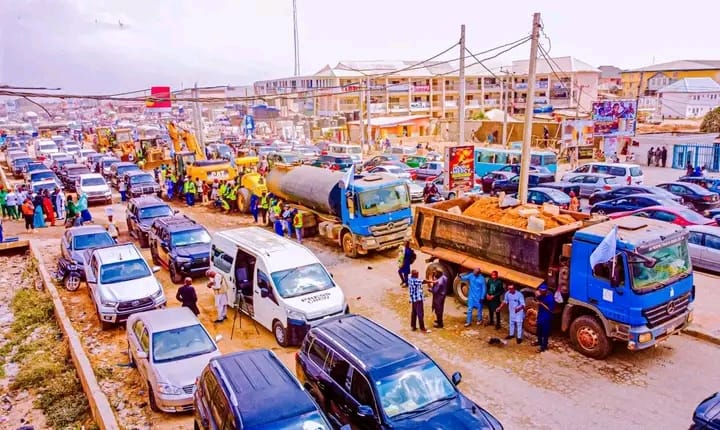
For hundreds of thousands of commuters, the Mararaba-Keffi road is not merely a route but a grueling daily test of endurance. On a typical morning, the passage connecting Nasarawa State to Nigeria’s capital, Abuja, transforms into a stagnant river of metal and frustration. A series of interviews with road users trapped in the gridlock paints a vivid picture of a systemic transport crisis, as filed by Nigerian Tracker’s Yusuf Danjuma Yunusa.
By 7:30 AM, Muazu, a 34-year-old banker, had already been in his private car for over an hour, stuck near Mararaba Market. He left his home in Ado at 6:15 AM for his office in Central Area. “This road is a nightmare every single day,” he lamented, gesturing at the unmoving sea of vehicles.
He identified the core issues as a catastrophic mismatch between road capacity and population. “One major road for a million people. And every morning, broken-down vehicles, carelessly parked tankers, and too many FRSC checkpoints that just seem to slow us down for no reason.” His solution echoed a common refrain: actionable infrastructure development.
“They’ve been talking about expanding this road for years. Thankfully, our voices have been heard by this current administration of President Bola Tinubu. We hope they get it fixed as soon as possible. We need action, not talk,” Muazu said.
A Commercial Driver Calculating Losses
Quite a distance away, Sanusi, a 52-year-old commercial bus driver, was parked in front of the Sahad Stores opposite First Bank, slowly filling his vehicle with passengers. The traffic had decimated his livelihood. “My brother, it’s a total loss. Before, like 8 years back, I could do three trips to Wuse by 10 AM. Now, I’m lucky to do one. The fuel we burn in this traffic alone can take us to Kaduna.”
From his professional view point, he pinpointed the chaotic merging near Karu junction and the proliferation of illegal shortcuts as critical failures.
“Everyone forces their way in. And the buses stopping anywhere to pick passengers—we are all guilty.” He advocated for dedicated bus lanes and the completion of the long-promised road expansion.
A Teacher’s Ordeal
Inside a cramped tricycle (keke) at the Karu Bridge junction, Chioma, a 28-year-old teacher heading for Garki, watched her morning vanish.
“By the time I get there, first period is almost finished. It’s so discouraging.”
She observed a culture of impatience exacerbating the blockage, with drivers using oncoming lanes to jump the queue.
“Then causing a total block when they meet oncoming vehicles.” She also cited sand and gravel trucks spilling debris and street traders encroaching onto the roadway. Her desired fix was a reliable, scheduled bus service and a dedicated bypass for heavy goods vehicles.
An Expert’s Diagnosis
Transport economist Dr. Idris Adetola, in a phone interview with our correspondent, synthesized these complaints into a stark diagnosis. He described the Mararaba-Keffi corridor as a “textbook case of dormitory town planning failure,” where massive residential development occurred without parallel transport investment. “One over-capacity road connects everyone to their jobs in Abuja. Add poor traffic management, zero mass transit alternatives, and weak enforcement, and you have a predictable crisis.”
Dr. Idris proposed a multi-tiered solution: immediate enforced traffic management, a critical short-term launch of a high-capacity Bus Rapid Transit (BRT) system, and a long-term strategy to decentralize Abuja’s economy and complete stalled rail and road projects. “The people’s daily suffering,” he concluded, “is a direct result of planning neglect.”
Asked if he is hoping for an improvement in the ongoing reconstruction on that route, Dr. Idris replied: “Well, this is Nigeria! You never can tell the next news. But I hope they do better with the ongoing reconstruction.”
Together, these voices from the daily users form a unified testimony: the Mararaba-Keffi gridlock is more than an inconvenience; it is a daily economic and social drain, demanding urgent and holistic intervention.









News
ASUU Threatens Nationwide Shutdown

By Yusuf Danjuma Yunusa
The Academic Staff Union of Universities has warned the Federal Government of Nigeria to immediately implement the newly approved salary structure for university lecturers or face a possible nationwide shutdown of public universities.
The union issued a four-day ultimatum on Thursday, with its president, Christopher Piwuna, saying failure to act within the deadline would trigger a strong response.
Speaking at Sa’adu Zungur University in Bauchi State, Piwuna said the government must begin payment under the new salary arrangement without further delay.
“We have issued a four-day ultimatum from today to the federal government to commence payment of the newly approved salary structure. Failure to comply will attract a strong response from the union,” he said.
The warning comes months after ASUU and the federal government signed a renegotiated agreement in January, aimed at resolving long-standing disputes and preventing the recurring strikes that have plagued Nigeria’s university system.
At the heart of the agreement is a revised salary structure designed to improve lecturers’ welfare and finally address issues stemming from the controversial 2009 FG-ASUU pact, which remained largely unimplemented for years.
News
APC Convention:FG Orders Remote Work for Offices Near Eagles Square
By Yusuf Danjuma Yunusa
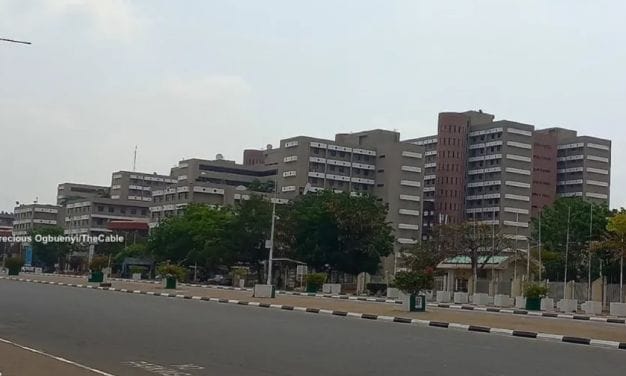
The Federal Government has directed all civil servants working in offices around Eagle Square and the Federal Secretariat complex in Abuja to work from home this weekend.
The directive, issued in a circular by the Office of the Head of the Civil Service of the Federation, is aimed at easing congestion ahead of the All Progressives Congress (APC) national convention. The event is scheduled to hold on March 27 and 28 at Eagle Square.
The measure is intended to ensure smooth access and security around the convention venue.
News
Nigeria’s Power Supply to Improve in Two Weeks as Gas Pipeline Work Nears Completion
By Yusuf Danjuma Yunusa
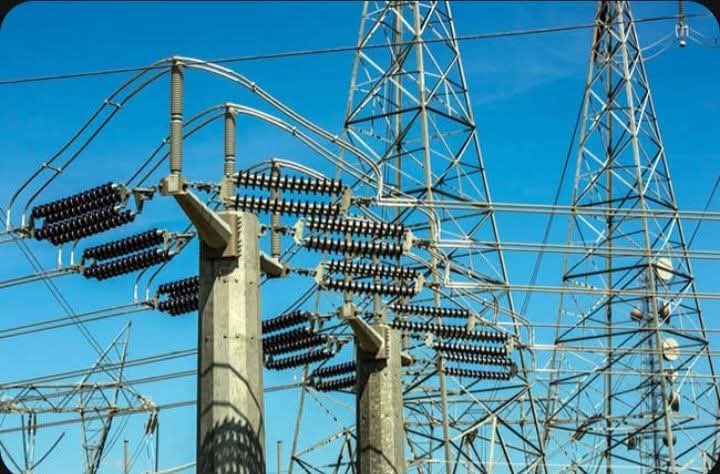
Nigerians can expect a steady improvement in electricity supply within the next two weeks, following the completion of maintenance work on a critical gas pipeline, according to Adebayo Olowoniyi, Chief Technical Adviser to the Minister of Power.
Speaking during an appearance on Arise TV on Thursday, Olowoniyi addressed the recent nationwide blackouts that have disrupted homes, businesses, and industries. His remarks came just days after the Minister of Power, Adebayo Adelabu, issued a public apology over the worsening power situation.
Olowoniyi defended the minister’s apology, framing it not as an admission of personal failure but as a demonstration of accountability. “I think, first of all, I’d like to start with the apology from the Honourable Minister, which we believe is all about taking leadership in the sector,” he said.
“It is not necessarily directly his fault for the challenges that we have, but as the Minister of Power, it was the right leadership step to say, ‘I take ownership of this issue, and I’m going to prefer a solution that would ensure power supply comes back in the shortest available time.'”
The adviser attributed the recent grid instability to disruptions in a major gas pipeline, which supplies fuel to power plants responsible for approximately 75 per cent of the nation’s electricity generation.
“One of the major gas pipelines in Nigeria was undergoing maintenance, and gradually that process is being completed,” Olowoniyi explained. “We’re sure that within the next two weeks, full gas pressure will be back on the gas pipelines, and the power plants will be able to get enough gas at least to go back to their level of generation that they had in the last two to three months.”

ASUU Threatens Nationwide Shutdown

APC Convention:FG Orders Remote Work for Offices Near Eagles Square

Nigeria’s Power Supply to Improve in Two Weeks as Gas Pipeline Work Nears Completion

Court Orders Arrest of PDP Factional Chairman Kabiru Turaki for Skipping Trial

Youth Call on Ibrahim Little to Contest for Kano Governorship Under ADC

The Governor Who Chose His People Over His Politics: Abba Yusuf and the Moral Courage Behind Kano First

FREEDOM OF SPEECH, NOT FREEDOM FROM CONSEQUENCE: A CITIZEN’S CALL FOR RESPONSIBLE PUBLIC COMMENTARY

Press Freedom: IPI Nigeria Calls on New Acting IGP to End Police Harassment of Journalists
Tinubu to Swear in Olatunji Disu as Inspector-General of Police on Wednesday
Restoring the Glory That Was Always There: Governor Abba Kabir Yusuf and the Historical Vision Behind Kano First
ASUU Threatens Nationwide Shutdown
APC Convention:FG Orders Remote Work for Offices Near Eagles Square
Nigeria’s Power Supply to Improve in Two Weeks as Gas Pipeline Work Nears Completion
Court Orders Arrest of PDP Factional Chairman Kabiru Turaki for Skipping Trial
Youth Call on Ibrahim Little to Contest for Kano Governorship Under ADC
The Governor Who Chose His People Over His Politics: Abba Yusuf and the Moral Courage Behind Kano First
FREEDOM OF SPEECH, NOT FREEDOM FROM CONSEQUENCE: A CITIZEN’S CALL FOR RESPONSIBLE PUBLIC COMMENTARY
Press Freedom: IPI Nigeria Calls on New Acting IGP to End Police Harassment of Journalists
Tinubu to Swear in Olatunji Disu as Inspector-General of Police on Wednesday
Restoring the Glory That Was Always There: Governor Abba Kabir Yusuf and the Historical Vision Behind Kano First
-

 Opinion4 years ago
On The Kano Flyovers And Public Perception
-

 Features5 years ago
How I Became A Multimillionaire In Nigeria – Hadiza Gabon
-

 Opinion5 years ago
Kano As future Headquarters Of Poverty In Nigeria
-

 History5 years ago
Sheikh Adam Abdullahi Al-Ilory (1917-1992):Nigeria’s Islamic Scholar Who Wrote Over 100 Books And Journals
-

 Opinion4 years ago
My First Encounter with Nasiru Gawuna, the Humble Deputy Governor
-

 History5 years ago
The Origin Of “Mammy Market” In Army Barracks (Mammy Ochefu)
-

 History4 years ago
The History Of Borno State Governor Professor Babagana Umara Zulum
-

 News4 years ago
Federal University Of Technology Babura To Commence Academic Activities September