
News
Katsina Becomes Spiritual Hub as Millions Celebrate Maulud of Sheikh Ibrahim Niasse
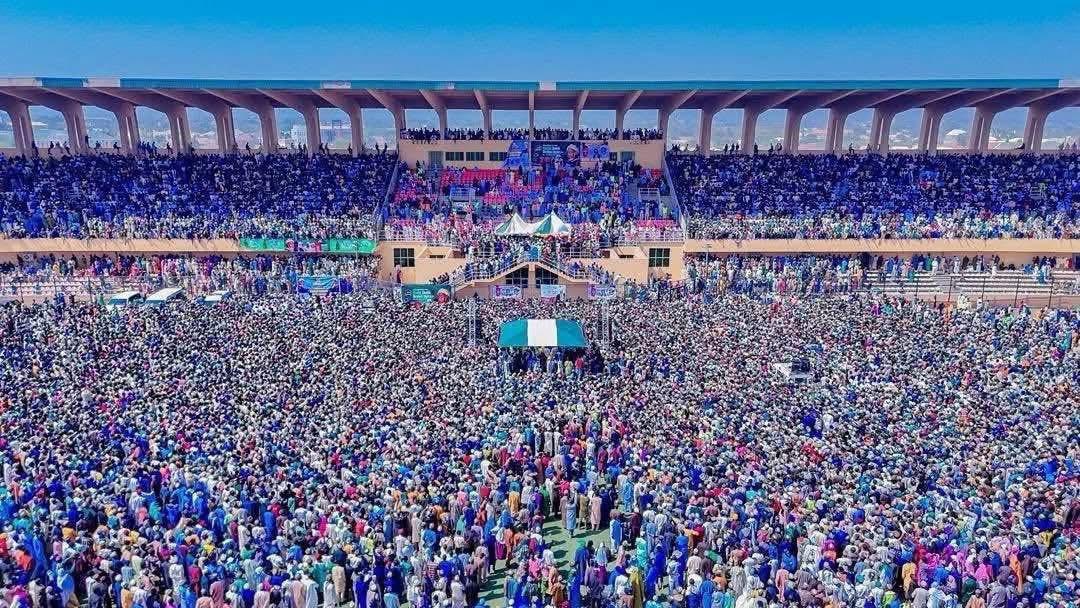
Over three million Muslims from across Nigeria and several African countries converged on Katsina State to commemorate the Maulud (birthday) of the late Tijjaniyya spiritual leader, Sheikh Ibrahim Niasse.
The week-long religious event was held at the Dukko Radda Stadium, Katsina, and was organised by the Majma’u Ahbab Niasse association. It attracted prominent Islamic scholars, traditional rulers, and thousands of followers of the Tijjaniyya order from Nigeria’s 36 states and neighbouring West African nations.
Speaking at the gathering, the President of Majma’u Ahbab Niasse, Sheikh Ahmad Tijjani Sani Auwal, said the 2026 celebration marked the 40th anniversary of the annual Maulud. He explained that the event was aimed at honouring the life and teachings of Sheikh Ibrahim Niasse, while also offering prayers for peace, unity, and economic development in Katsina State, the North-West region, and Nigeria at large.
Sheikh Auwal, who also serves as Commissioner at the Kano State Ministry for Religious Affairs, noted that Katsina State was hosting the Maulud for the third time, having previously hosted in 2002 and 2016. He added that other states such as Zamfara, Sokoto, and Kebbi have also hosted similar commemorations in the past.
He commended the Katsina State Government for providing a peaceful and conducive environment for the event and prayed for sustained stability and harmony in the state and the country.
Addressing the gathering, the Emir of Kano, Khalifa Muhammadu Sanusi II, called for unity among Tijjaniyya adherents and the broader Muslim Ummah. He highlighted the historic role of Sheikh Ibrahim Niasse in the spread of Islam across Africa, describing him as an influential scholar whose legacy transcended national boundaries.
In his remarks, Governor of Katsina State, Dr Dikko Umaru Radda, expressed appreciation to the organisers for choosing Katsina as the host state. He reaffirmed his administration’s commitment to supporting religious activities that foster peace, unity, and social cohesion, while urging continued prayers for Nigeria.
Dignitaries from Nigeria and West Africa graced the occasion, including representatives of the Secretary-General of the Organisation of Islamic Cooperation (OIC), as well as Khalifa Sheikh Mahi Sheikh Ibrahim Niasse, represented by Muhammad Qurash Sheikh Ibrahim Niasse from Senegal.
The Maulud, which commenced on Sunday and lasted seven days, concluded on Saturday with Qur’anic recitations, prayers, lectures, and conferences, all highlighting the life, teachings, and enduring legacy of the renowned Tijjaniyya leader.










News
Independence Day: FG Declares October 1 Public Holiday
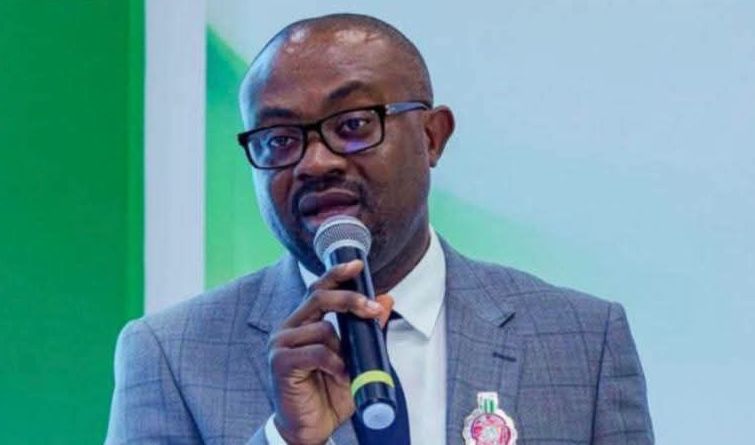
By Yusuf Danjuma Yunusa
The Federal Government has declared Thursday, October 1, 2026, as public holiday to mark Nigeria’s 66th Independence Anniversary.
The Minister of Interior, Dr. Olubunmi Tunji-Ojo, announced the declaration on behalf of the Federal Government in a statement issued on Wednesday by Dr. Magdalene Ajani, Permanent Secretary, Ministry of Interior.
Tunji-Ojo congratulated Nigerians at home and abroad, describing the anniversary as an opportunity to reflect on the country’s journey since independence and its prospects for the future.
He highlighted Nigeria’s human capital, natural resources and cultural diversity as key national assets, while stressing the importance of peace and stability to the country’s development.
The minister urged Nigerians to emulate the patriotism of the nation’s founding fathers and contribute to building a country that future generations would be proud of.
“As we celebrate 66 years of our independence, we should always remember that there is hope for our country and our diversity is our strength, and our collective determination remains the foundation upon which a stronger and more prosperous nation will be built,” he said.
Tunji-Ojo also called on citizens to use the celebration to promote unity, patriotism, peaceful coexistence and mutual respect.
News
Dangote Sponsors Abuja Trade Fair, Features Refinery IPO
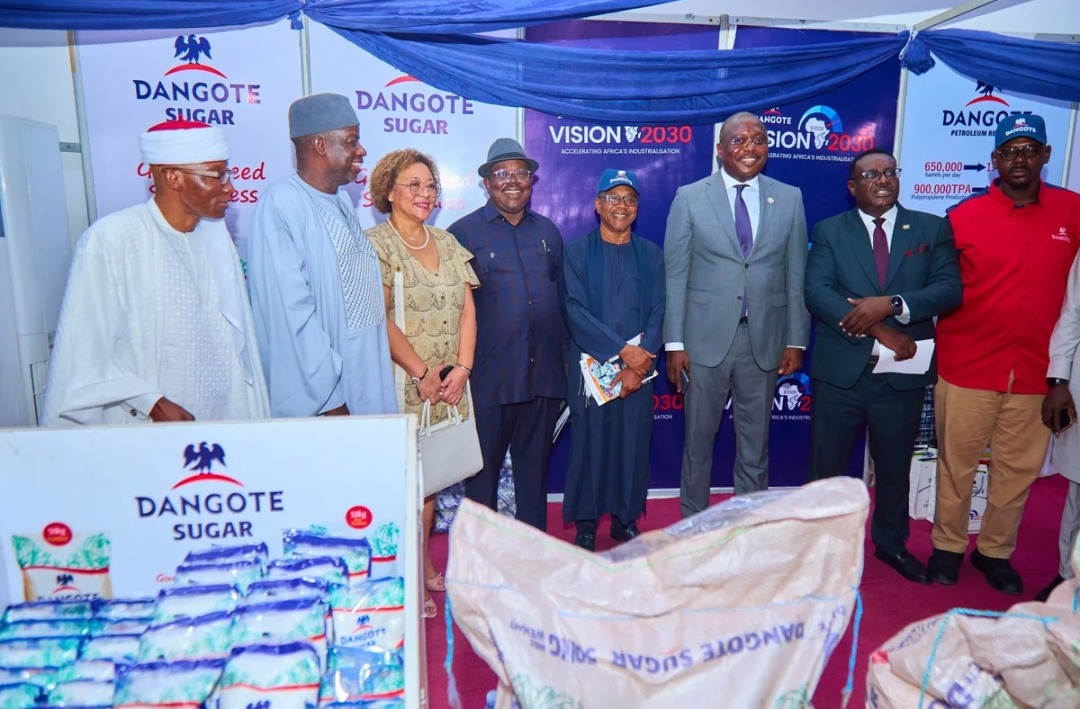
Dangote Industries Limited (DIL), one of the sponsors of the 21st Abuja International Trade Fair, will spotlight the ongoing Initial Public Offering (IPO) of the Dangote Petroleum Refinery and Petrochemicals (DPRP) during the company’s Special Day.
The Dangote Special Day, scheduled for Friday October 2, will feature a high-level fireside and business interactive session bringing together representatives of Dangote Group, government, the organised private sector and business leaders to examine the transformative role of the Dangote Refinery in Nigeria’s economic development.
According to the company, the interactive session will provide prospective investors, entrepreneurs, business operators and other participants with an opportunity to engage directly with representatives of Dangote Group and gain a better understanding of the refinery’s ongoing IPO and its broader economic significance.
The session, themed “Dangote Refinery, Vision 2030, ACCI and the Economy,” will examine the refinery’s contribution to Nigeria’s energy security, industrialisation, trade, employment generation, taxation and economic growth.
Particular attention will be paid to how increased domestic refining capacity can reduce Nigeria’s dependence on imported petroleum products, conserve foreign exchange, strengthen local value chains and create new opportunities for businesses across the petroleum, petrochemical, logistics, manufacturing and services sectors.
The IPO will also feature prominently in the discussions, with participants expected to explore how the public offer can broaden participation in the ownership of one of Africa’s most significant industrial assets, deepen Nigeria’s capital market and provide eligible investors with an opportunity to participate in the country’s ongoing industrial transformation.
The fireside session will bring together senior representatives of Dangote Group, the Abuja Chamber of Commerce and Industry (ACCI), the Nigerian Association of Chambers of Commerce, Industry, Mines and Agriculture (NACCIMA), government and the wider private sector.
The company said the session would also provide an opportunity to examine Dangote Group’s Vision 2030 and its implications for industrialisation, job creation, local content development, technology transfer, investment and economic diversification.
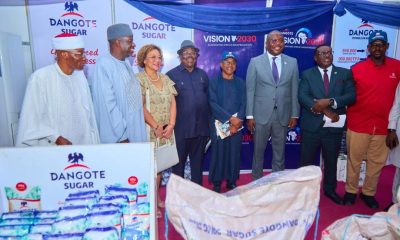
Beyond the fireside discussion, visitors to the Trade Fair will have the opportunity to engage with the Dangote Group at its pavilion, where the company will showcase a range of products and businesses spanning cement, sugar, salt and seasoning, packaging and other sectors.
Dangote Group’s sustained participation and sponsorship of the Abuja International Trade Fair reflects its continued support for platforms that promote trade, investment, entrepreneurship and stronger linkages between the private sector and government.
The 21st Abuja International Trade Fair, organised by the Abuja Chamber of Commerce and Industry, is expected to bring together hundreds of exhibitors, businesses, investors, policymakers and members of the public, providing a platform for networking, market access, investment promotion and business-to-business engagement.
The company said it looks forward to welcoming participants to the Dangote Special Day and its pavilion to explore the Group’s products, investment opportunities and potential areas of business collaboration.
News
15th Emir Of Kano Condemns Destruction Of Governor Yusuf’s Banners, Orders Immediate Replacement
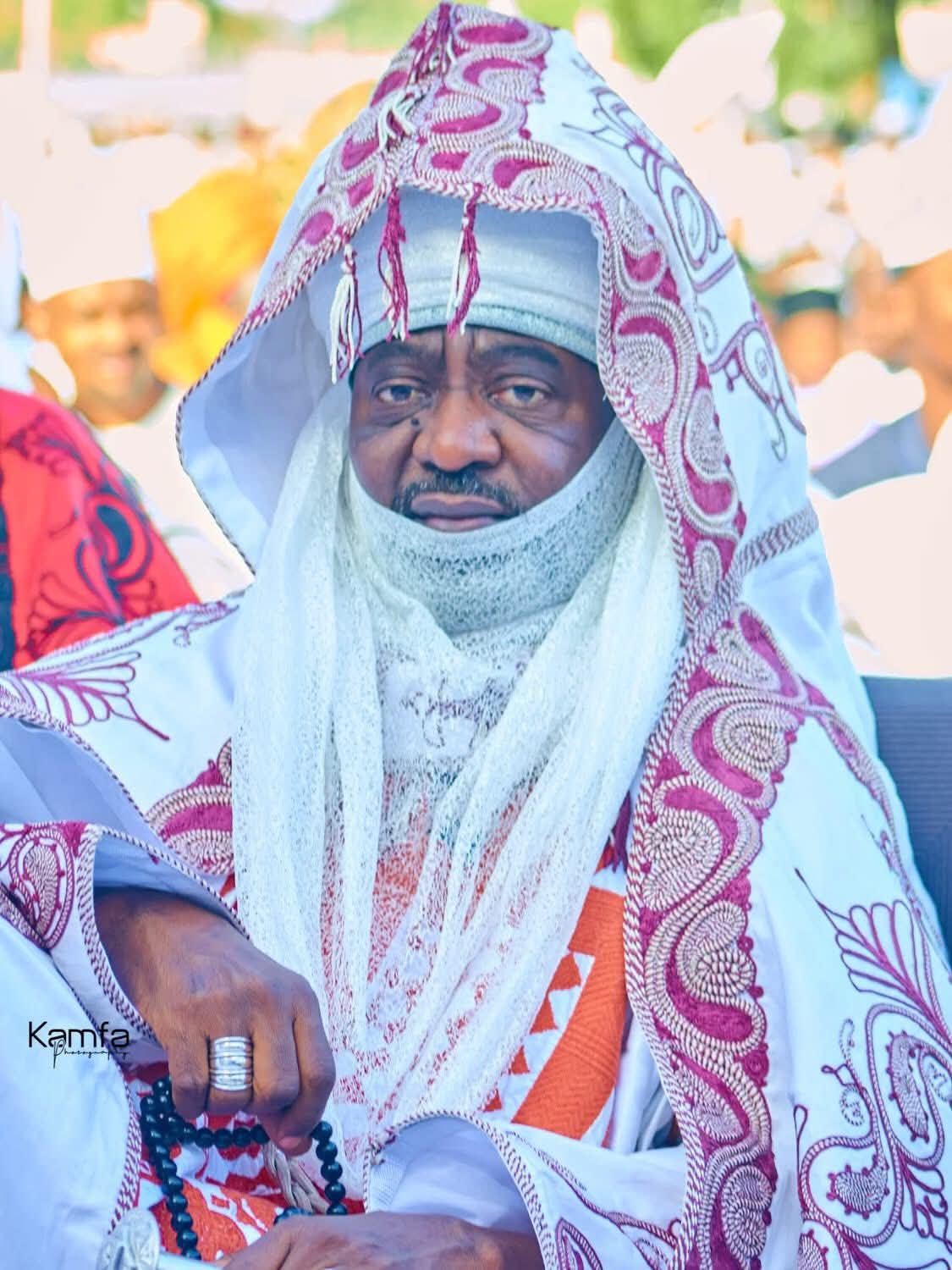
15th Emir of Kano, Alhaji Aminu Ado Bayero, has expressed displeasure over the destruction of banners bearing the images of the Kano State Governor, Alhaji Abba Kabir Yusuf.
The 15th Emir’s Chief Councillor, Alhaji Aminu Babba Dan’agundi, Sarkin Dawaki Babba, disclosed this while addressing journalists, saying that the Emir had already directed that the damaged banners be repaired.
According to him, 15th Emir Bayero stressed that the traditional institution must remain above partisan politics, saying, “We are fathers of the people, not politicians.” He therefore appealed to the Emir’s supporters and well-wishers to avoid bringing partisan political activities into the affairs of the traditional institution.
The Sarkin Dawaki Babba also conveyed the 15th Emir’s appreciation to the thousands of supporters men and women, youths and elders who demonstrated their love and loyalty by complying with the government’s directive and accompanying the Emir on foot to his residence at the Nassarawa Palace, despite the heavy rainfall and strong winds.
He said the 15th Emir had no adequate words to express his gratitude to the people for their show of love, patience and solidarity, adding that His Highness prayed that Almighty Allah would reward them abundantly.
The 15th Emir also urged his supporters to continue with prayers, as is customary, for peace, stability and progress in Kano State and Nigeria, as well as abundant blessings and prosperity for the people.

Independence Day: FG Declares October 1 Public Holiday

Dangote Sponsors Abuja Trade Fair, Features Refinery IPO

15th Emir Of Kano Condemns Destruction Of Governor Yusuf’s Banners, Orders Immediate Replacement

PCACC Arrests Man Over Alleged ₦4.5m Sale, Illegal Leasing of Kano Government Horse Stable

Goje’s Electoral War:The Confrontation With Tinubu,Governor Inuwa,Usman Kumo And APC candidates Ahead Of 2027

Zamfara Varsity ASUU Threatens Warning Strike Over FG-ASUU Agreement, Promotion Arrears

Bello Sharada: A Great Writer, A Bookish Soul, Gone Too Soon

Kano Chemists Threaten Warning Strike Over Alleged PCN Pressure

Per Ishaq Samaila: “Waziri” for Strategy. “Mai Jama’a” for Service. One Man. One Mission. Ibrahim Kabir Masari

UN Assembly: Nigeria Affirms Nuclear-Free Status, Seeks Overhaul of UN Domestic Jurisdiction Rule
Independence Day: FG Declares October 1 Public Holiday
Dangote Sponsors Abuja Trade Fair, Features Refinery IPO
15th Emir Of Kano Condemns Destruction Of Governor Yusuf’s Banners, Orders Immediate Replacement
PCACC Arrests Man Over Alleged ₦4.5m Sale, Illegal Leasing of Kano Government Horse Stable
Goje’s Electoral War:The Confrontation With Tinubu,Governor Inuwa,Usman Kumo And APC candidates Ahead Of 2027
Zamfara Varsity ASUU Threatens Warning Strike Over FG-ASUU Agreement, Promotion Arrears
Bello Sharada: A Great Writer, A Bookish Soul, Gone Too Soon
Kano Chemists Threaten Warning Strike Over Alleged PCN Pressure
Per Ishaq Samaila: “Waziri” for Strategy. “Mai Jama’a” for Service. One Man. One Mission. Ibrahim Kabir Masari
UN Assembly: Nigeria Affirms Nuclear-Free Status, Seeks Overhaul of UN Domestic Jurisdiction Rule
-

 Opinion5 years ago
On The Kano Flyovers And Public Perception
-

 Features5 years ago
How I Became A Multimillionaire In Nigeria – Hadiza Gabon
-

 Opinion6 years ago
Kano As future Headquarters Of Poverty In Nigeria
-

 History5 years ago
Sheikh Adam Abdullahi Al-Ilory (1917-1992):Nigeria’s Islamic Scholar Who Wrote Over 100 Books And Journals
-

 Opinion5 years ago
My First Encounter with Nasiru Gawuna, the Humble Deputy Governor
-

 History5 years ago
The History Of Borno State Governor Professor Babagana Umara Zulum
-

 History6 years ago
The Origin Of “Mammy Market” In Army Barracks (Mammy Ochefu)
-

 News4 years ago
Federal University Of Technology Babura To Commence Academic Activities September