
Opinion
When Power Meets Purpose: Why Abba Kabir Yusuf’s APC Move Is Kano’s Necessary Turn
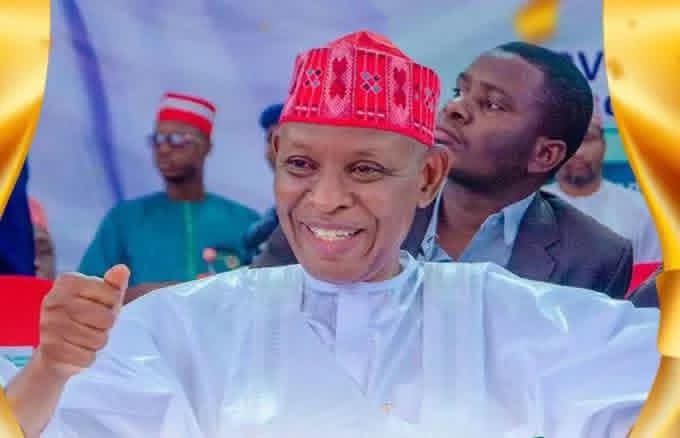
By Abdulkadir Ahmed Ibrahim (Kwakwatawa), FNGE.
In politics, moments arise when loyalty to a platform must give way to loyalty to the people. There are seasons when courage is not found in standing still, but in moving forward with clarity of purpose. Kano State stands at such a moment. The planned defection of Governor Abba Kabir Yusuf to the ruling All Progressives Congress is not an act of betrayal. It is a call to responsibility, a deliberate choice shaped by necessity, foresight, and the overriding interest of Kano and its people.
Perhaps power, when isolated, grows weak. Governance, when detached from the centre, struggles to deliver. Since the emergence of Abba Kabir Yusuf as governor, Kano has found itself standing alone in the national space. Federal presence is thin, strategic attention limited. The state that once sat confidently at the table of national influence now watches key decisions pass by without its voice fully heard. This isolation is not a reflection of the governor’s intent or capacity; it is the reality of operating outside the ruling structure in a political environment where access often determines outcomes.
It is common knowledge that governors do not govern in a vacuum. Roads, security, education, health, and economic revival depend on cooperation between state and federal authorities. When that bridge is weak, the people bear the cost. Kano today needs bridges, not walls. It needs inclusion, not distance. It needs a seat where decisions are shaped, not a gallery where outcomes are merely observed.
The internal tension surrounding the emirate question has further deepened uncertainty. While history and tradition demand respect, governance demands stability. Prolonged disputes distract leadership, unsettle investors, and weigh heavily on public confidence. At such a time, a governor requires strong institutional backing and political leverage to navigate sensitive reforms with balance and authority. Standing alone makes that task far more difficult than it ought to be.
More troubling is the visible absence of federal projects and partnerships. In a country where development is often driven by political proximity, Kano cannot afford to remain on the margins. A state of its stature, population, and historical relevance deserves more than sympathetic silence. It deserves action, presence, and partnership.
It is within this context that Abba Kabir Yusuf’s movement toward the APC must be understood. Not as personal ambition, but as strategic realism. Not as political convenience, but as a pathway to unlock opportunities long denied by distance from power.
By extension, Senator Rabi’u Musa Kwankwaso stands at a defining crossroads. History has placed him in a rare position. He is respected across party lines, commands a loyal following, and remains one of the most influential political figures in Northern Nigeria. Above all, President Bola Ahmed Tinubu holds him in high regard. They share a common political generation, having both served as governors in 1999, shaped by the same democratic rebirth and seasoned by time and experience.
In addition, one can recall that both Rabi’u Kwankwaso and Bola Tinubu were at the National Assembly under the platform of the now defunct Social Democratic Party, SDP, during the short-lived 3rd Republic. The former was the Deputy Speaker at the House of Representatives while the latter was a Senator together with Late Senator Engineer Magaji Abdullahi who was also elected under the same SDP ticket.
Late Engineer Magaji Abdullahi a former Deputy Governor of Kano State (2003 to 2007) and also a former Chief Executive of the State owned Water Resources and Engineering Construction Agency, WRECA, in the 1980s was a benefactor of Engineers Rabi’u Kwankwaso and Abba Kabir Yusuf were they first met as members of staff.
The late successful Kano technocrat, accomplished engineer, career civil servant charismatic and vibrant national politician was a close ally and associate of Asiwaju Bola Ahmed Tinubu starting from the SDP days and the duo was some of the foundation members of the APC.
The President’s repeated extension of an olive branch to Kwankwaso is therefore not accidental. These gestures are acknowledgements of value, respect, and shared history. They signal recognition of Kwankwaso’s political weight and his capacity to contribute meaningfully at the national level. When such calls come consistently, wisdom suggests they should not be ignored. Kwankwaso should heed the call by moving along with the political direction of Kano State.
The truth is unavoidable. The political home Kwankwaso once built no longer offers the shelter it promised. The NNPP is enmeshed in internal crises that threaten its very identity. Court cases over party ownership and recognition pose serious risks. With the Independent National Electoral Commission recognising one faction amid raging disputes, the platform has become unstable ground for any serious electoral ambition. Under these circumstances, entering the 2027 race either with Abba Kabir Yusuf seeking re election on the NNPP platform or Kwankwaso pursuing a presidential ambition would amount to gambling against history and reason.
The alternatives are no better. The Peoples Democratic Party is fractured, weakened by internal contradictions and persistent leadership disputes. Its once formidable structure now struggles to inspire confidence. The African Democratic Congress, on the other hand, is ideologically and historically uncomfortable for Kwankwaso. Many of its leading figures were once his fiercest rivals. They resisted him in the PDP and are unlikely to allow him meaningful influence now. Political memory is long, and grudges rarely dissolve.
Beyond current realities lies a deeper lesson from history. Regional parties, no matter how passionate or popular within their strongholds, have rarely succeeded on the national stage. From the First Republic to the Fourth, the pattern remains consistent. Nigeria rewards broad coalitions, not narrow bases. Power flows where diversity converges.
The APC today represents that convergence. It is not perfect, but it is expansive. It is national in outlook, broad in structure, and firmly in control of the federal machinery. For Kano, aligning with the APC is not surrender. It is strategy. It is an investment in relevance, access, and development.
For Abba Kabir Yusuf, the move is about delivering tangible dividends of democracy. For Kwankwaso, it is about securing a future that reflects his stature and experience. Loyalty, in its truest sense, is not blind attachment to a platform. It is fidelity to the welfare of followers, to the aspirations of a people, and to the demands of the moment.
Politics is not static. It is a living conversation between ideals and realities. When realities change, wisdom adapts. Kano’s future demands bold choices, not sentimental delays. The music is louder now. The moment is clearer. The door is open.
History favours those who recognise when to move. For Abba Kabir Yusuf and Senator Rabi’u Musa Kwankwaso, the path toward the APC is not a retreat from principle. It is a step toward purpose. They should go back to where they rightly belong. And for Kano, it may well be the bridge back to the centre, where its voice belongs and its destiny can be fully pursued.
Abdulkadir, a Fellow of Nigerian Guild of Editors, former National Vice President of the NUJ, Veteran Journalist, was the Press Secretary of the former Deputy Governor Late Engineer Magaji Abdullahi.





Opinion
Why All Hues, Cries Against Garo?
By Abba Anwar
First and foremost, it is against the very philosophy and principle behind the formation of All Progressives Congress (APC), from day one, an amalgamation of different political interests coming together with a common goal and purpose. To uproot the then party in power, People’s Democratic Party (PDP).
That philosophy, that principle, should be maintained across board, as the party, APC, has been on the throne for over a decade now. It was the breakaway from the original philosophy, that played an important role in pushing the party to where it is now, in Kano state.
It was made public that there were controversial allegations of diverting public funds between 2020 and 2023, totalling N57,433,981,816.00, which subsequently led to the prosecution of the former Commissioner for Local Governments and Chieftaincy Affairs, and Deputy Gubernatorial candidate for 2023 election in Kano, His Excellency Murtala Sule Garo, by the Kano State Public Complaints and Anti-corruption Commission before a Kano State High Court.
It was in the charge sheet, dated 29th July, 2024. The act, according to established laws is contrary to the provisions of Sections 97, 309 and 315 of the Penal Code (as amended), Cap. 105, Vol. 2, Laws of Kano State, 1991. And as cited by the complainant, it was a breach of Section 26 of the Kano State Public Complaints and Anti-corruption Commission Law 2008 (as amended).
Let me go to the technicalities of the matter at hand, before advancing my argument, not on the issue in court, by on the political circumstances massaging the process of our political realities here in Kano.
But before delving into that, show me a prominent politician in Nigeria, yes across all the six geopolitical zones, who has no corruption allegations hovering around his or her neck, I will show you a liar. It has been a common principle, known to all that, an accused is innocent until proven otherwise by competent court of justice.
In the Kano State High Court, before Hon Justice Sanusi Ado Magaji of High Court No. I5 Miller Road, Complex, Kano, in a ruling dated 30th June, 2025 and as issued as a True Certified Copy, also dated 4th February, 2026, on an issue before the High Court between Kano State Government as the Complainant and Murtala Sule Garo and others as Defendants, after stating the historical content of the issue at hand and after depending on several authorities, judgements /rulings in previous circumstances and references, the Hon Justice ruled that,
“I must humbly adopt the profound statement of the law as mine in respect of this instant case. I hold that the Complainant, herein cannot investigate any issue that borders on corruption or corrupt practices. Predicated of the above statement the charge herein filed by the Complainant is HEREBY STRUCK OUT (emphasis mine). The Defendants are accordingly DISCHARGED (emphasis mine).”
Though there is an appeal of the ruling by the state, but as some observers argue or assess, it could be possible and easy to say the case, as it stands before the state government, is not seriously handled. May be another way of saying, it looks as if the state is contemplating of withdrawing the case, because of reasons best known to the state. This is the legal aspect of Garo’s issue at hand.
Coming down to other aspects or areas, it still sounds odd and strange to see that, APC people or at best heavyweights in Kano, are still in the stone age of political practice. Before His Excellency the Governor of Kano State, Abba Kabir Yusuf joins APC, there were serious crises amongst leadership and followership. Within the leadership circle and within the followership circle, there were internal face-offs, fracas, which necessitated a well positioning of the party into another round of political waterloo.
I wonder the kind of hateful and destructive political practices, old APC members are engaged in. If and only if, old APC people will continue this way, what can stop Governor Yusuf from treating them as political toys. Fortunately for APC, Governor Yusuf isn’t an autocratic leader. Neither is he a dictator. If I were the governor, I will still help the party, especially the old circle, to be one and indivisible. Your Excellency Sir if you do that, history will not forget you forever.
After all the necessary assessments and closer observation of the APC juggernauts, Presidency believes that, at this era of political alignment and realignment, especially when the vacancy of a Deputy Governor, emerges in Kano, there are potential suitors, but the best of them all, is Murtala Sule Garo.
Hence, I heard it from a very reliable source that President Bola Ahmed Tinubu, GCFR, pleaded with the Governor Yusuf to accept Garo as his Deputy. If I were the Governor, henceforth I would not spend more than 24 hours without Garo’s nomination to the State House of Assembly. Presidential request na whose mate? Laughter. My able governor is aware that, he has many requests to be forwarded to Presidency from now to election period and beyond. Dabara ta rage ga mai shiga rijiya.
It sounds odd and sometimes unbelievable to say His Excellency, Deputy Senate President, Distinguished Senator Barau I Jibrin, CFR, is principally a force behind the delay. It doesn’t sound musical to ears. I said this because I knew what the relationship between Garo and the Senator was at the early days of the current political dispensation. Very cordial and healthy. From the beginning of this fourth republic, which started from 1999.
Before his Senatorial seat, Jibrin was a member House of Representatives, from Tarauni federal constituency. After that, he followed his ancestors from paternal side and traced back to Kabo local government, from where he got the right and the advantage to contest for Kano North Senatorial zone and later became a Senator of the Federal Republic of Nigeria.
When Garo was the Chairman of Kabo local government, he facilitated and issued the Senator with an indigene Certificate of Kabo local government. Since then, there was a gentleman arrangement between the two, that Jibrin would contest for gubernatorial position and Garo would contest for Senatorial seat. But as Allah planned hitherto, Jibrin contested for the Senatorial seat and won. I can still remember vividly clear that, then I was with the Hotline Magazine and Pan African News Agency.
Garo was Jibrin’s Director General of Campaign in two different elections, 2015 and 2019. So I am utterly confused when I heard that Senator Jibrin is presently against Garo’s nomination as a Deputy Governor. Looking at the antecedents, it could be much proper to see DSP in the forefront lobbying for the seat for Garo. Without even the involvement of Mr President. This should be the practice, in a normal and healthy political practice. Anything short of this, to me, is a negation of many good things. I am still in a state of mental confusion. Still asking myself, can the DSP be that low?
For the Governor, yes he has all the right to chose from many interested individuals, yet he should take it at the back of his mind that, whatever choice he makes, the result, output and repercussions, will definitely bounce back at him. He either gets apple or bitter lemon after cultivation. This is the fact and this is the comfortable or uncomfortable reality.
And the way I see it, Garo is not desperate about it. He isn’t so desperate to become a Deputy Governor. My view, I stand to be corrected. As it is now, former Governors and former Deputy Governors, are still benefiting from him, from many standpoints.
Garo, unlike former Deputy Governor and Gubernatorial candidate under the platform of APC in 2023 election, His Excellency Nasiru Yusuf Gawuna, who after he lost 2023 election was appointed, Chairman Governing Board, Bayero University, Kano and Chairman Board of Directors of Mortgage Bank, exited from APC recently to African Democratic Congress (ADC), in search of more political breathing space, Garo remains in the party without any appointment, whatsoever.
All along, nowhere was it reported that Garo was castigating the party at either state or national level. Now a vacancy arises, and the space is naturally available without any effort from anybody. Who then is in the best position to be compensated? If not Garo, who?
What I suggest our leaders should bear in mind is the fact that, so long they will continue to be in disarray, deconstructing each other, forgetting the marriage of convenience as the philosophy behind the formation of the party APC, ab initio, their political objectives and interest will remain in danger. Whatever that means.
Fruition of the relationship between and among old APC leadership and followership and that of the Governor with his new party, APC, is just like the two sides of a coin, that face different directions, but must stay together.
Anwar writes from Kano
Sunday 5th April, 2026
Opinion
The Kid with a Dream-Muhammad Abbas
By Muhammad Abbas
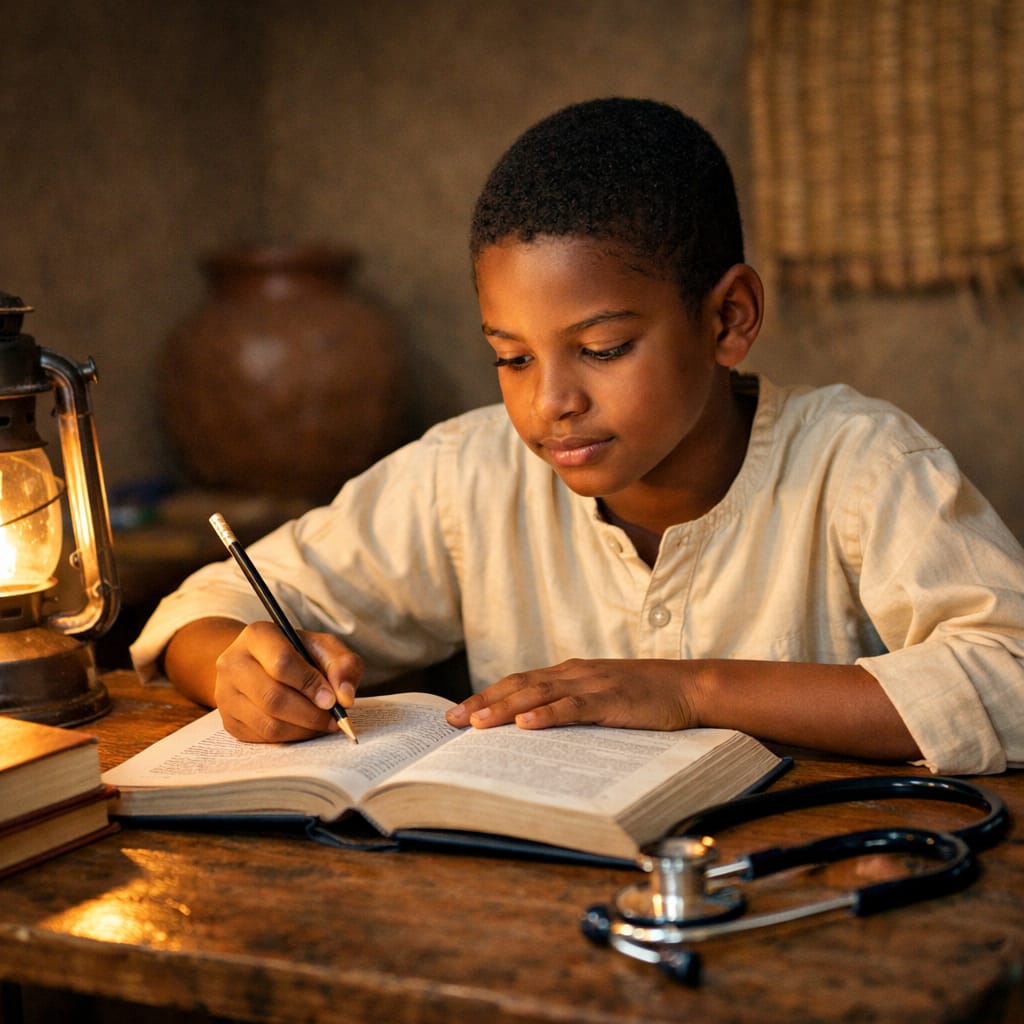
Once, in a land as far as you could imagine, there lived a boy called Usman. He was a thirteen-year-old boy with a strikingly handsome face and glowing eyes. Usman wasn’t just a normal kid; he was different.
At a very young age, Usman could already solve complex equations, and that made him stand out among his mates.
Usman’s father, Alhaji Sani, and his mother, Hajiya Zainab, were very rich, but Usman didn’t really care about his parents’ wealth.
Even when his parents offered to take him to school in their Rolls-Royce, he would tell them he would rather go on the bus like other students.
Usman went to one of the best schools in town called Arewa Fields Academy. It was a world-class school with some of the best facilities, such as an advanced robotics lab, digital views of space and the ocean, modern classrooms, and world-class sports facilities.
However, Usman never really liked the school very much. He preferred to go to a normal school with normal classes and live a normal life like other children.
One day, Usman’s father suddenly became very sick. It was a serious and chronic illness that needed urgent medical attention. The family rushed to find help, but there was a big problem.
Their village, called Garin Dutsi, had only one medical doctor, and unfortunately the doctor was not in town that day.
People tried their best to help Alhaji Sani, but the illness became worse. Sadly, Usman’s father did not survive.
After the funeral, Usman cried until he had no tears left. He loved his father deeply and missed him every day. But that painful moment also made him think about something very important.
He realized that if there had been more doctors in the village, maybe his father and many other people could have been saved.
That night, Usman made a promise to himself. He decided that one day he would become a doctor so that he could help people in places where medical care was difficult to find.
Years passed, and Usman worked very hard in his studies. Eventually, he finished university with a first-class degree in medicine. People admired his intelligence and his determination.
When he finally became a doctor, Usman chose to return to villages like Garin Dutsi, where many people still struggled to find medical care.
He treated the sick, helped families, and trained young health workers so that communities would never again suffer because there were not enough doctors.
Usman never forgot his father, and the memory of that difficult day always reminded him why he chose to become a doctor.
And that is the story of a kid with a dream who grew up to help others.
Muhammad Abbas is an aspiring writer, a secondary school student, and lives in Kano.
Opinion
INEC, David Mark, And Coming Abachaian Coronation
By Farooq Kperogi
With INEC’s overtly partisan, intentionally illegal, and possibly remote-controlled withdrawal of recognition for the David Mark-led ADC, Nigeria has officially reverted to full-on Abacha-era suffocation of even the wispiest pretence to competitive electoral politics.
Lawyers have said that the judgment of the appeal court, which INEC invoked as a convenient crutch to carry out a predetermined action, said the status quo should be maintained. In other words, the judgment says David Mark should remain the chairman of the ADC until the merit of the appeal has been determined.
However, it appears that INEC is in the know of what the final judgment will be and decided to jump the gun. Yet the INEC chairman is a professor of law and a SAN! He can’t even pretend to be neutral.
It seems obvious that the ADC faction INEC will ultimately recognize, as I predicted in my column of two weeks ago, will be the faction that will merely be an extension of the APC, much like the PDP now is. They will either present dummy candidates or adopt Tinubu as their candidate, which is a distinction without a difference.
It is obvious that Tinubu wants a coronation, not a competitive election, in 2027. He is scared to death about a real electoral contest. We all know why.
Well, according to public records, it cost around ₦300–₦355 billion to conduct the 2023 presidential election. It is projected that it will cost almost ₦870 billion to conduct the 2027 election.
Why should Nigeria spend close to a trillion naira on a preset, make-believe, Abachaian coronation exercise? Let’s kuku cancel democracy and make Tinubu the supreme leader. At least we would save a trillion naira.

REJOINDER: The Fallacy of the “Commander” and the Burden of Integrity

INEC Directs RECs to Suspend Plans on Voter Revalidation Exercise

Kano’s Quest for an Alternative with Ibrahim Ali Amin Little, By Adnan Mukhtar

Easter: CAN Urges Nigerians to Unite, Rise Above Challenges

Wife of Former INEC Chairman, Prof. Jega, Passes Away

ADC Leadership Crisis: State Chairmen to Elect Caretaker Committee on Tuesday

Governor Abba Kabir Yusuf Holds Exclusive Prerogative to Choose Deputy – Malam Inuwa Waya

The Governor Who Chose His People Over His Politics: Abba Yusuf and the Moral Courage Behind Kano First
Restoring the Glory That Was Always There: Governor Abba Kabir Yusuf and the Historical Vision Behind Kano First

Table Water Producers Increase New Price for Sachet Water in Kano
REJOINDER: The Fallacy of the “Commander” and the Burden of Integrity
INEC Directs RECs to Suspend Plans on Voter Revalidation Exercise
Kano’s Quest for an Alternative with Ibrahim Ali Amin Little, By Adnan Mukhtar
Easter: CAN Urges Nigerians to Unite, Rise Above Challenges
Wife of Former INEC Chairman, Prof. Jega, Passes Away
ADC Leadership Crisis: State Chairmen to Elect Caretaker Committee on Tuesday
Governor Abba Kabir Yusuf Holds Exclusive Prerogative to Choose Deputy – Malam Inuwa Waya
The Governor Who Chose His People Over His Politics: Abba Yusuf and the Moral Courage Behind Kano First
Restoring the Glory That Was Always There: Governor Abba Kabir Yusuf and the Historical Vision Behind Kano First
Table Water Producers Increase New Price for Sachet Water in Kano
-

 Opinion4 years ago
On The Kano Flyovers And Public Perception
-

 Features5 years ago
How I Became A Multimillionaire In Nigeria – Hadiza Gabon
-

 Opinion5 years ago
Kano As future Headquarters Of Poverty In Nigeria
-

 History5 years ago
Sheikh Adam Abdullahi Al-Ilory (1917-1992):Nigeria’s Islamic Scholar Who Wrote Over 100 Books And Journals
-

 Opinion4 years ago
My First Encounter with Nasiru Gawuna, the Humble Deputy Governor
-

 History5 years ago
The Origin Of “Mammy Market” In Army Barracks (Mammy Ochefu)
-

 History4 years ago
The History Of Borno State Governor Professor Babagana Umara Zulum
-

 News4 years ago
Federal University Of Technology Babura To Commence Academic Activities September