
News
DSP Barau Opens New Year With 129 FG Appointments For His People
By Abba Anwar
It is in rare cases that you spot individual politician like the Deputy Senate President and First Deputy Speaker of ECOWAS Parliament, Dr Barau I Jibrin, CFR, who enters the new year of 2026 with a profound human development engagement.
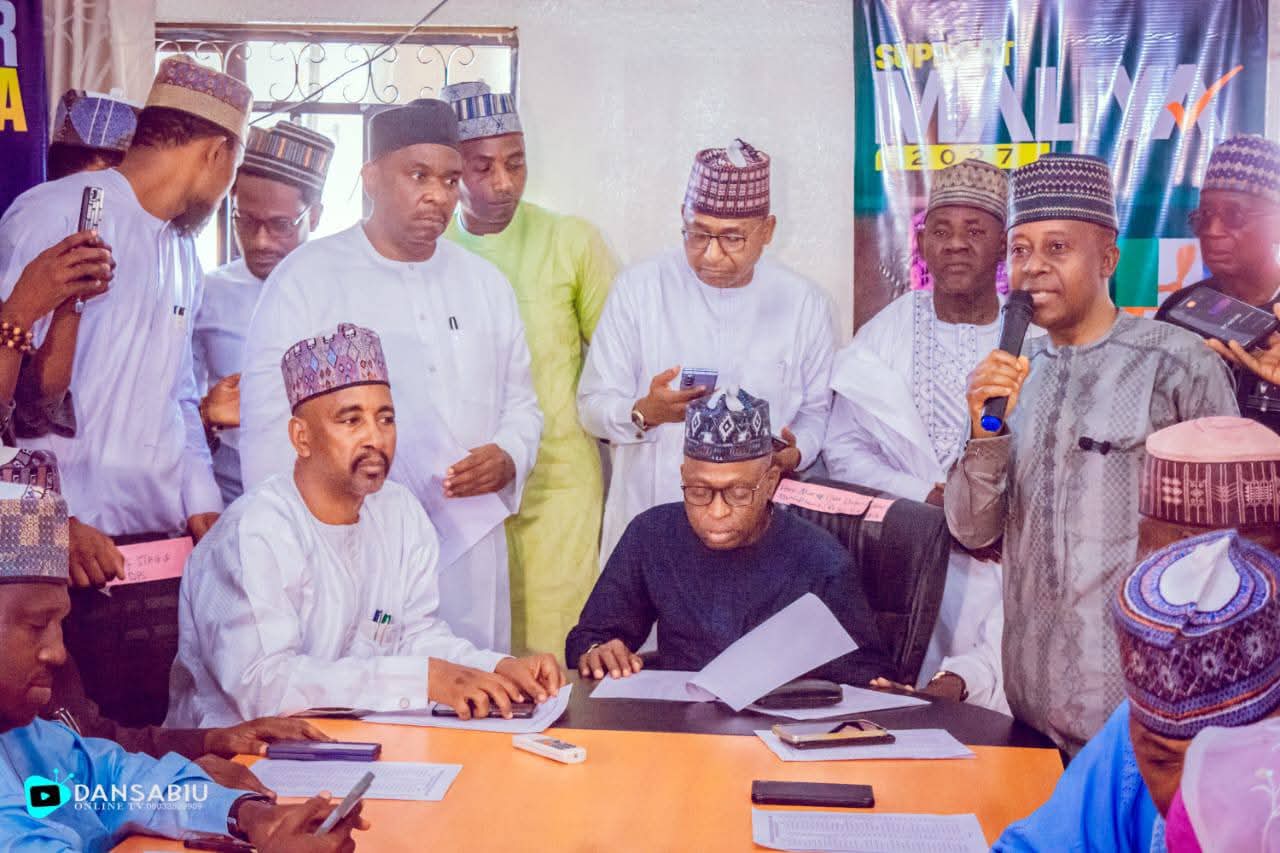
On Thursday, First January, 2026, he distributed 129 federal government employment offers for his people. An event that took place at Yusuf Maitama Sule Federal University of Education, Kano.
Senator Barau was represented at the occasion by Honourable Minister of State, Housing, Yusuf Abdullahi Atah, who urged all the beneficiaries to remain committed and steadfast in the discharge of their responsibilities.
This at the very beginning of the new year, gives an insight into his relentless effort in developing his people with vigor and unwavering commitment. My readers could be witnesses in one way or another, of how difficult it is in today’s Nigeria to get access to federal government appointments.
This effort speaks volumes about how deeply rooted is the DSP in the welfare of his people. Being a highly responsive leader with special interest in building the capacity of his constituents, his love for skills development is concrete and unassuming.
What interests all about this New Year resolution process of the Deputy Senate President, is the selection process of the newly recruited beneficiaries. The procedure was characterized by due process as all applicants were given equal opportunities to compete.
Believe it or not, his unique interventions in the past instances, before now, helped in acknowledging him as one of the few identified productive politicians who always put the electorate first before any other consideration. Public interest first before personal identification.
The year 2026, could be a pregnant of many interpretations and divergent outcomes to many people. But from the look of things, as DSP opens the new year with the distribution of 129 federal government employment opportunities, his, will be a scenario of happy, happier and happiest. Making 129 families happy, the first day of a year, isn’t an easy task. He didn’t give these families fish, but he facilitated their knowledge and accessibility to learn how to catch a fish. A whole lot life saving engagement.
I read, listened and watched new year messages from individual politicians and non-politicians alike, not only across Kano state, or North West, but across the entire 19 Northern states, if not across Nigeria, as a whole, from yesterday to this morning, I couldn’t spot any, who opened a new chapter of 2026 with such style as DSP does.
I know if you can ask him one-on-one, he will tell you that, this is not his making but a Divine process and implementation. But I stand to be corrected. While individual preferences are always allowed in daily engagements, but the fate and outcomes are the fundamental power of The Creature. To the normal mind, DSP’s first public engagement in 2026, catalogues victory, safety and protection. That only discerning minds see the flipside.
During the event of the distribution of appointment letters, a great number of the beneficiaries attended the event with their families, friends and well wishers. All praying for happy and prosperous life for the DSP. For putting smile in their faces. Emphasizing that, this is what democracy and its dividends should be.
As one of the strongest pillars of the ruling All Progressives Congress (APC) in the country, Senator Barau, as reserve and calm, as he appears, maintains that, human development first before any other consideration. Hence his many years of meaningful interventions. While his approach strengthens his political base, his exposure places him above many of his contemporaries. Not to say a word on late comers.
Distinguished Senator’s name alone, is synonymous with hard work, selfless service, informed exposure, unwavering commitment, enduring political relationships, communal togetherness, focus, ingenuity, enhanced expertise in governance, collective responsibility and political independence.
Anwar writes from Kano
Friday, 2nd January, 2026









News
Governor Yusuf Sacks Sagagi as Kano Commissioner Of Commerce
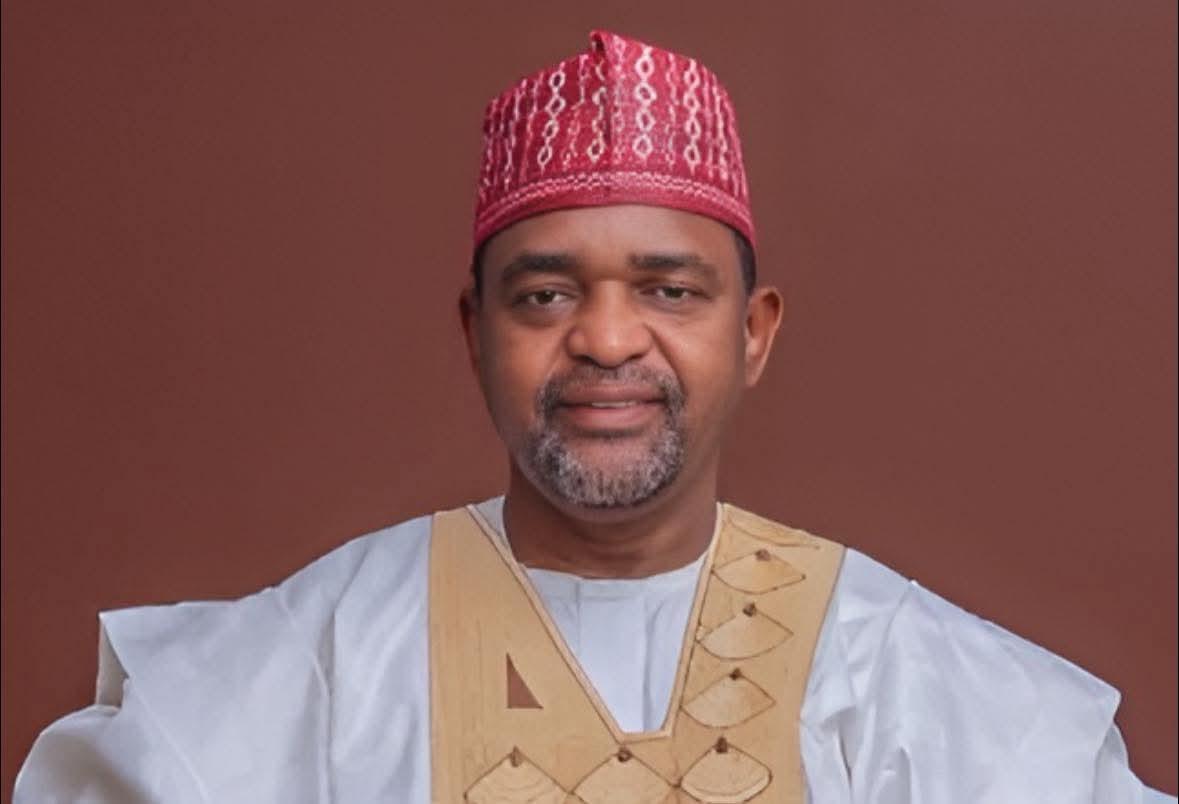
Kano State Governor, Alhaji Abba Kabir Yusuf, has relieved Alhaji Shehu Wada Sagagi of his appointment as Commissioner for Investment, Commerce and Industry with immediate effect.
This was contained in a statement signed by the governor’s spokesperson, Sunusi Bature Dawakin Tofa, on Thursday.
According to the statement, the former Commissioner is directed to hand over the affairs of the ministry to the Director Commerce with immediate effect.
Governor Yusuf expressed appreciation for the services rendered by the former commissioner during his tenure.
He acknowledged Sagagi’s contributions to the development of the state, particularly in the areas of politics, religion, small and medium enterprises.
The Governor wished him success in his future endeavours as he reassured the public of his administration’s continued commitment to efficient service delivery and good governance in the state.
This decision is part of the ongoing strategic realighment of government structures for systematic growth and sustainable development.
News
Terrorist Logistics Suppliers Apprehended in Borno
By Yusuf Danjuma Yunusa
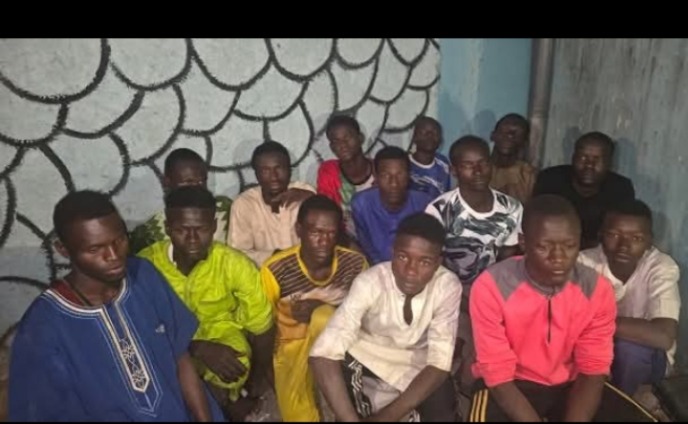
Troops of Operation Hadin Kai, OPHK, have apprehended 18 suspected logistics suppliers allegedly enroute Gubio, with plans to proceed to the Gudumbali axis, a known Boko Haram terrorists, BHTs, enclave.
Troops of Operation Hadin Kai, OPHK, have apprehended 18 suspected logistics suppliers allegedly enroute Gubio, with plans to proceed to the Gudumbali axis, a known Boko Haram terrorists, BHTs, enclave.
This is contained in a daily operational report made available to the News Agency of Nigeria on Wednesday.
The military said the suspects were intercepted while travelling towards the location to deliver the goods to the terrorists.
According to the report, preliminary investigation revealed that all 18 suspects confessed to engaging in the supply of goods to the terrorist group.
“They admitted that they routinely purchase and convey items to the terrorists.
“Their justification was lack of employment, which points to a deeper socio-economic challenge in Maiduguri and its environs,” the army said.
The development, according to the reportt, validates recent remarks by the Chief of Defence Staff on the link between economic hardship and the sustenance of insurgency logistics networks.
“The arrest highlights the critical role of civilian collaborators in sustaining terrorist operations, particularly in remote areas such as Gubio and Gudumbali,” it added.
The army called for a comprehensive approach combining military operations with economic empowerment and job creation to address the root causes of insurgency in the region.
News
Kano Gov’t Offers Study Scholarship to SWAN Members
By Abdulgafar Oladimeji
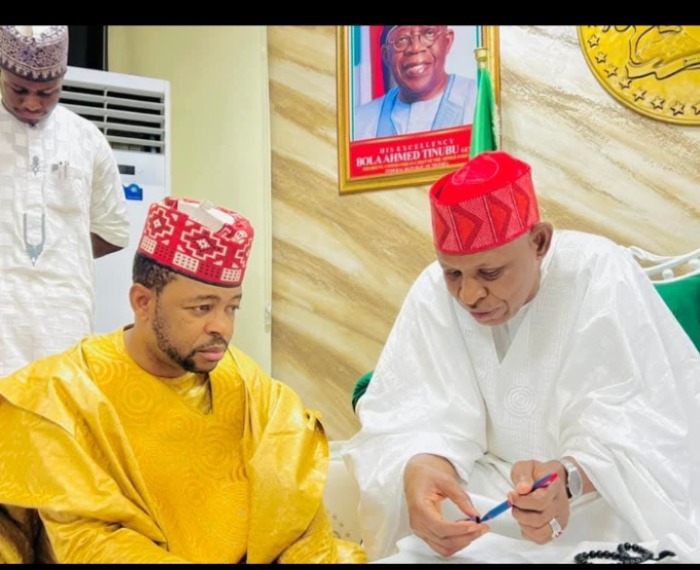
Kano state government has facilitated and supported members of the Sports Writers Association of Nigeria, SWAN Kano chapter to proceed to pursue professional certification courses in sports journalism, our correspondent reports .
The Special Adviser , youths and sports to Kano state governor, Sani Musa Danja, disclosed that the offer covers their tuition fees.
He said , the beneficiaries have been identified and their enrolment process have been completed.
According to him, through interactions with stakeholders , the decision was reached for some sports writers, who are faced with the challenge of acquiring the required professional qualification to practice their trade should be given support to fill the gap.
said, findings have revealed that , for Kano sports writers to compete favorably there exists the urgent need to empower members of the association to acquire certain requisite qualification to enable them feature amongst the best in Nigeria and beyond.
Danja speaking, when he hosted SWAN members in his office , located within the premises of Kano state Library Complex, along Ahmadu Bello Way said that the state government, under Abba Kabir Yusuf , on discovering this major challenge , acted swiftly to address the lapses, by offering to sponsor 10 SWAN members to pursue professional diploma in Sports Journalism at El Roi London University.
In his word “ we give thanks to almighty Allah for his mercies, I want to thank our mentor and leader, his excellency governor, Abba Kabiru Yusuf , who made this possible.
“his excellency takes the issue of empowering our people very seriously, the challenge facing our sports journalists is principally the issue of professional certification, some of our sports journalists have their degrees in other fields, but we are aware that, they also require to obtain certain minimum qualification in journalism or other related fields to help them to excel .
“in line with the policy of the government of his excellency, we have moved in to make sure , these sons and daughter of Kano overcome this hinderance that may hinder their professional progress.
“the sports media is the back bone of sports development and sports promotion, our government is focused and committed to support and reshape the sports media to achieve the set out goal to empower Kano youths through sports.
“the mission of his excellency through this gesture is to empower our professional sports journalists and give them the required qualification to continue with their pursuit to upward steadily representation of Kano state in that sector.
Danja hinted that, Kano state government remains unrepentant in its upward investment drive to create a generation of professionals that would keep the state afloat on the terrain of quality and abundance human resources.
Reacting, chairman SWAN Kano chapter, comrade Zahradeen Saleh thanked the state government for the support.
He said, the scholarship offer is an major step towards uplifting the practice of sports journalism in the state.
He said the dividends of sports could only accrue with the effective operations of the sporting press through the training and re-training of sports writers.
He admitted that, acquiring the requisite qualification to practice sports journalism has been one of the major challenges confronting members of the association.
“ our members who are the beneficiaries of this offer are youths, on completion of the professional course, they will have stable professional growth and would be better equipped to contribute their quota to the development of the state.” Zahradeen said .

Governor Yusuf Sacks Sagagi as Kano Commissioner Of Commerce

Terrorist Logistics Suppliers Apprehended in Borno

Kano Gov’t Offers Study Scholarship to SWAN Members

OPINION: Examining the Sanity of Saner Climes

Obi Raises Alarm Over Arrest of Cleric Who Hosted Him in Kaduna

The Governor Who Chose His People Over His Politics: Abba Yusuf and the Moral Courage Behind Kano First

FREEDOM OF SPEECH, NOT FREEDOM FROM CONSEQUENCE: A CITIZEN’S CALL FOR RESPONSIBLE PUBLIC COMMENTARY

How Kano Government Official Allegedly Intimidate And Insult Two Journalists On Lawful Duty

DSP Barau and APC Unity in Kano

BREAKING: President Tinubu Removes IGP Egbetokun
Governor Yusuf Sacks Sagagi as Kano Commissioner Of Commerce
Terrorist Logistics Suppliers Apprehended in Borno
Kano Gov’t Offers Study Scholarship to SWAN Members
OPINION: Examining the Sanity of Saner Climes
Obi Raises Alarm Over Arrest of Cleric Who Hosted Him in Kaduna
The Governor Who Chose His People Over His Politics: Abba Yusuf and the Moral Courage Behind Kano First
FREEDOM OF SPEECH, NOT FREEDOM FROM CONSEQUENCE: A CITIZEN’S CALL FOR RESPONSIBLE PUBLIC COMMENTARY
How Kano Government Official Allegedly Intimidate And Insult Two Journalists On Lawful Duty
DSP Barau and APC Unity in Kano
BREAKING: President Tinubu Removes IGP Egbetokun
-

 Opinion4 years ago
On The Kano Flyovers And Public Perception
-

 Features5 years ago
How I Became A Multimillionaire In Nigeria – Hadiza Gabon
-

 Opinion5 years ago
Kano As future Headquarters Of Poverty In Nigeria
-

 History5 years ago
Sheikh Adam Abdullahi Al-Ilory (1917-1992):Nigeria’s Islamic Scholar Who Wrote Over 100 Books And Journals
-

 Opinion4 years ago
My First Encounter with Nasiru Gawuna, the Humble Deputy Governor
-

 History5 years ago
The Origin Of “Mammy Market” In Army Barracks (Mammy Ochefu)
-

 History4 years ago
The History Of Borno State Governor Professor Babagana Umara Zulum
-

 News4 years ago
Federal University Of Technology Babura To Commence Academic Activities September