
News
Islamic Cleric Ahmad Gumi Sues Facebook Users for Defamation, Alleged Death Threat Forgery

By Yusuf Danjuma Yunusa
Renowned Islamic scholar Ahmad Gumi has filed a criminal complaint against two individuals at the Chief Magistrate Court in Kaduna State, accusing them of criminal conspiracy and defamation.
The suit, numbered KMD/685/25 and filed on Wednesday, names Facebook users George Udom and Bello Isiaka as defendants.
Court documents reveal that the defendants allegedly published a post on December 23, 2025, falsely attributed to Gumi, which contained a violent threat directed at the Minister of Defence, Christopher Musa.
The fabricated statement read:
“If the Minister of Defence Christopher Musa doesn’t stop his military offensive against bandits, his entire family in Zango Kataf in Southern Kaduna will be eliminated.”
In his complaint, Gumi denied any involvement with the post, stating that it falsely portrayed him as threatening a serving public official—a claim he described as both malicious and dangerous.
Through his counsel, Suleiman Lere, Gumi asserted that the publication was “recklessly crafted to depict him as a sponsor of terrorism and a threat to national security,” severely damaging his reputation as a cleric known for advocating peace and dialogue.
He further expressed concern that the false statement endangered his personal safety, potentially exposing him to reprisals or unwarranted state action.
The application for criminal summons cites provisions of the Kaduna State Penal Code Law, 2017, which prescribe severe penalties for such offences upon conviction.
Speaking on the case, Lere warned social media users against spreading false information:
“The era of hiding behind a smartphone to destroy the reputation of others is over.”
Gumi remains a prominent—and often controversial—figure in Nigeria’s security discourse, especially in the Northwest and North-central regions. He has repeatedly called for dialogue with armed bandits and previously engaged in forest visits to facilitate peace talks.
He has also urged the federal government to consider amnesty for bandits, akin to the Niger Delta programme, and proposed establishing a federal ministry of nomadic affairs.






News
2027: Rep Abubakar Kabir Bichi holds strategic meeting with Kano lawmakers
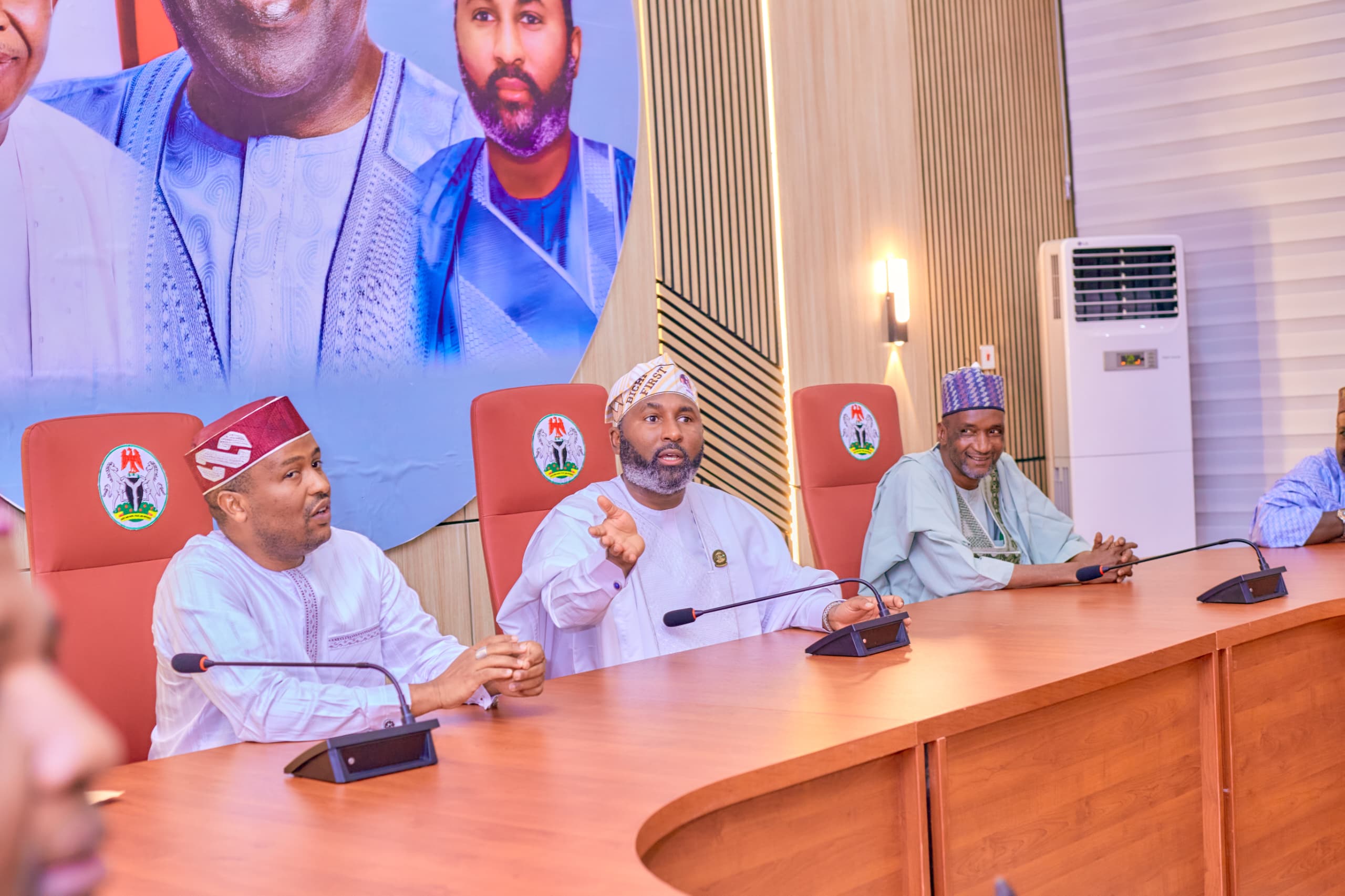
The Chairman, House of representatives committee on appropriations Hon. Abubakar Kabir Bichi, has convened a meeting of all APC State Assembly Members and 40 Candidates in the upcoming 2027 General elections, led by the Speaker of the Kano State House of Assembly, Rt. Hon. Jibril Ismail Falgore.
Crucial issues were discussed on how best to coordinate their campaigns programs to deliver the APC, President Bola Ahmed Tinubu and Governor Abba Kabir Yusuf in the forthcoming 2027 general elections.
The meeting was held at his Bichi office, Sunday evening 1st November 2026.
News
Waiya’s Removal: Veteran Journalist Urges Yusuf to Appoint Professional as Information Commissioner
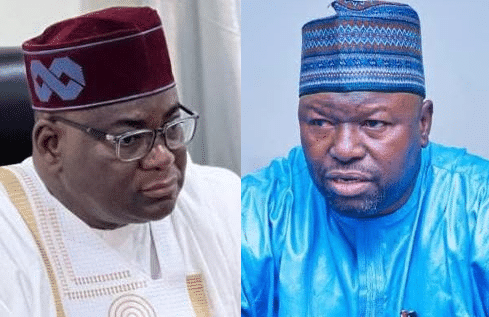
A veteran journalist, Dr. Garba Ubale Danbatta, has commended Kano State Governor, Engr. Abba Kabir Yusuf, for removing Comrade Ibrahim Abdullahi Waiya from his position as Commissioner for Information in the state’s recent cabinet reshuffle.
Danbatta, who has more than 30 years of experience in journalism, made the commendation in a statement issued to the press, arguing that Waiya’s approach to managing the Ministry of Information was more reflective of civil society activism and advocacy than professional journalism.
According to the veteran journalist, the former commissioner’s activities did little to strengthen professional journalism standards and improve the reputation of the media industry in Kano State.
“As someone who has spent over 30 years in the field of journalism, I commend Kano State Governor, Engr. Abba Kabir Yusuf, for his decision to remove the former Commissioner for Information. His approach was not that of a journalist; rather, he operated like an activist, an approach that essentially distorted the profession because it conflicted with the established ethics and standards of journalism,” Danbatta said.
He further alleged that Waiya’s activities had created a negative perception of Kano State among organisations monitoring media freedom, professional standards and the rights of journalists.
“His actions created a negative perception of Kano State among organisations that monitor the media industry and the rights of journalists. It is truly regrettable,” he added.
Danbatta expressed hope that Governor Yusuf would appoint a suitably qualified and experienced professional to head the Ministry of Information, stressing the importance of appointing someone with a solid background in journalism and a cordial working relationship with media practitioners.
He said the next commissioner should prioritise the development of the media industry, promote professional ethics and work towards restoring the reputation of journalism in Kano State.
The veteran journalist also expressed his readiness to offer professional advice and support to the state government towards improving the media sector.
“If the Governor of Kano State takes this step, we, for our part, are prepared to continue offering our full support and advice to help improve the profession and elevate its standing in Kano State in the eyes of the world,” he stated.
Dr. Garba Ubale Danbatta has over three decades of experience in journalism, having worked with several media organisations in Nigeria and abroad.
His professional career includes service with the Hausa Service of Deutsche Welle (DW) in Bonn, Germany; the Hausa section of Daily Trust newspaper; and as Deputy Editor of Rariya newspaper.
He also served as an editor at Hamada Radio in Abuja and Head of the Hausa Service at Kiss FM, Abuja, before joining Radio Nigeria in a managerial capacity.
Waiya was recently reassigned from the Ministry of Information to the Ministry of Youth as part of Governor Yusuf’s cabinet reshuffle.
News
Four States Adopt Play-Based ECCD Model to Tackle Out-of-School Children Crisis
In a major boost for early childhood education in conflict-affected regions, four states Borno, Niger, Benue and Sokoto have endorsed the community-based Early Childhood Care and Development (ECCD) school model as a cost-effective strategy to enroll under-five children who are out of school.
The commitment was made at a National ECCD Roundtable convened by the Development Research and Projects Centre (dRPC) in collaboration with the National Institute for Policy and Strategic Studies (NIPSS). The high-level dialogue was held at the Shehu Musa Yar’Adua Centre, Abuja.
The one-day roundtable drew participation from national curriculum planners at the Nigerian Educational Research and Development Council (NERDC), the Special Adviser to the Minister of State for Education, the Director of Research at NIPSS, Prof. Musa Umar, and top education managers from Kano State.
Setting the tone for adoption, the Technical Adviser on Education Reform to the Kano State Governor, Mallam Haladu Mohammed, announced that Kano State has adopted the dRPC community-based ECCD model for play-based learning.
Speaking on the sidelines of activities marking the International Day of the Girl Child, Mohammed described the model as cost-effective and scalable for expanding access.
Corroborating him, the Director of Planning, Research and Statistics at the Kano State Ministry of Education confirmed his participation in the evaluation of dRPC’s eight-year community-based ECCD project being implemented by Prof. Bala Ado Kofar Mata of Bayero University, Kano.
According to him, the evaluation will provide empirical evidence on how play-based learning enhances child development and school readiness.
Speaking separately, the Commissioners of Education from Niger and Borno States, the Benue State Commissioner for Humanitarian Affairs, and the Chairman of the Sokoto State Universal Basic Education Board (SUBEB) said the model was timely for states grappling with insecurity and displacement.
They pledged to initiate immediate steps to replicate the Kano experiment in their respective states.
Participants at the roundtable stressed that community-based approaches offer a viable alternative in underserved and displacement-affected communities where insecurity has disrupted conventional schooling.
In a major outcome, the Commissioners from Niger and Benue States invited the dRPC team to meet with their executive governors next week to present the model for formal adoption.
The development signals growing sub-national interest in community-driven, play-based learning as a sustainable solution for Nigeria’s youngest and most vulnerable learners.

2027: Rep Abubakar Kabir Bichi holds strategic meeting with Kano lawmakers

Kano’s War On Drugs: How Barr. Muhyi’s Taskforce Is Changing The Game

The Reward For Hardwork Is More Work: A Rejoinder To Dr Garba Ubale Danbatta

Waiya’s Removal: Veteran Journalist Urges Yusuf to Appoint Professional as Information Commissioner

Four States Adopt Play-Based ECCD Model to Tackle Out-of-School Children Crisis

Kano Monitors ₦48.9bn Projects Across Six LGAs

Kano Spends ₦10.36bn on Hospitality, Sitting Allowances, Others in Six Months

Open The Social Sciences “A Tribute to a Heterodox Scholar: Mallam Ibrahim Muazzam

Senate Passes Barau’s Bill to Provide Legal Framework for Yusuf Maitama Sule Federal University of Education, Kano

Kano First Forum Petitions Police Over Alleged Inciting Statements by Aminu Babba Dan Agundi
2027: Rep Abubakar Kabir Bichi holds strategic meeting with Kano lawmakers
Kano’s War On Drugs: How Barr. Muhyi’s Taskforce Is Changing The Game
The Reward For Hardwork Is More Work: A Rejoinder To Dr Garba Ubale Danbatta
Waiya’s Removal: Veteran Journalist Urges Yusuf to Appoint Professional as Information Commissioner
Four States Adopt Play-Based ECCD Model to Tackle Out-of-School Children Crisis
Kano Monitors ₦48.9bn Projects Across Six LGAs
Kano Spends ₦10.36bn on Hospitality, Sitting Allowances, Others in Six Months
Open The Social Sciences “A Tribute to a Heterodox Scholar: Mallam Ibrahim Muazzam
Senate Passes Barau’s Bill to Provide Legal Framework for Yusuf Maitama Sule Federal University of Education, Kano
Kano First Forum Petitions Police Over Alleged Inciting Statements by Aminu Babba Dan Agundi
-

 Opinion5 years ago
On The Kano Flyovers And Public Perception
-

 Features5 years ago
How I Became A Multimillionaire In Nigeria – Hadiza Gabon
-

 Opinion6 years ago
Kano As future Headquarters Of Poverty In Nigeria
-
 History6 years ago
Sheikh Adam Abdullahi Al-Ilory (1917-1992):Nigeria’s Islamic Scholar Who Wrote Over 100 Books And Journals
-

 Opinion5 years ago
My First Encounter with Nasiru Gawuna, the Humble Deputy Governor
-

 History5 years ago
The History Of Borno State Governor Professor Babagana Umara Zulum
-
 History6 years ago
The Origin Of “Mammy Market” In Army Barracks (Mammy Ochefu)
-
 News5 years ago
Federal University Of Technology Babura To Commence Academic Activities September