
News
Sharada Highlights Africa’s Security Concerns at Washington Parliamentary Intelligence Security Forum
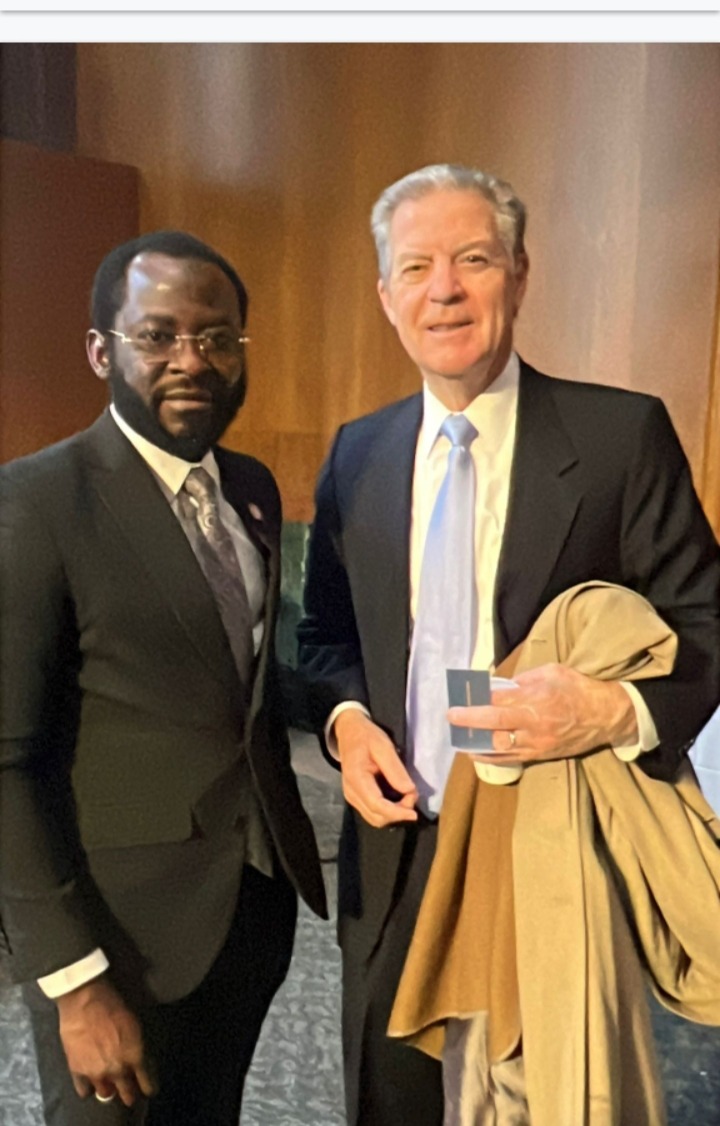
As the 31st Washington Parliamentary Intelligence Security Forum (PI-SF) concluded, participants exchanged ideas on pressing global security challenges and explored actionable solutions aimed at making the world a safer place. The forum brought together lawmakers, security experts, and policymakers from across the globe to deliberate on strategies for peace, intelligence cooperation, and stability.
Speaking after the meeting, Hon. Shaaban Ibrahim Sharada, former Chairman of Nigeria’s House of Representatives Committee on National Security and Intelligence, emphasized the importance of leveraging such platforms to address Africa’s unique security concerns.
Sharada, who also serves as the Forum’s Director for African Parliamentarians Engagements and a member of its steering committee, noted that discussions at the event were particularly relevant to Nigeria and the wider African continent during this challenging period.
“I engaged in meaningful discussions on peace and stability in Africa, particularly in my country, during this trying moment,” Sharada stated. He expressed optimism that the knowledge gained at the forum would be communicated back to stakeholders within his jurisdiction, fostering collaboration with PI-SF to strengthen Africa’s security architecture and promote global understanding.
Sharada said there is the need for African leaders to take advantage of international platforms like PI-SF to build partnerships that can help tackle terrorism, insurgency, and other transnational threats. He stressed that Africa’s security challenges require not only local solutions but also global cooperation, given their impact on international peace and stability.
The Washington Parliamentary Intelligence Security Forum has become a key gathering for legislators and security professionals worldwide, providing a space to share experiences and develop strategies to counter evolving threats. With Sharada’s active role in bridging African parliamentarians and the forum, Nigeria’s voice continues to resonate in global security dialogues.







News
2027 Race : President Tinubu’s Aide, Ja’oji Resigns to Contest
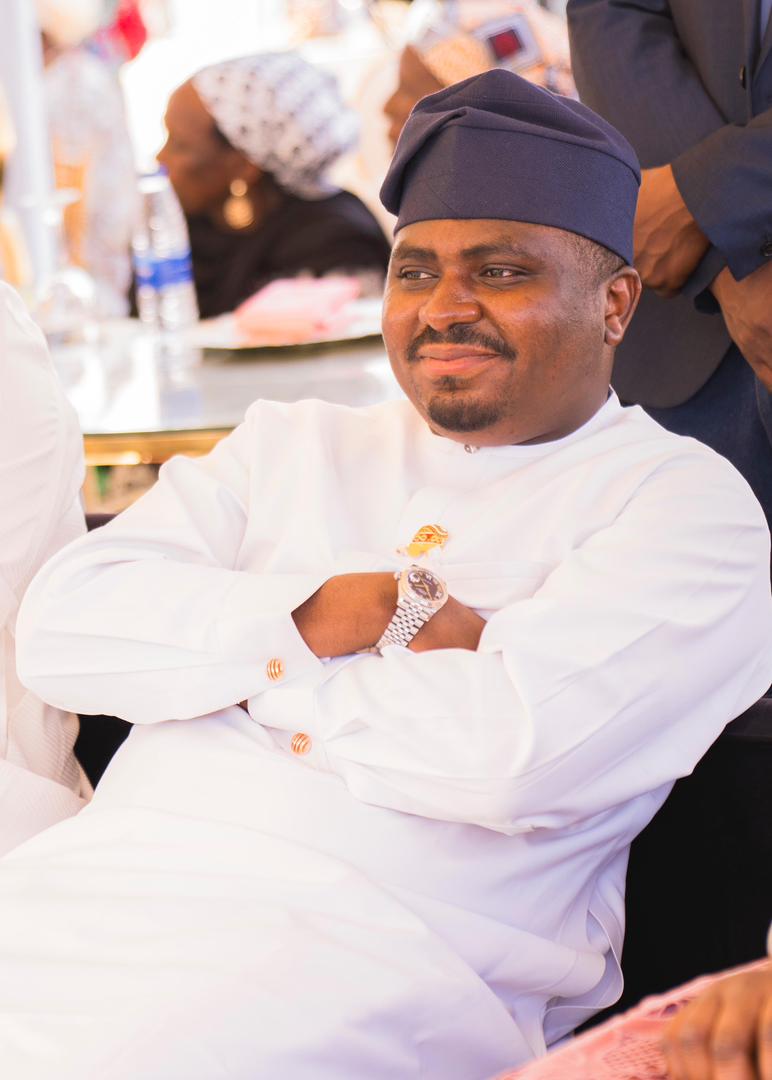
Responding to the directive given by President Bola Tinubu directing all political appointees contesting for positions in the 2027 elections to resign by March 31, 2026, the Senior Special Assistant on Citizenship and Leadership, Honourable Nasir Bala Aminu, popular called Ja’oji, has tendered his resignation letter.
The Presidential directive applies to Ministers, Ministers of State, Special Advisers, Senior Special Assistants, and other officials appointed by the President, who where appointed to contribute their share in the development of the country.
In the letter, he profoundly thanked the President, for giving him the opportunity to serve his motherland, Nigeria. Emphasizing that, his choice for the two different positions, was informed by President Tinubu’s concern for Nigerian youth. And the confidence he (President) reposed in them.
He pledged that, at whatever rate, he is ready to serve his country at any time President Tinubu deems it fit. Adding that, Tinubu’s keen interest in the development of Nigerian youth, is one of the cardinal principles of his administration, which serves as morale booster to all ages.
While appreciating the administration’s Renewed Hope Initiative as a driving force, he believes that, many of the good policies and programmea of the administration would bear more fruits when Tinubu gets second tenure, come 2027.
With his resignation, it also means that, Ja’oji is ready and confident enough to contest for elective office. His people remain jubilant over his show of seriousness and commitment in seeking for elective position. Assuring that, they would always support him to achieve his political goals. Under sun or rain.
News
Crisis Deepens in PDP as Makinde-Aligned Bloc Rejects Wike Faction’s Convention Plan
By Yusuf Danjuma Yunusa
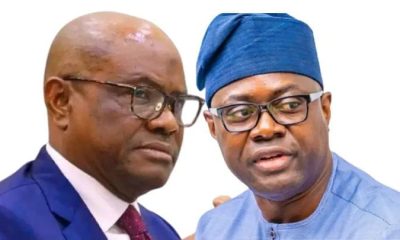
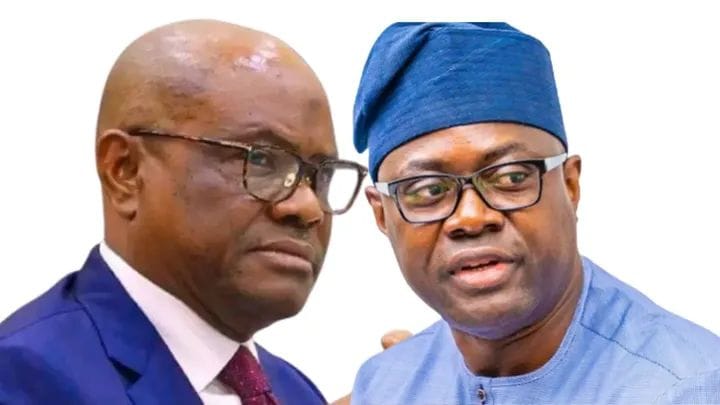
A fresh crisis has erupted within the Peoples Democratic Party (PDP), threatening to undo reconciliation efforts as a powerful bloc loyal to Oyo State Governor, Seyi Makinde, rejected a rival faction’s plan to hold a national convention. The move has intensified the leadership tussle between Governor Makinde’s camp and supporters of the Minister of the Federal Capital Territory (FCT), Nyesom Wike.
The conflict came to a head on Saturday during the party’s 103rd National Executive Committee (NEC) meeting in Abuja, where the Makinde-aligned group dismissed the convention scheduled for March 28–29, 2026, by the Wike-backed faction. The Wike camp, however, insists the convention will proceed as planned, arguing that the current National Working Committee (NWC) led by Kabiru Tanimu Turaki, SAN, lacks legitimacy.
The faction loyal to the FCT Minister has already conducted ward, local government, and state congresses, positioning its upcoming Abuja convention as a move to install a new NWC. Party insiders say the group has intensified mobilisation across several states, engaging delegates and stakeholders to secure support for the exercise.
Proponents of the convention describe it as a “reset” aimed at producing a more assertive and electorally competitive leadership ahead of the 2027 general elections.
Beyond the convention dispute, the crisis reflects a fundamental struggle over who holds legitimate authority within the opposition party. The two camps remain deeply divided over reconciliation efforts and the strategic direction of the PDP, raising concerns about the party’s ability to present a united front in time for the next election cycle.
Tensions were laid bare during the NEC meeting, which had been delayed for weeks to allow for broader consultations. In attendance were key party leaders, including National Chairman Kabiru Tanimu Turaki, SAN; Board of Trustees Chairman, Senator Adolphus Wabara; House of Representatives caucus leader, Hon. Fred Agbedi; Chairman of PDP State Chairmen, Hon. Tony Aziegbemi; and National Publicity Secretary, Ini Ememobong.
Opposition to the planned convention was swift and unequivocal, particularly from state party leaders who accused the Wike-aligned camp of sidelining broader party structures.
“You must have consultation. You must bring more people to the table when you are sharing those positions,” Aziegbemi said. “Here we are, with just one person, or at most two people, presenting us with a list of members of the National Working Committee of our great party. Will you allow that to happen?”
He added: “Which convention? Where did we decide that we are going for a convention? Who agreed to go to that convention? For us at the level of state chairmen, we want to assure you that we will go nowhere, that we will stand with you, no matter what happens.”
Addressing reporters after the meeting, National Publicity Secretary Ini Ememobong denied knowledge of any impending convention, while cautioning against public commentary that could further fracture the party.
“Talking about the convention, there’s no convention coming up to our knowledge,” Ememobong said. “But we will not begin to deconstruct that because that would be an inconvenient truth, and we cannot be saying those inconvenient truths at this point in public.”
On reconciliation, Ememobong acknowledged progress while noting the journey is far from over. “Reconciliation is a journey towards a destination, and so you measure it by movement. Movement is being made along that line. The destination will be met. We have a situation of negative peace at the moment—at least a cessation of hostilities.”
National Chairman Turaki underscored the party’s commitment to due process, explaining the NEC meeting was intended to assess developments carefully before taking decisive action.
“We felt it was important to examine these developments microscopically so that we can take informed decisions, not only to save and strengthen our party, but to ensure that multi-party democracy survives,” Turaki said. “All hope is not lost. Indeed, no hope is lost.”
News
APC Convention: Yilwatda, Ajibola Basiru Reappointed as National Chairman, Secretary

By Yusuf Danjuma Yunusa
Nentawe Yilwatda and Ajibola Basiru have been returned as national chairman and national secretary of the All Progressives Congress (APC), respectively.
Yilwatda and Basiru were elected on Friday at the fourth elective national convention of the APC held at Eagle Square, Abuja.
The party’s convention election committee announced their election as part of several officials returned via consensus.
Last week, the ruling party said it would retain the existing zoning arrangement for national working committee (NWC) positions during its national convention.
In a statement, Felix Morka, national publicity secretary of the APC, said the arrangement is contained in the party’s published schedule of nationwide congresses, national convention, and related activities for 2026.
He said the zoning formula for NWC positions across states within the geopolitical zones remains valid for the convention.
Morka advised aspirants seeking national offices in the party to adhere strictly to the zoning arrangement.
In furtherance of this decision, both Yilwatda and Basiru were returned unopposed for the national chairman and secretary positions, respectively.
The convention, themed “Unity in progres: Consolidating the renewed hope agenda,” was attended by President Bola Tinubu, Vice-President Kashim Shettima, Senate President Godswill Akpabio, and Tajudeen Abbas, speaker of the house of representatives, among other party chieftains.
The convention was organised by a planning committee led by Aminu Masari, former governor of Katsina, and Anyim Pius Anyim, former secretary to the government of the federation (SGF).
According to Mohammed Idris, minister of information and national orientation, about 8,453 delegates are participating in the convention.

2027 Race : President Tinubu’s Aide, Ja’oji Resigns to Contest

Crisis Deepens in PDP as Makinde-Aligned Bloc Rejects Wike Faction’s Convention Plan

APC Convention: Yilwatda, Ajibola Basiru Reappointed as National Chairman, Secretary

El-Rufai’s Release Sparks Claims of Political Motives, Unjust Detention

APC National Convention : How DSP Barau Displays Political Sagacity, Deep Knowledge of Democracy Before President Tinubu, Others

The Governor Who Chose His People Over His Politics: Abba Yusuf and the Moral Courage Behind Kano First

FREEDOM OF SPEECH, NOT FREEDOM FROM CONSEQUENCE: A CITIZEN’S CALL FOR RESPONSIBLE PUBLIC COMMENTARY

Press Freedom: IPI Nigeria Calls on New Acting IGP to End Police Harassment of Journalists
Restoring the Glory That Was Always There: Governor Abba Kabir Yusuf and the Historical Vision Behind Kano First
Tinubu to Swear in Olatunji Disu as Inspector-General of Police on Wednesday
2027 Race : President Tinubu’s Aide, Ja’oji Resigns to Contest
Crisis Deepens in PDP as Makinde-Aligned Bloc Rejects Wike Faction’s Convention Plan
APC Convention: Yilwatda, Ajibola Basiru Reappointed as National Chairman, Secretary
El-Rufai’s Release Sparks Claims of Political Motives, Unjust Detention
APC National Convention : How DSP Barau Displays Political Sagacity, Deep Knowledge of Democracy Before President Tinubu, Others
The Governor Who Chose His People Over His Politics: Abba Yusuf and the Moral Courage Behind Kano First
FREEDOM OF SPEECH, NOT FREEDOM FROM CONSEQUENCE: A CITIZEN’S CALL FOR RESPONSIBLE PUBLIC COMMENTARY
Press Freedom: IPI Nigeria Calls on New Acting IGP to End Police Harassment of Journalists
Restoring the Glory That Was Always There: Governor Abba Kabir Yusuf and the Historical Vision Behind Kano First
Tinubu to Swear in Olatunji Disu as Inspector-General of Police on Wednesday
-

 Opinion4 years ago
On The Kano Flyovers And Public Perception
-

 Features5 years ago
How I Became A Multimillionaire In Nigeria – Hadiza Gabon
-

 Opinion5 years ago
Kano As future Headquarters Of Poverty In Nigeria
-

 History5 years ago
Sheikh Adam Abdullahi Al-Ilory (1917-1992):Nigeria’s Islamic Scholar Who Wrote Over 100 Books And Journals
-

 Opinion4 years ago
My First Encounter with Nasiru Gawuna, the Humble Deputy Governor
-

 History5 years ago
The Origin Of “Mammy Market” In Army Barracks (Mammy Ochefu)
-

 History4 years ago
The History Of Borno State Governor Professor Babagana Umara Zulum
-

 News4 years ago
Federal University Of Technology Babura To Commence Academic Activities September