
News
WAEC CBT Exam Must Not Hold Yet–National Assembly

By Yusuf Danjuma Yunusa
The House of Representatives has ordered the Federal Ministry of Education and the West African Examinations Council (WAEC) to immediately suspend the planned introduction of Computer-Based Testing (CBT) for the 2026 school examinations.
The federal lawmakers warned that the policy could lead to massive failure, depression, and even deaths among students.
The lawmakers’ decision followed the adoption of a motion of urgent public importance sponsored by Rep. Kelechi Wogu during Thursday’s plenary, titled “Need for Intervention to Avert the Pending Massive Failure of Candidates Intending to Write the 2026 WAEC Examination Using Computer-Based Testing (CBT), Capable of Causing Depression and Deaths of Students.”
WAEC, with the backing of the Nigerian government, had earlier announced plans to conduct the 2026 May/June Senior School Certificate Examination (SSCE) using computers, after a partial rollout for private candidates in 2024.
But lawmakers have now described the move as “ill-timed and unrealistic”, citing Nigeria’s poor digital infrastructure and lack of computer literacy among millions of students, especially those in rural areas.
Rep. Wogu, who moved the motion, said most secondary schools across the country are “grossly unprepared” for such a transition. He warned that rushing into full CBT implementation could trigger chaos, frustration, and psychological trauma among candidates.
“Computer-based examinations require fully equipped halls with functional computers, internet access, and constant electricity — either from the national grid or standby generators,” he said.
“The House is worried that most schools, especially in rural communities where over 70 per cent of candidates reside, lack the basic facilities and trained personnel for such an exercise.”
Wogu recalled that the 2025 WAEC result portal recently crashed due to “technical glitches”, leaving many students and parents stranded — a situation he said highlights the risk of introducing an entirely digital exam system without adequate preparation.
He argued that WAEC examinations are more complex than JAMB’s Unified Tertiary Matriculation Examination (UTME), as candidates take at least nine subjects — including theory, objective, and practical components — making a rushed CBT switch impractical.
Following an extensive debate, the House directed the Federal Ministry of Education, state governments, and relevant agencies to make provisions in the 2026, 2027, 2028, and 2029 budgets for the recruitment of qualified computer teachers, construction of computer halls with reliable internet connectivity, installation of standby generators, and a nationwide assessment of schools’ readiness before the policy is fully implemented in 2030.
Lawmakers also warned WAEC to consult widely with education stakeholders and the Nigeria Union of Teachers before taking any action that could “jeopardise the academic future” of millions of Nigerian students.









News
Prof Gwarzo Nominated for Lifetime Achievement Award in Education, University Development and Philanthropic Impact by The iDevPro-African Institute
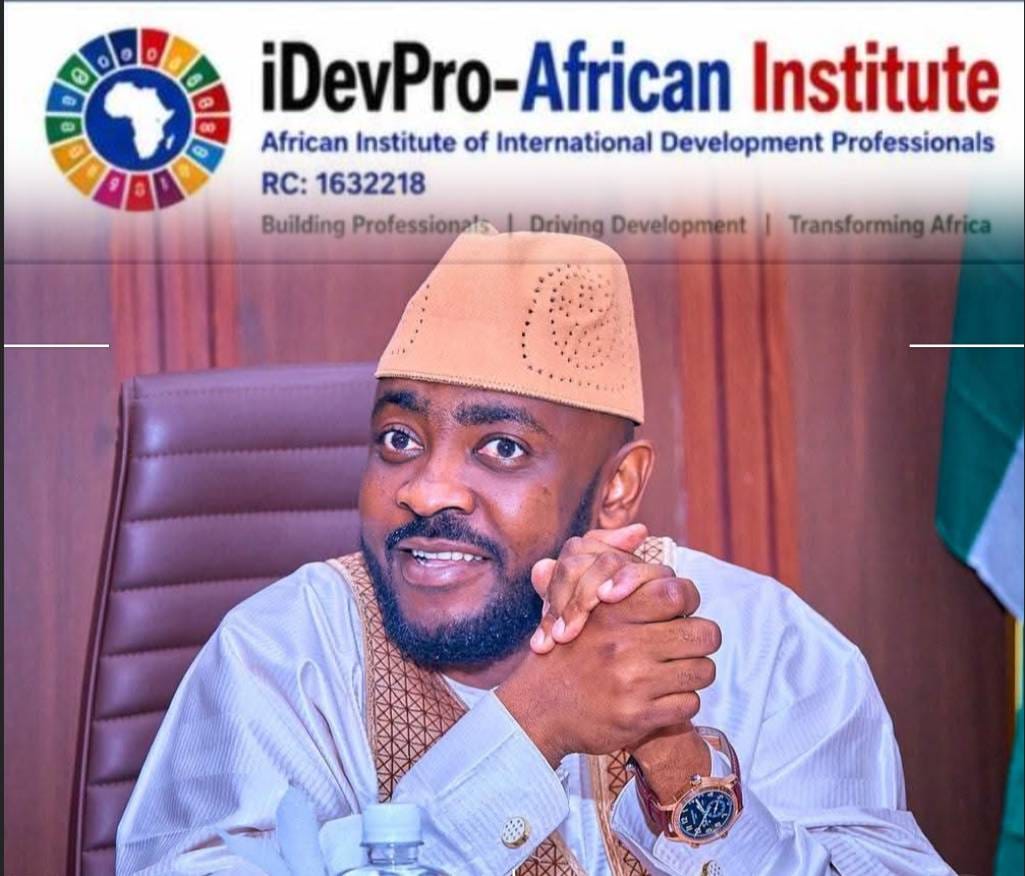
The Governing Council of the African Institute of International Development Professionals (iDevPro-Africa) has nominated Professor Adamu Abubakar Gwarzo for its Lifetime Achievement in Education, University Development and Philanthropic Impact Award.
The nomination recognises Professor Gwarzo’s contributions to higher education, university development, institution building, philanthropy and human capital advancement across Africa.
According to iDevPro-Africa, Professor Gwarzo was selected in recognition of his role in establishing and developing four universities across Nigeria and Niger Republic, thereby expanding access to internationally oriented higher education and creating platforms for learning, research, professional development and cross-border academic collaboration.
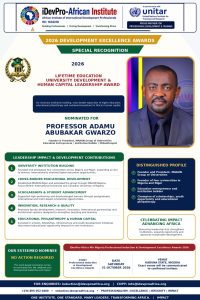
The institutions highlighted by the Governing Council include Maryam Abacha American University of Niger (MAAUN Niger), Maryam Abacha American University of Nigeria (MAAUN Nigeria), Franco-British International University, and the Canadian University of Nigeria.
The Institute also recognised his contributions to scholarships and student advancement, faculty development, research and innovation, international academic partnerships, educational infrastructure and youth-development initiatives.
It noted that his educational philanthropy has provided opportunities for high-performing and disadvantaged students while supporting broader efforts to strengthen teaching, learning and professional development.
According to the Council, Professor Gwarzo’s leadership reflects the transformative role of education in sustainable development and demonstrates how sustained investment in universities, scholarship and young people can contribute to strengthening Africa’s human capital and knowledge economy.
The award is scheduled to be presented during the iDevPro-Africa 4th Nigeria Professional Induction & Development Excellence Awards 2026, holding on Saturday, October 31, 2026, in Kaduna State.
The exact venue will be communicated to confirmed participants and invitees.
iDevPro-Africa stated that the nomination is a merit-based recognition and attracts no nomination fee, adding that no application, payment or additional paperwork is required from the nominee.
Professor Gwarzo has acknowledged the nomination and formally confirmed his participation in the award ceremony.
The nomination letter was issued on behalf of the Governing Council of iDevPro-Africa by its President/Director-General, Dr Mansur Muhammad Tukur.
For more information about the induction and development excellence award contact iDevPro on info@idevproafrica.org
News
Jigawa Govt Appoints Dr. Lawan Ahmed as the 17th Emir of Gumel
By Yusuf Danjuma Yunusa
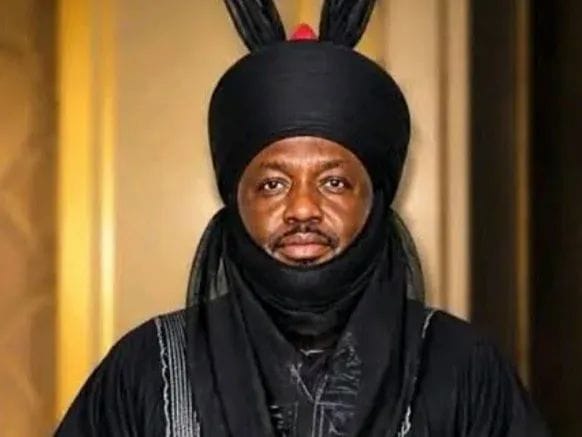
Jigawa State Governor, Malam Umar Namadi, has approved the appointment of Dr Lawan Ahmed Muhammad Sani as the 17th Emir of Gumel Emirate, three days after the demise of his father, the late Emir.
The announcement was made public by the Secretary to the State Government, Bala Ibrahim, during a press briefing on Sunday at the NUJ Jigawa State Secretariat in Dutse, the Jigawa State capital.
“Following due consultations with the Gumel Emirate Council, kingmakers, and in accordance with the Jigawa State Emirate Council Law, His Excellency the Executive Governor of Jigawa State, Malam Umar Namadi, has approved the appointment of Dr Lawan Ahmed Muhammad Sani as the new Emir of Gumel,” the SSG declared.
Ibrahim said the appointment was immediate and necessary to ensure continuity of leadership and stability in the emirate after the transition period.
“This appointment takes effect immediately in order to fill the vacuum created by the passing of His Royal Highness and to sustain peace, unity and development in Gumel Emirate,” he stated.
The SSG described Dr Lawan as a worthy successor, noting his years of service to the emirate.
“Dr Lawan Ahmed Muhammad Sani previously served diligently as the Ciroman Gumel during the reign of his late father. His experience, education, and deep understanding of the traditions of Gumel make him eminently qualified for this exalted throne,” Bala Ibrahim said.
He added that the new Emir’s background positions him to consolidate the legacies of his father.
“Having served as Ciroman Gumel, Dr Lawan is not new to the people. He understands the challenges and aspirations of Gumel and Jigawa State at large. Government is confident he will provide purposeful and exemplary leadership,” the SSG affirmed.
Governor Namadi, according to the SSG, urged the people of Gumel to rally behind the new Emir.
“His Excellency calls on all sons and daughters of Gumel Emirate to give their maximum support and cooperation to the new Emir for the overall peace and progress of the emirate,” Ibrahim quoted the governor as saying.
The SSG also prayed for the repose of the late Emir and assured the government’s commitment to traditional institutions.
“On behalf of the government and good people of Jigawa State, we pray Almighty Allah to grant the late Emir Aljannatul Firdaus. Government remains committed to preserving our traditional institutions as custodians of culture and unity,” he said.
“In due course, His Excellency will present the staff of office to the 17th Emir of Gumel in a ceremony befitting his status. We urge all stakeholders to cooperate with government for a hitch-free event,” the SSG concluded.
News
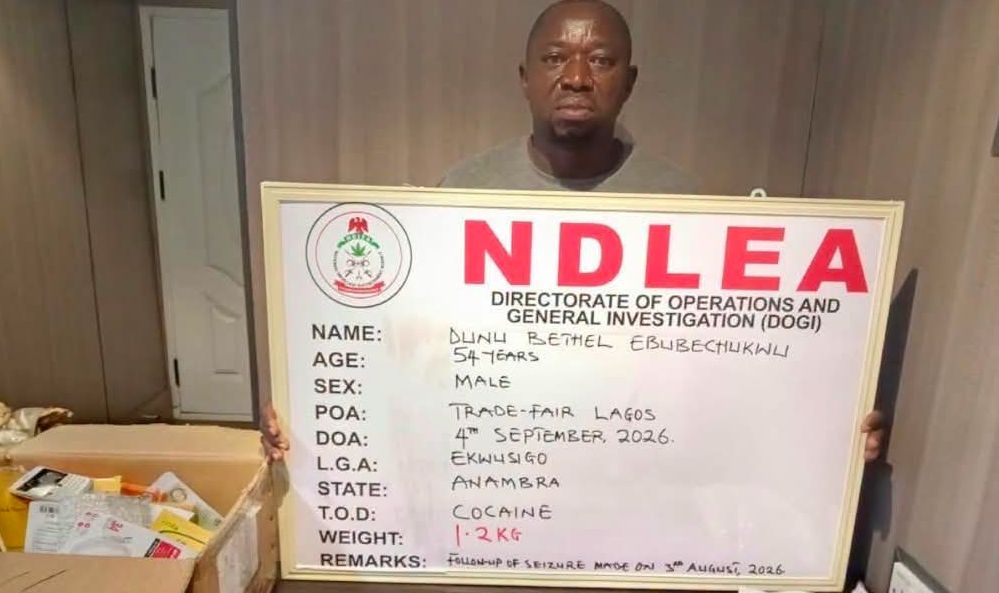
How a ‘Herbal Tea’ Businessman Used Phone Chargers to Smuggle Cocaine to Saudi Arabia – NDLEA
By Yusuf Danjuma Yunusa
Operatives of the National Drug Law Enforcement Agency (NDLEA) have arrested a convicted cocaine trafficker who disguised himself as a herbal tea merchant in Lagos.
In a statement on Sunday, the agency said the arrest occurred weeks after it intercepted a 1.2kg cocaine consignment concealed in phone chargers and destined for Riyadh, Saudi Arabia, at a courier company in Lagos on 31st July 2026.
“The suspect, arrested in a sting operation at Article Market, opposite Trade Fair Market, Ojo area of Lagos, on Friday, 4th September 2026, while posing as a herbal tea businessman, was identified as 54-year-old Dunu Bethel Ebubechukwu.
“In his statement, he admitted being the mastermind of some illicit drug shipments in the past while stating that he discarded his telephone SIM card once he learnt his latest consignment had been intercepted by the NDLEA,” the agency stated.
According to the NDLEA, further investigation revealed the suspect is no stranger to the agency: he was first arrested in 2011 at the Murtala Muhammed International Airport (MMIA) Ikeja Lagos after ingesting 900 grams of cocaine and 130 grams of heroin in an attempt to fly to Austria under the name Dunu Chukwuyenre Enoch.
The agency disclosed that the suspect was prosecuted for the crime, convicted and sentenced to five years in jail, adding that he thereafter changed his name to Dunu Bethel Ebubechukwu and returned to the criminal trade.
“A search of his residence located at 6 Yemishola Street, Ejigbo, Lagos on Friday, 4th September led to the recovery of phone chargers similar to those used to conceal the intercepted cocaine, with their internal components removed to create space for drugs,” the NDLEA noted.
The NDLEA also said that, in another development, it chased down a 20,000-litre fuel tanker marked MKA 960 XC, notorious for evading arrest in the past, in Ondo on Friday after its driver refused to stop.
“The driver later abandoned the vehicle at a church premises in Ugbe Akoko and fled into the bush. A search of the tanker revealed a false compartment concealing 165 bags of cannabis weighing 2,145kg alongside its legitimate fuel cargo destined for Jos, Plateau State,” it added.

Prof Gwarzo Nominated for Lifetime Achievement Award in Education, University Development and Philanthropic Impact by The iDevPro-African Institute

Jigawa Govt Appoints Dr. Lawan Ahmed as the 17th Emir of Gumel

How a ‘Herbal Tea’ Businessman Used Phone Chargers to Smuggle Cocaine to Saudi Arabia – NDLEA

Thugs Attack Journalists During APC Rally in Kano

Gov. Mutfwang Orders Closure of Schools Across State as Diphtheria Hits Plateau

From World’s 9th Most Populous City to Perfect: As Gov Yusuf Revisits Kano Master Plan

95% of Governor Abba Kabir Yusuf’s Promises Have Been Fulfilled — CPS Interview By Musa Diso, In Kano

Kano Islamic Scholar Declares Kano Widow Marriage Programme ‘Haram’, Urges Government to Stop It

We’re aware of your clandestine meetings with Lulu-Briggs, 𝐏𝐢𝐝𝐨𝐦𝐬𝐨𝐧, CRP uncovers ex-MD of NDDC, Nunieh

Between Sabotage and Scepticism: Why Nigeria’s Oil Dream Keeps Stalling
Prof Gwarzo Nominated for Lifetime Achievement Award in Education, University Development and Philanthropic Impact by The iDevPro-African Institute
Jigawa Govt Appoints Dr. Lawan Ahmed as the 17th Emir of Gumel
How a ‘Herbal Tea’ Businessman Used Phone Chargers to Smuggle Cocaine to Saudi Arabia – NDLEA
Thugs Attack Journalists During APC Rally in Kano
Gov. Mutfwang Orders Closure of Schools Across State as Diphtheria Hits Plateau
From World’s 9th Most Populous City to Perfect: As Gov Yusuf Revisits Kano Master Plan
95% of Governor Abba Kabir Yusuf’s Promises Have Been Fulfilled — CPS Interview By Musa Diso, In Kano
Kano Islamic Scholar Declares Kano Widow Marriage Programme ‘Haram’, Urges Government to Stop It
We’re aware of your clandestine meetings with Lulu-Briggs, 𝐏𝐢𝐝𝐨𝐦𝐬𝐨𝐧, CRP uncovers ex-MD of NDDC, Nunieh
Between Sabotage and Scepticism: Why Nigeria’s Oil Dream Keeps Stalling
-

 Opinion5 years ago
On The Kano Flyovers And Public Perception
-

 Features5 years ago
How I Became A Multimillionaire In Nigeria – Hadiza Gabon
-

 Opinion6 years ago
Kano As future Headquarters Of Poverty In Nigeria
-

 History5 years ago
Sheikh Adam Abdullahi Al-Ilory (1917-1992):Nigeria’s Islamic Scholar Who Wrote Over 100 Books And Journals
-

 Opinion5 years ago
My First Encounter with Nasiru Gawuna, the Humble Deputy Governor
-

 History5 years ago
The History Of Borno State Governor Professor Babagana Umara Zulum
-

 History5 years ago
The Origin Of “Mammy Market” In Army Barracks (Mammy Ochefu)
-

 News4 years ago
Federal University Of Technology Babura To Commence Academic Activities September