
News
Nigeria’s Shari’a Council Calls for Immediate Review of Amupitan’s Appointment As INEC Boss

By Yusuf Danjuma Yunusa
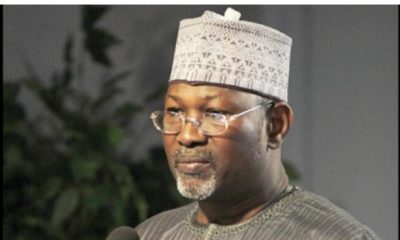
The Supreme Council for Shari’ah in Nigeria (SCSN) has urged President Bola Ahmed Tinubu to reassess the appointment of Professor Joash Ojo Amupitan as Chairman of the Independent National Electoral Commission (INEC), on an account of the alleged divisive and anti-Muslim legal paper which he once authored in the year 2020, as reported by Sahara Reporters.
In a statement signed by its Secretary General, Nafiu Baba-Ahmad, the Council said it was “deeply concerned” by the said legal brief of Prof. Amupitan in which he made “provocative, distorted and bigoted assertions” about conflicts in Northern Nigeria and the historical legacy of Sheikh Uthman bn Fodio’s Jihad.
The SCSN described the alleged content as “toxic” and “unbecoming” of someone now entrusted with safeguarding Nigeria’s democratic process.
“If indeed Prof. Amupitan authored the said document, his submissions are dangerously inimical to the unity, peace, and stability of our country,” the statement read.
According to the Council, the alleged paper wrongly characterized northern violence as “Christian genocide” and sought to link current insecurity to the 19th-century jihad led by Sheikh Uthman bn Fodio.
The SCSN said such a connection was “a malicious distortion of history and a deliberate misrepresentation of one of West Africa’s most revered reform movements.”
The Jihad of Sheikh Uthman was not a war of hatred or extermination but a spiritual, moral, and social reform movement that sought to restore justice, knowledge, and governance rooted in ethics,” the Council explained.
It further argued that Prof. Amupitan’s alleged analysis painted a false picture of religious persecution in northern Nigeria, ignoring the fact that Muslims have also been major victims of violence.
“Both Muslims and Christians have suffered immensely from extremist attacks, banditry, and communal clashes rooted in neglect, poverty, and injustice,” the statement added.
The Council maintained that the majority of those killed in affected regions from Borno to Zamfara, Katsina, and Yobe were Muslims.
“It therefore defies logic and decorum for anyone to reduce these tragedies to a one-sided narrative of Christian persecution,” it noted.
The SCSN questioned how a person allegedly holding such “deep-seated prejudice” could have passed through Nigeria’s security clearance process to lead a sensitive national institution like INEC.
“It is astonishing and troubling that an individual with such open bias could have been approved for such an exalted office,” the statement said.
Calling for a review of the appointment, the Council said that presiding over Nigeria’s electoral process “demands the highest standards of neutrality, fairness, and inclusivity.”







News
ADC Leadership Tussle Worsens as Third Faction Emerges, Rejects Nafiu Camp, Mark’s Coalition
By Yusuf Danjuma Yunusa
A new faction within the African Democratic Congress has surfaced, rejecting the authority of the Senator David Mark-led coalition and distancing itself from Nafiu Bala’s faction.
According to Africa Independent Television, the faction led by Don Norman Obinna claims to represent the legitimate National Executive Committee of the party.
The group says it is stepping in to manage the party’s affairs ahead of the next national convention.
At a briefing in Abuja on Tuesday, the group stated that “The tenure of Ralph Nwosu, who handed the party to the David Mark group, had ended in August 2022, and afterwards, he (Nwosu) had faced a series of litigations due to his failure to step down.”
The faction also clarified the status of Nafiu Bala, noting that he “never held the position of National Vice Chairman,” and affirmed that former ADC presidential candidate “Dumebi Kachikwu is still a member of ADC”
The group further disclosed that new interim leaders have been appointed to oversee party activities, ensuring continuity until the national convention is held.
The remarks come amid an ongoing leadership crisis within the ADC, which has seen rival factions contest control of the party. The Independent National Electoral Commission recently withdrew recognition of the party’s leadership under former Senate President David Mark.
News
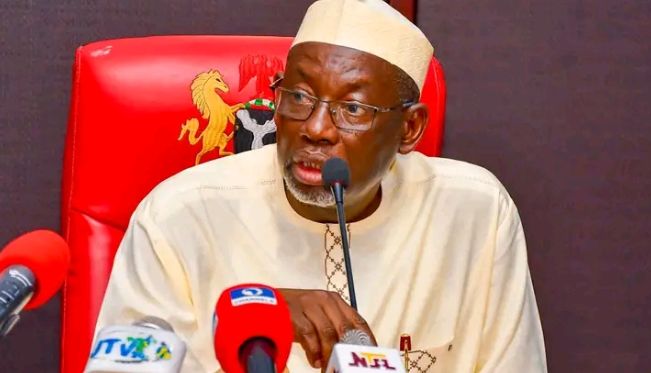
Internal Crisis Deepens in Jigawa APC as High-Profile Defections Threaten Party Cohesion
By Yusuf Danjuma Yunusa
The All Progressives Congress (APC) in Jigawa State is grappling with its most significant internal crisis in years, as a wave of defections by prominent political figures threatens to erode the party’s structural integrity and electoral prospects.
The growing discontent is widely attributed to allegations of poor party management and the marginalisation of key stakeholders under Governor Umar Namadi. His leadership style has come under increasing scrutiny from within party ranks, with critics pointing to a breakdown in internal consensus-building.
Political observers trace the roots of the crisis to a strained relationship between Governor Namadi and his political benefactor, former Governor Mohammed Badaru Abubakar, as well as his financial backer, Isa Gerawa. Although both men remain in the APC, sources familiar with the situation report lingering resentment over what they perceive as a systematic exclusion from decision-making processes and party affairs.
This “cold war” at the highest levels of the party hierarchy has created factions and widened fissures across the APC’s political base in Jigawa. Analysts warn that if left unresolved, the discord could severely undermine party unity and weaken its performance in future elections.
The crisis has now manifested in a string of high-profile defections involving former lawmakers, ex-party executives, and grassroots mobilisers.
Leading the list are former Senators Sabo Nakudu, who represented Jigawa South-West from 2015 to 2023, and Muhammad Ubali Shitu, a longtime political associate of the governor who served in the Senate from 2015 to 2019. Senator Nakudu’s defection is particularly symbolic, as he previously contested the APC governorship ticket against Namadi. His relationship with former Governor Badaru reportedly soured after Badaru backed Namadi during the primaries. Notably, Nakudu and Badaru have since reconciled, united by their mutual opposition to the current governor.
The departure of former party chairmen further underscores the depth of the crisis. Ado Sani Kiri, who chaired the party from 2014 to 2019 and also served as a commissioner and member of the House of Representatives, has left the party, as has Aminu Keskes, who led the party from 2019 to 2023 and previously served as Gumel Local Government chairman and chairman of the Association of Local Governments of Nigeria (ALGON) in the state.
Also among the defectors is Bala Usman Chamo, a former Social Investment Programme coordinator and Dutse Local Government chairman, widely regarded as a key grassroots organiser. Their exit is seen as a major blow to the party’s strength, given their influence across various political blocs in the state.
The crisis has also penetrated the governor’s inner circle, with several political appointees resigning from their positions and quitting the party. Two serving special advisers have stepped down, including one reportedly preparing to contest for a seat in the House of Representatives under the opposition African Democratic Congress (ADC). Additionally, six senior special assistants and two special assistants have resigned, all citing dissatisfaction with the current direction of the party.
One of the most notable exits is that of Zakari Kafin Hausa, a former senior special assistant who played a central role in organising Governor Namadi’s campaign and mobilising the support that led to his emergence as governor. His defection is viewed by insiders as a significant indicator of deepening cracks within the governor’s inner circle.
Perhaps most damaging to the APC’s political machinery is the defection of at least 17 former local government chairmen. These figures are critical to grassroots mobilisation, electoral coordination, and voter outreach. Their exit signals a potential collapse of the party’s local structures, raising serious concerns about the APC’s ability to secure the mandatory 25 percent of votes in the state during future presidential elections.
News
Federal Government, Pluck Global Inaugurate ₦8BN Critical Infrastructure at FGC Kano
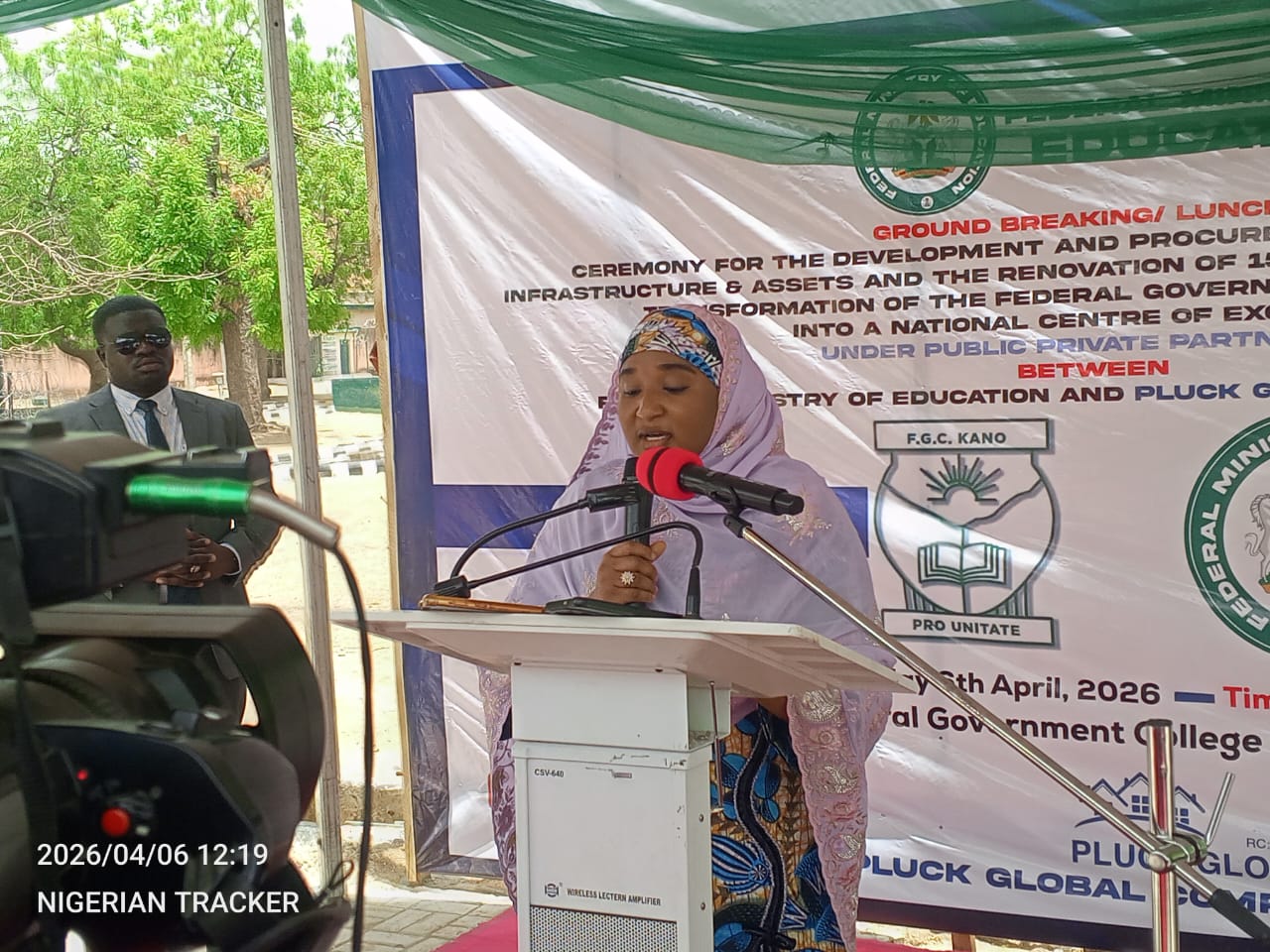
The Federal Government of Nigeria, in partnership with Pluck Global Company Limited, has inaugurated a landmark ₦8 billion project at the Federal Government College (FGC) Kano.
The initiative covers the development and procurement of 18 new critical infrastructure assets alongside the renovation of 15 existing facilities, marking a transformative step in revitalizing the education sector.
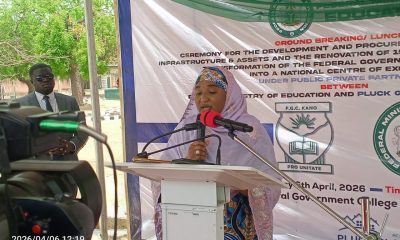
Speaking at the inauguration, the Minister of State for Education, Professor Suwaiba Sai’d Ahmad, described the project as more than just infrastructure, but a “transformation of the education sector.” She emphasized that education remains the bedrock of national development and highlighted the Federal Ministry of Education’s adoption of the Public-Private Partnership Plus (PPPP) model to bridge infrastructural gaps.
“It’s not about infrastructure, it’s about implementation. This project reflects a well-structured approach. For decades, the land of our federal unity colleges has remained undeveloped. This is a positive development for students to have modern facilities for teaching and learning,” she said.
Professor Ahmad further urged students to take ownership of the facilities, utilize them responsibly, and maximize their benefits.
Permanent Secretary of the Federal Ministry of Education, Alhaji Murtala Alhaji Tanko, reaffirmed the government’s unwavering commitment to revitalizing education. He described the intervention as bold and necessary, noting that federal unity colleges were established to symbolize excellence, national unity, and integration.
“Lack of basic infrastructure has long been a stumbling block. This PPPP project is designed to address infrastructural deficits in our institutions and ensure value for money,” Tanko stated.
Managing Director of Pluck Global, Musaddiq Talle Ado, expressed pride in the company’s involvement, calling it a defining moment.
“We are elated to flag off this project at over ₦8 billion. It is a testament to investor confidence. Our approach is holistic, including a modern academic center, renewable energy solutions, and a robust water system. We are not just delivering world-class infrastructure but sustainable infrastructure,” he said.
He also thanked the Kano State Government for fostering an environment where private partnerships can thrive.
Representing Governor Abba Kabir Yusuf, Abduljabbar M. Umar, Commissioner for Land and Physical Planning, praised the initiative for utilizing previously idle land assets.
“It is a culture globally to maximize unused land. For the first time, FGC Kano’s land assets will be properly utilized. The project managers must ensure effective stakeholder engagement,” Umar remarked.
The ₦8 billion investment is expected to significantly enhance learning conditions at FGC Kano, setting a precedent for similar interventions across Nigeria’s 120 federal unity colleges. By combining government oversight with private sector expertise, the project aims to deliver sustainable, modern infrastructure that supports academic excellence and national integration.

ADC Leadership Tussle Worsens as Third Faction Emerges, Rejects Nafiu Camp, Mark’s Coalition

AN OPEN LETTER TO THE PRESIDENT OF THE FEDERAL REPUBLIC OF NIGERIA

Internal Crisis Deepens in Jigawa APC as High-Profile Defections Threaten Party Cohesion

OPINION:Bauchi ,A Paradise for Immunity Seekers? How Alleged Corrupt Politicians Are Eyeing Government House

Federal Government, Pluck Global Inaugurate ₦8BN Critical Infrastructure at FGC Kano

ADC Leadership Crisis: State Chairmen to Elect Caretaker Committee on Tuesday

Governor Abba Kabir Yusuf Holds Exclusive Prerogative to Choose Deputy – Malam Inuwa Waya

The Governor Who Chose His People Over His Politics: Abba Yusuf and the Moral Courage Behind Kano First
Restoring the Glory That Was Always There: Governor Abba Kabir Yusuf and the Historical Vision Behind Kano First

Table Water Producers Increase New Price for Sachet Water in Kano
ADC Leadership Tussle Worsens as Third Faction Emerges, Rejects Nafiu Camp, Mark’s Coalition
AN OPEN LETTER TO THE PRESIDENT OF THE FEDERAL REPUBLIC OF NIGERIA
Internal Crisis Deepens in Jigawa APC as High-Profile Defections Threaten Party Cohesion
OPINION:Bauchi ,A Paradise for Immunity Seekers? How Alleged Corrupt Politicians Are Eyeing Government House
Federal Government, Pluck Global Inaugurate ₦8BN Critical Infrastructure at FGC Kano
ADC Leadership Crisis: State Chairmen to Elect Caretaker Committee on Tuesday
Governor Abba Kabir Yusuf Holds Exclusive Prerogative to Choose Deputy – Malam Inuwa Waya
The Governor Who Chose His People Over His Politics: Abba Yusuf and the Moral Courage Behind Kano First
Restoring the Glory That Was Always There: Governor Abba Kabir Yusuf and the Historical Vision Behind Kano First
Table Water Producers Increase New Price for Sachet Water in Kano
-

 Opinion4 years ago
On The Kano Flyovers And Public Perception
-

 Features5 years ago
How I Became A Multimillionaire In Nigeria – Hadiza Gabon
-

 Opinion5 years ago
Kano As future Headquarters Of Poverty In Nigeria
-

 History5 years ago
Sheikh Adam Abdullahi Al-Ilory (1917-1992):Nigeria’s Islamic Scholar Who Wrote Over 100 Books And Journals
-

 Opinion4 years ago
My First Encounter with Nasiru Gawuna, the Humble Deputy Governor
-

 History5 years ago
The Origin Of “Mammy Market” In Army Barracks (Mammy Ochefu)
-

 History4 years ago
The History Of Borno State Governor Professor Babagana Umara Zulum
-

 News4 years ago
Federal University Of Technology Babura To Commence Academic Activities September