
News
FACT-CHECK: How True Is Trump’s Claim Of Christian Genocide In Nigeria?
By Yusuf Danjuma Yunusa
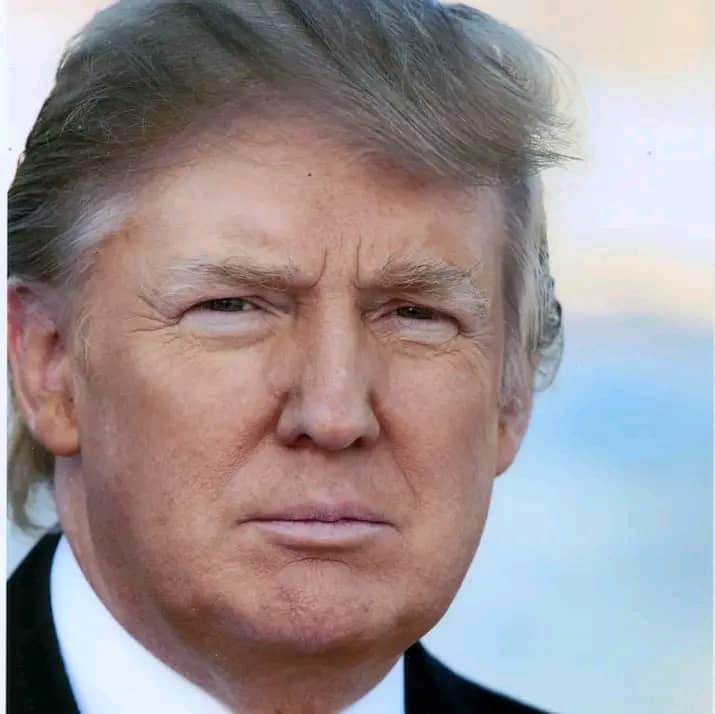
The US, on Friday, October 31, 2025, under President Donald Trump’s administration has redesignated Nigeria as a “country of particular concern” over allegations of genocide against Christians.
The Nigerian Tracker News has learnt that the Christian genocide narrative in Nigeria supposedly gained traction after the address of Vice-President Kashim Shettima at the United Nations last week.
Shettima had said the situation in Gaza was “heart-wrenching” and demanded an immediate ceasefire that would birth Palestinians independence and create homes of their own on territories already recognised by the UN and international law.
He said a two-state solution remained the most viable path to peace and warned that continued neglect of international law only fuels propaganda and undermines global stability.
Many, including a Vatican Cardinal, had rejected the claim, saying both Christians and Muslims were victims of insecurity in Nigeria.
It’s quite surprising hearing such claim coming from Trump because, earlier this month, Massad Boulos, Senior Adviser to Trump for Arab and African Affairs, dismissed persistent claims of a Christian genocide in Nigeria — insisting that terrorism in the country affects people of all faiths.
Speaking in Rome, Italy, during a meeting with President Bola Tinubu on the sidelines of the Aqaba Process Heads of State and Government summit, Boulos countered allegations by some U.S. lawmakers who had called for Nigeria to be designated a “country of particular concern” (CPC) over alleged persecution of Christians.
Despite such unambiguous stand by his Senior Adviser on the matter, in a post on social Media, on Friday, Trump said Christianity was facing an existential threat in Nigeria.
“Christianity is facing an existential threat in Nigeria. Thousands of Christians are being killed. Radical Islamists are responsible for this mass slaughter. I am hereby making Nigeria a “COUNTRY OF PARTICULAR CONCERN” — But that is the least of it. When Christians, or any such group, is slaughtered like is happening in Nigeria (3,100 versus 4,476 Worldwide), something must be done!”
“I am asking Congressman Riley Moore, together with Chairman Tom Cole and the House Appropriations Committee, to immediately look into this matter, and report back to me.
“The United States cannot stand by while such atrocities are happening in Nigeria, and numerous other Countries. We stand ready, willing, and able to save our Great Christian population around the World!”
While some blamed his utterances on ignorance of what really transpires here in Nigeria on the said issue, others brand him as a deliberately mischievous being.
What Does The Term “Country Of A Particular Concern” Mean?
According to the US, a Country of Particular Concern (CPC) is a designation by the United States Secretary of State (under authority delegated by the President) of a country responsible for particularly severe violations of religious freedom under the International Religious Freedom Act (IRFA) of 1998 (H.R. 2431) and its amendment of 1999 (Public Law 106-55).
The term “particularly severe violations of religious freedom” means systematic, ongoing, egregious violations of religious freedom, including violations such as:
a) Torture or cruel, inhuman, or degrading treatment or punishment;
b) Prolonged detention without charges;
c) Causing the disappearance of persons by the abduction or clandestine detention of those persons; or
d) Other flagrant denials of the right to life, liberty, or the security of persons. Nations so designated are subject to further actions, including economic sanctions, by the United States.
Historically, this newspaper recalled that this is the second time that the US government is branding Nigeria as a Country Of Particular Concern, as the first one was reported to had happened in December, 2020.
Data Speaks
Nigerian Tracker News, in its quest to make the world know the authenticity of the president’s claim, made a thorough investigation into the matter by presenting records of violence and killings in each of the six geo political zones in Nigeria.
The North West and North East regions have been the most severely affected by killings in Nigeria in recent years. The violence in Nigeria is driven by a mix of factors including insurgency (Boko Haram and ISWAP), banditry, and farmer-herder clashes, with different regions experiencing different primary threats.
North West
This region has recorded the highest number of overall murder cases and kidnappings recently, with banditry and associated criminal activities being the primary causes. States like Zamfara, Kaduna, and Katsina have been major flashpoints. In the period between May 2023 and April 2024, the North West alone recorded an estimated 206,030 murder cases.
North East
Historically, this region has been the epicenter of the Boko Haram and ISWAP insurgencies. Borno State, in particular, has experienced the highest number of insurgency-related fatalities. The conflict has resulted in hundreds of thousands of direct and indirect deaths since 2009, with an estimated 188,992 cases reported between May 2023 and April 2024.
North Central (Middle Belt)
This region is frequently affected by long-standing and escalating conflicts between predominantly Fulani herders and mostly Hausa farmers over land and water resources. Benue and Plateau states have experienced significant mass killings and displacement due to these clashes, with Benue recording the highest death toll in the two years since President Bola Tinubu took office (May 2023 – May 2025).
Southern Regions (South East, South South, South West)
While experiencing significant crime, including cultism, kidnapping for ransom, and road accidents, these regions generally have lower levels of large-scale killings compared to the northern and central regions. The South West reported the least number of murder cases between May 2023 and April 2024. The South East has seen an increase in violence related to separatist agitation and other criminal activities.
National Bureau of Statistics (NBS) Report (May 2023 – April 2024)
This report highlights the North West (206,030 cases) and North East (188,992 cases) as having the highest number of murder cases nationally.
Amnesty International Reports:
Various reports from Amnesty International have consistently documented the failure of authorities to protect rural communities, particularly in the North West and North Central, from attacks by armed groups, leading to thousands of deaths and a looming humanitarian crisis.
UN and Research Think Tanks:
Reports from the UN Development Programme (UNDP) and the International Crisis Group provide in-depth analysis of the root causes of the violence, such as competition over resources, weak governance, and the proliferation of arms, confirming the north of the country as the most violent.
Causes of Violence by Region (In Summary)
Region Primary Causes of Violence
North West: Banditry, kidnappings, criminal activities
North East: Insurgency (Boko Haram, ISWAP)
North Central: Farmer-herder clashes (land, water resources)
South East : Separatist agitation, cultism, kidnappings
South South : Cultism, kidnapping for ransom, road accidents
South West: Crime (including cultism, kidnapping), relatively lower large-scale killings
A critical observation of the information above makes it clear that Donald Trump’s claim of a Christian genocide in Nigeria is false, because the two regionsthe South-East and South-South which are predominantly Christian environments, are suffering from violence unrelated to religion.








News
Gombe flags off the disbursement of the second batch of the AGILE Conditional Cash Transfer
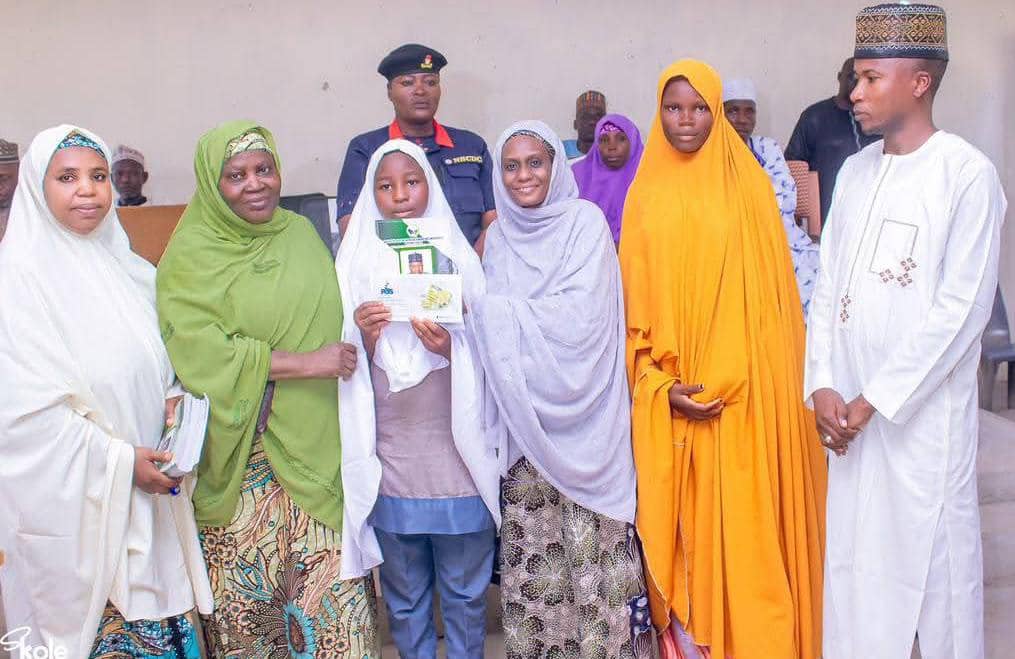
Gombe State Government has flagged-off the distribution of ATM cards to Adolescent Girls in public schools under the Conditional Cash Transfer,CCT of the Adolescent Girls Initiative for Learning and Empowerment, AGILE Project.
Speaking at the flagging off of the disbursement at Government Junior Secondary School Malamsidi central in Kwami Local Government area, the Honourable Commissioner of Education, Associate Prof Aishatu Umar Maigari said the disbursement of the CCT is part of the Governor Muhammadu Inuwa Yahaya’s zeal and passion for the girl child education in the state.
She said the concept is also geared towards supporting parents to cater for their children to remain in schools up to completion of their secondary education.
Associate Prof Aishatu Umar Maigari then assured the students that the government will continue to bring more educational policies that will further support students to pursue education with ease.
Earlier, the project coordinator of the AGILE, Dr. Amina Abdul noted that with the disbursement of the second cohort of the conditional cash transfer, the project was able to record significant improvement in enrollment and retention of students in schools across the state.
The project coordinator therefore urged parents to utilize the funds judiciously through supporting the education of their children.
News
China, Nigeria Mark Friendship with Joint Cultural Mural
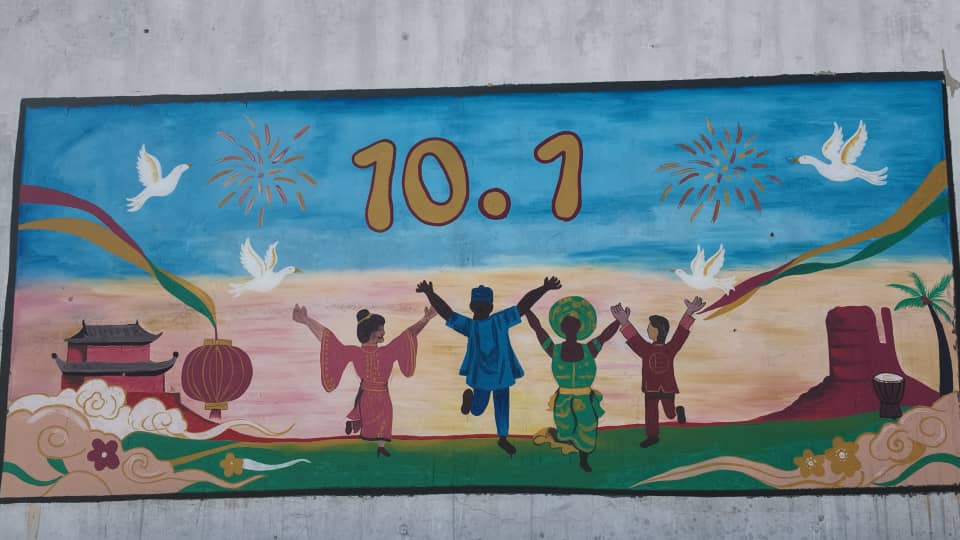
A colourful mural celebrating both China’s National Day and Nigeria’s Independence Day has been unveiled at an overseas project site, serving as a vivid symbol of the enduring friendship between the two nations.
The artwork, jointly produced by Chinese and Nigerian staff, features builders dressed in traditional Chinese costumes and Nigerian ethnic attire holding hands and dancing together.
Above them, fireworks and white doves of peace illuminate the sky, while the inscription “10.1” highlights the dual significance of October 1, the China’s National Day and Nigeria’s Independence Day.
On the left side of the mural, ancient Chinese architecture, red lanterns and auspicious cloud motifs showcase Chinese heritage.
On the right, red earth, coconut palms and African drums reflect Nigeria’s cultural identity. Flowing ribbons weave across the painting, symbolising unity and shared destiny.
Project officials described the mural as a “living testament” to cooperation at the frontline of development. They said it embodies mutual trust and support as workers from both countries overcome challenges together.
The initiative underscores cultural integration and partnership, with both sides pledging to continue working hand in hand to strengthen ties.
“Celebrating two festivals as one, we march forward with one heart,” a statement read, emphasising the commitment to write new chapters of friendship along the path of cooperation.
The mural, rooted in the overseas project site, stands as a reminder of the brotherly bond between China and Nigeria, and the shared vision of building together for a brighter future.
News
Musa Illiyasu Kwankwaso Celebrates Senator Lado @60, Says Is A Political Dogma
From Muhammad Kabir Kano
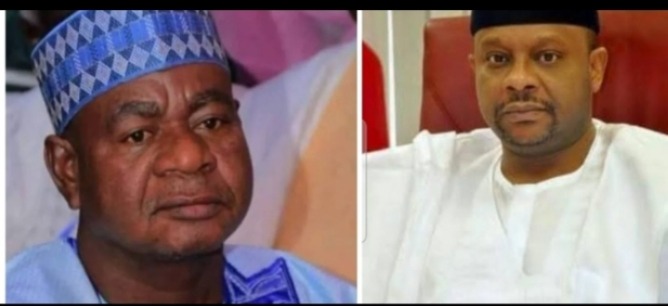
The spokesperson of Political Appointees Forum from Kano State, Dr. Musa Illiyasu Kwankwaso, has described Senator Basheer Lado, the Special Adviser to President Tinubu on National Assembly Matters (Senate), who also doubles as the Chairman of the Appointees, on his 60th birthday, as a Political Blog who plays the game with maturity and respect.
Kwankwaso who also describes Senator as Political Dogma, praised his contributions to democratic governance, humanitarian services and national development.
“Senator Lado is a dependable public servant and accomplished legislator whose experience had helped strengthen relations between the Executive and the Senate and also steer ship the activities of the Political Appointees with huge respect and understanding”,
He said it is on notice that Lado served in the Senate for four years before his by late President Buhari on Relief agency and subsequent appointment as Tinubu’s liaison officer in the upper chamber of the National Assembly.
Lado represented Kano Central Senatorial District in the Seventh National Assembly from 2011 to 2015, where he served as Vice Chairman of the Senate Committee on Works.
Lado facilitated several constituency projects, including the Kundila Bridge, popularly known as Gadar Lado, in Kano State. His contributions to humanitarian services through his previous roles as Federal Commissioner of the National Commission for Refugees, Migrants and Internally Displaced Persons, and Director-General of the National Agency for the Prohibition of Trafficking in Persons (NAPTIP).
He said Lado contributed to protecting vulnerable Nigerians, combating human trafficking and improving the welfare and rehabilitation of displaced persons.
Kwankwaso further commended the senator’s humanitarian initiatives through the Ladon Alheri Foundation, particularly in education, healthcare, women’s economic empowerment, rural water supply and support for disadvantaged communities.
” Lado’s contributions across public service reflected his commitment to national development and the welfare of Nigerians”, he added.

Gombe flags off the disbursement of the second batch of the AGILE Conditional Cash Transfer

Why Gov Abba Deserves Another Tenure

China, Nigeria Mark Friendship with Joint Cultural Mural

Musa Illiyasu Kwankwaso Celebrates Senator Lado @60, Says Is A Political Dogma

EFCC Reopens Atiku’s Alleged Financial Crimes Probe

Zamfara Varsity ASUU Threatens Warning Strike Over FG-ASUU Agreement, Promotion Arrears

PCACC Arrests Man Over Alleged ₦4.5m Sale, Illegal Leasing of Kano Government Horse Stable

Goje’s Electoral War:The Confrontation With Tinubu,Governor Inuwa,Usman Kumo And APC candidates Ahead Of 2027

Prof Yusuf Adamu Delivers BUK’s 63rd Professorial Inaugural Lecture, Reflects on Medical Geography and Academic Legacy

Senate Passes Barau’s Bill to Provide Legal Framework for Yusuf Maitama Sule Federal University of Education, Kano
Gombe flags off the disbursement of the second batch of the AGILE Conditional Cash Transfer
Why Gov Abba Deserves Another Tenure
China, Nigeria Mark Friendship with Joint Cultural Mural
Musa Illiyasu Kwankwaso Celebrates Senator Lado @60, Says Is A Political Dogma
EFCC Reopens Atiku’s Alleged Financial Crimes Probe
Zamfara Varsity ASUU Threatens Warning Strike Over FG-ASUU Agreement, Promotion Arrears
PCACC Arrests Man Over Alleged ₦4.5m Sale, Illegal Leasing of Kano Government Horse Stable
Goje’s Electoral War:The Confrontation With Tinubu,Governor Inuwa,Usman Kumo And APC candidates Ahead Of 2027
Prof Yusuf Adamu Delivers BUK’s 63rd Professorial Inaugural Lecture, Reflects on Medical Geography and Academic Legacy
Senate Passes Barau’s Bill to Provide Legal Framework for Yusuf Maitama Sule Federal University of Education, Kano
-

 Opinion5 years ago
On The Kano Flyovers And Public Perception
-

 Features5 years ago
How I Became A Multimillionaire In Nigeria – Hadiza Gabon
-

 Opinion6 years ago
Kano As future Headquarters Of Poverty In Nigeria
-

 History6 years ago
Sheikh Adam Abdullahi Al-Ilory (1917-1992):Nigeria’s Islamic Scholar Who Wrote Over 100 Books And Journals
-

 Opinion5 years ago
My First Encounter with Nasiru Gawuna, the Humble Deputy Governor
-

 History5 years ago
The History Of Borno State Governor Professor Babagana Umara Zulum
-

 History6 years ago
The Origin Of “Mammy Market” In Army Barracks (Mammy Ochefu)
-

 News5 years ago
Federal University Of Technology Babura To Commence Academic Activities September