
News
Reps Urges FG To Upgrade First-Generation Universities

By Yusuf Danjuma Yunusa
The House of Representatives has appealed to the Federal Government to take urgent steps toward restoring the lost glory of Nigeria’s first-generation universities.
A motion from Aderemi Oseni (APC, Oyo) led to the adoption of the resolution during Wednesday’s plenary session.
The title of the motion which is “Need to Upgrade First-Generation Universities and Investigate the Quality and Standards of TETFUND Projects Across Federal Universities in Nigeria,” received overwhelming support from lawmakers.
Oseni noted that the first-generation universities, established in the early 1960s, once represented the pinnacle of academic excellence, boasting world-class facilities, highly qualified lecturers, and an environment that attracted global recognition.
However, decades of neglect, inadequate funding, and infrastructural decay have eroded their once-enviable status.
He lamented that lecture halls, hostels, and auditoriums in these universities have deteriorated. In contrast, once vibrant facilities such as the university zoos—formerly tourist attractions—are now abandoned or non-existent.
The lawmaker further expressed concern over the poor quality of Tertiary Education Trust Fund intervention projects, alleging that many recently completed projects are already showing signs of decay, unlike structures built over six decades ago.
In response, the House resolved to conduct a comprehensive investigation into the quality and standard of TETFund projects executed in federal universities to ensure value for money and accountability in the use of public funds.
Lawmakers also urged the Federal Ministries of Education and Finance, the National Universities Commission, TETFund, and development partners to collaborate on modalities for rehabilitating and upgrading first-generation universities.
Additionally, the House mandated its Committees on University Education, TETFund, and other relevant bodies to investigate completed and ongoing projects in tertiary institutions across the country, ensure compliance with standards, and report back within four weeks for further legislative action.
Nigerian Tracker News has learnt that the universities that are unarguably in this category are the likes of ABU, UI, UNN, and others, owing to the fact that they are Nigeria’s oldest and most prestigious Federal institutions, mostly established in the early 1960s around the time of independence.
They were initially the benchmark for academic quality in Africa, attracting international scholars and students.
The motion categorically references the fact that these institutions have suffered “decades of neglect, poor funding, and infrastructural decay.”
The unending deterioration has led to the loss of their “once enviable status” and has made their global standing and ability to compete internationally declined drastically.









News
TMS Inaugurates Kano North’s 13 LG Executives and Empowers Social Media Representatives
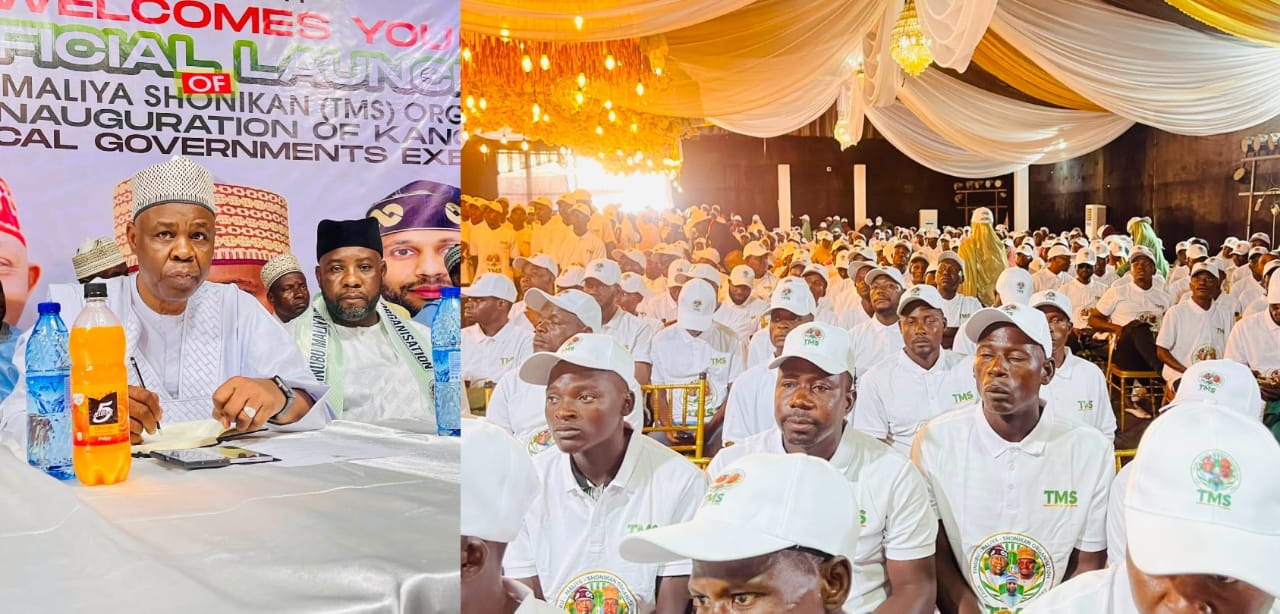
The Tinubu Maliya Shonikan (TMS) Organisation has inaugurated its local government coordinators across Kano North Senatorial District, with a pledge to strengthen grassroots mobilisation and support the All Progressives Congress (APC) ahead of future political engagements.
The inauguration ceremony, which was held on Sunday at Amani Event Centre, Nassarawa GRA, Kano, was led by the organisation’s leader, Alhaji Ibrahim Yusuf Garo, popularly known as Shonikan, alongside the Kano State Chairman of TMS, Barrister Nura Abdullahi Bagwai.
Speaking at the event, the organisers said the establishment of TMS in Kano North was motivated by the desire to support and promote programmes and political activities associated with Senator Barau I. Jibril Maliya, whom they described as having contributed significantly to the development and representation of the area.
According to the organisation, the initiative is also intended to mobilise support for the APC and strengthen its grassroots structure across Kano North and the wider Kano State.
As part of the inauguration, social media agents from 141 wards across Kano North were provided with android tablet pc and data support to enable them to effectively communicate the activities, programmes and achievements of the organisation and its political allies through digital platforms.
The leadership of TMS said the provision of the devices and monthly data support formed part of a broader strategy to establish an organised and effective digital communication network across the senatorial district.
The organisation further announced plans to introduce additional programmes and initiatives aimed at strengthening grassroots mobilisation and contributing to the success of the APC from the grassroots to the state level.
The event attracted important diginataries like MD Hadejia Jama’are River Basin Development Authority, Engr. Rabi’u Suleiman Bichi whonis the Guest Speaker if rhe Occasion, APC National Vice Chairman North West Hon. Garba Datti Mohammed, the commissioner National Assembly Service Commission Hon. Yusuf A. Yusuf Tabuka, Representative of rhe State Minister Housing and Urban Development, APC leaders, members, supporters and representatives of the organisation from across Kano North.
The organisers expressed appreciation to God for the successful and peaceful conclusion of the inauguration ceremony, describing the event as an important step towards strengthening the organisation’s structure and activities across the senatorial district.
News
No Pay, No Escape: Unpacking Shehu Sani’s Account of Abuja Hospital Lock-Ins
By Yusuf Danjuma Yunusa
The escalating cost of healthcare in Nigeria has reached a critical inflection point, with private hospitals in the Federal Capital Territory now reportedly resorting to security protocols to prevent patients from absconding at night without settling their bills. This stark reality was brought to light on Thursday by former Kaduna Central Senator, Shehu Sani.
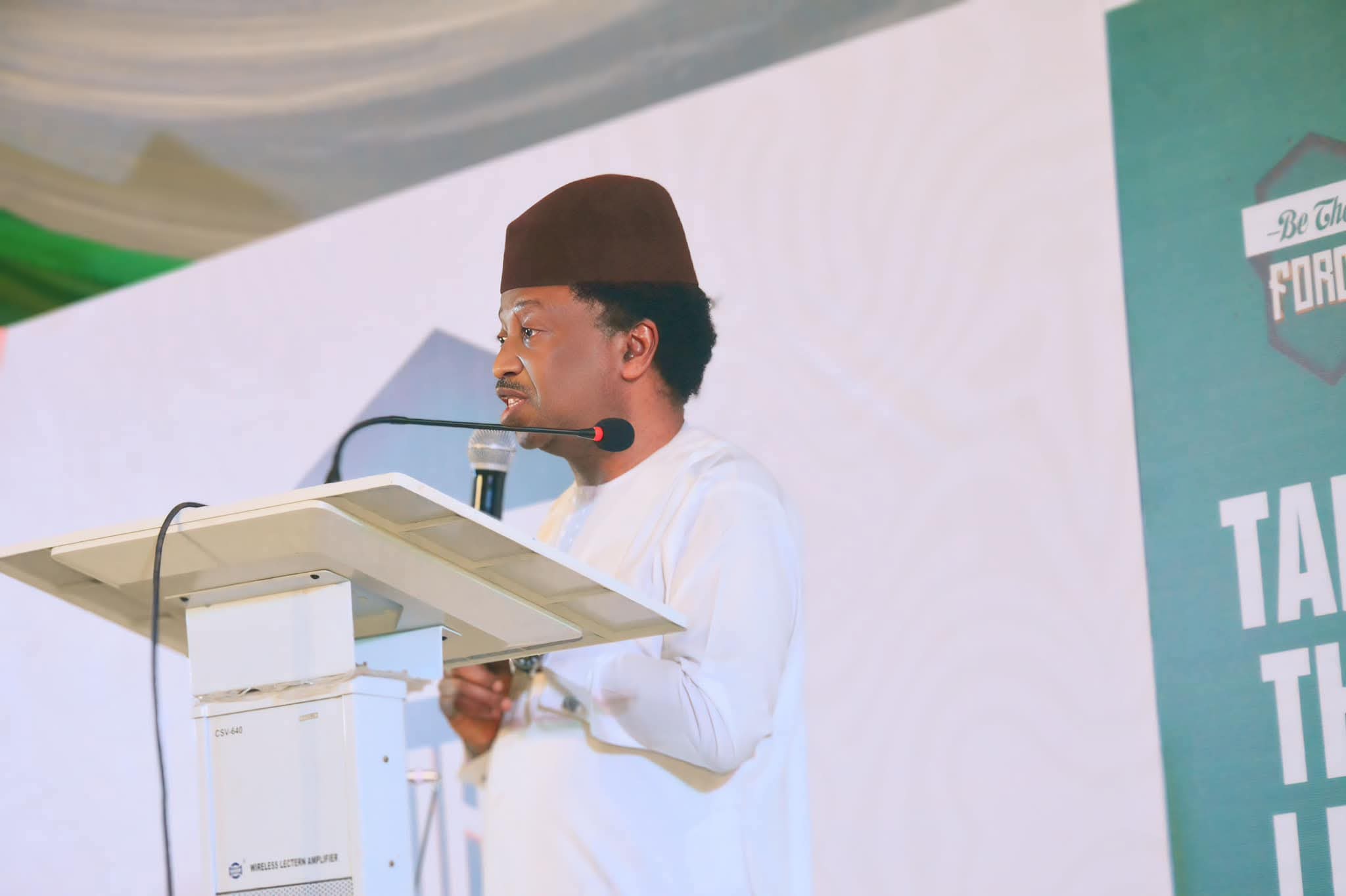
In a post on his Facebook page, Sani described witnessing the practice firsthand during a visit to a private clinic in Abuja.
“Some Abuja private hospitals have started taking security measures to ensure that patients don’t escape at night without completely settling their bills. That’s the case when I visited one of the private clinics today,” he wrote.
While he refrained from naming the facility or detailing the specific security steps, his observation underscores a deepening national crisis where medical care is rapidly becoming a luxury, trapping families between the desperation for treatment and the burden of debt.
This practice is merely the symptom of a systemic failure where the rising costs of drugs, diagnostic scans, surgery, and hospital admission fees are pushing citizens to the brink. For many, the choice is no longer between private and public care, but between treatment and survival.
While patients suffer, health workers argue that hospitals are also struggling under the weight of economic headwinds. With inflation eroding the naira’s value, forex challenges limiting the import of medical supplies, and the removal of fuel subsidies impacting logistics and energy costs, the operational expenses for healthcare facilities have more than doubled in the last 18 months.
While on the other hand, a health practitioner, Ummee Manson, painted a stark picture of Nigeria’s healthcare burden, citing the ordeal of a fictional mother, Mama Chinedu, who had to sell her earrings and borrow money to raise ₦185,000 for her children’s malaria treatment—a bill that, despite saving the children, left the family skipping meals for weeks.
The practitioner noted that this experience mirrors the reality for millions, as it’s documented that in 2024, out‑of‑pocket spending still accounted for 58.3% of total health expenditure, meaning families directly bear the cost of drugs, tests, and hospital care.
The practitioner further warned that such high financial exposure pushes over one million Nigerians into poverty each year, since a single illness can deplete savings, create crushing debt, or force households to abandon care altogether, locking them in a relentless cycle of worsening health and economic distress.
The statistics paint a grim picture of a broken system. Recently released data from the National Bureau of Statistics (NBS) indicates that out-of-pocket spending still accounts for over 70% of total health expenditure in Nigeria. With most families lacking any form of health insurance, they are left to pay directly for services, often depleting their life savings in the process.
In response, both the Nigerian Medical Association (NMA) and various patient advocacy groups are renewing their calls for urgent government intervention. They urge the Federal Government to aggressively expand the National Health Insurance Scheme (NHIS) to cover a larger percentage of the population and to regulate the prices of essential medicines to curb exploitation.
For now, however, survival often depends on the kindness of strangers. Many Nigerians are forced to resort to crowdfunding, church donations, and social media appeals to raise funds for life-saving procedures—a precarious lifeline that is not available to everyone.
Health economists and medical professionals warn that without comprehensive reforms, the trend will only worsen, and until structural changes are made, the haunting reality remains: for millions of Nigerians, a hospital bed is a financial gamble, and the price of life is becoming too high to pay.
News
Gov. Yusuf Increases Salaries of Two Varsities’ Academic and Non-Academic Staff
Kano State Governor, Alhaji Abba Kabir Yusuf, has approved the implementation of a new salary review for Academic and Non-Academic Staff of Aliko Dangote University of Science and Technology, Wudil, and Northwest University, Kano.
The new increase in salary was adopted from the Federal Government’s new remuneration package implemented at the Federal Universities in Nigeria.
This was contained in a statement issued by the governor’s spokesman, Sunusi Bature Dawakin Tofa, on Monday.
The approval followed a report and recommendations of a committee constituted by the State Executive Council to examine and review requests by the two state-owned universities for the domestication of the new salary package.
Under the approved arrangement, the new remuneration package will take effect from January 2026, while payment will commence in September 2026.
The salary review will have a total financial implication of ₦391,847,555.24 monthly, amounting to ₦4,702,170,662.88 annually for the two universities.
For Aliko Dangote University of Science and Technology, Wudil, the monthly financial implication is ₦228,195,210.83, comprising ₦141,082,223.37 for Academic Staff under the ASUU agreement and ₦87,112,987.46 for Non-Academic Staff under SSANU.
For Northwest University, Kano, the monthly implication is ₦163,652,344.41, comprising ₦112,238,985.30 for Academic Staff and ₦51,413,359.11 for Non-Academic Staff.
The government has approved the inclusion of ₦1,567,390,220.96 in the 2026 Supplementary Budget to cover payments from September to December 2026.
Similarly, arrears covering the period from January to August 2026, amounting to ₦3,134,780,441.92, will be provided for under the 2027 Budget.
The decision, according to the committee’s report, is aimed at ensuring industrial harmony and improving the welfare of staff of the two institutions, in line with the implementation of the new remuneration package in federal universities and other state-owned universities.
Governor Yusuf also approved the consideration of Visitation Panels for the two universities and other tertiary institutions in the state, as provided by relevant laws, to strengthen accountability, administration and effective management of the institutions.
The Governor reaffirmed his administration’s commitment to improving the welfare of workers and strengthening the quality of higher education as part of its broader investment in human capital development.

962 Forfeited Homes: Why Aliyu’s ICPC Is Beginning To Redefine What Asset Recovery Means

The Weight of a School Bag Is Not the Weight of Knowledge

TMS Inaugurates Kano North’s 13 LG Executives and Empowers Social Media Representatives

No Pay, No Escape: Unpacking Shehu Sani’s Account of Abuja Hospital Lock-Ins

Gov. Yusuf Increases Salaries of Two Varsities’ Academic and Non-Academic Staff
How Kano Digitized Land Turns N50m to N750m Monthly

Goodwill, Visibility, and Operational Security: A Strategic Communication Reading of Senator Ahmad Lawan’s DIA Post
Kano Governor Yusuf Shortlisted for Africa’s SANKOFA Award of Excellence in Infrastructural Development

Is This Even Legal’: Internet Erupts as Senator Lawan Boasts About ‘Facilitating’ Secret Agent Jobs for Constituents

Beyond the Numbers: What the Ekiti 2026 Governorship Results Reveal About Coalition Politics and Path to 2027
962 Forfeited Homes: Why Aliyu’s ICPC Is Beginning To Redefine What Asset Recovery Means
The Weight of a School Bag Is Not the Weight of Knowledge
TMS Inaugurates Kano North’s 13 LG Executives and Empowers Social Media Representatives
No Pay, No Escape: Unpacking Shehu Sani’s Account of Abuja Hospital Lock-Ins
Gov. Yusuf Increases Salaries of Two Varsities’ Academic and Non-Academic Staff
How Kano Digitized Land Turns N50m to N750m Monthly
Goodwill, Visibility, and Operational Security: A Strategic Communication Reading of Senator Ahmad Lawan’s DIA Post
Kano Governor Yusuf Shortlisted for Africa’s SANKOFA Award of Excellence in Infrastructural Development
Is This Even Legal’: Internet Erupts as Senator Lawan Boasts About ‘Facilitating’ Secret Agent Jobs for Constituents
Beyond the Numbers: What the Ekiti 2026 Governorship Results Reveal About Coalition Politics and Path to 2027
-

 Opinion4 years ago
On The Kano Flyovers And Public Perception
-

 Features5 years ago
How I Became A Multimillionaire In Nigeria – Hadiza Gabon
-

 Opinion6 years ago
Kano As future Headquarters Of Poverty In Nigeria
-

 History5 years ago
Sheikh Adam Abdullahi Al-Ilory (1917-1992):Nigeria’s Islamic Scholar Who Wrote Over 100 Books And Journals
-

 Opinion5 years ago
My First Encounter with Nasiru Gawuna, the Humble Deputy Governor
-

 History5 years ago
The History Of Borno State Governor Professor Babagana Umara Zulum
-

 History5 years ago
The Origin Of “Mammy Market” In Army Barracks (Mammy Ochefu)
-

 News4 years ago
Federal University Of Technology Babura To Commence Academic Activities September