
Opinion
When Brilliance is Mocked: The ₦200,000 Reward that Shamed Nigeria-Lamara Garba
By: Lamara Garba Azare
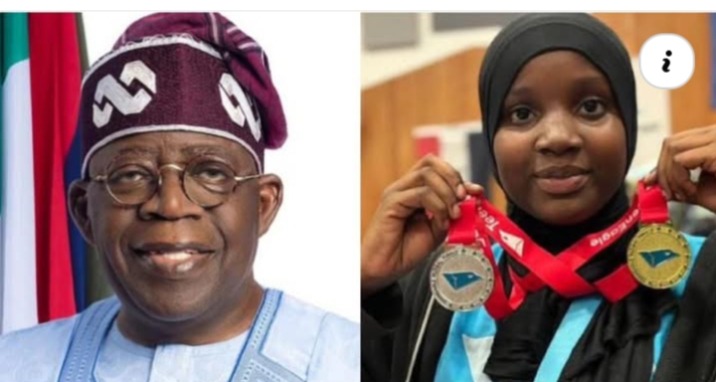
In the theatre of nations, where countries display what they value most, Nigeria once again played the wrong script. On the 28th of August, 2025, the Federal Government stood before the world and, with fanfare, announced a ₦200,000 cash reward for Nafisa Abdullahi, a 17-year-old girl from Yobe State, who had just conquered the globe at the TeenEagle Global English Championship in London.
It should have been a moment of national pride the triumph of intellect, the victory of knowledge, the vindication that Nigerian children, though raised in broken classrooms with tattered textbooks, can still outshine peers from nations where education is richly funded. Instead, the moment was reduced to farce.
The prize was ₦200,000. Not a scholarship. Not a lifelong educational support package. Not even a promise of sustained recognition. Just ₦200,000 money that vanishes before the ink on a bank teller’s slip dries. And shamelessly, the same government invited the girl and her parents to travel all the way from Damaturu to Abuja for the presentation. Anyone who knows the realities of transportation, accommodation, and feeding on such a trip will realise that the ₦200,000 reward barely covers the expenses of the journey itself. By the time they return to Yobe, how much of the so-called “national honour” will be left? This is not recognition. This is mockery.
The insult was sharper because of what came before. Just weeks earlier, the same government gave $100,000 each over ₦160 million to Nigerian athletes who returned victorious from global tournaments. Sportsmen celebrated like kings, while a girl who carried Nigeria’s flag through intellect was treated like a beggar appeased with coins. This contrast is not just unfair. It is a scandal. It is a window into the soul of a government that speaks loftily of education but starves it in practice.
Sports have their place. Football unites nations; athletes inspire. But is it not education that sustains nations long after the cheers in the stadium fade? When Nigeria gave ₦160 million to footballers, it was hailed as generosity. When Nigeria gave ₦200,000 to Nafisa, it exposed a tragic hierarchy of values: here, knowledge is cheap. Here, intellect is disposable. Here, the very foundation of progress is treated as an afterthought.
₦200,000 in today’s Nigeria barely covers a semester’s tuition in a private university. It cannot buy a modest laptop and a year’s reliable internet. It cannot even cover the travel expenses for Nafisa to attend the very competition she conquered, had sponsors not intervened. Meanwhile, ₦160 million is enough to pay for a PhD at Harvard, buy a house in Abuja, and still have funds left to establish a scholarship foundation. This is not about envying athletes. It is about exposing the imbalance in our governance. Why is brawn valued more than brain? Why is intellect seen as unworthy of investment?
This ₦200,000 reward is not just a mistake; it is a philosophy — the philosophy of spectacle over substance. Governments love the visibility of sports victories: stadiums roar, cameras flash, politicians clap. Intellectual triumphs, by contrast, are quieter, less glamorous, and less “profitable” politically. So they are dismissed with tokenism. Yet, it is ideas, not athletics, that build civilizations. Japan rose from the ashes of war not through football, but through science and education. South Korea transformed from poverty to prosperity by grooming engineers, doctors, and innovators. Singapore became a global giant by making education sacred. Nigeria, however, prefers medals to minds, applause to intellect, noise to knowledge.
Imagine if Nafisa’s victory had been met with a life-changing scholarship perhaps to study at one of the world’s leading universities. Imagine if the government had created an “Intellectual Heroes Fund” to support students who conquer global competitions. Imagine if the President himself had hosted her in Aso Rock and told every Nigerian child watching: See what books can do. This is the path to greatness. Instead, Nafisa received ₦200,000 less than what a minister might spend on a single lunch. Her victory, which could have been a rallying point for millions of children, was reduced to a footnote in the news.
Nafisa’s story is not just about her. It is a metaphor for the Nigerian child. In every rural school where pupils sit under leaking roofs, in every city classroom where teachers go unpaid for months, the same message echoes: education is not valued here. How many brilliant youths have fled abroad with their talents because at home they were mocked with crumbs? How many have settled for mediocrity because their society told them that brains don’t matter? When the government presented ₦200,000 to Nafisa, it was not just a gift. It was a signal loud and clear that excellence in education is worth less than a handshake.
Nigerians, long used to disappointment, still found this too much to swallow. Social media exploded with outrage. One father wrote online: “My daughter saw this story and asked me, Daddy, is it better to be a footballer than to be intelligent? I had no answer.” That is the damage done not just the insult to Nafisa, but the discouragement of millions of children who now see that the path of books leads only to mockery.
Elsewhere in the world, intellectual triumphs are immortalized. Pakistan rallied behind Malala Yousafzai, and today she is a Nobel laureate. India celebrates its top students with scholarships and mentorship. Rwanda invests heavily in its brightest minds. Nigeria, by contrast, splashes billions on politicians’ allowances and football banquets, but offers mere tokens to its intellectual heroes.
This is bigger than Nafisa. It is about the soul of Nigeria. A country that trivializes education cannot develop. A country that rewards muscle over mind will remain trapped in mediocrity. A country that mocks brilliance will drive its best and brightest away. What is needed is not token cash rewards but a shift in philosophy a recognition that investing in education is not charity but national survival.
And yet, Nafisa’s victory must not be lost in the scandal. Despite the mockery of ₦200,000, she remains a shining light. She has proven that Nigerian children can rise above poverty and neglect to shine before the world. Her triumph must inspire, not depress. Let every child know: your worth is not determined by the crumbs offered by government. Knowledge is priceless. Brilliance is its own reward.
In the end, it is Nigeria, not Nafisa, that has been shamed. A nation that rewards genius with peanuts has revealed its poverty of vision. But history is clear: nations that neglect education collapse under ignorance, while those that nurture it rise to greatness. One day, Nigeria will remember that it once mocked brilliance with ₦200,000 and perhaps by then, it will understand the true cost of its shame.
Opinion
FROM APPOINTEE TO AGITATOR: DECODING THE REAL MOTIVES BEHIND GALADIMA’S ATTACKS ON GOVERNOR YUSUF AND THE DSS
By Mohammed Babagana Abubakar
28 February 2026
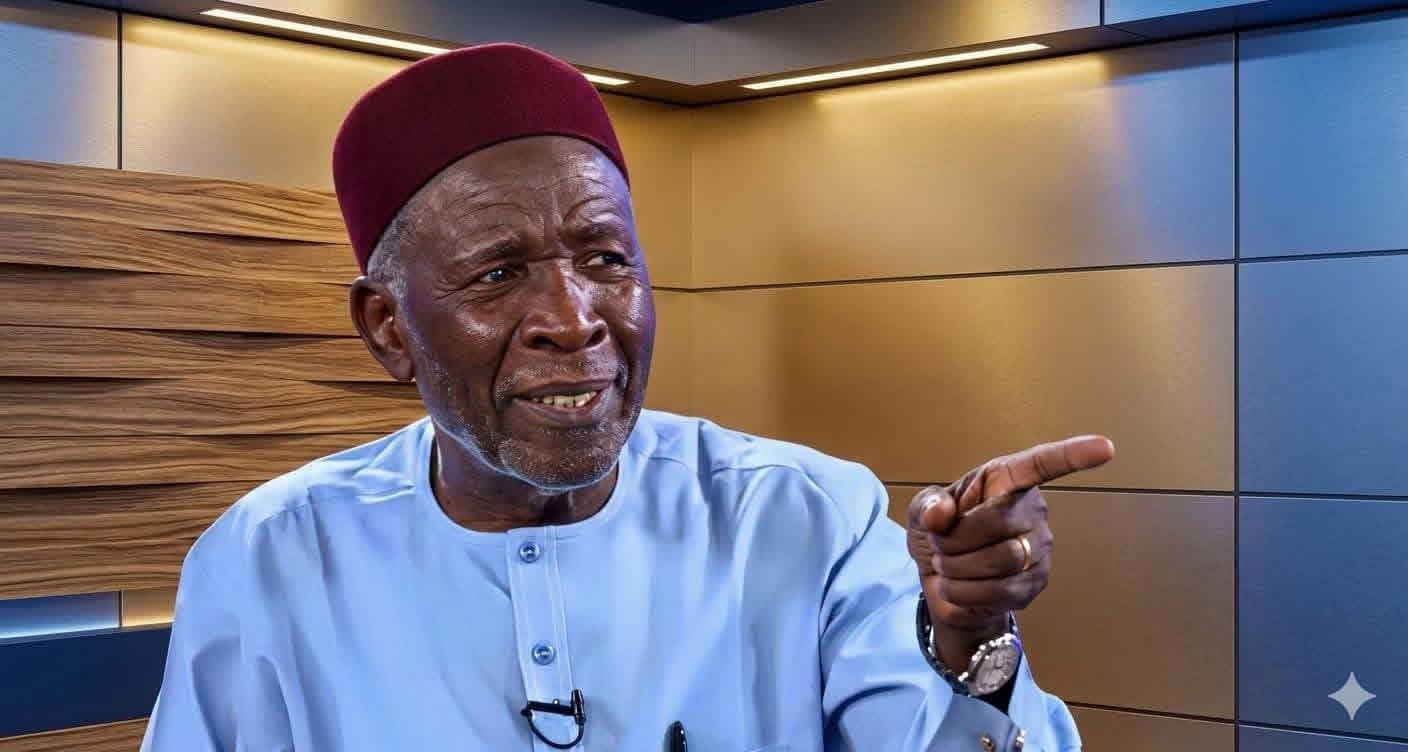
In the theatre of Nigerian politics, certain actors have mastered what analysts call the distraction technique: generating maximum noise about injustice at precisely the moment their own relevance is slipping away. The recent outbursts by Alhaji Buba Galadima against His Excellency, Governor Abba Kabir Yusuf, and the Director of the Department of State Services (DSS) in Kano State is a clear demonstration of this manoeuvre. The claims of midnight justice and the systematic arrest of opposition voices paint a dramatic picture of a state in crisis. The facts, examined honestly, tell a fundamentally different story.
It is not coincidental that Galadima’s public offensive against the Governor and the DSS intensified immediately following his removal as Chairman of the Governing Council of Kano State Polytechnic in February 2026. Governor Yusuf, acting under the stated policy of his Kano First Agenda, a governance framework oriented toward institutional performance and the prioritisation of Kano’s developmental interests, relieved Galadima of the position, citing the need for optimal performance and institutional repositioning. The role was subsequently conferred on the Emir of Gaya, Alhaji Aliyu Abdulkadir, a figure whose stature and local relevance align directly with the Governor’s repositioning objectives.
For a public figure who held a senior institutional appointment in a state of which he is not an indigene, a graceful and dignified exit would have been the appropriate response. Instead, Galadima chose retribution. His subsequent media campaign, escalating in intensity and in the seriousness of its allegations with each successive interview, is not the behaviour of a disinterested democratic advocate. It is the behaviour of a man whose access to institutional privilege has been withdrawn, and who is determined to exact a political cost for that withdrawal.
The specific allegations Galadima has advanced, including claims about the arrest of a radio personality and the characterisation of security agency actions as politically motivated persecution, represent a calculated misrepresentation of the constitutional and operational realities of governance in Kano State. Kano is navigating a complex security and political environment, one shaped by the Governor’s strategic realignment with the APC and the accompanying need to stabilise the state’s politics within a new national power configuration. In that context, the actions of the DSS have been directed, as they should be, by federal law, institutional mandate, and specific credible complaints, not by partisan instruction.
Freedom of expression, guaranteed under Section 39 of the Constitution of the Federal Republic of Nigeria, is a right the Governor’s administration has consistently respected. However, no constitutional guarantee of free expression extends to the use of media platforms to incite public disorder, spread demonstrably false information, or engage in conduct that, under the Cybercrime (Prohibition, Prevention, etc.) Act of 2015, constitutes a criminal offence. When security agencies invite individuals for questioning in response to credible complaints under these provisions, that is the rule of law functioning as designed. Characterising it as political kidnapping is not democratic advocacy. It is deliberate and legally questionable misrepresentation.
While Galadima has been constructing his narrative of persecution, the administration of Governor Abba Kabir Yusuf has been constructing something considerably more consequential: a governance record. The administration has pursued the reform of Kano’s tertiary institutions, addressing years of accumulated structural dysfunction. It has moved to clear long-overdue gratuity obligations to retired civil servants, a commitment to public workers that previous administrations allowed to languish. And it has taken deliberate steps to dismantle the architecture of godfatherism, the entrenched system of patronage-based political control that has historically subordinated Kano’s public institutions to the interests of political power brokers rather than the citizens those institutions exist to serve.
It is precisely this dismantling of godfatherism that illuminates the deeper logic of Galadima’s campaign. His objection is not fundamentally to the governance philosophy of the Yusuf administration. It is to a system in which access to public institutional positions, and the patronage and influence those positions confer, is no longer guaranteed by political connection alone. The removal from the Polytechnic board was not merely an administrative decision. It was a signal that the old arrangements no longer apply. Galadima’s response has been to attempt to demonstrate, through sustained public aggression, that such decisions carry a political cost. Governor Yusuf and his administration must, and should, remain undeterred by that calculus.
The people of Kano are neither passive observers nor easily manipulated audiences. They are a politically sophisticated electorate with a long institutional memory and a demonstrated capacity to distinguish between genuine democratic advocacy and the grievance politics of displaced privilege. Galadima is not fighting for the common people of Kano. He is fighting for a lost title, a withdrawn appointment, and a diminished political footprint. That is his right. But it should be named honestly for what it is.
Governor Abba Kabir Yusuf was elected to govern Kano in the interest of its people, not to preserve the access arrangements of those who regard public office as personal entitlement. His administration, the DSS, and all institutions operating within their constitutional mandates must remain focused on that mission, undistracted by the noise of those whose loudness is inversely proportional to the credibility of their arguments. Kano’s future will be built on governance, performance, and accountability, not on the manufactured grievances of those left behind by the end of an era they benefited from and now seek to restore.
ABOUT THE AUTHOR
Mohammed Babagana Abubakar is a political commentator and analyst with a keen interest in governance, accountability, and the democratic development of Kano State and Northern Nigeria.
The views expressed in this article are those of the author alone and do not represent the position of any organisation, party, or institution.
Opinion
GALADIMA’S ALLEGATIONS AGAINST GOVERNOR YUSUF AND THE DSS: POLITICALLY MOTIVATED, EVIDENTIALLY BASELESS, AND INSTITUTIONALLY DANGEROUS
The Unifier Project, a national civic organization committed to democratic accountability, responsible public discourse, and peaceful coexistence, has taken note of the recent media interview by Alhaji Buba Galadima, in which he advanced allegations against His Excellency, Governor Abba Kabir Yusuf of Kano State, and the Department of State Services (DSS) in Kano. He alleged, without verifiable evidence, that opposition voices in Kano State are being suppressed through the instrumentality of federal security agencies.
After a thorough review of the substance, context, and timing of these claims, the Unifier Project states unequivocally that the allegations are devoid of credible foundation and are driven by narrow political considerations rather than genuine democratic concern. We make this statement because the deployment of unsubstantiated allegations against public institutions carries measurable consequences for the stability of our democratic order, social cohesion, and public confidence in institutions.
The Unifier Project has examined Alhaji Galadima’s claims with the seriousness they demand. Our conclusion is unambiguous: not a single allegation is supported by documentary evidence, sworn testimony, or any verifiable account that could withstand independent scrutiny. What has been placed before the Nigerian public is a collection of assertions coloured by personal grievance, political frustration, and the rhetoric of a man whose relationship with the current political order in Kano has undergone a well-documented deterioration.
Allegations of political interference in a federal security institution such as the DSS are extraordinarily serious. They implicate constitutional principles, the rule of law, and citizens’ fundamental rights. Precisely because they are so serious, they demand an equally serious evidentiary standard. A press interview saturated with political animus and bereft of supporting documentation does not meet that standard. The Unifier Project calls on the public, the media, and the political community to treat these claims with the scepticism they deserve, and to resist amplifying unverified allegations simply because they are confidently stated.
No responsible analysis can proceed without examining context. It is public record that Alhaji Galadima was recently removed from the board of Kano State Polytechnic. It is equally public record that these intensified allegations emerged immediately after that removal, and against the backdrop of Governor Yusuf’s association with the APC.
The Unifier Project does not suggest that political disappointment forfeits the right to speak. Every citizen retains constitutional freedom of expression, unconditioned by political loyalty. However, when a public figure who has suffered an identifiable political setback immediately turns to making sweeping, institution-threatening allegations against those who administered that setback, the burden of proof rises sharply, and the public’s obligation to interrogate motive rises with it.
The pattern of timing is neither subtle nor coincidental. It is the familiar architecture of a grievance campaign dressed in the language of democratic concern. The Unifier Project calls it by its proper name.
The DSS is a constitutionally established institution charged with protecting Nigeria’s internal security. To allege, without evidence, that it is being weaponised for partisan purposes in Kano is not merely to criticise a governor. It is to invite the public to regard a pillar of national security as corrupt and undeserving of trust.
The consequences are not abstract. Citizens who distrust security institutions cooperate less with them, report fewer threats, and become more susceptible to criminal, extremist, or vigilante alternatives that fill the resulting vacuum. In a state as significant as Kano, with its population density, economic centrality to Northern Nigeria, and historical vulnerabilities, the erosion of institutional confidence is not a political game. It is a security hazard.
The Unifier Project calls upon Alhaji Galadima and all who have amplified these allegations to reflect on their consequences, and to consider whether any personal or partisan interest is worth the institutional damage they risk inflicting on the Nigerian state.
The Unifier Project affirms without qualification that freedom of expression is a democratic value we defend, including when exercised by those whose motives we question. We do not seek to silence Alhaji Galadima or any citizen with grievances against authority.
However, freedom of expression has never been a licence for evidence-free, potentially defamatory targeting of individuals and institutions. The Nigerian Constitution, the African Charter on Human and Peoples’ Rights, and international democratic standards all recognise that expression carries responsibilities of accuracy, fairness, and proportionality. Public commentary making serious allegations without factual grounding risks crossing into defamation, with all the legal consequences that entails.
We call upon political actors, commentators, social media influencers, and media organisations to uphold responsible communication. Verify before you amplify. Question the motive behind the message. The coordinated spread of unverified allegations through digital platforms is information warfare with real victims, real consequences, and real costs to our democracy.
Alhaji Galadima’s allegations did not emerge in isolation. They are part of a pattern of coordinated negative messaging that has intensified following recent political developments in Kano State. Across Facebook, X, WhatsApp, and TikTok, a campaign of narrative warfare has been waged against the person, record, and administration of Governor Yusuf, drawing on fabricated claims, decontextualised information, emotional manipulation, and strategic amplification of partisan voices.
This is the architecture of a disinformation operation. Its goal is not to inform but to destabilise, manufacturing a political reality so saturated with negativity that truth becomes difficult to locate and public confidence impossible to sustain. The Unifier Project calls on regulatory bodies, civil society, and responsible media to take a stronger, coordinated stand against the weaponisation of digital platforms for political disinformation.
The Unifier Project calls upon political actors of all affiliations to commit to evidence-based communication and refrain from making or endorsing unsubstantiated allegations. We call upon the media, traditional and digital, to apply rigorous editorial standards to politically charged claims, demand evidence before amplification, and uphold their responsibility as gatekeepers of the public information environment.
We call upon civil society, religious leaders, traditional rulers, and community influencers across Kano State and Northern Nigeria to resist divisive narratives and serve as anchors of reason and social cohesion. We call upon citizens to engage critically with political information, ask who benefits from the narratives placed before them, and demand the same standard of evidence from political actors that they would demand from any other party.
The future of Nigerian democracy will be determined not only by the quality of its leaders, but by the quality of its public discourse. That discourse is under sustained attack. The Unifier Project is committed to defending it, and we invite every Nigerian of goodwill to stand with us.
Issued and authorised by:
NAJEEB NASIR IBRAHIM
National Director-General, The Unifier Project
Abuja, Nigeria | 28 February 2026
Opinion
OPPOSITION OR INDIRECT ENABLEMENT: THE STRATEGIC QUESTION KWANKWASO’S POLITICAL ARITHMETIC FORCES KANO TO CONFRONT
By Nworisa Michael
Coordinator, Inter-tribe Community Support Forum
nworisamichael1917@gmail.com
It is a common knowledge that Kano politics has never been ordinary. It shapes national outcomes, influences the political direction of the North, and has historically play a significant role in who sits at the centre of power in Abuja. Therefore, to engage seriously with Kano’s political dynamics is, therefore, not merely a regional exercise. It is an engagement with the strategic heartbeat of Nigerian democracy itself.
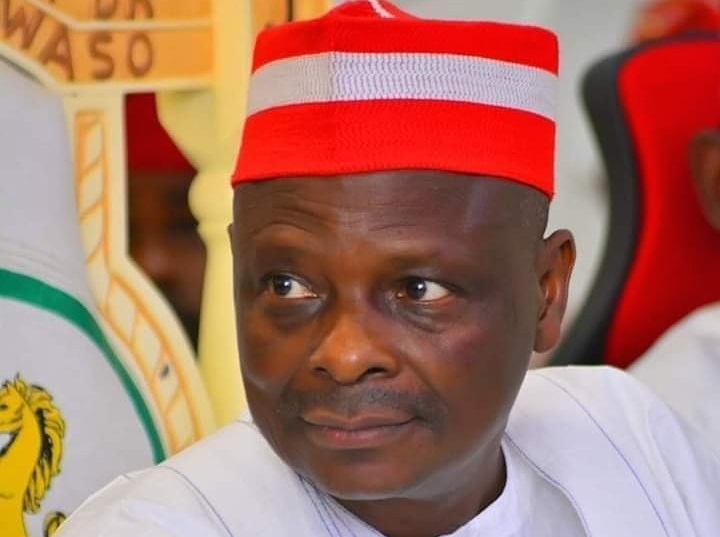
Today, two figures dominate that conversation: Senator Rabiu Musa Kwankwaso, the veteran political architect whose Kwankwasiyya movement commands one of the most disciplined and loyal political bases in the country, and His Excellency, Governor Abba Kabir Yusuf, the sitting governor navigating the complex terrain of governance within a rapidly shifting national power equation. Both men matter. But beyond the chants of loyalty and the colours of party affiliation, Kano’s politically conscious citizens must now confront a harder, more strategic question: are the political decisions being made in their interest actually weakening the dominant structure, or quietly reinforcing it?
The 2023 presidential election offers a case study that demands honest reflection. Nigeria entered that election cycle with a genuine opposition opportunity. Polling data, civil society analysis, and the visible energy of public discontent with the ruling All Progressives Congress all suggested that a consolidated opposition could have fundamentally altered the outcome. That consolidation never materialised. The Labour Party’s Peter Obi drew significant support from the South and among urban youth. The NNPP’s Kwankwaso commanded loyalty in Kano and parts of the North. The PDP’s Atiku Abubakar held his traditional base. The result was a three-way fragmentation that divided the anti-APC vote with mathematical precision, producing exactly the outcome that benefited the ruling party.
Whether this fragmentation was the product of political pride, strategic miscalculation, or something more deliberately calibrated remains a question that Nigerian political analysts continue to debate. What is not debatable is the arithmetic: a divided opposition is a gift to the incumbent. History, from Nigeria’s own political transitions to comparative democratic experiences across Africa, consistently demonstrates that opposition forces which cannot unite around a minimum common platform do not defeat entrenched ruling parties. They extend their tenure.
Returning to the present, there is a visible contrast between the political postures of the two principal figures in this analysis. Governor Abba Kabir Yusuf’s recent political alignment choices are, whatever one’s assessment of their strategic wisdom, characterised by directness and visibility. He has staked a position openly within the national power configuration. Citizens, analysts, and political opponents can measure him against that position. His direction, whether one agrees with it or not, is clear.
Senator Kwankwaso, by contrast, maintains a posture of vigorous anti-APC rhetoric while his concrete political decisions at critical moments of opposition consolidation have consistently produced alternative lanes rather than unified fronts. The Kwankwasiyya movement remains formidable in its base loyalty and its organisational discipline. But loyalty and organisation are means, not ends. The strategic question is what those assets are being deployed to achieve, and whether the outcomes they produce serve the stated goal of providing a credible alternative to the current political order.
Politics, at its most rigorous, is not judged by the passion of speeches or the size of rallies. It is judged by outcomes. And the outcomes that matter most in opposition politics are coalition-building, electoral consolidation, and the actual transfer of power from one political force to another. Measured against these outcomes, a critical pattern emerges in Kwankwaso’s recent political engagements: when moments arise that could produce a meaningful consolidation of opposition forces, the decisions taken tend to fracture rather than unify the alternative.
This raises a question that is uncomfortable precisely because it must be asked without malice and answered without evasion: if a political actor consistently opposes the dominant structure in language while consistently producing outcomes that strengthen it in practice, at what point does the distinction between opposition and indirect enablement become meaningful? This is not an accusation of deliberate collaboration. It is a structural observation about the consequences of political choices, and consequences, not intentions, are what history records.
The citizens of Kano, and particularly the Kwankwasiyya faithful, are among the most politically engaged communities in Nigeria. Their loyalty is not blind. It is built on decades of political participation, on genuine belief in a leader who gave them a sense of dignity, visibility, and political identity. That loyalty deserves respect. But loyalty, precisely because it is valuable, must be protected from exploitation by strategic clarity rather than surrendered to emotional attachment.
The questions that Kano’s political followers owe themselves are simple and direct. Who benefits consistently when opposition alliances fail to materialise? Who grows stronger each time the alternative cannot consolidate? What is the long-term strategic destination of a political movement that is powerful enough to prevent the opposition from unifying but has not yet demonstrated the capacity to win power independently? These are not attacks on Kwankwaso’s legacy or his genuine contributions to Kano’s political development. They are the questions that any politically serious follower must be willing to ask of any leader, including one they admire.
Kano deserves political transparency, not only in words but in strategic direction. The gap between what a political actor says and what the outcomes of their decisions consistently produce is not a private matter. It is a public accountability question of the highest order. Senator Kwankwaso may well be engaged in long-term strategic chess, using apparent fragmentation as negotiation leverage toward a larger consolidation that is not yet visible. That possibility deserves acknowledgement. But if that is the strategy, its logic and its destination must at some point be made legible to the millions of citizens whose political futures are shaped by its execution.
The difference between genuine opposition and indirect enablement does not lie in rhetoric. It lies in results. And the time has come for Kano’s political community, in all its sophistication and historical awareness, to evaluate its leadership not by the loudness of the opposition voice, but by the clarity and effectiveness of the path it is building toward the change it claims to seek.

Ex-Bayelsa Governor Dickson Defects from PDP to NDC

NDLEA Clarifies: Drug Case Against Abba Kyari Still Active After Court Discharge

US Troops in Nigeria for Training and Advice Only, Defence Minister Clarifies

Impeachment Notice: Kano Assembly Advises Deputy Governor, Comr. Abdulsalam, to Vacate Office

At 89, Obasanjo Reflects: “Leadership’s Burden and Blessing Are Often the Same

BREAKING: El-Rufai Suffers Nose Bleeding in EFCC Custody, Family Denied Access

Breaking:NAHCON Chairman Prof.Abdullahi Saleh Resigns

INEC Registers Two New Political Parties, Roster Rises to 20

JUST IN: Nnamdi Kanu Files Appeal Against Conviction on Life Sentences

Abubakar Isah Dandago Resigns as Hikima Radio GM
Ex-Bayelsa Governor Dickson Defects from PDP to NDC
NDLEA Clarifies: Drug Case Against Abba Kyari Still Active After Court Discharge
US Troops in Nigeria for Training and Advice Only, Defence Minister Clarifies
Impeachment Notice: Kano Assembly Advises Deputy Governor, Comr. Abdulsalam, to Vacate Office
At 89, Obasanjo Reflects: “Leadership’s Burden and Blessing Are Often the Same
BREAKING: El-Rufai Suffers Nose Bleeding in EFCC Custody, Family Denied Access
Breaking:NAHCON Chairman Prof.Abdullahi Saleh Resigns
INEC Registers Two New Political Parties, Roster Rises to 20
JUST IN: Nnamdi Kanu Files Appeal Against Conviction on Life Sentences
Abubakar Isah Dandago Resigns as Hikima Radio GM
-

 Opinion4 years ago
On The Kano Flyovers And Public Perception
-

 Features5 years ago
How I Became A Multimillionaire In Nigeria – Hadiza Gabon
-

 Opinion5 years ago
Kano As future Headquarters Of Poverty In Nigeria
-

 History5 years ago
Sheikh Adam Abdullahi Al-Ilory (1917-1992):Nigeria’s Islamic Scholar Who Wrote Over 100 Books And Journals
-

 Opinion4 years ago
My First Encounter with Nasiru Gawuna, the Humble Deputy Governor
-

 History5 years ago
The Origin Of “Mammy Market” In Army Barracks (Mammy Ochefu)
-

 History4 years ago
The History Of Borno State Governor Professor Babagana Umara Zulum
-

 News4 years ago
Federal University Of Technology Babura To Commence Academic Activities September