
News
Special Report:Nigerians’ And Waning Patriotism ,Experts Calls for Reform
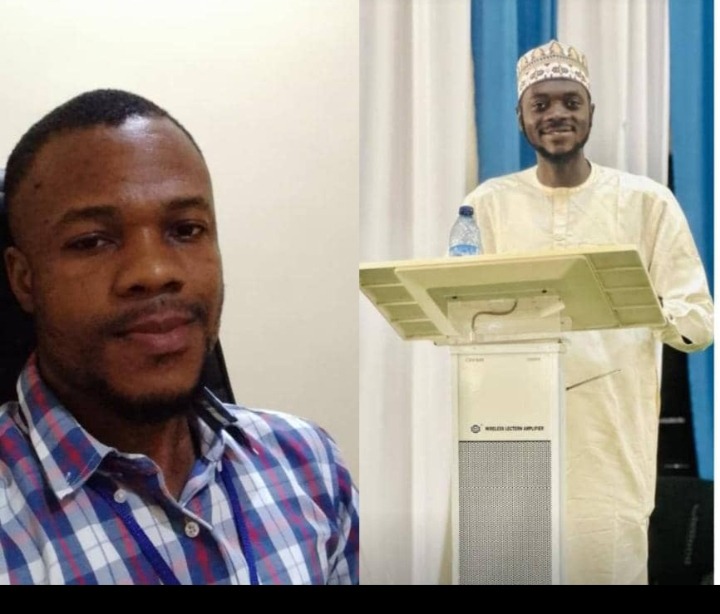
Yusuf Danjuma Yunusa- NIGERIAN TRACKER correspondent
Amid growing demands for institutional reforms across Nigeria, a concerning disconnect exists between citizens and the spirit of patriotism a vital catalyst for the very change they seek. Many fail to recognize that patriotism serves as the driving force behind national transformation, a quality currently in short supply among the populace.
Increasingly, Nigerians feel no sense of duty toward their country, with some even viewing national identity as a mark of shame. This raises a critical question: How can meaningful reform take root when such disillusionment persists?
In an effort to investigate the causes and potential solutions to this growing apathy, Nigerian Tracker News correspondent Yusuf Danjuma Yunusa consulted experts for insights:
Historical Roots of Unpatriotism
Political scientist Chukwuemeka Precious Chidiebere traced the issue back to Nigeria’s pre-independence era, where loyalty was often divided along ethnic and tribal lines.
“Even before independence, the patriotism displayed by leaders was largely tied to ethnic and tribal affiliations,” Chidiebere noted. “This division fueled the civil war an unequivocally unpatriotic conflict.”
He emphasized that true patriotism hinges on unity and upholding national values, qualities he argued were absent in past leadership.
When asked about the impact of poor governance on citizens’ loyalty, Chidiebere was unequivocal: “Leaders have normalized broken promises, breeding political apathy another form of unpatriotism. Poor leadership is undeniably a major factor in the erosion of national loyalty.”
Comparing Nigeria to other African nations, he observed that the country ranks low in patriotism, attributing this to systemic governance failures.
Leadership Failures Fuel Disillusionment
Sociologist Isah Imran expanded on the discussion, criticizing Nigerian leaders for failing to set a patriotic example.
“Many of our leaders seek medical care, education, and investments abroad resources that could strengthen local institutions,” Imran stated. “This contradicts core patriotic values: sacrifice, national pride, and faith in domestic systems.”
A Path Forward
Despite these challenges, both experts expressed cautious optimism about Nigeria’s future.
Imran outlined key prerequisites for progress: “Good governance led by honest, transparent leaders is essential to rebuilding trust. Nigerians must also prioritize national identity over ethnic divisions.”
Echoing this sentiment, Chidiebere stressed that unity can only be achieved when discourse transcends tribal and ethnic biases.
As calls for reform grow louder, the experts’ message is clear: without a resurgence of patriotism from both leaders and citizens Nigeria’s path to meaningful change remains uncertain.
Voices From Ordinary Nigerians
Various Nigerians shared their candid opinion on how they feel about the country:
Omeiza Alfa, a 200 level student of engineering was asked if he considers himself a patriotic Nigerian and he responded, “Honestly, I don’t know if I am one.”
When asked why, he said: “with the level of suffering and the economic situation of the country, I am considering leaving the country for greener pastures–which is certainly not a patriotic mindset.”
Another respondent, Nazir Musa, was of the opinion that if given the opportunity to change one thing that could make Nigerians more patriotic, he will definitely recommend a drastic reform in the governance system of the country:
“It’s in this country that Nigerian senators are earning in millions of naira excluding their allowances–more than the professors that are serving as lecturers in the universities,” “no professor in Nigerian universities earn close to a million naira,” he criticized.
“So if I could change one thing to make Nigerians more patriotic, it will definitely be the system of governance where lecturers will be well compensated and our graduates gainfully employed,” Mr. Nazir proposed.
Sodiq Oluwatele Jimoh, a final year student of Ahmadu Bello University, Zaria, was also of the same opinion that he isn’t sure if he is a patriotic Nigerian:
“Although, I will never try anything to break the law in the country but, being a patriotic citizen is something I am not sure of.”
When asked why, Mr. Jimoh responded that he is political apartheid:
“I don’t vote. As a matter of fact, I don’t even have voter’s card,” he added.
Mr. Sodiq also recommended that for Nigerians to be patriotic, there should be good governance, and for that to happen, allowances and salaries of the elected political office holders should be reduced in such a manner that only those with genuine intention to make good impacts in the country will contest for elections.
From professionals to everyday citizens, the consensus is clear: tangible governance reforms not just rhetoric are essential to restoring faith and patriotism among Nigerians.









News
Terrorist Logistics Suppliers Apprehended in Borno
By Yusuf Danjuma Yunusa
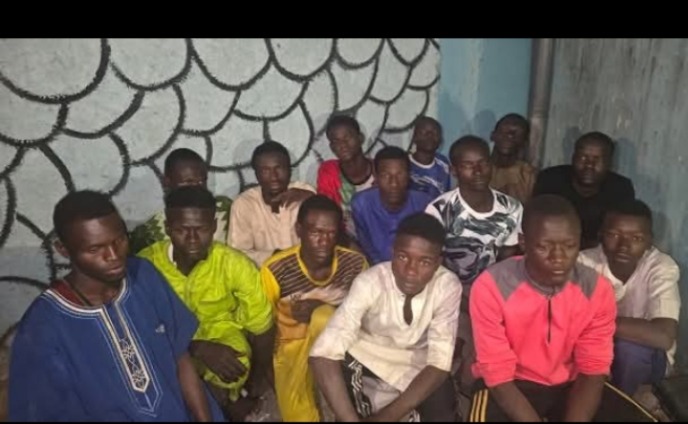
Troops of Operation Hadin Kai, OPHK, have apprehended 18 suspected logistics suppliers allegedly enroute Gubio, with plans to proceed to the Gudumbali axis, a known Boko Haram terrorists, BHTs, enclave.
Troops of Operation Hadin Kai, OPHK, have apprehended 18 suspected logistics suppliers allegedly enroute Gubio, with plans to proceed to the Gudumbali axis, a known Boko Haram terrorists, BHTs, enclave.
This is contained in a daily operational report made available to the News Agency of Nigeria on Wednesday.
The military said the suspects were intercepted while travelling towards the location to deliver the goods to the terrorists.
According to the report, preliminary investigation revealed that all 18 suspects confessed to engaging in the supply of goods to the terrorist group.
“They admitted that they routinely purchase and convey items to the terrorists.
“Their justification was lack of employment, which points to a deeper socio-economic challenge in Maiduguri and its environs,” the army said.
The development, according to the reportt, validates recent remarks by the Chief of Defence Staff on the link between economic hardship and the sustenance of insurgency logistics networks.
“The arrest highlights the critical role of civilian collaborators in sustaining terrorist operations, particularly in remote areas such as Gubio and Gudumbali,” it added.
The army called for a comprehensive approach combining military operations with economic empowerment and job creation to address the root causes of insurgency in the region.
News
Kano Gov’t Offers Study Scholarship to SWAN Members
By Abdulgafar Oladimeji
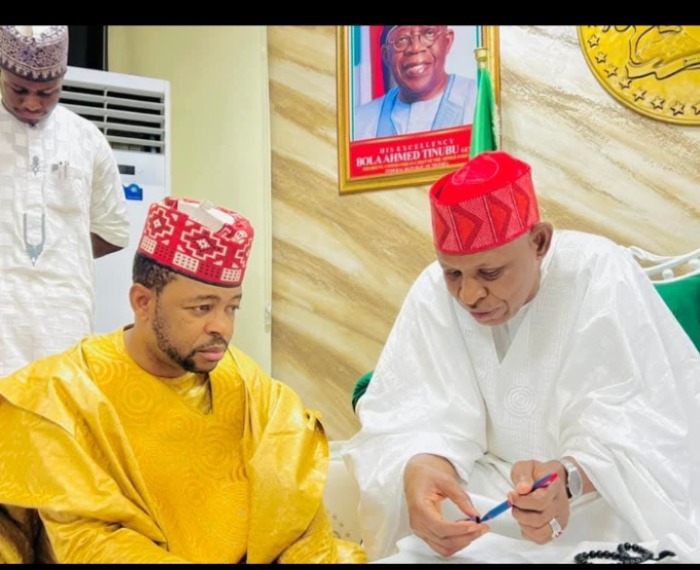
Kano state government has facilitated and supported members of the Sports Writers Association of Nigeria, SWAN Kano chapter to proceed to pursue professional certification courses in sports journalism, our correspondent reports .
The Special Adviser , youths and sports to Kano state governor, Sani Musa Danja, disclosed that the offer covers their tuition fees.
He said , the beneficiaries have been identified and their enrolment process have been completed.
According to him, through interactions with stakeholders , the decision was reached for some sports writers, who are faced with the challenge of acquiring the required professional qualification to practice their trade should be given support to fill the gap.
said, findings have revealed that , for Kano sports writers to compete favorably there exists the urgent need to empower members of the association to acquire certain requisite qualification to enable them feature amongst the best in Nigeria and beyond.
Danja speaking, when he hosted SWAN members in his office , located within the premises of Kano state Library Complex, along Ahmadu Bello Way said that the state government, under Abba Kabir Yusuf , on discovering this major challenge , acted swiftly to address the lapses, by offering to sponsor 10 SWAN members to pursue professional diploma in Sports Journalism at El Roi London University.
In his word “ we give thanks to almighty Allah for his mercies, I want to thank our mentor and leader, his excellency governor, Abba Kabiru Yusuf , who made this possible.
“his excellency takes the issue of empowering our people very seriously, the challenge facing our sports journalists is principally the issue of professional certification, some of our sports journalists have their degrees in other fields, but we are aware that, they also require to obtain certain minimum qualification in journalism or other related fields to help them to excel .
“in line with the policy of the government of his excellency, we have moved in to make sure , these sons and daughter of Kano overcome this hinderance that may hinder their professional progress.
“the sports media is the back bone of sports development and sports promotion, our government is focused and committed to support and reshape the sports media to achieve the set out goal to empower Kano youths through sports.
“the mission of his excellency through this gesture is to empower our professional sports journalists and give them the required qualification to continue with their pursuit to upward steadily representation of Kano state in that sector.
Danja hinted that, Kano state government remains unrepentant in its upward investment drive to create a generation of professionals that would keep the state afloat on the terrain of quality and abundance human resources.
Reacting, chairman SWAN Kano chapter, comrade Zahradeen Saleh thanked the state government for the support.
He said, the scholarship offer is an major step towards uplifting the practice of sports journalism in the state.
He said the dividends of sports could only accrue with the effective operations of the sporting press through the training and re-training of sports writers.
He admitted that, acquiring the requisite qualification to practice sports journalism has been one of the major challenges confronting members of the association.
“ our members who are the beneficiaries of this offer are youths, on completion of the professional course, they will have stable professional growth and would be better equipped to contribute their quota to the development of the state.” Zahradeen said .
News
Obi Raises Alarm Over Arrest of Cleric Who Hosted Him in Kaduna
By Yusuf Danjuma Yunusa
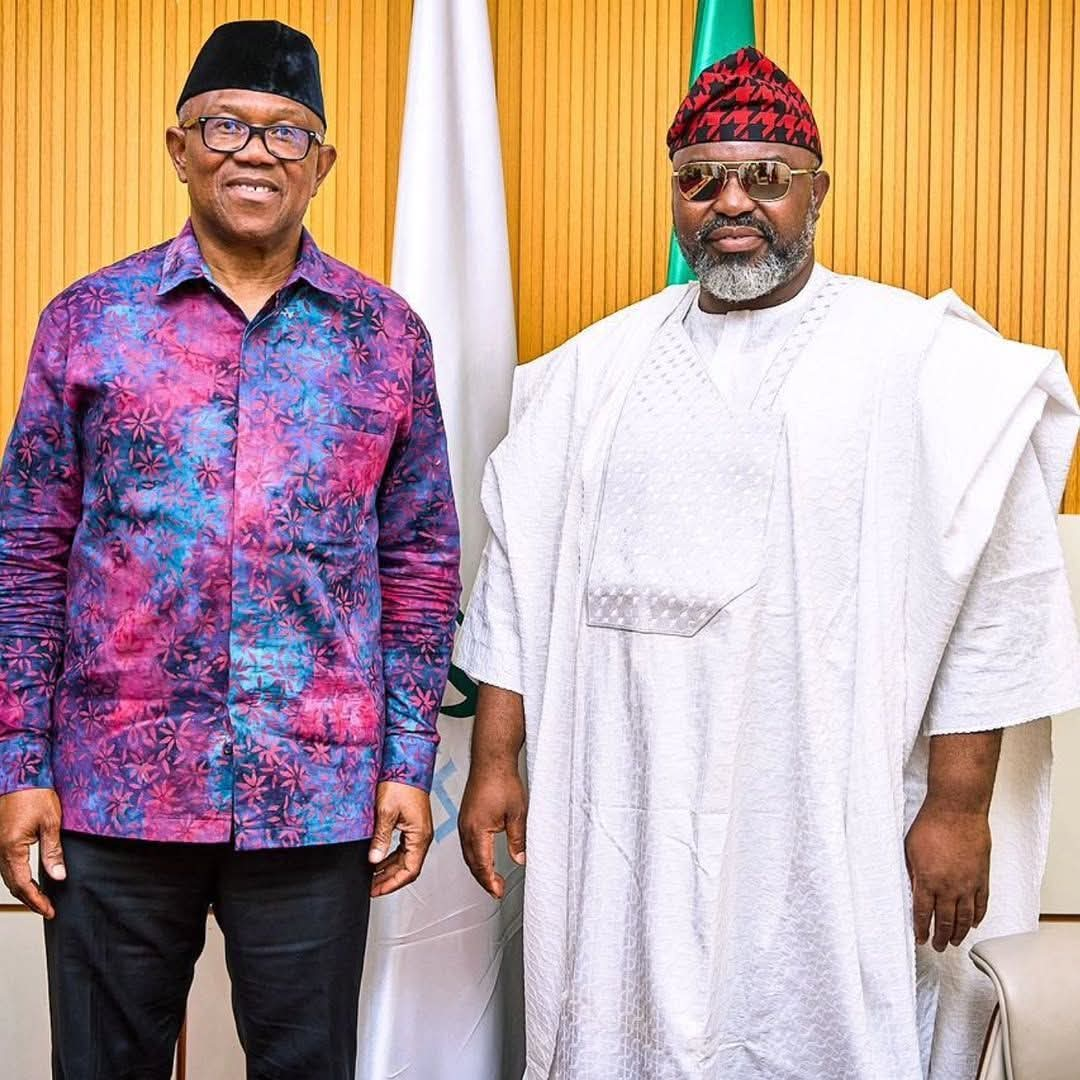
Peter Obi, the Labour Party’s 2023 presidential candidate, has condemned the arrest of a Muslim cleric who hosted him over the weekend, describing the incident as a sign of deepening threats to civil liberties in Nigeria.
In a statement shared on his X (formerly Twitter) account on Tuesday, Obi said he was notified that Sheikh Ahmad Tijjani Umar was taken into custody by security operatives shortly after their meeting in Kaduna on Sunday.
“This development underscores the deeply troubling state of our nation and our democracy, where freedom of speech and movement is increasingly threatened, and where citizens and perceived political opponents face harassment and unnecessary persecution,” Obi wrote.
The former Anambra governor warned that such actions risk eroding Nigeria’s democratic foundations if left unchecked. He urged authorities to uphold the rule of law and refrain from tactics that intimidate dissent.
“This country must defend freedom and free speech, which are the hallmarks of every democratic society. Suppression and intimidation of dissent can never stand in a democratic society, and this Nigerian government must understand this fact,” he added.
Obi called on those “bent on undermining our already fragile democracy” to desist and adhere to democratic principles in dealing with citizens.
As of Tuesday morning, security agencies had not issued an official statement regarding the cleric’s arrest or the circumstances leading to it. Sheikh Umar, a respected religious figure in Kaduna, has not been publicly charged.

Terrorist Logistics Suppliers Apprehended in Borno

Kano Gov’t Offers Study Scholarship to SWAN Members

OPINION: Examining the Sanity of Saner Climes

Obi Raises Alarm Over Arrest of Cleric Who Hosted Him in Kaduna

ICPC Arraigns Ex-Governor El-Rufai in Kaduna Amid Tight Security

BREAKING: El-Rufai Suffers Nose Bleeding in EFCC Custody, Family Denied Access

The Governor Who Chose His People Over His Politics: Abba Yusuf and the Moral Courage Behind Kano First

FREEDOM OF SPEECH, NOT FREEDOM FROM CONSEQUENCE: A CITIZEN’S CALL FOR RESPONSIBLE PUBLIC COMMENTARY

How Kano Government Official Allegedly Intimidate And Insult Two Journalists On Lawful Duty

DSP Barau and APC Unity in Kano
Terrorist Logistics Suppliers Apprehended in Borno
Kano Gov’t Offers Study Scholarship to SWAN Members
OPINION: Examining the Sanity of Saner Climes
Obi Raises Alarm Over Arrest of Cleric Who Hosted Him in Kaduna
ICPC Arraigns Ex-Governor El-Rufai in Kaduna Amid Tight Security
BREAKING: El-Rufai Suffers Nose Bleeding in EFCC Custody, Family Denied Access
The Governor Who Chose His People Over His Politics: Abba Yusuf and the Moral Courage Behind Kano First
FREEDOM OF SPEECH, NOT FREEDOM FROM CONSEQUENCE: A CITIZEN’S CALL FOR RESPONSIBLE PUBLIC COMMENTARY
How Kano Government Official Allegedly Intimidate And Insult Two Journalists On Lawful Duty
DSP Barau and APC Unity in Kano
-

 Opinion4 years ago
On The Kano Flyovers And Public Perception
-

 Features5 years ago
How I Became A Multimillionaire In Nigeria – Hadiza Gabon
-

 Opinion5 years ago
Kano As future Headquarters Of Poverty In Nigeria
-

 History5 years ago
Sheikh Adam Abdullahi Al-Ilory (1917-1992):Nigeria’s Islamic Scholar Who Wrote Over 100 Books And Journals
-

 Opinion4 years ago
My First Encounter with Nasiru Gawuna, the Humble Deputy Governor
-

 History5 years ago
The Origin Of “Mammy Market” In Army Barracks (Mammy Ochefu)
-

 History4 years ago
The History Of Borno State Governor Professor Babagana Umara Zulum
-

 News4 years ago
Federal University Of Technology Babura To Commence Academic Activities September