
Opinion
THE ’12- DAY WAR : lesson for tomorrow-Inuwa Waya
Let me start with a hypothetical scenario. You have a neighbour who was full of pride because he is strong economically and otherwise. He has friends equally very powerful who come to his assistance whenever he requested.
Because of that, he holds every household in your area with disdain and contempt. With or without provocation, he enters any household, maim, and even kill if there is resistance. His powerful friends rearmed him with weapons and money from time to time for him to continue oppressing and frightening the neighbourhood. Everyone in the environs and beyond is afraid of him, and nobody dare challenge his impunity and wanton display of power and arrogance. Any perceived threat to his power is met by maximum punishment. When the situation became unbearable, you started showing signs of disapproval. You began to raise awareness for the neighbourhood to address his excesses. Once he noticed your actions, he became more aggressive and started planning on how to deal with you. He began by planning with his powerful friends to kill your relations who are staying
in a nearby neighbourhood. He followed that with clandestine actions to intimidate you for daring him. One day in your absence, he entered your house, vandalised properties, and killed some members of your family whilst others managed to escape. He also left an inscription on your door stating that you are the next target. When you returned home and saw the carnage, you became confused. You started having a dilemma on whether to avenge or beg him to spare your life and those of the remaining members of your family. The aforementioned hypothetical narration typified the situation between the Islamic Republic of Iran and Israel. We assumed you are IRAN and ISRAEL is the neighbour who has been terrorising the neighbourhood and the one that conducted the assault in your house. Let’s move out of the hypothetical World into the realm of reality. After the Israel preemptive attack against Iran on the 13th of June, it took less than twenty- four hours for Iran to exert her revenge. The revenge itself was one, it’s significance however was the show of determination and courage on the part of the Iranian nation to confront the state of Israel. Since its creation in 1948, Israel uprooted and expelled the Palestinians who are the original inhabitants of the land. Over time, they expanded their land grab by building more settlements in occupied lands of Jerusalem, Jericho, West Bank, and Bethlehem, actions which are illegal under the International Law. They invaded Southern Lebanon in 1982 and participated in planning, preparation and execution of Sabra and Chatila massacre in which nearly three thousand five hundred Labanese and Palestinians were killed. In June 1967, Israel entered and gained control of Golan Heights, which was under the control of the Syrian Arab Republic. From time to time, Israel made incursions into any territory to conduct covert and overt military and intelligence operations. Through targeted assassinations, Israel killed a number of persons. In Palestine for instance, Israel assassinated Yahaya Ayesh, Sheik Ahmed Yasin, Mahmoud Rantisi his brother Abdulaziz Rantisi, Yahaya Sinwar, Mohammed Sinwar, Ismail Haneya, Chairman Yasser Arafat, to mention but a few. On 27th November 2020, Israel assassinated Mohsen Fakhrizadeh Mahabad an Iranian nuclear scientist. In the 13th June attack, Israel killed fourteen Iranian nuclear scientist along with their neighbours and members of their families. At the behest of Israel, the United States assassinated Iranian Genaral Qasim Soleimani on the 3rd January 2020 at the Baghdad airport. It was based on Israel false intelligence that America and the rest of the West invaded Iraq and deposed Saddam Hussain in March 2003. Tens of thousands of people were killed in that war. In the end, no weapons of mass destruction were found as stated by the Israeli intelligence. In Gaza where Israel is raging a relentless war against unarmed people, over 56,000 thousand Palestinians were killed and 2.1 million of them were displaced and subjected to starvation. All infrastructures in Gaza were destroyed by Israel bombs. The strip is now unhabitable for ordinary human beings. This war followed the Hamas attack on Israel which killed 1200 Israelis. In addition to the general subjugation the Palestinians are going through since Israel was created in 1948, the people of Gaza suffered additional humiliation by living in what is generally referred to as the largest open prison in the World. In this particular war, Israel tested lethal weapons that were never use in any warfare. When they run out of bombs, America, replenished them with new supplies. Millions of Palestinians are scattered all over the World as refugees or on exile to escape Israel onslaught.
Israel is a very powerful Country. It is the only nuclear state in the Middle East, although it maintained policy of silence regarding its nuclear weapons. The Israel nuclear possession came to the World’s attention in 1986, when Mordachai Vanunu a former Israel nuclear technician gave detailed information and photos of Israel’s nuclear program to the British newspaper The Sunday Times. His revelations indicated that Israel had developed a substantial nuclear arsenal. After that revealing interview, Vanunu was kidnapped in Rome and brought to Israel by the Israel intelligence outfit, Mossad. He was tried in secret and was sentenced to 18 years imprisonment. To date Israel refused to join the International Atomic Energy Agency ( IAEA) and denied it’s inspectors entry visa to visit the County for inspection.
Through the work of the American Israel Public Affairs Committee ( AIPAC), Israel was able to get political and diplomatic cover from the United States of America. It was estimated that the United Nations Security Council had passed over 30 resolutions that Israel is accused of contravening. Additionally, the US had used its veto power over 40 times to block resolutions critical of Israel in the Security Council. Most of these resolutions relates to Israel’s activities in Palestine, Lebanon, Syria and Jerusalem. In today’s World, political analysts have concluded that Israel is the most powerful Country, more powerful than even the United States that gives it all the protection at the International level.
When a Country like Israel attacks one, it is in One’s interest to retreat and run away. That brought us to the significance of the revenge carried out by the Islamic Republic of Iran against the Jewish state. The Iranian bravery demystified the vulnerability of the invulnerability of the state of Israel. It further exposed the myth that no Country can attack Israel and remain a Country. In the twelve days war, the Iranian short, medium and long range missiles caused massive destruction in Israel. The Iranian drones and missiles penetrated the Israel’s iron dome, David sling and arrows, to cause maximum damage in Tel Aviv, Haifa, Dimona, Hora, Hod HaSharon, Beersheba, and Rishon LeZion. During the period of the war, the Israelis experienced terrible consequences of their actions. Schools were closed, workers were asked to go home, sirens were activated every now and then and people were in and out of public shelters. At home, people were asked to listen to radios and television for intermittent announcements. The restaurants, beaches and night clubs were all deserted. People were running helter skelter. Before the 13th of June, if you ask the Israelis that they would experience such, they would say you are deluded. But it happened, it was a reality and not a dream. The government became confused just as the people were. The jews are pampered people full of pride and lavish lifestyle. The Iranians are not. They are prepared for a long war. They experienced it before fighting the Iraqis for eight years. The Iranians have been in one form of sanction or another since the Islamic revolution of 1979. The sanctions made them resilient and enable to make inventions and innovations for their progress and development. They also have pride about their religion and their ancestry. You just can not beat them easily.
When Israel realised that their military campaign is ineffective, they begged the Americans to come to their rescue. Back home, the majority of the Americans do not have the appetite for war. President Trump was elected to stop Americans from going to war. However in order not to embarrass the Israelis, President Trump decided to intervene in the war by striking the Iranian nuclear facilities on June 22. On that day, the United States Air Force and Navy attacked three Iranian nuclear sites at Fordow, Natanz, and Isfahan. The operation was conducted using bunker buster bombs. President Trump said the Iranian nuclear programme has been obliterated. Israel said the same thing. Iran and other intelligence sources in the US said otherwise. They believe the programme was only delayed with a month or two. Be that as it may, the Islamic Republic of Iran had always insisted that its nuclear programme is for civilian purposes and nobody can stop it from exercising that right under whatever guise. On June 23, Iran retaliated by attacking the American air base at Al Udeid in Qatar. One hour before the attack, the Iranians gave the Qatari government notice of the attack, and also to the Americans through Qatar. There were no casualties in the attack.
On the 12th day of the war, President Trump informed the World that both Iran and Israel agreed on ceasefire. From the way President Trump spoke, it appears both Iran and Israel showed signs of exhaustion. More importantly, Israel who started the unjustified pre-emptive military strikes was severely devastated . It was a tactical blunder on their part. They should have known that there is a limit to nations endurance. The ceasefire which everyone has been asking them for over 15 months in respect of their war in Gaza, they now agree to it in 12 days in the war with Iran. Their pre-emptive strike at this time boomerang. As for the Middle Eastern region and the World in general, the ceasefire has brought a welcome relief. The global economy would have been adversely affected had the war continue.
In conclusion, it is our hope that the International community especially the United Nations Security Council (UNSC) will take a lesson from these. They should put the necessary mechanisms in place to ensure that all members of the United Nations are treated equal. They must ensure that every member respects the UN charter and also abide by the UNSC resolutions. They should immediately call for ceasefire in respect of the Israel war in Gaza. That war is an embarrassment to the International community. Human rights has no meaning if human life is not guaranteed. Solving the Palestinian issue is solving half of the global conflicts. Just as the Israelis are leading their free lives, the Palestinians deserve to live in peace and dignity. God created human beings as equals. There is no superior race or races. Blacks and whites are the same.
I rest my case.












Opinion
The Godfather Who Mistook Democracy for Personal Ownership
Murtala Muhammad Rijiyar Zaki
Democracy is, at its most essential, an act of trust. Citizens go to the polls, cast their votes, and place in the hands of an elected individual the authority to govern on their behalf. That authority is borrowed, not given. It is conditional, not absolute. It belongs, in the final and irreducible sense, to the people who granted it, and it must be exercised in their interest, not in the interest of whoever helped engineer its acquisition. This elementary principle, the very foundation upon which every credible democracy in the world is constructed, is the principle that Senator Rabiu Musa Kwankwaso has spent the better part of three decades systematically, deliberately, and quite unapologetically violating. His violation of it is not accidental. It is not the product of ignorance or misunderstanding. It is the logical expression of a political philosophy that has always placed personal ownership above democratic accountability, and godfather authority above the sovereign will of the people.
To understand the full weight of this charge, one must first understand what godfatherism actually means in the Nigerian political context, and why it is not merely an inconvenient feature of our democracy but a fundamental corruption of it. A political godfather, in the Nigerian tradition, is a figure who uses his resources, his organization, and his influence to install candidates in elective office, with the explicit or implicit understanding that those candidates, once elected, will govern not primarily in the interest of the electorate but in the interest of the godfather. The elected official becomes, in this arrangement, less a representative of the people and more a proxy for the man who put him there. The voters, in this model, are not principals whose mandate the elected official is obligated to honor. They are a mechanism, a crowd to be mobilized and demobilized at the godfather’s discretion, a necessary inconvenience in the process of acquiring and exercising power.
This is the model that has been perfected, refined, and deployed with extraordinary effectiveness across the entire arc of his political career. He did not invent godfatherism in Nigerian politics, and it would be unfair to suggest otherwise. But he has practiced it at a scale, with a sophistication, and with a degree of institutional embedding that sets him apart from the ordinary political patron. Kwankwasiyya is not simply a network of political supporters. It is a parallel governance structure, a shadow administration that has, for years, operated alongside whatever formal government happened to be in power in Kano, always with the understanding that the real decisions, the real appointments, the real directions of policy would be filtered through one man’s judgment and one man’s calculations.
The most instructive way to appreciate the depth of this ownership model is to examine what happened each time a political associate of Kwankwaso dared to exercise the kind of independent judgment that democracy not only permits but actively demands. The case of Governor Abdullahi Ganduje is the first and perhaps most telling exhibit. Ganduje was Kwankwaso’s deputy governor, his chosen running mate, and eventually his personally endorsed successor. He was, by every public indication, a Kwankwasiyya man to the core. When he won the governorship and proceeded to govern Kano as an elected official accountable to Kano’s people rather than as a Kwankwasiyya proxy accountable to its founder, the consequences were swift, bitter, and enormously damaging to Kano’s political stability. war enraged. The two men, former partners and political brothers, became bitter enemies whose conflict consumed years of Kano’s political energy, distorted the state’s governance, and created divisions whose effects are still visible in the state’s political landscape today.
Now, with a precision that suggests not merely repetition but pathology, the same drama is performing itself with Governor Abba Kabir Yusuf. Abba was Kwankwaso’s political son in the most complete sense of that phrase. He rose through the Kwankwasiyya structure, received the movement’s full organizational support in the 2023 governorship election, and arrived in office as the standard bearer of a movement that had just achieved its most significant electoral victory in years. By the Kwankwasiyya ownership model, Abba was supposed to govern as an instrument of the movement’s will, making appointments that the movement approved, pursuing policies that the movement sanctioned, and maintaining, above all, the fiction that the man in Government House in Kano was the governor while the man who really governed Kano lived elsewhere and wore a red cap.
Abba refused. And in refusing, he did something that deserves to be named clearly and celebrated without reservation: he honored the democratic mandate that the people of Kano had given him. The people of Kano did not vote for Kwankwasiyya’s agenda on the ballot paper they cast in 2023. They voted for Abba Kabir Yusuf. They did not elect a movement to govern them. They elected a man. And that man, exercising the authority that democratic election confers, made decisions that his judgment and his reading of Kano’s interests demanded, including the strategically essential decision to align his government with the federal administration in order to ensure that Kano’s development was not held hostage to one man’s unresolved political grievances.
Kwankwaso’s response to this exercise of democratic independence has been to cry betrayal, to mobilize his movement’s considerable media machinery against the government, and to position himself as a martyr of political ingratitude. But let us be precise about what he is actually saying when he uses the language of betrayal in this context. He is saying that an elected governor who makes decisions without his approval has broken faith with him. He is saying that the democratic mandate of millions of Kano voters is subordinate to his personal expectations. He is saying, with a candor that his language barely conceals, that he considers the governorship of Kano to be, in some meaningful sense, his property, and that its occupant’s primary obligation is not to the electorate but to the man who arranged for his installation. This is not a democratic position. It is the position of a feudal lord who has temporarily misplaced his deed of ownership and wants it returned.
The scholarship program, so frequently invoked as the centerpiece of Kwankwaso’s benevolence, must also be examined in this context of ownership and obligation. It is a program of genuine educational impact, and that impact must be acknowledged. But it was also, by the testimony of its own structure and its own cultural expectations, a mechanism for creating politically indebted citizens. Young men who received Kwankwaso’s scholarships understood, without being told explicitly, that their education came with a political price tag attached. They were expected to be Kwankwasiyya soldiers, to wear the red cap, to attend the rallies, to defend the movement on social media, and to vote, organize, and mobilize as the movement directed. The scholarship was real. The debt it created was equally real. And a democracy in which citizens are politically indebted to a patron for their education is not a functioning democracy. It is a patronage system wearing democracy’s clothing.
There is a further dimension to this ownership model that deserves careful attention, and that is its impact on the quality of governance that Kano has received across the years of Kwankwasiyya’s dominance. When a governor knows that his political survival depends not on satisfying his electorate but on satisfying his godfather, his incentives are fundamentally distorted. He makes appointments that the godfather approves rather than appointments that competence recommends. He pursues policies that maintain the movement’s patronage networks rather than policies that address the state’s developmental needs. He manages information to protect the movement’s image rather than managing resources to improve the people’s lives. The distortion is systematic, and its costs, while difficult to quantify in any single instance, accumulate across years of governance into a development deficit of enormous proportions. Kano’s persistent structural challenges, its unemployment crisis, its struggling industrial base, its dependence on federal allocations, these are not merely the products of bad luck or difficult circumstances. They are, in significant part, the products of a governance model that has been answerable to the wrong principal for far too long.
It is worth pausing here to consider what genuine political mentorship, as opposed to godfatherism, actually looks like. A true political mentor invests in the development of younger leaders because he believes that stronger leaders produce better governance for the people he loves. He gives his mentees the tools, the networks, and the confidence to govern independently and excellently. He celebrates their independence as evidence that his investment has matured. He measures his own legacy not by how many proxies he controls but by how many excellent leaders he has released into public service. By every one of these measures, Kwankwaso’s relationship with his political sons fails the test comprehensively. He has not produced independent leaders. He has produced dependents, and when they outgrow their dependence, he has declared war on them. The pattern is too consistent, too repetitive, and too damaging to be explained as personal disappointment. It is the structural consequence of a political philosophy that was always about ownership rather than mentorship.
The people of Kano have a right, a democratic and a moral right, to a government that is accountable to them and only to them. They have a right to a governor whose first, last, and only political obligation is to the mandate they granted him at the ballot box. They have a right to a political culture in which their votes are the ultimate source of political authority, not a preliminary ceremony that a godfather subsequently ratifies or overrides according to his own judgment. Governor Abba Kabir Yusuf’s refusal to govern as Kwankwaso’s proxy is not a betrayal of democracy. It is democracy’s vindication. It is the system working precisely as its architects intended, returning authority to the people by insisting that their elected representative answers to them and not to the man who helped elect him.
Kwankwaso has spent decades building a movement and decades mistaking that movement for a mandate. He has confused organizational power with democratic legitimacy, confusing the ability to mobilize crowds with the right to govern through proxies, confusing the gratitude of scholarship beneficiaries with the sovereign consent of an electorate. These are not small confusions. They are the fundamental errors of a man who has been at the center of Nigerian democracy long enough to know better, and who has chosen, repeatedly and consequentially, not to.
Nigeria’s democracy is young, imperfect, and perpetually under pressure from precisely the forces that Kwankwaso represents: the forces that would reduce elections to expensive ceremonies legitimizing predetermined outcomes, that would convert public office into private property, and that would transform the people’s sovereign authority into a godfather’s personal asset. Every time a governor like Abba Kabir Yusuf insists on governing for his people rather than for his patron, he pushes back against those forces. Every time Kwankwaso responds to that insistence with outrage and accusations of betrayal, he reveals, with an honesty that his political communications never intend, exactly what he believed he owned and exactly why he was always wrong to believe it.
Kano does not belong to Kwankwaso. It never did. And the sooner his political calculations are made to reckon with that elementary democratic truth, the sooner the state can complete the transition from a political culture of patronage and ownership to one of accountability and genuine service. That transition is already underway. Governor Abba Kabir Yusuf, by the simple act of governing for the people who elected him, has done more to advance it than any political speech or manifesto could have achieved. That is not betrayal. That is, at long last, democracy beginning to mean what it was always supposed to mean in Kano.
Opinion
APC National Convention : How DSP Barau Displays Political Sagacity, Deep Knowledge of Democracy Before President Tinubu, Others
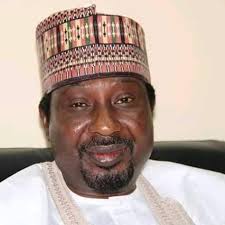
By Abba Anwar
As National Convention for the ruling All Progressives Congress (APC) kickstarts at the famous Eagle Square, Abuja, in the presence of President Bola Ahmed Tinubu, all APC who is who in the country, as well as all delegates from across all the 36 states of the federation, including federal capital territory, Abuja, it was designed that the Deputy Senate President, Barau I Jibrin, CFR, would be amongst the very few, who were selected to move motions for party operations, administration and continuity, during the convention.
The motions moved by big shots like, His Excellency, the Senate President, Godswill Akpabio, GCON and the Right Honorable Speaker, House of Representatives, Tajuddeen Abbas, GCON, ranging from the dissolution of the current national leadership of the party to many other issues surrounding the administrative continuity of the party and so on and so forth.
Under this great recognition and assigned national responsibility, His Excellency Deputy Senate President, was mandated to move an all-important motion for the extension of the tenure of the Caretaker Executive Committees of the party in Ekiti and Osun states.
Our Distinguished Senator, started with the lovely self-introduction, stating and being proud of his root, with passion and feeling of greatness, he said, “My name is Barau I. Jibrin, the member of APC, in Kabo ward in Kabo local government area of Kano state.” With all sense of humility and root-first approach.
The substance of his brief motion statement, hinted to all, how deeply rooted he is in democracy and democratization process. The wordings illuminated, to many, his clear and valued understanding of the ruling party, the APC and its organizational capability within the context of party continuity, at all levels.
He said, “My motion is as follows : I move this motion of urgent administrative and organizational necessity, concerning the leadership structure of our party in Ekiti and Osun states.
The party now operates through duly constituted Caretaker Executive Committees, at the wards, local governments and state levels, in both Ekiti and Osun states. The tenure of the Committees are due to expire at the end of March, 2026.”
“The Caretaker Committees are within the period of their mandate of maintaining party structure, ensuring operational continuity and stabilizing party affairs in the affected states,” he highlighted.
To tell you that, our dear DSP fully understands the workings and demands of politics and political operations, he stated reasons, as to why the call for the extension of the tenure of the caretaker committees became necessary, he clarified that, “Ongoing development in Ekiti and Osun states, particularly the heightened and tensed environment for the forthcoming gubernatorial elections have created conditions that are presently not conducive for the peaceful and orderly conduct of the wards, local governments and state congresses in the affected states.”
He further maintained the grip of the political realities in those states when he highlighted that, “It is expedient in the overall interest of the party to extend the tenure of the caretaker committees to allow for proper coordination, consolidation and preparation for the conduct of the congresses.”
He cited the provision of the APC Constitution, Article 13(1), which gives that mandate and power for the action.
His motion(s) was four-in-one, unlike other motions moved by other movers. This could be seen when he said, “I hereby move that, this National Convention (i) approve the extension of the tenure of the Caretaker Executive Committees of wards, local governments and states in Ekiti and Osun states, (ii) the said extension shall be for the period of 6 months, commencing from the expiration of their current tenure at the end of the March, 2026, uptill the end of September, 2026, (iii) mandate the relevant organs of the party to utilize the period of their extension to conclude all necessary arrangements for the conduct of wards, local governments and state congresses and (iv) enjoy all members of the party to cooperate with the caretaker committees. This motion is moved in the interest of party unity, administrative continuity and orderly conduct of party process.”
Being one of the critical stakeholders of the ruling party in the country, DSP’s national outings are waxing stronger day in day out. The composure, dexterity and depth in his speech, say a lot as a Distinguished Senator, who believes in democracy and democratic principles. The speech was with all vigor and substance of deeper understanding of party politics.
Kudos to His Excellency, the Deputy Senate President, our pride our focus!
Anwar writes from Kano
Friday, 27th March, 2026
Opinion
OPINION: Examining the Sanity of Saner Climes
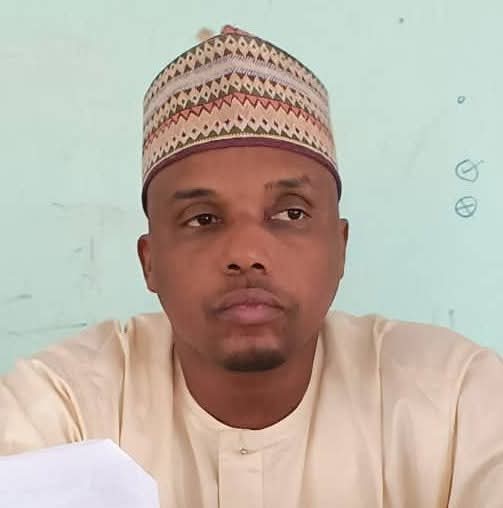
By: Amir Abdulazeez
Several decades into the global modern era, Africans, Asians and Latin Americans are continued to be held hostage by their colonially indoctrinated inferior mindsets engineered by the blackmail and mythology of western moral supremacy. This error is not in observing western virtues; many of which are real. The error is in the uncritical veneration that renders their vices invisible and their judgements unchallengeable. It is evident from the events of the last three decades alone, that the so-called saner climes of Western Europe and North America are the primary architects of global chaos and instability of nations, all in the name of injecting sanity into ‘less sane’ societies.
The ongoing US-Israel war on Iran, launched in the midst of Ramadan is a typical doctrine of the saner climes, exhibited in its most naked form. Iran’s Foreign Minister had three days before the war declared that a nuclear agreement was ‘within reach’, after a third round of indirect talks had taken place in Geneva. The IAEA itself confirmed there was no evidence of a structured Iranian nuclear weapons programme at the time of the attack. Yet, the surprise assault assassinated Supreme Leader Ali Khamenei, killed his family members and damaged schools, hospitals and even UNESCO-recognized cultural heritage sites. This is a typical catalogue of barbaric war crimes for which the West has condemned others across generations.
The Donald Trump administration whose seemingly rude, dishonest and arrogant officials, has offered a menu of rationalizations and a handful conflicting justifications for the war. However, when Amnesty International confirmed that the United States was responsible for a strike that killed at least 160 primary school girls, the US officials chose more arrogance through denials instead of remorse. In fact, the Head of the Federal Communications Commission simultaneously intimidated his own press, threatening the withdrawal of broadcast licenses of American news outlets whose war coverage he deemed unfavourable. Another trademark saner-climes mythology, muzzled in a way only a few non-saner climes can imagine.
Meanwhile, in all these, it is the ‘lunatic’ Iran that is supposed to apologize and do nothing while it is been attacked. The Iranian Regime, branded autocrats on the premise that it compels women to cover their hairs in public are being lectured by leaders of societies whose women go out naked in the name of civilization and whose governments topple, kill and abduct Heads of States of other countries for recklessly greedy reasons. Now imagine if the erratically behaving Donald Trump was the leader of any African Country, the West would’ve since declared him incoherent and unstable to deal with or labelled his citizens stupid for voting him. Worse still, imagine if the Epstein scandal happened in Asia or Latin America. All these contradictions reveal with crystal clarity that Western principles are instruments of convenience.
To understand the foundations to all these, let us revisit some history. Britain’s Industrial Revolution was fertilised by the profits of the transatlantic slave trade and the systematic plunder of India, a country whose share of global GDP fell from about 25% at the onset of colonial rule to barely 4% at independence. France financed much of its republican grandeur on the forced labour of West Africa and the Caribbean. Belgium’s King Leopold II transformed the Congo into a private abattoir, severing the hands of Africans who failed to meet rubber quotas, leaving behind a traumatized country that still bleeds today. To speak of the sanity of these climes without acknowledging that they were partly built from organised insanity inflicted elsewhere is to ignore the background to what we are witnessing today.
In the last fifty years alone, the so-called saner climes have unleashed a level of violence and destabilisation that would shame any regime they have ever deemed fit to condemn. The United States, the self-acclaimed sentinel of the free world, has engineered irrational regime changes in Chile (1973), Iran (1953 and subsequently), Guatemala (1954), Nicaragua, Panama, Libya, Iraq, Afghanistan and Syria, among others. The 1973 CIA-backed coup against a democratically elected socialist president of Chile Salvador Allende, installed Augusto Pinochet, under whose reign thousands were tortured, disappeared, or executed. Henry Kissinger, the American architect of that atrocity, received the Nobel Peace Prize from his fellow saner clime comrades. The French Government, through its notorious Françafrique policy, maintained a neocolonial empire across West and Central Africa long after the 1960s, propping up murderous dictators and conducting military interventions to protect economic interests, with a consistency that made a mockery of every democratic principle France professed to uphold.
The invasion of Iraq in 2003 by Western Governments is perhaps the most consequential act of manufactured catastrophe of the modern era. The war resulted in the deaths of an estimated 200,000 to one million Iraqi civilians, the obliteration of the country’s infrastructure, the rise of ISIS from the ashes of a disbanded Iraqi army and the triggering of a refugee crisis that continues to destabilise the Middle East. No one was held accountable. George W. Bush and Tony Blair are living happy lives in their saner countries. The International Criminal Court, which has indicted multiple African heads of state on much lesser crimes with considerable alacrity, found no jurisdiction to examine any of them. Meanwhile, the people of Iraq, Syria and Libya who were dismantled in the name of liberation still live in the ruins and pains of what the saner climes call democracy.
While the West was busy bombing the Middle East, Africa, the so-called backward continent, was largely attending to its own affairs of conflict resolution with a remarkable degree of maturity. The African Union mediated crises in Burundi, the Gambia and Lesotho without firing a single bullet. ECOWAS brokered peace agreements in Sierra Leone and Liberia, deployed peacekeeping forces with genuine multilateral mandates without the casual trigger-happiness of Western powers.
Western attitude towards violence is shamelessly selective. When Russia invaded Ukraine in 2022, the Saner Clime’s response was swift, comprehensive and morally unambiguous: sanctions, weapons, diplomatic isolation and a media chorus of civilizational solidarity. This response was appropriate anyway. But the problem is its stark contrast with the Western posture toward other invasions. When Saudi Arabia launched its war on Yemen in 2015, the United States and the United Kingdom did not merely decline to intervene; they allegedly supplied the bombs, refuelled the warplanes and provided intelligence for strikes that killed thousands of Yemeni civilians and engineered one of the worst humanitarian crises on earth.
Many argue that the actions of Western Governments isn’t a true reflection of what their citizens stand for. This is debatable especially when one examines certain incidences. During the Obama presidency, Edward Snowden revealed that the US National Security Agency was conducting mass, warrantless surveillance of American citizens and foreign governments, including the personal telephone of former German Chancellor Angela Merkel in flagrant violation of constitutional protections and international diplomatic norms. The response was not accountability but exile for Snowden and a classification of his revelations as treason. The United States, has the largest prison population on earth both in absolute numbers and per capita administered under a system in which Black Americans are incarcerated at five times the rate of their white counterparts, in conditions that the United Nations has described as cruel. Since 1968, gun violence has claimed more American lives than all of America’s foreign wars combined. One can certainlybe inclined to believe that these are controversies that ordinary western citizens may not approve of.
Climate change is another damning indictment of Western moral authority in the twenty-first century. The Industrial activities enriching Europe and North America still depends on burning carbon at a scale the planet had never experienced. The United States, historically the world’s largest cumulative emitter of greenhouse gases, withdrew from the Paris Climate Agreement under Donald Trump. Australia, another clime reputed to be considerably saner than most, has built its prosperity on coal exports and resisted meaningful emissions reduction. Some Pacific Island nations face sea submersions within this century as a consequence of decisions made in saner capitals. When these nations’ leaders speak at the United Nations with tears in their voices, the saner climes offer symbolic but empty sympathy before later returning to preserving their industrial prerogatives.
The Western Media’s tactical twisting of narratives regarding other climes is another issue. For example, CNN may not run primetime documentaries on the Swiss banking system’s complicity in laundering the proceeds of African kleptocracy, but will rather concentrate on the primary kleptocrats. The BBC does not lead with investigations into the role of British arms dealers in sustaining African conflicts. The New York Times does not dedicate its front page to the tax avoidance schemes through which Western corporations drain billions of dollars annually from African economies (more than the continent receives in foreign aid).
Beside all these, there is something more worrisome. The bulk of support received by these saner climes come from their victims in the third world. In Nigeria for instance, the blind sympathy for religious affiliations drives people to support the brazen oppression and cruel injustices perpetrated by the West. Our solidarities should be among ourselves, not with those who see and treat us as worthless humans and more like animals because of their superior moral hypocrisy. Additionally, our bootlicking governments who are considered close to valueless in the International arena or even insane just like us, must stop intimidating its own citizens who decide to speak up against western double standards. Let’s remember, the phrase “saner climes” is a moral verdict and a devastating condemnation of everywhere else expect Europe and North America. Africans and all peoples of the marginalised world are owed the intellectual inheritance of critical discernment.
The world does not need more or fewer saner climes; it needs a more honest accounting of what sanity actually requires. It requires consistency: the same rules applied to the powerful and the powerless alike. It requires humility: the acknowledgement that no civilisation holds a monopoly on wisdom. And it requires accountability: not the selective justice of indicting the weak and glorifying the mighty, but the universal application of standards that do not bend in the presence of a Security Council veto or the impulse of a self-serving Super power. Until that accounting arrives, the presumption of Western moral authority deserves not deference, but fearless interrogation; the kind that the so-called saner climes have always claimed to celebrate and so rarely been prepared to receive.
23-03-2026

The Godfather Who Mistook Democracy for Personal Ownership

FMBN Chairman Nasiru Gawuna Resigns, Set to Defect to ADC Amid Kano Political Realignments

Sallah Thanksgiving: NUJ President Commends Kano Correspondents’ Chapel For Fostering Love, Unity Among Journalists

Breaking: Kwankwaso Resigns from NNPP

Northern Youth Group Backs Doguwa for Kano APC Leadership, Urges National Role

The Governor Who Chose His People Over His Politics: Abba Yusuf and the Moral Courage Behind Kano First

FREEDOM OF SPEECH, NOT FREEDOM FROM CONSEQUENCE: A CITIZEN’S CALL FOR RESPONSIBLE PUBLIC COMMENTARY
Restoring the Glory That Was Always There: Governor Abba Kabir Yusuf and the Historical Vision Behind Kano First

Tinubu to Swear in Olatunji Disu as Inspector-General of Police on Wednesday

NDLEA Clarifies: Drug Case Against Abba Kyari Still Active After Court Discharge
The Godfather Who Mistook Democracy for Personal Ownership
FMBN Chairman Nasiru Gawuna Resigns, Set to Defect to ADC Amid Kano Political Realignments
Sallah Thanksgiving: NUJ President Commends Kano Correspondents’ Chapel For Fostering Love, Unity Among Journalists
Breaking: Kwankwaso Resigns from NNPP
Northern Youth Group Backs Doguwa for Kano APC Leadership, Urges National Role
The Governor Who Chose His People Over His Politics: Abba Yusuf and the Moral Courage Behind Kano First
FREEDOM OF SPEECH, NOT FREEDOM FROM CONSEQUENCE: A CITIZEN’S CALL FOR RESPONSIBLE PUBLIC COMMENTARY
Restoring the Glory That Was Always There: Governor Abba Kabir Yusuf and the Historical Vision Behind Kano First
Tinubu to Swear in Olatunji Disu as Inspector-General of Police on Wednesday
NDLEA Clarifies: Drug Case Against Abba Kyari Still Active After Court Discharge
-

 Opinion4 years ago
On The Kano Flyovers And Public Perception
-

 Features5 years ago
How I Became A Multimillionaire In Nigeria – Hadiza Gabon
-

 Opinion5 years ago
Kano As future Headquarters Of Poverty In Nigeria
-

 History5 years ago
Sheikh Adam Abdullahi Al-Ilory (1917-1992):Nigeria’s Islamic Scholar Who Wrote Over 100 Books And Journals
-

 Opinion4 years ago
My First Encounter with Nasiru Gawuna, the Humble Deputy Governor
-

 History5 years ago
The Origin Of “Mammy Market” In Army Barracks (Mammy Ochefu)
-

 History4 years ago
The History Of Borno State Governor Professor Babagana Umara Zulum
-

 News4 years ago
Federal University Of Technology Babura To Commence Academic Activities September