
News
Kwankwaso Welcomes 1,230 Kawu Sumaila Supporters Back to NNPP
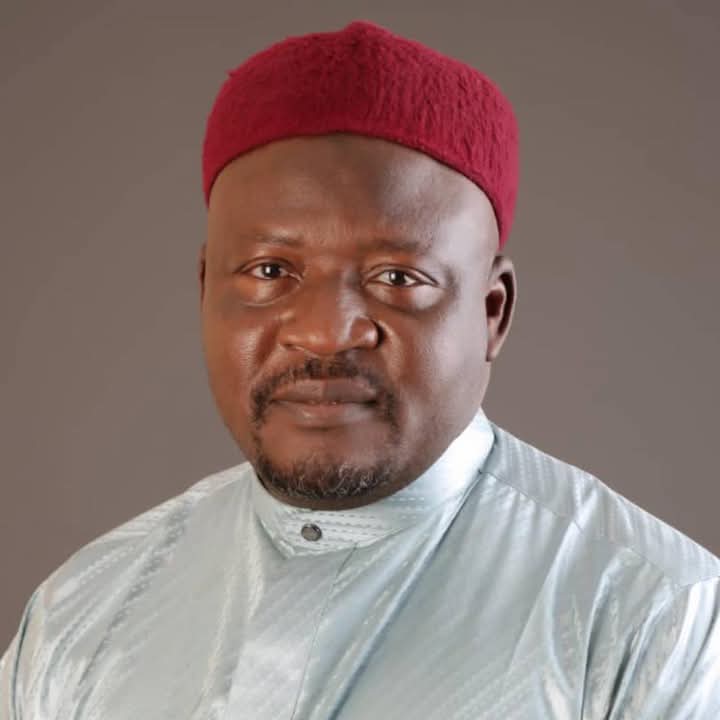
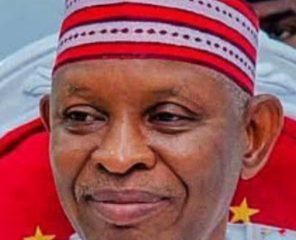
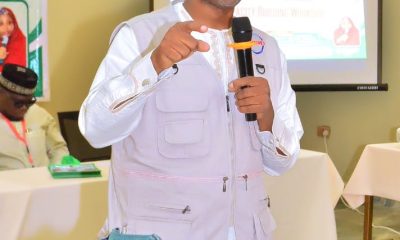
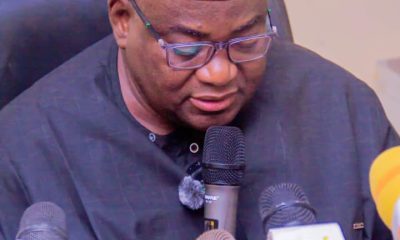
The national leader of the New Nigeria People’s Party (NNPP) and former Governor of Kano State, Senator Rabiu Musa Kwankwaso, has received no fewer than 1,230 former supporters of Hon. Abdulrahman Kawu Sumaila back into the NNPP.
The defectors, who hail from Albasu and Sumaila Local Government Areas in the Kano South Senatorial District, were previously aligned with the Waraka political group.
Their return was formally announced during a political gathering held on Sunday, attended by key party stakeholders, community leaders, and enthusiastic supporters at Kwankwaso’s residence in miller road.
While addressing the gathering, Senator Kwankwaso welcomed the returnees with open arms, describing their decision as a significant step in the pursuit of progressive, ideology-driven politics.
He reiterated his long-standing commitment to issue-based politics, which he said distinguishes the NNPP from others.
“I am always happy to receive people who believe in our movement, not because of financial incentives, but because of our collective vision for a better Nigeria,” Kwankwaso said.
“This is politics of ideology, not politics of the highest bidder.”
Speaking on behalf of the returnees, Jamilu Zamba and Maryam Romo reaffirmed their loyalty to the NNPP and praised Senator Kwankwaso’s leadership style.
They stated that their decision to rejoin the party was informed by Kwankwaso’s integrity, consistency, and his unwavering commitment to grassroots development.
“We have realized that this is where our political future lies,” said Zamba.
“Kwankwaso has always stood by the people. He doesn’t play money politics. He plays politics that uplifts communities.”
The return of the Waraka group is seen as a major political boost for the NNPP in Kano South, especially as political alignments begin to take shape ahead of the 2027 general elections.
Party insiders believe the development could further strengthen the NNPP’s grassroots structure in the region and reinforce its position as a formidable force in Kano politics.
Other defectors who joined Kwankwasos’s NNPP were from Bunkure and Tofa local government areas








News
Singapore to Give Families Nearly ₦94m for Every Child Born as Birth Rate Record Drops
By Yusuf Danjuma Yunusa
Singapore has announced a new financial support package that will provide each eligible Singaporean child with nearly S$70,000 (about ₦94 million) in government benefits from birth until age 17.
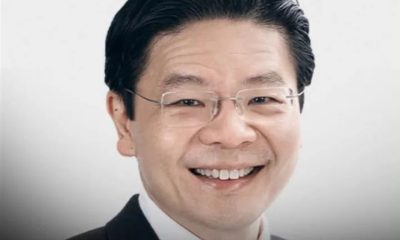
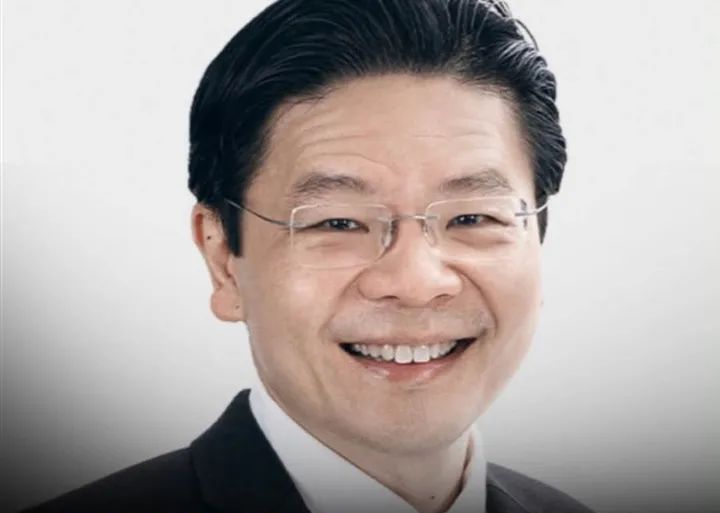
Prime Minister Lawrence Wong announced the S$62,000 SG Child Support Package during his National Day Rally speech on August 23, saying the government wants to make a fundamental change in how families are supported rather than simply making small adjustments to existing schemes.
The package includes a S$10,000 cash Baby Gift, S$32,000 in Child Credits, a S$5,000 Child Development Account (CDA) grant, up to S$5,000 in government CDA co-matching and a S$10,000 top-up to the child’s Post-Secondary Education Account.
When combined with existing benefits, including a S$5,000 MediSave Grant for Newborns and annual Edusave contributions, total government support will reach about S$70,000 per child. This is higher than the current S$27,500 to S$56,500 parents receive, depending on the child’s birth order.
Wong said the government would simplify the system because many parents find the existing schemes difficult to understand. He said every child would receive the same level of support, with assistance provided not only at birth but throughout the years as children grow.
The S$10,000 Baby Gift will be paid in two instalments during the first year after birth, while the S$32,000 Child Credits will provide S$2,000 annually from age one until the child turns 16. The government will also give a further S$10,000 top-up to the child’s education account when the child turns 17.
The new package is expected to benefit more than 610,000 children across 380,000 households. The measures are part of Singapore’s wider efforts to encourage more people to have children amid a declining birth rate.
Wong said the government was putting significant resources into the plans because supporting families and Singaporeans through every stage of life remains a national priority.
News
Imam Jingir Sells Out, Deploys Muslim-Muslim Chants Minutes After ₦600 Million APC Windfall
By Yusuf Danjuma Yunusa
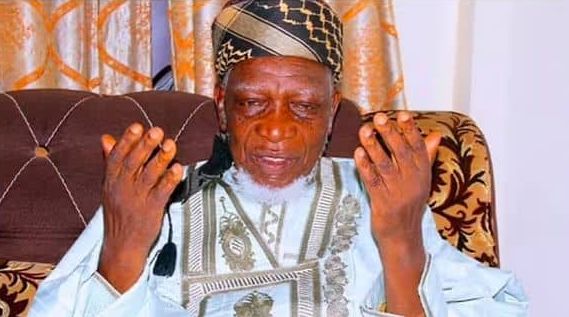
Plateau-based Islamic cleric, Yahaya Jingir, intensified his support for the All Progressives Congress (APC) Muslim-Muslim ticket after receiving donations of N600 million from Ibrahim Masari, special adviser to President Bola Tinubu, and Governor of Yobe State, Mai Mala Buni.
A viral video of Mr Masari, an ally and SA on political affairs to Mr Tinubu, announcing the donation of ₦600 million by him and Mr Buni to Mr Jingir-led religious university project emerged on the internet on Monday.
“I, too, have given ₦300 million, and my brother, the Governor of Yobe State, has also given ₦300 million, bringing the total to ₦600 million. Give us the account details so we can transfer the money right now,” Mr Masari said.
In response to Mr Masari’s donation at the event, the cleric doubled down on campaign for a Muslim-Muslim ticket.
“So, we are very grateful, and may Allah reward you. Let me stop here,” Mr Jingir said, asking the crowd, “is the name of the university the private purse of Alhaji Sani Yahaya Jingir?”
“I want education to be established so that both Muslims and Christians can be successful,” he added.
Chanting “Muslim-Muslim” in support of the same-faith ticket to close his remarks, Mr Jingir said, “May Allah bring peace to Nigeria and peace to the Muslim world. And for those who are saying we are cheating in the name of Islam, may Allah open their eyes and guide them to Islam.”
Though the cleric claimed the donations were not to him but for a university project, it has sparked reactions on social media.
“If you are following Yahaya Jingir to shout Muslim-Muslim ticket look at this video! N600 million,” Imran Wakili, an X user said. “And you still think removal of subsidy is for you and me!”
Another X user, @MBMoralpolice said, “The man is after his bank balances to say so seems fair but when one is announcing a 300M Naira donation to your purse somehow and you are eager to take the microphone away ahead of further donations announcement, I better ask?! How Much Are You Really Worth.”
@Aliyyyou said, “Religious leaders have really got it wrong in this country. No respect, dignity or honor. Just power, money and fake faith. No difference from the politicians.”
About two weeks ago, Mr Jingir had announced support for Mr Tinubu’s same faith ticket as Nigerians head for presidential election in 2027, sparking backlash.
“I am one of those who raise the flag of Islam. I am calling on people to come and let us do Muslim-Muslim again,” Mr Jingir said.
Charging Muslims to vote for Mr Tinubu’s re-election based on the same-faith ticket to prove that Muslims outnumber Christians in Nigeria, Mr Jingir said, “So, here I am calling on you; please, everyone should get their votes ready. Let us show the world that those unbelievers who claim they outnumber us in Nigeria are lying.”
News
It’s a Lie: Nigeria Is Not Africa’s Wealthiest but One of Its Poorest — Donald Duke
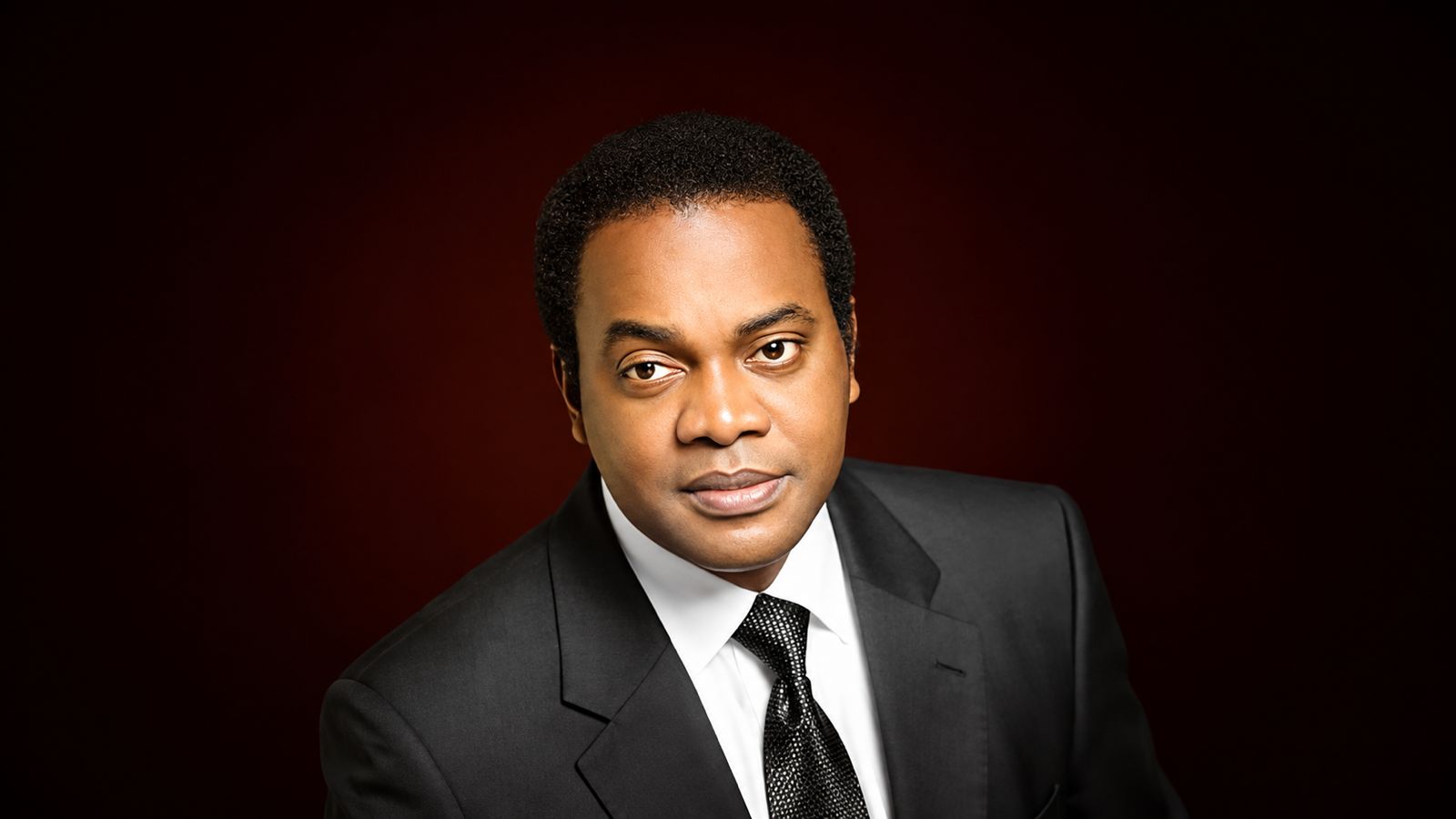
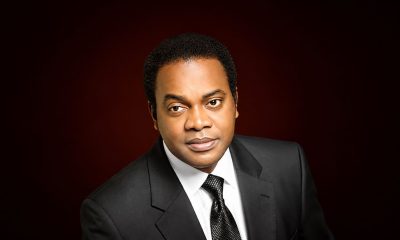
The presidential candidate of the People’s Redemption Party (PRP), Donald Duke, has described as “a lie” the notion that Nigeria is the wealthiest country in Africa.
The former Governor of Cross River State said Nigeria is, rather, one of the poorest countries on the continent and should not be regarded as Africa’s largest economy based solely on its overall GDP.
In an interview with selected journalists in Lagos, Duke said Nigeria is a poor country when its per capita income is taken into consideration.
According to him, even countries that Nigeria considers smaller have higher per capita incomes, adding that the country is “living a lie.”
“It is embarrassing that a country that was considered one of the wealthiest in Africa still thinks today that it is the largest economy in Africa. That is not true.
“We are living a lie. It is a nice sound bite, though, to say that Nigeria is the largest economy in Africa. No. Nigeria is just one of the poorest when you take per capita income into consideration, and that is what you should measure, not just growth.
“If all we were producing in Nigeria was kulikuli, as we have been advised to do, we would still be a large economy in terms of GDP. But individually, what is our capital base? It is very poor.
“Most of these countries that we laugh at have a higher income per capita than we do.
“So, it all comes down to productivity. The idle mind is the playground of the devil. That was true yesterday, it is true today, and it will be true tomorrow,” Duke said.
On security, Duke said he does not like the phrase “Islamic terrorists” because he does not believe the terrorists are driven by Islam.
He noted that the security challenges facing Nigeria, particularly in the northern part of the country, were aggravated by the collapse of Libya, which led to an influx of arms through Nigeria’s land borders.
He, therefore, suggested that Nigeria needs short-, medium- and long-term approaches to address the rising insecurity holding the country back.
“Right now, you have got to deal with the security problems as they exist today — kidnapping, banditry, terrorism and all that.
“But even beyond that, those things are consequences of other things. They are consequences of a very poor economy and, of course, the failure to properly manage our borders.
“With the collapse of Libya, a lot of arms have been moving south. We call them Islamic terrorists. I don’t like that phrase because I don’t think they are driven by Islam.
“The Islam I know is different. They just use that connotation to describe them. Rather, I think these are destructive elements. You can see that when they go into communities, they collect taxes and do other things. It is all geared towards collecting or building a resource base for themselves.”
For the medium- and long-term approaches, Duke suggested that the Nigerian government should focus on making citizens more productive.
He noted that as long as people are not productive, they will find their own means of survival.
He advised the government to focus on local production to improve productivity and to deploy modern technology in securing the country’s borders.
On reviving the economy of Northern Nigeria, the PRP presidential hopeful said that, if elected President, he would ensure that mining activities in the region are properly structured.
According to him, the structure should promote inclusive participation in the mining industry, ensuring that local and state governments become stakeholders in the sector.
“The rush to produce oil is not synonymous with wealth. You must have commercial quantities and all that. I sometimes think it is overplayed. The oil in the Chad Basin is not available in such commercial quantities. I think the real wealth of the North, beyond agriculture, is in the mineral deposits there.
“There must be a structured way of mining. Today, it is artisanal, and the broader community, the border communities, society and the nation itself do not adequately benefit from those resources.
“Take, for instance, the gold in Zamfara. It probably has — I don’t know — perhaps as much gold as all of Ghana does. Ghana was once called the Gold Coast, so that tells you how much gold there could be in Zamfara. But mining has also attracted banditry because Nigeria is largely an unpoliced state.
“So, I would make each state an economic entity. I think it would encourage states and their governments to focus on the minerals they have.
“If I were in charge, alongside the states, we would carry out an evaluation. I know some of this has already been done. We would evaluate what is available in each state and go further to determine the proven reserves.
“So, for instance, if you are looking for columbite or any other mineral and you know columbite exists in a particular place, let us go further and determine the proven reserves of columbite, lithium or whatever mineral we want to develop.
“Once you have developed it to that level, you make it more attractive for investors to come in. This should be a joint venture between the state and federal governments because the revenues from those resources will be shared by both levels of government.
“But nobody is going to invest if there is no security. We saw what happened in the South, in the Niger Delta region, when security broke down, which was also a function of increasing poverty in those areas.
“The investors there — the oil companies and international companies — moved out, and they now prefer producing oil from the deep sea, which is considered safer,” he said.

95% of Governor Abba Kabir Yusuf’s Promises Have Been Fulfilled — CPS Interview By Musa Diso, In Kano

Singapore to Give Families Nearly ₦94m for Every Child Born as Birth Rate Record Drops

Imam Jingir Sells Out, Deploys Muslim-Muslim Chants Minutes After ₦600 Million APC Windfall

It’s a Lie: Nigeria Is Not Africa’s Wealthiest but One of Its Poorest — Donald Duke

Shamaki Congratulates Yari on Appointment as Tinubu’s Campaign DG

How Kano Digitized Land Turns N50m to N750m Monthly

From the struggle for Gombe State to life in the Senate: Senator Umar Usman Dukku reflects on politics, democracy, and his relationship with the late General Sani Abacha.

Borders, Visas and the Beautiful Game: How U.S. Immigration Policies Shaped Global Perceptions During the 2026 FIFA World Cup

President Tinubu Declines Meeting with S’African Envoy, Directs Delegation to Foreign Affairs Minister

ADC Youths Call on Atiku to Intervene Over Allegations of Injustice in Primary Elections, Demand Resignation of David Mark
95% of Governor Abba Kabir Yusuf’s Promises Have Been Fulfilled — CPS Interview By Musa Diso, In Kano
Singapore to Give Families Nearly ₦94m for Every Child Born as Birth Rate Record Drops
Imam Jingir Sells Out, Deploys Muslim-Muslim Chants Minutes After ₦600 Million APC Windfall
It’s a Lie: Nigeria Is Not Africa’s Wealthiest but One of Its Poorest — Donald Duke
Shamaki Congratulates Yari on Appointment as Tinubu’s Campaign DG
How Kano Digitized Land Turns N50m to N750m Monthly
From the struggle for Gombe State to life in the Senate: Senator Umar Usman Dukku reflects on politics, democracy, and his relationship with the late General Sani Abacha.
Borders, Visas and the Beautiful Game: How U.S. Immigration Policies Shaped Global Perceptions During the 2026 FIFA World Cup
President Tinubu Declines Meeting with S’African Envoy, Directs Delegation to Foreign Affairs Minister
ADC Youths Call on Atiku to Intervene Over Allegations of Injustice in Primary Elections, Demand Resignation of David Mark
-

 Opinion5 years ago
On The Kano Flyovers And Public Perception
-

 Features5 years ago
How I Became A Multimillionaire In Nigeria – Hadiza Gabon
-

 Opinion6 years ago
Kano As future Headquarters Of Poverty In Nigeria
-

 History5 years ago
Sheikh Adam Abdullahi Al-Ilory (1917-1992):Nigeria’s Islamic Scholar Who Wrote Over 100 Books And Journals
-

 Opinion5 years ago
My First Encounter with Nasiru Gawuna, the Humble Deputy Governor
-

 History5 years ago
The History Of Borno State Governor Professor Babagana Umara Zulum
-

 History5 years ago
The Origin Of “Mammy Market” In Army Barracks (Mammy Ochefu)
-

 News4 years ago
Federal University Of Technology Babura To Commence Academic Activities September