
News
Reps Minority Caucus condemns unlawful detention of VDM, demands his immediate release

The Minority Caucus of the House of Representatives has condemned in the strongest terms the arrest and continued detention of social campaigner and activist, Martins Otse, popularly known as Very Dark Man (VDM), by the Economic and Financial Crimes Commission (EFCC).
In a statement jointly signed by the HoR caucus leaders, Rep Kingsley Chinda, Leader, Rt. Hon. Dr. Ali. Isa J.C Minority Whip, Rt. Hon. Aliyu Madaki., Deputy Minority Leader,,Rt. Hon. George Ozodinobi
Deputy Minority Whip, the opposition leaders declared that:
“The disturbing trend of security and law enforcement agencies deploying their powers arbitrarily against citizens exercising their rights to free expression poses grave threats to our democracy.
“We must state clearly that such acts, cloaked in the guise of enforcement, erode public confidence in the rule of law and undermine the principles of accountability and transparency.
The caucus insisted that: “The arrest of Mr. Otse which reportedly took place without the issuance of a warrant is a direct violation of the 1999 Constitution of the Federal Republic of Nigeria (as amended) that guarantees the liberty of the citizen except in accordance with the due process of law. Sections 35(1) and 35(3) of the Constitution stipulate the conditions under which a person may be deprived of their liberty and require that any person arrested must be informed promptly of the reasons for their arrest and any charges against them.
“The EFCC, like every other agency of government, is bound by these constitutional provisions and must not act outside their bounds.
“Moreover, the continued detention of Mr. Otse beyond the constitutionally permissible period of 24 to 48 hours without being charged to court is not only an abuse of power, it is also a blatant affront to the principles of natural justice and fair hearing.
“The Constitution, under Section 35(4), provides that a person who is arrested or detained must be brought before a court of law within a reasonable time, which, in the case of an arrest without a warrant, shall not exceed two days.
“Any deviation from this is a breach of the citizen’s fundamental rights and a descent into lawlessness.
“As the voice of the opposition in the National Assembly, the Minority Caucus calls on the EFCC to immediately release Mr. Otse or charge him to court in accordance with the law.
“Arbitrary arrests and prolonged detentions of citizens for expressing dissenting or unpopular views must have no place in a democratic society.
“The preservation of liberty, due process, and respect for constitutional rights remain the bedrock of our republic. We will not stand idly by while state agencies abuse their powers to suppress voices that challenge the status quo in line with the laws.














News
APC Denies Plot to Assassinate Atiku, Urges Security Agencies to Question Timi Frank
By Yusuf Danjuma Yunusa
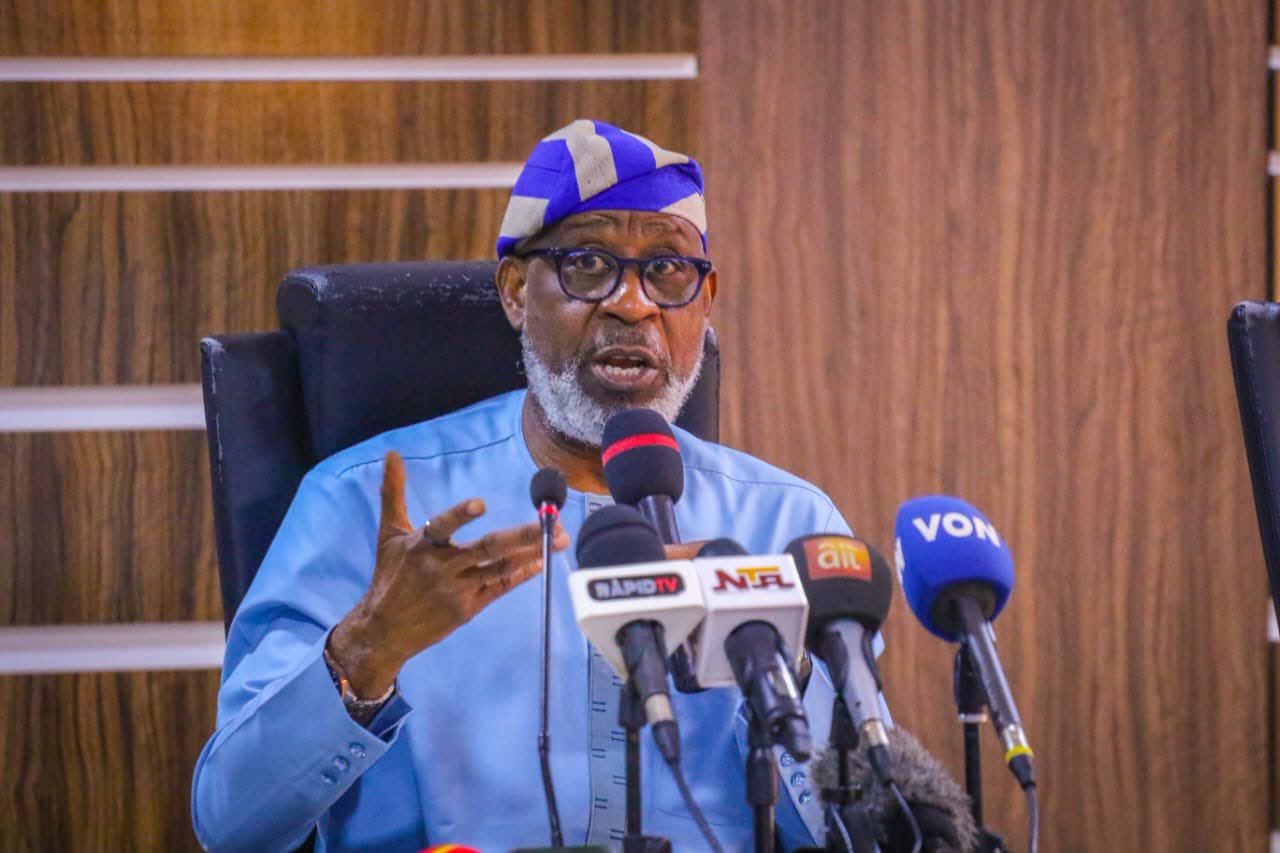
The All Progressives Congress Presidential Campaign Council has denied allegations that the Nigerian Government is plotting to assassinate former Vice President Atiku Abubakar, the ADC presidential candidate, and called on security agencies to invite Timi Frank to substantiate the claim.
In a statement signed by its spokesperson, Dele Alake, dated October 20, 2026, the council said:
“Our attention has been drawn to the statement by Timi Frank, a member of the African Democratic Congress, alleging that the Nigerian Government is plotting to assassinate former Vice President Atiku Abubakar, the Presidential candidate of the ADC. This is a grave allegation that Mr Frank must prove. We thus urge security agencies to invite him to substantiate the allegation, given its gravity and the urgent need to preserve life.”
The council also rejected any involvement by the presidency or the APC Campaign Council, stating:
“We categorically reject the claim that the presidency of Nigeria or the APC Campaign Council is involved in any plot to assassinate former Vice President Atiku Abubakar or any opposition figure.”
It further dismissed as false claims that security personnel attached to Atiku had been withdrawn, saying the former vice president is protected by the police and the Department of State Security. According to the statement, President Bola Tinubu recently directed security agencies to reinforce and increase protection for all presidential, vice-presidential, governorship and deputy governorship candidates across the country.
The council said security around the ADC presidential candidate had never been compromised and that, as a former vice president, Atiku enjoys two levels of state-funded security protection, which the statement said Tinubu had increased ahead of the 2027 general elections.
It urged candidates, parties and supporters to be factual and responsible in public statements and to avoid utterances that could trigger avoidable tension, accusing Frank of “typical opposition rabble-rousing.”
News
Kano Youths Condemn Lawmaker Over Alleged Mockery of Governor Yusuf

Concerned youths of Gama Ward in Nassarawa Local Government Area of Kano State have condemned the member representing Nassarawa Local Government in the Kano State House of Assembly, Hon. Bello Ali Yusuf, over an alleged act of mockery directed at Governor Abba Kabir Yusuf.
The youths, in a gathering on Tuesday, October 20, 2026, said they were displeased with the lawmaker’s reported action of holding the ear of a live rabbit in the presence of his supporters, which they alleged was intended to ridicule the governor.
Addressing journalists during a peaceful press briefing, the youths described the incident as disrespectful to the office of the governor and contrary to the cultural values and traditions of Gama Ward and the wider Kano community.
According to the group, the alleged conduct was undemocratic and unbecoming of an elected representative, adding that public officeholders should demonstrate maturity, decorum and respect for democratic institutions in their political engagements.
The Concerned Gama Youth further expressed concern that the incident could create unnecessary political tension and undermine the prevailing peace in the state.
They maintained that political disagreements should be handled through constructive engagement and democratic processes rather than actions they considered capable of ridiculing public officeholders.
NIGERIAN TRACKER reports that the group also reaffirmed its support for Governor Yusuf, commending his administration for what it described as people-oriented projects executed in Gama Ward and other parts of Nassarawa Local Government Area.
Specifically, the youths highlighted the construction of the road linking Gwagwarwa to Gama Hotel, describing the project as an important intervention that had improved transportation and eased movement within the community.
While addressing the press the group’s Secretary-General, Comrade Auwal Garba Gama, the road had also contributed to economic activities and improved access for residents.
The youths said the project demonstrated the governor’s commitment to infrastructure development and the welfare of residents of Gama Ward, adding that they appreciated the administration’s efforts to address the community’s needs.
Consequently, the group called on the leadership of the Kano State House of Assembly to investigate the incident and take what it described as immediate and decisive disciplinary action against Bello Ali Yusuf.
The youths argued that the alleged conduct had the potential to bring the legislature into disrepute, urging the Assembly’s leadership to ensure that elected representatives upheld the standards expected of public officeholders.
They also appealed to community leaders, political stakeholders and residents of Gama Ward to continue supporting the governor’s administration while maintaining peace and mutual respect despite political differences.
The group urged residents to remain law-abiding and avoid actions that could escalate political disagreements, while calling on them to pray for the success of the governor’s administration.
The secretary also reaffirmed the group’s solidarity with Gama Ward, Nassarawa Local Government Area and Kano State.
News
IITA Trains Over 1,800 Farmers on Modern Farming Techniques in Kano

The International Institute of Tropical Agriculture (IITA), in collaboration with Nigeria’s Ecological Project Office (EPO), has trained more than 1,800 farmers in Kano State on modern farming techniques aimed at increasing crop yields and improving food production.
The programme covered farmers from 16 local government areas in Kano South Senatorial District, equipping them with modern agricultural practices to improve farm productivity and address challenges associated with farming, particularly during the dry season.
The training and demonstration of improved farming technologies took place in Hamdullahi community, Albasu Local Government Area, where farmers were introduced to improved crop varieties and other techniques for achieving higher yields.
Speaking at the event, IITA Project Coordinator, Professor Lucky Omoigui, said the training was designed to enhance farmers’ knowledge of improved seed varieties and modern agricultural practices.
He disclosed that more than 1,800 people had benefited from the programme, expressing optimism that the knowledge gained would encourage dry-season farming and boost food production.
Omoigui urged the participating farmers to apply the knowledge acquired to improve their farming practices and increase crop yields.
As part of the programme, the farmers visited demonstration farms, where they were shown modern techniques for cultivating crops, including cowpeas, maize, soybeans, groundnuts, sorghum and rice.
Speaking on behalf of EPO, Bashir Ibrahim Umar said agriculture plays a vital role in poverty reduction and job creation, particularly for young people in Nigeria.
He stressed the need for sustained farmer awareness campaigns and access to agricultural knowledge to encourage the adoption of modern farming technologies and improve livelihoods.
Also speaking, Garba Ayuba, who represented the Chairman of Albasu Local Government Area, Garba Aliyu Hungu, expressed satisfaction with the programme and urged farmers to put the techniques they had learnt into practice.
Similarly, the Gaya Zonal Director of the Kano State Agricultural and Rural Development Authority (KNARDA), Danjuma Uba, commended the farmers for their interest in learning modern agricultural practices.
He emphasised that collaboration between agricultural development agencies and farmers was essential to ensuring the sustainable adoption of modern farming technologies.
In his remarks, Alhaji Saidu Abdulkadir Hamdullahi, whose farm was used to demonstrate the improved crop varieties, said some people had previously doubted the possibility of achieving successful crop production during the dry season.
However, he expressed surprise and delight at the results achieved on his farm, saying the experience had boosted his confidence in dry-season farming.
He thanked IITA and its partners for the training, noting that the programme had improved farmers’ knowledge of seed planting, fertiliser application and other modern agricultural practices.
According to him, the new knowledge would help farmers increase productivity and improve their income.
The initiative forms part of broader efforts to strengthen the agricultural sector by encouraging farmers to adopt modern technologies to improve food production and reduce poverty in Nigeria, particularly in areas facing water shortages.
IITA Technical Support through the Ecological Project Office to promote the best climate-smart agricultural practices around the dams to boost food production and increase the income of smallholder farmers in the Kano South Senatorial District
The International Institute of Tropical Agriculture (IITA) is collaborating with the Ecological Project Office (EPO) to leverage the Federal Government’s rehabilitation and expansion of irrigation infrastructure in the Kano irrigation project, covering Tiga Dam, Challawa Gorge Dam, and Kafin-Chiri Dam in the Kano South Senatorial District, to promote sustainable irrigation and dry-season farming to boost agricultural productivity and increase the income of smallholder farmers. The collaboration under the project “Community-based Engagement on Sustainable Agriculture and Biodiversity Restoration for the Kano Irrigation Scheme” is being implemented across the 16 Local Government Areas (LGAs) surrounding the dams (comprising Ajingi, Garko, Bunkure, Doguwa, Tudun Wada, Karaye, Gaya, Albasu, Kibiya, Rogo, Kiru, Wudil, Bebeji, Sumaila, Takai, and Rano), covering 155 communities.
The project interventions aim to boost year-round farming by combining irrigation with climate-smart practices to increase productivity and income, enhance food security, and improve the livelihoods of smallholder farmers. A total of 1,890 farmers, 20% of whom are women, have been trained in Integrated Soil Fertility Management (ISFM), climate-smart irrigation and water-harvesting technologies, and youth entrepreneurship in climate-smart agricultural practices across the 16 LGAs to enhance their resilience to climate-related vulnerabilities.
Participating communities have witnessed increased farming activities and improved access to and use of climate-smart agricultural technologies, contributing to increased productivity, income, and food security.

APC Denies Plot to Assassinate Atiku, Urges Security Agencies to Question Timi Frank

Kano Youths Condemn Lawmaker Over Alleged Mockery of Governor Yusuf

IITA Trains Over 1,800 Farmers on Modern Farming Techniques in Kano

Former Delta State Governor, Emmanuel Uduaghan, Dies At 71

Astute Civil Society Raises Concern Over Exclusion of Gubernatorial Candidates

Zamfara Varsity ASUU Threatens Warning Strike Over FG-ASUU Agreement, Promotion Arrears

PCACC Arrests Man Over Alleged ₦4.5m Sale, Illegal Leasing of Kano Government Horse Stable

Kano Monitors ₦48.9bn Projects Across Six LGAs

Goje’s Electoral War:The Confrontation With Tinubu,Governor Inuwa,Usman Kumo And APC candidates Ahead Of 2027

Prof Yusuf Adamu Delivers BUK’s 63rd Professorial Inaugural Lecture, Reflects on Medical Geography and Academic Legacy
APC Denies Plot to Assassinate Atiku, Urges Security Agencies to Question Timi Frank
Kano Youths Condemn Lawmaker Over Alleged Mockery of Governor Yusuf
IITA Trains Over 1,800 Farmers on Modern Farming Techniques in Kano
Former Delta State Governor, Emmanuel Uduaghan, Dies At 71
Astute Civil Society Raises Concern Over Exclusion of Gubernatorial Candidates
Zamfara Varsity ASUU Threatens Warning Strike Over FG-ASUU Agreement, Promotion Arrears
PCACC Arrests Man Over Alleged ₦4.5m Sale, Illegal Leasing of Kano Government Horse Stable
Kano Monitors ₦48.9bn Projects Across Six LGAs
Goje’s Electoral War:The Confrontation With Tinubu,Governor Inuwa,Usman Kumo And APC candidates Ahead Of 2027
Prof Yusuf Adamu Delivers BUK’s 63rd Professorial Inaugural Lecture, Reflects on Medical Geography and Academic Legacy
-

 Opinion5 years ago
On The Kano Flyovers And Public Perception
-

 Features5 years ago
How I Became A Multimillionaire In Nigeria – Hadiza Gabon
-

 Opinion6 years ago
Kano As future Headquarters Of Poverty In Nigeria
-

 History6 years ago
Sheikh Adam Abdullahi Al-Ilory (1917-1992):Nigeria’s Islamic Scholar Who Wrote Over 100 Books And Journals
-

 Opinion5 years ago
My First Encounter with Nasiru Gawuna, the Humble Deputy Governor
-

 History5 years ago
The History Of Borno State Governor Professor Babagana Umara Zulum
-

 History6 years ago
The Origin Of “Mammy Market” In Army Barracks (Mammy Ochefu)
-

 News5 years ago
Federal University Of Technology Babura To Commence Academic Activities September