
News
Dangote Group Deploys Advanced Technology In Companies

Clinging onto its position as Africa’s leading conglomerate, the Dangote Industries Limited has instituted a plethora of cutting-edge technology in creating top-notch efficiency for all its companies.
Speaking weekend at the just concluded 46th Edition of the Kaduna International Trade Fair, Senior Advisor to the President of the Dangote Group, Fatima Wali Abdurrahman, said the digitization exercise is a sustained endeavour, adding that it has helped in speeding up manufacturing and sales.
“As some of you may be aware, we have since digitized our manufacturing and sales processes through the deployment of automated and smart systems, particularly in our cement plants,” she said.
Mrs. Wali Abdurrahman spoke at the Dangote Special Day, against the backdrop of the Trade Fair’s theme: Promoting Efficiency in Manufacturing, Trade, and Agriculture through Digital Transformation.
She said what normally takes days, now takes minutes to accomplished.
The company is one of the major sponsors of this year’s Trade Fair.
She said: “The integrated advanced technology adopted in all our operations; cement, sugar, salt, fertiliser, Petro-chemicals, and agriculture, has made us become leaders in all sectors where we play.
According to her, customers of the company have voiced their immense satisfaction with this innovative ordering channel, reinforcing our commitment to enhancing their experience and propelling future growth.
“The DMS Application is available on both Android and iOS platforms for our registered customers in the cement, sugar, and salt sectors, ensuring they can easily access our products anytime, anywhere,” she added.
According to her Dangote Peugeot Automobile Nigeria (DPAN) plant has leveraged on advanced technology of in the production of a 120-vehicle daily production capacity and an annual capacity of 44,000 units.
“By assembling globally renowned Peugeot models—such as the Landtrek pickup, 3008, 5008, and 508 GT—DPAN fosters trade by reducing import dependency and providing locally assembled vehicles at competitive prices, “she said.
Speaking earlier, President of the Kaduna Chamber of Commerce, Industry, Mines, and Agriculture (KADCCIMA) Rsv Ishaya Idi commended the Dangote Group for its job creation strides in the country, saying the company has sustained its partnership with the Chamber.
The President of the Chamber called on Nigerians to support the Dangote Group.
He said the 46th Kaduna Trade Fair has offered the opportunity for both the company and the Chamber to interact.
Dangote Group is the biggest employer of labour in the private sector in Nigeria.
The company took the center stage during the fair, as the Federal Government affirmed its pivotal role in the country’s push towards industrialization.
Acting Permanent Secretary in the Ministry of Industry, Trade and Investment, Dr. Dafang I. Sale, who represented President Bola Ahmed Tinubu and the Minister of Industry, Trade and Investment, Dr Jumoke Oduwole, thanked the company for “doing a good job” in Nigeria.
Speaking to newsmen in Kaduna, Director General of the Chamber, Alhaji Usman Saulawa, defined the Dangote Group as a conglomerate that is helping to drive the Nigerian economy.
According to him, the company has not only made a significant positive impact on the business community in Kaduna State but has also contributed immensely to the growth of both the Nigerian, and global economy.
He added: “Our selling point is the joint collaboration and full involvement of Kaduna State Government, Dangote Group and other companies.”
He also acknowledged its partnership with the Dangote Group, describing it as the Unique Selling Point, and a major competitive advantage of the 46th Kaduna International Trade Fair.












News
Terrorist Logistics Suppliers Apprehended in Borno
By Yusuf Danjuma Yunusa
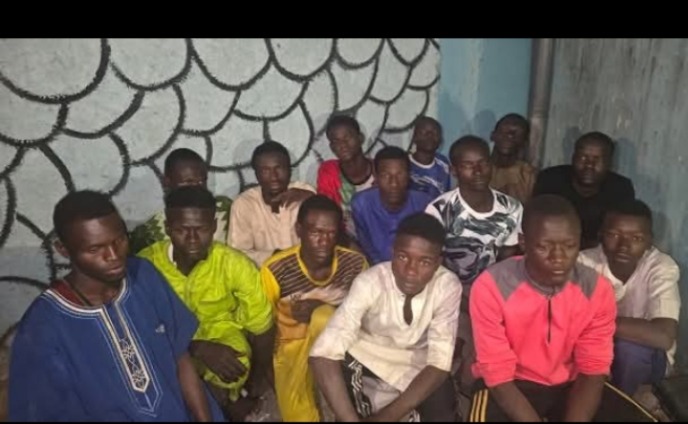
Troops of Operation Hadin Kai, OPHK, have apprehended 18 suspected logistics suppliers allegedly enroute Gubio, with plans to proceed to the Gudumbali axis, a known Boko Haram terrorists, BHTs, enclave.
Troops of Operation Hadin Kai, OPHK, have apprehended 18 suspected logistics suppliers allegedly enroute Gubio, with plans to proceed to the Gudumbali axis, a known Boko Haram terrorists, BHTs, enclave.
This is contained in a daily operational report made available to the News Agency of Nigeria on Wednesday.
The military said the suspects were intercepted while travelling towards the location to deliver the goods to the terrorists.
According to the report, preliminary investigation revealed that all 18 suspects confessed to engaging in the supply of goods to the terrorist group.
“They admitted that they routinely purchase and convey items to the terrorists.
“Their justification was lack of employment, which points to a deeper socio-economic challenge in Maiduguri and its environs,” the army said.
The development, according to the reportt, validates recent remarks by the Chief of Defence Staff on the link between economic hardship and the sustenance of insurgency logistics networks.
“The arrest highlights the critical role of civilian collaborators in sustaining terrorist operations, particularly in remote areas such as Gubio and Gudumbali,” it added.
The army called for a comprehensive approach combining military operations with economic empowerment and job creation to address the root causes of insurgency in the region.
News
Kano Gov’t Offers Study Scholarship to SWAN Members
By Abdulgafar Oladimeji
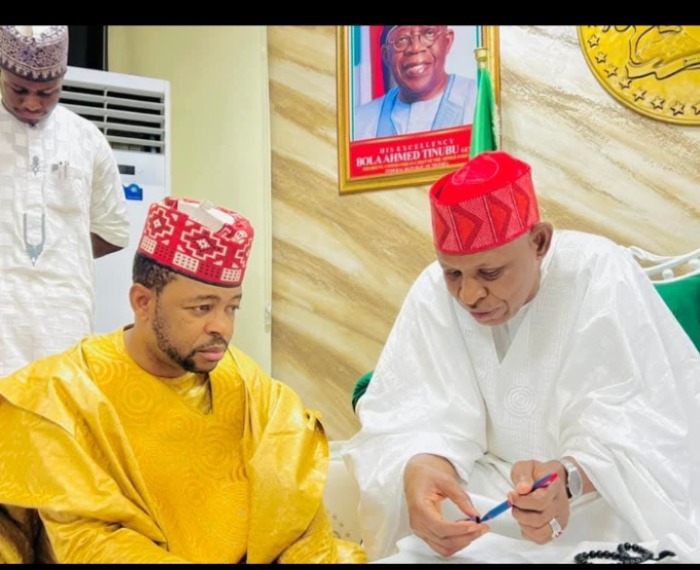
Kano state government has facilitated and supported members of the Sports Writers Association of Nigeria, SWAN Kano chapter to proceed to pursue professional certification courses in sports journalism, our correspondent reports .
The Special Adviser , youths and sports to Kano state governor, Sani Musa Danja, disclosed that the offer covers their tuition fees.
He said , the beneficiaries have been identified and their enrolment process have been completed.
According to him, through interactions with stakeholders , the decision was reached for some sports writers, who are faced with the challenge of acquiring the required professional qualification to practice their trade should be given support to fill the gap.
said, findings have revealed that , for Kano sports writers to compete favorably there exists the urgent need to empower members of the association to acquire certain requisite qualification to enable them feature amongst the best in Nigeria and beyond.
Danja speaking, when he hosted SWAN members in his office , located within the premises of Kano state Library Complex, along Ahmadu Bello Way said that the state government, under Abba Kabir Yusuf , on discovering this major challenge , acted swiftly to address the lapses, by offering to sponsor 10 SWAN members to pursue professional diploma in Sports Journalism at El Roi London University.
In his word “ we give thanks to almighty Allah for his mercies, I want to thank our mentor and leader, his excellency governor, Abba Kabiru Yusuf , who made this possible.
“his excellency takes the issue of empowering our people very seriously, the challenge facing our sports journalists is principally the issue of professional certification, some of our sports journalists have their degrees in other fields, but we are aware that, they also require to obtain certain minimum qualification in journalism or other related fields to help them to excel .
“in line with the policy of the government of his excellency, we have moved in to make sure , these sons and daughter of Kano overcome this hinderance that may hinder their professional progress.
“the sports media is the back bone of sports development and sports promotion, our government is focused and committed to support and reshape the sports media to achieve the set out goal to empower Kano youths through sports.
“the mission of his excellency through this gesture is to empower our professional sports journalists and give them the required qualification to continue with their pursuit to upward steadily representation of Kano state in that sector.
Danja hinted that, Kano state government remains unrepentant in its upward investment drive to create a generation of professionals that would keep the state afloat on the terrain of quality and abundance human resources.
Reacting, chairman SWAN Kano chapter, comrade Zahradeen Saleh thanked the state government for the support.
He said, the scholarship offer is an major step towards uplifting the practice of sports journalism in the state.
He said the dividends of sports could only accrue with the effective operations of the sporting press through the training and re-training of sports writers.
He admitted that, acquiring the requisite qualification to practice sports journalism has been one of the major challenges confronting members of the association.
“ our members who are the beneficiaries of this offer are youths, on completion of the professional course, they will have stable professional growth and would be better equipped to contribute their quota to the development of the state.” Zahradeen said .
News
Obi Raises Alarm Over Arrest of Cleric Who Hosted Him in Kaduna
By Yusuf Danjuma Yunusa
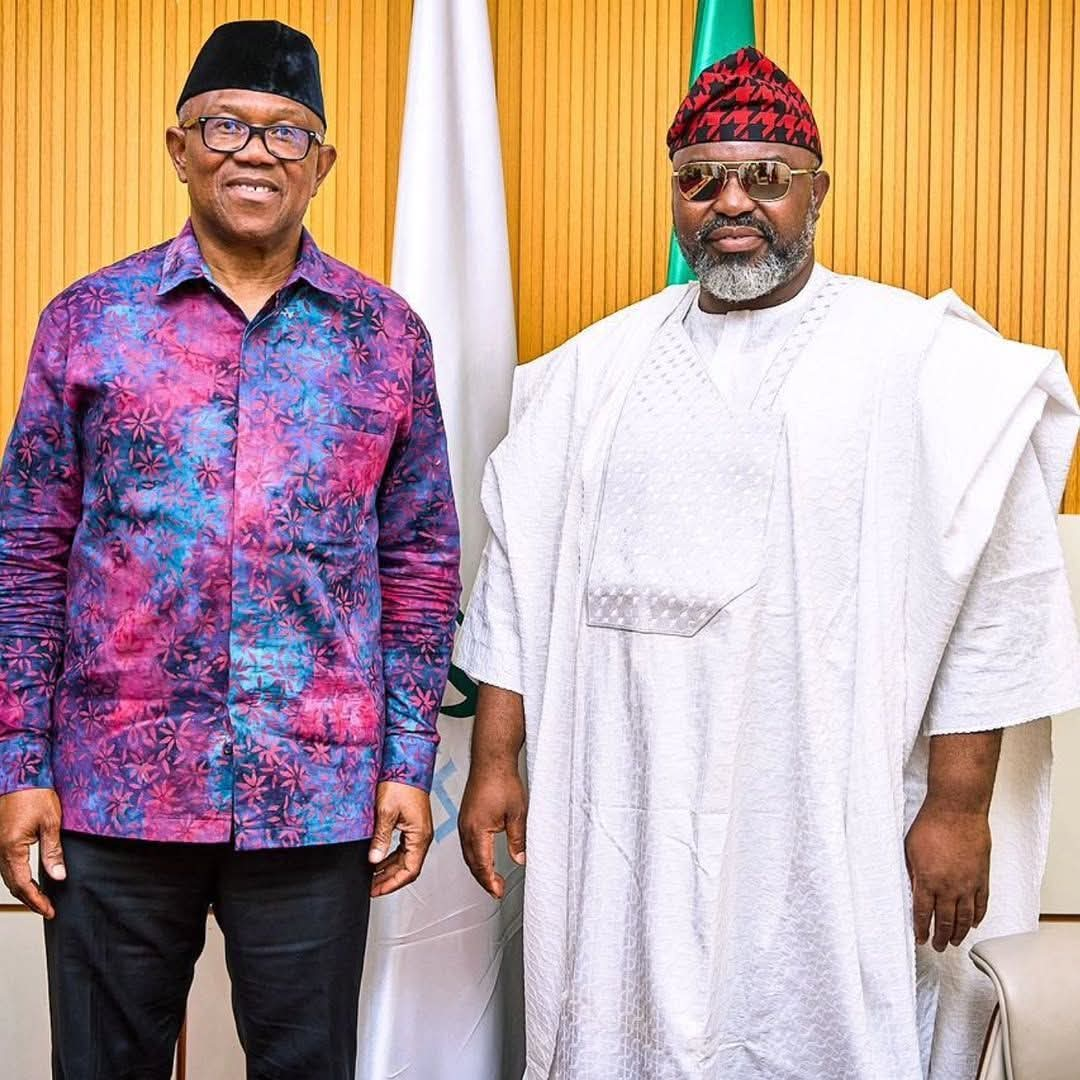
Peter Obi, the Labour Party’s 2023 presidential candidate, has condemned the arrest of a Muslim cleric who hosted him over the weekend, describing the incident as a sign of deepening threats to civil liberties in Nigeria.
In a statement shared on his X (formerly Twitter) account on Tuesday, Obi said he was notified that Sheikh Ahmad Tijjani Umar was taken into custody by security operatives shortly after their meeting in Kaduna on Sunday.
“This development underscores the deeply troubling state of our nation and our democracy, where freedom of speech and movement is increasingly threatened, and where citizens and perceived political opponents face harassment and unnecessary persecution,” Obi wrote.
The former Anambra governor warned that such actions risk eroding Nigeria’s democratic foundations if left unchecked. He urged authorities to uphold the rule of law and refrain from tactics that intimidate dissent.
“This country must defend freedom and free speech, which are the hallmarks of every democratic society. Suppression and intimidation of dissent can never stand in a democratic society, and this Nigerian government must understand this fact,” he added.
Obi called on those “bent on undermining our already fragile democracy” to desist and adhere to democratic principles in dealing with citizens.
As of Tuesday morning, security agencies had not issued an official statement regarding the cleric’s arrest or the circumstances leading to it. Sheikh Umar, a respected religious figure in Kaduna, has not been publicly charged.

Terrorist Logistics Suppliers Apprehended in Borno

Kano Gov’t Offers Study Scholarship to SWAN Members

OPINION: Examining the Sanity of Saner Climes

Obi Raises Alarm Over Arrest of Cleric Who Hosted Him in Kaduna

ICPC Arraigns Ex-Governor El-Rufai in Kaduna Amid Tight Security

BREAKING: El-Rufai Suffers Nose Bleeding in EFCC Custody, Family Denied Access

The Governor Who Chose His People Over His Politics: Abba Yusuf and the Moral Courage Behind Kano First

FREEDOM OF SPEECH, NOT FREEDOM FROM CONSEQUENCE: A CITIZEN’S CALL FOR RESPONSIBLE PUBLIC COMMENTARY

How Kano Government Official Allegedly Intimidate And Insult Two Journalists On Lawful Duty

DSP Barau and APC Unity in Kano
Terrorist Logistics Suppliers Apprehended in Borno
Kano Gov’t Offers Study Scholarship to SWAN Members
OPINION: Examining the Sanity of Saner Climes
Obi Raises Alarm Over Arrest of Cleric Who Hosted Him in Kaduna
ICPC Arraigns Ex-Governor El-Rufai in Kaduna Amid Tight Security
BREAKING: El-Rufai Suffers Nose Bleeding in EFCC Custody, Family Denied Access
The Governor Who Chose His People Over His Politics: Abba Yusuf and the Moral Courage Behind Kano First
FREEDOM OF SPEECH, NOT FREEDOM FROM CONSEQUENCE: A CITIZEN’S CALL FOR RESPONSIBLE PUBLIC COMMENTARY
How Kano Government Official Allegedly Intimidate And Insult Two Journalists On Lawful Duty
DSP Barau and APC Unity in Kano
-

 Opinion4 years ago
On The Kano Flyovers And Public Perception
-

 Features5 years ago
How I Became A Multimillionaire In Nigeria – Hadiza Gabon
-

 Opinion5 years ago
Kano As future Headquarters Of Poverty In Nigeria
-

 History5 years ago
Sheikh Adam Abdullahi Al-Ilory (1917-1992):Nigeria’s Islamic Scholar Who Wrote Over 100 Books And Journals
-

 Opinion4 years ago
My First Encounter with Nasiru Gawuna, the Humble Deputy Governor
-

 History5 years ago
The Origin Of “Mammy Market” In Army Barracks (Mammy Ochefu)
-

 History4 years ago
The History Of Borno State Governor Professor Babagana Umara Zulum
-

 News4 years ago
Federal University Of Technology Babura To Commence Academic Activities September