
News
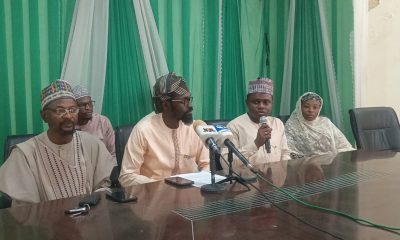
Arewa Dignity Advancement Initiative Calls on National Assembly to Reject Controversial Tax Reform Bill”
It is evident that the proposed tax reform bill submitted to the National Assembly by the Presidency has sparked widespread criticism and opposition from various societal groups, including academia, professionals, civil society organizations, students, traditional and religious leaders, and other stakeholders. This time, the dissent is not limited to the governed; several Nigerian governors have also openly expressed their lack of confidence in the bill. Some criticized it for being biased against certain regions, while others rejected it entirely, citing its lack of merit or suggesting it reached the Assembly through questionable procedures. This situation clearly signals significant tension and dissatisfaction.
Distinguished Parliamentarians,
As representatives of the people, you are entrusted with the critical responsibility of safeguarding their interests and ensuring just governance. While the Executive may have its agenda on issues of national importance, your duty is to uphold the rule of law and protect democratic ideals by prioritizing the needs and demands of your constituents.
Following a detailed analysis of public opinion on the proposed tax reform bill—which appears to have been widely rejected—we have identified the following concerns:
1. Lack of Merit: The bill fails to reflect a nationalistic approach and does not align with the principles of fairness and equity.
2. Economic Priorities: In light of the nation’s fragile economic state, the immediate focus should be on implementing bailout programs to stabilize the economy. Introducing additional taxation, particularly on personal income and value-added tax (VAT), is ill-timed and could exacerbate economic hardship.
3. Exclusion of Stakeholders: The bill was drafted without adequate input from professionals and the general public. As a key democratic institution, the National Assembly must ensure that inclusive decision-making processes are upheld. The lack of broader consultation at the Executive level before presenting the bill is a significant oversight that must be addressed.
4. Redistribution Formula in Section 77: The proposed redistribution formula, which allocates 60% of VAT ownership to states based on consumption location, contradicts existing laws that emphasize revenue distribution based on equality and population rather than consumption location.
We urge the National Assembly to remember its constitutional mandate to uphold the principles of justice and fairness. It must resist any form of bias, sectionalism, or divisive policies that could widen economic disparities among regions.
As a patriotic and law-abiding organization committed to Nigeria’s unity, the Arewa Dignity Advancement Initiative reaffirms its dedication to democratic ideals and the principles of fairness, equity, and natural justice.
~
Signatures:
Baheejah Mahmood. Abdullahi. Bauchi State.
Chairperson
Hon Musa Ibrahim Bere. Kebbi State.
Hon Ibrahim Mohammed Adamawa State.
Comrade Abdullahi Wadata Isa Bauchi State.
Hon. Abubakar Muhammad. Kano State.
Secretary.













News
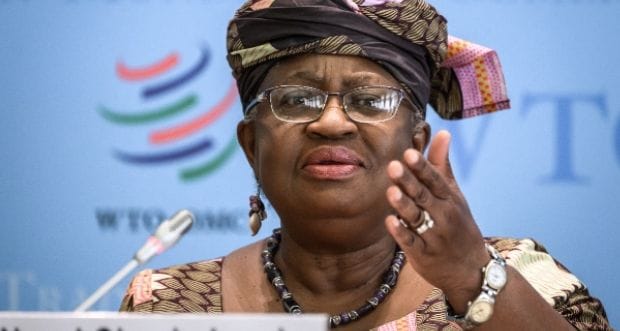
Okonjo-Iweala to Tinubu: Borrow Cautiously, Reforms Should Create Jobs for Nigerians
By Yusuf Danjuma Yunusa
The director-general of the World Trade Organisation, Ngozi Okonjo-Iweala, has urged the Nigerian government to be careful about borrowing and managing the country’s debt, saying economic reforms must improve the lives of ordinary Nigerians.
She also called on the government to sustain ongoing reforms while creating more jobs and economic opportunities for the country’s growing youth population.
Mrs Okonjo-Iweala spoke on Wednesday at the seventh Africa Emerging Markets Forum in Abuja.
Commending the Central Bank of Nigeria for its monetary and foreign exchange reforms, Ms Okonjo-Iweala urged Nigeria to continue broader economic reforms while remaining disciplined in managing its finances.
“Nigeria needs to continue the work on overall macroeconomic reforms with a careful approach to fiscal issues, contracting of debt and debt management,” the WTO chief stated.
According to the latest data from the Debt Management Office, Nigeria’s total public debt stood at N159.28 trillion at the end of December 2025, rising by N14.61 trillion, or 10.10 per cent, from N144.67 trillion recorded at the end of 2024. The figure covers the debt owed by the federal government, the 36 states and the Federal Capital Territory. The government is also expected to continue borrowing this year to finance its 2026 budget deficit.
Mrs Okonjo-Iweala said the success of Nigeria’s reforms should not be measured only by improvements in economic indicators. Instead, she said Nigerians must begin to experience better living conditions through more jobs and opportunities.
“Above all, Nigeria needs to focus on creating jobs and economic opportunities for a young and hungry population. Nigerians have to feel the dividends of reform in the real economy,” noted the WTO chief.
Nigeria has one of the world’s youngest populations, with millions of young people joining the labour market every year. However, many struggle to find decent jobs, making employment one of the biggest economic challenges in the country.
Since President Bola Tinubu assumed office in May 2023, his administration has introduced major reforms, including the removal of petrol subsidy and the liberalisation of the foreign exchange market.
The policies have pushed up the cost of living, with many Nigerians facing higher prices for food, transport and other essentials. Although inflation has slowed in recent months, prices remain high.
The National Bureau of Statistics said Nigeria’s headline inflation rate eased slightly to 15.91 per cent in June 2026 from 15.93 per cent in May. Food inflation, however, increased to 17.52 per cent, showing that many households are still paying more for basic food items.
For opportunities, Ms Okonjo-Iweala said countries that maintain stable economic policies and improve their business environment will be better placed to benefit from changes in global trade.
She noted that companies are increasingly looking for new places to invest and diversify their supply chains, creating opportunities for countries that can offer stability and predictable policies and urged Nigeria to continue strengthening its economy so it can attract long-term investment and create more jobs for its people.
News
U.S. Discontinues Routine Visa Services in Abuja, 24 Other African Cities

By Yusuf Danjuma Yunusa
The U.S. government says routine visa services in Abuja and 24 other African cities will end on August 1.
“Effective August 1, 2026, the Department of State will realign routine visa services in Antananarivo, Abuja, Asmara, Bamako, Banjul, Brazzaville, Bujumbura, Conakry, Cotonou, Durban, Freetown, Gaborone, Harare, Juba, Libreville, Lilongwe, Lusaka, Maputo, Maseru, Mbabane, N’Djamena, Niamey, Nouakchott, Ouagadougou, and Windhoek to a regional visa hub,” the agency stated.
It noted that citizens and residents of the affected countries who wish to apply for a visa on or after August 1, 2026, must schedule an appointment and pay the required visa fee at the appropriate designated non-immigrant visa locations or designated immigrant visa locations.
From August 1, Nigerians who want to process a U.S. visa would have to travel to the U.S. consulate in Lagos.
According to a statement on July 23 by the agency, the move is “realigning visa operations in Africa to regional hubs, part of a long-standing Department practice that strengthens national security by promoting more uniform screening, vetting, and adjudication standards, as well as improves efficiency”.
Last June, reports had it that Abuja was missing from President Donald Trump administration’s shortlist of 20 African cities where foreigners seeking to travel to the U.S. can process visa applications.
The U.S. currently has around 50 embassies and consulates across Africa that process visa applications, but the new move by the State Department will slash that number to 20 amid Mr Trump’s crackdown on immigration.
News
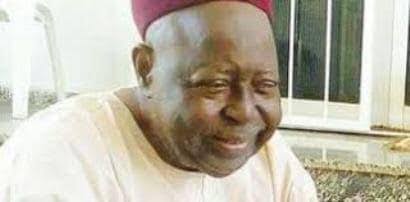
Breaking:Sardaunan Sokoto Alhaji Abubakar Alhaji Is Dead
Abbas Yushau Yusuf
The Sardaunan Sokoto and Nigeria’s former British high commissioner Alhaji Abubakar Alhaji is dead.
A family source informed Nigerian Tracker about the passing of Alhaji Abubakar Alhaji this morning
Alhaji Abubakar Alhaji died this morning in Abuja Hospital after a prolong illness.
NIGERIAN TRACKER reports that Abubakar Alhaji is a Nigerian administrator who is a former Minister of Planning and Finance. He currently holds the title of Sardauna of Sokoto. Alhaji was a long serving Permanent Secretary who worked with various Nigerian administrations
Alhaji was born to the family of Muhammed Sani also known as Alhaji Alhaji because he was born on the day of Sallah and went on a made pilgrimage to Mecca, he was also called Dogon Daji, Sarkin Shanu.
Alhaji attended a secondary school in Kano before transferring to Katsina Government College. He later attended Bournemouth College of Commerce and University of Reading, Berkshire earning a degree in political economy.
Alhaji took courses at the Hague Institute of Social Services and the IMF Institute, Washington.
He joined the Nigerian civil service in 1964 and was an Assistant Secretary in the Federal Ministry of Finance in the late 1960s. After attending a course in Hague, he was briefly posted to the Ministry of Industries where he became a Principal Assistant Secretary. In 1971, he was posted back to the Ministry of Finance. In 1975, he became a Permanent Secretary in the Federal Ministry of Trade and was in the ministry till 1978. In 1979, he was posted to the Finance Ministry as the Permanent Secretary. In his role at the Finance Ministry, he was involved in managing Nigeria’s relationship with its external creditors and was on the Nigerian negotiating team for Lome II agreement.
Alhaji was later posted to the Ministry of Planning before Babangida upgraded his position as Minister of State, Budget and Planning in 1988. Between 1990 and 1991, he was the Minister of Finance. In the mid-1990s, he was the country’s High Commissioner to United Kingdom.
Alhaji was turbaned Sardauna in 1990, the previous title holder, Ahmadu Bello died in 1966. He is a senior brother to the late Aliyu Dasuki who was raised by Ibrahim Dasuki. He has a grandson, Ibraheem Dasuki Aminu-Alhaji.

Okonjo-Iweala to Tinubu: Borrow Cautiously, Reforms Should Create Jobs for Nigerians

U.S. Discontinues Routine Visa Services in Abuja, 24 Other African Cities

Breaking:Sardaunan Sokoto Alhaji Abubakar Alhaji Is Dead

ADC Youths Call on Atiku to Intervene Over Allegations of Injustice in Primary Elections, Demand Resignation of David Mark

Kaduna 2027: Governor Uba Sani Replaces Deputy, Names Jerry Adams as Running Mate

Alhaji Tijjani Rabiu Spikin: A Neighbour, Philanthropist, and Friend of Children

What Saheeba Taught Me About Waiting for Love

Is N100,000 Worth the Risk?’ Nigerians React to Soldiers’ Salary Increase

CBN Revokes Licences of 46 Microfinance Banks Over Regulatory Breaches

Goodwill, Visibility, and Operational Security: A Strategic Communication Reading of Senator Ahmad Lawan’s DIA Post
Okonjo-Iweala to Tinubu: Borrow Cautiously, Reforms Should Create Jobs for Nigerians
U.S. Discontinues Routine Visa Services in Abuja, 24 Other African Cities
Breaking:Sardaunan Sokoto Alhaji Abubakar Alhaji Is Dead
ADC Youths Call on Atiku to Intervene Over Allegations of Injustice in Primary Elections, Demand Resignation of David Mark
Kaduna 2027: Governor Uba Sani Replaces Deputy, Names Jerry Adams as Running Mate
Alhaji Tijjani Rabiu Spikin: A Neighbour, Philanthropist, and Friend of Children
What Saheeba Taught Me About Waiting for Love
Is N100,000 Worth the Risk?’ Nigerians React to Soldiers’ Salary Increase
CBN Revokes Licences of 46 Microfinance Banks Over Regulatory Breaches
Goodwill, Visibility, and Operational Security: A Strategic Communication Reading of Senator Ahmad Lawan’s DIA Post
-

 Opinion4 years ago
On The Kano Flyovers And Public Perception
-

 Features5 years ago
How I Became A Multimillionaire In Nigeria – Hadiza Gabon
-

 Opinion6 years ago
Kano As future Headquarters Of Poverty In Nigeria
-

 History5 years ago
Sheikh Adam Abdullahi Al-Ilory (1917-1992):Nigeria’s Islamic Scholar Who Wrote Over 100 Books And Journals
-

 Opinion5 years ago
My First Encounter with Nasiru Gawuna, the Humble Deputy Governor
-

 History5 years ago
The History Of Borno State Governor Professor Babagana Umara Zulum
-

 History5 years ago
The Origin Of “Mammy Market” In Army Barracks (Mammy Ochefu)
-

 News4 years ago
Federal University Of Technology Babura To Commence Academic Activities September