
News
Family Of Slain Policeman Seeks Justice, As Delta DPP Exonerates Main Suspect
The Delta State Director of Public Prosecutions (DPP), Mr. Anthony Orhorhoro, has reacted to the concerns raised by the family of one late Inspector Itobi Green, who was brutally murdered by an armed robbery gang in Delta State.
Inspector Green, along with his colleague, Inspector Bienowu Richard, was violently attacked and robbed of multiple AK-47 rifles.
Despite compelling evidence, including witness statements and the recovery of firearms from his residence, Chief Hyacinth Okolie was released following the Delta State Ministry of Justice’s decision to enter a nolle prosequi, thereby discontinuing the prosecution against him.
Chief Hyacinth Okolie, a prominent figure in the Ogwashi-Uku Kingdom, was initially arrested in connection with the crime.
Mr. Anthony Orhorhoro, the Director of Public Prosecutions, responded to an inquiry from our correspondent, stating that there was no prima facie case against Chief Hyacinth Okolie that warranted prosecution.
Adding that those alleging that Okolie was guilty of wrongdoing should reinvestigate their facts.
However, when our correspondent reminded him that charges had already been filed against Chief Okolie under Charge No. A/71/2018, indicating that a prima facie case had indeed been established, Mr. Anthony Orhorhoro ceased communication and directed the reporter to the Commissioner for Justice.
Attempts to reach the Commissioner for Justice, Mr Ekemejero Ohwovoriole SAN were unsuccessful as he did not answer calls placed to his line.
Our correspondent has been unable to get a clear response as to why the Ministry of Justice terminated the prosecution of the suspect.
Two weeks prior, the Green family presented their grievances to federal authorities during a meeting in Abuja. They accused the Delta State Ministry of Justice of prematurely releasing Chief Hyacinth Okolie, who was arrested alongside other members of the gang.
The family maintains that Chief Okolie was identified as the mastermind and leader of the gang, with substantial evidence, including witness testimonies and the recovery of firearms from his home during a police raid.
According to a police investigation report (Reference AB: 4099/DTS/X/D13/VOL 3 dated 30th July 2018) prepared by then-Deputy Commissioner of Police (now AIG) Wale Abass, a nine-man armed robbery gang attacked and robbed Sgt. Ayo Fidelis and Cpl. Daniel Gana of two AK-47 rifles (breach numbers 09981 and 19874) containing fifty-nine rounds of live ammunition on 13th July 2018 and 16th July 2018. The gang also robbed Sgt. Godwin John of an assault rifle (breach number 07015337) with twenty-four rounds of live ammunition at Rain Oil Petroleum along the Benin-Asaba road. Furthermore, Inspector Green, Sgt. Yakubu Mallam, and Inspector Bienowu Richard were attacked and robbed of two AK-47 rifles, one with breach number 0887722 and another without a breach number.
Tragically, Inspector Green was fatally stabbed multiple times by the assailants.
The investigation, conducted by the Special Anti-Kidnapping and Cyber Crimes Squad (SAKCCS), the Federal Anti-Robbery Squad (F-SARS), and the State Anti-Cult Unit (SACU), resulted in the arrest of several suspects.
The family of Inspector Green remains deeply troubled by the nolle prosequi decision. They allege foul play and are calling for a thorough investigation by the Federal Government.
Elder Solomon Green, representing the family, has vowed to pursue justice relentlessly, condemning the release of Chief Okolie despite clear evidence and confessions implicating him as the gang leader.
Elder Solomon emphasized that a nolle prosequi does not equate to an acquittal, and he urged that the charges be reinstated.










News
Kano, IBP sign MoU on health financing transparency dashboard
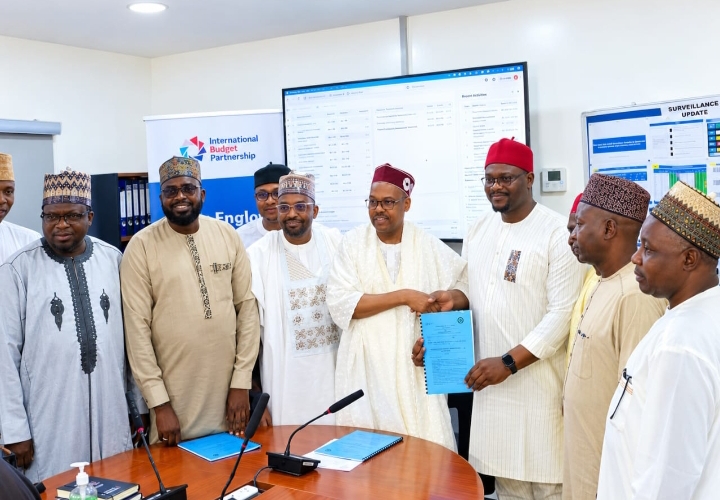
The International Budget Partnership (IBP), Nigeria, and the Kano State Government on Saturday in Kano signed a Memorandum of Understanding (MoU) to strengthen transparency and accountability in health sector financing.
The partnership will support the development of a health financing dashboard to enable stakeholders monitor budget planning, releases, expenditure and performance across health sector agencies in the state.
The Commissioner for Health, Dr Abubakar Labaran, said the partnership had brought significant improvements in budget planning, execution and tracking in the ministry.
Labaran said the dashboard would enable the ministry to monitor the performance of its various units and agencies in real time.
He said the state government would continue to work with IBP and other partners to improve budget performance, releases and other issues relating to health financing.
IBP Country Director, Dr Olayinka Babalola,
said the dashboard was aimed at improving transparency around health budgeting and providing a comprehensive picture of expenditure.
Represented by Policy and Strategy Lead, Onyekachi Chukwu, said Kano was already making significant investments in the health sector alongside development partners, but tracking where the funds were going had been a challenge.
According to him, the MoU will support the state in developing a health financing dashboard that will enable stakeholders to monitor expenditure by various agencies in the health sector.
He said the dashboard would also provide information on the full range of investments in the sector and show where the funds were being spent.
Babalola, said the platform would help stakeholders track reasons why certain health services were not being delivered.
He said the information would enable relevant authorities to identify gaps in service delivery and take appropriate measures to address them.
Dr Shamsuddin Sani, State Representative of the Gates Foundation in Kano, said the foundation was supporting the initiative to address longstanding challenges in monitoring fund flow within the health sector.
Sani said the project would particularly focus on primary healthcare service delivery and provide clearer information on resources coming into the sector.
He said over the years, the health sector in Kano had faced challenges in tracking the amount of funding coming into the system, how much was being spent and how much was not reaching the intended areas.
According to him, government and development partners working in the sector have not had a clear picture of the resources coming into the health system and how they are being utilised.
“With this project, we want to close that gap by ensuring that we know exactly how much resources are coming into the primary healthcare system and the broader health sector in the state,” he said.
Sani said the initiative would also help determine the resources required by the sector and compare government funding with contributions from development partners.
He said the grant for the project was conceived to address the identified gaps, adding that implementation began earlier in the year.
The dashboard is expected to provide stakeholders with timely information on health financing and expenditure to support better planning, monitoring and service delivery in the state.
News
Kano Gov Abba Kabiru Yusuf bags international sports award in UK

Kano state governor, Abba Kabir Yusuf , Saturday was honoured in the United Kingdom for his commitment and support to sports development in the state.
Our correspondent reports that the award presentation ceremony took place at the Feel Good Too , Ive Farm sports arena located at the Pavilion Walk in London.
The patron W O. Sports, Moses Andishu , while making the presentation, said the award is aimed at appreciating the governor for his consistency towards the development of sports in Kano.
Moses who doubles as SWAN national patron said “this is our token way of saying kudos to mr governor and our aim is to encourage him to do more for the growth of the industry .
He added that “ we have noticed the reforms been carried out in Kano Pillars football club , we are aware of the efforts ongoing at the Kano state Sports Commission, KSSC and Kano Pillars is taking a new shape again, the state various sports teams now honor national invitations to major competitions, this is worth encouraging.
“we are very much aware of the plans by the governor, who is investing massively in the area of the provision of infrastructure, likewise we have seen investments made to renovate and upgrade major sports facilities, in the state, we just want to say thank you to his excellency and encourage him to invest more in sports
The special adviser to the governor on Youths and Sports, Sani Musa Danja , who received the award on behalf of the state governor said , “we are very delighted and happy, his excellency does not joke with anything that has to do with the development of the youths and he has always assured that he will always do everything possible to support the growth of Kano youths.
“I receive this award on behalf of his excellency with humility and honour for my governor , eng Abba Kabiru Yusuf, his works testify for his passion and commitment to sports development, his agenda is to always ensure Kano athletes competes amongst the best of the best by providing all the requirements that is needed for the state to excel in sports , and be rest assured that with my governor in charge sports development will always remain on the burner of the Kano First Agenda.
News
President Tinubu Salutes Hon. Kabir Bichi, Chair Appropriation Committee Of The House Of Representatives On His 45th Birthday
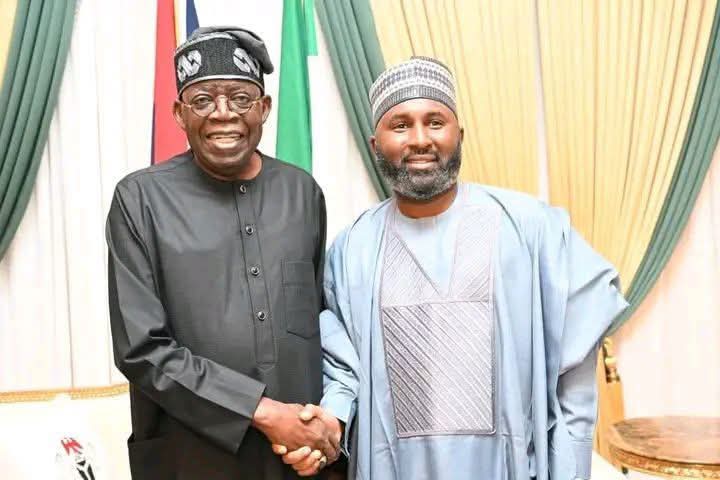
President Bola Ahmed Tinubu celebrates the Chairman, House of Representatives Committee on Appropriation, Hon. Abubakar Kabir Bichi, on his 45th birthday today.
President Tinubu describes Hon. Bichi, who represents Bichi Federal Constituency of Kano State, as a vibrant, resourceful and dedicated lawmaker whose commitment to legislative duties and national development stands out.
President Tinubu remarks: “ As Chairman of one of the most strategic committees of the House, Hon. Bichi has demonstrated uncommon capacity, grit, and leadership in steering the consideration, scrutiny, and passage of the nation’s annual budget, a role central to implementing the Renewed Hope Agenda.
“I commend him for his effective representation of his constituents and his impactful interventions in education, infrastructure, and youth empowerment, which have endeared him to his people.
“Bichi has distinguished himself since his first election to the House in 2019, where he served as Chairman of the House Committee on Works in the 9th Assembly and now as Chairman of Appropriation in the 10th Assembly.
“ As he marks his birthday today, I urge him to rededicate himself to serving his people and his fatherland.
“ And I pray to Almighty God to continue to bless him with good health, wisdom and strength.”
Bayo Onanuga
Special Adviser to the President
(Information & Strategy)
October 3, 2026

Kano, IBP sign MoU on health financing transparency dashboard

Kano Gov Abba Kabiru Yusuf bags international sports award in UK

President Tinubu Salutes Hon. Kabir Bichi, Chair Appropriation Committee Of The House Of Representatives On His 45th Birthday

Yari Urges North to Respect Power Rotation, Back Tinubu’s 8-Year Presidency

Muhuyi Raided Our Area: Encomiums, Prayers and Solidarity Trail Operation

Zamfara Varsity ASUU Threatens Warning Strike Over FG-ASUU Agreement, Promotion Arrears

Kano Chemists Threaten Warning Strike Over Alleged PCN Pressure

Per Ishaq Samaila: “Waziri” for Strategy. “Mai Jama’a” for Service. One Man. One Mission. Ibrahim Kabir Masari

Goje’s Electoral War:The Confrontation With Tinubu,Governor Inuwa,Usman Kumo And APC candidates Ahead Of 2027

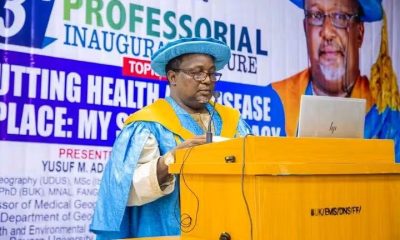
Prof Yusuf Adamu Delivers BUK’s 63rd Professorial Inaugural Lecture, Reflects on Medical Geography and Academic Legacy
Kano, IBP sign MoU on health financing transparency dashboard
Kano Gov Abba Kabiru Yusuf bags international sports award in UK
President Tinubu Salutes Hon. Kabir Bichi, Chair Appropriation Committee Of The House Of Representatives On His 45th Birthday
Yari Urges North to Respect Power Rotation, Back Tinubu’s 8-Year Presidency
Muhuyi Raided Our Area: Encomiums, Prayers and Solidarity Trail Operation
Zamfara Varsity ASUU Threatens Warning Strike Over FG-ASUU Agreement, Promotion Arrears
Kano Chemists Threaten Warning Strike Over Alleged PCN Pressure
Per Ishaq Samaila: “Waziri” for Strategy. “Mai Jama’a” for Service. One Man. One Mission. Ibrahim Kabir Masari
Goje’s Electoral War:The Confrontation With Tinubu,Governor Inuwa,Usman Kumo And APC candidates Ahead Of 2027
Prof Yusuf Adamu Delivers BUK’s 63rd Professorial Inaugural Lecture, Reflects on Medical Geography and Academic Legacy
-

 Opinion5 years ago
On The Kano Flyovers And Public Perception
-

 Features5 years ago
How I Became A Multimillionaire In Nigeria – Hadiza Gabon
-

 Opinion6 years ago
Kano As future Headquarters Of Poverty In Nigeria
-

 History5 years ago
Sheikh Adam Abdullahi Al-Ilory (1917-1992):Nigeria’s Islamic Scholar Who Wrote Over 100 Books And Journals
-

 Opinion5 years ago
My First Encounter with Nasiru Gawuna, the Humble Deputy Governor
-

 History5 years ago
The History Of Borno State Governor Professor Babagana Umara Zulum
-

 History6 years ago
The Origin Of “Mammy Market” In Army Barracks (Mammy Ochefu)
-

 News4 years ago
Federal University Of Technology Babura To Commence Academic Activities September