
News
Dangote Cement places premium on Community engagement, sustainability in Host communities
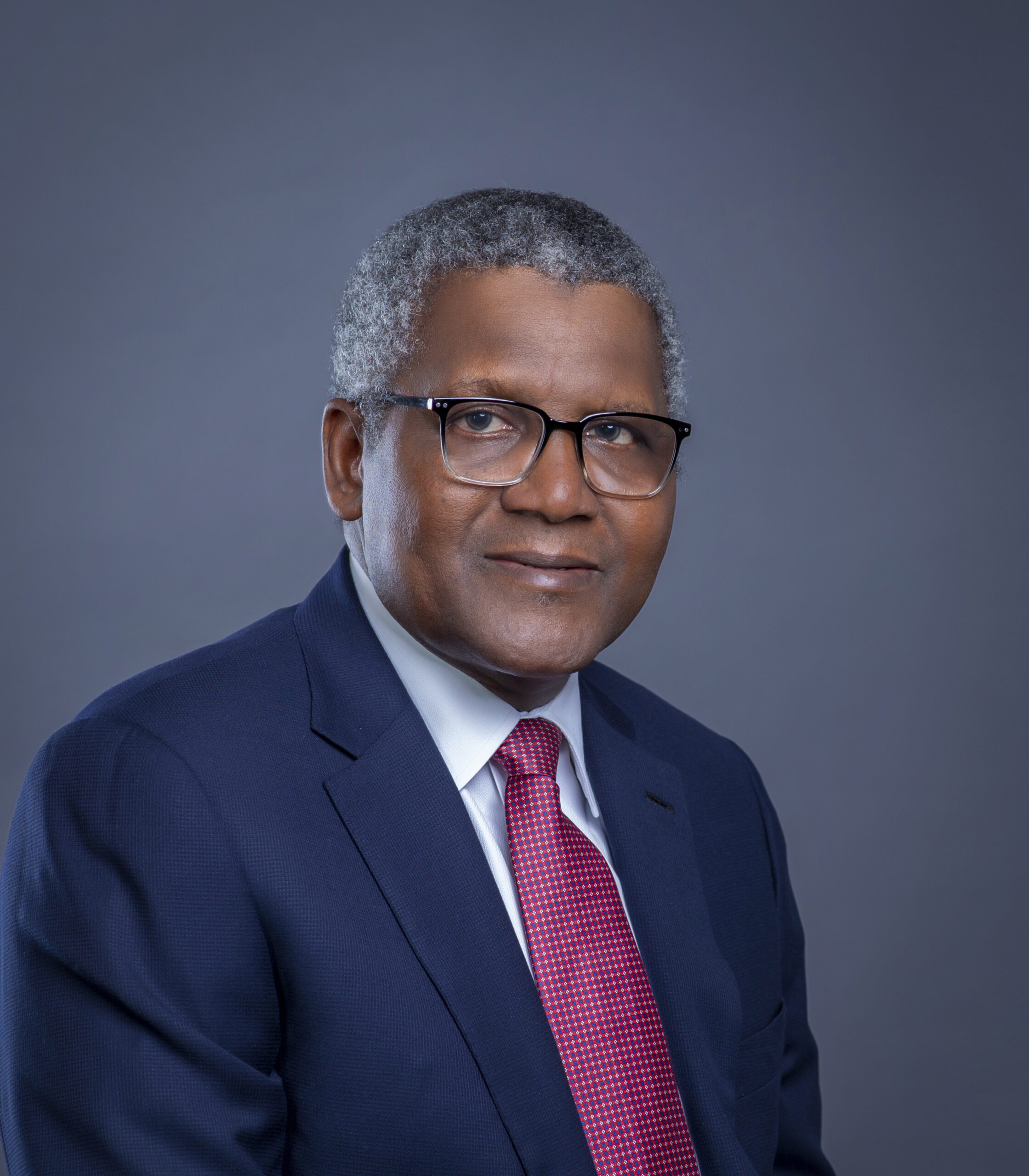
Dangote Cement Plc, is prioritizing community engagement, empowerment, and environmental stewardship to sustain its upward trajectory,
The cement manufacturing firm said it believed that true progress is measured not only by economic prosperity but also by the holistic development of all stakeholders.
The Plant Director of Dangote Cement Plc Obajana, Mr. Azad Nawabuddin, who disclosed this during a media chat in Obajana, said that the relationship between Dangote Cement and its host communities and other stakeholders transcends transactional exchanges as it is built on a foundation of trust, mutual respect, and shared aspirations.
“The communities in which we operate are not just beneficiaries; they are our partners in progress,” he affirmed.
While reaffirming the company’s commitment to its host communities, Nawabuddin, who recently moved from the Ibese plant, emphasized that the company would collaborate with key stakeholders in Obajana to implement impactful projects.
He said crucial to the vision is the empowerment of residents through skills development and capacity-building initiatives. “We recognize the importance of equipping community members with the requisite skills to thrive in today’s competitive landscape,” Nawabuddin asserted.
The Dangote Cement boss said this will enhance employability and foster entrepreneurship among youth and women in the host communities.
With a steadfast commitment to corporate social responsibility (CSR) and sustainable development, Nawabuddin outlined initiatives to strengthen the bond between Dangote Cement and the communities. He emphasized that the company views its host communities as partners.
“In terms of community engagement, we will hold meetings to explore avenues for supporting them, including opportunities for businesses and contracts. The communities are integral partners for us. Through dialogue with them, we aim to execute significant projects that will bring them lasting benefits,” he stated.
Nawabuddin also stressed the importance of environmental stewardship and sustainable practices in Dangote Cement’s operations. “We are custodians of the environment, and it is our duty to ensure that our activities leave a positive impact on the ecosystem,” he added.
Nawabuddin explained that in addition to socio-economic development is the importance of addressing security concerns in the host communities. He said through collaborative efforts with law enforcement agencies and community-based initiatives, security risks will be mitigated, and the well-being of residents will be upheld.
“We are working closely with local authorities and community leaders to enhance security measures and create a safe and conducive environment for all,” he added.










News
Kwankwaso Accuses Kano Governor Abba of Using EFCC to Intimidate Him, Block NDC Candidate
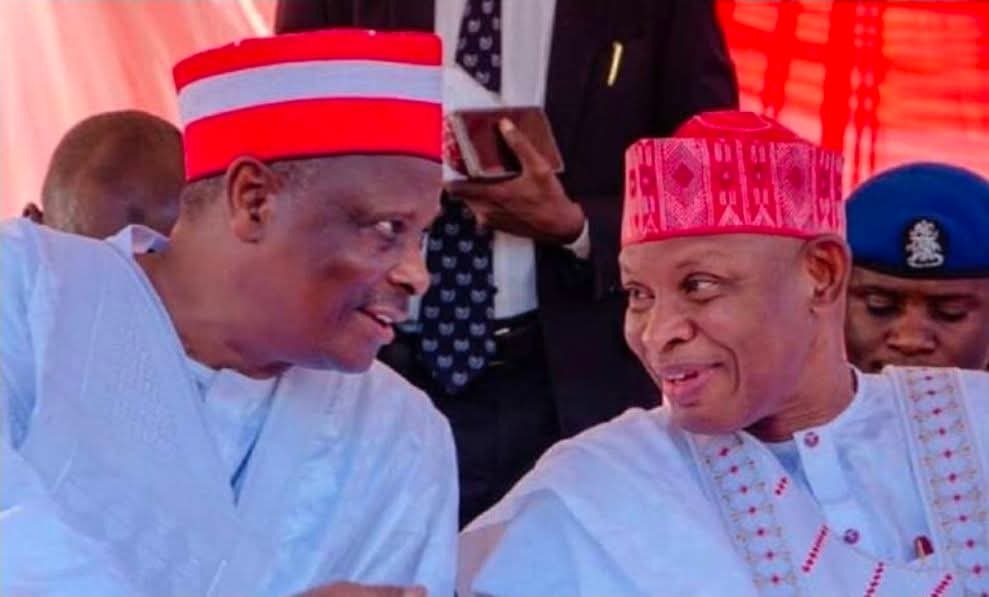
Former Kano State Governor and New Nigeria Democratic Congress (NDC) vice-presidential candidate, Senator Rabiu Musa Kwankwaso, has accused Governor Abba Kabir Yusuf of allegedly using the Economic and Financial Crimes Commission (EFCC) to intimidate him and damage his reputation ahead of the 2027 general elections.
Kwankwaso also accused the governor of allegedly attempting to manipulate institutions, including the Independent National Electoral Commission (INEC) and the judiciary, to prevent the Kano State NDC governorship candidate, Comrade Aminu Abdussalam, from participating in the 2027 elections.
The former governor made the allegations in a statement published on his verified Facebook page, where he expressed concern over what he described as the alleged use of anti-corruption institutions for political purposes.
Kwankwaso recalled that Governor Abba Kabir Yusuf had served under him in several capacities, including as his Personal Assistant, Principal Private Secretary and Commissioner, before becoming the political movement’s preferred candidate in the 2019 and 2023 governorship elections.
He noted that Yusuf eventually won the 2023 governorship election through their collective political efforts, describing their relationship as one spanning 43 years.
According to Kwankwaso, the longstanding relationship and trust he had placed in the governor had regrettably been abused.
He alleged that the governor was determined to drag him and members of his family into public controversy by using government institutions, particularly the EFCC, to undermine the reputation he had built over nearly five decades in public service.
The former governor further claimed that Governor Abba had personally submitted a formal request to the EFCC several months ago, seeking an investigation against him.
Kwankwaso alleged that after the governor reportedly failed to secure the commission’s cooperation, he resorted to using an organisation identified as the Society for Anti-Corruption and Good Governance Initiative (SACGGI) to mount pressure on the anti-graft agency.
He claimed that the organisation was neither registered with the Corporate Affairs Commission (CAC) nor had any verifiable digital presence or formal relationship with the EFCC or the Independent Corrupt Practices and Other Related Offences Commission (ICPC).
According to him, the group was allegedly deployed to organise physical protests at the EFCC premises in an attempt to pressure the commission into taking action against him.
Kwankwaso also accused the governor and some members of his cabinet of allegedly using sections of the media to advance what he described as a campaign against his reputation through selective leaks and the amplification of information on public platforms.
He argued that the alleged actions were particularly concerning because they were taking place ahead of the 2027 general elections.
The NDC vice-presidential candidate maintained that the developments appeared calculated to distract attention from important political issues, undermine the credibility of his political camp and weaken its capacity to contest and win elections.
He warned that such political manoeuvres could further heighten tensions in Kano State and threaten the prevailing peace and security in the state.
Kwankwaso further alleged that the purported campaign was not limited to him but had extended to other political candidates, particularly the NDC governorship candidate in Kano State, Comrade Aminu Abdussalam.
He said Abdussalam was currently defending his governorship ticket before INEC and the courts, alleging that there were attempts to influence relevant institutions to prevent the publication of his name and ultimately stop him from contesting the 2027 governorship election.
According to Kwankwaso, the alleged move was intended to create an opportunity for Governor Abba Kabir Yusuf to contest the election unopposed.
The former governor, however, commended the EFCC for what he described as its professional handling of two previous invitations extended to him during his years in public service.
He expressed appreciation to the commission for maintaining its institutional procedures and exercising prudence in handling matters concerning him.
Reflecting on his public service record, Kwankwaso said he had maintained a clean record more than 11 years after leaving the Kano State Government, having served two full terms as governor between 1999 and 2003 and 2011 and 2015.
He also highlighted his previous positions in government, including 17 years in the civil service, Deputy Speaker of the House of Representatives during the aborted Third Republic, elected delegate to the 1994–1995 Constitutional Conference, Minister of Defence, Special Adviser to the President on Darfur, member representing the North-West on the Niger Delta Development Commission and member of the 8th Senate.
He urged younger politicians and serving public office holders to exercise caution in their conduct, warning that political power and public office were temporary.
“Public office is transient; those who live in glass houses should be careful about throwing stones,” he cautioned.
Kwankwaso also thanked members of the public who, according to him, had refused to be misled by what he described as efforts to tarnish his reputation, particularly those who had spoken in defence of his record and political achievements.
He insisted that his public record remained intact and that his achievements in public service spoke for themselves.
The former governor consequently called on political actors to respect the independence of government institutions and refrain from actions capable of undermining their credibility or eroding public confidence.
Kwankwaso further wishes Kano State and the Federal Republic of Nigeria continued peace and progress.
News
2027: After Clerics, Barau Mobilises 3,405 Traditional Rulers in Kano for Tinubu, Abba, Other APC Candidates
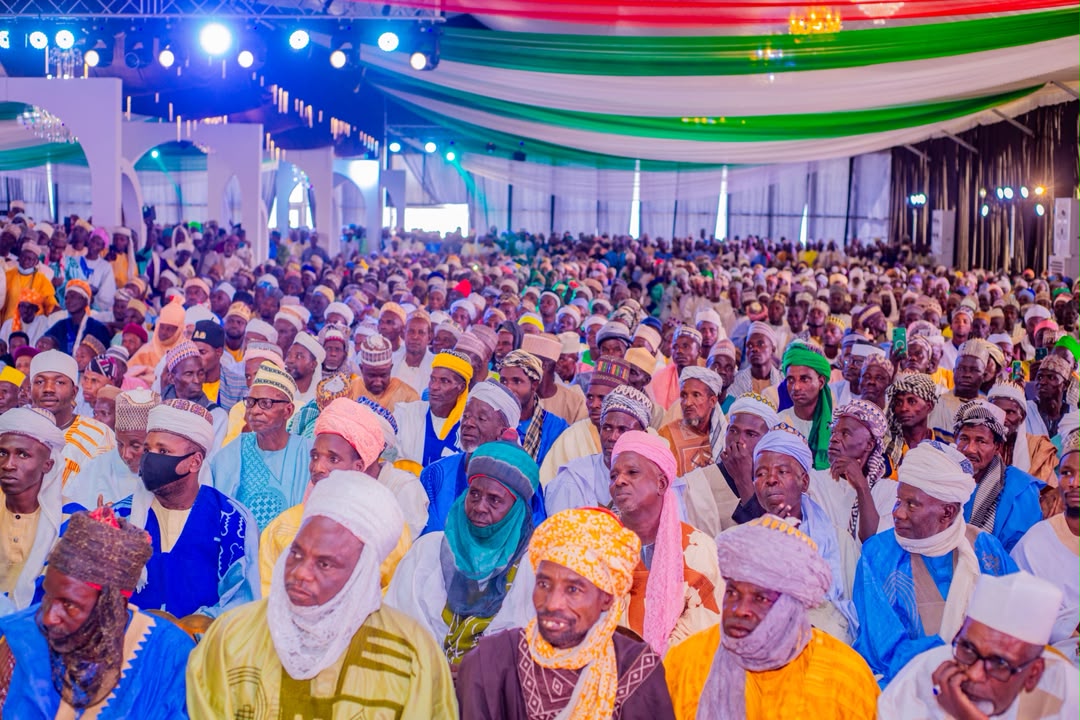
As part of his ongoing engagement with stakeholders across Kano North Senatorial District, the Deputy President of the Senate, Senator Barau I. Jibrin, on Thursday met with 3,405 traditional rulers, urging them to support and vote for President Bola Ahmed Tinubu, Governor Abba Kabir Yusuf, himself for re-election as Senator representing Kano North, and all other candidates of the All Progressives Congress (APC) in the 2027 general elections.
The meeting, held at the Ali Jita Event Centre in Kano, brought together 3,405 traditional rulers, comprising all the 3,032 ward heads, 347 village heads, and 26 representatives and secretaries of the district heads.
The engagement came barely 72 hours after Senator Barau rallied more than 2,000 Islamic clerics from the 13 local government areas of Kano North Senatorial District for President Tinubu and other APC candidates ahead of the 2027 general elections.
In the past months, the Deputy President of the Senate has intensified engagements with critical stakeholders across Kano North, reaching out to different groups with a common message and objective: support and vote for President Tinubu and all APC candidates in the 2027 general elections. APC from top to bottom.
In a statement by his Special Adviser on Media and Publicity, Ismail Mudashir, Senator Barau commended the traditional rulers for their invaluable contributions to grassroots development, describing them as indispensable partners in promoting peace, security and the wellbeing of the people.
He expressed profound appreciation for their cooperation, prayers and continued support, noting that traditional institutions remain closest to the people and understand their needs and challenges.
On security, the Deputy President of the Senate acknowledged the challenges confronting some communities in Kano North but expressed optimism over the improving situation through the collective efforts of security agencies and other stakeholders.
He said the decision of the Nigerian Army to deploy a battalion to Dambatta Local Government Area, in addition to existing security formations across the district, would strengthen security and safeguard lives and property.
Highlighting major electricity projects across the district, Senator Barau disclosed that the power projects in Bichi, Dawanau Market and Kwanar Kanye in Kabo would gulp over N130 billion.
“These projects may take time, but they will definitely turn around the economic fortunes of our senatorial district. I remember when I was in the House of Representatives between 1999 and 2003, similar power projects were attracted to Ogun State by the former President. Today, the state has become an industrial hub. We will get there in Kano North too,” he said.
He explained that the electricity projects, alongside the Federal University of Science and Technology (FUST), Kabo, Police Training School, Immigration Training School and Civil Defence Training School, would boost economic activities, create employment opportunities and accelerate development across the district.
In the health and education sectors, Senator Barau disclosed plans to transform the Bagwai and Kabo hospitals into major referral and teaching hospitals, with Kabo Hospital expected to serve as a teaching hospital for FUST, Kabo.
He also revealed plans to upgrade the Federal College of Education, Bichi, and Audu Bako College of Agriculture, Dambatta, into universities, subject to the lifting of the existing embargo on the establishment and conversion of tertiary institutions.
Ahead of the 2027 general elections, the Deputy President of the Senate urged the traditional rulers to encourage their subjects to support and vote for President Tinubu, Governor Abba, himself as Senator for Kano North Senatorial District and all APC candidates.
He noted that Governor Abba’s decision to join the APC had strengthened cooperation between the Federal and State Governments, positioning Kano to attract more Federal Government projects and development interventions in the next administration.
Speaking on behalf of the traditional rulers, the Village Head of Lakwaya in Gwarzo Local Government Area, Alhaji Idris Ado Lakwaya, said they attended the meeting with the approval of the Kano Emirate Council.
” We have the permission and approval of the Emir to attend this function. We thank the Deputy President of the Senate for his relentless efforts to address the challenges facing us, including insecurity,” he said.
** Barau Meets Kano North Fulani Association, Persons with Disabilities **
Meanwhile, the Deputy President of the Senate also met with members of the Kano North Fulani Association and associations of persons with disabilities at the Amani Event Centre in Kano as part of his ongoing consultations with stakeholders across the district.
Speaking at the meeting, former Senate Chief Whip, Senator Bello Hayatu Gwarzo, urged all to vote for President Tinubu, Governor Abba, Senator Barau and all APC candidates in the 2027 general elections.
Senator Gwarzo commended Senator Barau for his extensive engagement with stakeholders and different groups across the district.
” President Tinubu has already started well, and we are very optimistic that all his initiatives will bring the desired results that will benefit everyone. So, come out en masse and vote for him and all APC candidates from top to bottom. All these bogus promises by others (oppositions) will not take us anywhere. Let us support and vote for Mr President. He has good intentions for us,” he said.
In his remarks, Senator Barau reiterated his call for support for all APC candidates, urging the groups to mobilise their members and other residents to vote for the APC in the 2027 general elections.
News
A Moment in Time-Binta Spikin
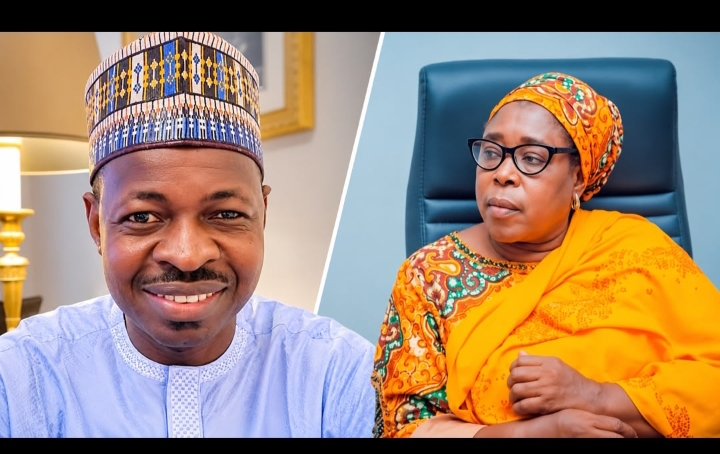
By Binta Spikin
bintaspikin@gmail.com
There are moments that stand out, either because of the importance they hold or the magnitude of their impact on people. These rare and exceptional moments become part of us because we cherish the lessons we learn from them. That is what Saturday, the 21st of this month, means to me. It was a moment in time, and a great one at that.
It all started with a WhatsApp message from a friend, Malam Abdulaziz Abdulaziz, for whom I have tremendous respect and with whom I have shared so much in the past. Although politics and life’s events have made it difficult for us to stay in touch, we have maintained our mutual respect whenever we happen to cross paths. It was, therefore, only natural that I accepted his invitation to participate in a workshop they were organising in Abuja.
We arrived in Abuja a day before the workshop, and I was, and still am, in awe of the incredible women I met, all of whom had come to attend. Each one is a powerhouse in her own right, particularly in terms of her thinking and professional accomplishments. They also represent exceptional institutions and command impressive followings and strong personal brands. All of them are leaders in their own right. I am honoured to have had the opportunity to be in their company and learn from their wealth of experience and knowledge. For this, I am eternally grateful.
However, that was just the tip of the iceberg. The real game-changer came when we settled down for the workshop. Lo and behold, there was the National Security Adviser himself, Malam Nuhu Ribadu!
He is calm, friendly and accommodating. With every statement he made, certain qualities about him became increasingly evident: he is a patriot through and through; he genuinely wants this country to work; he is determined to succeed in the responsibility entrusted to him; and he has tremendous respect for women. This last quality particularly caught my attention.
Subconsciously, he kept reiterating the words: “Nobody can do it better than you, because, as wives and mothers, you have absolute control over what men do.”
I am no feminist, but I liked his statement because I want people to trust me when I say that women are truly powerful. Do you want to test just how powerful they are? Cross your wife and watch how she turns on you!
Anyway, my takeaways from the workshop are simple, and that is why I have decided to write this piece.
First, we learnt that Nigeria is winning the war against terror. Even though some of the progress may be evident, there is certainly no harm in reminding ourselves of where we were so that we can appreciate where we are today. We may not have achieved everything, but at least we now enjoy relative peace.
As he spoke, I found myself comparing different scenarios in my mind. I want all of us to remember what travelling by road from Abuja to Kano was like before this administration came into office. It was virtually impossible. The road had been abandoned, even by contractors engaged to rehabilitate the Abuja-Kaduna-Kano route.
In fact, kidnappers had become so brazen that they attacked a moving train in broad daylight!
When we compare the scale of the terror Nigerians experienced before this administration with the situation today, we cannot help but appreciate the progress made so far. For example, the Tony Blair Institute reports that, in the period following the 2013 general elections in Nigeria, there were 168 attacks by IPOB alone, resulting in the destruction of several police stations. In 2014, Boko Haram killed 6,644 people, with the figure rising to 7,000 in 2015.
Now, consider these alarming figures alongside recent developments, including the frequency and scale of Boko Haram attacks and the destruction they leave behind. Only then can we begin to appreciate the significance of the progress recorded so far.
It is worth noting that only one attack was reported this year, with no lives lost. Equally impressive is the report that Nigeria lost 750 people in 2025. The figure is frightening, but when compared with previous years, we can still regard the trend as a step in the right direction.
According to SBM Intelligence, if we want to understand how far we have come in the war against terror, we should follow the money. Following that logic, it is encouraging to know that terrorist organisations reportedly collected ₦1.7 billion in ransom payments in 2024, compared with ₦7.5 million last year.
These are significant developments, particularly because we know that terrorist groups use such funds to purchase ammunition and drugs, thereby strengthening their capacity to wage war. Less money means reduced purchasing power for them.
There are several other examples, but my point is that we should at least acknowledge the modest achievements recorded so far. Progress may be slow, but its impact cannot be denied. If we continue along this path, we may eventually reach a point where Nigerians no longer live under the threat of terrorism.
This brings me to another important point, particularly as the 2027 general elections draw closer.
Choosing our leaders is a constitutional right provided for under the Constitution of the Federal Republic of Nigeria. However, I believe it is only fair that we give President Asiwaju Bola Ahmed Tinubu another four years to govern Nigeria.
This has nothing to do with the fact that I belong to the APC. Rather, it has everything to do with the political stability of a country we all deeply care about.
There is a dominant narrative surrounding Hausa-Fulani political hegemony, and those who subscribe to that view have their reasons. One of them is that, in the 66 years since Nigeria gained independence, the Hausa-Fulani have governed the country for almost 40 years.
In addition, there is the unwritten understanding of power rotation between the North and the South.
Therefore, at this moment in time, I believe we need to give this President of southern extraction, a performing president, a listening president and a forgiving president, the opportunity to complete his eight-year tenure.
The South deserves this. In fact, it has earned it.
This is about the political stability of Nigeria, our Nigeria. We want our country to continue to exist and prosper. However, longevity and prosperity are products of the choices we make and the actions we take every day.
The truth is that Nigeria’s myriad problems are partly of our own making. They are not solely the responsibility of our leaders. It is unfortunate that Nigerians constantly demand accountability from their leaders while often refusing to accept responsibility as citizens. This simply does not add up.
Let me be clear: I am not absolving our leaders of their wrongdoings. What I am saying is that we, too, have our own shortcomings.
Interestingly, we have a President who is not afraid to make difficult decisions, no matter how painful, in an effort to put the country back on track. He takes responsibility for both the assets and liabilities of his administration. He does not spend his time complaining; rather, he appears more concerned about the development of the country than about receiving praise.
This is a President extraordinaire!
What is more? There are tangible results to show for it.
From the inception of this administration to date, it is an open secret that state governments can now pay salaries without having to borrow from banks or other financial institutions, while still having funds left over to execute projects. They no longer have to alternate between ministries when allocating funds for projects.
This represents a departure from what was obtainable in the past, when the norm was either to slash salaries or accumulate months of unpaid wages, plunging families into financial distress. This was not necessarily because state governors wanted to be unfair, but because it was the only way they could make ends meet.
Even the stories on the front pages of our national dailies are now more encouraging.
Malam Abdulaziz Abdulaziz told me that when he was an editor at Daily Trust (his last assignment before his current position), they often had to search for positive stories to feature on the front pages of their newspaper. It was that bad.
Bandits, kidnappers and other criminal elements had trapped us in a sea of unhappiness. We can still remember how bandits operated with impunity, riding in convoys and gleefully terrorising entire communities.
Not any more!
So, if you ask me why I believe we should give Asiwaju Bola Ahmed Tinubu a second term, my talking points are simple: political stability, improved security and economic growth.
The man has a knack for growing the economy. Let us give him a chance to consolidate on the progress he has made so far.
Let us make Nigeria work again.
APC from top to bottom, for a better Nigeria!
All in all, the workshop was worthwhile. We left better informed about Nigeria and, more importantly, with renewed hope and a deeper appreciation of the issues confronting our country.

Kwankwaso Accuses Kano Governor Abba of Using EFCC to Intimidate Him, Block NDC Candidate

2027: After Clerics, Barau Mobilises 3,405 Traditional Rulers in Kano for Tinubu, Abba, Other APC Candidates

A Moment in Time-Binta Spikin

2027: Amupitan Raises Alarm over Threats to His Life, Warns RECs Against Operational Lapses

NASCON to Unveil New Dangote Seasoning Products at 2026 Kano Trade Fair

Kano’s War On Drugs: How Barr. Muhyi’s Taskforce Is Changing The Game

Begging in Northern Nigeria: What Future Are We Preparing for Our Society?

NDC Deputy Governorship Candidate Gives Kano Information Commissioner 48-Hour Ultimatum Over Alleged Defamation

Bauchi Govt Suspends Emir over Alleged Misconduct, Inaugurates Probe Panel

Tinubu’s Jigawa Rally Signals Growing Northern Support, TMS Says as President Defends Economic Reforms
Kwankwaso Accuses Kano Governor Abba of Using EFCC to Intimidate Him, Block NDC Candidate
2027: After Clerics, Barau Mobilises 3,405 Traditional Rulers in Kano for Tinubu, Abba, Other APC Candidates
A Moment in Time-Binta Spikin
2027: Amupitan Raises Alarm over Threats to His Life, Warns RECs Against Operational Lapses
NASCON to Unveil New Dangote Seasoning Products at 2026 Kano Trade Fair
Kano’s War On Drugs: How Barr. Muhyi’s Taskforce Is Changing The Game
Begging in Northern Nigeria: What Future Are We Preparing for Our Society?
NDC Deputy Governorship Candidate Gives Kano Information Commissioner 48-Hour Ultimatum Over Alleged Defamation
Bauchi Govt Suspends Emir over Alleged Misconduct, Inaugurates Probe Panel
Tinubu’s Jigawa Rally Signals Growing Northern Support, TMS Says as President Defends Economic Reforms
-

 Opinion5 years ago
On The Kano Flyovers And Public Perception
-

 Features5 years ago
How I Became A Multimillionaire In Nigeria – Hadiza Gabon
-

 Opinion6 years ago
Kano As future Headquarters Of Poverty In Nigeria
-
 History6 years ago
Sheikh Adam Abdullahi Al-Ilory (1917-1992):Nigeria’s Islamic Scholar Who Wrote Over 100 Books And Journals
-
 Opinion5 years ago
My First Encounter with Nasiru Gawuna, the Humble Deputy Governor
-
 History5 years ago
The History Of Borno State Governor Professor Babagana Umara Zulum
-
 History6 years ago
The Origin Of “Mammy Market” In Army Barracks (Mammy Ochefu)
-
 News5 years ago
Federal University Of Technology Babura To Commence Academic Activities September