
Opinion
Heinous ‘Political’ Kidnappings And Killings In Ebiraland: At Whose Behest?
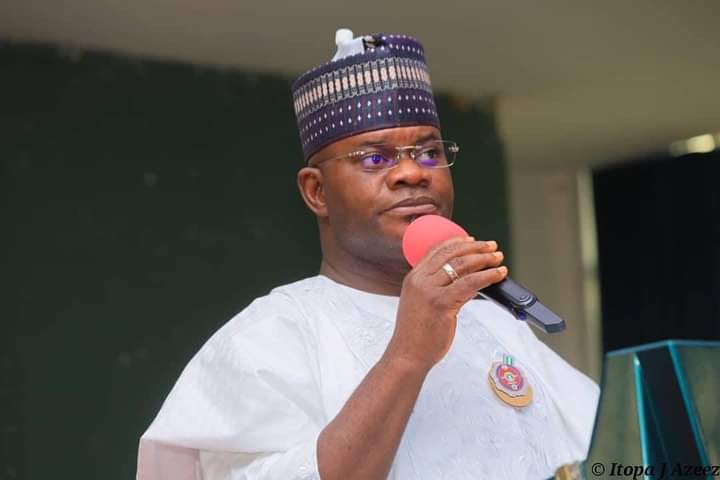
By Ozumi Abdul
The prayers and pride of all parents in most African societies, my beloved Ebiraland inclusive are always to have them buried by their children.
In fact, it is considered an abominable disaster when parents shed tears over the deaths of their children, or bury them with their own hands while they are still alive.
They would go out of their ways to do everything within their power to avert such fate from befalling them because it’s ill-luck and ill-fate on their part.
However, this age-long potent belief since the coming on board of this outgoing administration of Governor Yahaya Adoza Bello close to eight years now has been consistently reduced to mere fictious and mythical one, as old parents, especially mothers, now cry over the deaths of their sons.
In some cases though, these old parents still die before their children, but it’s usually abrupt deaths because of the psychological inability to cope with the depression of having their children who mostly fend for them in incarceration without traces. Some even lose their sigts after years of umpteenth and consistent sobs.
My intents for writing this piece are not to indict Governor Yahaya Bello, and his administration that have been able to fight and suppress the issues of insecurities to a standstill in the state, rather to subtly call his attention to how some people who are allegedly close to him and his government are hellbent on tarnishing his award-winning record of the best governor in terms of security.
I sincerely want the governor to swing into action within these few weeks he has left in office, and quickly prevail on his subjects to have people who they allegedly condemned to Illegal incarcerations released, or account for them in case they are no more.
These alleged individuals are proverbial bats who are neither birds nor rats, they are without identities, they neither have the love of Ebiraland at heart, nor that of the governor, who on the lips service they profess to pay loyalty and allegiance to.
What they are mostly concerned about are their political and personal interest, they don’t mind whose horses are gored, they can sacrifice anything and anybody who are threats to their status quo.
Amid all wrongs, they would never tell truth to power they are very close to, because they don’t mind if the governor fails or not, in as much as their interests are protected.
They would equally do everything humanly possible to shield and frustrate whoever that has the ingenuity to tell the governor the realities of the state from assessing him, because they thrive in falsehood, lies, distortion, deception and fabrication.
These individuals would take people who dare to voice out publicly their displeasures towards some of the government’s anti people policies to the cleaner. They do this by hiding under the veiled guise of the governor’s directives, because they consider such constructive criticisms as threats to their avaricious self-aggrandizements if they get to the governor. Go and consult Mr Garido in Okengwe, who happened to be the only survivors of their nefarious onslaughts to tell you the tale.
They have been simply giving the governor bad names all along, they not honourable, but horrible.
I watched in pains, with broken and shattered heart an emotionally-disturbing viral video last week, wherein an old woman, who should probably be an octogenarian (in her late 80s most likely) was crying out her heart and almost had her voice hoaxed.
She cried and her eyes became swollen and misty, while also intermittently muttering words of pleas to Governor Yahaya Adoza Bello to come to her aid.
It wasn’t as if the grey-haired old, poor, wrecked, hapless and helpless woman from Ihima, in Okehi Local Government Area of the state was actually sick, and thus seeking the governor’s assistance to foot her medical bill. A big NO! It’s far off it.
Her pleads to the governor was simply for him to prevail on his appointees to release her only child who was reportedly whisked away in the sedate of a nightfall to an unknown location for alleged political reason.
Her ‘politically’ motivated kidnapped son, Kashim, she said was the sole sustainer of the entire family; a father of five, and husband.The old woman narrated how life has been hellish and nightmarish for the entire family Kashim left behind over eight months ago that he has been in incarceration of the alleged ‘unknown government men’.
As we speak, whether Kashim is still alive, or exterminated while in immurement remains unknown to virtually all of us, but clearly known to those who have their hands all soiled in his heinous ‘political’ kidnapping and durance.
Another sad, notable and attrocious political kidnapping similar to that of Kashim, that was reported via viral WhatsApp voice note barely a month ago was that of one Dahiru, also known as Decorous.
I also listened with heavy heart, as his aged mother narrated her sad ordeals.
The old woman had already lost her sights as a result of umpteenth sobs, because Decorous is her only surviving son that fends for her.
He fathers children numbering up to minimum of seven from two wives, and he is the sole fender for his immediate family and old mother.
According to the accounts of his two wives in the viral WhatsApp voice note, three months before Decorous unlawful “arrest”, arguments were said to ensued via phone call conversations between him and his old childhood friend, who is now a “powerful” member of the Governor Yahaya Bello’s cabinet.
Amidst the conversation via phone call, threats of him going to prison was said to be made by the said supposed childhood turned ‘powerful’ appointee friend, then Decorous retorted, challenging him to go ahead to execute his threat of him going to prison, else he is a bastard. Then three months after, masked men on military uniform were said to stormed Decorous’ yougourt factory and forcibly whisked him away with three of his workers who protested against their boss’ unlawful “arrest”.
I’m not alleging anybody as the orchestrator of his abduction here, but pardon me for using a Yoruba adage as a logical analogy thus: “Aje ke lale ana, omo kuloni, ta ni o pa omo? Meaning, a witch blubbed yesterday night, then suddenly a child died this morning, who then killed the child?
Again, a proverb in our native Ebira dialect would ask that, when a limping man enters a house, and moments later, a limping masquerade exited that same house, then who is in the masquerade?
Thus, threat of imprisonment was made during phone call conversations, then months later, Decorous a devout Muslim, who had no issues with anyone before then was allegedly kidnapped, and till date nothing has been heard of him, who then was behind his kidnapping?
If he (Decorous) and Kashim that was equally ‘kidnapped’ eight months ago in Ihima District were in any way found wanting to have broken the law, why were they not arrested in accordance to the dictates that are within the ambit of law, and get prosecuted in the the courts of competent jurisdictions?
Why were they ‘kidnapped’, leaving their families and loved ones in the dark over their whereabouts?
Now, after years and months respectively that these Ebira sons were ‘politically’ abducted, whether they are still alive today or extra-judicially killed, is a question no one can boldly answer including their family members.
No one can rightly attest to any of these two fates that must have befell Decorous and Kashim now, no one knows their whereabouts, and the kinds of treatments they are subjected to, but only their political abductors and orchestrators.
Sadly enough, there are tens or twenties of Kashims and Decorouses across Ebiraland whose fates have been decided in these similar heartless, monstrous and inhuman manners that are unheard of.
Their family members would only mourn in what German Noelle Neumann described as spiral of silence, accept their fates, move on, while the tales of their kidnapped brethren are interred eternally into the abyss of history.
They are gone forever and never to return again, their family members would hardly see them again. Their children especially those who are very young during the abductions of their fathers would hardly know the facial identities of their fathers again.
Who then takes up the responsibilities of these emergency-orphaned children, as they journey down the routes of futures laden with uncertainties? What are their fates of not becoming liabilities to themselves, their families and societies in future?
What about their emergency-widowed wives, what are their fates?
As I drop my pen here, I ask again, at whose behest are all the heinous political kidnappings and killings in Ebiraland? Who are the orchestrators?
In as much as answers can’t be readily be provided to these questions for now, one thing the culprits of these crimes to humanity should discern is that Anebiras don’t forget, they hardly forgive people who had committed attrocities against them.
Stale pounded yam can still be freshly hot even after hundred years. These individuals should better know this now that posterity shall take its due course








Opinion
The Final Betrayal Of A Red Neck?-Martin Yakwo
By Martin Yakwo
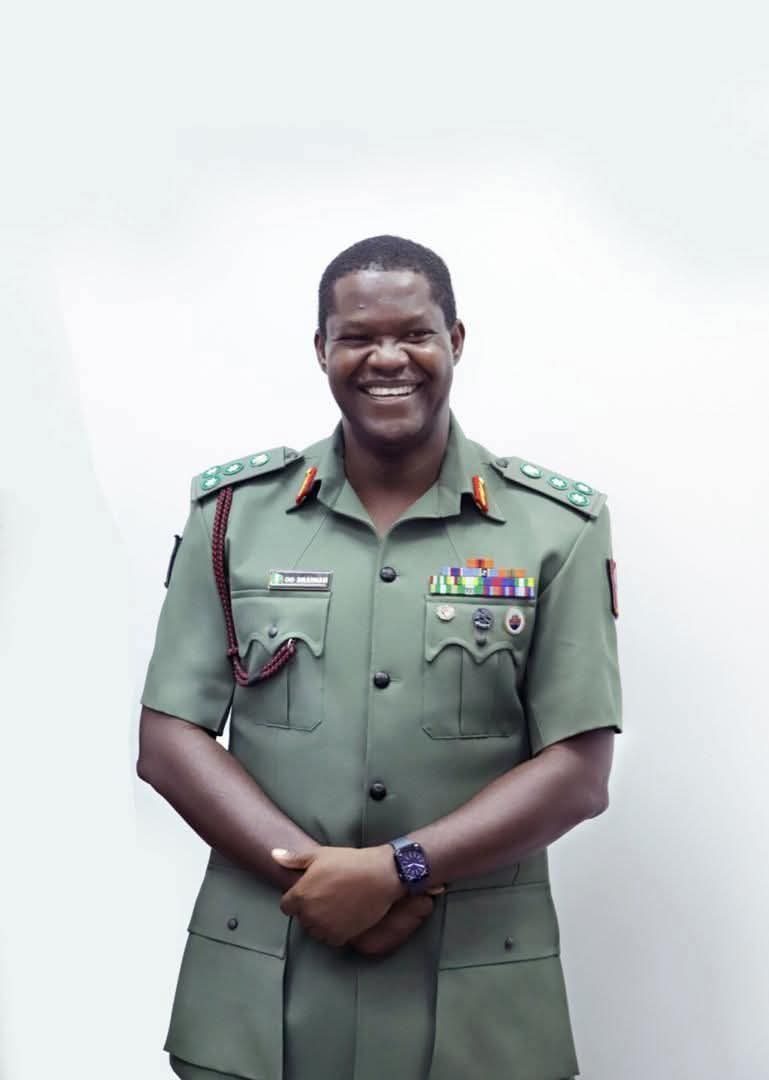
The humid air of Benisheikh felt heavy yesterday, not with rain, but with the silence of a trap. Brigadier General Oseni Braimah stood in the center of the 29 Task Force Brigade’s perimeter, his thumb tracing the jagged edge of a radio that hadn’t caught a clear signal in three days.
He had surely sent five memos to Abuja in a month. He’d asked for the T-72 tanks promised in the quarterly budget and the thermal optics needed to see through the encroaching Sahel dust. After all the general in his youth was trained in the annals of red house aka octopus house..where being on point was a religion? Sharp thinking was necessary to survive and being resourceful was mandatory.
But alas, The replies from the High Command via the buffoons in the villa were always the same: “Resources are being deployed. Maintain your position.” But Braimah knew where the resources were. He had seen the photos of the new mansions in Lakeview, Abuja, owned by men who had never heard a shot fired in anger. He knew the “superior firepower” touted in the morning press releases was sitting in a shipping container in Lagos, held up by a kickback dispute between greedy politically inclined morons and the compromised analogue generals who have become their partners in crime and corruption.
“General,” his adjutant whispered, pointing toward the tree line. “The scouts didn’t return.” how could they have returned? They had already been betrayed by some rehabilitated sons and daughters of Satan with the blessing of the NSA and his clowns in control of the nations security apparatus a long time ago.
Braimah reached for his rifle. It was a decades-old weapon, the ubiquitous AK 47? its barrel worn smooth. He knew the political will to end this war didn’t exist; a forever war was too profitable for the men/agbayas in flowing agbadas, multi million naira watches and their paramilitary gang members in well starched khakis who the general answered to. If the insurgency died, the “security votes”—those unvetted billions—would vanish. After all, the dirty, stinky, drug addled vermin known as Boko Haram are the prodigal sons of some of the hierarchy as well as the politicians. These boys are cash in the bank as it is and so must be protected and supplied more than the military itself.
Then, the darkness erupted.
The terrorists didn’t come with swords; they came with brand-new technicals and night-vision goggles—gear better than anything Braimah’s men possessed. The General sprinted toward the front trench, shouting orders that were drowned out by the screams of boys holding jammed rifles.
He picked up a Light Machine Gun from a fallen soldier, but after three bursts, it seized.
The procurement officers had bought “refurbished” ammunition that was actually decades-old surplus. “Request air support!” Braimah roared over the thunder of RPGs.
“The jets are grounded in Maiduguri, sir!” the comms officer yelled back, tears streaking his dusty face. “They say there’s no fuel budget cleared for night Sorties!”
Braimah looked at the sky, vast and empty. No air support? No night time drones? It wasn’t the enemy that had defeated him. It was the ink on the diverted contracts and the shrugs in the air-conditioned boardrooms of the capital. He stood tall, a silhouette of defiance against the muzzle flashes. He was a lion led by sheep, a guardian sold for a percentage. As the perimeter collapsed, he didn’t retreat. He fired his sidearm until the slide locked back. By then the scene must have looked like a scorched earth with bodies strewn across each other, blood and dust mixing with bullets and shrapnel as the constant staccato of gunfire mixed with Islamic chants by the evil killers of his colleagues rent the air, getting closer, and closer by the mili second?
The last thing Oseni Braimah felt wasn’t the sting of the bullet, but the “cold weight of a betrayal that started a thousand miles away from the battlefield in an air conditioned suite in the villa and freezing office in the MOD.” The desire to gaze upon the faces of his beautiful wife and kids once more must have driven him to jump into the last remaining MRAP vehicle in order to save himself and the wounded left alive to try to salvage their dire situation and protect us the citizens who slept underneath the covers while simultaneously living in order to fight another day?
But alas….it wasn’t meant to be…”oga the MRAP has no fuel and the engine is faulty?” What manner of government allows a red neck to be in charge of a command with such a logistical nightmare? The Nigerian government of course. Better to turn our brightest and bravest into sitting ducks in borno for the bandits as long as the allowances can be exchanged in zone 4 for dollars but not sense!
The next morning, the DHQ would release a statement praising his “heroism” and “the military’s successful repelling of the attack.” The mansions in Abuja would remain quiet, their walls thick enough to drown out the sound of the desert wind while also buck passing in order to avoid any form of official scrutiny. Maybe tomorrow morning the mong from bourdillion would hurriedly fly into an airfield in Maiduguri for 10 minutes to extol the virtues of my red house brother and his fallen comrades in arms as he did in jos? He would make his usual regurgitated speech about “never again or we will crush these bandits?” He may also demand that they bring omos twin brother and his grieving wife and kids for a photo op? To show that he cares? Typical.
Mr President , your high command and your useless Boko Haram trainee ministers and the safari suit wearing boy scout from kaduna . You have all sacrificed an innocent man’s life and that of his brave platoon with your incompetence, blinding stupidity and lack of political will to face this menace head on. Nigerians are now on par with somalians as regards to insecurity and it is all happening under your bleary-eyed watch.
The betrayal of all the remaining red necks and their subordinates rests on your shoulders. May all of you responsible for the current state of this nations capitulation choke on your wealth and die off in penury after being haunted by the visions of all those who have been sent to the upper room by your inaction greed and lack of foresight.
As for “Le deux, tallest, Omo bee and the general?”…..I wish you a peaceful journey
I will see you when it’s my turn . Rest in peace……Salute.
[“The final betrayal of a red neck” is a SEMI BIOGRAPHICAL EPITAPH written by me based on the events of the last 24 hours of oseni braimahs life, as a dedication to his bravery and that of his men, the current inefficiency affecting our nations military offensive against terrorists in nigeria, the debilitating federal corruption as well as our 32 year association via our journey through the hallowed halls of CSSKD”]
© God of words productions. 2026
Opinion
Shekarau In APC, Morale Booster For Governor Abba
By Abba Anwar
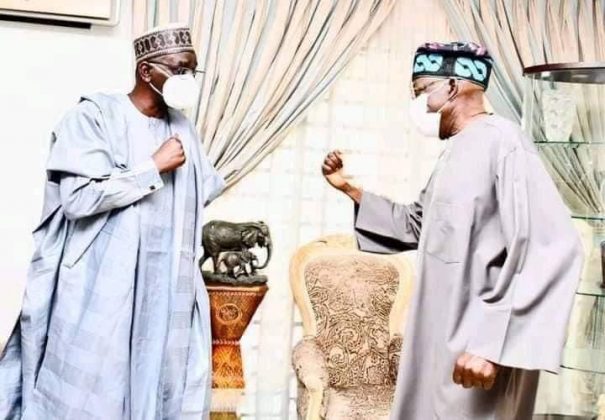
It is no longer a news or something strange for Kano people, for one to comfortably advance a stance that, among all the former Governors of Kano, who are still alive, including Military Administrators during Military regime, Malam Ibrahim Shekarau, Sardaunan Kano and a one time Distinguished Senator of the Federal Republic of Nigeria, is the most focused, most honest, most humane, most humble and most lenient, with high sense of spiritual touch.
Just like the former Governor Rabi’u Musa Kwankwaso, whose political structure cuts across all the 44 local government areas in the state, Malam Shekarau has that political spread for sure. Shekarau’s structure, under what is called Shurah Council /Committee, is more genuine and democratic, than that of Kwankwaso.
For the simple reason that, nowhere in his political life, before, during and after his days in office, it was reported that he takes decisions without consultation. The cardinal essence of the true meaning of Shurah. Consultation before action. The concept of Shurah became more prominent in his post administration era.
Even the Shurah Council /Committee, is under the leadership of another respected and down – to-earth personality, Dr Umar Mustapha, popularly known and called Mai Mansaleta (Mentholatum). An ocean difference between Kwankwaso’s Kwankwasiyya and Shekarau’s Shurah. Under Shurah, immediately after Shekarau, there is the Chairman of the body of decision makers, Shurah. Unlike in Kwankwasiyya where you have Kwankwaso and only him, as the alpha and omega. Below him in the chain of decision making and command? Nobody! Absolute totalitarianism!
With the cross over of Shekarau to the ruling All Progressives Congress (APC), the chances and influence of Kano state, Abba Kabir Yusuf, against 2027 election, are becoming more visible, predictable and waxing stronger. Even the consolidation of the party and governance are becoming increasingly focused. Shekarau is respected by almost all Kano elders and responsible individuals.
One good thing about Shekarau’s political empire, is, almost all those who are following his political direction, have it at the back of their mind that, they are duty bound, to be loyal, as a symbol of duty of followership. No blind loyalty, no deceit and no double-speak. He, as an overall leader of the dynasty, if I can use the term, consults, before any decision is reached.
Shekarau in APC, means governor Yusuf’s decisive political spread across all the 44 local governments. I also hope that, Shekarau’s people will not be sidelined in the party activities and governance. As it was the case during the immediate past governor Dr Abdullahi Umar Ganduje, CON.
If and only if governor Yusuf wants to display practical relationship with Shekarau, I suggest, he should incorporate Shekarau’s loyalists in governance, more than any other section or camp of the traditional APC. Why? Because, Shekarau, as it appears now, has no single individual in the party leadership. Right form the ward to local government up to state. Congresses across wards, local governments and state took place few weeks back. Before Shekarau joins the party. So he should be compensated, anyway.
It is governor Yusuf, Malam Shekarau, Baba Ganduje and His Excellency, Deputy Senate President, Distinguished Senator Barau I Jibrin, CFR, who are now on the table. A round table, if you wish. Is not for roundtable discussion. But for redesign, refocus, rejig, realignment and rehearsal of current political reality in Kano, against 2027.
Without fear of contradiction and exaggeration, Shekarau is still one of the very few politicians in the country, whom, when you look at their faces, you see faith, seriousness, straightforwardness, focus, commitment and humility. So as a matter of fact, APC under the governor, in Kano, is lucky to woo Sardaunan Kano, ahead of such stiffer elections, come 2027. Which is just some miles away.
I suggest that, Shekarau people, as he joins APC, should be involved in governance from local governments to state level. Failure to do that, may as well mean, APC looks at him (Shekarau), alone, not alongside his people. And this could mean a bad political approach. Let Shekarau and his people know that, their relevance and influence are spotted and appreciated, by the present state government. Unlike what was obtained in the past. When their hardwork, commitment and loyalty were thrown to the dogs.
As important as Shekarau is, in normalizing and consolidating the strength of APC, not only in Kano, it is expected that, his people would not be neglected after joining the party. Yes, Shekarau still enjoys grassroot supporters, real and genuine, for that matter. The ball, I believe, is in the court of both President Bola Ahmed Tinubu, GCFR, and governor Yusuf.
So governor Yusuf should facilitate the fixing of Shekarau people in some chosen federal government spaces. Consolidation of power, is rewarding, when realities on ground are not deliberately neglected.
Shekarau’s influence cuts across many states, especially, in the North. More importantly, people that are religious, in the true sense of the word religion, gentlemen and other community leaders across our traditional settings. Humility and approachable posture, are two major attitudes that endear him to many.
Without being economical with the truth, I can say, governor Yusuf finds a new political father in Shekarau. Take it or leave it.
Anwar writes from Kano
Wednesday, 8th April, 2026
Opinion
AN OPEN LETTER TO THE PRESIDENT OF THE FEDERAL REPUBLIC OF NIGERIA
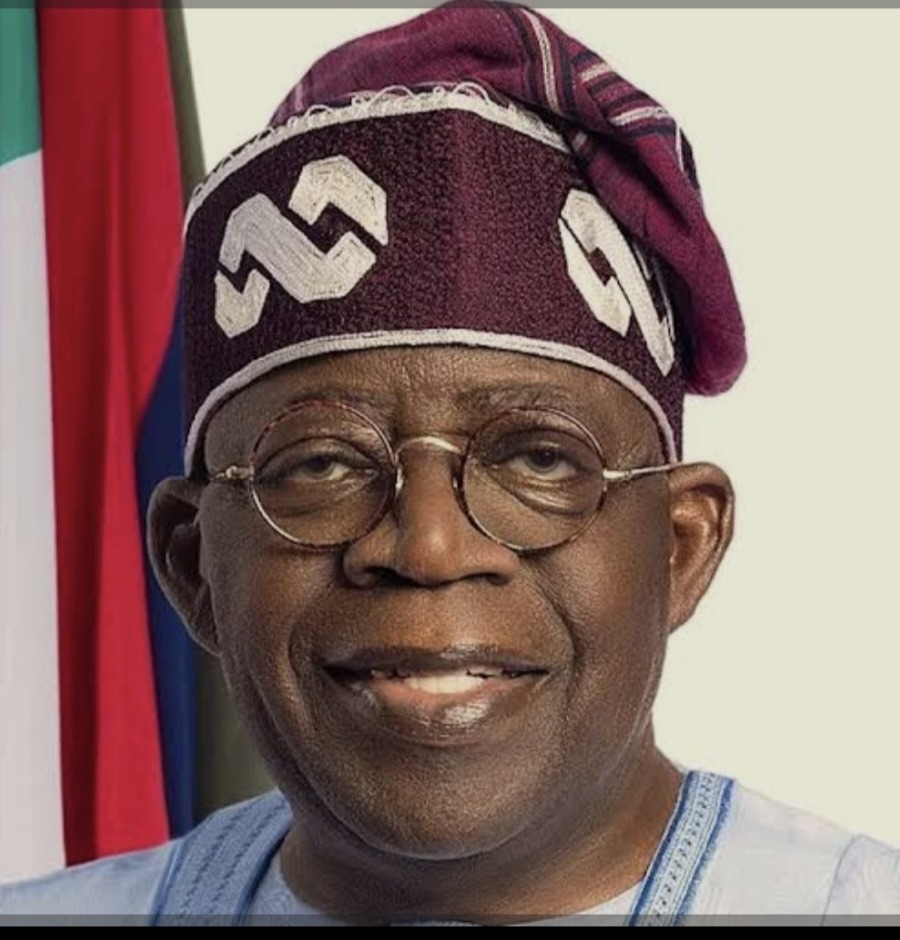
Date: April 7, 2026
His Excellency, Bola Ahmed Tinubu, GCFR
President of the Federal Republic of Nigeria
State House, Abuja.
Your Excellency,
We write to you as a collective patriotic stakeholders and concerned citizens of Kano State, motivated by a profound sense of civic duty and an unwavering commitment to the integrity of our democracy.
We are observing with keen interest the ongoing deliberations regarding the appointment of a new Deputy Governor for Kano State, and we are compelled to bring to your attention the grave implications of certain reports currently circulating within the political sphere.
There are persistent and troubling rumors suggesting that the Presidency may be exerting significant pressure on Governor Abba Kabir Yusuf to nominate an individual for the Deputy Governorship who is currently facing multiple and serious corruption charges.
It is imperative to bring to your attention a detail of which you may not be fully aware: the candidate being promoted by the former National Chairman of the APC, Dr. Abdullahi Umar Ganduje, is a co-defendant alongside Dr. Ganduje himself in these very cases.
There are active criminal proceedings instituted by the Kano State Government in competent courts of law, backed by overwhelming documentary evidence.
The precedent for accountability in this administration has already been set. Before the sudden resignation of the former Deputy Governor, Comrade Abdulsalam Gwarzo—which was necessitated by a petition submitted to the State House of Assembly regarding corruption charges to the tune of approximately ₦2 billion—the Assembly had formally demanded that he defend himself.
Rather than engage the members, he chose to resign. To now recommend another individual, whom the state is actively prosecuting across multiple courts, would be, to say the least, a glaring act of double standards.
The pressure being mounted for this specific nomination appears to be nothing more than a calculated attempt to secure a form of “backdoor immunity” for the accused.
By elevating a co-defendant to the office of Deputy Governor, the ongoing trial would be effectively paralyzed, as the individual would then be shielded by the constitutional immunity afforded to that office.
Such a move would be a direct assault on the rule of law and an affront to the judicial process. It would not only ridicule the personality of the Governor but also compromise the integrity of the legislators and the APC as a party.
Your Excellency, we cannot ignore the striking parallel between these local developments and the commendable steps your own administration is taking at the federal level to ensure accountability.
We note the vigor with which your government is investigating high-ranking former officials—including the likes of Abubakar Malami, SAN, and His Excellency, Nasir El-Rufai.
To then turn around and compel a state governor to elevate an individual facing similar scrutiny to the second-highest office in the state would create an irreconcilable double standard.
It is our sincere opinion that Your Excellency should allow the Governor to nominate whoever he feels comfortable working with as his Deputy Governor.
Beyond the moral and legal implications, there is a significant political risk. In a state like Kano, where the ADC is preparing a formidable opposition, mounting pressure to nominate Dr. Ganduje’s candidate will invite immense internal friction and provide the opposition with potent ammunition to challenge the administration’s credibility.
The good people of Kano State, and indeed all Nigerians who believe in the rule of law, would be forced to rethink their perception of your administration’s stance against corruption. We urge you to allow the internal processes of Kano State to unfold without external interference that favors political expediency over judicial integrity.
The soul of our governance and the sanctity of our institutions must remain paramount.
We trust in your wisdom.
E-signed
Habib musa Dawanan is a Kano citizen, frontline member of APC, live at 801 Yakasai Quarters, Kano City.
7th April, 2026

Atiku Faults Tinubu’s Fuel Price Comparison with Kenya, Says Nigerians Worse Off Despite

INEC Chairman Faces Allegations Over Alleged Pro-Tinubu Communications

Defections and Realignments Shape Kano’s Political Landscape Ahead of Elections-Inuwa Waya

BREAKING: INEC Postpones Nationwide Voter Revalidation Till After 2027 Elections

World Bank Urges Nigeria to Break Petrol Monopoly, Reopen Market to Imports

ADC Leadership Crisis: State Chairmen to Elect Caretaker Committee on Tuesday
Governor Abba Kabir Yusuf Holds Exclusive Prerogative to Choose Deputy – Malam Inuwa Waya

DSP Barau As A Global Citizen, His Recent Global Engagements

NUJ Kano Online Chapel Tightens Membership Standards, Approves 31 Applicants After Rigorous Screening

APC National Convention : How DSP Barau Displays Political Sagacity, Deep Knowledge of Democracy Before President Tinubu, Others
Atiku Faults Tinubu’s Fuel Price Comparison with Kenya, Says Nigerians Worse Off Despite
INEC Chairman Faces Allegations Over Alleged Pro-Tinubu Communications
Defections and Realignments Shape Kano’s Political Landscape Ahead of Elections-Inuwa Waya
BREAKING: INEC Postpones Nationwide Voter Revalidation Till After 2027 Elections
World Bank Urges Nigeria to Break Petrol Monopoly, Reopen Market to Imports
ADC Leadership Crisis: State Chairmen to Elect Caretaker Committee on Tuesday
Governor Abba Kabir Yusuf Holds Exclusive Prerogative to Choose Deputy – Malam Inuwa Waya
DSP Barau As A Global Citizen, His Recent Global Engagements
NUJ Kano Online Chapel Tightens Membership Standards, Approves 31 Applicants After Rigorous Screening
APC National Convention : How DSP Barau Displays Political Sagacity, Deep Knowledge of Democracy Before President Tinubu, Others
-

 Opinion4 years ago
On The Kano Flyovers And Public Perception
-

 Features5 years ago
How I Became A Multimillionaire In Nigeria – Hadiza Gabon
-

 Opinion5 years ago
Kano As future Headquarters Of Poverty In Nigeria
-

 History5 years ago
Sheikh Adam Abdullahi Al-Ilory (1917-1992):Nigeria’s Islamic Scholar Who Wrote Over 100 Books And Journals
-

 Opinion4 years ago
My First Encounter with Nasiru Gawuna, the Humble Deputy Governor
-

 History5 years ago
The Origin Of “Mammy Market” In Army Barracks (Mammy Ochefu)
-

 History4 years ago
The History Of Borno State Governor Professor Babagana Umara Zulum
-

 News4 years ago
Federal University Of Technology Babura To Commence Academic Activities September