
News
Conglomeration of Northern Singers Condemns Rarara’s Antics Against Former President Buhari
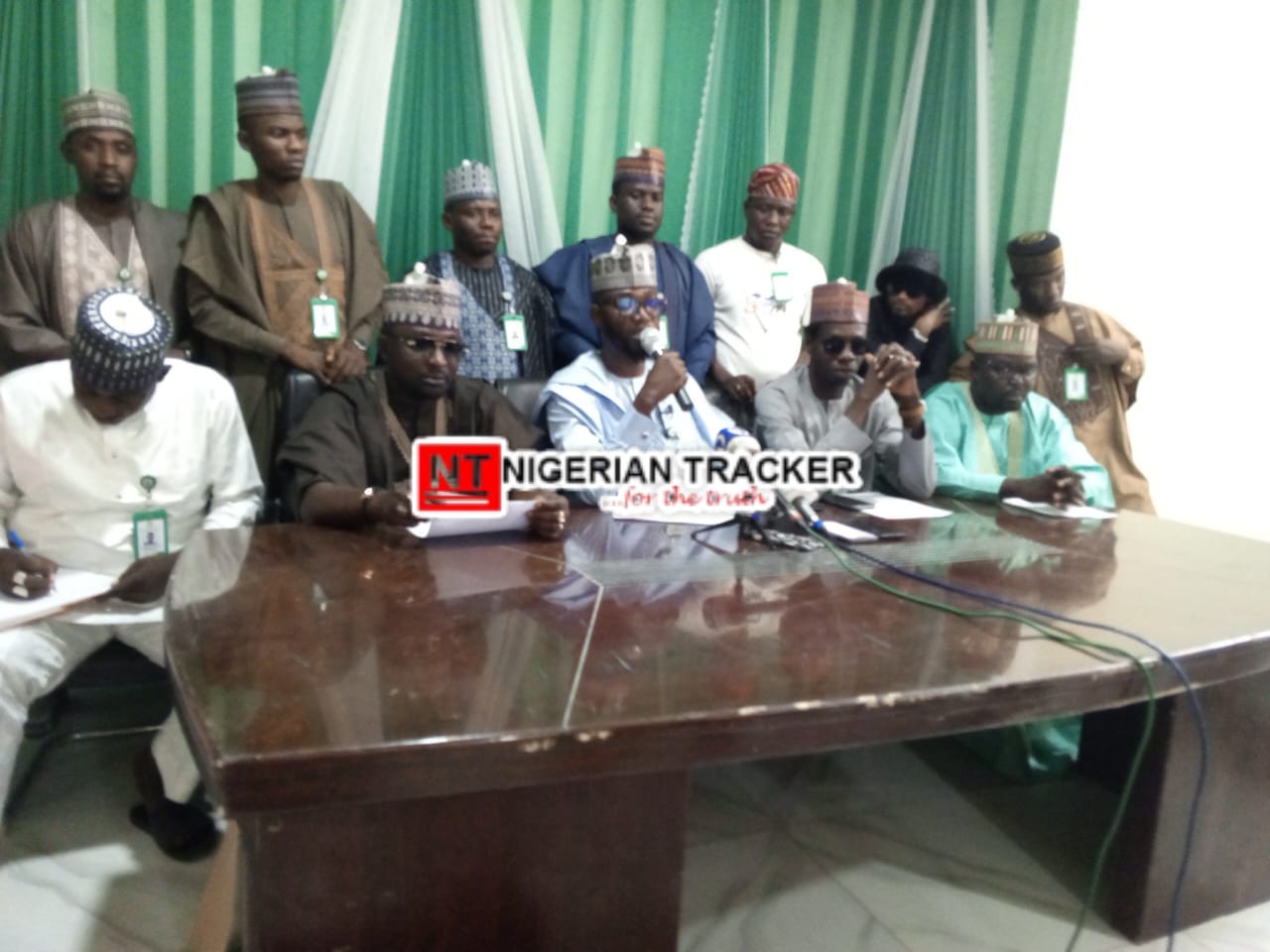
A conglomerate of Northern singers, known as MURYA Daya, has distanced itself and its members across Nigeria from the antics of a popular political singer, Dauda Kahutu Rarara, who, during a press conference, condemned the administration of his former paymaster, President Muhammad Buhari.
The head of the conglomerate of Northern singers, Ali Isa Jita, stated this while addressing journalists at the Nigeria Union of Journalists center in Kano.
Ali Jita, surrounded by members of the association “MURYA DAYA,” said that the entire Northern singers, who are cultured and well-mannered, do not support Dauda Kahutu Rarara’s remarks against the immediate past administration of President Muhammadu Buhari.
“He is not representing us, either individually or as a group. He did it on behalf of himself and the staff of his office, not Northern singers.”
On his part, the spokesperson of the association said they do not support Rarara’s stance of criticizing the administration of President Muhammad Buhari or any Northern elder, or even the administration of President Bola Ahmad Tinubu.
El Muaz said nobody is perfect, but for Rara to claim that President Buhari did not do anything is callous and should not be considered by any discerning individual. He noted that government is a continuous process; therefore, Nigerians should ignore Rarara as he does not represent us.
The singers stated that Rara’s boast of contributing more than anybody to the success of the APC government at the federal level is laughable, and they will continue to uphold the dignity of Northern elders. They mentioned that they will soon find the time to visit former President Muhammadu Buhari.
The vice-chairman of MURYA DAYA, Ado Gwanja, called on Islamic clerics to be cautious about their statements regarding singers and refrain from equating them with dogs, as it is not in line with the teachings of Islam.
of Northern Singers Condemns Rarara’s Antics Against Former President Buhari
A conglomerate of Northern singers, known as MURYA Daya, has distanced itself and its members across Nigeria from the antics of a popular political singer, Dauda Kahutu Rarara, who, during a press conference, condemned the administration of his former paymaster, President Muhammad Buhari.
The head of the conglomerate of Northern singers, Ali Isa Jita, stated this while addressing journalists at the Nigeria Union of Journalists center in Kano.
Ali Jita, surrounded by members of the association “MURYA DAYA,” said that the entire Northern singers, who are cultured and well-mannered, do not support Dauda Kahutu Rarara’s remarks against the immediate past administration of President Muhammadu Buhari.
“He is not representing us, either individually or as a group. He did it on behalf of himself and the staff of his office, not Northern singers.”
On his part, the spokesperson of the association said they do not support Rarara’s stance of criticizing the administration of President Muhammad Buhari or any Northern elder, or even the administration of President Bola Ahmad Tinubu.
El Muaz said nobody is perfect, but for Rara to claim that President Buhari did not do anything is callous and should not be considered by any discerning individual. He noted that government is a continuous process; therefore, Nigerians should ignore Rarara as he does not represent us.
The singers stated that Rara’s boast of contributing more than anybody to the success of the APC government at the federal level is laughable, and they will continue to uphold the dignity of Northern elders. They mentioned that they will soon find the time to visit former President Muhammadu Buhari.
The vice-chairman of MURYA DAYA, Ado Gwanja, called on Islamic clerics to be cautious about their statements regarding singers and refrain from equating them with dogs, as it is not in line with the teachings of Islam.












News
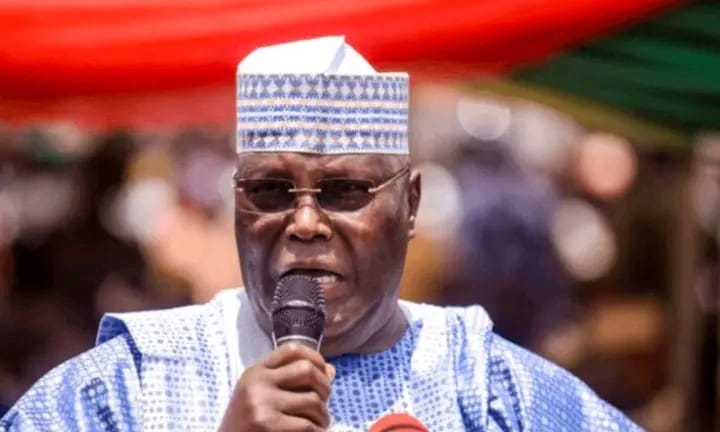
Revoking Rainbow Centre’s Licence Over ADC Convention Is Abuse of Power-Atiku
By Yusuf Danjuma Yunusa
Alhaji Atiku Abubakar, a leading presidential hopeful of the African Democratic Congress (ADC) for the 2027 election, has issued a blistering statement accusing the government and its agents of attempting to revoke the licence of Rainbow Event Centre – the scheduled venue for the party’s national convention today.
In a statement released Tuesday morning, Abubakar described the alleged move as a “shameful and cowardly abuse of public office,” and insisted that the convention will proceed despite what he called a pattern of political intimidation.
The full statement reads:
“The reports from the spokesperson of our great party, which exposes the plans of the government and its agents to revoke the licence of Rainbow Event Centre for the singular offence of hosting the African Democratic Congress convention slated for today, Tuesday, April 14, 2026, is a shameful and cowardly abuse of public office.
Let it be said without equivocation: coercing a private business owner to deny a lawfully registered opposition party the use of a venue is not governance. It is not politics. It is the naked conduct of a regime that has lost the argument, lost the people, and now reaches for the boot because it has nothing else left.
The ADC has paid every fee. The ADC has signed every contract. The ADC has broken no law. Our only offence is that we are organising, we are growing, and we are preparing to retire this failed government at the ballot box in 2027.
This is how democracies are strangled, not in a single dramatic blow, but in a thousand petty, vindictive acts against opposition parties, against free assembly, and against the sacred right of citizens to choose their own leaders. To the international community, and every democratic partner of Nigeria: take note of what is being done here tonight, and in whose name.
We will not be intimidated. We will not be silenced. We will not bow to this creeping tyranny, and we will never bow to the petty tyrants behind it.
The convention will hold. The ADC will rise. And Nigeria will rise with it.
– AA”
Abubakar, a former vice president and veteran opposition figure, did not provide specific documentary evidence of the alleged licence revocation plot. However, his remarks come hours after the statement made by the National Publicity Secretary of their party, and before the ADC’s scheduled convention, which party officials say is expected to draw thousands of delegates from across the country.
Government spokespersons had not issued an official response at the time of this report.
Observers note that accusations of venue cancellations against opposition parties have been a recurring flashpoint in Nigerian politics, often raising questions about the fairness of the democratic space ahead of major elections.
The ADC has positioned itself as a coalition of disaffected groups and individuals aiming to challenge the ruling party in the 2027 presidential race. Today’s convention is seen as a critical test of the party’s organisational strength and resolve.
News
Shaaban Sharada Distances Self From Barau/Abba/Shaaban Group’s Planned Gathering And Move To Endorse A New Deputy Governor

Former federal lawmaker Shaaban Ibrahim Sharada has publicly disassociated himself from a political group known as Barau /Abba/Shaaban, which reportedly convened a meeting to endorse Kano State’s new Deputy Governor.
Sharada, who represented Kano Municipal in the House of Representatives between 2019 and 2023, issued the clarification on his verified Facebook page. In the statement, he emphasized that he has no affiliation with the group and no involvement in the planned gathering.
“I woulaaad like to take this opportunity to distance myself from a gathering that is said to be organized on, Tuesday, by the Abba, Barau, and Sha’aban Sharada grp They plan to declare their position regarding the current situation of endorsing new Deputy Governor of Kano under the leadership of Hon. Iliyasu Koki, which has already been published in the media,” Sharada wrote.
He further stressed that he was unaware of the group’s formation and had no hand in organizing the meeting, adding that he did not even know its purpose.
The former lawmaker with prays for peace and well-being of Kano State:
“May Allah grant us health and peaceful living. Ameen, summa ameen.”
Sharada’s statement comes due to heightened political activity in Kano following the resignation of the former Deputy Governor Comrade Aminu Abdulsalam , with various factions and interest groups positioning themselves on the matter.
His distancing showcases the fluid alliances and tensions within Kano’s political landscape, particularly among figures associated with Senator Barau Jibrin.
News
To Support the Family in This Difficult Time, Hon. Bichi Donates ₦100 Million to Late Colleague’s Family
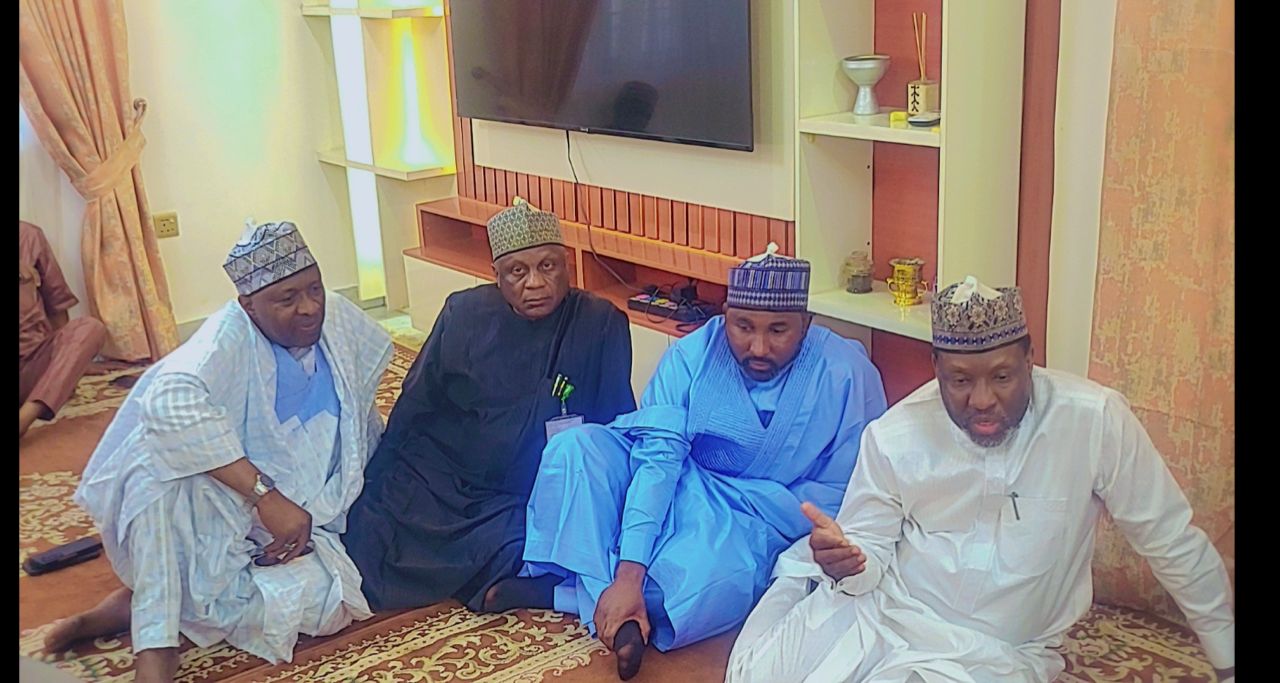
Hon. Abubakar Kabir Abubakar Bichi, Chairman of the House Committee on Appropriations and representative of Bichi Federal Constituency, has donated ₦100,000,000 (One Hundred Million Naira) to the family of his late colleague, Hon. Barrister Muhammad Hassan.
The condolence visit, led by Hon. Bichi and members of the Appropriations Committee, was held in Abuja following the passing of Hon. Hassan last Friday night at the age of 62. The late lawmaker, who represented Dawakin Kudu/Warawa Federal Constituency in Kano State, succumbed after a prolonged illness. His death has drawn widespread mourning from fellow legislators, political associates, and constituents who hailed him as a dedicated public servant committed to the welfare of his people.
During the visit, prayers were offered for the repose of his soul, with colleagues asking Allah (SWT) to forgive his shortcomings, show him mercy, and grant him Aljannatul Firdaus. The atmosphere was deeply emotional as lawmakers reflected on his contributions to governance and his enduring legacy.
Hon. Bichi’s donation of ₦100 million was described as a significant show of compassion, underscoring the bond among members of the House of Representatives and their commitment to supporting one another in times of grief. The gesture is expected to provide relief to the bereaved family as they navigate this difficult period.
The late Hon. Hassan is survived by three wives and 18 children, leaving behind a large family and a legacy of service. As condolences continue to pour in, prayers have been extended for strength and comfort to his family, colleagues, and the people of Dawakin Kudu/Warawa Federal Constituency.

Revoking Rainbow Centre’s Licence Over ADC Convention Is Abuse of Power-Atiku

Shaaban Sharada Distances Self From Barau/Abba/Shaaban Group’s Planned Gathering And Move To Endorse A New Deputy Governor

To Support the Family in This Difficult Time, Hon. Bichi Donates ₦100 Million to Late Colleague’s Family

Borno Airstrike: President Tinubu Meets Service Chiefs

ADC: Islamic scholar joins 2027 Zamfara Gov’ship race

ADC Leadership Crisis: State Chairmen to Elect Caretaker Committee on Tuesday

Governor Abba Kabir Yusuf Holds Exclusive Prerogative to Choose Deputy – Malam Inuwa Waya

APC National Convention : How DSP Barau Displays Political Sagacity, Deep Knowledge of Democracy Before President Tinubu, Others

Radiographers Kick Against Controversial Health Bills, Demand Immediate Withdrawal

ADC Crisis: Kwankwaso Seeks Intervention of Gombe Emir
Revoking Rainbow Centre’s Licence Over ADC Convention Is Abuse of Power-Atiku
Shaaban Sharada Distances Self From Barau/Abba/Shaaban Group’s Planned Gathering And Move To Endorse A New Deputy Governor
To Support the Family in This Difficult Time, Hon. Bichi Donates ₦100 Million to Late Colleague’s Family
Borno Airstrike: President Tinubu Meets Service Chiefs
ADC: Islamic scholar joins 2027 Zamfara Gov’ship race
ADC Leadership Crisis: State Chairmen to Elect Caretaker Committee on Tuesday
Governor Abba Kabir Yusuf Holds Exclusive Prerogative to Choose Deputy – Malam Inuwa Waya
APC National Convention : How DSP Barau Displays Political Sagacity, Deep Knowledge of Democracy Before President Tinubu, Others
Radiographers Kick Against Controversial Health Bills, Demand Immediate Withdrawal
ADC Crisis: Kwankwaso Seeks Intervention of Gombe Emir
-

 Opinion4 years ago
On The Kano Flyovers And Public Perception
-

 Features5 years ago
How I Became A Multimillionaire In Nigeria – Hadiza Gabon
-

 Opinion5 years ago
Kano As future Headquarters Of Poverty In Nigeria
-

 History5 years ago
Sheikh Adam Abdullahi Al-Ilory (1917-1992):Nigeria’s Islamic Scholar Who Wrote Over 100 Books And Journals
-

 Opinion4 years ago
My First Encounter with Nasiru Gawuna, the Humble Deputy Governor
-

 History5 years ago
The Origin Of “Mammy Market” In Army Barracks (Mammy Ochefu)
-

 History4 years ago
The History Of Borno State Governor Professor Babagana Umara Zulum
-

 News4 years ago
Federal University Of Technology Babura To Commence Academic Activities September