
News
6 Major Findings about Tinubu from the CSU Documents-Kperogi
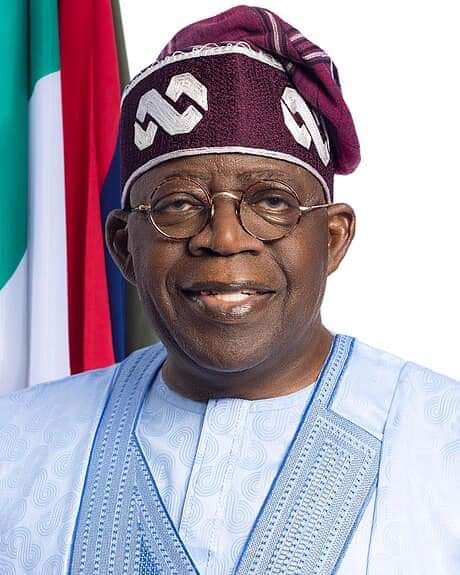
By Farooq Kperogi
Both pro- and anti-Tinubu news outlets and blogs are selectively reporting the documents that Chicago State University handed over to former Vice President Atiku Abubakar yesterday. Here are 6 non-partisan tidbits I discovered from poring over them:
1. Chicago State University’s Office of the Registrar affirmed that Bola A. Tinubu indeed attended the university “from August 1977 through June 1979” and was “awarded a Bachelor of Science in Business Administration with Honors on June 22, 1979.”
The registrar also swore to this under oath. The penalty for lying under oath in America can be steep. It is punishable by up to 10 years in prison.
2023 Presidential Election Should be Cancelled; It’s Already Predetermined
This information is consistent with my September 2, 2023, column titled, “Tinubu Definitely Graduated from Chicago State University.”
2. The certificate (we call it “diploma” in the US) that Tinubu submitted to INEC is inconsistent with the certificates CSU issued in 1979 and subsequently, indicating that Tinubu forged his. (In the US, diplomas are mere ceremonial documents that most employers don’t ask for. Transcripts directly from universities are the usual ways to verify attendance and graduation.)
Although he did legitimately graduate from Chicago State University in 1979, he obviously lost his certificate and, instead of applying for a replacement, decided to forge it.
That strikes me as mysterious self-harm. It costs only $26 to get a replacement diploma from CSU. But it takes between eight and 10 weeks to receive it after filling out the Diploma Replacement Order Form.
My guess is that, in the typical last-minute, fire-brigade approach to things among Nigerian elites, Tinubu didn’t plan ahead and didn’t have enough time to apply for his replacement diploma from CSU to meet INEC’s deadline and decided to visit Lagos’ infamous “Oluwole” for a counterfeit replacement.
3. The Southwest College transcript that Tinubu used to get admitted to Chicago State University belongs to a female. I had questioned the authenticity of the transcript because of the many errors in it, such as the date and social security number. We await what CSU has to say about this.
This reality, though, seems to validate uncorroborated but long-standing whispers from the grapevine that Tinubu, who was allegedly born Lamidi Amoda [Yoruba Muslim domestication of Abdulhamid Ahmed] Sangodele in Osun State’s Iragbiji, stole the identity of a female Bola Adekunle Tinubu to go to America.
4. Nonetheless, this whisper may be difficult to sustain in light of the fact that Tinubu’s Chicago State University admission letter dated August 23, 1977, was addressed to “Mr. Tinubu,” not Ms. or Miss Tinubu.
Was the “F” in the transcript from Southwest College a clerical error, especially because the social security number and the dates were also clerical errors? Or was there a cover-up somewhere?
Well, we saw from the documents released to Atiku that after accepting his transfer credits from Southwest College (which later became Daley College), CSU required Tinubu to take qualifying exams in English, math, and reading, which he passed. Why did CSU allow a man who presented a transcript that belonged to a woman to take qualifying exams as a man?
Tinubu obviously identified as a man throughout the two years he studied at the school. A Nigerian CSU graduate and classmate of Tinubu’s swore under oath that Tinubu ran for and won election as president of CSU’s accounting students’ association. His yearbook photo from 1979 also clearly showed a younger version of Tinubu.
And Tinubu’s handwriting and signature in the June 27, 2022, Consent to Release Student Education Records form, which authorized CSU to release his academic records to one Oluwole Afolabi of 3 Roosevelt Avenue, West Orange, New Jersey, seems to me similar to his handwriting and signatures in his CSU records.
Finally, if he used a woman’s associate degree from Southwest College to gain admission to CSU without having any background in accounting or business administration, his performance at CSU was perplexing. Of the more than 30 courses he took there, he got C’s in only three courses. The rest were A’s and B’s, which earned him honors.
5. The Bola A. Tinubu who applied to Southwest College for an associate degree in 1975 claimed to have attended Government College, Lagos, and presented a 1970 GCE A-level result with grades E in Chemistry and Biology and an F in Physics. The problem is that Government College, Lagos, was established in 1974. So, there’s a chronological conundrum there, which signposts forgery.
The GCE A-level result also shows that “Bola A. Tinubu” took the exam as an HSC student, which used to be a two-year study after 5 years of secondary school education. In other words, the owner of the certificate must have graduated from secondary school at least in 1968.
It’s not clear at the moment if the GCE A-level result is fake or authentic—or if it belongs to the man we know today as President Bola A. Tinubu. My hunch is that it doesn’t belong to him. But this will become clear in the coming days.
6. Tinubu tells the world that he was born on March 29, 1952, but the birthday recorded in his CSU transcript says he was born on March 29, 1954. The space for birthday in the Southwest College transcript he submitted to CSU is blank. So is the record of his secondary school education. These facts added to my previous suspicion that the transcript was probably fake.
If he was born in 1954, it means he was 14 years old when he graduated from high school.









News
ADC Reports Surge in Membership Following Kwankwaso’s Defection, Calls Him ‘Game Changer’
By Yusuf Danjuma Yunusa
The African Democratic Congress (ADC) has officially welcomed former Kano State Governor and 2023 presidential candidate Senator Rabiu Musa Kwankwaso into its fold, touting his defection as a pivotal move that strengthens a growing coalition for political realignment in Nigeria.
In a statement released for immediate effect, the party described Kwankwaso as a “game-changer,” announcing that he has directed his network of supporters nationwide to join the ADC. According to the party, this call has already triggered a significant uptick in registrations on its online platform over the past 24 hours.
The ADC’s National Publicity Secretary, Mallam Bolaji Abdullahi, framed the defection as part of a broader recognition among Nigerians of the need for a credible political alternative. The statement emphasized Kwankwaso’s experience in governance, grassroots influence, and capacity to unify as assets to the party’s ambition to “rebuild Nigeria.”
Notably, the ADC highlighted the presence of several high-profile leaders at the defection event, including the party’s National Chairman, Senator David Mark; National Secretary, Ogbeni Rauf Aregbesola; and leading presidential aspirants such as former Vice President Atiku Abubakar, Mr. Peter Obi, and Rt. Hon. Rotimi Amaechi. Their attendance, the party stated, reflects a united front and growing momentum.
The party characterized the surge in online registrations as evidence that Nigerians are aligning with what it called a “different path forward.” In its appeal to Kwankwaso’s supporters and the broader public, the ADC positioned itself as a vehicle for restoring dignity, opportunity, and public trust in governance.
“Change does not happen by chance,” the statement concluded. “It happens when people come together with purpose.”
The development marks a significant realignment in Nigeria’s opposition political landscape, with the ADC seeking to position itself as a converging point for influential politicians and their followings ahead of future elections.
News
Foreign Affairs Minister Resigns to Pursue Bauchi Governorship Election
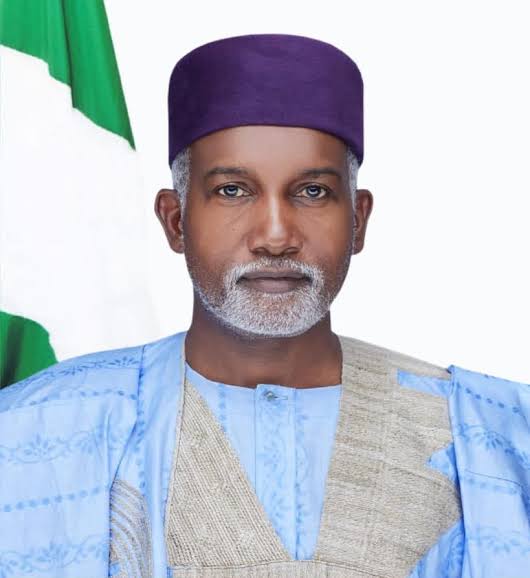
By Yusuf Danjuma Yunusa
The Minister of Foreign Affairs, Yusuf Maitama Tuggar, has resigned from his position in the administration of President Bola Ahmed Tinubu to pursue the governorship of Bauchi State in the 2027 election.
Tuggar submitted his resignation on Monday, in compliance with a presidential directive requiring all political appointees with electoral ambitions to vacate their posts by the March 31, 2026, deadline.
The directive, issued through the office of the Secretary to the Government of the Federation, George Akume, aligns with Section 88(1) of the Electoral Act, 2026, and the timetable released by the Independent National Electoral Commission (INEC). It affects ministers, advisers, and heads of federal agencies intending to contest in the 2027 general elections.
Reports have it that his resignation positions him to seek the ticket of the All Progressives Congress (APC) for the Bauchi State gubernatorial race.
Tuggar’s entry is expected to significantly reshape the state’s political landscape, intensifying an already competitive contest for the APC nomination. His background as a career diplomat and serving minister is seen by political observers as a potential advantage, offering national visibility and extensive political networks.
With less than 24 hours remaining before the deadline, additional resignations from the Federal Executive Council are anticipated as other appointees move to formalize their electoral ambitions.
News
Kwankwaso Officially Joins ADC
By Yusuf Danjuma Yunusa
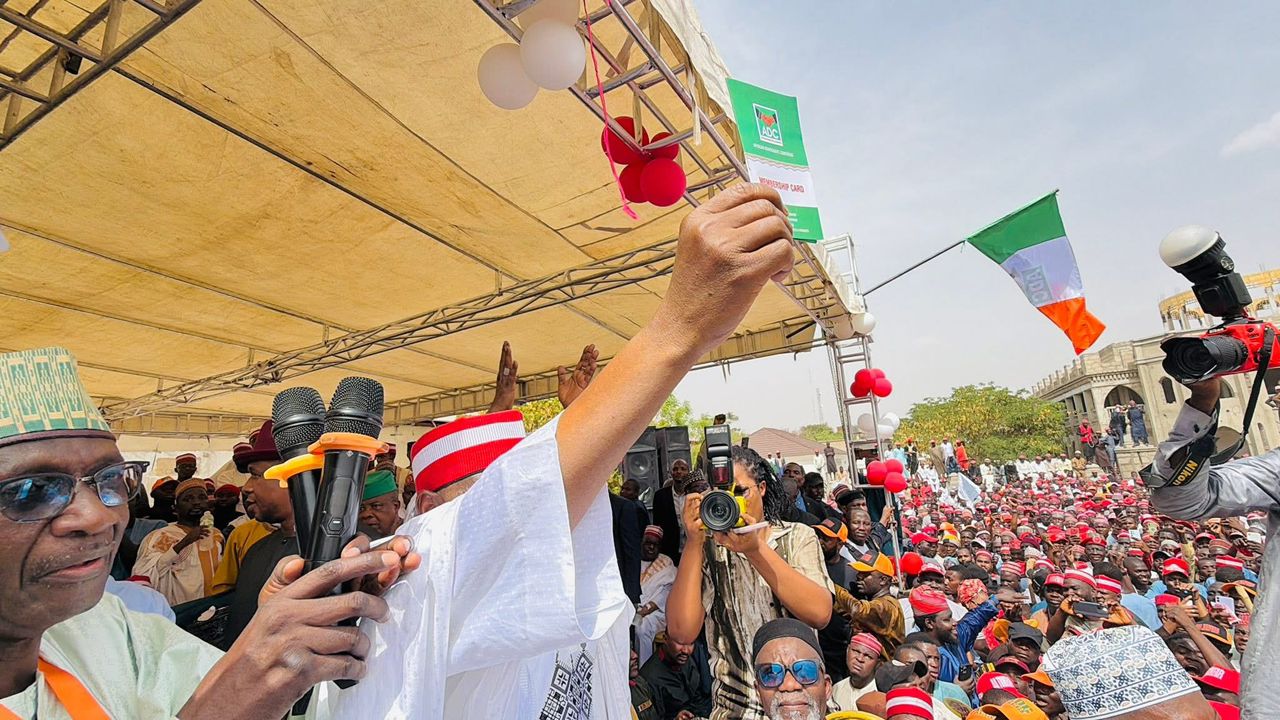
Former presidential candidate of the New Nigeria Peoples Party and ex-Governor of Kano State, Senator Rabiu Kwankwaso, has officially joined the African Democratic Congress.
The former Minister of Defence also registered with the party and received his membership card on Monday at Gidan Kwankwasiyya, Miller Road, Bompai, Kano.
Present at the event include ADC National Chairman and former Senate President, David Mark; former Sokoto State Governor, Senator Aminu Tambuwal; former Minister of Transportation, Rotimi Amaechi; former Labour Party presidential candidate, Peter Obi; Senator Dino Melaye; and former National Chairman of the All Progressives Congress, John Odigie-Oyegun, among others.

ADC Reports Surge in Membership Following Kwankwaso’s Defection, Calls Him ‘Game Changer’

Foreign Affairs Minister Resigns to Pursue Bauchi Governorship Election

Kwankwaso Officially Joins ADC

El-Rufai/Uba Sani And Pantami’s Perceived Peace Of The Graveyard

Defection: Kwankwaso’s Legacy Under Scrutiny; A Critical Look at his Political Journey Since 1999

The Governor Who Chose His People Over His Politics: Abba Yusuf and the Moral Courage Behind Kano First

FREEDOM OF SPEECH, NOT FREEDOM FROM CONSEQUENCE: A CITIZEN’S CALL FOR RESPONSIBLE PUBLIC COMMENTARY
Restoring the Glory That Was Always There: Governor Abba Kabir Yusuf and the Historical Vision Behind Kano First

Tinubu to Swear in Olatunji Disu as Inspector-General of Police on Wednesday

NDLEA Clarifies: Drug Case Against Abba Kyari Still Active After Court Discharge
ADC Reports Surge in Membership Following Kwankwaso’s Defection, Calls Him ‘Game Changer’
Foreign Affairs Minister Resigns to Pursue Bauchi Governorship Election
Kwankwaso Officially Joins ADC
El-Rufai/Uba Sani And Pantami’s Perceived Peace Of The Graveyard
Defection: Kwankwaso’s Legacy Under Scrutiny; A Critical Look at his Political Journey Since 1999
The Governor Who Chose His People Over His Politics: Abba Yusuf and the Moral Courage Behind Kano First
FREEDOM OF SPEECH, NOT FREEDOM FROM CONSEQUENCE: A CITIZEN’S CALL FOR RESPONSIBLE PUBLIC COMMENTARY
Restoring the Glory That Was Always There: Governor Abba Kabir Yusuf and the Historical Vision Behind Kano First
Tinubu to Swear in Olatunji Disu as Inspector-General of Police on Wednesday
NDLEA Clarifies: Drug Case Against Abba Kyari Still Active After Court Discharge
-

 Opinion4 years ago
On The Kano Flyovers And Public Perception
-

 Features5 years ago
How I Became A Multimillionaire In Nigeria – Hadiza Gabon
-

 Opinion5 years ago
Kano As future Headquarters Of Poverty In Nigeria
-

 History5 years ago
Sheikh Adam Abdullahi Al-Ilory (1917-1992):Nigeria’s Islamic Scholar Who Wrote Over 100 Books And Journals
-

 Opinion4 years ago
My First Encounter with Nasiru Gawuna, the Humble Deputy Governor
-

 History5 years ago
The Origin Of “Mammy Market” In Army Barracks (Mammy Ochefu)
-

 History4 years ago
The History Of Borno State Governor Professor Babagana Umara Zulum
-

 News4 years ago
Federal University Of Technology Babura To Commence Academic Activities September