
Opinion
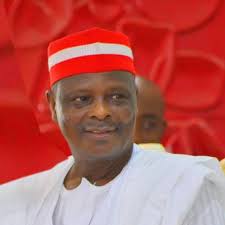
The Price of Betrayal: How History Caught Up with Kwankwaso
By Dr Usman Sarki Madobi
Political power rarely collapses overnight. More often, it unravels slowly, weighed down by history, memory, and the quiet reckoning of past actions. The steady decline of Senator Rabiu Musa Kwankwaso’s once-formidable political dynasty in Kano is best understood not as coincidence or bad luck, but as political payback. It is a reminder that in politics, as in life, those who help you rise matter, and the cost of betrayal is eventually collected.
Kwankwaso did not emerge in a vacuum, his political journey was shaped, guided, and sustained by mentors and allies who believed in his potential long before he became a household name. Among them was the late Senator Hamisu Musa, a crucial figure in Kwankwaso’s early political career. Hamisu Musa mentored him, opened doors, and helped him establish the contacts necessary to enter the House of Representatives before contesting the governorship at later time, and without such foundational support, Kwankwaso’s rise would have been far more difficult. Yet, history records that this alliance ended in bitterness, with both men eventually standing on opposite sides due to what many viewed as Kwankwaso’s betrayal. The same pattern repeated itself with other political benefactors such as late Musa Gwadabe and Engr. Magaji Abdullahi, both of blessed memory who invested their time, trust, and political capital in Kwankwaso. However, instead of being rewarded with loyalty or respect, they were sidelined when their interests no longer aligned with his ambition.
Perhaps the earliest and most symbolic fracture was with Abubakar Rimi. Rimi, being a political heavyweight, expected to play the role of godfather and chief conductor of the Kwankwaso administration and this was not unusual in Nigerian politics, where senior figures often guide protégés from behind the scenes. Kwankwaso, however, asserted his independence and insisted on running the government himself. While this stance earned him admiration from some quarters, it also marked the beginning of a reputation for political ingratitude and intolerance of shared power. Rimi’s eventual withdrawal of support was not just personal; it signaled to others that alliances with Kwankwaso were conditional and expendable.
Moreover, the rivalry between Kwankwaso and Alhaji Musa Gwadabe further deepened this narrative. Both of them were influential figures within the PDP in the early 2000s, and their conflict over party leadership, candidacies, and control of the party structure became one of Kano’s most defining political battles. Allegations that Kwankwaso sought Gwadabe’s removal from ministerial office only reinforced perceptions of intolerance and power consolidation. What could have been managed as internal party disagreement instead became another chapter in a growing list of broken relationships.
Ironically, at his lowest point, when Rimi, Musa Gwadabe, and Dangalan distanced themselves due to what they described as Kwankwaso’s political excesses and constant crises, one man stood firmly by him. Ambassador Aminu Wali became the only leader among the Kano PDP conveners that remained loyal, and helped Kwankwaso during the turbulent times. History, however, shows that even such loyalty did not translate into lasting trust, as Kwankwaso later fall out with many who once defended him against the odds.
The Ganduje episode provides perhaps the clearest illustration of history coming full circle. In 1999, Dr. Abdullahi Umar Ganduje won the PDP gubernatorial primaries but was persuaded by party stakeholders to accept Kwankwaso as his running mate in the interest of unity. Years later, when Ganduje became governor in 2015, Kwankwaso attempted to exert control over his administration. Ganduje’s refusal to submit led to a dramatic and bitter split. Today, critics argue that Kwankwaso is repeating the same controlling approach with Governor Abba Kabir Yusuf, reducing him to a political puppet in pursuit of personal interests again, at odds with the wishes of many in Kano State.
Recent defections within the NNPP appear to be the final confirmation of a long-standing pattern. The departure of figures such as Hon. Aliyu Madakin Gini, Hon. Kabiru Alhasan Rurum, Secretary to the Kano State Government Dr. Baffa Bichi, and other key stakeholders is widely seen as vindication for those who left Kwankwaso years earlier. Leaders like Dr. Abdullahi Umar Ganduje, Alhaji Rabiu Suleiman Bichi, Arch. Aminu Dabo, and others had warned of Kwankwaso’s autocratic and self-centered leadership style long before it became publicly undeniable but Kwankwaso remained adamant.
In the end, the collapse of Kwankwaso’s political dynasty is less about external opposition and more about internal erosion. A movement built on personal control rather than mutual respect cannot endure. The ladder that lifted him was kicked away rung by rung, not by enemies, but by the memories of those who felt used, discarded, and betrayed.
Politics never forgets. And in Kano, history has finally returned the favor.
*Usman Suleiman Sarki Madobi, Ph.D.*









Opinion
Kano’s War On Drugs: How Barr. Muhyi’s Taskforce Is Changing The Game
By Muhammad Abubakar Suleiman
When Governor Abba Kabir Yusuf declared a public health emergency on drug abuse on July 22, 2026, and inaugurated the Multi-Agency Task Force on Drug Abuse and Illicit Trafficking, many in Kano saw it as another committee. Three months later, the committee led by Barrister Muhyi Magaji Rimin Gado is dominating security headlines in the state.
The Taskforce was constituted as a multi-agency platform bringing together NDLEA, Police, DSS, Consumer Protection Council, Pharmaceutical Society, Ministry of Health, Anti-Daba Unit and other stakeholders. Dr. Ibrahim Garba Muhammad serves as Secretary.
From Raids to Results: Over 400 Arrests
According to briefings by the Chairman, within the first two months the Taskforce arrested more than 380 suspects and secured over 230 convictions. By September 29, when Barr. Muhyi spoke at the Kano Network of NGOs (KANET) Monthly Lecture at Nasarawa GRA, the figure had risen to over 400 arrests.
Presenting its scorecard to the State Executive Council in late September, the Taskforce reported a 35% reduction in drug-related crimes in the last three months, attributing it to intensified enforcement, seizures and over 500 convictions as of October 22.
Operations have focused on identified hotspots: Race Course, Filin Idi, Filin Mahaha, Tashar Rami, Kawo, Tashar Rimi, Jakara, Madigawa, Yalwa, Sanka, Kul Kul, Dogon Nama and Kukar Bulukiya.
Recoveries include Cannabis Sativa, Tramadol, Diazepam, Pentazocine, Pregabalin, Exol-5 and a Methamphetamine-based designer drug. In one case, 870,000 capsules of Pregabalin were seized from a pharmaceutical company over suspected diversion. Local weapons – knives, daggers, cutlasses and clubs – used by gangs were also recovered.
The Taskforce also recorded high-profile arrests. On August 18, it announced the arrest of a former Chairman of Rogo Local Government for allegedly selling and administering fentanyl injections to youths, after a victim who spent over N2 million on injections identified him.
Latest: Gang Sponsor Tracked to Port Harcourt
In its most recent operation, the Taskforce announced on October 30 the arrest of a 27-year-old suspected gang violence sponsor, Ishaq Lawan Ibrahim, popularly known as Malam Keya, from Yalwa in Dala LGA.
According to the committee, Malam Keya was allegedly financing violent clashes by rival Daba gangs in Dala that claimed lives. He fled to Port Harcourt, Rivers State, after crackdown intensified, but was tracked and arrested in an operation led by Head of Operations, CSP Bashir Gwadabe, and brought back to Kano. He is now in police custody pending prosecution.
Chairman Muhyi said the arrest outside Kano shows the Taskforce will pursue suspects beyond state boundaries.
Beyond Enforcement: Children, Rehabilitation and Technology
The committee says its mandate is not just enforcement. It reported rescuing 43 underage children allegedly exposed to intoxicants and convicting two dealers – Kabiru Isa and Usman Hamisu – for the offence. About 125 persons were referred to the Kano Reformatory Institute in Kiru for rehabilitation. With Kiru overstretched, government has provided an additional facility in Tofa.
The Taskforce has set an ambitious target of taking 10,000 youths off the streets for rehabilitation, skills acquisition and reintegration.
On August 21, Barr. Muhyi inaugurated nine sub-committees to professionalize the fight: Finance; Media and Publicity; Advocacy and Sensitisation; Licences, Inventory and Verification; Compliance, Inspection and Electronic Tracking; Monitoring and Implementation; Intelligence; Reformative and Traditional Council; and Anti-Drug Coordination.
Tech Turn: AI, 24-Hour Line and NDLEA Support
In the last two weeks, the Taskforce unveiled a new approach. On October 22, Barr. Muhyi, on behalf of Governor Yusuf, donated operational equipment to the NDLEA Kano Strategic Command led by Commander Dahiru Yahaya Lawan, to boost operations.
He also disclosed that Kano is deploying Artificial Intelligence for surveillance and tracking of suspected dealers, and equipping a rapid-response centre with ICT and a 24-hour toll-free line where residents can report and get response within 30 minutes.
At KANET lecture themed “Kano Drugs Crisis: Challenges, the Way Forward and the Role of the Community,” Muhyi stressed community intelligence and called for more rehabilitation to decongest remand homes.
No Sacred Cows
From day one, Barr. Muhyi has maintained a hard line on political interference. “No politician can pressure me to free drug suspects. The only person who can stop me is the Governor, and I know he will never interfere,” he told journalists on July 28.
That stance, coupled with intelligence-led raids, has earned the Taskforce both praise and scrutiny.
The Bigger Picture
Kano Police data cited by the Taskforce indicates about 70% of major crimes in 2025 were linked to drug abuse. The Executive Order outlawing Daba gangs provides a minimum of five years imprisonment under Section 97A of the Kano Penal Code.
Whether the Taskforce can sustain momentum will depend on three tests: securing the drug supply chain from pharmaceutical diversion, expanding rehabilitation beyond Kiru, and maintaining inter-agency cooperation without becoming a parallel enforcement body.
For now, in the markets of Filin Idi and the streets of Dala, residents say the presence of the committee is being felt.
Opinion
The Reward For Hardwork Is More Work: A Rejoinder To Dr Garba Ubale Danbatta
By Nworisa Michael
The redeployment of Hon. Comr. Ibrahim Abdullahi Waiya PhD from the Ministry of Information and Internal Affairs to the Ministry of Youth and Sports Development has attracted several reactions. While professional and civic organisations have congratulated him and acknowledged his contributions, Dr Garba Ubale Danbatta, a supposedly veteran journalist, has chosen to use the development to question his performance and professional conduct in his former ministry.
Dr Danbatta is entitled to his opinion. Nobody should be above criticism, especially in public office. However, when criticism is presented as a professional assessment, it should be supported by facts, not merely personal convictions or years of experience.
Before concluding that journalism suffered under Waiya, perhaps we should examine some of the developments recorded during his tenure.
Eight contributions worth considering:
• Grassroots information: Strengthened engagement with Information Officers across Kano’s 44 local government areas and eight zonal offices.
• Capacity building: Supported training programmes for local government Information Officers, alongside interactive engagements with editors and news managers.
• Media policy: Facilitated the inauguration of an 18-member committee to develop a media and information policy framework for Kano State.
• Digital transformation: Established a Digital Multimedia Department to modernise government communication, improve digital engagement and address misinformation.
• Peacebuilding: Advanced the Safe Corridor Project, an initiative focused on rehabilitation, skills development and reintegration of reformed youths.
• Media engagement: Engaged media practitioners, online publishers and political programme presenters on responsible public communication and professional conduct.
• Institutional development: Pursued interventions aimed at strengthening state-owned media institutions and improving the capacity of personnel within the information machinery.
• National recognition: Received the Crisis Communicator of the Year award at the 2026 National Spokespersons Awards in Abuja.
These developments do not mean that Waiya’s tenure was without shortcomings. They simply demonstrate that there is more to his record than the sweeping conclusion offered by his critic.
There is also something interesting about the public reactions to his redeployment. The Kano State Forum of Information Officers, Northern Youths Assembly and International Peace and Secure Society are among the organisations that have publicly acknowledged his contributions and congratulated him on his new assignment. Their statements may not settle every debate about his tenure, but they show that his work was not viewed negatively by everyone who interacted with his ministry.
Now, to Dr Danbatta’s presentation of his professional experience.
I found it rather curious that a commentary intended to assess another public officer’s performance devoted three of its concluding paragraphs to the author’s own professional journey, positions held and years of experience. One could almost finish reading the piece knowing more about the author’s resume than the evidence behind his criticism of Waiya.
Same individual who has been unable to ensure good working relationship with his staffs at Pyramid Radio Kano where is currently serves as its manager, a station that constantly runs out of diesel and goes off the air, perhaps even he isn’t proud of this hence he left it out from the list of his workplaces listed.
With due respect, professional experience is valuable, but it should strengthen an argument, not become the argument itself. A good product sells itself. A journalist’s professional standing should be reflected in the quality, fairness and depth of their analysis. Thirty years in the profession deserves recognition, but it does not automatically make every opinion conclusive.
If the intention was to assess Waiya’s stewardship, then the more important questions should have been: What did he inherit? What did he change? Which initiatives did he introduce? What measurable outcomes were achieved? And where did he fall short? Those are the questions that give criticism substance.
We can be safe to say that Waiya’s redeployment was a direct reward for his performance in the former ministry. The Governor has publicly explained the cabinet adjustments as part of efforts to strengthen institutions and improve service delivery. What is evident, however, is that Waiya has been entrusted with another important responsibility, and his record in the former ministry remains open to public examination.
The Ministry of Information and Internal Affairs is not beyond criticism, and neither is Dr. Waiya. But fairness requires that we acknowledge the work done alongside the shortcomings alleged.
Frankly the most fitting way to understand this new assignment is captured in the title of this piece: the reward for hard work is more work. His previous assignment is now part of his public record; his new ministry presents another opportunity to serve.
Congratulations, Hon. Comr. Ibrahim Abdullahi Waiya. The expectations continue.
Nworisa Michael is a
Writer, Public Affairs Commentator and writes from nworisamichael1917@gmail.com
1st Nov. 2026
Opinion
My Achievements At Kano State Ministry of Environment — By Dr. Dahir M. Hashim
Looking back on my time at the Ministry of Environment and Climate Change, one change I value most is how the public came to see the sector itself. Environmental protection became a stronger part of conversations about our health, neighbourhoods, livelihoods, and Kano’s future. People increasingly joined the work, supported our programmes, and held us accountable.
For that, I thank the people of my dear state.
This journey began for me on 6 January 2025, when His Excellency, Alhaji Abba Kabir Yusuf, the Executive Governor of Kano State, entrusted me with the responsibility of leading the Ministry.
The challenges were clear. Facilities had deteriorated, policies needed updating, enforcement was weak, and frontline workers were owed outstanding payments. Yet His Excellency saw what the Ministry could become and gave us the support to begin rebuilding it.
Our government-owned nurseries tell part of that story. Eight facilities that had become non-functional were fully rehabilitated, restoring our capacity to produce seedlings locally. Building on the administration’s three-million-tree planting programme in 2024, the programme grew to five million in 2025 and ten million in 2026, with all seedlings raised in government-owned nurseries. Behind those numbers was the recovery of public facilities that could continue serving Kano for years to come.
The same determination guided the restoration of the Kano State Pollution Control Laboratory. We renovated, equipped, and recommissioned it, giving the State the scientific capacity to test, monitor pollution, and support enforcement. We operationalised the Environmental Pollution Control Law and developed the Environmental Pollution and Waste Control Regulations to give that work a stronger legal foundation.
At REMASAB, reforms improved the coordination of waste collection, evacuation, and disposal. Waste management became more organised and responsive, with operations supporting the evacuation of approximately one million metric tonnes of waste. The Dorayi Compost Plant was also brought back into operation, restoring the capacity to turn organic waste into useful compost and creating opportunities for investment.
Across flood-prone communities, we undertook drainage construction, clearance and erosion control. The stormwater harvesting intervention in Toranke and work on the Kano State Drainage Master Plan formed part of our effort to move towards better protection and long-term planning.
We also restored four public parks, with more underway. Spaces that had suffered neglect were given new management arrangements and a clear responsibility for maintenance. Families now have more welcoming places to spend time together, while the parks’ combined annual revenue increased from around ₦5 million to ₦90 million.
Alongside these projects, we rebuilt the policy foundations of the sector. We developed the Kano State Climate Change Policy, its implementation plan and results framework; advanced the Climate Change Bill; and reviewed the Forestry Law after more than five decades. We also developed the Climate Finance Reform Action and Implementation Plan and the Green Bond Framework to prepare Kano for environmental and climate investment.
Kano’s third-place finish in the just-concluded 2026 Climate Governance Performance Ranking, and the opportunity to present our work at COP30 in Belém, Brazil, gave us reasons to be thankful. They also reminded us how far consistent support and collective effort could take the state.
None of this work could have continued without the people delivering it every day. With His Excellency’s backing, we cleared nine months of salary arrears for 2,369 verified street sweepers and doubled their stipends, re-engaged inspectors and forest guards, and doubled the stipends of 875 sanitation vanguards. I remain grateful for their service.
Today, as His Excellency separates the ministries and appoints a new Commissioner for Environment and Climate Change, my strongest feeling is gratitude.
To His Excellency, thank you for trusting me with this responsibility, listening to our proposals and supporting the decisions needed to carry them through.
To our staff and agencies, community leaders, development partners, civil society organisations, young volunteers, businesses and residents: thank you for standing with us. Your participation, patience and constructive criticism helped us improve. These achievements belong to everyone who contributed.
I congratulate the incoming Honourable Commissioner and offer my full cooperation to sustain the work we began together.
Serving the people of Kano State in this capacity has been a privilege. Thank you for the trust and support.
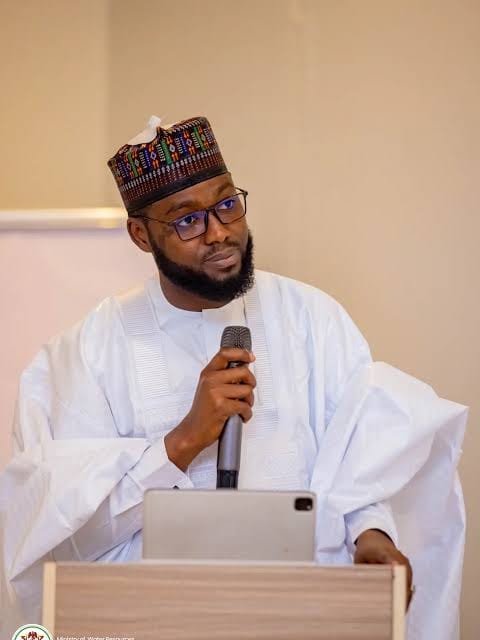
Dr. Dahir M. Hashim, Honourable Commissioner
Ministry of Water Resources, Kano State, writes from Kano.

Former Kano NUJ Chairman Abbas Ibrahim Loses Mother at 91

Kano Intensifies War Against Drug Abuse, Thuggery as Governor Abba Commissions Quick Response Squad

APC Youth Coalition Petitions Akpabio, Defence Minister, Amnesty International Over Alleged Lawlessness by Dan Agundi

2027: ALKALANCI Mobilises Women Religious Leaders Against Fake News, Disinformation

Just In: Court Nullifies Atiku’s Candidacy ,David Mark’s ADC Leadership

Kano Monitors ₦48.9bn Projects Across Six LGAs

Kano Spends ₦10.36bn on Hospitality, Sitting Allowances, Others in Six Months

Open The Social Sciences “A Tribute to a Heterodox Scholar: Mallam Ibrahim Muazzam

Senate Passes Barau’s Bill to Provide Legal Framework for Yusuf Maitama Sule Federal University of Education, Kano
OPEN LETTER TO HIS EXCELLENCY, MR. PRESIDENT BOLA AHMED TINUBU, GCFR PRESIDENT AND COMMANDER-IN-CHIEF OF THE FEDERAL REPUBLIC OF NIGERIA
Former Kano NUJ Chairman Abbas Ibrahim Loses Mother at 91
Kano Intensifies War Against Drug Abuse, Thuggery as Governor Abba Commissions Quick Response Squad
APC Youth Coalition Petitions Akpabio, Defence Minister, Amnesty International Over Alleged Lawlessness by Dan Agundi
2027: ALKALANCI Mobilises Women Religious Leaders Against Fake News, Disinformation
Just In: Court Nullifies Atiku’s Candidacy ,David Mark’s ADC Leadership
Kano Monitors ₦48.9bn Projects Across Six LGAs
Kano Spends ₦10.36bn on Hospitality, Sitting Allowances, Others in Six Months
Open The Social Sciences “A Tribute to a Heterodox Scholar: Mallam Ibrahim Muazzam
Senate Passes Barau’s Bill to Provide Legal Framework for Yusuf Maitama Sule Federal University of Education, Kano
OPEN LETTER TO HIS EXCELLENCY, MR. PRESIDENT BOLA AHMED TINUBU, GCFR PRESIDENT AND COMMANDER-IN-CHIEF OF THE FEDERAL REPUBLIC OF NIGERIA
-
 Opinion5 years ago
On The Kano Flyovers And Public Perception
-

 Features5 years ago
How I Became A Multimillionaire In Nigeria – Hadiza Gabon
-

 Opinion6 years ago
Kano As future Headquarters Of Poverty In Nigeria
-
 History6 years ago
Sheikh Adam Abdullahi Al-Ilory (1917-1992):Nigeria’s Islamic Scholar Who Wrote Over 100 Books And Journals
-
 Opinion5 years ago
My First Encounter with Nasiru Gawuna, the Humble Deputy Governor
-
 History5 years ago
The History Of Borno State Governor Professor Babagana Umara Zulum
-
 History6 years ago
The Origin Of “Mammy Market” In Army Barracks (Mammy Ochefu)
-
 News5 years ago
Federal University Of Technology Babura To Commence Academic Activities September