
News
Empowering Academia and Beyond: CITAD’s Data Analysis Training with STATA Software”
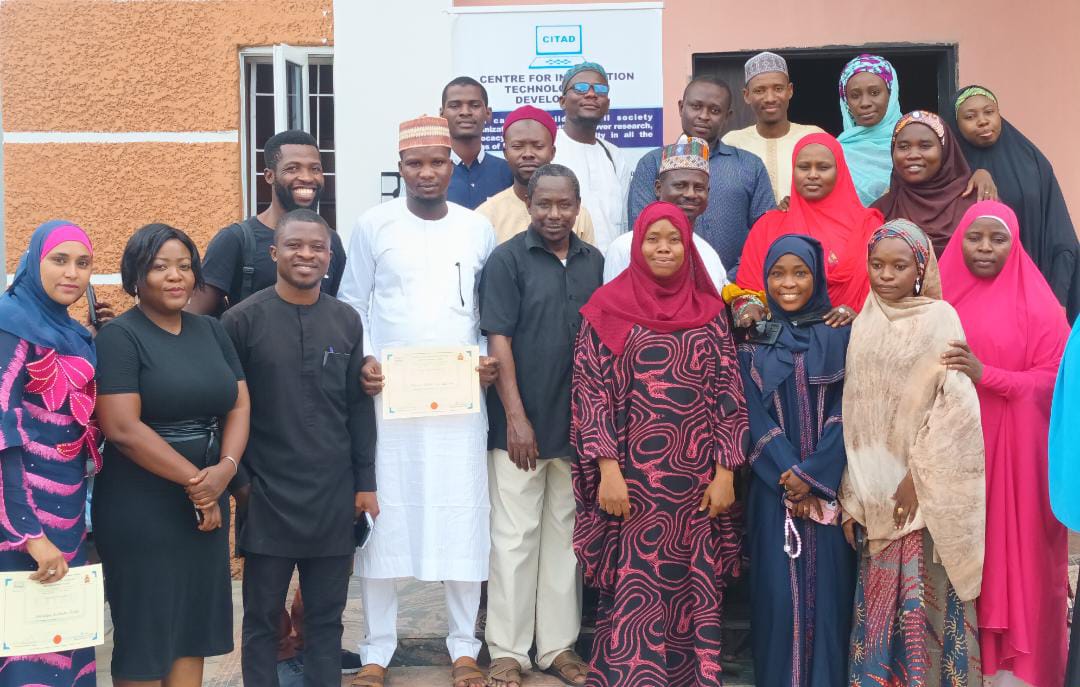
In an effort to enhance research in academia, civil society organizations, and government agencies, the Centre for Information Technology and Development (CITAD) has provided training to another group of academicians, professionals, students, and representatives from the development sector on data analysis in collaboration with Data Analysis STATA Software.
The Center stated that this group of participants, marking the 5th phase of beneficiaries, aims to enhance their research capacities and data management skills for effective policy-making, educational development, and programs.
STATA, a general-purpose statistical software package, is widely used by researchers in various fields for data manipulation, visualization, statistics, and automated reporting.
Speaking to reporters at the conclusion of the three-day training, CITAD Executive Director Engr. Y.Z Ya’u, represented by Senior Program Officer Malam Isah Garba, explained that the program is aligned with CITAD’s objective to provide advanced data analysis knowledge to academia and other sectors.
He mentioned that the training participants were drawn from academia, civil society organizations (CSOs), and government institutions.
Engr. Ya’u further added that CITAD introduced the training due to the increasing significance of data not only for academic purposes but also for public policies.
“When we announced the initial call for applications for the training, CITAD received over 600 applications within 24 hours. We planned to train 40 people.”
“We had to carefully screen and select the intended participants, which was done in multiple batches. The first, second, third, and fourth batches were successful, and today we are completing the 5th batch with 23 trainees,” Y.Z. noted.
The Executive Director also expressed concern about the lack of accurate data in most government agencies and institutions for their respective areas of focus, emphasizing that the absence of reliable data leads to inaccurate policies and programs.
Participants who spoke at the event, including Hassan Nuhu Wali, a lecturer at Sule Lamido University, Jigawa State, stated that they gained exposure to the utilization of data for evidence-based policies and research purposes using the STATA software.
“It is a valuable opportunity and knowledge to learn the STATA data analysis software,” she added.
Another participant, Magdaline Habiba Musa from the Nigerian Defence Academy, Kaduna, mentioned that they were guided through the fundamentals of using STATA for Data Entry, Data Cleansing, and Data Analysis.
“The STATA software enables you to input all your statistical analysis quickly and helps you identify correctly or incorrectly inserted data,” Magdaline added.
Expressing gratitude to CITAD for providing them with the training opportunity, the participants pledged to share their newfound knowledge with their respective organizations and students.











News
El-Rufai’s Release Sparks Claims of Political Motives, Unjust Detention
By Yusuf Danjuma Yunusa
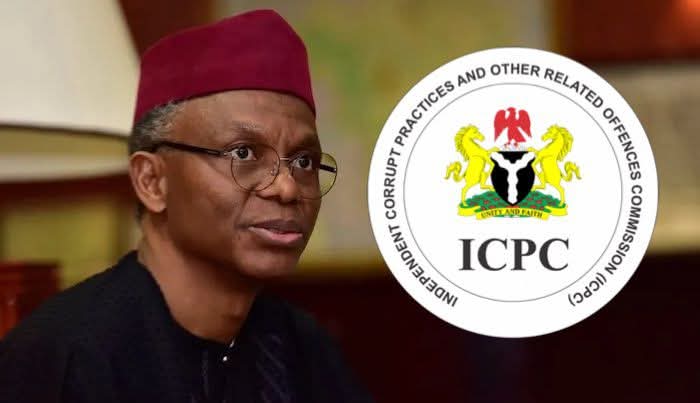
Following the release of former Kaduna State Governor, Nasir Ahmad El-Rufai, a growing number of netizens have alleged that his detention was politically motivated and aimed at humiliation rather than justice. The former governor was released hours after the news of his mother’s death broke, prompting accusations of undue hardship from several public commentators.
Among those speaking out are Barrister Abba Hikima, Stanley Chinonso, and Imran U Wakili, who took to social media to question the timing and rationale behind the release.
In a post on X (formerly Twitter), Imran U Wakili argued that the former governor’s detention was never about criminal allegations but was intended to degrade him. He noted that El-Rufai was held throughout the 30 days of Ramadan and was not permitted to bid farewell to his late mother while in custody.
“The sudden release of Nasir Ahmad El-Rufai shows that they were only keeping him to humiliate him, not because he committed any crime,” Wakili wrote. He added that while the release—coming in time for the funeral—suggests “a little conscience” on the part of authorities, it also underscores what he described as unjust treatment.
Echoing similar sentiments, Stanley Chinonso described the former governor’s detention as politically driven. “This simply shows the federal government does not have any case against him; they are just trying to hold him down because they felt he’s a threat to them. For Tinubu, he has just saved face because he would have lost the case in court. We are watching,” Stanley wrote.
Barrister Abba Hikima offered a legal perspective, pointing to the absence of formal judicial proceedings that would typically precede a release. He noted that El-Rufai was neither granted bail by the court nor had his bail conditions reviewed—standard legal pathways to release.
“Well, none of that has happened. And Nasir El-Rufa’i has been released. Does this show there was cruelty and violation in refusal to release him from the beginning?” Hikima posted.
Meanwhile, President Bola Tinubu, Kaduna State Governor Uba Sani, and National Security Adviser Nuhu Ribadu have all extended condolences to El-Rufai over the passing of his mother. The messages, shared publicly, have drawn mixed reactions on social media, with some users dismissing them as indicative of a closed political circle.
El-Rufai was arraigned by the Independent Corrupt Practices and Other Related Offences Commission (ICPC) on a 10-count charge related to alleged conversion of public property and money laundering. He appeared before a Federal High Court in Kaduna, which had adjourned his bail application until March 31.
The former governor was released shortly after news broke of his mother’s death in Cairo, Egypt. He has consistently denied all allegations against him.
News
BREAKING: El-Rufai Released Following Mother’s Death, Son Alleges Unlawful Detention
By Yusuf Danjuma Yunusa
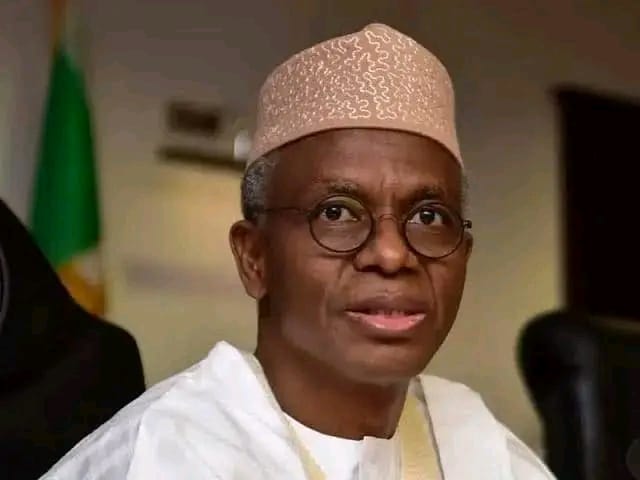
Nasir El-Rufai, the former governor of Kaduna State, has returned home after what his family describes as a period of detention, just in time for the funeral of his late mother.
His son, Bashir El-Rufai, confirmed the development in a post on X (formerly Twitter), stating that his father had been released. Bashir characterized the detention as “unlawful and illegal,” and directed sharp criticism at the agency involved, referring to it as “one of the most corrupt agencies in the Federal Republic of Nigeria that is a lame excuse of a pathetic institution.”
The former governor had reportedly presented himself to the Economic and Financial Crimes Commission (EFCC) on February 16 for questioning. According to Bashir’s account, El-Rufai was held by the commission until his release prior to the funeral.
News
Breaking:Kano Deputy Governor Resigns
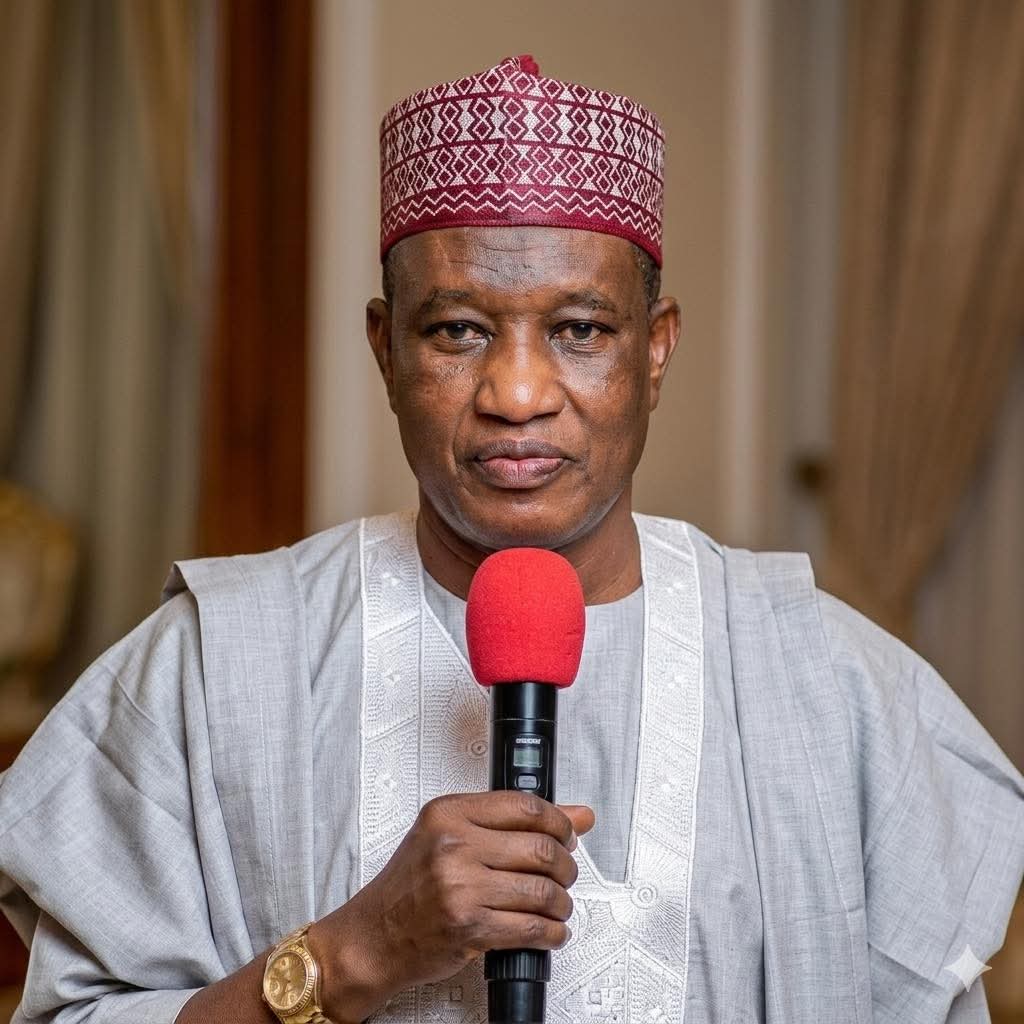
The Kwankwasiyya Movement has announced the resignation of the Deputy Governor of Kano State Comrade Aminu Abdulsalam Gwarzo, stating that the decision was formally communicated to the public in a press release issued on Friday and signed by its spokesperson, Dr. Habibu Sale Mohammed.
According to the statement, the resignation was taken “in the overall interest of the people and the stability of governance” in the state, with the movement noting that recent developments had significantly limited the Deputy Governor’s ability to fully discharge the responsibilities of the office.
The movement also addressed the ongoing issues involving the Kano State House of Assembly, emphasizing that the Deputy Governor’s decision to step down should not be interpreted as an admission of any allegations raised against him, and insisting that he continues to maintain his innocence.
Describing the move as one of “statesmanship,” the statement said the resignation was intended to reduce political tension and prevent further disruptions to governance and development efforts in Kano State, while demonstrating a commitment to peace and political maturity.
The Kwankwasiyya Movement further disclosed that the former Deputy Governor plans to redirect his focus toward strengthening the movement’s internal structures and strategies, particularly as political actors begin positioning ahead of Nigeria’s 2027 general elections.
The statement added that this renewed engagement would involve rebuilding party frameworks and pursuing strategic realignments aimed at promoting what it described as people-oriented leadership, social justice, and sustainable development.
The movement called on its supporters and residents of Kano State to remain calm, law-abiding, and committed to democratic principles, assuring the public that additional details regarding the resignation would be communicated in due course, according to the spokesperson.
Comrade Aminu Abdulsalam Gwarzo the Deputy Governor has been enmeshed in a political battle with his boss Governor Abba Kabir Yusuf since the Governor defected to the All Progressives Congress without the blessing of the NNPP National leader Senator Rabiu Musa Kwankwaso.
Recently the Kano state House of Assembly has issued Impeachment notice on Comrade Aminu Abdulsalam Gwarzo over allegation of corruption.

El-Rufai’s Release Sparks Claims of Political Motives, Unjust Detention

APC National Convention : How DSP Barau Displays Political Sagacity, Deep Knowledge of Democracy Before President Tinubu, Others

BREAKING: El-Rufai Released Following Mother’s Death, Son Alleges Unlawful Detention

Breaking:Kano Deputy Governor Resigns

Hajiya Umma El-Rufai, Mother of Former Kaduna Governor, Passes Away

The Governor Who Chose His People Over His Politics: Abba Yusuf and the Moral Courage Behind Kano First

FREEDOM OF SPEECH, NOT FREEDOM FROM CONSEQUENCE: A CITIZEN’S CALL FOR RESPONSIBLE PUBLIC COMMENTARY

Press Freedom: IPI Nigeria Calls on New Acting IGP to End Police Harassment of Journalists
Tinubu to Swear in Olatunji Disu as Inspector-General of Police on Wednesday
Restoring the Glory That Was Always There: Governor Abba Kabir Yusuf and the Historical Vision Behind Kano First
El-Rufai’s Release Sparks Claims of Political Motives, Unjust Detention
APC National Convention : How DSP Barau Displays Political Sagacity, Deep Knowledge of Democracy Before President Tinubu, Others
BREAKING: El-Rufai Released Following Mother’s Death, Son Alleges Unlawful Detention
Breaking:Kano Deputy Governor Resigns
Hajiya Umma El-Rufai, Mother of Former Kaduna Governor, Passes Away
The Governor Who Chose His People Over His Politics: Abba Yusuf and the Moral Courage Behind Kano First
FREEDOM OF SPEECH, NOT FREEDOM FROM CONSEQUENCE: A CITIZEN’S CALL FOR RESPONSIBLE PUBLIC COMMENTARY
Press Freedom: IPI Nigeria Calls on New Acting IGP to End Police Harassment of Journalists
Tinubu to Swear in Olatunji Disu as Inspector-General of Police on Wednesday
Restoring the Glory That Was Always There: Governor Abba Kabir Yusuf and the Historical Vision Behind Kano First
-

 Opinion4 years ago
On The Kano Flyovers And Public Perception
-

 Features5 years ago
How I Became A Multimillionaire In Nigeria – Hadiza Gabon
-

 Opinion5 years ago
Kano As future Headquarters Of Poverty In Nigeria
-

 History5 years ago
Sheikh Adam Abdullahi Al-Ilory (1917-1992):Nigeria’s Islamic Scholar Who Wrote Over 100 Books And Journals
-

 Opinion4 years ago
My First Encounter with Nasiru Gawuna, the Humble Deputy Governor
-

 History5 years ago
The Origin Of “Mammy Market” In Army Barracks (Mammy Ochefu)
-

 History4 years ago
The History Of Borno State Governor Professor Babagana Umara Zulum
-

 News4 years ago
Federal University Of Technology Babura To Commence Academic Activities September