
News
APC Appoints Ganduje APC National Chairman
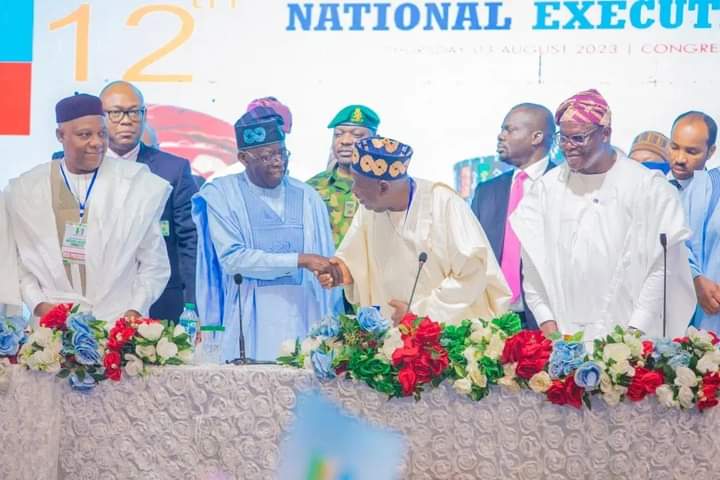
Abdullahi Ganduje, immediate former governor of Kano State, has been appointed by the All Progressives Congress (APC) National Executive Committee (NEC) on Thursday to serve as the party’s national chairman.
The party’s NEC also elected former Senate spokesman, Ajibola Basiru as National Secretary.
During his acceptance speech Dr Abdullahi Umar Ganduje promised to provide functional offices of the party across the 36 states of the federation.
Dr Ganduje said he will also update the scientific membership of the party












News
ADC: Islamic scholar joins 2027 Zamfara Gov’ship race
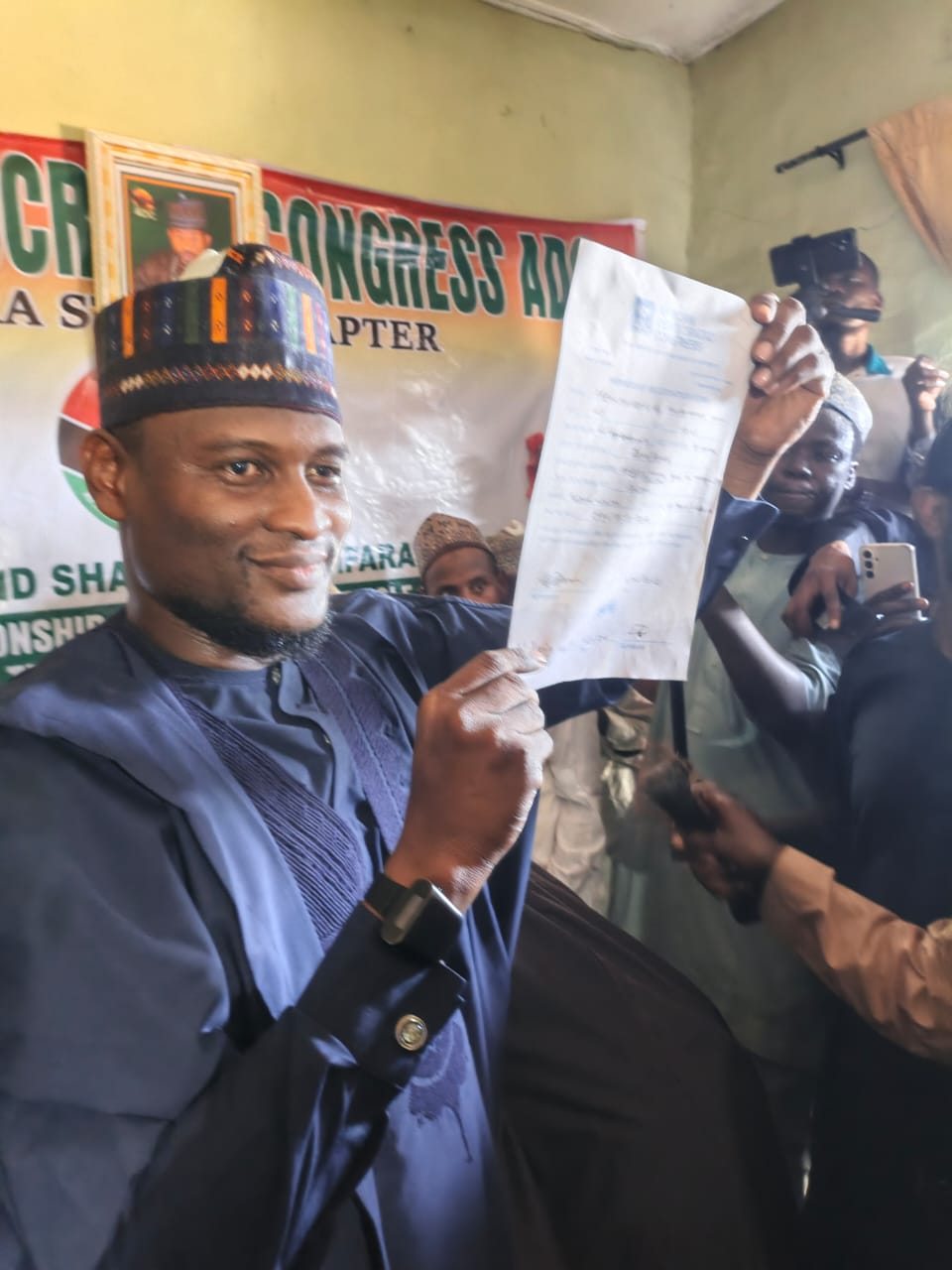
A popular Islamic scholar, Dr Abdulmuddalib Muhammad Auwal has joined the African Democratic Congress (ADC) in Zamfara State and declared for Governorship ahead of the 2027 general elections.
Dr Auwal who formally registered with ADC on Sunday at the state APC Secretariat was supported by the Chairman ADC Tudun Wada Ward.
He was received and welcome by ADC leaders and stakeholders in Tudun Wada Ward and Gusau LGA and large crowd of the party members.
Dr Auwal said he joined ADC because of good ideologies and manifestos of the party
“I have personal desire to contribute to ensure good governance tackling security challenges, addressing poverty and vulnerability in Zamfara.
“I have blueprints to serve as framework, and strategic plans on Education, Health, insecurity, Poverty reduction, women and youths empowerment.
“The ADC’s ideology aligns with my visions to rescue Zamfara from poor governance,” he said.
According to him, “if we are given the mandate, we would change the Zamfara fortune to the promised land through the ADC”.
He described injustice and poor governance as the yardsticks of the increase of security challenges in Zamfara
One of the main reasons for the ongoing escalation of the issues with insecurities challenges destroying Zamfara state and other places is as results of neglect, injustice and political aspirations that have eaten deeply around some elites in the society.
We are aware that injustice and poor governance by the certain group of leaders entrusted with governance are becoming too burden and a yardstick of the increase of the insecurity challenges, particularly in Zamfara state that have become a feasting ground of banditry.
“Poverty and injustice are the main reasons for the ongoing security challenges in Zamfara.”
“Also the lingering insecurity challenges in Zamfara is due to o poor governance.
“In Zamfara we have various potentialities to address future the challenges of insecurity and poverty,” he explained.
He further said, “We came up with good blueprints to ensure sustainable security of our dear state through various policies and programs to tackle poverty, unemployment, and lack of education, particularly among youths”
“We are going to create more job opportunities, through agriculture and economic entrepreneurship development for our teeming to have better alternatives than criminal activities.
“You know, Zamfara is blessed with immense agricultural potentials, infact our motto is “Farming is Our Pride”, but due to lack of good governance, we failed to develop such potentials in to reality for the development of our dear state.
He noted that Zamfara, we have comparative advantages in agriculture due to a large fertile land but not being utilize to address youths unemployment, poverty among our people especially those affected by the insecurity.
“On security sector, I will come up with good strategies to tackle insecurity affecting our communities.
“I have passion about agriculture, if we are voted I will initiate various policies and programs to transform irrigation farming in the state to enhance food security in the state.
“In each of the 14 LGAs in the state, I will build a dam for our teeming population to go in to food and cash crops production.
“One of my blueprints is addressing youth unemployment through establishment of companies by fostering entrepreneurship development and vocational training for our teeming unemployed youths.
“This is to change mindsets of our people, infact we want to Zamfara people to become job providers not job seekers- Scholar explained.
In their seperate remarks, the ADC leaders in Tudun Wada Ward and Gusau LGA expressed gratitude for the Governorship aspirant for joining the party.
They assured him that the party would provide an enabling environment for him and his teeming supporters
News
APC Stakeholders Back Rurum for Kano Deputy Governor as Three Nominees Emerge
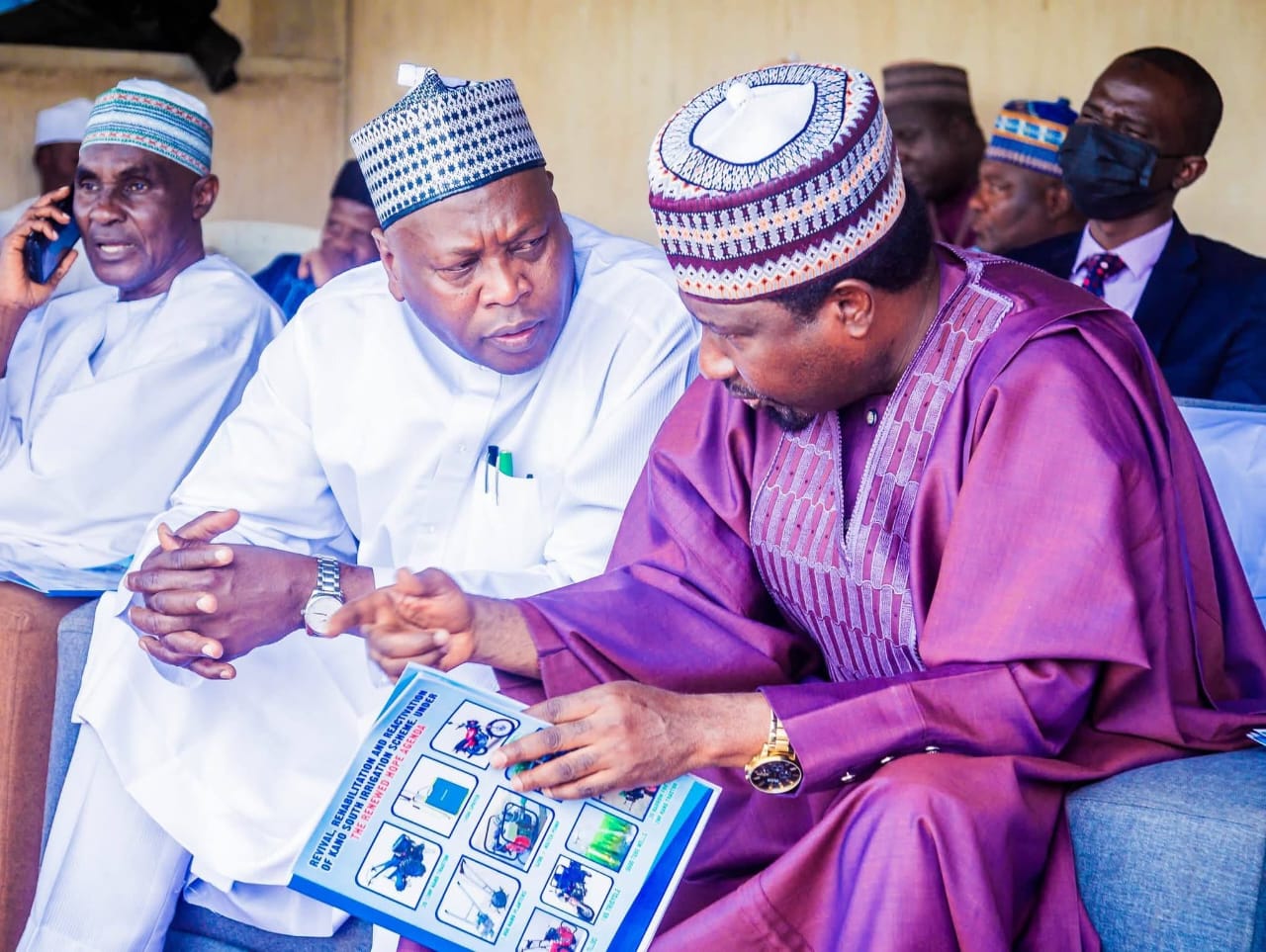
Stakeholders of the All Progressives Congress (APC) in Kano State, including the Deputy Senate President, Barau I. Jibrin, former governorship candidate Salihu Sagir Takai, and Minister of State for Housing and Urban Development, Honourable Yusuf Abdullahi Ata, have reportedly thrown their weight behind Kabiru Alhassan Rurum as one of the leading contenders for the position of deputy governor of Kano State.
The endorsement followed a stakeholders’ meeting held on Sunday night, where three nominees were selected to fill the vacant deputy governorship seat following the resignation of Aminu Abdulsalam Gwarzo.
The meeting was convened in line with a directive reportedly issued by Governor Abba Kabir Yusuf, asking party stakeholders to forward three names for consideration.
The stakeholders, however, clarified that contrary to reports in circulation, some of the information about the meeting had been “fabricated,” insisting that the directive was strictly adhered to.
They said the governor directed that “three names be proposed and submitted to him, from which one may be considered as the next Deputy Governor.”
The three nominees are Kabiru Alhassan Rurum, former Speaker of the Kano State House of Assembly and member of the House of Representatives; Rabiu Suleiman Bichi, former Secretary to the State Government and Managing Director of the Hadejia-Jama’are River Basin Development Authority; and Murtala Sule Garo, former local government chairman and commissioner.
Rurum’s nomination was moved by the immediate past APC state secretary, Ibrahim Zakari Sarina, and seconded by Minister of State for the Federal Capital Territory, Mariya Mahmud Bunkure.
For Bichi, the motion was moved by the former APC chairman in the state, Abdullahi Abbas, and seconded by the deputy state chairman, Salisu Maje Ahmad Gwangwazo.
Garo was nominated by Alhassan Ado Doguwa and seconded by Labaran Abdul Madari.
During the meeting, Takai and former Secretary to the State Government, Usman Alhaji, argued that Kano South should be given consideration for the position, saying the zone has been excluded from both the governorship and deputy governorship slots since 1992.
They noted that Kano South, with 16 local government areas and over seven million population, “deserves consideration.”
The stakeholders also witnessed strong political alignments, with Rurum reportedly enjoying the backing of top figures including Barau Jibrin, Mariya Mahmud Bunkure, Yusuf Abdullahi Ata, Ibrahim Zakari Sarina, Sha’aban Sharada, Bashir Garba Lado, Yahuza Ado Yan Kaba, and other prominent stakeholders.
Similarly, Murtala Garo was said to have the support of Senator Abdulrahman Kawu Sumaila, Alhassan Ado Doguwa, Abubakar Bichi, Sani Bala, Hamisu Chidari, Abdullahi M. Gwarzo, Abdullahi Rogo, Yusuf Badau, Abdulsalam Zaura, and others.
The stakeholders said the list of nominees has been forwarded and now awaits the final decision of Governor Abba Kabir Yusuf.
News
Calls for INEC Chairman’s Resignation, Premature, Risky-Oluwafemi
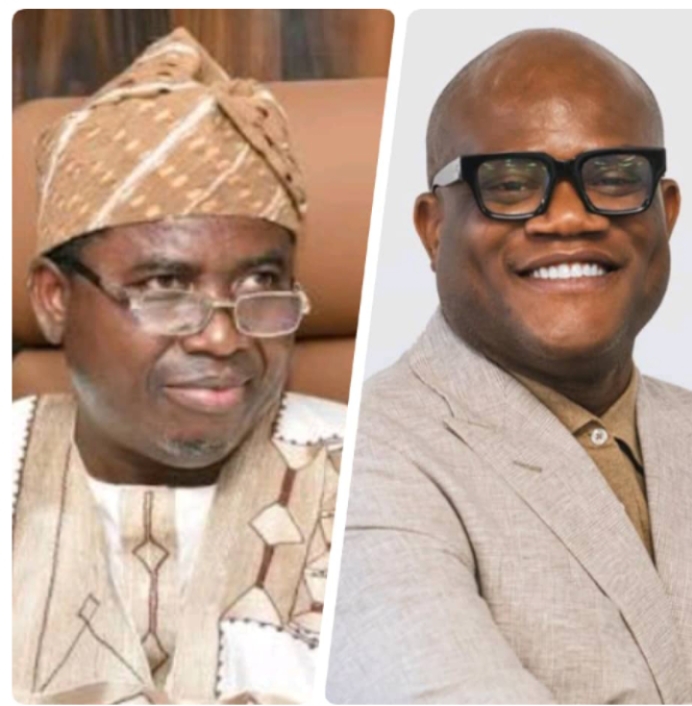
Sir Victor Walsh Oluwafemi
Public Analyst and Development Consultant has called for due process and responsible public discourse over calls for the resignation of Independent National Electoral Commission INEC’s chairman, Prof Joash Amupitan, SAN.
In a statement he personally signed, Oluwafemi noted that:
“I am compelled, as a concerned citizen and a professional engaged in governance advisory and institutional systems, to address the growing calls for the resignation of the Chairman of the Independent National Electoral Commission, Professor Joash O. Amupitan, SAN.
“While accountability remains central to any functioning democracy, the manner, tone, and timing of these demands raise serious questions about intent and consequence.
“It is important to critically examine whether such calls are grounded in verifiable institutional breaches or whether they reflect political positioning and reactionary pressure.
Oluwafemi further stressed that: “The positions recently advanced by the African Democratic Congress and the Supreme Council for Shari’ah in Nigeria, if not exercised with caution, risk projecting a troubling precedent that leadership within critical national institutions can be influenced through public agitation rather than constitutional procedure.
“When institutions begin to respond to pressure instead of process, democracy itself becomes negotiable.”
“Nigeria’s constitutional framework is unambiguous. The removal of the INEC Chairman is not a matter for public sentiment or media campaigns, but one strictly governed by law. It is therefore both prudent and necessary to advise that all grievances, allegations, or concerns be subjected to judicial scrutiny.
At this stage, restraint is not only advisable but also essential.
“In every serious democracy, accusation must travel through the courts, not through microphones.”
“Equally concerning is the growing trend of unguarded and, in some instances, uncultured utterances across television, radio, and digital platforms.
“Public commentary on matters of national importance must be measured, responsible, and evidence-based. The consequences of careless rhetoric are neither theoretical nor distant.
“Recent electoral observations in Nigeria recorded over 200 incidents of election-related violence, with multiple fatalities.
“A significant driver of such tensions has consistently been inflammatory rhetoric and the premature delegitimisation of institutions.
“Words, when recklessly deployed in a fragile political climate, can become triggers rather than expressions.”
“It is therefore imperative to caution all stakeholders. Opposition actors must ensure that their engagements strengthen democratic confidence rather than weaken institutional trust.
“Socio-religious organisations must be mindful of the weight of their voice, particularly in matters that intersect with national governance.
“Those who appear on radio and television must understand that public platforms are not merely spaces for expression, but instruments that shape national mood and direction. Discipline in speech is not a limitation; it is a responsibility.
“Freedom of expression must never become a licence for institutional erosion.”
“This is not a defence of any individual. It is a defence of process, order, and democratic stability. Where there is credible evidence of wrongdoing, it must be tested through lawful and constitutional channels. Disputes must be resolved within the framework of the judiciary.
“Until such processes have run their course, calls for resignation remain premature and potentially destabilising.
“A nation does not strengthen its democracy by removing officials through pressure, but by upholding the systems designed to hold them accountable.”
“Nigeria must choose discipline over noise, process over pressure, and stability over sentiment.

ADC: Islamic scholar joins 2027 Zamfara Gov’ship race

APC Stakeholders Back Rurum for Kano Deputy Governor as Three Nominees Emerge

Calls for INEC Chairman’s Resignation, Premature, Risky-Oluwafemi

Stakeholders Back Murtala Sule Garo For Kano Deputy Governor

Turaki-led PDP Faction Rejects Secretariat Takeover by Wike Group, Accuses Police of Bias

ADC Leadership Crisis: State Chairmen to Elect Caretaker Committee on Tuesday

Governor Abba Kabir Yusuf Holds Exclusive Prerogative to Choose Deputy – Malam Inuwa Waya

NUJ Kano Online Chapel Tightens Membership Standards, Approves 31 Applicants After Rigorous Screening

APC National Convention : How DSP Barau Displays Political Sagacity, Deep Knowledge of Democracy Before President Tinubu, Others

Radiographers Kick Against Controversial Health Bills, Demand Immediate Withdrawal
ADC: Islamic scholar joins 2027 Zamfara Gov’ship race
APC Stakeholders Back Rurum for Kano Deputy Governor as Three Nominees Emerge
Calls for INEC Chairman’s Resignation, Premature, Risky-Oluwafemi
Stakeholders Back Murtala Sule Garo For Kano Deputy Governor
Turaki-led PDP Faction Rejects Secretariat Takeover by Wike Group, Accuses Police of Bias
ADC Leadership Crisis: State Chairmen to Elect Caretaker Committee on Tuesday
Governor Abba Kabir Yusuf Holds Exclusive Prerogative to Choose Deputy – Malam Inuwa Waya
NUJ Kano Online Chapel Tightens Membership Standards, Approves 31 Applicants After Rigorous Screening
APC National Convention : How DSP Barau Displays Political Sagacity, Deep Knowledge of Democracy Before President Tinubu, Others
Radiographers Kick Against Controversial Health Bills, Demand Immediate Withdrawal
-

 Opinion4 years ago
On The Kano Flyovers And Public Perception
-

 Features5 years ago
How I Became A Multimillionaire In Nigeria – Hadiza Gabon
-

 Opinion5 years ago
Kano As future Headquarters Of Poverty In Nigeria
-

 History5 years ago
Sheikh Adam Abdullahi Al-Ilory (1917-1992):Nigeria’s Islamic Scholar Who Wrote Over 100 Books And Journals
-

 Opinion4 years ago
My First Encounter with Nasiru Gawuna, the Humble Deputy Governor
-

 History5 years ago
The Origin Of “Mammy Market” In Army Barracks (Mammy Ochefu)
-

 History4 years ago
The History Of Borno State Governor Professor Babagana Umara Zulum
-

 News4 years ago
Federal University Of Technology Babura To Commence Academic Activities September